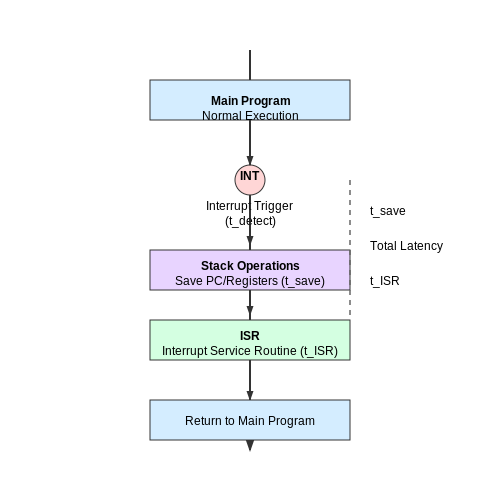
Digital Signal Controllers (DSC)
1. Definition and Purpose
1.1 Definition and Purpose
Digital Signal Controllers (DSC) are specialized microcontrollers designed for processing digital signals with high accuracy and speed. They effectively combine the functions of digital signal processors (DSPs) with the control capabilities of traditional microcontrollers. This unique integration enhances digital control applications, making DSCs indispensable in various complex systems, such as automotive control, energy management, and advanced robotics.
The primary purpose of DSCs revolves around the need for real-time processing in embedded systems, where both high-speed computation and control operations must occur simultaneously. A typical DSC can perform arithmetic operations on digital inputs, process those signals to extract useful information, and then use that information to influence real-world systems through outputs. This capability is crucial in applications that require precise timing and swift responses, often referred to as closed-loop control systems.
Historical Context
The evolution of DSCs stems from the simultaneous advancements in microcontroller and digital signal processing technologies. The integration began as embedded systems began to demand more processing power without escalating complexity or cost. Originally, engineers relied heavily on separate DSPs and microcontrollers, which comprised a variety of interfacing dilemmas, speed limitations, and increased power consumption. The development of DSCs solved these challenges, leading to streamlined system design and enhanced functionality.
Applications in the Real World
DSCs find a multitude of applications across different sectors, showcasing their versatility:
- Motor Control: In industrial automation, DSCs are employed to precisely control DC, stepper, and AC motors for smooth operation and high efficiency.
- Power Management: They are utilized in power electronics, like inverters and converters, facilitating efficient energy distribution from solar panels or wind turbines.
- Automotive Systems: DSCs enhance vehicle dynamics control systems, allowing for improved stability and safety mechanisms.
- Medical Devices: In healthcare, DSCs support intricate systems like imaging equipment, contributing to diagnostic accuracy.
The design and operation of a Digital Signal Controller often incorporate advanced features, such as integrated analog interfaces, pulse-width modulation (PWM), and high-speed interrupts. These capabilities enable DSCs to manage multiple tasks concurrently, ensuring that they can respond to fast-changing environments effectively.
In conclusion, the definition and purpose of Digital Signal Controllers extend beyond mere computation to encapsulate their role as a cornerstone in modern electronic systems. Their ability to blend digital processing with control functionalities positions them favorably in a wide array of industries, fostering innovation and efficiency across numerous applications.
1.2 Applications of DSCs
Digital Signal Controllers (DSCs) serve a pivotal role in modern electronics, integrating the functionalities of digital signal processors (DSPs) and microcontrollers (MCUs) to create highly versatile systems capable of managing complex control tasks. Their ability to handle real-time data processing and decision-making makes them ideal candidates for a myriad of applications across various industries. In this subsection, we will explore the practical applications of DSCs, illustrating their importance and functionality through real-world examples.Control Systems
One of the most significant applications of DSCs lies in control systems, which are essential for automation in industries such as manufacturing, robotics, and automotive. DSCs can execute complex algorithms used in feedback control, thereby improving the efficiency and responsiveness of systems. For instance, in motor control applications, DSCs enable precise speed and position control in servomotors, leading to enhanced performance in automation equipment. The implementation of control algorithms such as PID (Proportional, Integral, Derivative) can be effectively managed by DSCs owing to their ability to process multiple data inputs concurrently. In a typical motor control system, the PID algorithm will adjust the motor control signals based on feedback from sensors, which monitor speed and position. The rapid processing capability of DSCs ensures that these adjustments can occur in real-time, enhancing the overall system responsiveness.Telecommunications
Another critical application area for DSCs is telecommunications. With the advent of digital communication, the need for efficient signal processing has surged. DSCs are used in base stations for mobile networks, facilitating modulation and demodulation of signals, and error correction. Their high computation power allows them to manage sophisticated algorithms in real-time, such as Adaptive Modulation and Coding (AMC), which enhances bandwidth efficiency. For example, in a cellular network, DSCs can dynamically adjust the signal transmission parameters based on channel conditions, optimizing performance and reducing power consumption. This adaptability is essential for maintaining quality of service in mobile communications, especially in densely populated areas where network traffic can vary drastically.Consumer Electronics
The applications of DSCs extend significantly into consumer electronics, where they are integral to devices such as digital cameras, smartphones, and smart home systems. DSCs are adept at managing multimedia processing tasks, including audio and video encoding/decoding, image processing, and user interface interactions. Consider the example of a modern smartphone camera, which requires rapid processing of images for functions like autofocus, image stabilization, and facial recognition. DSCs can efficiently handle the complex algorithms governing these features, allowing for high-quality imaging in varied lighting conditions. In this context, the combination of image sensors with DSCs creates a compelling synergy that enhances user experience through superior performance.Automotive Applications
The automotive industry has increasingly adopted DSC technology, especially with the introduction of advanced driver-assistance systems (ADAS). DSCs are utilized in tasks such as adaptive cruise control, collision avoidance, and lane-keeping assistance, where processing large amounts of sensor data in real-time is critical. Utilizing signal processing capabilities, DSCs can examine data from radar, cameras, and ultrasonic sensors to make rapid decisions, thereby improving road safety. For example, in automatic braking systems, the DSC constantly analyzes the distance to the car ahead and can initiate braking in a fraction of a second if it detects an impending collision.Conclusion
Digital Signal Controllers are versatile components that find applications across diverse fields—ranging from control systems in automation to multimedia processing in consumer electronics, and enhancing safety in automotive applications. As technology advances, the demand for effective, real-time data processing capabilities will only grow, propelling DSCs into even more crucial roles in innovative solutions. Through their integration of control algorithms and data processing abilities, DSCs continue to shape the technological landscape around us, underlying the evolution of smarter and more efficient systems.2. Core Components of DSCs
2.1 Core Components of DSCs
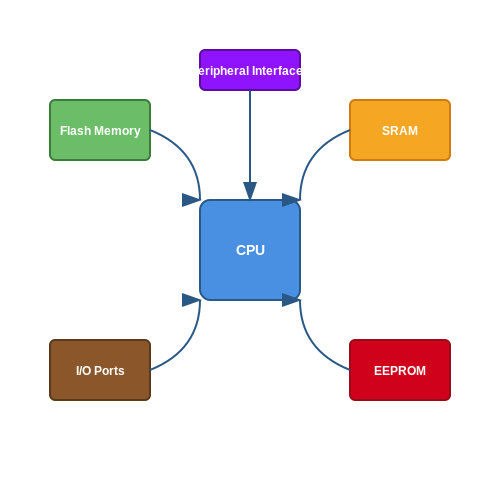
Digital Signal Controllers (DSCs) represent a pivotal evolution in embedded control systems, merging capabilities typically found in microcontrollers and digital signal processors. Understanding the core components that constitute DSCs is essential for engineers and researchers aiming to leverage their advanced functionalities in a variety of applications ranging from motor control to digital audio processing.Microcontroller Core
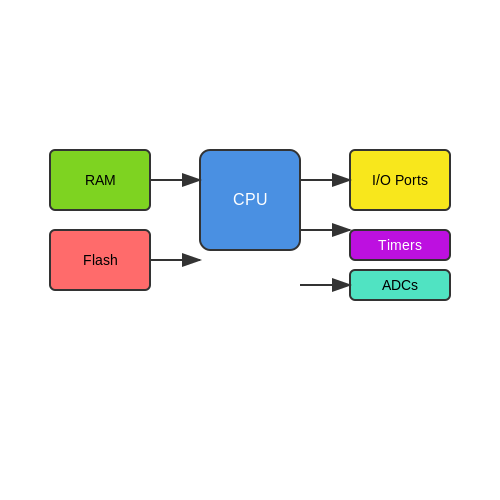
At the heart of a DSC is its microcontroller core, which functions as the central processing unit (CPU) of the device. This core is designed to execute control algorithms with high efficiency, utilizing Reduced Instruction Set Computer (RISC) architecture principles. RISC-based architectures facilitate *efficient instruction execution*, enabling high throughput in applications with stringent timing constraints. The microcontroller core in a DSC typically includes:- Arithmetic Logic Unit (ALU): Responsible for performing arithmetic and logical operations, which are crucial for processing signal data.
- Program Memory: Stores firmware, often in Flash memory, allowing for easy updates and modifications without hardware changes.
- Data Memory: Comprises Static RAM (SRAM) for temporary data storage, essential during computation cycles.
Digital Signal Processing Unit (DSPU)
Complementing the microcontroller core is the Digital Signal Processing Unit (DSPU), which specializes in high-speed arithmetic operations such as multiplications and accumulations, vital for implementing algorithms like Fast Fourier Transforms (FFT) and digital filters. The architecture of the DSPU is typically optimized for operations on fixed-point and floating-point data types, allowing for a balance between performance and precision. For instance, many DSCs offer dedicated hardware multipliers or adders that enhance performance by reducing the cycle count for operations.Practical Relevance:
In practical scenarios, the DSPU’s efficiency allows for real-time data processing in automotive applications, such as feedback control loops for engine management systems, where rapid response times are critical for optimal performance.Peripheral Interfaces
Next in importance are the peripheral interfaces that enable communication between the DSC and external devices. These interfaces establish a connection with various components such as sensors, actuators, and communication modules. Common types of interfaces include:- Analog-to-Digital Converters (ADC): Convert real-world analog signals to digital data for analysis.
- Digital-to-Analog Converters (DAC): Enable the conversion of processed digital signals back to analog form.
- Serial Communication Interfaces: Such as SPI, I²C, and UART, facilitating data exchange with external devices or other controllers.
Case Study:
A significant case study on the efficacy of DSCs can be drawn from robotics, wherein high-speed data acquisition from sensors via ADCs, coupled with swift processing through the DSPU, leads to improved control accuracy in robotic arms.Memory Architecture
Finally, a robust memory architecture is crucial for the efficient operation of DSCs. Both program and data memory must be designed to handle the workload generated by sophisticated algorithms. Modern DSCs often integrate:- Embedded Non-Volatile Memory: For firmware storage, ensuring minimal boot-up time.
- DMA (Direct Memory Access) Controllers: Allowing peripherals to communicate with memory without CPU intervention, thus freeing up processing resources for computational tasks.
Conclusion
The core components of Digital Signal Controllers — the microcontroller core, DSPU, peripheral interfaces, and a well-structured memory architecture — collectively empower DSCs to perform complex signal processing tasks with efficiency and precision. This makes DSCs invaluable across an array of fields such as telecommunications, automotive systems, and consumer electronics, offering significant advancements in both performance and functionality.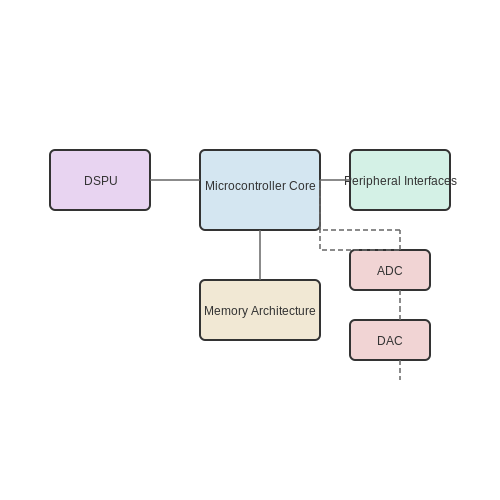
2.2 Data Handling and Memory
Digital Signal Controllers (DSCs) are increasingly used in embedded applications where both digital signal processing and control functions are required. One of the key aspects that differentiates DSCs from traditional microcontrollers is their advanced capabilities in data handling and memory management, which are crucial for real-time processing of signals.
Understanding Data Handling in DSCs
At their core, DSCs are designed to efficiently process and manipulate large streams of data. This is particularly relevant in applications such as motor control, power conversion, and signal processing. The ability of a DSC to handle data efficiently is primarily determined by its architecture, which includes aspects such as:
- Data buses: Wide data buses allow faster data transfer between the processor and memory.
- Direct Memory Access (DMA): Enables peripherals to access the main memory independently of the CPU, enhancing performance in data-heavy applications.
- Dedicated hardware units: Such as multipliers and accumulating registers, tailored for signal processing tasks.
Efficient data handling is not only about speed but also about the precision of data manipulation. The incorporation of fixed-point and floating-point arithmetic within DSC architectures enables developers to choose the most suitable method for their specific applications, leading to improved performance and reduced computational overhead.
Memory Architecture Overview
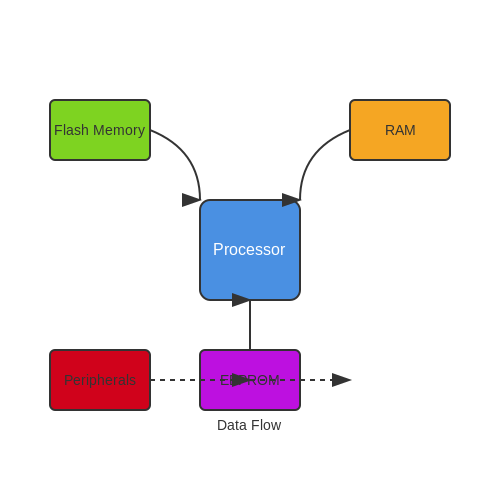
The memory architecture in DSCs is critical for efficient data handling and the overall performance of real-time applications. Typically, DSCs consist of the following types of memory:
- Flash Memory: Non-volatile memory used to store firmware and application data. It allows quick boot-up and can be reprogrammed for updates.
- RAM: Volatile memory used for temporary data storage during execution. The size and speed of RAM can significantly influence the performance of signal manipulation algorithms.
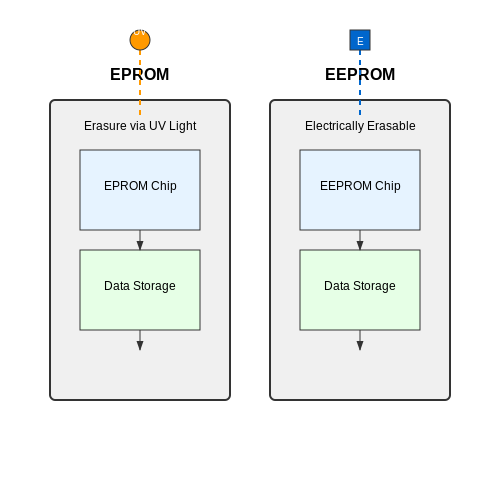
- EEPROM: Used for storing small amounts of data that must be preserved even when the device is powered off, such as calibration data.
Each memory type plays a vital role in the architecture, providing a balance between speed, capacity, and persistence. The architecture must be carefully designed to optimize the data access patterns, which can reduce power consumption and increase the responsiveness of the system.
Memory Management Techniques
Effective memory management is essential to avoid bottlenecks when performing real-time signal processing. DSCs may implement various techniques to optimize the management of both data and program memory:
- Memory Allocation: Dynamic allocation strategies can optimize memory usage without fragmentation, especially in systems where real-time performance is critical.
- Data Buffering: Use of circular buffers can facilitate continuous data streaming from sensors or communication modules with minimal delay.
- Segmentation: Segmented memory allows different types of data to be processed in parallel, leveraging the internal architecture of the DSC.
Real-World Applications
The importance of data handling and memory in DSCs cannot be overstated, especially in applications meeting stringent performance requirements. For example, in motor control applications, a DSC’s ability to handle real-time feedback from sensors via advanced memory management techniques is pivotal for achieving precise control of speed and position.
Furthermore, in audio processing applications, a DSC might process multiple audio channels simultaneously. This capability largely hinges on optimized data handling and efficient utilization of available memory resources.
As the field of digital signal processing continues to evolve, the enhancement of data handling capabilities in DSCs will pave the way for more complex and powerful applications across various industries, including automotive, telecommunications, and robotics.
2.3 Input/Output Interfaces
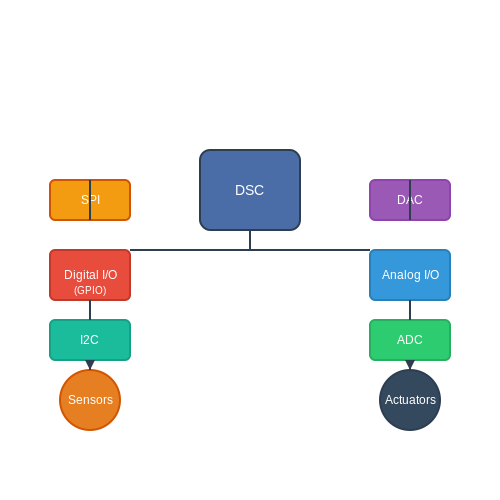
Input/Output (I/O) interfaces play a crucial role in the functionality of Digital Signal Controllers (DSCs), acting as gateways for communication between the microcontroller and external peripherals. Understanding these interfaces allows engineers and researchers to optimize system designs for specific applications, enhancing both performance and efficiency.
DSCs integrate various types of I/O interfaces, which can be broadly classified into digital and analog signals. Each category serves specific purposes and is optimized for distinct applications. When designing a system around a DSC, it is vital to carefully select and configure the appropriate I/O interfaces to meet system requirements such as speed, resolution, and power consumption.
Digital I/O Interfaces
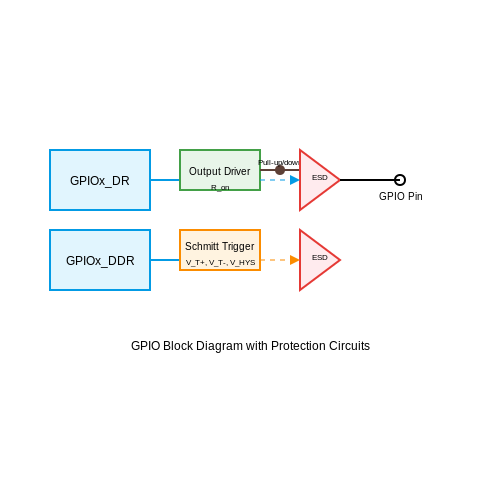
Digital I/O interfaces, often termed GPIO (General Purpose Input/Output), are perhaps the most fundamental interface types. They are binary, meaning they can exist in either a high (1) or low (0) state. This binary representation of signals is what underpins digital electronics and communication systems.
In practical applications, digital I/O can read sensor states, control actuators, or interface with other digital devices. For instance, a DSC in a motor control application might use GPIO lines to receive input from limit switches (sensors) and send output to motor drivers. The configuration of these digital pins can often be altered programmatically, allowing them to function dynamically as either inputs or outputs based on real-time conditions.
To establish communication with devices, DSCs often implement communication protocols over their digital I/O interfaces, such as SPI (Serial Peripheral Interface), I2C (Inter-Integrated Circuit), or UART (Universal Asynchronous Receiver/Transmitter). These protocols provide more sophisticated means of exchanging data than simple pin states, thus enhancing the functionality of the DSC.
SPI and I2C
SPI and I2C are common protocols especially useful for interfacing with peripheral sensors and other integrated circuits. SPI operates with a master-slave architecture and achieves higher data transfer rates by jointly using clock and data lines, significantly serving applications requiring rapid data acquisition. Conversely, I2C supports multiple slaves and is beneficial in applications that require a simpler connection scheme, albeit at lower speeds.
Where \( f_{clock} \) is the clock frequency and \( N \) is the number of clock pulses for bits transmitted. This presents how SPI might be configured based on desired throughput.
Analog I/O Interfaces
In contrast to digital I/O, analog interfaces acknowledge a continuous range of values. DSCs often utilize these interfaces for tasks like reading analog sensors, controlling PWM (Pulse Width Modulation) outputs, or generating analogue signals. Analog interfacing typically involves the use of ADCs (Analog-to-Digital Converters) and DACs (Digital-to-Analog Converters), allowing for the interface of real-world physical quantities with the digital computation of the DSC.
For instance, a DSC could monitor temperature using a thermistor, where an analog voltage level proportional to temperature is digitized using an ADC. Additionally, the output of this DSC could control a heating element through a DAC, adjusting power levels in response to the sensed temperature.
This equation establishes the output voltage \( V_{out} \) from a DAC, where \( V_{ref} \) represents the reference voltage, \( n \) is the resolution (bit depth), and \( D \) is the digital input value. Understanding how to wield the relationships between these inputs and outputs directly affects the precision and responsiveness of the system.
Practical Applications
Numerous applications leverage the capabilities of I/O interfaces in DSCs. For example, in automotive control systems, DSCs facilitate communication with various sensors (like pressure and temperature sensors) and actuators responsible for maintaining safety and efficiency in engines and other systems. In industrial settings, DSCs can enable precision control of machine operations by accurately interfacing with numerous analog and digital devices.
In summary, designing and working with I/O interfaces on Digital Signal Controllers encompasses a comprehensive understanding of the underlying principles of both digital and analog signals. The selection of appropriate interfaces, along with their careful configuration, can significantly influence the performance and functionality of embedded systems.
3. Development Environments
3.1 Development Environments
In the realm of Digital Signal Controllers (DSCs), selecting the appropriate development environment is crucial for optimizing design processes, streamlining workflows, and ensuring effective debugging. The development environment not only encompasses Integrated Development Environments (IDEs) but also includes the tools and libraries needed to accelerate software development, as well as the frameworks essential for deploying applications. To embark on this exploration, it's important to first understand the type of DSC being used. Different manufacturers often provide specific development environments tailored to their hardware. For instance, Microchip’s dsPIC series utilizes the MPLAB X IDE, which is designed for both code development and simulation. On the other hand, Texas Instruments offers Code Composer Studio for its C2000 series. Let's delve deeper into the key elements that shape the development environments for DSCs and how they reflect a coherent ecosystem for engineers and researchers.Integrated Development Environments (IDEs)
IDEs serve as a centralized hub for code writing, compiling, and debugging. A salient feature of IDEs is their ability to integrate hardware abstraction layers, thus allowing developers to interact with physical components effortlessly. Furthermore, modern IDEs provide simulation capabilities that facilitate the testing of algorithms in a virtual environment prior to deployment on actual hardware. When evaluating IDEs for DSC development, consider the following aspects:- Compiler Compatibility: Most DSCs come with specific compilers optimized for their architecture, which can significantly affect execution speed.
- Debugger Integration: Real-time debugging features, such as breakpoints and watch variables, allow developers to analyze the behavior of their code dynamically.
- User Interface: A clean and organized interface can enhance productivity and reduce the learning curve associated with new tools.
Hardware In the Loop (HIL) Simulation Tools
Real-world applications require validation and testing to ensure robust function under various conditions. HIL simulation is a technique that employs both software and hardware to test control systems dramatically. By enabling the DSC to interact with simulated physical processes, engineers can observe how algorithms perform before deployment. This method is particularly beneficial in automotive and robotics applications, where real-time processing is critical. Many modern DSC development environments integrate HIL options that provide libraries and frameworks to facilitate the simulation of complex systems. These environments often include:- Model-based design tools: Such as MATLAB/Simulink that allows for graphical programming and simulation of system behavior.
- Signal generation and analysis tools: To offer insights into how algorithms respond to various inputs across a spectrum of operational scenarios.
Code Generation and Optimization
Once a design is validated through simulation, the next phase is code generation. Effective development environments provide tools that automate the translation of high-level designs onto machine code specific to the DSC’s architecture. Automated code generation tools can streamline the whole process, allowing engineers to focus on algorithm development rather than getting bogged down with low-level coding. Additionally, optimization features often allow users to select various operational modes that can adjust the balance between performance and power consumption, which is particularly vital in battery-operated devices. As an example, compilers may utilize advanced techniques such as loop unrolling and constant propagation to enhance execution speed. It's worthwhile to explore how various developing environments implement these techniques, as they can have a significant impact on the efficiency of the final product.Practical Applications and Indispensable Tools
Understanding the practical relevance of each tool and development environment is essential. For instance, modern DSC applications span a wide array of industries, including automotive systems (like ABS and traction control), industrial control (such as motor drives), and consumer products (like smart appliances). Here, the interdependency between the choice of development environment and the desired outcome becomes evident. Effective use of HIL simulations, coupled with real-time debugging and automated optimizations, can lead to accelerated product development cycles, thereby lowering costs and enhancing product quality. In conclusion, selecting the right development environment for Digital Signal Controllers is a multifaceted task that involves understanding the hardware, the complexity of the applications, and the required features of the IDEs and tools. By harnessing the strengths of these environments, engineers and researchers can unlock significant advancements in the efficiency and capability of their DSC-driven projects.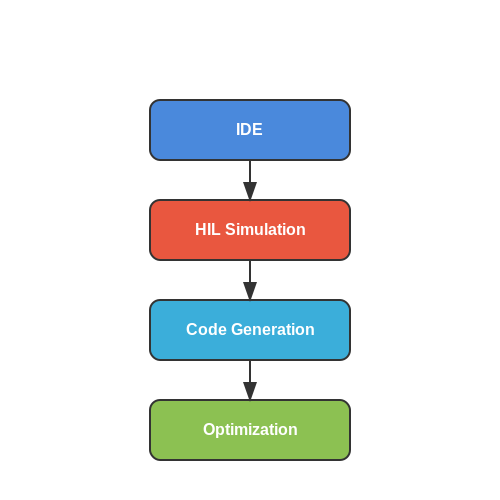
3.2 Programming Languages and Frameworks
Digital Signal Controllers (DSCs) encompass a broad range of applications that necessitate precise signal processing and control capabilities. To harness the potential of these devices, a solid understanding of programming languages and frameworks tailored for DSC environments is imperative. The effective utilization of these languages and frameworks directly influences the efficiency, maintainability, and scalability of digital signal processing applications.The Importance of Programming Languages and Frameworks
Programming languages serve as the backbone for translating logical operations into actionable code on a DSC. The choice of language can determine not only the performance of the final application but also the complexity of the development process. As such, engineers and researchers often opt for high-level languages when developing firmware and applications for DSCs, given the growing emphasis on rapid prototyping, ease of maintenance, and code readability. In contrast to higher-level programming languages, which are abstracted from the hardware, lower-level languages provide more direct control over the hardware resources. This ability is crucial in applications requiring optimized timing or direct interfacing with hardware peripherals.Common Programming Languages
A few widely used programming languages for DSC development include:- C/C++: Known for its performance efficiency, C is often favored in embedded systems. Its ability to interact closely with hardware while allowing for structured programming is invaluable. C++ extends this usability with object-oriented features that can enhance code organization and reuse.
- Assembly Language: While more difficult to learn and use, assembly language provides the utmost resource efficiency, enabling developers to take full advantage of a DSC’s architecture and available instructions. Assembly is particularly useful in time-critical applications.
- Python: As a higher-level language, Python is popular for rapid prototyping and simulation environments. With libraries like NumPy and SciPy, it enables advanced numerical calculations but may not be suitable for real-time applications where timing is critical.
Frameworks and Toolchains
When developing applications for DSCs, utilizing appropriate frameworks and development toolchains can significantly streamline the process. Frameworks provide pre-defined methods and functionalities that can save development time while enforcing better design practices. Some prominent frameworks include:- MATLAB/Simulink: This environment is primarily used for model-based design. With its extensive library of signal processing functions, users can design algorithms in a high-level context before implementing them in a DSC using code generation techniques.
- FreeRTOS: A real-time operating system ideal for microcontrollers. It allows for multitasking and effective management of system resources, making it suitable for applications requiring real-time performance.
- CMSIS-DSP: The Cortex Microcontroller Software Interface Standard (CMSIS) enables easy access to DSP functions which are optimized for ARM Cortex-M processors. This library offers various filtering, matrix math, and transformation functionalities, simplifying the implementation of signal processing algorithms.
Real-World Applications
Various industries leverage DSCs to meet specific technical requirements, resulting in innovative applications. For instance: - In automotive systems, DSCs are pivotal for managing systems such as anti-lock braking systems (ABS), where real-time signal processing is essential for safety. - Consumer electronics frequently utilize DSCs for audio processing, enhancing sound quality through advanced algorithms that adapt to user environments. - Industrial automation systems implement DSCs for monitoring and controlling machinery, where signal integrity and responsiveness to parameter shifts are crucial for operational efficiency.Conclusion
Understanding programming languages and frameworks relevant to digital signal controllers is crucial for engineers and researchers aiming to develop robust, efficient, and high-performance applications. The variety of languages, from C/C++ for performance-critical sections to higher-level environments like Python for rapid prototyping, offers flexibility for numerous application domains. The choice of the right tools not only optimizes development time but also ensures the success of applications deployed in real-world scenarios. In the ensuing sections, we will delve further into specific programming techniques and optimization strategies for enhancing DSC performance and functionality.3.3 Common Programming Models
Digital Signal Controllers (DSCs) have emerged as pivotal components in various embedded systems, enabling sophisticated applications that require precise signal processing and control functionalities. Understanding the programming models applicable to DSCs is crucial for engineers and researchers aiming to harness their full potential. In this section, we explore the common programming models used in DSCs, focusing on their architecture, benefits, and practical applications.Understanding the Programming Paradigms
Programming models refer to the methodologies that define how software interacts with hardware to execute tasks efficiently. In the context of DSCs, the primary programming models include the real-time multitasking, event-driven, and data flow models. Each of these models offers distinct advantages tailored to specific application requirements.1. Real-time Multitasking Model
The real-time multitasking model allows multiple tasks to run concurrently while adhering to timing constraints, essential in applications like motor control and signal processing. This model leverages an operating system designed for real-time operations, enabling precise control over task scheduling and resource allocation. In this framework, tasks are prioritized based on their urgency, facilitating timely execution. For instance, tasks related to signal processing may be assigned higher priority compared to less time-sensitive activities like data logging. The scheduling diagram showcases how tasks are allocated CPU time based on their priorities, ensuring that critical tasks are executed within acceptable time frames.2. Event-driven Model
The event-driven model focuses on responding to events or changes in state rather than following a strict sequence of execution. This model is characterized by its efficiency in resource usage, making it suitable for applications such as user interfaces and sensors. In an event-driven system, the program remains idle until an event triggers its execution. For instance, in a DSC monitoring a temperature sensor, the program remains dormant until the specified temperature threshold is reached, prompting the control system to initiate corrective actions. This model is particularly advantageous in environments with unpredictable inputs, allowing for dynamic responses without the need for constant polling of sensor data.3. Data Flow Model
The data flow model visualizes data movement and processing as nodes connected by directed edges, representing the flow of data between processes. This model excels in environments where data is produced, transformed, and consumed in a pipeline. In practical terms, a DSC could utilize a data flow model to process audio signals—where each node represents a function (e.g., filtering, amplification) and edges represent the data path. This model is inherently parallel, allowing multiple processing nodes to operate simultaneously, thereby enhancing processing efficiency. The diagram illustrates a simple data flow architecture, where data nodes are interconnected, showcasing the dynamic nature of data processing in a DSC setup.Practical Relevance and Applications
Understanding and selecting the right programming model is vital for optimizing the performance of DSC-based applications. In industrial automation, for example, the real-time multitasking model ensures that critical control systems remain responsive under varying loads. Alternatively, the event-driven model shines in smart home devices, enabling efficient power usage by activating components only upon user interaction or environmental changes. Lastly, the data flow model can be applied in real-time audio processing systems, which require high-speed operations in an efficient manner. These models illustrate the versatility of DSCs in addressing the diverse requirements of modern applications, confirming their role in advancing embedded systems design. By evaluating these programming models, engineers can make informed decisions, tailoring systems to meet specific operational demands while balancing performance and resource utilization.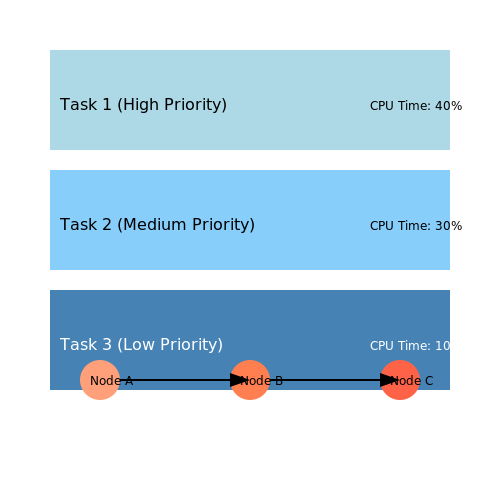
4. Digital Filtering
4.1 Digital Filtering
Digital filtering is a crucial aspect of signal processing, particularly in the context of Digital Signal Controllers (DSCs). DSCs, with their ability to efficiently process digital signals in real-time, leverage filtering techniques to enhance signal quality and extract pertinent information from noisy data. In this section, we will delve into the foundational concepts of digital filtering, exploring its types, design techniques, and practical applications relevant to DSCs.
Understanding Digital Filters
At its core, a digital filter is an algorithm that applies mathematical operations to a discrete-time signal to achieve a desired output. Unlike analog filters, digital filters provide greater flexibility in terms of functionality, precision, and adaptation. They utilize numerical methods to manipulate various frequency components, either attenuating or amplifying specific ranges of frequencies. This enables engineers to fine-tune the response characteristics according to the application at hand.
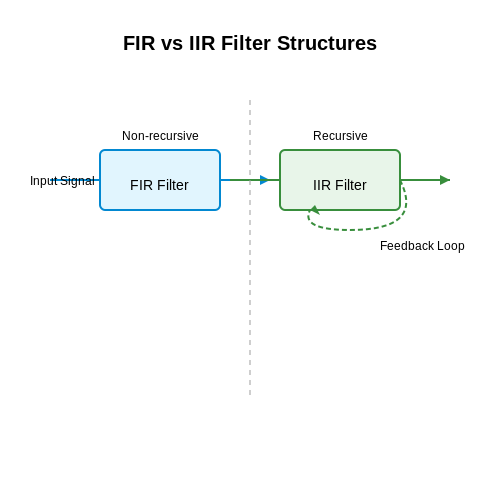
Digital filters can be broadly categorized into two types: FIR (Finite Impulse Response) and IIR (Infinite Impulse Response) filters. The choice between FIR and IIR often depends on the specific requirements of the application—such as response time, computational efficiency, and stability.
FIR Filters
FIR filters are characterized by having a finite response to an impulse input. The output of an FIR filter depends only on a finite number of past input samples. Mathematically, the output signal \( y[n] \) can be expressed as:
where \( b_k \) represents the filter coefficients, \( M \) is the number of coefficients (or the filter order), and \( x[n-k] \) is the input signal. FIR filters possess several advantages, including inherent stability and the ability to design linear-phase responses.
IIR Filters
In contrast, IIR filters have an infinite impulse response due to the feedback mechanism incorporated into their structure. The output signal \( y[n] \) can be described by:
Here, \( a_j \) denotes the feedback coefficients, making IIR filters potentially more efficient in achieving a specified frequency response with fewer resources compared to FIR filters. However, careful design is necessary to ensure stability.
Design Techniques and Considerations
When designing digital filters for DSC applications, several considerations must be taken into account:
- Frequency response requirements: Define the desired cutoff frequencies, passband, and stopband characteristics.
- Stability: Ensure that the filter remains stable under all input conditions, particularly in IIR designs.
- Implementation complexity: Optimize the filter for efficiency based on the computational capabilities of the DSC.
Various design methods, such as the Windowing method for FIR design and the Bilinear transform for IIR filters, allow engineers to create tailored solutions for specific applications. For example, in motor control applications, precise filtering is crucial for eliminating high-frequency noise from sensor data, thereby ensuring stable and accurate control metrics.
Applications in Digital Signal Controllers
The practical relevance of digital filtering in DSCs is evident across a variety of fields:
- Sensor data processing: Digital filters help clean up the raw data from sensors used in robotics, automotive systems, and industrial automation, allowing for more accurate and meaningful analysis.
- Audio signal processing: In audio applications, filtering is essential to remove noise and enhance sound quality.
- Communications systems: Filters play a critical role in modulating and demodulating signals in communications, ensuring clarity and reducing interference.
In conclusion, digital filtering serves as a cornerstone in the processing capabilities of DSCs. By effectively utilizing FIR and IIR techniques, engineers can enhance the performance of various applications, from robotic control systems to audio enhancement. Understanding the underlying principles and design strategies will enable professionals to develop robust and efficient signal processing solutions in their respective fields.
4.2 Signal Sampling and Reconstruction
In digital signal processing, particularly when using Digital Signal Controllers (DSC), understanding the concepts of signal sampling and reconstruction is essential. Sampling refers to the process of converting a continuous-time signal into a discrete-time signal, allowing it to be processed by digital systems. Reconstruction is the reverse process, where the discrete representation is transformed back into a continuous form. This section delves into the techniques and underlying principles governing these processes, providing both theoretical foundations and practical implementations.
Understanding Sampling
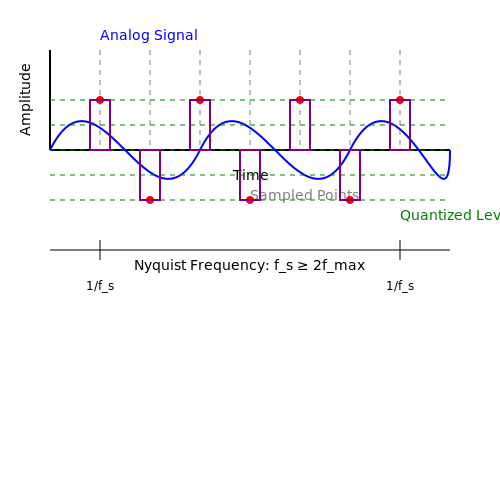
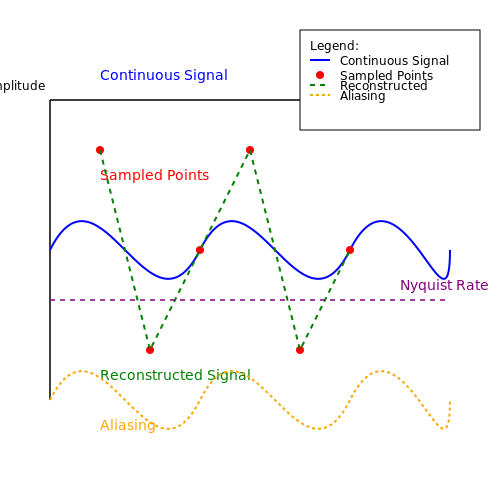
The core principle of sampling is captured by the Nyquist-Shannon sampling theorem, which states that a continuous signal can be completely reconstructed from its samples if it is sampled at a rate greater than twice its highest frequency component, termed the Nyquist rate. Mathematically, if \(f_m\) is the maximum frequency of the signal, the sampling frequency \(f_s\) must satisfy:
If the sampling frequency meets this criterion, the original signal can be perfectly reconstructed from its samples without any loss of information. Failing to adhere to this principle leads to aliasing, where higher frequency components become indistinguishable from lower frequencies. This phenomenon can drastically affect the system's performance, leading to erroneous outputs.
Practically, implementing an optimal sampling rate is crucial. In audio applications, for example, CD-quality audio is sampled at 44.1 kHz, accommodating the highest audible frequencies. In contrast, signals such as those from sensors may have different rates depending on their specific characteristics and environment.
Sampling Techniques
Several sampling techniques exist, each with distinct advantages and applications:
- Uniform Sampling: Involves taking samples at regular intervals. This technique is simple and widely used.
- Non-uniform Sampling: Samples are taken at irregular intervals, often used in applications where the signal characteristics vary significantly over time.
- Zero-crossing Sampling: Samples are triggered based on the points where the signal crosses zero, which can be effective in capturing certain characteristics of specific signals.
Reconstruction Techniques
Once the signal has been sampled, the next critical step is reconstruction. The process generally requires the use of interpolation techniques to create a continuous representation from the discrete samples. The most common methods include:
- Ideal Reconstruction: Utilizes a sinc function to perfectly reconstruct the original signal. This method, while theoretically perfect, is not feasible in practice due to its non-causal nature.
- Linear Interpolation: A straightforward approach where the value of intermediate points is linearly estimated. It is easy to implement but may introduce noticeable errors, particularly in rapidly changing signals.
- Cubic Spline Interpolation: Provides more sophisticated interpolation by joining piecewise cubic polynomials, resulting in a smoother reconstructed signal with reduced artifacts.
The choice of reconstruction technique significantly impacts the quality of the output signal. A poorly chosen method can lead to distortions or artifacts that compromise the integrity of the signal processing system.
Applications and Practical Implications
The principles of signal sampling and reconstruction are foundational across numerous fields including telecommunications, audio signal processing, and biomedical engineering. For example, in telecommunications, signals are often digitized for transmission over networks, necessitating careful consideration of sampling rates to prevent data loss. Similarly, in biomedical applications, sensors continuously sample signals from the human body, making real-time processing and accurate reconstruction critical for medical diagnostics.
Advancements in DSC technologies have enabled engineers to optimize these processes, implementing sophisticated digital filters and dynamic sampling techniques that enhance system performance while ensuring fidelity in signal reconstruction.
As we explore more advanced topics in DSC, a solid understanding of sampling and reconstruction lays the groundwork for developing complex algorithms and applications in modern digital signal processing.
4.3 Control Algorithms
Control algorithms are at the heart of Digital Signal Controllers (DSCs), empowered by their ability to process high-speed signals while executing complex mathematical computations essential for control system applications. These algorithms allow DSCs to manage real-time systems effectively, such as motor control, digital filtering, and adaptive control systems in various industrial and consumer applications.
At its core, a control algorithm can be seen as a systematic approach to manipulating system inputs based on feedback from outputs to achieve desired performance goals. For DSCs, this often includes techniques such as Proportional-Integral-Derivative (PID) control, feedforward control, and state-space control.
Fundamental Control Strategies
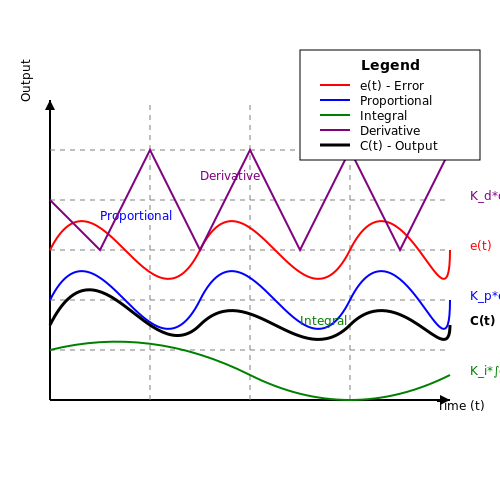
One of the most widely implemented control algorithms is the PID controller, which combines three fundamental actions: proportional, integral, and derivative. The output of the PID controller can be expressed mathematically as:
Where:
- C(t) is the controller output.
- e(t) is the error signal, representing the difference between the desired setpoint and the measured output.
- K_p, K_i, and K_d are the proportional, integral, and derivative gains, respectively.
Understanding PID Control
The proportional term provides a control output that is proportional to the current error, which is crucial for stabilizing system behavior. The integral term accumulates the error over time, which helps eliminate steady-state error, while the derivative term predicts future error based on its rate of change, providing dynamic response adjustments.
In practice, enhancing a PID controller's performance often requires tuning these gains, a method recently bolstered by algorithms capable of adapting during runtime to changing system dynamics. For a deeper comprehension, feedback is vital as it allows the continuous adjustment of the control input, ensuring that the system maintains the desired response under variable conditions.
Other Control Techniques
While PID is a prevalent choice, numerous other algorithms exist, including:
- Sliding Mode Control: A robust control strategy that alters the dynamics of systems to follow a predefined sliding surface.
- Model Predictive Control (MPC): A method that optimizes control inputs by predicting future outputs, allowing for a broader range of constraints to be addressed.
- Fuzzy Logic Control: A rule-based approach that mimics human reasoning, incorporating vague and imprecise information.
Each of these strategies can be effectively implemented within a DSC, ensuring optimal performance in various applications ranging from industrial automation to robotics and automotive systems.
As the field continues to evolve, the integration of artificial intelligence (AI) and machine learning (ML) into control algorithms is becoming more prevalent, facilitating adaptive strategies that can learn from their environment and optimize performance in real-time.
In contemplating the significance of control algorithms within the context of DSCs, it is essential to recognize that they not only enhance system performance but also contribute to energy efficiency, reliability, and overall functionality in complex circuit and system designs.
5. Real-Time Signal Processing
5.1 Real-Time Signal Processing
Digital Signal Controllers (DSCs) serve as pivotal components in modern engineered systems, where they are tasked with managing signals in real-time. This subsection delves into the intricacies of real-time signal processing, outlining its fundamental components, methodologies, and applications. We will explore how DSCs facilitate complex signal manipulations, which are essential for achieving high performance across a range of applications.
Understanding Real-Time Signal Processing
Real-time signal processing involves the analysis, transformation, and synthesis of signals within a strict time limitation, enabling immediate response to signal dynamics. The key aspects that define real-time processing include:
- Latency: The delay introduced in the processing of signals; it must be minimized to maintain system responsiveness.
- Throughput: Refers to the amount of data processed in unit time, vital for maintaining signal flow and ensuring operational efficiency.
- Predictability: The ability to consistently meet timing requirements, allowing for a reliable system performance in critical applications.
Fundamental Components of DSCs in Signal Processing
DSCs are engineered with hardware and software components optimized for real-time tasks. Key hardware features include:
- Integrated DSP Engines: These cores perform complex mathematical operations, such as Fast Fourier Transforms (FFT), facilitating frequency domain analyses crucial for effective signal manipulation.
- High-speed A/D and D/A Converters: High resolution and fast sampling rates are essential for accurately capturing and outputting signals, thereby enhancing the fidelity of real-time processing.
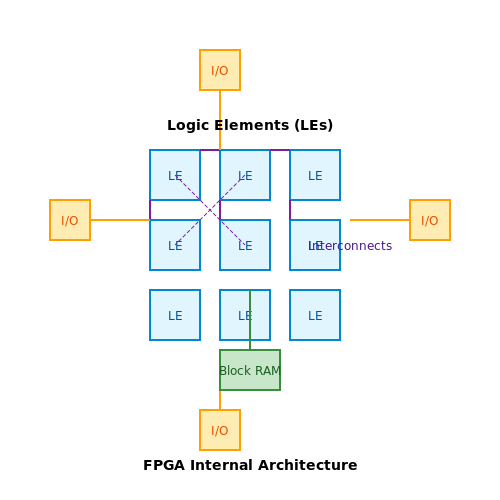
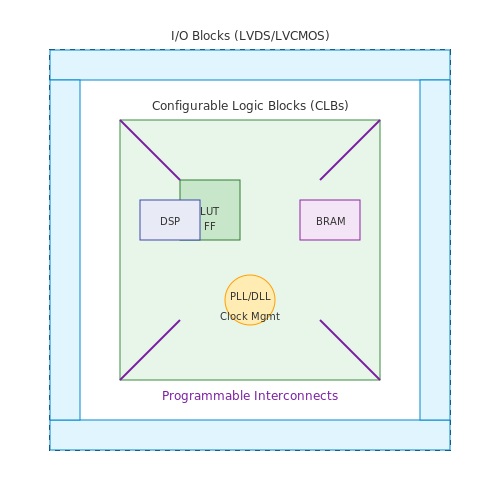
- Field-Programmable Gate Arrays (FPGAs): Often employed for rapid prototyping and customization of processing algorithms, FPGAs allow for extensive parallel processing capabilities.
Theoretical Foundations
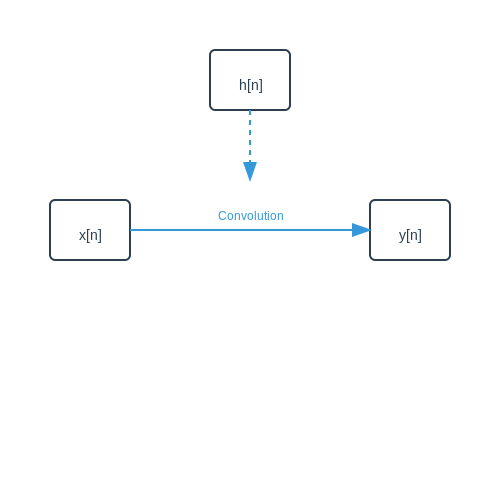
To mathematically model real-time signal processing, consider a discrete-time system where the input signal \( x[n] \) is transformed via a linear time-invariant (LTI) system characterized by its impulse response \( h[n] \). The output \( y[n] \) can be expressed as:
This convolution operation illustrates how current input values and previous states interact to yield the output at a given time, forming the backbone of many digital signal processing algorithms.
Practical Applications
The efficiency and reliability of real-time signal processing using DSCs find applications across various domains, including:
- Automotive Systems: Real-time analysis of signals from sensors in vehicles enhances safety features, such as anti-lock braking systems and adaptive cruise control.
- Telecommunications: Quick and efficient processing of voice and data signals ensures quality of service in mobile and landline communications.
- Medical Devices: Real-time monitoring and processing of physiological signals enable immediate medical interventions, improving patient outcomes in critical care.
Case Studies
Numerous researchers have explored real-time signal processing within the framework of DSCs. For instance, recent advancements in wireless sensor networks demonstrate significant latency reductions in environmental monitoring systems, attributing improvements to the adoption of DSC architectures centered on real-time processing capabilities.
As we progress further into newer realms of technology such as the Internet of Things (IoT) and artificial intelligence, the role of real-time signal processing continues to expand across a broad array of applications, making the mastery of underpinning concepts essential for engineers and researchers alike.
5.2 Handling Noise and Distortion
In the realm of Digital Signal Controllers (DSCs), noise and distortion present significant challenges that demand sophisticated mitigation strategies. Understanding these interferences — their origins, effects, and potential remedies — is crucial for engineers and researchers striving for signal integrity in complex systems.
Sources of Noise in Digital Signal Processing
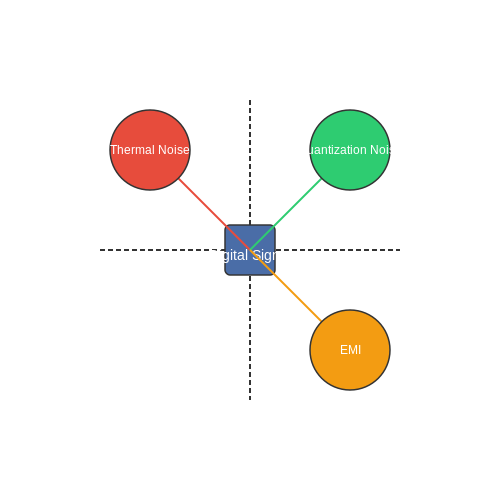
Noise can be broadly classified into several categories, including thermal, quantization, and electromagnetic interference (EMI). Each type of noise interacts differently with digital signals, influencing system performance. For instance:
- Thermal Noise: Generated by the random motion of charge carriers in resistive materials, thermal noise is a universal phenomenon that can affect both analog and digital signals.
- Quantization Noise: Arising during the analog-to-digital conversion process, quantization noise results from the finite resolution of the digital representation of the analog signal.
- Electromagnetic Interference (EMI): External sources such as motors, RF transmitters, and other electronic devices can introduce noise that modulates the signal integrity.
Characterizing Distortion
Distortion refers to the alteration of the original signal shape. It can be induced by non-linearities in the signal processing chain, including the transfer characteristics of components and filtering operations. Analyzing distortion often involves examining the harmonic content of the signal and using tools such as Fourier transforms to ascertain the signal's fidelity. One mathematical concept to understand in this context is the total harmonic distortion (THD), defined as:
Where \( A_1 \) is the amplitude of the fundamental frequency and \( A_n \) are the amplitudes of harmonic frequencies.
Mitigation Strategies
To combat noise and distortion, several techniques are implemented in DSC applications. These methods range from hardware solutions to advanced signal processing algorithms.
Hardware Techniques
Implementing proper circuit design practices plays a pivotal role in minimizing noise. Potential techniques include:
- Shielding: Using conductive enclosures can effectively reduce EMI ingress.
- Differential Signaling: Employing differential signals can enhance rejection of common-mode noise.
- Filtering: Analog and digital filters help in attenuating unwanted frequency components from signals.
Software Techniques
On the software side, numerous algorithms can actively improve signal quality:
- Adaptive Filtering: This technique utilizes algorithms that continuously update filter parameters for noise cancellation based on input characteristics.
- Noise Shaping: By distributing noise over a broader spectrum, specific frequencies can be reserved for signal data, thus enhancing signal quality.
- Sampling Theory Optimization: Following the Nyquist-Shannon sampling theorem, appropriate sampling rates can minimize distortion due to aliasing.
Real-World Applications
The importance of handling noise and distortion is illustrated in various applications, such as:
- Audio Processing: Ensuring high fidelity in music production and reproduction systems.
- Communication Systems: Maintaining the integrity of data in wireless and fiber-optic networks.
- Industrial Control Systems: Enhancing signal fidelity for sensor data in automation applications.
Advanced understanding and effective handling of noise and distortion are essential for achieving optimal performance across a wide array of digital signal applications. As technology progresses, ongoing research continues to unveil new methods and materials to address these persistent challenges.
5.3 Integration with Other Systems
Digital Signal Controllers (DSCs) have become vital components in modern electronics, providing a sophisticated level of processing in applications ranging from motor control to digital audio processing. Once understanding the standalone capabilities of DSCs, it is essential to explore how they can be effectively integrated with various other systems to amplify their functionality and achieve enhanced performance.
Understanding System Integration
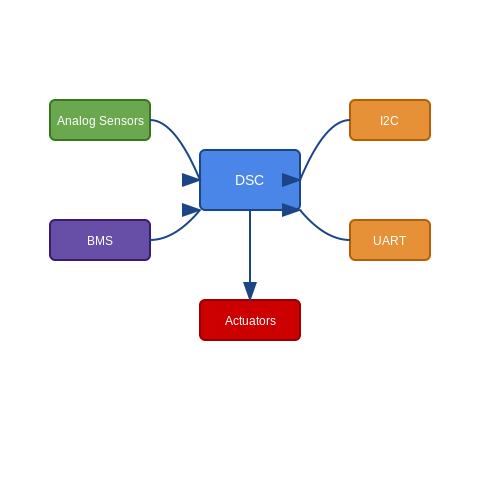
Integration typically involves combining multiple subsystems into a cohesive and functional whole. In the context of DSCs, this can refer to their interaction with sensors, actuators, communication modules, and other processing units. The ability of DSCs to operate effectively in such integrated environments is largely due to their inherent architecture, which often includes various interfaces such as PWM (Pulse Width Modulation), ADC (Analog-to-Digital Converters), and communication protocols like SPI (Serial Peripheral Interface) or I2C (Inter-Integrated Circuit).
Peripheral Interfacing
To achieve effective integration, DSCs utilize a range of peripheral interfacing options. For instance:
- Analog Sensors: DSCs often include built-in ADCs to convert signals from analog sensors to digital format. This conversion is crucial in applications such as temperature monitoring or position feedback in motor control systems.
- Communication Interfaces: DSCs support various communication protocols, allowing them to exchange data with other devices. For example, I2C can be used for communication with peripheral sensors, while UART (Universal Asynchronous Receiver-Transmitter) can facilitate communication with higher-level processing systems or HMIs (Human-Machine Interfaces).
- Actuator Control: Pulses generated by DSCs can control actuators in mechanisms such as servo motors, leveraging PWM signals to regulate speed and position accurately.
Real-World Applications of DSC Integration
To illustrate the practical application of integrating DSCs, consider the automotive sector. DSCs are increasingly being integrated into Electric Vehicles (EVs) for managing the battery systems and motor control. By interfacing DSCs with battery management systems (BMS), they can perform real-time monitoring of battery health, state of charge (SoC), and temperature, optimizing performance and ensuring safety.
Moreover, in robotic applications, DSCs can be combined with various sensors such as LIDAR and ultrasonic distance sensors, allowing robots to navigate their environment effectively. The instantaneous signal processing capabilities of DSCs enable them to react in real-time, providing agility and precision in these systems.
Impact of Real-Time Processing
The power of DSCs lies in their ability to process signals in real time, influencing the overall performance of the system. For instance, in audio applications, DSCs can integrate with Digital Signal Processing (DSP) technologies to enhance sound quality in consumer electronics. By manipulating audio signals dynamically, they can adjust equalization, suppress noise, or apply effects in real time. This capability dramatically improves the user experience in audio devices.
Design Considerations for Integration
When considering the integration of DSCs into existing systems, several design considerations must be taken into account:
- Power Consumption: DSCs are designed for efficiency, but careful attention must be paid during integration to ensure that overall power consumption remains within acceptable limits.
- Compatibility: It is crucial to ensure that the electrical, mechanical, and communication standards of paired components are compatible to avoid system failures.
- Scalability: The design should allow for scalability to incorporate future upgrades or expansions without significant redesign.
In conclusion, the integration of Digital Signal Controllers with other systems is not only crucial for enhancing their existing functionalities but also opens new avenues for innovation across various applications. By leveraging their real-time processing capabilities and modular architecture, engineers can develop sophisticated solutions that meet the demands of modern technology.
6. Common Issues and Solutions
6.1 Common Issues and Solutions
Understanding Common Issues in Digital Signal Controllers (DSC)
Digital Signal Controllers (DSCs) are robust components widely used in real-time applications, blending the functionality of microcontrollers with the processing capabilities of Digital Signal Processors (DSPs). However, like any sophisticated technology, they encounter a range of common issues. This section delves into these challenges, examining their underlying causes and presenting effective solutions.Timing Issues
One prevalent challenge in implementing DSCs is timing issues, which can stem from various sources, including clock inaccuracies, unanticipated interruptions, and algorithm complexity. These discrepancies can lead to incorrect outputs or even system failure. In a DSC, precise timing is essential for signal processing applications, where even minor lags or errors can significantly alter the signal. Companies often employ phase-locked loops (PLLs) or clock dividers to overcome such inaccuracies. By synchronizing the internal clock of the DSC with an external time reference, engineers can ensure the correctness of timing for functions such as PWM (Pulse Width Modulation) and ADC (Analog-to-Digital Conversion). Furthermore, optimizing code execution by reducing interrupt priorities or employing real-time operating systems (RTOS) can help mitigate timing deviations. RTOS provides task scheduling and prioritization, ensuring that critical functions receive necessary processing time, thus enhancing the overall reliability of signal processing tasks.Signal Distortion
Signal distortion can manifest due to non-ideal components, insufficient bandwidth, or improper signal amplification. It is vital to understand the sources and types of distortion—such as harmonic distortion and intermodulation—to implement effective corrective measures. To address signal distortion, one efficient approach is to employ filtering techniques. A digital filter can be designed to remove unwanted frequencies, thereby restoring the signal integrity. Common filtering methods include low-pass, high-pass, and band-pass filters, which can be realized through both software and hardware implementations. The design of these filters heavily relies on the Z-transform, which provides the necessary insight into the filter's behavior in the discrete domain. For a simple digital low-pass filter characterized by a cut-off frequency \( f_c \), the transfer function can be expressed as:Power Management Challenges
Power management is another critical issue affecting DSC performance, especially in low-power applications. The challenge lies in maintaining efficiency while ensuring adequate performance tiers. Low-power states, dynamic voltage scaling, and sleep modes are strategies employed to minimize consumption. A practical solution involves implementing power management ICs (PMICs) that interact with the DSC to optimize the power delivery depending on the operational state. Additionally, understanding the power consumption profile can enhance design decisions. For example, techniques such as turning off unused peripherals and employing sleep modes can lead to significant energy savings. Moreover, thermal management is crucial since rising temperatures can impair performance and reduce longevity. Active and passive cooling methods, including heat sinks and thermal pads, are typically utilized in high-performance applications to mitigate these issues.Debugging and Testing Complications
Another significant hurdle in the deployment of DSCs is debugging and validating the various functionalities. Complex algorithms and real-time constraints complicate the testing processes. Traditional debugging methods may not suffice, particularly in real-time signal processing applications. Utilizing in-circuit emulators (ICE) and logic analyzers can present solutions for monitoring the system in real-time without disrupting the signal flow. These tools help observe the state variables and confirm expected signal outputs during execution. Effective logging practices along with hardware debugging tools enhance the ability to trace and identify issues in both the software and hardware domains.Design Integration Problems
Integrating DSC into existing systems can also pose challenges. Compatibility issues often arise when interfacing with other components, necessitating careful consideration of bus compatibility, voltage levels, and communication protocols. To navigate these challenges, engineers can employ signal conditioning and isolation techniques. By utilizing level shifters or isolated communication protocols such as RS-485 for long-distance transmission, system designers can ensure robust communication between modules, subsequently minimizing errors due to mismatched logic levels or signal integrity issues. Through understanding these common issues and employing targeted solutions, engineers can optimize their use of Digital Signal Controllers in various applications, enhancing both performance and reliability. In summary, addressing the challenges associated with DSCs involves a multi-faceted approach, leveraging hardware and software techniques, while continually tuning the application to meet both user requirements and operational constraints. Continuous innovation in design methods and real-world testing ensures that DSCs remain a vital component in the field of electronics and emerging technologies.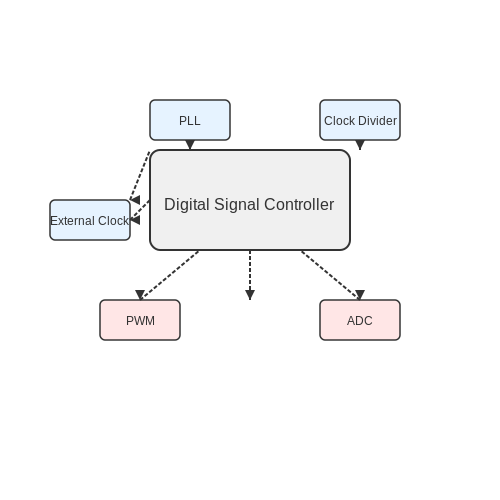
6.2 Performance Optimization Techniques
In the realm of Digital Signal Controllers (DSCs), optimizing performance is essential for various applications, ranging from automotive systems to consumer electronics. To harness the full potential of DSCs, several strategies can be employed that target efficiency, processing speed, and power consumption. Understanding these techniques requires not only grasping the theoretical underpinnings but also applying them in real-world scenarios.Understanding Performance Metrics in DSCs
Before delving into optimization techniques, it is crucial to understand the key performance metrics that govern the efficacy of DSCs. These metrics typically include:- Processing Speed: Measured in MIPS (Million Instructions Per Second), this indicates how quickly a DSC can execute instructions.
- Power Consumption: Refers to the energy required for the DSC to perform operations, often expressed in milliwatts (mW).
- Latency: The time taken to process a signal input to output, adversely affecting real-time applications if excessive.
- Throughput: The amount of data processed successfully in a given time frame, usually measured in bits per second (bps).
1. Efficient Resource Utilization
Maximizing the performance of DSCs begins with efficient resource utilization. This can be achieved through several approaches:- Memory Optimization: Careful management of RAM and Flash storage can prevent bottlenecks. Techniques include using circular buffers for data streams instead of static arrays, thereby reducing memory overhead.
- Data Type Optimization: Using appropriate data types can lead to reduced memory usage and faster processing times. For example, using 16-bit integers instead of 32-bit can dramatically enhance performance in computation-constrained environments.
2. Algorithm Optimization
The algorithms employed in DSC applications play a critical role in determining overall performance. For instance: - Implementing Fast Fourier Transform (FFT) algorithms instead of the basic discrete Fourier transform can expedite processing times significantly in signal analysis. - Utilizing adaptive filters instead of fixed filters can enhance signal processing in varying environments, improving performance in real-time systems.3. Hardware Acceleration
Hardware components in DSCs can be optimized to facilitate better performance. This includes: - Digital Signal Processing (DSP) Blocks: Many DSCs come with built-in DSP blocks specifically designed for high-performance numerical calculations, which can offload processing from the general processor, leading to more efficient execution. - Parallel Processing: Leveraging multiple cores or parallel execution units can lead to significant performance improvements. For example, using SIMD (Single Instruction, Multiple Data) techniques can enable simultaneous processing of multiple data points.4. Clock Speed Management
Adjusting the clock speed of the DSC can also optimize performance based on the load: - Dynamic Voltage and Frequency Scaling (DVFS): This technique adjusts the voltage and frequency according to computational load, thereby minimizing power consumption while providing adequate performance. For example, reducing frequency during idle status can extend battery life without compromising performance during data processing.5. Code Optimization Techniques
Lastly, optimization at the software level is paramount: - Loop Unrolling: This technique involves expanding the loop into a series of sequential actions to reduce the overhead of loop control. While it can increase code size, it can substantially decrease the execution time for calculations. - In-lining Functions: Replacing function calls with the function's actual code can reduce overhead and speed up execution, especially in frequently called functions.Conclusion
By employing these performance optimization techniques, engineers can enhance the operational efficiency of DSCs across various applications. Each technique addresses unique aspects of performance, allowing for tailored solutions based on specific project requirements. As digital signal processing demands grow, mastering these optimization methods becomes increasingly critical. This continuous pursuit of efficiency not only leads to better performance outcomes but also fosters innovation in the rapidly evolving field of digital signal processing.7. Books and Textbooks
7.1 Books and Textbooks
- Digital Signal Controllers: Architecture, Programming, and Design Guide — This book provides a comprehensive introduction to DSCs, covering architecture, programming methodologies, and design strategies essential for development in advanced digital systems.
- Practical Digital Signal Processing for Engineers and Technicians — Geared towards practical application, this book focuses on real-world scenarios where digital signal processing principles are applied using DSC devices.
- Digital Signal Processing: Principles, Algorithms, and Applications — This text delves into the fundamental principles and algorithms of digital signal processing, with added sections on implementations using digital signal controllers.
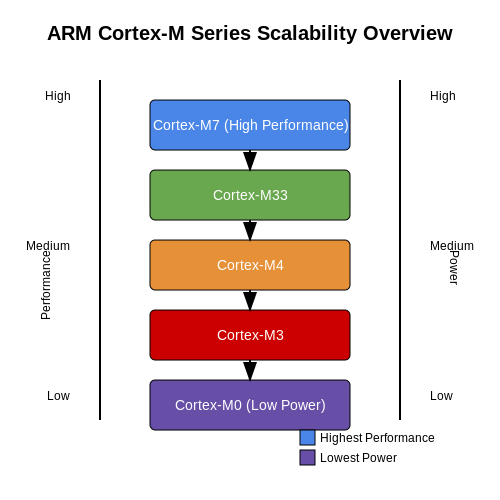
- Digital Signal Processing Using the ARM Cortex-M4 — Specific to the ARM Cortex-M4 DSCs, this book provides a detailed exploration of programming techniques for high-efficiency digital signal computation and its applications.
- Digital Signal Processing with DSP Microcontrollers — Focusing on DSP microcontrollers, including DSCs, this book covers hardware aspects, software development, and implementation in signal processing applications.
- Microcontrollers: Principles and Applications — A well-rounded introduction to microcontrollers with insights into their applications in digital signal processing and control systems, including in-depth discussions on DSCs.
- Digital Signal Processing in Power System Protection and Control — This resource emphasizes the use of digital signal processing technologies, such as DSCs, in power system protection and control scenarios, offering practical engineering insights.
7.2 Research Articles and Papers
- IEEE Journals & Magazines — A comprehensive collection of research articles and papers covering all aspects of electronics, including digital signal controllers. IEEE Xplore is a leading source of professional research in electrical engineering, computer science, and electronics.
- Journal of Systems Architecture — This journal offers cutting-edge research articles related to the architecture design of embedded systems, including the latest advancements in digital signal controllers.
- ACM Transactions on Embedded Computing Systems — Provides influential research papers and articles on modern embedded systems, focusing on advancements in digital signal controllers and their applications.
- Electronics (MDPI) — An open-access journal providing the latest research findings in electronics. It frequently publishes papers on digital signal control technology and its real-world applications.
- Analog Integrated Circuits and Signal Processing — Publishes peer-reviewed papers on both analog and digital signal processing methods, including the design and application of digital signal controllers.
- Journal of Neural Engineering — Explores cutting-edge research in the intersection of electronics and neuroscience. It includes articles discussing the application of digital signal controllers in medical devices and neural interfaces.
- Digital Signal Processing and its Applications Journal — Features articles and papers on digital signal processing techniques, emphasizing their implementation in digital signal controllers for various industrial applications.
- IntechOpen: Electrical, Electronic and Information Engineering — Open access books and journals focusing on various aspects of electronics engineering, offering valuable insights into digital signal controllers and other electronic systems.
7.3 Online Resources and Tutorials
- Microchip Technology Webinars — Offers a series of webinars and online tutorials focusing on the use of Digital Signal Controllers for various applications. These resources are aimed at both novice and advanced users by providing real-world examples and implementation strategies.
- EDN Network - DSC Design Articles — This platform posts in-depth articles about DSC applications, including real-world case studies. Highly recommended for engineers looking to enhance their understanding of DSC integration in diverse systems.
- Texas Instruments - DSC Educational Resources — Texas Instruments provides comprehensive documentation and educational materials specifically tailored for digital signal controllers, including datasheets and development guides.
- EE Times - DSP & Controllers — A leading source of news, analysis, and opinion for electronics industry professionals, with extensive coverage on digital signal controllers and DSP applications.
- DSPRelated.com — A dedicated portal for DSP-related tutorials, forums, and peer-to-peer technical discussions. It includes a focus on digital signal controllers and their role in modern electronics design.
- Design & Reuse - Digital Signal Controllers Trends — Articles and research papers highlighting the trends and emerging applications of DSCs, useful for engineers and researchers keeping abreast of the latest technological advancements.
- Element14 Community - Learning Center — Provides a platform for collaboration and sharing of knowledge among electronics enthusiasts and professionals, featuring resources and discussions related to digital signal controllers.