Data Acquisition Systems
1. Definition and Purpose
1.1 Definition and Purpose
A Data Acquisition System (DAS) is an integrated system designed to collect, measure, and analyze physical phenomena or conditions, such as temperature, pressure, humidity, and other environmental factors. These systems are fundamental in various fields, including engineering, physical sciences, biomedical applications, and industrial automation. By converting physical signals into a digital format, DAS enables more precise measurements and data analysis, assisting in decision-making processes.
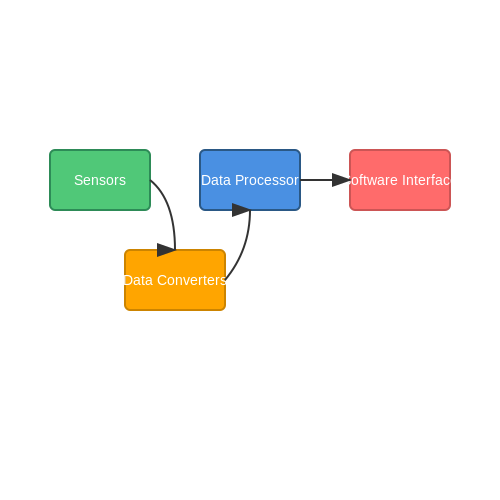
At its core, a DAS comprises hardware and software components that work in harmony to execute its functions. The hardware typically includes sensors, data converters, and a data collector or processor, while the software encompasses data processing algorithms and user interfaces. This design allows for real-time monitoring and control, as well as post-analysis of the collected data.
The purpose of employing a data acquisition system extends beyond simple measurement. It serves several critical functions:
- Real-Time Monitoring: DAS facilitates the continuous observation of dynamic processes, allowing users to respond swiftly to fluctuations in system behavior.
- Data Recording: High-accuracy recording of parameters aids in future analysis and can provide valuable insights for predictive maintenance or system optimization.
- Environmental Control: By monitoring and regulating conditions, DAS contributes to maintaining desired operational environments, particularly in sensitive applications such as laboratory experiments or manufacturing processes.
- Research and Development: DAS is crucial in experimental setups, providing researchers with the necessary tools to gather data that can validate or challenge existing theories.
To illustrate the importance of data acquisition systems, consider the example of environmental monitoring for climate research. In such applications, sensors gather data on temperature, humidity, and atmospheric pressure across various geographic locations. This information is subsequently processed to track climate change patterns over time, which plays a significant role in developing effective environmental policies.
The evolution of data acquisition systems traces back to early analog devices and has progressed with advancements in computing and sensor technology. Modern DAS solutions can incorporate wireless technologies, enabling remote data collection and access to measurements in hard-to-reach locations. With their versatility and adaptability, data acquisition systems have become integral to both industrial and scientific pursuits.
In summary, data acquisition systems are essential tools in contemporary research and technology. As we delve deeper into the components and functionalities of these systems in subsequent sections, it is essential to appreciate how they transform raw data into actionable insights, influencing a wide range of applications and industries.
1.2 Key Components
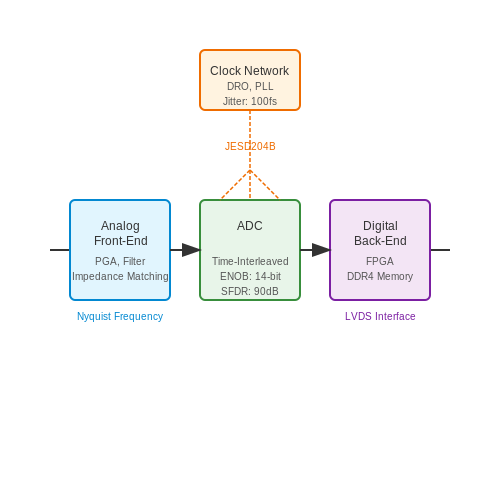
In a typical data acquisition system (DAS), several key components work in concert to ensure efficient and reliable data collection from various physical phenomena. Understanding these components is essential for engineers and scientists who design or utilize these systems in their work.Analog-to-Digital Converters (ADCs)
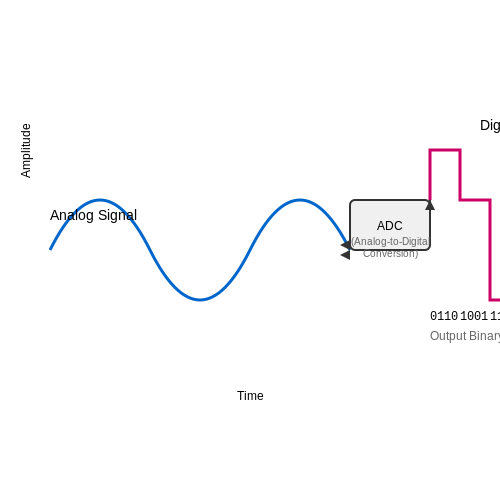
The Analog-to-Digital Converter is one of the most critical components in a data acquisition system, as it translates real-world analog signals into a digital format that can be processed. This conversion is fundamental for enabling high-level data manipulation and analysis by computers. ADCs function by sampling an analog signal at discrete intervals, followed by quantizing the measured voltage levels into discrete values. The resulting digital output is then typically represented in binary form, which can be processed by digital systems. The performance of an ADC can be characterized by several parameters, including resolution (measured in bits), sampling rate (samples per second), linearity, and signal-to-noise ratio (SNR). For example, in applications that require high precision, such as scientific instrumentation, a 16-bit ADC may be used, offering 65,536 discrete values (or levels) for quantizing the input signal. To illustrate this concept, consider how an ADC samples a sine wave signal. If we have a sine wave with an amplitude of 5V and a frequency of 1kHz being sampled at a rate of 10kHz, the ADC would take 10 samples for each complete cycle of the sine wave. The sampled points, after quantization, would be represented as a series of binary values, forming the basis for further signal processing.Signal Conditioning
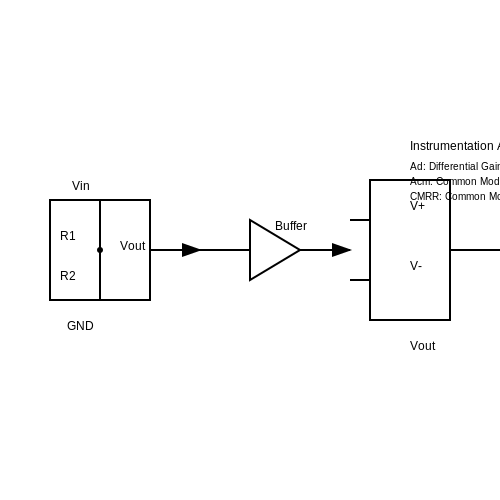
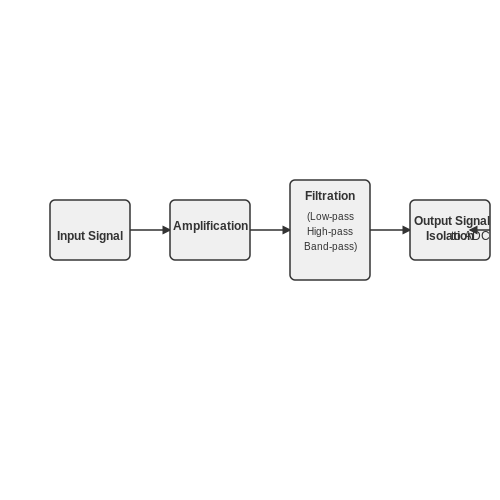
Signal conditioning plays a pivotal role in enhancing the quality of the signals before they are passed to the ADC. Raw signals from transducers may contain noise, drift, or irrelevant frequencies that can degrade the quality of the data. Therefore, signal conditioning circuits are employed to manipulate the input signals to a more suitable format. Common types of signal conditioning include:- Amplification: Boosting the signal amplitude to ensure it falls within the ADC's input range.
- Filtering: Removing unwanted frequency components, typically using analog filters (low-pass, high-pass, band-pass).
- Isolation: Protecting the data acquisition system from high voltages or currents by using isolators.
Data Acquisition Hardware
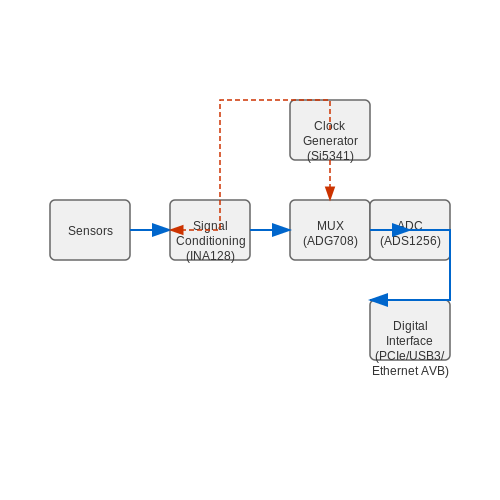
Data acquisition hardware encompasses all the physical devices used to collect data, including sensors, data converters, and their associated circuitry. Sensors, the frontline components, directly measure physical quantities like temperature, pressure, or light intensity and deliver these measurements to signal conditioning modules linked to ADCs. The choice of sensor is critical, as it determines the sensitivity and range of the measurement. For example, thermistors are excellent for precise temperature measurements in a limited range, while RTDs (Resistance Temperature Detectors) can offer greater stability over wider temperature ranges. Moreover, data acquisition systems may include multiplexers, which allow multiple sensors to share a single ADC channel. This reduces costs and complexity but can introduce challenges regarding timing and sampling rate, as switching times must be accounted for to ensure accurate readings.Data Storage and Interpretation
After conversion and conditioning, the digital data is typically stored in some form of data storage, which allows for later retrieval and analysis. Modern systems employ various forms of storage, ranging from simple memory chips to complex databases, depending upon the size of the data sets and the intended applications. Following data acquisition, interpretation involves applying various algorithms and data analysis techniques. For engineers and researchers, understanding how to manipulate and display this data using software tools such as MATLAB, LabVIEW, or Python is equally as important as the physical measurement process. Visualizing the data through graphs or statistical analysis helps to elucidate trends and system behaviors. In conclusion, the integration of these key components—ADCs, signal conditioning, data acquisition hardware, and data storage and interpretation—creates a cohesive data acquisition system capable of transforming raw physical phenomena into valuable digital insights. This foundation paves the way for advanced applications in various fields, including automotive testing, environmental monitoring, and medical diagnostics, illustrating the versatility and importance of modern data acquisition systems.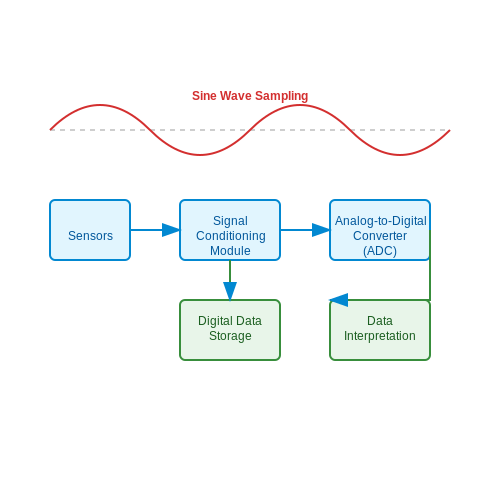
2. Analog vs Digital Systems
2.1 Analog vs Digital Systems
In the realm of data acquisition systems, an essential preliminary distinction exists between analog and digital systems. Understanding these two paradigms is fundamental for engineers and researchers, as they dictate the methods used for data collection, processing, and interpretation in various applications, ranging from environmental monitoring to industrial automation.
Defining Analog Systems
Analog systems operate with continuous signals that vary over time. These signals can represent physical phenomena such as temperature, pressure, or voltage by fluctuating in a way that mirrors the changes in those phenomena. A hallmark feature of analog systems is that they provide an infinite range of values, allowing for smooth and gradual changes in measurement.
For example, consider an analog temperature sensor, which might output a voltage that corresponds linearly to the temperature it measures. In this context, a voltage of 0.5V could represent 25°C, while 5V might indicate 100°C. This intrinsic relationship means that, theoretically, as the temperature changes continuously, the output signal does so as well.
The Role of Digital Systems
In contrast, digital systems operate with discrete signals. Rather than a continuous flow, they represent information in binary format—0s and 1s—led by the principles of digital electronics. These systems sample analog input signals at specific intervals and convert these samples into digital values through a process known as analog-to-digital conversion (ADC).
The advantages of digital systems lie in their robustness to noise and their ease of processing. For instance, a digital temperature sensor might convert the analog signal into a binary format, outputting values such as 11001 (which corresponds to a specific temperature). This digitized format can be easily manipulated, stored, and transmitted, making digital systems particularly advantageous in applications requiring high accuracy and reliability.
Key Differences Between Analog and Digital Systems
To further elucidate the distinctions between analog and digital systems, we can highlight several critical factors:
- Signal Representation: Analog systems convey information as continuous signals that change over a range, while digital systems encode data into discrete levels.
- Noise Immunity: Digital systems exhibit significant resistance to noise compared to analog due to their binary nature, allowing for clearer signal interpretation even in challenging environments.
- Processing Capabilities: Digital systems can employ complex algorithms and processing power to manipulate data, while analog systems generally utilize simpler methodologies.
- Storage and Transmission: Data from digital systems can be easily stored in various formats and transmitted over long distances without degradation, which is more challenging for analog signals.
- Real-World Applications: Analog systems remain prevalent in niche applications such as audio devices, while digital systems dominate in computing, telecommunications, and automation.
Practical Applications of Analog and Digital Data Acquisition Systems
The choice between analog and digital systems often depends on the application's specific requirements. In fields like healthcare, digital sensors are widely employed for patient monitoring systems due to their precision and reliability. Conversely, in audio engineering, analog systems can still be favored for their warm sound and fidelity in music production.
Furthermore, hybrid systems, which integrate both analog and digital components, are increasingly common. These systems leverage the strengths of both paradigms—using analog components for initial data acquisition and digital components for processing and analysis.
Conclusion
In summary, while analog and digital systems each have their distinct characteristics, the future of data acquisition technology lies not in a binary choice but in understanding the strengths and limitations of both. An adept engineer or researcher will appreciate that choosing the right system is context-dependent, often leading to innovative solutions in complex applications.
2.2 Multiplexed and Sampled Systems
Data acquisition systems are essential in various fields, including engineering, physics, and even biology. Among the multiple architectures available, multiplexed and sampled systems stand out due to their capacity to efficiently manage multiple signals while optimizing data collection processes. In this subsection, we explore the principles, applications, and benefits of these systems, providing the necessary theoretical foundation to understand their underlying mechanisms.
Understanding Multiplexing
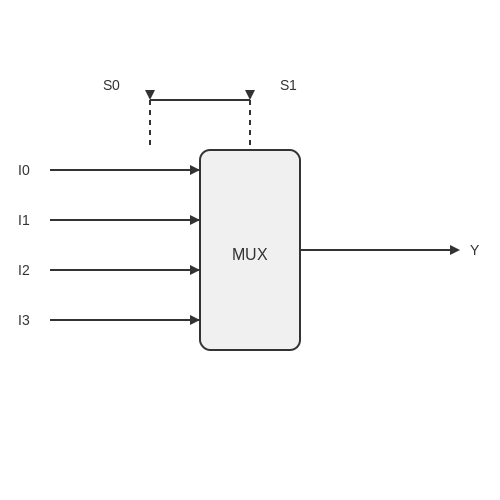
Multiplexing refers to the technique used to combine multiple input signals into a single output signal, allowing for efficient transmission and processing. In the context of data acquisition, multiplexers (MUX) enable the selection of one of several input channels to send to an analog-to-digital converter (ADC). This selection is accomplished using digital control signals.
As a practical example, consider a scenario where an environmental monitoring system collects temperature data from multiple sensors positioned across a city. Instead of employing individual wiring for each sensor, a multiplexer aggregates their input into a single data channel, significantly reducing wiring complexity and costs.
The Basics of a Multiplexer
A multiplexer can be visualized as a switch that opens specific connections based on the digital input signals. The simplest form is an n-to-1 multiplexer, which can select one of n inputs. For instance, a 4-to-1 multiplexer has four inputs and one output, where two control bits determine which input is selected.
The logic of the multiplexer can be quantified. The output \( Y \) as a function of inputs \( I_0, I_1, I_2, I_3 \) and control signals \( S_0 \) and \( S_1 \) is expressed as follows:
In this representation, the output \( Y \) will reflect the state of the selected input based on the control lines \( S_0 \) and \( S_1 \). This on-demand selection process is pivotal in multiplexed systems, reducing sample rates and improving overall system efficiency.
Sampling in Data Acquisition
Sampling, at its core, is the process of converting a continuous signal into a discrete one. This is crucial for digital systems as they cannot process continuous data directly. Sampling involves measuring the amplitude of the analog signal at specific time intervals, which is then quantized into a digital form by an ADC.
The sampling theorem, popularly known as the Nyquist theorem, states that to accurately reconstruct a continuous signal, the sampling frequency must be at least twice the maximum frequency of that signal. Formulated, this is:
In practice, this means if we want to digitize an audio signal that has a maximum frequency of 20 kHz, we must sample it at a frequency of at least 40 kHz. Oversampling can be utilized to provide a margin of safety, preventing aliasing effects—an undesirable folding of higher frequencies into the sampled signal.
Real-World Applications of Sampling
- Audio Processing: Digitally capturing sound waves for purposes such as music production, voice recognition, and telecommunications.
- Image Processing: Sampling is fundamental in digital imaging, where pixels are the sampled values of visual information.
- Sensor Data Logging: In industrial applications, sensors output continuous readings that must be sampled at appropriate intervals to avoid missing critical data points.
Combining Multiplexing and Sampling
In sophisticated data acquisition systems, multiplexing and sampling often occur concurrently. A multiplexer collects signals from multiple sources, while a sampling mechanism discretizes these signals for digital processing. This synergy allows systems to handle vast amounts of data efficiently without overwhelming storage or processing capabilities.
The combination of these technologies plays a crucial role in applications such as:
- Medical imaging systems, allowing multiple sensor inputs for diagnostics.
- Telecommunication systems, where bandwidth is conserved through multiplexed channels.
- Environmental monitoring, collecting diverse data types from remote locations with limited infrastructure.
As engineering and scientific inquiries become increasingly complex, understanding and utilizing multiplexed and sampled systems will remain fundamental. The efficiency and data-handling capabilities they present pave the way for innovations across various sectors, fundamentally altering how data is collected and utilized in real-time.
3. Sensor Types and Applications
3.1 Sensor Types and Applications
Data Acquisition Systems (DAS) are fundamental in modern engineering and scientific research, enabling precise measurement and analysis of physical phenomena. Central to these systems are sensors, which convert physical variables into signals that can be read and interpreted. Understanding the various types of sensors and their applications is critical for designing efficient data acquisition systems.
Overview of Sensor Types
Sensors can be classified based on the physical quantity they measure, their operating principles, and the nature of their output signals. The most prevalent categories include:
- Temperature Sensors: These sensors measure thermal energy. Common types are thermocouples, RTDs (Resistance Temperature Detectors), and thermistors. Each type has unique characteristics suited for specific applications, such as industrial processes or medical devices.
- Pressure Sensors: Devices such as piezoelectric sensors and capacitive pressure transducers are widely utilized to monitor pressure in various environments, from manufacturing to atmospheric science.
- Displacement Sensors: These include linear variable differential transformers (LVDTs) and capacitive displacement sensors, which are vital in industrial automation and robotics for detecting small movements.
- Flow Sensors: These measure fluid dynamics and include types like vortex flowmeters and magnetic flowmeters, which are critical in chemical manufacturing and automotive applications.
- Image Sensors: Found in cameras and video equipment, image sensors such as CCD (Charge-Coupled Device) and CMOS (Complementary Metal-Oxide-Semiconductor) convert light into electronic signals. Their use ranges from consumer devices to industrial inspections and surveillance systems.
Applications across Various Fields
Each type of sensor has specific applications that significantly benefit industries and technology:
Temperature Sensors in HVAC and Medical Devices
Temperature sensors are widely used in heating, ventilation, and air conditioning (HVAC) systems as part of climate control systems. In hospitals, thermocouples and RTDs provide critical measurements in patient monitoring systems, ensuring accurate temperature readings for patient safety.
Pressure Sensors in Automotive Engineering
Pressure sensors are integral to automotive systems, enabling the monitoring of tire pressure and engine parameters. These sensors ensure optimal performance and safety in vehicles by providing real-time feedback to drivers and onboard systems.
Displacement Sensors in Robotics
In robotics, displacement sensors enable precise positioning and movement control. LVDTs and optical encoders are essential for applications requiring high accuracy, such as robotic arms in assembly lines, allowing for complex tasks to be performed with precision.
Flow Sensors in Chemical Processing
The chemical industry relies heavily on flow sensors to regulate processes. For instance, vortex flowmeters are used to monitor the flow rates of fluids in reactors, ensuring that chemical reactions proceed safely and efficiently.
Image Sensors in Surveillance and Research
In the field of surveillance, image sensors are essential for capturing high-definition video feeds for security. In scientific research, low-light CCD sensors facilitate detailed astronomical imaging, enabling discoveries in astrophysics by capturing faint celestial objects.
Recent Advancements and Future Trends
The evolution of sensor technology is marked by advancements in miniaturization, integration, and connectivity. The integration of smart sensors with IoT capabilities allows for remote monitoring and data analysis, paving the way for innovations across fields such as smart homes, environmental monitoring, and industrial automation.
Furthermore, ongoing research into artificial intelligence (AI) applications is transforming how data collected by sensors is processed, leading to predictive maintenance and enhanced decision-making across various sectors.
In summary, the types of sensors used in data acquisition systems are diverse, and their applications are critical across numerous domains. Understanding these components enables engineers and researchers to select the appropriate sensors for their specific needs, thereby enhancing the efficacy of their data acquisition systems.
3.2 Selecting the Right Transducer
In the realm of data acquisition systems, the choice of transducer is paramount as it directly influences the fidelity and accuracy of the data collected. A transducer is a device that converts one form of energy into another, facilitating the measurement of physical quantities such as temperature, pressure, or motion. Selecting the appropriate transducer is a critical step that requires a thorough understanding of both the application requirements and the characteristics of various transducer types.
Understanding Transducer Types
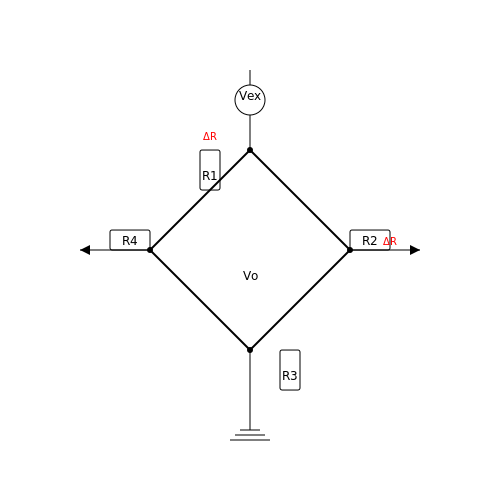
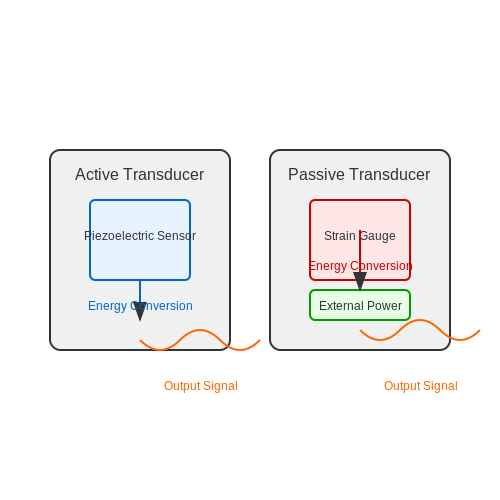
Transducers can be broadly categorized into two main types: active and passive transducers. Active transducers generate an output signal that is proportional to an input quantity without the need for an external energy source. Common examples include piezoelectric sensors and thermoelectric generators. On the other hand, passive transducers do not produce energy themselves; they require an external power supply to operate. Strain gauges and thermistors fall into this category.
The choice between active and passive transducers depends significantly on the application context:
- Power supply availability: If an external power source is easily accessible, passive transducers might be more advantageous due to their simpler designs.
- Signal output: Active transducers typically provide a higher signal output, which can be critical in applications requiring long-distance signal transmission.
Key Parameters for Selection
When selecting a transducer, several critical parameters should be carefully considered:
- Sensitivity: This defines the smallest change in the measured quantity that can be detected. It is essential for applications where minute differences are significant.
- Range: The operational range of the transducer must align with the expected levels of the input signal. Exceeding this range may lead to saturation and inaccurate readings.
- Linearity: A transducer should ideally provide a linear relationship between its output and the input. Non-linear responses can complicate calibration and data interpretation.
- Response Time: Time constraints in dynamic measurements necessitate a transducer with a suitable response time to track changes accurately.
- Environmental Considerations: Conditions such as temperature fluctuations, humidity, or exposure to corrosive substances can affect transducer performance and should be factored into the selection process.
Application-Driven Considerations
Real-world applications of data acquisition systems may impose unique requirements on transducer selection. For instance, in biomedical applications, specificity and reliability are paramount, and hence, selecting transducers such as bio-sensors that offer minimal invasiveness and high accuracy is essential. In industrial settings, where robust performance is necessary, choice might lean towards durable sensors capable of withstanding harsh conditions.
Case Study: Automotive Sensor Selection
In the automotive industry, sensors such as accelerometers and pressure transducers are crucial for vehicle stability and performance monitoring. Selecting the right type involves assessing factors including operating temperature, vibration tolerance, and integration with existing electronic systems. For instance, piezoelectric accelerometers are favored for their high sensitivity and dynamic range, ideal for real-time quality assurance in production lines.
Conclusion
The successful implementation of a data acquisition system is heavily reliant on the judicious selection of transducers. Understanding the diversity of transducer types, their operational parameters, and the specific demands of the application will facilitate the accurate measurement and control necessary in modern engineering endeavors.
4. Importance of Signal Conditioning
4.1 Importance of Signal Conditioning
In the realm of data acquisition systems, effective signal conditioning represents a critical process that ensures the reliability and accuracy of measurement data from analog signals prior to their digitization. As sensor outputs can often be erratic due to noise, impedance mismatches, or inadequate signal levels, the role of signal conditioning becomes essential in transforming these signals into a form that can be effectively processed by analog-to-digital converters (ADCs).
Understanding Signal Conditioning
Signal conditioning encompasses a range of processes and techniques designed to enhance signal integrity. These methods include amplification, filtration, and isolation, among others. Each function aims to prepare the signal for optimal performance in the data acquisition workflow.
- Amplification: Many sensors output weak signals, often in the millivolt range, which can be indistinguishable from noise. Amplifiers increase the signal strength to improve the signal-to-noise ratio (SNR).
- Filtration: Noise can be introduced from various sources, including electronic interference and environmental factors. Filters, including low-pass, high-pass, and band-pass configurations, are utilized to remove unwanted frequency components.
- Isolation: To prevent ground loops and ensure safety, isolators can be used to decouple the sensor from the data acquisition system, providing a stable reference point and protecting sensitive electronics.
Mathematical Representation of Signal Filtering
Consider a basic example of a first-order low-pass RC filter utilized in signal conditioning. The transfer function of this filter can be expressed as:
Here, \( H(s) \) represents the transfer function, \( s \) is the complex frequency, \( R \) is the resistance, and \( C \) is the capacitance. To understand how this filter operates, we can analyze its frequency response.
The cutoff frequency \( f_c \) can be derived from the time constant \( \tau = RC \), which marks the point where the output signal's amplitude begins to drop significantly compared to the input. The cutoff frequency is given by:
All signals above this frequency will be attenuated, while those below it are allowed to pass—effectively reducing noise in the desired frequency range.
Applications in Real-World Scenarios
Signal conditioning is not solely theoretical; it has profound impacts in various industries. For example, in biomedical engineering, accurate data acquisition from electrocardiograms (ECG) or electromyography (EMG) signals requires sophisticated signal conditioning to filter out noise and enhance diagnostics. Similarly, in industrial automation, accurate readings from temperature or pressure sensors, processed through appropriate conditioning, are crucial for ensuring system safety and efficiency.
Moreover, the integration of digital signal processing with signal conditioning techniques further expands the capacity to perform complex analysis, such as filtering and feature extraction, enabling the development of smart sensors capable of providing actionable insights.
Case Study: Fine-Tuning Sensory Applications
Consider a case study involving a temperature monitoring system in a manufacturing process. Fluctuations due to environmental changes could lead to inaccurate temperature readings. By implementing signal conditioning techniques—such as utilizing a low-noise amplification stage and filtering algorithms—the effective temperature readings were enhanced, leading to operational improvements and reduced wastage.
In conclusion, the importance of signal conditioning in data acquisition systems cannot be overstated; it is foundational in ensuring that data extracted from real-world phenomena is accurate, reliable, and actionable, bridging the gap between the analog and digital domains seamlessly.
4.2 Common Techniques for Signal Conditioning
Signal conditioning is a crucial step in data acquisition systems, aimed at enhancing the accuracy and usability of signals before they are digitized and processed. This section delves into several common techniques employed to achieve effective signal conditioning. By understanding these methods, engineers and researchers can better design systems that respond to real-world phenomena with higher fidelity.
Understanding Signal Conditioning
Signal conditioning refers to the manipulation of signals to prepare them for the next stage in a data acquisition system. It often encompasses filtering, amplifying, attenuating, and converting signals into forms that can be easily interpreted by analog-to-digital converters (ADCs) or further digital processing systems. Each of these techniques addresses specific challenges and applications, emphasizing the interplay between the physical world and electronic systems.
Amplification
Amplification is frequently the first step in signal conditioning, particularly when dealing with weak signals from sensors. The purpose of amplification is to increase the signal’s amplitude to a level suitable for processing. Operational amplifiers (op-amps) are commonly used in this approach due to their high input impedance and versatility.
The voltage gain \( A \) of a non-inverting amplifier is given by the formula:
Here, \( R_f \) is the feedback resistance, and \( R_i \) is the input resistance. This configuration ensures that the input signal, which could be in the millivolt range, is boosted to a more usable level, minimizing the impact of subsequent noise in the system.
Filtering
Another critical technique for signal conditioning is filtering. Filters are used to remove unwanted noise or frequency components from the signal. Depending on the application, different types of filters can be employed:
- Low-pass filters: Allow signals with frequencies lower than a certain cutoff frequency to pass through and attenuate frequencies higher than this threshold.
- High-pass filters: Opposite to low-pass, they allow signals above a certain cutoff frequency while blocking lower frequencies.
- Band-pass filters: Only allow a specific range of frequencies to pass, effectively filtering both below and above that range.
The transfer functions of these filters can be derived using various methods, including Laplace transforms or Bode plots, offering insights into their behavior over different frequency ranges.
Analog-to-Digital Conversion (ADC)
Following amplification and filtering, the conditioned signal is transferred to an ADC. The selection of the ADC is crucial, as factors such as resolution and sampling rate significantly affect the fidelity of the digital representation of the original signal. The Nyquist theorem informs the sampling rate, indicating that it must be at least twice the highest frequency present in the signal to avoid aliasing.
Case Studies and Applications
Real-world applications of signal conditioning techniques can be seen across various domains, from biomedical instrumentation—where tiny voltages from electrodes must be amplified and filtered for accurate representation of physiological signals—to industrial control systems, where the integrity of sensor signals can be influenced by electromagnetic interference. For instance, in an ECG machine, a careful balance of amplification and filtering ensures that heart signals can be accurately represented free from noise.
Understanding these techniques empowers engineers and researchers to design more robust systems, enhancing the quality and reliability of the data acquired from sensor interactions with their environments.
Conclusion
The significance of signal conditioning within data acquisition systems cannot be overstated. By employing techniques such as amplification, filtering, and proper ADC selection, practitioners can ensure that the signals accurately reflect the physical processes they represent. As technology advances, the methods for signal conditioning continue to evolve, underscoring the need for ongoing learning and adaptation in this critical area of engineering and research.
5. Data Acquisition Boards
5.1 Data Acquisition Boards
Data acquisition boards (DABs) are integral components in modern data acquisition systems that serve a multitude of applications, primarily focused on capturing, analyzing, and processing physical phenomena in various research and industrial fields. These boards convert real-world analog signals into digital forms, enabling further analysis, recording, or control. Understanding the architecture and function of data acquisition boards is essential for engineers and researchers striving to implement effective measurement and data analysis solutions.
Overview of Data Acquisition Boards
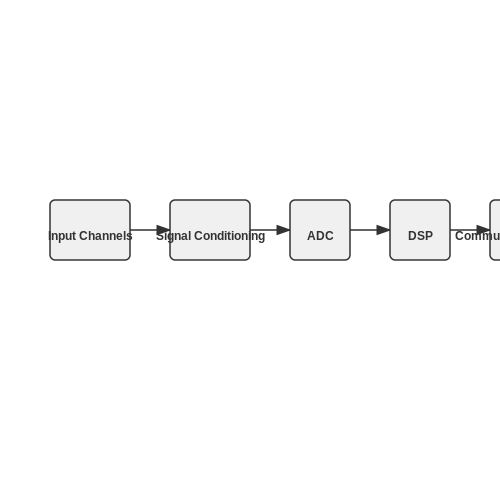
At their core, data acquisition boards consist of several critical components, including:
- Input Channels: These channels are responsible for receiving analog signals from sensors or instrumentation.
- Analog-to-Digital Converter (ADC): The ADC converts analog voltage levels into corresponding digital values, allowing for digital processing.
- Digital Signal Processor (DSP): This component typically handles real-time processing tasks, enabling fast computations on the acquired data.
- Communication Interfaces: These are used for data transfer between the board and external systems, including USB, Ethernet, or PCIe interfaces.
These components work synergistically to facilitate seamless data acquisition. The choice of components and specifications often depends on the application requirements, such as sampling rate, resolution, and bandwidth.
Functioning of Data Acquisition Boards
The functioning of data acquisition boards can be understood through the following stepping analysis:
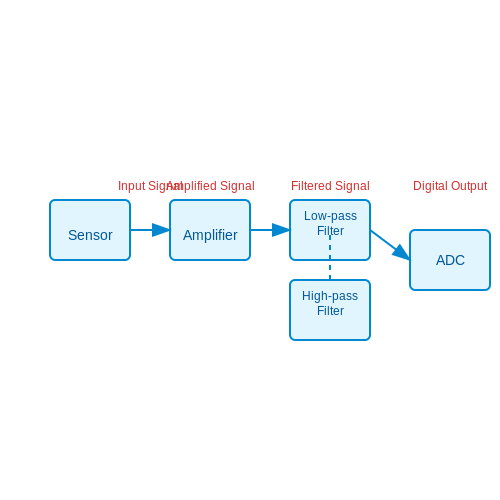
- Signal Conditioning: Before the input signals reach the ADC, they are typically subjected to signal conditioning, which may involve amplification, filtering, and isolation. This enhances the quality of the signal and protects the board from noise and interference.
- Analog-to-Digital Conversion: Once conditioned, the signals enter the ADC. The process of sampling involves measuring the amplitudes of the analog signals at discrete time intervals, converting them into digital values, which can be expressed mathematically as:
$$ x[n] = x(t)|_{t=nT} $$where \( T \) is the sampling period and \( n \) is the sample index.
- Digital Processing: The DSP processes the data in real-time to extract relevant information, apply algorithms, and perform transformations as per the application requirements. This might include Fourier transforms for spectral analysis or filtering techniques.
- Data Output: Finally, the processed data is sent to a storage device or an external system for further analysis or display via the communication interface.
Applications and Practical Relevance
Data acquisition boards find extensive applications across various fields. Some noteworthy examples include:
- Biomedical Engineering: DABs are utilized in medical diagnostics and research, enabling the monitoring of physiological signals such as ECG and EEG.
- Aerospace and Defense: They are crucial in flight data monitoring and testing, allowing for the capture of critical performance data from test flights.
- Environmental Monitoring: DABs facilitate monitoring of atmospheric conditions, pollution levels, and climate change parameters through various sensors.
- Industrial Automation: In manufacturing environments, they are used for equipment monitoring, quality control, and process optimization in real-time applications.
In summary, data acquisition boards play a pivotal role in bridging the analog and digital worlds, enabling engineers and researchers to gather valuable data for analysis, control, and decision-making. The continuous advancements in technology have allowed for more integrated, higher precision, and versatile data acquisition boards to serve the growing demand across diverse sectors.
5.2 Interface Standards
In the realm of data acquisition systems, interface standards play a pivotal role in ensuring seamless communication between sensors, devices, and the systems that process their data. These standards dictate how data is transmitted, interpreted, and utilized, ultimately impacting the efficiency and effectiveness of a data acquisition setup. Understanding these standards is essential for engineers and researchers who aim to design robust and versatile data acquisition systems.Understanding Interface Standards
Interface standards are defined protocols that govern the exchange of information between hardware components. They not only ensure compatibility between different devices but also establish guidelines for speed, data integrity, and electrical characteristics. A few of the most prominent standards frequently employed in data acquisition systems include:- IEEE 488 (GPIB): Originally designed for test equipment communication, GPIB has found its way into various data acquisition applications.
- RS-232 and RS-485: These serial communication protocols are widely used for point-to-point and multi-point connections, respectively.
- USB and USB-C: The Universal Serial Bus standard has evolved to support high-speed data transfer and power supply in a compact form.
- Ethernet and TCP/IP: Leveraging existing network infrastructure, these standards allow for remote data acquisition and monitoring.
- I²C and SPI: These protocols are critical for microcontroller communication with sensors, offering simplicity and speed in short-distance applications.
Key Factors Influencing the Choice of Interface Standards
The selection of an appropriate interface standard is influenced by several factors, including:- Data Rate: Different applications may have varying requirements for data transfer speed. For instance, high-frequency measurements necessitate faster interfaces like USB 3.0 or Ethernet.
- Distance: The physical distance between the devices can significantly impact the choice of interface. Ethernet is well-suited for long distances, while RS-232 is limited to shorter connections.
- Number of Devices: When multiple devices are connected, standards like RS-485 or I²C facilitate communication among many nodes.
- Power Requirements: Some interfaces, such as USB, can provide power to devices, simplifying system architecture.
Practical Applications in Data Acquisition Systems
In typical data acquisition systems, interface standards manifest in various configurations based on application requirements. For example: 1. Environmental Monitoring: Systems involved in collecting data from multiple sensors distributed over a wide area may rely on Ethernet or wireless protocols to facilitate real-time data transfer to a central database. 2. Industrial Automation: Comprehensive automation solutions often utilize protocols such as Modbus, derived from RS-485 standards, allowing seamless communication across devices in harsh environments. 3. Laboratory Experiments: Researchers frequently leverage GPIB for data collection from multiple measurement instruments, ensuring synchronization and precise data management. In conclusion, understanding and selecting the right interface standard is crucial for maximizing the effectiveness of data acquisition systems. With the ongoing advancements in communication technologies, engineers and researchers must stay abreast of emerging standards and best practices that can further enhance these systems' performance and reliability.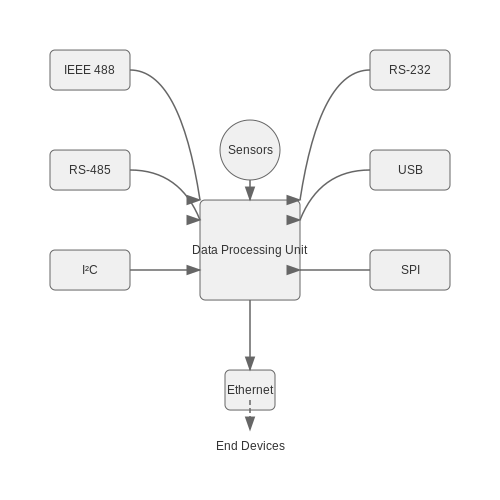
6. Data Storage Solutions
6.1 Data Storage Solutions
Data Acquisition Systems (DAS) play a critical role in various fields, from industrial automation to scientific research. The effectiveness of a DAS is heavily influenced by its data storage capabilities. In this subsection, we will delve into several data storage solutions, exploring their architectures, advantages, and practical applications.
Storage Technologies Overview
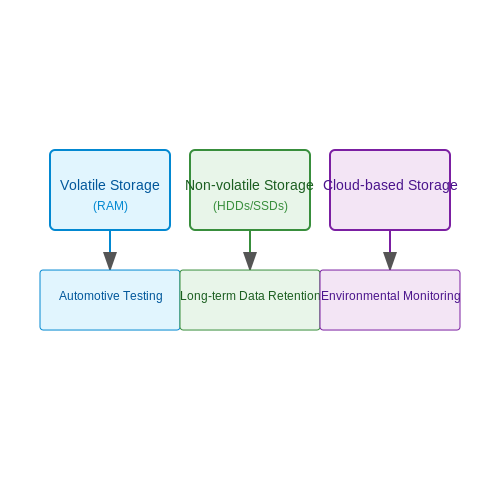
Data storage solutions for DAS can be broadly categorized into three main types: volatile storage, non-volatile storage, and cloud-based storage. Each type has its specific use cases, benefits, and limitations.
- Volatile Storage: This includes Random Access Memory (RAM) which is fast and suitable for short-term data holding. Applications include intermediate data processing where speed is crucial, but it loses data when power is off.
- Non-volatile Storage: Examples are hard disk drives (HDDs) and solid-state drives (SSDs). These are essential for long-term storage of acquired data but have slower access times compared to RAM.
- Cloud-based Storage: This emerging solution allows for scalable data storage and access via the internet. Its practicality increases with the development of high-speed networks and improved data security measures.
Volatile Storage in Data Acquisition
The choice of volatile storage can significantly enhance throughput in applications that require real-time data processing. For example, in high-speed testing environments, data collected from sensors can be temporarily stored in RAM for immediate processing. This enables systems to react swiftly, for instance, in automotive testing to analyze responses to sudden changes in vehicle dynamics.
Mathematical Formulation for Data Throughput
To quantify the capability of RAM in data acquisition, we can define throughput, \( T \), in terms of data size, \( S \), and time, \( t \):
As \( T \) increases, the volume of data processed in a given time frame grows, facilitating better real-time analytics.
Non-Volatile Storage Solutions
Non-volatile storage options, such as HDDs and SSDs, provide reliable data retention capabilities essential for long-term data acquisition. SSDs are particularly favored in modern DAS due to their speed, durability, and energy efficiency. They ensure quicker write and read cycles compared to traditional HDDs, making them ideal for systems that require rapid data retrieval.
Performance Comparison
Several factors delineate the advantages of SSDs over HDDs:
- Access Speed: SSDs generally offer access speeds ranging from 100 MB/s to several GB/s compared to HDDs, which usually cap at around 160 MB/s.
- Durability: SSDs are less prone to mechanical failure since they have no moving parts, making them more reliable in mobile and field applications.
- Energy Consumption: SSDs consume significantly less power, which extends battery life in portable devices and contributes to energy savings in larger systems.
Cloud-Based Data Storage
With the ongoing shift towards cloud computing, cloud-based storage solutions have gained prominence. They enable users to store vast amounts of data without the need for physical hardware, leveraging internet connectivity for data access and management. Applications in scientific research, such as storing experimental data or managing sensor networks, benefit greatly from the scalability and flexibility that cloud solutions offer.
Case Study: Environmental Monitoring
In various environmental monitoring applications, sensors collect data continuously. Using cloud-based storage allows for:
- Real-time analysis of environmental data.
- Remote access for researchers across geographic boundaries.
- Collaboration opportunities enabled by shared data access.
Given these diverse storage solutions, data acquisition systems can be tailored to specific applications by selecting a combination of volatile, non-volatile, and cloud-based storage techniques. The careful selection and integration of these technologies ensure that data integrity, speed, and accessibility requirements are met, paving the way for robust and efficient data acquisition systems.
6.2 Data Analysis Techniques
In the realm of data acquisition systems, the transformation of raw data into meaningful insights is achieved through various data analysis techniques. Understanding and applying these techniques is essential for engineers, researchers, and physicists looking to derive conclusions from experimental data or operational measures.Statistical Analysis Basics
At the core of data analysis lies statistical analysis, which provides a framework for interpreting data variability and trends. Utilizing descriptive statistics, researchers summarize key features of data sets. This method involves calculating measures such as mean, median, mode, variance, and standard deviation to understand the central tendency and dispersion of data. Additionally, inferential statistics allows us to draw conclusions beyond our immediate data set through hypothesis testing, regression analysis, and confidence intervals. Here, the central limit theorem plays a pivotal role, enabling the approximation of the distribution of sample means to a normal distribution as sample size increases, thereby enhancing the reliability of inferences made from samples.Signal Processing Techniques
In many applications, raw signals acquired from sensors are burdened with noise, which can obscure meaningful data. Signal processing techniques serve to enhance data quality through filtering, transforming, and analyzing signals. Techniques such as the Fast Fourier Transform (FFT) enable conversion of time-domain data into frequency-domain representations, facilitating the identification of periodic components in signals. Consider, for instance, a vibration analysis performed on machinery. By applying FFT, the frequency components of vibrations can be isolated, allowing for the diagnosis of potential malfunctions, such as imbalance or misalignment, based on identifying specific frequency peaks.Advanced Data Processing Techniques
Beyond basic analysis, advanced processing techniques such as machine learning algorithms have become prevalent in data analysis within acquisition systems. These algorithms can uncover complex patterns or trends that traditional statistical methods may overlook. For example, supervised learning algorithms—such as regression models or support vector machines—require labeled data to train models that can predict outcomes based on new input data. Conversely, unsupervised learning techniques, like clustering, group data points based on inherent characteristics without prior labels, thus revealing data structures or anomalies. Another noteworthy technique is Principal Component Analysis (PCA), often employed for dimensionality reduction. PCA simplifies datasets by transforming them into a set of orthogonal variables that capture the most variance, making it easier to visualize and analyze large datasets without significant loss of information.Visualization and Interpretation
Data visualization plays a critical role in data analysis as it helps communicate findings effectively. Tools like histograms, scatter plots, and box plots provide visual summaries of distributions, relationships, and outliers. By employing these graphical representations, data analysts can discern trends and make data-driven decisions. For instance, a scatter plot might indicate a correlation between two measured variables, prompting further investigation or validation of the relationship. In practical applications, such as environmental monitoring, visualizing time-series data (like temperature or pollutant levels) can reveal seasonal patterns and unexpected fluctuations. These insights can inform policy responses or further research initiatives. The integration of these techniques—statistical foundations, signal processing, machine learning, and visualization—creates a robust framework for drawing actionable insights from the raw outputs of data acquisition systems. As technology continues to advance, embracing these methods will empower researchers and engineers to navigate and interpret complex datasets effectively.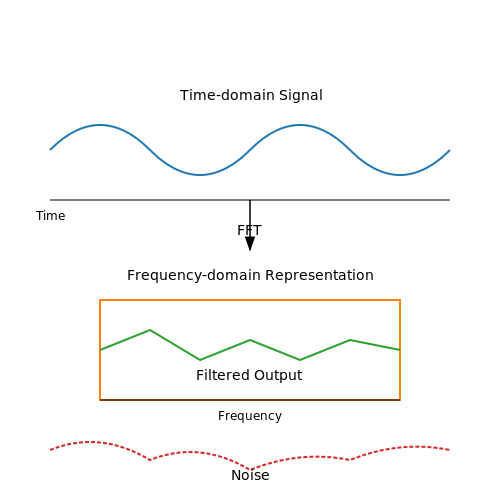
7. Industrial Applications
7.1 Industrial Applications
Data acquisition systems (DAS) play a crucial role in various industrial sectors, providing the ability to monitor, analyze, and control processes in real time. These systems are essential for enhancing productivity, ensuring safety, and optimizing operations across diverse applications. In this section, we will explore the key industrial applications of data acquisition systems, detailing their implementation, benefits, and the technologies involved.
Process Monitoring and Control
One of the primary uses of data acquisition systems in industries such as manufacturing and chemical processing is for process monitoring and control. DAS enables the collection and analysis of data from various sensors—temperature, pressure, flow rate, and chemical concentrations—allowing operators to monitor system performance continuously. By employing real-time data, industries can make informed adjustments to maintain optimal operational conditions. For instance, in an oil refinery, temperature and pressure sensors connected to a data acquisition system can help maintain safe operating conditions and improve product quality.
Case Study: Oil and Gas Industry
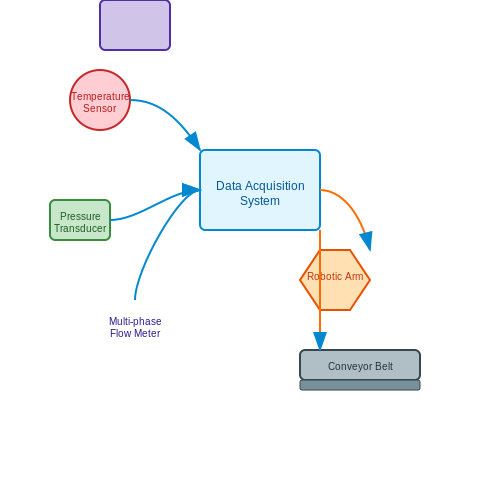
In the oil and gas sector, the use of data acquisition systems has revolutionized how companies monitor and optimize their operations. Data acquisition systems collect information from multi-phase flow meters, pressure transducers, and temperature gauges, integrating this data to provide a real-time view of the extraction and refining processes. This level of monitoring not only improves efficiency but also enhances safety by identifying potentially hazardous conditions before they escalate.
Environmental Monitoring
Data acquisition systems are vital in environmental monitoring applications. These systems can track air and water quality parameters, meteorological data, and soil conditions, which is essential for regulatory compliance and environmental protection. By installing numerous sensors throughout an area, organizations can create a comprehensive overview of environmental conditions.
For example: a municipality could implement a DAS to monitor wastewater treatment processes, collecting data on pH levels, turbidity, and chemical oxygen demand to ensure the facility complies with environmental regulations and operates efficiently. This proactive approach mitigates risks associated with pollution and environmental degradation.
Industrial Automation
In the realm of industrial automation, data acquisition systems are integral in the implementation of automated systems, including robotics and production line machinery. These systems facilitate the communication between various components, enabling seamless operation. Data acquisition systems collect operational data from machinery, allowing for predictive maintenance and reducing downtime. By analyzing trends in equipment performance, engineers can anticipate failures and perform maintenance before issues arise.
Illustration of Industrial Automation with DAS
Imagine a manufacturing facility where a data acquisition system interfaces with robotic arms, conveyor belts, and quality control systems. The DAS monitors parameters such as robotic operation speed, conveyor load, and product defects in real time. This information informs decision-making processes and enhances overall equipment effectiveness, resulting in increased productivity.
Research and Development
In R&D environments, data acquisition systems are essential for experiments across various fields, including physics, chemistry, and engineering. The flexibility and scalability of these systems allow researchers to customize data collection methods as needed for specific applications. By integrating sensors, signal conditioning equipment, and computational tools, research labs can capture and analyze complex data sets, leading to breakthroughs in technology and materials.
Example in Materials Science
An application in materials science might involve using a data acquisition system to monitor the stress and strain on a sample during tensile testing. By integrating high-speed data acquisition with advanced sensors, researchers can gather detailed information on material properties, which is crucial for the development of new materials.
Conclusions
The diverse applications of data acquisition systems in industrial settings underscore their significance in modern technology and processes. As industrial requirements evolve, so too will the capabilities of DAS, integrating advanced sensors, AI, and machine learning algorithms to foster greater innovation and efficiency.
As industries continue to rely on data for decision-making, the role of data acquisition systems will only grow, paving the way for more automated, efficient, and environmentally responsible practices.
7.2 Research and Development
Data Acquisition Systems (DAS) play a crucial role in a variety of scientific and industrial applications, capturing, measuring, and analyzing real-world phenomena. In this discussion, we explore the pivotal place of research and development in advancing these systems. Continued innovation is essential to enhance the capabilities, accuracy, and efficiency of data acquisition technologies.
Emerging Technologies and Trends
The field of data acquisition is currently undergoing transformative changes driven by technologies such as Internet of Things (IoT), Machine Learning (ML), and big data analytics. These innovations not only improve data fidelity but also enable the integration of DAS into broader systems for real-time decision-making.
For instance, the convergence of IoT and data acquisition allows for remote sensing and monitoring applications, effectively collecting large datasets over vast geographic areas. As we develop these systems, the emphasis on bandwidth and energy efficiency becomes increasingly critical. The incorporation of low-power wide-area networks (LPWAN) exemplifies how communication technologies are adapting to support better data acquisition capabilities in field applications.
Sensor Development
The heart of any data acquisition system lies in its sensors. Research and development efforts are focused on creating new sensors that are more sensitive, robust, and suitable for specific applications. Innovations such as MEMS (Micro-Electro-Mechanical Systems) sensors have revolutionized fields like robotics, automotive, and healthcare by providing highly accurate measurements in a compact footprint.
For example, the development of high-throughput biosensors for healthcare diagnostics exemplifies a growing trend. These sensors can monitor multiple biomarkers in real time and offer significant advantages by enabling personalized medicine and immediate health feedback.
Data Processing and Analysis Techniques
Following data collection, the processing and analysis stage is crucial. The integration of advanced signal processing algorithms with machine learning techniques has opened new horizons for data interpretation. Researchers are now able to develop predictive models that can analyze incoming data and identify patterns autonomously.
This advancement is particularly notable in fields such as environmental monitoring, where researchers can predict phenomena such as air quality changes or seismic activity based on historical data trends. The engagement of ML in processing allows for quicker responses to anomalies, enhancing the overall reliability of the monitoring systems.
Statistical and Computational Methods
To complement algorithmic advancements, statistical methods for analyzing large datasets have also evolved. Techniques such as Principal Component Analysis (PCA) and Time-Series Analysis have become staples in discerning underlying trends within complex datasets. These approaches facilitate clearer representation and understanding of high-dimensional data, making it easier for researchers to derive meaningful insights.
In this equation, \(X\) represents the original data matrix, \(U\) contains the left singular vectors, \( \Sigma \) is a diagonal matrix of singular values, and \(V^T\) indicates the transposed matrix of the right singular vectors. By applying PCA, researchers can reduce the dimensionality of datasets while preserving as much variance as possible.
Practical Applications and Case Studies
The advancements in data acquisition systems have been showcased through various case studies across disciplines. For example, in the aerospace industry, modern DAS are crucial for collecting data during flight tests. Sophisticated sensors monitor parameters like temperature, pressure, and structural stress, ensuring aircraft safety and performance optimization.
In agricultural practices, autonomous monitoring systems equipped with advanced DAS technology have enabled precision farming, allowing farmers to optimize resource use and enhance yields while minimizing environmental impacts.
As we continue to push the boundaries of technology in DAS, the importance of research and development remains paramount. Ensuring that we are equipped with the latest capabilities will be fundamental to tackling the challenges faced in increasingly data-driven environments.
8. Advancements in Data Acquisition Technology
8.1 Advancements in Data Acquisition Technology
In recent years, the field of data acquisition (DAQ) has undergone significant transformations, driven by advances in technology and the increasing importance of precise measurement in both research and industrial applications. The evolution of DAQ systems has enabled engineers and scientists to acquire and analyze vast amounts of data with unprecedented speed and accuracy. This subsection explores recent advancements that have enhanced the functionality, versatility, and reliability of data acquisition systems, making them indispensable in modern experimentation and analytical tasks.
Increased Sampling Rates and Bandwidth
One of the most notable advancements in DAQ technology is the enhancement of sampling rates and bandwidth. Modern systems can now sample signals at rates exceeding several megasamples per second (MS/s), allowing for detailed analysis of fast phenomena such as transient responses in electronic circuits or rapid oscillations in physical systems. These improvements are primarily attributed to advancements in analog-to-digital converters (ADCs), which are now capable of achieving higher resolutions and speeds due to technological developments like sigma-delta modulation and successive approximation techniques.
For instance, high-speed DAQ systems have seamlessly integrated 12-bit to 16-bit ADCs that operate at speeds of 1 GS/s or higher. This capability is critical in fields like robotics and high-speed imaging, where capturing rapid changes in states or conditions is essential. Ultimately, enhanced sampling capabilities not only improve signal fidelity but also expand the range of applications for DAQ systems, from automotive testing to biophysical measurements.
Integration of Wireless Communication
The integration of wireless communication technologies has expanded the horizons for data acquisition systems, enabling remote monitoring and data collection without the constraints of wired connections. This openness allows researchers and engineers to deploy sensors in harsh environments or at large distances from data collection nodes. The application of Bluetooth, Wi-Fi, and cellular networks has made it feasible to transmit data efficiently over significant distances while maintaining data integrity and security.
Additionally, wireless DAQ systems have facilitated the shift toward smart technology and IoT (Internet of Things) applications. With remotely located sensors continuously transmitting data to cloud-based systems, real-time monitoring and analysis are now possible. This feature is particularly beneficial for environmental monitoring, medical diagnostics, and smart infrastructure where continuous data collection is paramount.
Enhanced Data Processing and Storage
As data acquisition systems have become more sophisticated, so too have the methods used for data processing and storage. Advanced processing algorithms, including machine learning and AI techniques, have been increasingly integrated into DAQ systems, enabling them to analyze data in real-time and improve the extraction of critical information from noisy datasets. These technologies help in recognizing patterns, anomalies, and trends within large datasets, enhancing decision-making processes in fields ranging from finance to scientific research.
Moreover, the support for cloud storage solutions and distributed computing architectures allows data from multiple DAQ systems to be aggregated and analyzed on a scalable level. This transition not only increases the capacity for data storage but also enhances accessibility for teams spread across different locations, thus fostering collaborative research and remote analysis.
Multimodal Acquisition Capabilities
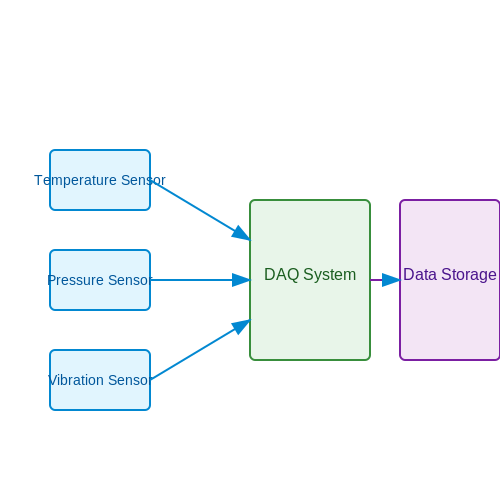
Another exciting trend is the capability of modern DAQ systems to handle multimodal data acquisition. By integrating different types of sensors into a single platform—such as temperature, pressure, and vibration sensors—engineers can simultaneously measure and analyze multiple parameters affecting a system's performance. This integration simplifies setups, reduces costs, and promotes comprehensive analyses of physical systems.
For example, in structural health monitoring, a multimodal DAQ system may combine accelerometers with strain gauges to provide a holistic view of structural integrity. The ability to cross-reference data from varying modalities enhances system diagnostics, paving the way for proactive maintenance and management strategies.
Case Studies and Practical Applications
The advancements in data acquisition technology are evident in diverse applications. In medical research, cutting-edge DAQ systems have been employed for real-time monitoring of physiological parameters, improving patient care and outcomes. Similarly, in environmental studies, mobile DAQ applications have enabled real-time data collection, leading to enhanced predictive models for climate change and natural resource management.
In the engineering domain, the automotive sector has embraced these technologies to test vehicle performance under various conditions, ensuring safety and compliance with regulatory standards. Compounded by advancements in simulation capabilities, modern DAQ systems have become cornerstones of both development and testing processes across various industries.
In summary, the advancements in data acquisition technology reflect a dynamic interplay between increased performance, improved data handling capacity, and expanded application domains. As these technologies continue to evolve, the potential for new discoveries and innovations remains vast, underscoring the essential role of DAQ systems in the scientific and engineering landscapes.
8.2 The Impact of IoT on Data Acquisition
The advent of the Internet of Things (IoT) has ushered in a new paradigm for data acquisition systems, fundamentally transforming how data is gathered, processed, and utilized across industries. By connecting various sensors and devices to the internet, IoT enables seamless communication and real-time data transmission, which is critical for efficient monitoring and decision-making processes.
Enhanced Data Collection
In traditional data acquisition systems, the collection of data from sensors and instruments often involved manual processes or dedicated wired communication paths. IoT changes this by allowing for a broad range of devices—military drones, agricultural sensors, smart meters in utility industries—to be connected wirelessly. This leads to:
- Scalability: Systems can easily expand by adding more devices without the limitations posed by physical cabling.
- Remote Monitoring: Stakeholders can access real-time data from across the globe, which enhances operational efficiency and response times.
- Variety of Data Types: IoT devices can collect data ranging from environmental parameters (temperature, humidity) to structural integrity and energy consumption.
Real-Time Analytics and Decision Making
IoT systems leverage cloud computing and advanced analytics tools to process the influx of data. Data can be analyzed in real-time, allowing operators to make informed decisions swiftly:
- Predictive Maintenance: By analyzing data patterns, equipment failures can be anticipated before they happen, significantly reducing downtime.
- Smart Alerts: Users receive notifications when predefined thresholds are crossed, enabling immediate corrective actions.
- Optimized Resource Management: Natural resource consumption can be efficiently monitored and adjusted, ensuring sustainability in industrial and agricultural settings.
Security Considerations
While the benefits of IoT in data acquisition are profound, security and privacy must also be addressed. Every connected device represents a potential entry point for cyber attacks. Thus, there is an increased focus on:
- Data Encryption: Ensuring that sensitive data transmitted over networks is secure against interception.
- Enhanced Authentication: Implementation of multi-factor authentication for device access.
- Regular Firmware Updates: To address vulnerabilities and enhance protection against emerging threats.
Case Studies and Practical Applications
Various sectors have adopted IoT technologies for data acquisition with significant success:
- Agriculture: IoT-driven sensors collect data on soil moisture levels, optimizing irrigation systems and improving crop yields.
- Healthcare: Wearable devices that monitor patients' vitals in real-time allow for proactive health management.
- Manufacturing: Smart factories leverage IoT-enabled machines to monitor production lines, adjust processes on-the-fly, and minimize waste.
In summary, IoT has a profound impact on data acquisition systems, enhancing their efficiency, reach, and capabilities while presenting new challenges that must be managed through strategic approaches to security and data handling. The integration of IoT in data acquisition not only optimizes processes but also paves the way for more intelligent systems that can learn and adapt over time.
9. Books on Data Acquisition
9.1 Books on Data Acquisition
- Data Acquisition Using LabVIEW — This book covers the fundamental concepts of data acquisition as well as practical applications using LabVIEW. Ideal for professionals and students who wish to integrate data acquisition into measurement systems using this powerful graphical programming environment.
- Data Acquisition and Analysis Techniques for Experiments in Nuclear Physics — Focused on nuclear physics, this IEEE document provides insights into data collection in high-energy environments, presenting methodologies suited for advanced experiments and practical implementation strategies.
- Data Acquisition for Sensor Systems — This book explores sensor integration and data acquisition, detailing various techniques and technologies used in sensor systems for real-time monitoring and automation across different industries.
- Data Acquisition Systems: From Normative View to Cloud View — Describing the evolution of data acquisition systems from traditional architectures to cloud-based frameworks, this text helps readers comprehend modern data integration strategies and cloud computing in data acquisition.
- Modern Data Acquisition Techniques — A comprehensive guide to contemporary data acquisition methods, this book emphasizes innovation in technology and applications, equipping readers with the knowledge needed to handle complex data scenarios.
- NI LabVIEW Platform for Data Acquisition — Provides an introduction to the LabVIEW platform by National Instruments, offering insights into how this software stack can be used for developing measurement and control systems efficiently.
- Data Acquisition Techniques Using Personal Computers — An insightful resource focusing on the employment of personal computers in data acquisition setups, exploring different hardware interfaces and software integrations suitable for engineering applications.
9.2 Journal Articles and Research Papers
In this subsection, we focus on essential journal articles and research papers that have significantly contributed to the development and understanding of data acquisition systems (DAS). These resources are invaluable for researchers, engineers, and graduate students aiming to deepen their knowledge in this field.- High-Speed Data Acquisition System for Particle Physics Experiments — This article explores a sophisticated data acquisition system designed for high-speed particle physics experiments, optimizing data throughput and accuracy.
- Design and Implementation of Portable Data Acquisition Systems — An in-depth analysis of the challenges and solutions associated with designing portable DAS, focusing on applications in fieldwork and remote data collection.
- Bio-Inspired Data Acquisition Systems in Medical Research — Discusses innovative bio-inspired DAS solutions for medical research, enhancing data fidelity and reducing power consumption in biological signal processing.
- Novel Applications of Data Acquisition in Oncology Research — Examines unique applications of DAS in oncology research, with insights into improving patient data management and monitoring technologies.
- Data Acquisition Systems for Space Exploration: A Review — A comprehensive review of DAS technologies utilized in space exploration, addressing challenges posed by harsh environments and long-distance communication.
- Scalable Data Acquisition Systems for Large-Scale Experiments — This paper presents scalable DAS architectures for handling large-scale scientific experiments, focusing on modularity and performance optimization.
- Advancements in Wireless Data Acquisition for Real-Time Industrial Applications — Highlights recent advancements in wireless DAS, showcasing real-time applications in industrial environments that benefit from improved data transmission capabilities.
- Cyber-Physical Systems and Data Acquisition: Integrating Technologies — Investigates the integration of cyber-physical systems with DAS, offering insights into achieving seamless data collection and processing in heterogeneous systems.
9.3 Online Resources and Tutorials
This section provides a curated list of online resources and tutorials that are valuable to anyone delving into data acquisition systems. These platforms cater to advanced-level users, offering in-depth tutorials, case studies, and latest research updates. Here, you'll find resources that enhance both theoretical understanding and practical applications of data acquisition technologies.
- NI Data Acquisition Training — National Instruments offers comprehensive training modules on data acquisition systems covering software and hardware components with hands-on examples and exercises.
- Control Engineering - Data Acquisition — Access a wide array of technical overviews, best practices, and case studies on the implementation and optimization of data acquisition systems across various industries.
- Analog Devices Education Library — Explore technical articles, design handbooks, and tutorials on the best practices for designing and implementing data acquisition systems using analog components.
- DesignSpark - Data Acquisition — Offers articles, tutorials, and design files for advanced users looking to integrate data acquisition systems with real-world applications.
- Belden Resources on Data Acquisition — Delve into in-depth guides and white papers about Ethernet-based control systems for data acquisition, focusing on network design and protocol considerations.
- EDN Data Acquisition Design Center — Find articles, blogs, and step-by-step design tutorials from experts in the field of electronics design, particularly focusing on data acquisition systems.
- All About Circuits - Data Acquisition Chapter — This free online textbook chapter provides a detailed exploration of data acquisition theory, system components, and practical implementation strategies.
- Mouser Electronics Resources — Advanced resources and solutions focusing on data acquisition for embedded systems, providing product guides and design concepts relevant to engineers and researchers.