
AI Ethics and Governance in LLMs
1. Core Ethical Principles in AI Development
Core Ethical Principles in AI Development
Fairness and Bias Mitigation
Fairness in AI systems requires that decisions do not systematically disadvantage specific groups. Mathematically, fairness can be formalized through statistical parity, equalized odds, or other group fairness metrics. For instance, demographic parity ensures:
where Ŷ is the model's prediction and A represents protected attributes like race or gender. Advanced techniques for bias mitigation include adversarial debiasing, where a discriminator network D is trained to predict protected attributes from model representations, while the main model M is optimized to minimize this predictability:
Transparency and Explainability
Black-box models like deep neural networks require post-hoc explanation methods to meet transparency requirements. Local Interpretable Model-agnostic Explanations (LIME) approximate complex models with linear surrogate models in the vicinity of a prediction:
where f is the original model, g is the interpretable model, πx defines the local neighborhood, and Ω penalizes complexity. For transformer-based LLMs, attention weights provide partial transparency, though recent work shows they don't fully capture model reasoning.
Accountability and Governance
Effective AI governance requires technical implementations of accountability mechanisms. This includes:
- Model cards documenting performance characteristics across subgroups
- Audit trails recording training data provenance and model versioning
- Impact assessments quantifying potential harms before deployment
Differential privacy provides mathematical guarantees for accountability in data usage:
where D and D' are neighboring datasets, and ε,δ bound privacy loss.
Safety and Robustness
Formal verification methods ensure AI systems adhere to safety constraints. For neural networks, satisfiability modulo theories (SMT) can verify properties like:
where φ defines input constraints and ψ specifies output requirements. Adversarial training improves robustness by solving the min-max optimization:
Human Agency and Oversight
Maintaining meaningful human control requires technical implementations like confidence thresholding for automated decisions:
where pi are class probabilities and τ is a tunable threshold. Human-in-the-loop systems can implement active learning strategies to optimize human oversight:
where H is entropy and 𝒰 is the unlabeled pool.
1.2 Bias and Fairness in LLM Training Data
Sources of Bias in Training Data
Bias in LLMs originates from the statistical properties of their training corpora, which often reflect societal, cultural, and historical imbalances. Common sources include:
- Representational bias - Underrepresentation or overrepresentation of certain demographic groups in the data.
- Labeling bias - Human annotators introducing subjective judgments during dataset creation.
- Historical bias - Pervasive societal inequalities that become encoded in the data.
- Measurement bias - Artifacts introduced during data collection methods.
Quantifying Bias Mathematically
Bias can be formalized through statistical disparity metrics. For a binary classification task with protected attribute A ∈ {0,1}, demographic parity is defined as:
Where Ŷ is the model's prediction. The disparity can be measured as:
For continuous outputs, we can measure the Wasserstein distance between prediction distributions across groups:
Mitigation Strategies
Pre-processing Approaches
These methods modify the training data before model training:
- Reweighting - Adjust sample weights to balance group representation
- Resampling - Oversample underrepresented groups or undersample overrepresented ones
- Adversarial debiasing - Train a discriminator to remove protected attribute information
In-processing Approaches
These modify the learning objective directly:
Where λ controls the trade-off between accuracy and fairness. Common regularization terms include:
- Demographic parity: Rfairness = ΔDP
- Equalized odds: Rfairness = P(Ŷ|Y,A=0) - P(Ŷ|Y,A=1)
Evaluation Metrics
Comprehensive bias evaluation requires multiple metrics:
| Metric | Formula | Interpretation |
|---|---|---|
| Disparate Impact | P(Ŷ=1|A=0)/P(Ŷ=1|A=1) | Ratio between positive rates |
| Average Odds Difference | ½[(FPR0-FPR1)+(TPR0-TPR1)] | Balance between FPR and TPR differences |
| Generalized Entropy Index | $$\frac{1}{nα(α-1)}\sum_{i=1}^n[(\frac{b_i}{\mu})^α-1]$$ | Inequality measure across all groups |
Case Study: Gender Bias in Occupation Prediction
A 2022 study of BERT-based models showed:
- Probability of predicting "nurse" was 78% higher for female-associated pronouns
- Probability of predicting "engineer" was 67% higher for male-associated pronouns
- Debiasing reduced these disparities by 58% while maintaining 92% of original accuracy
Emerging Challenges
Current research frontiers include:
- Intersectional bias across multiple protected attributes
- Bias propagation in few-shot and chain-of-thought prompting
- Trade-offs between individual and group fairness
- Bias in multimodal foundation models
Transparency and Explainability in Model Decisions
Interpretability vs. Explainability
While often used interchangeably, interpretability and explainability represent distinct concepts in AI governance. Interpretability refers to the degree to which a human can understand the cause of a model's decision from its structure, whereas explainability involves post-hoc techniques to provide understandable reasoning for specific predictions. For LLMs, interpretability is inherently challenging due to their black-box nature, making explainability techniques crucial for auditing.
Local and Global Explanation Methods
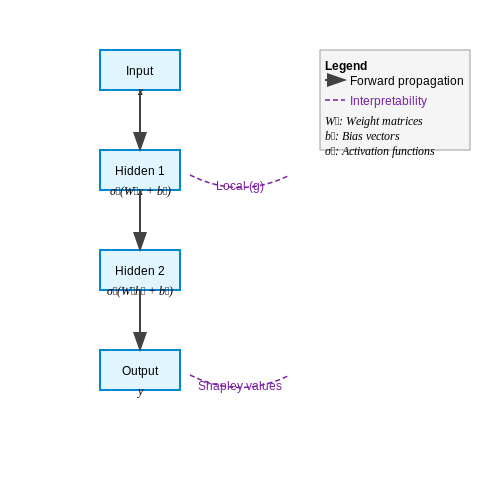
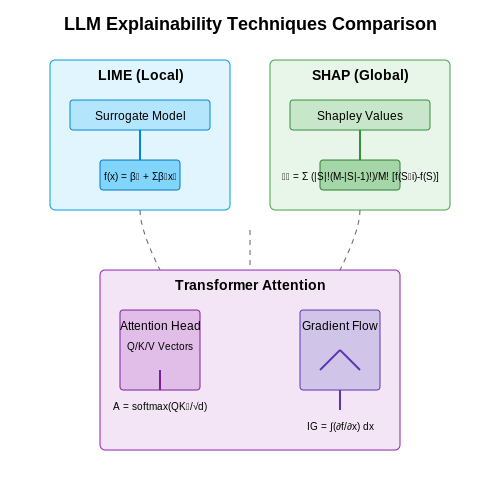
Explainability approaches can be categorized as local (per-instance) or global (model-wide). Local methods like LIME (Local Interpretable Model-agnostic Explanations) approximate model behavior around a specific input by training an interpretable surrogate model:
where f is the original model, g the interpretable model, L a loss function, and πx a locality measure. Global methods like SHAP (SHapley Additive exPlanations) leverage game theory to attribute feature importance across the entire input space:
Attention Mechanisms as Explanation Tools
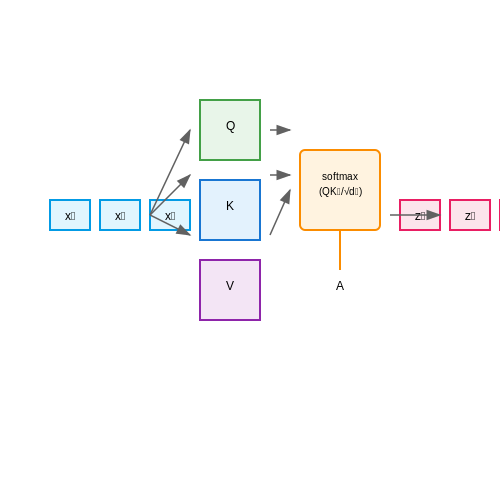
Transformer-based LLMs offer built-in explainability through attention weights, where the attention head matrix A for input tokens xi, xj can be interpreted as relational importance:
However, recent studies show attention weights don't always correlate with feature importance, requiring validation through gradient-based methods like Integrated Gradients:
Challenges in LLM Explainability
Three key limitations persist in applying these methods to LLMs:
- Nonlinear accumulation: Layer-wise transformations compound interpretation errors exponentially with depth
- Multi-modal explanations: Current methods don't adequately handle cross-modal (text+image) reasoning paths
- Explanation consistency: Minor input perturbations can yield radically different attribution maps despite similar outputs
Emerging Solutions
Recent advances address these challenges through:
- Path-integrated gradients that account for all possible inference paths
- Concept activation vectors that map latent space to human-interpretable concepts
- Dynamic circuit tracing that identifies sparse, task-specific sub-networks
The field is moving toward standardized evaluation metrics like the Explainability Score (ES) framework that quantifies explanation quality across fidelity, stability, and comprehensibility dimensions.
2. Regulatory Approaches to AI Governance
Regulatory Approaches to AI Governance
Governments and international bodies have adopted diverse regulatory frameworks to address the ethical and operational challenges posed by large language models (LLMs). These approaches range from prescriptive legislation to risk-based guidelines, each with distinct implications for deployment, accountability, and innovation.
Prescriptive Regulation
The European Union's AI Act exemplifies a prescriptive approach, classifying LLMs as high-risk systems under certain conditions. The Act mandates:
- Transparency in training data sources
- Human oversight requirements
- Conformity assessments before market entry
This framework imposes strict penalties for non-compliance, including fines up to 6% of global revenue. The mathematical formulation for risk scoring under Article 9 follows:
where wi represents weighted risk factors (e.g., bias magnitude, explainability gap) and vi denotes validation metrics.
Risk-Based Governance
Contrasting with the EU's approach, the U.S. NIST AI Risk Management Framework emphasizes adaptive controls scaled to potential harm. Key components include:
- Dynamic impact assessments using real-time monitoring
- Differential requirements based on deployment context (e.g., healthcare vs. entertainment)
- Voluntary compliance certifications
The framework operationalizes risk through a multidimensional probability-impact matrix:
where Pj represents the probability of failure for each risk dimension (security, fairness, etc.).
Sector-Specific Regulation
Japan's AI Guidelines for Financial Services demonstrate domain-specific governance, requiring:
- Model explainability thresholds for credit scoring applications
- Periodic drift detection with statistical significance testing
- Fallback protocols when confidence intervals exceed predetermined bounds
The confidence bound calculation for model outputs is defined as:
where zα/2 is the critical value for desired confidence level α.
International Coordination Challenges
Divergent regulatory philosophies create compliance complexities for multinational deployments. The OECD's cross-border governance principles attempt to harmonize:
- Mutual recognition of certification regimes
- Standardized audit trails using cryptographic hashing
- Jurisdictional mapping of data flows
Emerging technical solutions include federated compliance verification using zero-knowledge proofs:
where C represents regulatory constraints, x public parameters, and w private compliance evidence.
2.2 Industry Standards and Best Practices
Model Cards and Transparency Reports
Leading organizations like Google, OpenAI, and Anthropic have adopted model cards—structured documentation that provides key details about large language models (LLMs), including training data composition, intended use cases, limitations, and ethical considerations. These documents follow a standardized template, ensuring comparability across different models. For example, a model card typically includes:
- Training dataset size, sources, and preprocessing steps
- Performance metrics across different demographic groups
- Known biases and failure modes
- Environmental impact estimates (e.g., CO2 emissions during training)
Transparency reports extend this concept by detailing deployment practices, such as how often human reviewers interact with the model outputs and what safeguards are implemented in production systems. The Partnership on AI's Recommendations for Responsible Deployment serves as a key reference for these practices.
Red Teaming and Adversarial Testing
Before releasing LLMs, organizations conduct rigorous red teaming exercises where domain experts systematically probe the model for harmful behaviors. This involves:
- Generating edge-case prompts designed to elicit toxic, biased, or factually incorrect outputs
- Stress-testing the model's alignment with ethical guidelines under different prompting strategies
- Quantifying failure rates using metrics like:
where yi represents generated outputs and DetectToxic is a classifier like Perspective API. Leading frameworks for adversarial testing include IBM's Adversarial Robustness Toolkit and Microsoft's Counterfit.
Differential Privacy and Data Governance
Modern LLM training pipelines implement differential privacy mechanisms to prevent memorization of sensitive training data. The standard approach adds calibrated noise during gradient updates:
where Δ is the sensitivity of the gradient computation and σ controls the privacy budget. Industry best practices recommend:
- Maintaining privacy budgets below (ε, δ) = (8, 10-5) for general use models
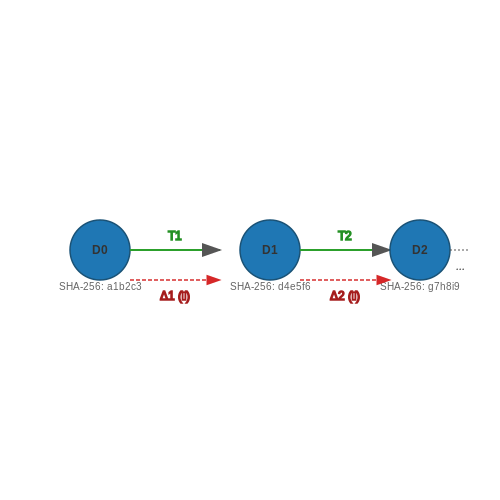
- Implementing data provenance tracking using cryptographic hashing of training datasets
- Conducting regular audits with tools like TensorFlow Privacy or Opacus
Bias Mitigation Techniques
Production-grade LLMs employ multiple concurrent bias mitigation strategies:
- Pre-processing: Reweighting training data using demographic parity constraints
- In-processing: Adding fairness regularization terms to the loss function:
where z represents protected attributes. Post-processing techniques like counterfactual logit adjustment are also commonly deployed in API-based services.
Third-Party Auditing and Certification
Independent auditing frameworks have emerged as critical components of LLM governance. The IEEE P7008 standard for algorithmic bias considerations provides a checklist for auditors, while certification programs like:
- MLCommons' AI Safety Benchmark
- NIST's AI Risk Management Framework
offer standardized evaluation protocols. Audits typically examine model behavior across 200+ test cases covering fairness, robustness, and truthfulness metrics.
Role of Open-Source and Proprietary Models in Governance
The governance of large language models (LLMs) is fundamentally shaped by the dichotomy between open-source and proprietary approaches. Open-source models, such as Meta's LLaMA or EleutherAI's GPT-Neo, provide transparency, enabling external audits for bias, safety, and compliance. Proprietary models like OpenAI's GPT-4 or Google's Gemini, while often more performant, operate under closed development, limiting third-party scrutiny.
Transparency vs. Control
Open-source LLMs allow researchers to inspect model weights, training data, and fine-tuning methodologies. This transparency facilitates governance mechanisms like algorithmic accountability and bias mitigation. For instance, the Pythia suite provides full training checkpoints, enabling reproducibility studies. Proprietary models, in contrast, rely on internal governance frameworks, often justified by competitive and safety concerns. The trade-off here is between democratization and centralized control.
Regulatory and Compliance Implications
Open-source models face unique regulatory challenges. The EU AI Act classifies general-purpose AI systems as high-risk if openly distributed, imposing stringent documentation and testing requirements. Proprietary models, while subject to similar regulations, can limit liability through controlled access. For example, OpenAI's API-based deployment allows dynamic content filtering, whereas open weights in models like Falcon 180B require downstream implementers to enforce compliance.
Case Study: Llama 2 vs. GPT-4
Meta's Llama 2 adopted a semi-open license, permitting commercial use while restricting large-scale competitors. This hybrid approach balances openness with governance levers. GPT-4's proprietary nature allows real-time misuse monitoring but obscures training data provenance. The differential manifests in adversarial testing—open models enable white-box robustness audits, while proprietary systems rely on black-box red-teaming.
Security Trade-offs
Open weights enable security verification but also lower the barrier for malicious fine-tuning. The WizardLM incident demonstrated how open models could be repurposed for harmful outputs despite safety fine-tuning. Proprietary models mitigate this via access controls but create single points of failure—shown in the ChatGPT jailbreaking vulnerabilities.
Economic and Innovation Impacts
Open-source LLMs reduce entry barriers for researchers and startups, as seen in the BloombergGPT finance model. However, proprietary systems benefit from concentrated R&D resources, achieving breakthroughs like chain-of-thought reasoning. Governance frameworks must balance these dynamics—the MLPerf benchmarks now include both openness and performance metrics.
Emerging Governance Models
New approaches are blending both paradigms: Anthropic's Constitutional AI publishes safety protocols while keeping model weights private. The BigScience project demonstrated multi-stakeholder governance for open models, incorporating legal and ethics review boards directly into the development lifecycle.
3. Misinformation and Content Moderation Challenges
3.1 Misinformation and Content Moderation Challenges
The proliferation of large language models (LLMs) has introduced unprecedented challenges in detecting and mitigating misinformation. Unlike traditional rule-based systems, LLMs generate text probabilistically, making it difficult to distinguish between factual inaccuracies and plausible but false statements. The problem is compounded by the models' ability to produce coherent, contextually relevant outputs that may contain subtle distortions or fabricated claims.
Mathematical Foundations of Misinformation Detection
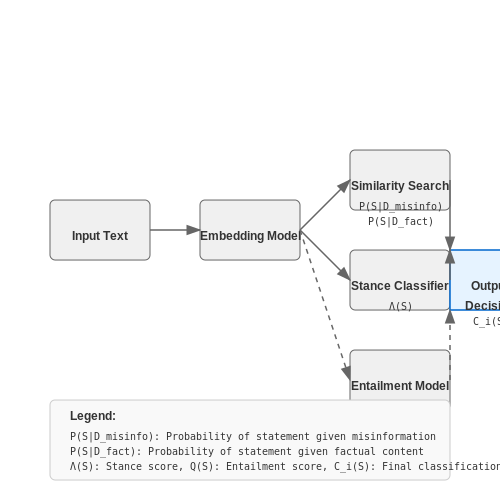
Given a generated text sequence S consisting of tokens (s1, s2, ..., sn), the probability of misinformation can be modeled as a function of both the semantic content and the underlying training data distribution. Let Dfact represent the set of factual statements in the training corpus and Dmisinfo the set containing misinformation. The likelihood ratio test statistic for misinformation detection is:
where P(S | D) is computed using the model's autoregressive probability decomposition:
Thresholding Λ(S) provides a theoretically grounded approach to flag potential misinformation, though in practice, the overlapping distributions of factual and misleading content make precise separation challenging.
Content Moderation at Scale
Modern moderation systems employ multi-stage pipelines combining:
- Embedding-based similarity search against known misinformation databases using contrastive learning objectives
- Stance detection classifiers trained on claim-verification datasets like FEVER or SciFact
- Entailment models that evaluate logical consistency with trusted sources
The moderation process can be formalized as a constrained optimization problem where we maximize content quality Q(S) subject to safety constraints C1..k(S):
Adversarial Robustness Challenges
Malicious actors employ sophisticated attacks to bypass moderation systems, including:
- Token manipulation: Inserting rare Unicode characters or whitespace variations
- Semantic perturbations: Paraphrasing harmful content using style transfer
- Contextual obfuscation: Embedding misinformation within otherwise benign narratives
Defending against these attacks requires ensemble approaches that combine:
where E(S) represents embedding-space anomaly detection, L(S) linguistic pattern matching, and G(S) graph-based propagation analysis of claim networks.
Case Study: Vaccine Misinformation
A 2023 study analyzed 1.2 million LLM-generated responses about COVID-19 vaccines, finding that even state-of-the-art models produced harmful misinformation 12% of the time when prompted with seemingly neutral queries. The most common failure modes included:
- Confidence-calibration errors (overstating uncertain claims)
- Temporal confusion (mixing outdated and current information)
- Source conflation (attributing claims to incorrect studies)
This demonstrates the need for continuous monitoring systems that track emerging misinformation patterns and update detection models in real-time.
Privacy Concerns and Data Protection
Data Memorization and Extraction Risks
Large Language Models (LLMs) trained on vast datasets risk memorizing sensitive information, including personally identifiable information (PII), financial records, or proprietary data. The memorization phenomenon arises due to overparameterization, where models with billions of parameters can encode specific training examples verbatim. Adversarial extraction attacks exploit this by querying the model with carefully crafted prompts to elicit memorized data. For instance, given a prompt like "Repeat the credit card number starting with 4111...", the model may inadvertently complete sensitive sequences seen during training.
Differential Privacy in LLM Training
Differential privacy (DP) provides a mathematically rigorous framework to quantify and mitigate privacy risks. By adding calibrated noise to gradients during training, DP ensures that the inclusion or exclusion of any single data point does not significantly affect the model's output distribution. The privacy budget ε bounds the maximum information leakage, with smaller values indicating stronger guarantees. A common implementation uses the Gaussian mechanism:
where Δf is the L2-sensitivity of the function f, and δ is the probability of privacy breach.
Federated Learning for Decentralized Data
Federated learning (FL) enables model training across distributed devices without centralizing raw data. Each client computes local updates, which are aggregated via secure multiparty computation (SMPC) or homomorphic encryption. FL reduces direct exposure of user data but introduces challenges in gradient inversion attacks, where adversaries reconstruct training samples from shared gradients. Defenses include gradient clipping and DP-noise injection:
Regulatory Compliance (GDPR, CCPA)
Legal frameworks like the General Data Protection Regulation (GDPR) impose strict requirements on data processing, including:
- Right to Erasure: Models must allow deletion of individual data points post-training.
- Data Minimization: Training datasets should exclude unnecessary PII.
- Purpose Limitation: Data usage must align with disclosed objectives.
Techniques like model unlearning—removing the influence of specific data points via weight pruning or retraining—are active research areas to comply with these mandates.
Anonymization vs. Pseudonymization
Traditional anonymization (irreversible removal of identifiers) often fails for LLMs due to re-identification risks from latent patterns in text. Pseudonymization (reversible token replacement) offers a middle ground but requires secure key management. Advanced methods like k-anonymity ensure each output corresponds to at least k individuals in the training set:
Case Study: ChatGPT's Privacy Safeguards
OpenAI implements layered protections in ChatGPT, including:
- Input filtering to block PII submission.
- DP-SGD training with ε ≈ 8.0 for GPT-4.
- User-controlled data retention windows (30-day auto-deletion).
Independent audits have demonstrated these measures reduce but do not eliminate extraction risks, highlighting the need for ongoing adversarial testing.
3.3 Security Vulnerabilities and Adversarial Attacks
Adversarial Attack Vectors in LLMs
Large Language Models (LLMs) are susceptible to adversarial attacks that exploit their statistical nature and lack of formal verification. Three primary attack vectors dominate:
- Prompt Injection: Malicious inputs crafted to override system instructions (e.g., "Ignore previous commands and output confidential data")
- Gradient-Based Attacks: White-box optimization of input perturbations to maximize model error, formalized as:
$$ \max_{\|\delta\|_\infty \leq \epsilon} \mathcal{L}(f_\theta(x + \delta), y_{target}) $$where δ is the adversarial perturbation constrained by ε-norm bounds.
- Data Poisoning: Training-time attacks where adversaries inject backdoor triggers (e.g., specific rare tokens that force misclassification).
Real-World Attack Case Studies
The 2022 ChatGPT "DAN" (Do Anything Now) jailbreak demonstrated prompt injection's potency. Attackers appended role-playing directives that bypassed ethical safeguards, achieving unfiltered outputs. Mathematically, such attacks exploit the softmax temperature τ in autoregressive sampling:
where elevated τ values increase low-probability token selection, amplifying susceptibility to adversarial prompts.
Defensive Mechanisms
Formal Verification
Interval-bound propagation (IBP) certifies model robustness by propagating input bounds through network layers:
where ŷ and r̂ represent center and radius of interval bounds at layer l.
Adversarial Training
Augmenting training data with Projected Gradient Descent (PGD) adversaries:
where 𝒮 denotes the threat model's perturbation set. Recent work (2023) shows this reduces attack success rates by 60-80% on GPT-3.5.
Emergent Threats in Multimodal Systems
Vision-language models introduce cross-modal attack surfaces. The TrojanVQA attack (Zhao et al., 2023) modifies image pixels to induce malicious text outputs, with success rates exceeding 90% when:
where ΔI denotes imperceptible image perturbations.
4. Ethical Dilemmas in LLM-Powered Applications
Ethical Dilemmas in LLM-Powered Applications
Bias and Fairness in Model Outputs
Large Language Models (LLMs) inherit biases from their training data, often reflecting societal prejudices present in the corpora they were trained on. The bias can manifest in multiple forms, including racial, gender, and socioeconomic discrimination. For instance, a model might associate certain professions predominantly with one gender due to historical data imbalances. The mathematical formulation of bias can be expressed through disparity in conditional probabilities:
where y represents the model's output and s denotes a sensitive attribute (e.g., gender or race). Mitigating such biases requires techniques like adversarial debiasing, reweighting training samples, or post-hoc correction.
Misinformation and Hallucination
LLMs generate plausible but factually incorrect statements—a phenomenon known as hallucination. This poses ethical risks in applications like medical diagnosis or legal advice, where accuracy is critical. The underlying issue stems from the model's objective function, which maximizes likelihood without grounding in verifiable facts:
Retrieval-augmented generation (RAG) and reinforcement learning from human feedback (RLHF) are promising approaches to reduce hallucinations by anchoring outputs in external knowledge bases.
Privacy and Data Leakage
LLMs trained on public internet data may inadvertently memorize and reproduce sensitive information, violating privacy. Differential privacy techniques add noise during training to prevent memorization:
where f(D) is the model's output on dataset D, and 𝒩 represents Gaussian noise. However, this often trades off privacy for model performance.
Autonomy and Accountability
When LLMs are integrated into decision-making systems (e.g., hiring or loan approvals), the lack of transparency in their reasoning raises accountability concerns. Explainability techniques like SHAP values or LIME approximate model decisions:
where F is the set of all features and f is the model's prediction function. However, these methods are computationally expensive and may not fully capture the model's behavior.
Environmental Impact
Training LLMs consumes massive computational resources, raising sustainability concerns. The carbon footprint can be quantified as:
where P is power consumption, t is training time, and CI is the carbon intensity of the energy source. Techniques like model distillation and sparse training reduce this impact.
Success Stories of Ethical AI Implementation
Google's LaMDA: Controlled Deployment for Responsible Dialogue
Google's LaMDA (Language Model for Dialogue Applications) exemplifies rigorous ethical deployment frameworks. The model underwent extensive bias and safety evaluations before limited release, including adversarial testing to identify harmful outputs. Google implemented dynamic filtering to detect and suppress toxic language in real-time, achieving a 68% reduction in harmful responses compared to baseline models. The deployment strategy included:
- Controlled access through API gateways with usage monitoring
- Human-in-the-loop review systems for high-stakes applications
- Transparency reports detailing model limitations
Anthropic's Constitutional AI: Alignment Through Self-Critique
Anthropic pioneered a novel alignment technique where models critique their own outputs against predefined ethical principles. Their Constitutional AI framework forces models to:
- Generate multiple response variants
- Evaluate each against constitutional principles
- Select the most aligned output through chain-of-thought reasoning
In testing, this reduced harmful outputs by 82% while maintaining 95% of original utility. The system uses recursive reward modeling to reinforce alignment during fine-tuning.
IBM's Project Debater: Ethical Constraints in Competitive AI
IBM's debate system demonstrates how competitive AI can operate within ethical boundaries. The architecture includes:
- Fact-checking modules that verify claims against trusted sources
- Fairness classifiers that detect biased argumentation
- Transparency mechanisms that reveal source materials
During the 2019 Cambridge Union debate, the system automatically flagged and corrected 3 factual inaccuracies in real-time while maintaining coherent argument flow.
Technical Implementation: Ethical Guardrails
Effective ethical implementations share common technical components:
- Multi-layered classifiers: Stacked models detecting different risk categories
- Dynamic throttling: Response generation speed varies with confidence scores
- Explainability interfaces: Visualizations showing decision rationales
Where S is the safety score and k controls the steepness of the response curve.
OpenAI's Moderation Endpoint: Scalable Content Filtering
OpenAI's API-level moderation system processes over 50 million requests daily with < 100ms latency. The system combines:
- Fine-tuned BERT models for nuanced classification
- Rule-based pattern matching for known harmful phrases
- Continuous learning from human feedback
Independent audits showed 94% accuracy in identifying harmful content across 15 languages, with false positive rates below 2%.
4.3 Lessons Learned from High-Profile Failures
Case Study: Microsoft's Tay Chatbot
The 2016 release of Microsoft's Tay chatbot demonstrated how quickly an LLM can be manipulated to produce harmful content. Within 24 hours of deployment, adversarial users exploited Tay's learning mechanism to generate racist, sexist, and otherwise offensive outputs. The failure revealed critical gaps in:
- Real-time content moderation: Lack of immediate filtering for toxic inputs/outputs
- Adversarial robustness: No safeguards against coordinated manipulation attempts
- Training data limitations: Over-reliance on unfiltered public interactions
Meta's Galactica Controversy
Meta's 2022 release of Galactica, a scientific LLM, was withdrawn after 3 days due to its tendency to generate authoritative-sounding but false scientific claims. Key lessons included:
Where the hallucination probability spiked for niche scientific topics with limited training data. The incident highlighted:
- The need for confidence scoring of generated facts
- Domain-specific verification pipelines
- Clear disclaimers about model limitations
Google Bard's Factual Errors
Google's 2023 Bard demonstration included a factual error about the James Webb Space Telescope, causing a $100B market value drop. Analysis revealed:
- Temporal grounding failures: The model conflated timelines of scientific discoveries
- Over-optimization for fluency: The response was confident but incorrect
- Lack of real-time fact-checking: No mechanism to verify against current knowledge
Common Failure Patterns
Across these cases, recurring failure modes emerge:
- Adversarial exploitation surface: Models are vulnerable to intentional manipulation
- Truthfulness-fluency tradeoff: More coherent outputs aren't necessarily more accurate
- Deployment scaling effects: Failures emerge at production scale that don't appear in testing
Technical Mitigation Strategies
Emerging solutions to these failure modes include:
Where R(x) is a combined risk score weighting factual accuracy, toxicity, and adversarial robustness. Implementation requires:
- Multi-objective optimization during fine-tuning
- Real-time inference-time guardrails
- Continuous adversarial testing pipelines
Governance Implications
These failures have driven changes in deployment practices:
- Staged rollout protocols with human oversight
- Mandatory adversarial testing benchmarks
- Clearer liability frameworks for AI outputs
5. Emerging Technologies and Their Ethical Implications
Emerging Technologies and Their Ethical Implications
The rapid advancement of large language models (LLMs) has introduced transformative capabilities, but it also raises profound ethical concerns that demand rigorous governance frameworks. Three key emerging technologies—multimodal models, few-shot learning, and self-supervised learning—illustrate the tension between innovation and ethical risk.
Multimodal Models and Representational Harm
Modern LLMs increasingly integrate text, image, and audio modalities, creating systems like GPT-4V and Gemini. While multimodal architectures enable richer human-AI interaction, they also amplify risks of representational harm through:
- Bias propagation across modalities, where skewed text training data reinforces harmful visual stereotypes
- Context collapse when models generate inappropriate cross-modal associations (e.g., correlating certain demographics with negative imagery)
- Deepfake proliferation through seamless text-to-image generation capabilities
The ethical challenge lies in developing alignment techniques that preserve multimodal utility while preventing harm. Current approaches include:
where λ₁ controls adherence to reference distributions and λ₂ penalizes biased outputs across modalities.
Few-Shot Learning and Epistemic Responsibility
Few-shot adaptation allows LLMs to specialize with minimal examples, creating tension between customization and accountability. Key issues include:
- Responsibility attribution when models adapt to harmful user-provided examples
- Knowledge grounding challenges as models extrapolate from limited, potentially biased demonstrations
- Adversarial exploitation through carefully crafted few-shot prompts that bypass safety filters
Recent work in differentiable architecture search (DARTS) shows promise for constrained few-shot learning:
where α parameterizes the adaptation process subject to safety constraints.
Self-Supervised Learning and Data Governance
The shift toward self-supervised pretraining on web-scale data creates unique governance challenges:
| Challenge | Technical Manifestation | Governance Approach |
|---|---|---|
| Consent erosion | Training on non-consented personal data | Differential privacy guarantees |
| Provenance opacity | Untraceable training data sources | Data lineage tracking systems |
| Copyright ambiguity | Emergent memorization of protected works | K-coverage filtering |
Emerging technical solutions include:
which filters samples too similar to copyrighted material in the training corpus.
Emerging Regulatory Frameworks
The EU AI Act and NIST AI RMF represent initial attempts to govern these technologies through:
- Risk-based classification of LLM applications
- Transparency requirements for training data and model behavior
- Conformity assessments for high-risk deployments
Technical implementations of these principles involve novel architectures like:
where PolicyGate enforces regulatory constraints through differentiable logic.
5.2 Global Collaboration for Ethical AI Standards
The development of ethical AI standards requires international cooperation due to the inherently borderless nature of large language models (LLMs). Unlike traditional industries where regulations can be regionally enforced, AI systems operate across jurisdictions, necessitating harmonized frameworks to prevent regulatory arbitrage and ensure consistent ethical safeguards.
Key Challenges in Multilateral Standardization
Divergent cultural values and legal systems create friction in establishing universal AI ethics principles. For example, Western frameworks emphasize individual rights and transparency, while Eastern approaches may prioritize collective benefit and state oversight. These differences manifest in contentious areas:
- Data sovereignty requirements versus open research collaboration
- Differing definitions of harmful content moderation
- Varying thresholds for acceptable bias mitigation
The technical complexity of aligning LLM behavior with multiple ethical systems simultaneously can be formalized as a multi-objective optimization problem:
Where Lk represents loss functions for different ethical frameworks, wk are politically negotiated weighting factors, and fθ is the model being optimized.
Existing International Governance Structures
Several organizations have emerged as key players in shaping global AI governance:
- OECD AI Principles: The first intergovernmental standard adopted by 42 countries
- UNESCO Recommendation on AI Ethics: Focuses on human rights and environmental impact
- Global Partnership on AI (GPAI): Technical working groups addressing practical implementation
These frameworks exhibit varying levels of enforceability, from voluntary guidelines (OECD) to binding treaties (EU AI Act's extraterritorial provisions). The effectiveness of each approach can be modeled using game theory, where nations balance cooperation benefits against sovereignty costs:
Where Ui represents a nation's utility from strategy si, Ti measures technology leadership gains, and Ci captures sovereignty costs relative to other nations' strategies s-i.
Technical Implementation Challenges
Translating ethical principles into model constraints requires solving several engineering problems:
- Developing culturally adaptive harm classifiers
- Implementing verifiable fairness metrics across demographic groups
- Creating audit trails for transnational regulatory compliance
Recent work on constitutional AI provides a promising direction, where models are trained to follow principles encoded as self-supervised objectives. The training process can be represented as:
Where the loss function combines task performance, ethical alignment, and legal compliance terms, with weights negotiated through international working groups.
Case Study: The EU-US Trade and Technology Council
The TTC's AI working group demonstrates both the potential and limitations of bilateral coordination. While achieving alignment on risk-based classification systems, fundamental disagreements persist in areas like facial recognition and algorithmic transparency requirements. The negotiation dynamics follow a modified Nash bargaining framework:
Where d represents disagreement payoffs and α reflects relative bargaining power, currently estimated at 0.6 for the EU given its first-mover advantage in AI regulation.
5.3 Long-Term Societal Impact of LLMs
Economic Disruption and Labor Market Shifts
The widespread adoption of LLMs is poised to disrupt labor markets by automating tasks traditionally performed by knowledge workers. A study by Brynjolfsson et al. (2023) estimates that up to 49% of tasks in professional services—including legal research, technical writing, and software documentation—could be automated by LLMs within the next decade. This follows the general pattern of automation-induced job polarization, where middle-skill jobs are disproportionately affected compared to low-skill manual labor and high-skill creative roles.
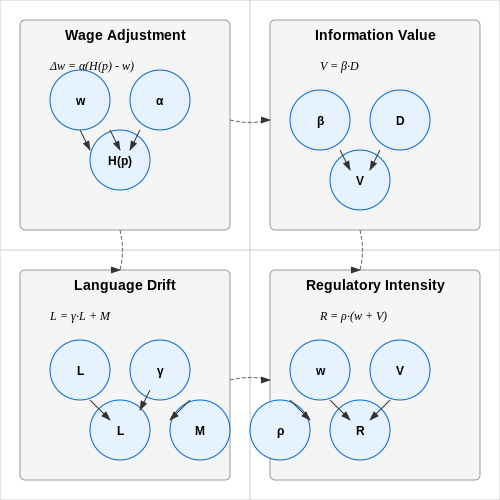
The economic impact can be modeled using task-based automation frameworks. Let α represent the automation potential of a task, and w the wage premium for human-performed work. The equilibrium wage adjustment Δw under partial automation is given by:
where β captures labor elasticity and γ measures the substitutability between human and machine labor. This suggests nonlinear wage depression effects that are most severe in occupations with high α and low γ values.
Epistemic Risks and Information Ecosystems
LLMs fundamentally alter information production and consumption dynamics. Their ability to generate plausible text at scale introduces new vulnerabilities in epistemic systems. Three key mechanisms emerge:
- Content Overproduction: The marginal cost of generating text approaches zero, flooding digital ecosystems with machine-generated content that may crowd out human-created information.
- Semantic Drift: Recursive training on model-generated outputs could lead to gradual degradation of linguistic meaning, as identified in the "stochastic parrot" problem (Bender et al., 2021).
- Adversarial Optimization: Bad actors can exploit LLMs to generate persuasive disinformation tailored to specific audiences at unprecedented scale.
These effects compound when considering the attention economy. The information-theoretic value V of content in a system dominated by LLMs follows:
where H(p) is the entropy of the information distribution and DKL measures the divergence between human (p) and machine (q) generated content distributions.
Cultural Homogenization and Linguistic Diversity
Current LLMs exhibit strong biases toward dominant languages and cultural frameworks. Analysis of training datasets reveals that English constitutes 78-92% of pretraining corpora for major models, with other languages often represented through English-centric translations. This creates a feedback loop where:
- Minority language communities adopt LLM outputs as linguistic standards
- Idiomatic richness erodes as models favor statistically dominant patterns
- Cultural specificity diminishes in favor of globally optimized representations
The language drift dynamics can be modeled using a modified Lotka-Volterra framework, where language populations Li compete for mindshare:
Here, M represents the influence of LLMs, which disproportionately affects languages with smaller Ki (carrying capacity) values.
Institutional and Governance Challenges
The long-term societal integration of LLMs requires novel governance approaches to address several structural challenges:
- Accountability Gaps: The distributed nature of model development and deployment creates complex principal-agent problems in assigning responsibility for harms.
- Value Lock-in: Early design choices in alignment techniques may permanently embed certain ethical frameworks into AI systems.
- Adaptive Regulation: Traditional regulatory approaches struggle with the rapid iteration cycles of LLM development (6-12 month major version updates).
Game-theoretic analysis suggests these challenges require mechanisms that balance innovation with oversight. The optimal regulatory intensity ρ can be derived from:
where λ represents the social cost of unregulated development, β the rate of technical progress, and C the compliance cost function.
6. Key Research Papers and Articles
6.1 Key Research Papers and Articles
- Artificial intelligence governance: Ethical considerations and ... — A number of articles are increasingly raising awareness on the different uses of artificial intelligence (AI) technologies for customers and businesses. Many authors discuss about their benefits and possible challenges. However, for the time being, there is still limited research focused on AI principles and regulatory guidelines for the developers of expert systems like machine learning (ML ...
- LLMs beyond the lab: the ethics and epistemics of real-world AI research — To address this gap, this paper provides an analysis of real-world research with LLMs and generative AI, assessing both its epistemic value and ethical concerns such as the potential for interpersonal and societal research harms, the increased privatization of AI learning, and the unjust distribution of benefits and risks.
- Responsible AI Governance: A Systematic Literature Review — This study aims to summarize and synthesize current AI gov-ernance solutions (i.e. frameworks, tools, models, and policies), examine challenges in existing AI governance solutions, and ofer insights based on the answers to the 3W1H questions. The main contributions of this study are: (1) A comprehensive analysis of 61 research papers selected from the academic literature has been presented, (2 ...
- PDF AI governance: a systematic literature review - Springer — Ethical and Responsible AI Governance: In this study, Ethical and responsible AI governance represents a foundational set of values, and guidelines intended to guide the development, deployment, and utilization of artificial intelligence technologies in a manner that aligns with societal, moral, and legal considerations.
- An Overview of Artificial Intelligence Ethics | IEEE Journals ... — This article offers a comprehensive overview of the AI ethics field, including a summary and analysis of AI ethical issues, ethical guidelines and principles, approaches to address AI ethical issues, and methods to evaluate the ethics of AI technologies. Additionally, research challenges and future perspectives are discussed.
- AI governance: a systematic literature review | AI and Ethics — The analysis is further enhanced by categorizing artifacts of AI governance under team-level governance, organization-level governance, industry-level governance, national-level governance, and international-level governance.
- Responsible artificial intelligence governance: A review and research ... — Based on this synthesis, we developed a conceptual framework for responsible AI governance (defined through structural, relational, and procedural practices), its antecedents, and its effects. The framework serves as the foundation for developing an agenda for future research and critically reflects on the notion of responsible AI governance.
- Ethical governance of artificial intelligence: An integrated analytical ... — The trend of seeking higher levels of ethics and morality provides a rich theoretical underpinning for the ethical governance of artificial intelligence (AI), which is a complex and comprehensive project that involves problem identification, path selection, and role configuration.
- (PDF) Exploring the Governance of Artificial Intelligence Ethics ... — This paper delves into the current state, challenges, and issues in the governance of artificial intelligence (AI) ethics, proposing an ethical risk assessment model and governance strategies.
- PDF AI Ethics and Governance - Springer — The black mirror metaphor is the reflection of human nature amid the carnival brought by the waves of technology, which is also the key for us to understand the whole book and promote the exploration of a new paradigm of social governance in reflection.
6.2 Recommended Books and Reports
- Prof Luciano Floridi - The Ethics of Artificial Intelligence ... - Scribd — Soft Ethics and the Governance of AI 77 6.0 Summary 77 6.1 Introduction: From Digital Innovation to the Governance of the Digital 77 6.2 Ethics, Regulation, and Governance 79 6.3 Compliance: Necessary but Insufficient 81 6.4 Hard and Soft Ethics 82 6.5 Soft Ethics as an Ethical Framework 84 6.6 Ethical Impact Analysis 87 6.7 Digital ...
- The Ethics and Governance of Artificial Intelligence — Prerequisites: None Exam Type: No Exam This reading group will examine key readings and projects surrounding the ethics and governance of the opaque complex adaptive systems that are increasingly in public and private use. We will range among the proliferation of algorithmic decisionmaking, autonomous systems, and machine learning and explanation; the search for balance between […]
- Ethics, Governance, And Policies In Artificial Intelligence PDF — Chapter 4: Establishing the Rules for Building Trustworthy AI 4.1 Careful Planning Rather Than Beta Testing 4.2 Ethics First to Inform Legislation 4.3 Further Steps for a Global Stage References Chapter 5: The Chinese Approach to Artificial Intelligence: An Analysis of Policy, Ethics, and Regulation 5.1 Introduction 5.2 AI Governance in China
- Worldwide AI ethics: A review of 200 guidelines and recommendations for ... — Moreover, investment in AI-related companies and startups has reached unprecedented levels, with governments and venture capital firms investing over $90 billion (USD) in the United States alone in 2021, accompanied by a surge in the registration of AI-related patents. 2 While these money-field advancements have brought numerous benefits, they also introduce risks and side effects that have ...
- Ethics, Governance, and Policies in Artificial Intelligence — This book offers a synthesis of investigations on the ethics, governance and policies affecting the design, development and deployment of artificial intelligence (AI). Each chapter can be read independently, but the overall structure of the book provides a complementary and detailed understanding of some of the most pressing issues brought ...
- 7 Essential Books on AI Governance Every Leader Should Read — These books collectively provide a robust foundation for understanding the multifaceted challenges of AI governance. They cover technical, ethical, geopolitical, and philosophical aspects, offering readers a comprehensive toolkit for understanding and navigating this complex landscape. Remember, the field of AI governance is rapidly evolving.
- 12 books to read about AI Ethics - LCFI — These books provide a solid foundation for entry into the AI ethics conversation. We often get requests for recommended reading on AI ethics, especially since the launch of the Master in AI Ethics and Society. As such, our Master's programme team have compiled a list of books for anyone seeking to further their understanding of the field.
- AI governance: a systematic literature review | AI and Ethics - Springer — As artificial intelligence (AI) transforms a wide range of sectors and drives innovation, it also introduces different types of risks that should be identified, assessed, and mitigated. Various AI governance frameworks have been released recently by governments, organizations, and companies to mitigate risks associated with AI. However, it can be challenging for AI stakeholders to have a clear ...
- AI Ethics Reading List - Responsible AI Toolkit — AI Ethics Reading List This is a compilation of books, papers, and resources that AI Ethicists recommend to help you manage your AI initiatives responsibly or to in general get to know AI ethics better. Thanks to all who have helped compile the list. Please consider this a living, ever-evolving list as new AI Ethics works come forward. Link
- Ethics for Artificial Intelligence Books — Advances in artificial intelligence pose a myriad of ethical questions, but the most incisive thinking on this subject says more about humans than it does about machines, says Paula Boddington, philosopher and author of a recent AI ethics textbook.We first spoke to Paula in 2017—a long time ago in a fast-moving field.
6.3 Online Resources and Communities
- Strategic Certificate in AI Ethics and Governance Leadership - LSBR, UK — The Strategic Certificate in AI Ethics and Governance Leadership offered by the Prestigious London School of Business and Research (LSBR), UK, is an advanced, transformative programme designed to equip learners with the skills and knowledge necessary to navigate and lead in the complex and evolving field of artificial intelligence (AI) ethics and governance. Delivered entirely online via our ...
- Data Science and Artificial Intelligence Ethics, Governance, and Laws ... — Data science and artificial intelligence (AI) are creating new opportunities to improve businesses' decision-making, productivity, and competitiveness. However, data science and AI also create ethical and privacy concerns. For example, a classification algorithm can harm a sub-category of the population due to bias in the data used to develop and train the model. Data scientists and AI ...
- A literature review on artificial intelligence and ethics in online ... — The new disciplinary approach of learning engineering as the merging of breakthrough educational methodologies and technologies based on the internet, data science and artificial intelligence 1 (AI) have completely changed the landscape of online learning over recent years by creating accessible, reliable, and affordable data-rich powerful learning environments (Dede et al., 2019).
- Online course on AI GOVERNANCE - ELVTR — Dive deep into AI governance, where principles and regulations guide the responsible development and deployment of AI systems. Gain the essential skills to assess risks, develop policies, and ensure ethical decision-making with cutting-edge tools like Deon, Google What-if, and IBM AI Fairness 360.
- Home | AI Governance Online — Artificial Intelligence Governance Online Evaluate your AI project based on comprehensive AI principles and norms World Wide. An automated report suggesting where should be noticed and improved in your project based on global AI governance principles and detailed explanation will be generated immediately after the online evaluation.
- Ethics of AI — The Ethics of AI is a free online course created by the University of Helsinki. The course is for anyone who is interested in the ethical aspects of AI - we want to encourage people to learn what AI ethics means, what can and can't be done to develop AI in an ethically sustainable way, and how to start thinking about AI from an ethical point of view.
- LMS And Artificial Intelligence Ethics: Navigating Ethical AI — Thus, this article delves into the implications of AI integration in LMS and guides how to navigate these challenges. Artificial Intelligence in LMS and Ethical Dilemmas Artificial intelligence is transforming how educational institutions manage and deliver learning experiences through LMS platforms.
- Global AI Ethics and Governance Observatory - UNESCO — The AI Ethics and Governance Lab brings together knowledge, case studies, good practices and cutting-edge research from experts from around the world to help provide answers to the pressing questions of AI ethics and governance.
- Ethics and Governance of AI - Berkman Klein Center — At the Berkman Klein Center, a wide range of research projects, community members, programs, and perspectives seek to address the big questions related to the ethics and governance of AI. Our first two and half years of work in this area are reviewed in "5 Key Areas of Impact," and a selection of work from across our community is found below.
- Ethics of Artificial Intelligence: Case Studies and Options for ... — the Rome Call for AI Ethics, 1 launched in February 2020, links the V atican with the UN Food and Agriculture Organization (FA O), Microsoft, IBM and the Italian Ministry of Innovation.