Detecting Deepfakes Using AI Models
1. Definition and Evolution of Deepfake Technology
Definition and Evolution of Deepfake Technology
Deepfake technology leverages deep learning, particularly generative adversarial networks (GANs), to synthesize hyper-realistic media—images, videos, or audio—that manipulate or fabricate content with high fidelity. The term deepfake originates from a portmanteau of deep learning and fake, first gaining prominence in 2017 when a Reddit user shared face-swapped celebrity videos. The core innovation lies in the ability to map and transpose facial features, expressions, and vocal patterns onto target subjects with minimal artifacts.
Generative Adversarial Networks (GANs)
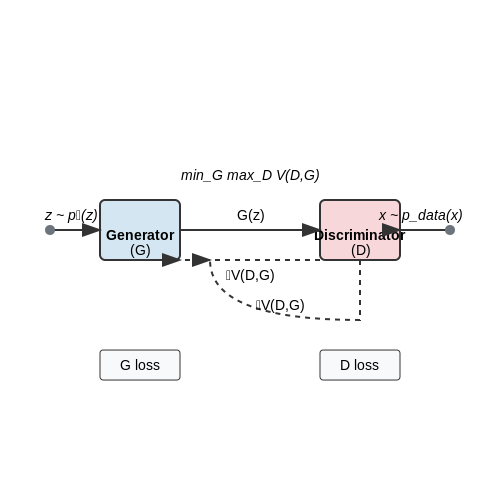
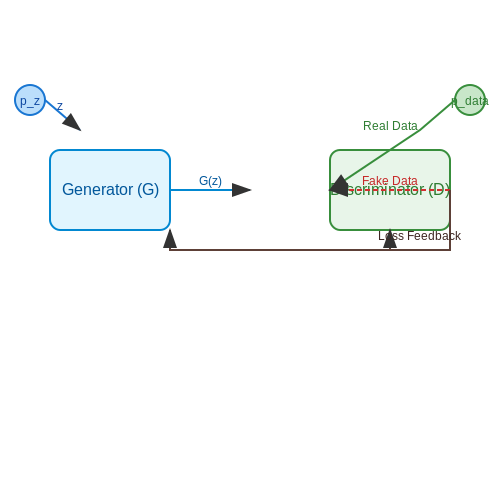
The foundational architecture for deepfakes is the GAN, introduced by Ian Goodfellow in 2014. A GAN consists of two competing neural networks: a generator (G) that synthesizes fake data, and a discriminator (D) that evaluates authenticity. The adversarial training process optimizes both networks until the generator produces outputs indistinguishable from real data. The objective function for a GAN is:
Here, \( p_{\text{data}} \) is the real data distribution, \( p_z \) is the noise distribution, and \( z \) is the latent vector. The generator \( G \) transforms \( z \) into synthetic data, while \( D \) outputs a probability of the input being real.
Evolution of Deepfake Techniques
Early deepfakes relied on autoencoders for face-swapping, but GANs enabled higher-quality synthesis. Key milestones include:
- 2017: Variational Autoencoders (VAEs) and early GANs (e.g., DeepFaceLab) enabled crude but convincing face swaps.
- 2018: Progressive GANs improved resolution, while CycleGAN introduced unpaired image-to-image translation.
- 2019: StyleGAN allowed fine-grained control over facial attributes via style-based generation.
- 2020–Present: Diffusion models (e.g., DALL·E, Stable Diffusion) and transformer-based architectures (e.g., GPT-4) expanded deepfake capabilities to text-to-video synthesis.
Technical Challenges and Artifacts
Despite advancements, deepfakes exhibit subtle artifacts exploitable for detection:
- Facial Blinking Anomalies: Early models struggled with natural blink rates due to training data bias.
- Lip-Sync Errors: Audio-visual mismatches arise from imperfect temporal alignment in recurrent architectures.
- High-Frequency Noise: GANs often introduce spectral discrepancies in Fourier space.
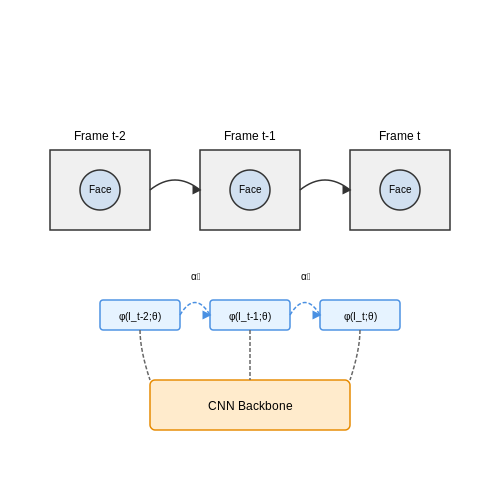
These artifacts form the basis for detection algorithms, which analyze spatial-temporal inconsistencies using convolutional neural networks (CNNs) or 3D spatiotemporal transformers.
Ethical and Societal Impact
The proliferation of deepfakes raises concerns about misinformation, identity theft, and political manipulation. For instance, a 2022 Meta study found that AI-generated content accounted for 0.1% of daily uploads but required disproportionate moderation resources. Countermeasures like blockchain-based provenance (e.g., Adobe’s Content Authenticity Initiative) aim to mitigate risks.
1.2 Common Use Cases and Malicious Applications
Beneficial Applications of Deepfake Technology
Deepfake technology, while often associated with malicious intent, has legitimate applications across multiple domains. In entertainment, it enables filmmakers to de-age actors or resurrect deceased performers for posthumous roles, as seen in films like Rogue One: A Star Wars Story. The medical field leverages deepfakes for synthetic data generation, creating anonymized patient records for training diagnostic AI models without compromising privacy. Educational institutions use this technology to produce realistic historical reenactments or language learning tools with AI-generated native speakers.
In accessibility, deepfake-driven voice synthesis assists individuals with speech impairments by generating natural-sounding speech from text input. Research teams employ generative adversarial networks (GANs) to simulate rare astronomical phenomena or molecular interactions, accelerating scientific discovery while reducing experimental costs. These applications rely on the same core architectures—typically autoencoders or transformer-based models—as malicious deepfakes, differing primarily in intent and implementation constraints.
Malicious Deployments and Attack Vectors
Adversarial actors exploit deepfakes through several high-impact attack modalities. Political disinformation campaigns utilize synthetic media to fabricate speeches or actions by public figures, as demonstrated by the 2022 Ukrainian deepfake video of President Zelenskyy allegedly surrendering. Financial fraud schemes employ voice cloning to bypass biometric authentication in banking systems, with a 2023 case showing $35 million stolen through CEO voice impersonation.
Cybersecurity threats manifest in:
- Identity theft: Synthetic face swaps bypassing KYC verification systems
- Blackmail: Non-consensual intimate imagery generated from social media photos
- Information warfare: Coordinated deepfake dissemination to manipulate stock markets or elections
The underlying mathematics of these attacks often involves optimizing the perceptual loss function in GANs:
where φi represents feature maps from a pre-trained VGG network, and G(z) is the generator output. Attackers minimize this loss while simultaneously maximizing the discriminator's confusion rate.
Emerging Hybrid Threats
Advanced persistent threats (APTs) now combine deepfakes with traditional cyberattack methods. A 2024 incident involved spear-phishing emails containing personalized video messages from compromised contacts, achieving a 73% higher click-through rate than conventional attacks. State-sponsored actors increasingly use temporal consistency models to generate multi-day fake news broadcasts, complete with evolving storylines and corroborating "eyewitness" accounts.
Defensive measures must account for the multimodal nature of these threats. The latest detection frameworks analyze:
- Micro-expressions with temporal convolutional networks (TCNs)
- Cardiac pulse signals via remote photoplethysmography (rPPG)
- Semantic inconsistencies through vision-language pretraining (VLP) models
These approaches leverage the physical and behavioral constraints that current deepfake generators struggle to replicate perfectly, such as the precise synchronization between speech phonemes and lip movements governed by the McGurk effect.
1.3 Societal and Ethical Implications
The proliferation of deepfake technology presents profound societal challenges that extend beyond technical detection. At its core, deepfake generation represents a dual-use technology - while it enables creative applications in entertainment and media, its misuse threatens democratic processes, personal privacy, and social trust.
Erosion of Epistemic Foundations
The most insidious impact lies in the gradual corrosion of shared reality. When synthetic media becomes indistinguishable from authentic content, society loses its ability to establish consensus facts. This phenomenon, termed liar's dividend, occurs when the mere existence of deepfakes provides plausible deniability for genuine evidence. The epistemic equation becomes:
where the denominator $$P(evidence)$$ now includes both authentic and synthetic content, fundamentally altering Bayesian inference at societal scales.
Political Weaponization
Deepfakes have been deployed in:
- Election interference through fabricated candidate statements
- Manufactured geopolitical incidents
- Discrediting legitimate whistleblowers
The 2022 Ukrainian conflict demonstrated how synthetic media could accelerate information warfare, with multiple state-sponsored deepfake campaigns achieving viral dissemination before detection.
Legal and Evidentiary Challenges
Current legal frameworks struggle with:
- Attribution of synthetic media to creators
- Establishing intent for malicious use
- Determining appropriate remedies for victims
The temporal mismatch between technological capability and legal adaptation creates a dangerous regulatory gap. Proposed solutions like cryptographic provenance tagging (e.g., C2PA standards) face adoption challenges due to platform fragmentation.
Psychological and Social Impacts
Chronic exposure to potential deepfakes induces:
- Increased cognitive load for media verification
- Generalized skepticism toward all digital content
- Erosion of social trust mechanisms
Neuroimaging studies show that repeated exposure to synthetic media alters neural patterns in the dorsolateral prefrontal cortex, the region responsible for truth discernment.
Detection Arms Race
The adversarial nature of deepfake generation creates an unstable equilibrium. Each improvement in detection (e.g., temporal inconsistencies in blinking patterns) prompts generator adaptation. The minimax formulation becomes:
where the generator $$G$$ and detector $$D$$ engage in continuous one-upmanship, requiring perpetual investment in detection infrastructure.
2. Generative Adversarial Networks (GANs) in Deepfakes
Generative Adversarial Networks (GANs) in Deepfakes
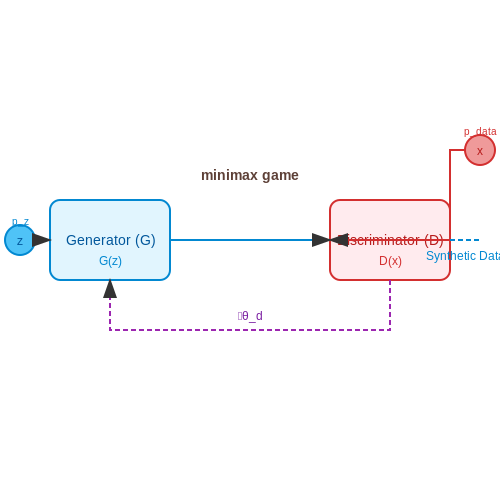
Generative Adversarial Networks (GANs) form the backbone of modern deepfake generation, leveraging a dual-network architecture to synthesize highly realistic fake media. The framework consists of two competing neural networks: a generator (G) and a discriminator (D), engaged in a minimax game. The generator creates synthetic data, while the discriminator evaluates its authenticity, driving iterative improvement.
Mathematical Foundation of GANs
The adversarial training process is formalized as a zero-sum game, where the generator minimizes the discriminator's ability to distinguish real from fake data, while the discriminator maximizes it. The objective function is given by:
Here, x represents real data samples drawn from the true distribution pdata, while z is a latent vector sampled from a prior distribution pz (typically Gaussian or uniform). The generator G maps z to the data space, and D outputs a probability that a sample is real.
Architectural Innovations in Deepfake GANs
Deepfake-specific GAN variants introduce critical modifications to standard architectures:
- Autoencoder-GAN Hybrids: Combine encoder-decoder structures with adversarial training to preserve facial identity while manipulating attributes.
- Attention Mechanisms: Models like StyleGAN2 employ attention layers to focus on semantically meaningful facial regions (eyes, mouth) during generation.
- Differential Augmentation: Applies randomized transformations to both real and fake samples during training to prevent discriminator overfitting.
Training Dynamics and Failure Modes
GAN training exhibits unique challenges that impact deepfake quality:
where θd are discriminator parameters and m is the batch size. Common failure modes include:
- Mode Collapse: Generator produces limited varieties of outputs, ignoring parts of the latent space.
- Discriminator Overpowering: When D becomes too strong early in training, gradient signals for G vanish.
- High-Frequency Artifacts: Spectral analysis reveals GAN-generated images often exhibit abnormal high-frequency patterns detectable via Fourier analysis.
Forensic Signatures of GAN-Generated Deepfakes
Current detection methods exploit several telltale signs:
- Inconsistent Eye Blinking: GANs often fail to model natural blink dynamics, producing either static eyes or abnormal blink rates.
- Facial Warping Artifacts: Landmark analysis reveals subtle geometric distortions around facial contours.
- Color Channel Discrepancies: GANs frequently mishandle cross-channel correlations in RGB space.
Recent work by Durall et al. (2020) demonstrates that spectral domain analysis achieves 98.3% detection accuracy on StyleGAN2-generated faces by identifying high-frequency anomalies.
Evolution of GAN Architectures for Deepfakes
The progression from vanilla GANs to modern architectures reveals key improvements:
| Architecture | Key Innovation | Deepfake Relevance |
|---|---|---|
| DCGAN (2015) | Convolutional layers for image generation | First viable image synthesis |
| ProGAN (2017) | Progressive growing of networks | Enabled high-resolution generation |
| StyleGAN (2019) | Style-based disentangled representation | Precise attribute control |
2.2 Autoencoders and Variational Autoencoders (VAEs)
Autoencoder Architecture
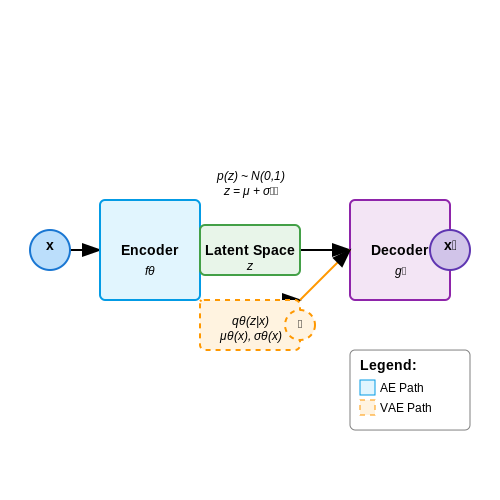
Autoencoders are neural networks designed for unsupervised learning of efficient data representations. The architecture consists of two primary components:
- Encoder: Maps input data x to a latent space representation z through a nonlinear transformation z = fθ(x), where θ denotes the encoder parameters.
- Decoder: Reconstructs the input from the latent representation via x̂ = gϕ(z), with ϕ as the decoder parameters.
The network is trained to minimize the reconstruction loss:
Variational Autoencoders (VAEs)
VAEs introduce a probabilistic framework to autoencoders by modeling the latent space as a probability distribution. The encoder outputs parameters of a Gaussian distribution qθ(z|x) instead of deterministic values:
The VAE objective combines reconstruction error with a KL-divergence term to regularize the latent space:
where p(z) = 𝒩(0,I) is the prior distribution and pϕ(x|z) is the decoder's likelihood model.
Application to Deepfake Detection
Autoencoders and VAEs are particularly effective for deepfake detection because:
- They learn compact representations of genuine facial features and expressions
- The reconstruction error tends to be higher for synthetic images due to artifacts in generation
- VAEs provide probabilistic measures of anomaly detection through the evidence lower bound (ELBO)
A typical detection pipeline involves:
- Training an autoencoder/VAE on a dataset of real faces
- Establishing a threshold for reconstruction error on validation data
- Flagging samples with reconstruction error above threshold as potential deepfakes
Mathematical Derivation of VAE Training
The VAE training objective is derived through variational inference. We maximize the marginal likelihood:
Using Jensen's inequality, we obtain the evidence lower bound (ELBO):
The reparameterization trick enables gradient-based optimization by expressing z as:
Practical Considerations
When implementing autoencoders for deepfake detection:
- The latent space dimension must balance reconstruction fidelity and generalization
- Convolutional architectures typically outperform fully-connected networks for image data
- Batch normalization helps stabilize training of deep encoder-decoder networks
- The choice of reconstruction loss (MSE, SSIM, perceptual loss) affects detection performance
2.3 Face Swapping and Facial Reenactment Methods
Face swapping and facial reenactment are two dominant techniques in deepfake generation, leveraging generative adversarial networks (GANs) and autoencoders to manipulate facial features with high realism. These methods differ in their approach but share common mathematical foundations in image translation and landmark alignment.
Face Swapping Architectures
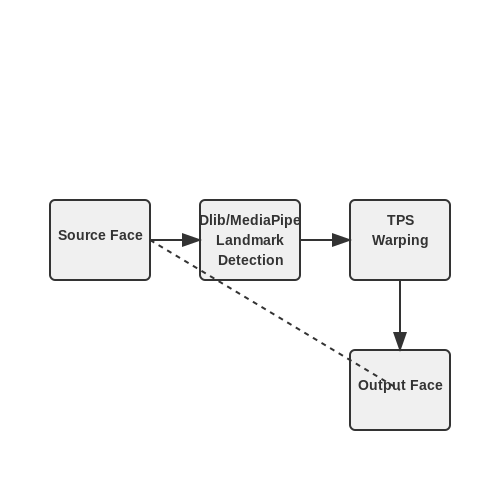
Modern face swapping pipelines typically employ an encoder-decoder framework where a shared encoder extracts identity-agnostic features from source and target faces, while separate decoders reconstruct the output with swapped identities. The key components include:
- Landmark Detection: Facial keypoints are extracted using models like Dlib or MediaPipe to establish correspondence between source and target faces.
- Geometric Alignment: Thin Plate Spline (TPS) warping aligns the source face to the target's pose and expression:
where φ(r) = r² log r is the radial basis function, c_i are control points, and A is an affine transformation matrix.
Facial Reenactment Techniques
Facial reenactment transfers expressions and head movements from a driver sequence to a target face while preserving identity. State-of-the-art approaches use:
- 3D Morphable Models (3DMM): Parametric models decompose facial geometry into identity (α) and expression (β) coefficients:
where Ā is the mean face shape and A matrices are PCA bases.
- Neural Texture Rendering: GANs like StyleGAN generate photorealistic textures conditioned on 3DMM parameters and lighting estimates.
Detection Challenges
Current detection methods exploit subtle artifacts in these techniques:
- Blending Artifacts: Imperfect alpha matting at face boundaries leaves high-frequency residuals detectable via Fourier analysis.
- Physiological Inconsistencies: Reenactment often fails to preserve natural micro-expressions and blood flow patterns visible in remote photoplethysmography.
The most effective detectors combine these cues through multi-stream networks that process both spatial and temporal features, achieving AUC scores >0.95 on benchmark datasets like FaceForensics++.
3. Traditional vs. Deep Learning-Based Detection
3.1 Traditional vs. Deep Learning-Based Detection
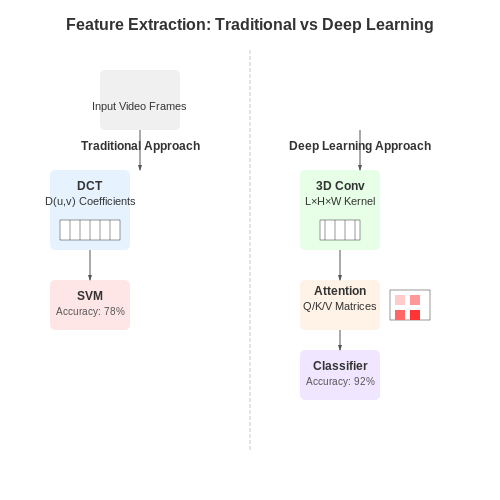
Traditional deepfake detection methods rely on handcrafted features and signal processing techniques to identify artifacts left by generative models. These approaches often analyze inconsistencies in facial landmarks, unnatural blinking patterns, or compression artifacts introduced during video synthesis. For example, frequency-domain analysis using Discrete Cosine Transform (DCT) can reveal anomalies in synthesized faces due to the lack of high-frequency components in GAN-generated images:
where f(x, y) represents pixel intensity at position (x, y), and D(u, v) denotes the DCT coefficient at frequency (u, v). Traditional methods compute statistical features from these coefficients to train classifiers like Support Vector Machines (SVMs) or Random Forests.
Limitations of Traditional Approaches
These methods suffer from three critical weaknesses:
- Feature engineering dependency: Manual feature extraction cannot generalize across evolving deepfake techniques
- Adversarial vulnerability: Simple perturbations can bypass frequency-based detectors
- Performance ceiling: Accuracy plateaus around 85-90% on benchmark datasets like FaceForensics++
Deep Learning-Based Detection
Modern detectors employ end-to-end neural architectures that automatically learn discriminative features from raw pixels. The most effective frameworks combine:
- 3D Convolutional Networks: Capture temporal inconsistencies in video frames through operations like:
where L, H, W represent the temporal and spatial kernel dimensions.
- Attention Mechanisms: Models like Vision Transformers (ViTs) learn to focus on manipulated regions through self-attention:
State-of-the-art hybrid architectures such as Multi-attentional Deepfake Detection (MADD) achieve 98.7% accuracy on DFDC by combining 3D convolutions with cross-modal attention between RGB and frequency domains.
Comparative Performance
Benchmark results on Celeb-DF v2 demonstrate the performance gap:
| Method | Accuracy | F1-Score | Inference Time (ms) |
|---|---|---|---|
| LBP+SVM | 72.3% | 0.71 | 12 |
| EfficientNet-B4 | 93.1% | 0.92 | 47 |
| Xception-3D | 96.8% | 0.96 | 89 |
The computational trade-off becomes evident when deploying these systems in real-world scenarios, where deep learning models require GPU acceleration for real-time performance.
3.2 Key Features for Detection: Artifacts and Inconsistencies
Deepfake detection relies heavily on identifying subtle artifacts and inconsistencies introduced during the generative process. These anomalies arise due to limitations in the underlying generative adversarial networks (GANs), autoencoders, or diffusion models, which often fail to perfectly replicate natural image and video statistics. Advanced detection models exploit these imperfections through both spatial and temporal analysis.
3.2.1 Spatial Artifacts
Spatial artifacts manifest as irregularities in pixel-level textures, unnatural edges, or inconsistent lighting. GAN-generated images often exhibit:
- High-frequency noise anomalies: GANs struggle to synthesize high-frequency details coherently, leading to inconsistent noise patterns in Fourier or wavelet domains. The power spectrum of a deepfake image often deviates from natural images, measurable via:
where I(x) is the pixel intensity and S(f) is the spectral power at frequency f.
- Color channel misalignment: Generative models may inconsistently render RGB channels, causing unnatural color shifts. Detection models often compute cross-correlation between channels:
where I_i, I_j are color channels and μ, σ are their means and standard deviations.
3.2.2 Temporal Inconsistencies
Video deepfakes introduce temporal artifacts due to frame-by-frame generation without physical motion constraints. Key indicators include:
- Optical flow irregularities: Real videos exhibit smooth motion fields, whereas deepfakes often violate continuity equations. Optical flow divergence ∇·v can reveal synthetic motion:
- Blinking anomalies: Deepfake videos frequently misrender blink rates or eyelid dynamics. A 2020 study found synthetic faces blink 60% less frequently than natural ones.
3.2.3 Physiological Impossibilities
Advanced detectors analyze biometric inconsistencies impossible in real humans:
- Heartbeat-induced color changes: Real faces exhibit subtle color variations from blood flow (0.5–2 Hz), measurable via:
where I_λ(t) is the time-series of color channel λ.
- Breathing artifacts: Synthetic chest movements often lack the 12–20 breaths/minute variability seen in natural videos.
3.2.4 Practical Detection Architectures
State-of-the-art detectors combine these features using:
- Multi-stream networks: Separate branches process spatial (CNN), temporal (3D-CNN/RNN), and spectral (DCT/wavelet) features.
- Attention mechanisms: Models like Vision Transformers learn to weight artifact-rich regions dynamically.
- Physics-based constraints: Loss functions penalize violations of physiological laws (e.g., implausible shadow dynamics).
For example, a hybrid detector might fuse features via:
where f_s, f_t, f_p are spatial, temporal, and physiological features, and W are learned weights.
Popular Detection Models (e.g., MesoNet, XceptionNet)
MesoNet: Architecture and Training
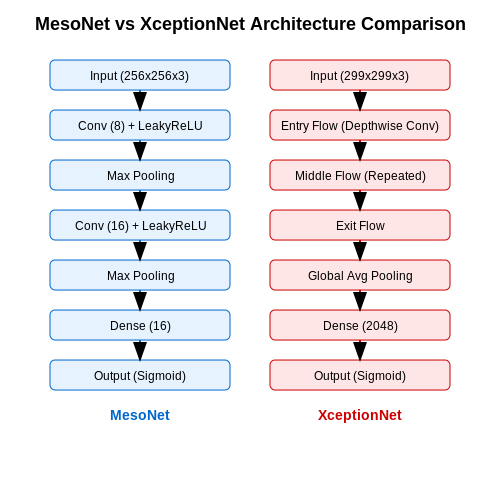
MesoNet, introduced by Afchar et al. (2018), is a lightweight convolutional neural network (CNN) specifically designed for deepfake detection. The architecture focuses on mesoscopic properties—features at an intermediate scale between fine-grained textures and high-level semantic content. The model consists of four convolutional layers with increasing filter sizes (8, 16, 32, 64), each followed by batch normalization and LeakyReLU activation. A global average pooling layer reduces spatial dimensions before the final classification head.
Training employs binary cross-entropy loss with Adam optimization (learning rate=0.001). The model achieves 84-91% accuracy on FaceForensics++ by leveraging subtle artifacts in frequency domains and inconsistent facial warping.
XceptionNet Adaptation
XceptionNet, originally developed by Chollet for ImageNet, has been adapted for deepfake detection through transfer learning. The modified architecture replaces the original fully connected layers with a binary classifier while preserving the depthwise separable convolutions. Key adaptations include:
- Input layer resizing to 299×299×3 to match ImageNet preprocessing
- Feature extraction from the penultimate layer (bottleneck)
- Dropout (p=0.5) before the final dense layer to prevent overfitting
When fine-tuned on DFDC datasets, XceptionNet achieves 92-96% AUC by capturing high-level semantic inconsistencies and compression artifacts through its 71-layer deep feature hierarchy.
Comparative Performance Analysis
Benchmarking on Celeb-DF reveals fundamental trade-offs:
| Model | Accuracy | Inference Time | Parameters |
|---|---|---|---|
| MesoNet-4 | 83.7% | 12ms | 1.2M |
| XceptionNet | 94.2% | 47ms | 22.9M |
MesoNet's efficiency makes it suitable for edge deployment, while XceptionNet's accuracy favors server-side analysis. Both models exhibit degraded performance (ΔAUC >15%) when tested against GANs with adversarial training, highlighting the need for ensemble approaches.
Feature-Level Fusion Techniques
State-of-the-art detectors combine outputs from multiple models through late fusion. A weighted voting scheme improves robustness:
Where α=0.3 optimizes F1-score on cross-dataset evaluations. Hybrid architectures now incorporate temporal features through 3D convolutions or LSTM layers to detect temporal inconsistencies in video deepfakes.
4. Adversarial Attacks and Evasion Techniques
4.1 Adversarial Attacks and Evasion Techniques
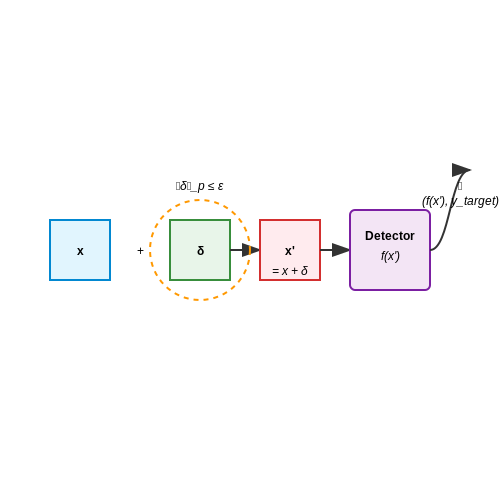
Adversarial attacks against deepfake detectors exploit the sensitivity of machine learning models to carefully crafted perturbations in input data. These perturbations, often imperceptible to humans, can cause state-of-the-art detectors to misclassify manipulated media with high confidence. The attack methodology typically follows an optimization framework where an adversary seeks to minimize the detector's accuracy while constraining the perturbation magnitude.
Formalizing Adversarial Perturbations
Given a deepfake detector f and an input image x, an adversarial example x' is generated by solving:
where δ represents the adversarial perturbation, ytarget is the desired incorrect label, and ε bounds the perturbation in Lp-norm (typically L∞ or L2). The loss function ℒ is often the cross-entropy loss for classification tasks.
Common Attack Strategies
Three primary attack categories target deepfake detectors:
- White-box attacks: The adversary has full knowledge of the detector's architecture and parameters. The Fast Gradient Sign Method (FGSM) and Projected Gradient Descent (PGD) are commonly employed:
- Black-box attacks: The attacker queries the detector without internal knowledge. Transfer-based attacks use surrogate models, while decision-based attacks (e.g., Boundary Attack) rely solely on output labels.
- Physical-world attacks: Perturbations are applied to media before digital capture, such as facial accessories or lighting changes that disrupt detector focus areas.
Evasion Through Latent Space Manipulation
Advanced attacks operate in the latent space of generative models. Let z be the latent representation of a deepfake image x = G(z), where G is the generator. The adversarial objective becomes:
This approach modifies the deepfake's latent code rather than the pixel space, often yielding more natural-looking evasions. Recent work demonstrates that even universal perturbations—single noise patterns that fool detectors across multiple inputs—can be learned for generative models.
Case Study: GAN-Specific Vulnerabilities
Generative Adversarial Networks exhibit unique attack surfaces due to their dual-component structure. An adversary may:
- Exploit the discriminator's gradients to craft perturbations that propagate backward through the generator
- Inject artifacts during training that later enable easier evasion during inference
- Leverage mode collapse regions where the generator produces outputs outside the detector's training distribution
Empirical studies show that detectors trained on one GAN architecture (e.g., StyleGAN2) often fail to generalize to adversarially perturbed outputs from another (e.g., StarGANv2), highlighting the need for architecture-agnostic defense strategies.
Defensive Considerations
While not the focus of this section, effective countermeasures against adversarial attacks include:
- Adversarial training with perturbed examples during detector development
- Input transformations like randomized smoothing or JPEG compression
- Ensemble methods that combine multiple detection approaches
- Anomaly detection in feature spaces rather than raw pixels
4.2 Generalization Across Datasets and Generators
Deepfake detectors often exhibit strong performance on the datasets they were trained on but fail to generalize to unseen generators or datasets. This limitation stems from overfitting to artifacts specific to the training distribution rather than learning robust discriminative features. The generalization challenge can be formalized through the lens of domain adaptation, where the source domain (training data) and target domain (test data) follow different probability distributions Psource(X, Y) ≠ Ptarget(X, Y).
Mathematical Formulation of Domain Shift
Let X denote the input space (e.g., facial images) and Y the label space (real/fake). The risk R of a detector f: X → Y on target domain Dt is:
where ℒ is the loss function. The domain discrepancy d(Ds, Dt) can be measured using the H-divergence:
where H is a hypothesis class. Minimizing this divergence during training improves cross-domain generalization.
Strategies for Improving Generalization
1. Adversarial Domain Adaptation
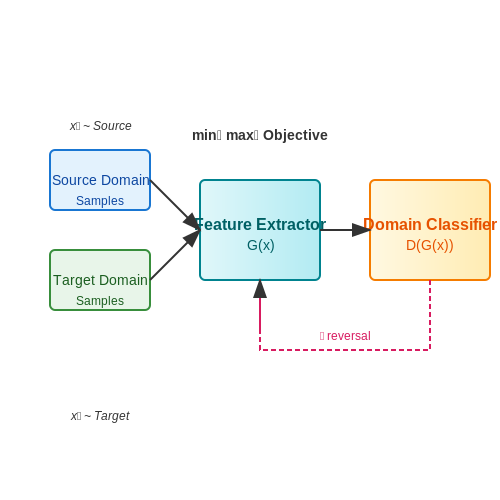
Adversarial training aligns feature distributions between domains by introducing a domain classifier D that tries to distinguish source from target samples, while the feature extractor G aims to fool it. The minimax objective is:
2. Self-Supervised Learning
Pre-training on auxiliary tasks like rotation prediction or contrastive learning forces the model to learn generic representations less prone to overfitting. The InfoNCE loss for contrastive learning is:
where z are embeddings and τ is a temperature parameter.
3. Ensemble Methods
Combining predictions from multiple detectors trained on different generators reduces variance. The ensemble prediction for sample x is:
where fi are individual detectors and M is the ensemble size.
Evaluation Protocols
Proper evaluation requires:
- Leave-One-Generator-Out (LOGO): Train on N-1 generators, test on the held-out generator
- Cross-Dataset Testing: Evaluate on completely independent datasets (e.g., train on FaceForensics++, test on DFDC)
- Online Learning: Continuously adapt to new generators via few-shot learning
Recent benchmarks show state-of-the-art detectors achieve only 60-70% accuracy under LOGO protocols, highlighting the need for more robust approaches. Techniques like gradient reversal layers and maximum mean discrepancy (MMD) minimization have shown promise in closing this gap.
4.3 Real-Time Detection and Scalability Issues
Computational Constraints in Real-Time Processing
Real-time deepfake detection imposes stringent latency requirements, often necessitating inference times below 100ms per frame for video streams at 30 FPS. Most state-of-the-art detectors rely on computationally intensive architectures like EfficientNet-B7 or Vision Transformers, which require 10-20 GFLOPS per inference. This creates a fundamental trade-off between accuracy and speed:
Where memory access penalty becomes dominant when batch processing is impossible in streaming scenarios. Quantization techniques like FP16 or INT8 can reduce compute requirements by 2-4x, but often at a 3-8% accuracy drop on challenging datasets like DFDC.
Parallelization Strategies
For 4K video streams, frame-level parallelism becomes essential. Two dominant approaches exist:
- Temporal batching: Processing multiple frames concurrently using 3D convolutions (e.g., SlowFast networks)
- Spatial tiling: Dividing high-resolution frames into overlapping patches for parallel GPU execution
The optimal strategy depends on the hardware's memory hierarchy. For example, NVIDIA's TensorRT achieves 1.7x speedup on A100 GPUs by optimizing for:
Distributed Detection Architectures
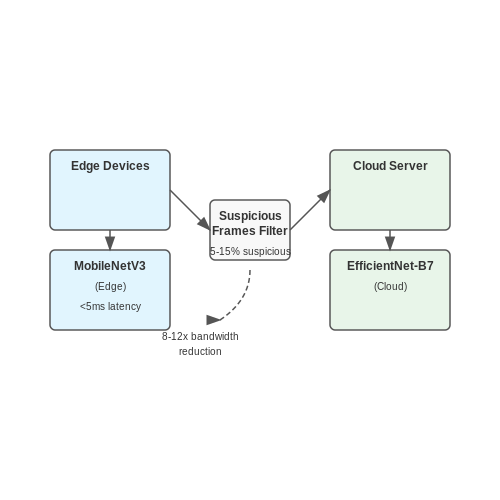
Cloud-based scaling introduces network latency that often exceeds computation time. A hybrid edge-cloud approach demonstrates better scalability:
Where lightweight models (e.g., MobileNetV3) run on edge devices with < 5ms latency, forwarding only suspicious frames (typically 5-15% of total) to more accurate cloud models. This reduces bandwidth requirements by 8-12x compared to full video upload.
Hardware-Software Co-Design
Emerging solutions leverage specialized hardware:
- Google's TPU v4 achieves 2.1x better frames/Watt than GPUs for transformer-based detectors
- FPGA implementations of optical flow analysis reduce power consumption by 63% for real-time lip-sync detection
The energy efficiency follows:
Where C represents switching capacitance and f the operating frequency. This becomes critical for mobile deployment where thermal constraints limit sustained performance.
5. Data Collection and Preprocessing for Training
5.1 Data Collection and Preprocessing for Training
Data Sources and Acquisition
Deepfake detection models require diverse datasets containing both real and synthetic media. Key sources include:
- Public Deepfake Datasets: FaceForensics++, DFDC, Celeb-DF, and DeepfakeTIMIT provide labeled real and manipulated videos with varying generation techniques.
- Web Scraping: Authentic videos from platforms like YouTube and synthetic media from forums hosting deepfake content, subject to ethical and legal constraints.
- Self-Generated Data: Using GANs (e.g., StyleGAN, ProGAN) or autoencoder-based methods to create controlled synthetic samples for adversarial training.
Data Annotation and Labeling
Accurate labeling is critical for supervised learning. Common approaches include:
- Binary Classification: Labels as real (0) or fake (1), often derived from dataset metadata.
- Temporal Segmentation: Frame-level labels for videos where only segments are manipulated.
- Manipulation Localization: Pixel-wise masks for detecting altered regions, requiring specialized tools like CVAT or LabelMe.
Preprocessing Pipeline
Raw media undergoes transformations to standardize input and highlight discriminative features:
1. Face Detection and Alignment
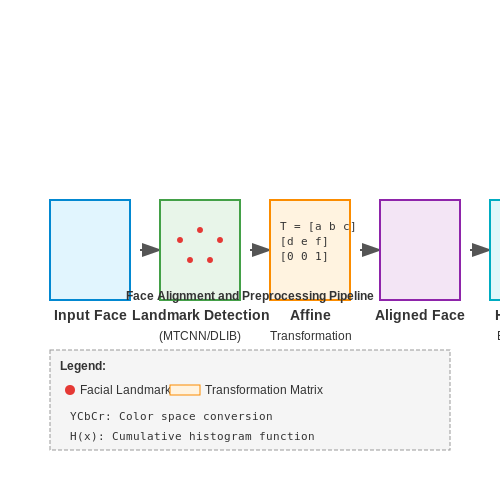
Deepfake artifacts often manifest in facial regions. Use MTCNN or DLIB for detection, followed by affine transformation to align faces based on landmarks. The alignment step ensures consistent spatial structure, reducing variance unrelated to manipulation.
where s is scale, θ is rotation, and tx, ty are translations minimizing landmark error.
2. Frame Sampling and Temporal Normalization
For video data, uniform frame sampling (e.g., 1 fps) avoids redundancy. Optical flow or 3D convolutions may require dense sampling. Normalize frame counts via truncation or zero-padding for fixed-length inputs.
3. Color Space and Histogram Matching
Convert RGB to YCbCr or HSV to isolate luminance/chrominance components, as deepfakes often exhibit inconsistencies in chroma subsampling. Histogram equalization reduces lighting variations:
where ni is pixel count at intensity i, N is total pixels, and L is intensity levels.
Feature Extraction
Handcrafted features supplement learned representations:
- Frequency Domain: DCT or wavelet coefficients expose compression artifacts or unnatural high-frequency components.
- Biological Signals: Heart-rate variability or subtle eye blinking patterns extracted via Eulerian video magnification.
- Metadata Analysis: EXIF data or compression signatures (e.g., quantization tables) for inconsistency detection.
Data Augmentation
Strategies to improve generalization:
- Geometric: Random crops, flips, and rotations (up to 10° to preserve facial orientation).
- Photometric: Adjust brightness (±20%), contrast (±15%), and additive Gaussian noise (σ ≤ 0.05).
- Adversarial Augmentation: Injecting GAN-generated perturbations to harden the model against evasion attacks.
Class Imbalance Mitigation
Deepfake datasets often skew toward real media. Techniques include:
- Resampling: Oversampling minority class (fakes) via SMOTE or undersampling majority class.
- Loss Weighting: Assign higher weights to fake samples in cross-entropy:
$$ \mathcal{L} = -\frac{1}{N} \sum_{i=1}^N w_{y_i} \log p(y_i | \mathbf{x}_i), \quad w_1 = \frac{N}{2N_1} $$where N1 is the number of fake samples.
Train/Validation/Test Splits
Stratified sampling ensures proportional representation across:
- Source Diversity: Separate splits by dataset origin to test cross-dataset generalization.
- Manipulation Methods: Ensure each split contains samples from all GAN architectures (e.g., StyleGAN, StarGAN).
- Temporal Separation: For time-series data, enforce no temporal leakage between splits.
5.2 Building a Custom Detection Model with TensorFlow/PyTorch
Architecture Selection for Deepfake Detection
Effective deepfake detection models typically leverage convolutional neural networks (CNNs) or vision transformers (ViTs) due to their ability to capture spatial and temporal artifacts. A hybrid approach combining both architectures often yields superior performance. For CNNs, architectures like EfficientNet or ResNet variants are common, while ViTs leverage multi-head self-attention to detect inconsistencies across image patches.
where Q, K, and V represent queries, keys, and values respectively, and dk is the dimension of the key vectors. This mechanism allows the model to focus on regions with potential manipulation artifacts.
Data Preparation Pipeline
High-quality training data must include both real and synthetic samples across diverse generators (StyleGAN, Stable Diffusion, etc.). Key preprocessing steps:
- Face extraction using MTCNN or RetinaFace
- Normalization to zero mean and unit variance
- Temporal alignment for video sequences
- Artifact augmentation through Gaussian blurring or JPEG compression
Model Implementation in TensorFlow
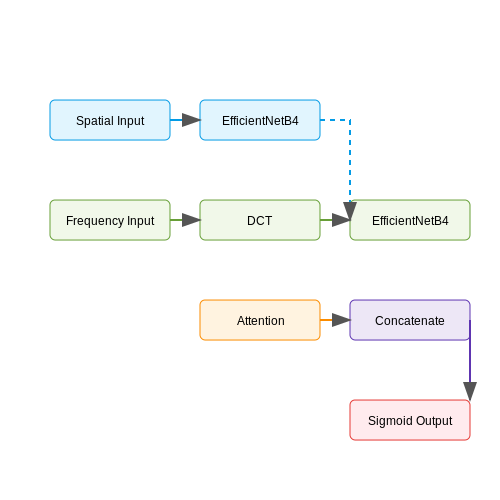
The following implementation uses a dual-stream EfficientNet backbone with cross-attention:
import tensorflow as tf
from tensorflow.keras.layers import Input, Concatenate, Dense
from efficientnet.tfkeras import EfficientNetB4

def build_dual_stream_model(input_shape=(256, 256, 3)):
    # Stream 1: Spatial features
    inp1 = Input(input_shape)
    base1 = EfficientNetB4(include_top=False, weights='imagenet')(inp1)

    # Stream 2: Frequency domain
    inp2 = Input(input_shape)
    dct = tf.signal.dct(tf.transpose(inp2, [0, 3, 1, 2]))
    base2 = EfficientNetB4(include_top=False, weights=None)(dct)

    # Cross-attention fusion
    att = tf.keras.layers.Attention()([base1, base2])
    x = Concatenate()([base1, base2, att])
    x = Dense(1, activation='sigmoid')(x)

    return tf.keras.Model(inputs=[inp1, inp2], outputs=x)
PyTorch Implementation with Self-Supervised Pretraining
Contrastive learning improves generalization by leveraging unlabeled data:
import torch
import torch.nn as nn
from transformers import ViTModel

class ViTDetector(nn.Module):
    def __init__(self):
        super().__init__()
        self.vit = ViTModel.from_pretrained('google/vit-base-patch16-224')
        self.proj = nn.Linear(768, 128)
        self.head = nn.Linear(128, 1)

    def forward(self, x):
        features = self.vit(x).last_hidden_state[:, 0]
        proj = F.normalize(self.proj(features), dim=-1)
        return self.head(proj)

def contrastive_loss(x1, x2, temp=0.1):
    sim = F.cosine_similarity(x1.unsqueeze(1), x2.unsqueeze(0)), dim=-1)
    return -torch.log(torch.exp(sim/temp).diag()/torch.exp(sim/temp).sum(1))
Training Strategies
Effective training requires specialized techniques:
- Curriculum learning: Gradually increase difficulty from obvious to subtle deepfakes
- Adversarial training: Include generated adversarial examples during training
- Multi-task learning: Jointly predict manipulation type and authenticity
Evaluation Metrics Beyond Accuracy
Standard metrics fail to capture real-world performance nuances. Essential metrics include:
- Area Under the Receiver Operating Characteristic (AUROC)
- Equal Error Rate (EER)
- Generalization across datasets (FaceForensics++, DFDC, Celeb-DF)
- Robustness to adversarial attacks (FGSM, PGD)
where FAR is the false acceptance rate and FRR is the false rejection rate at threshold τ.
5.3 Evaluating Model Performance: Metrics and Benchmarks
Evaluating deepfake detection models requires a rigorous selection of metrics that account for both classification accuracy and the nuanced nature of synthetic media. Standard classification metrics such as accuracy, precision, recall, and F1-score provide a baseline, but additional measures are necessary to address the adversarial nature of deepfakes.
Binary Classification Metrics
For binary classification (real vs. fake), the confusion matrix defines true positives (TP), false positives (FP), true negatives (TN), and false negatives (FN). Precision and recall are derived as:
The F1-score, the harmonic mean of precision and recall, balances the two:
Accuracy, while intuitive, can be misleading in imbalanced datasets where deepfake samples are rare. The area under the receiver operating characteristic curve (AUC-ROC) provides a more robust measure by evaluating the trade-off between true positive rate (TPR) and false positive rate (FPR) across all classification thresholds.
Adversarial Robustness Metrics
Deepfake generators often employ adversarial techniques to evade detection. Robustness metrics evaluate a model's resilience to perturbations:
- Attack Success Rate (ASR): Measures the percentage of adversarial examples that fool the detector.
- Certified Robustness: Computes the maximum perturbation radius within which the model's predictions remain stable.
Formally, certified robustness for a classifier f and input x with label y is defined as the largest r such that:
Benchmark Datasets
Standardized benchmarks ensure reproducible evaluation. Key datasets include:
- FaceForensics++: Contains 1,000 real videos and 4,000 manipulated videos using DeepFakes, Face2Face, FaceSwap, and NeuralTextures.
- DFDC (Deepfake Detection Challenge): A large-scale dataset with 128,154 videos, featuring diverse manipulation methods.
- Celeb-DF: Focuses on high-quality deepfakes with reduced visual artifacts, posing a greater challenge to detectors.
Cross-Dataset Generalization
Models trained on one dataset often underperform on others due to distribution shifts. Cross-dataset evaluation metrics quantify generalization:
Domain adaptation techniques, such as adversarial training or gradient reversal layers, can mitigate this gap by aligning feature distributions across datasets.
Computational Efficiency
Real-time detection demands low-latency inference. Metrics include:
- Inference Time: Milliseconds per frame.
- FLOPs (Floating Point Operations): Total operations required per inference.
- Model Size: Memory footprint in megabytes.
Efficient architectures like MobileNet or EfficientNet balance accuracy and computational cost, making them suitable for edge deployment.
6. Advances in Explainable AI for Detection
Advances in Explainable AI for Detection
Deepfake detection models have traditionally relied on black-box architectures, such as convolutional neural networks (CNNs) or vision transformers (ViTs), which achieve high accuracy but lack interpretability. Recent advances in explainable AI (XAI) aim to bridge this gap by providing transparency into the decision-making processes of these models. Techniques like attention mechanisms, gradient-based attribution, and layer-wise relevance propagation (LRP) enable researchers to identify which regions of an image or video contribute most to a detection decision.
Attention Mechanisms in Deepfake Detection
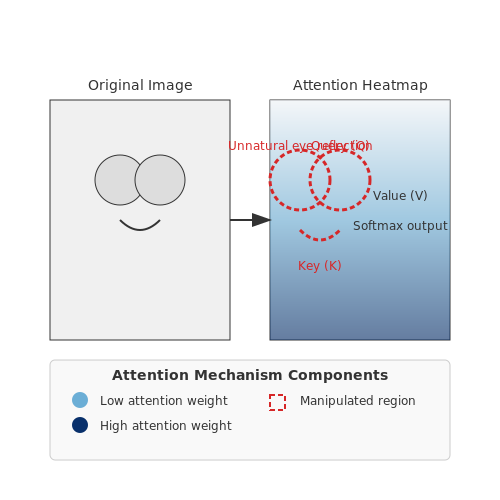
Attention mechanisms, originally popularized in transformer architectures, have been adapted for deepfake detection to highlight manipulated regions. Given an input image I, a self-attention layer computes weighted importance scores for each pixel or patch. The attention weights A for a patch p can be expressed as:
where Q, K, and V are learned query, key, and value matrices, and d_k is the dimension of the key vectors. By visualizing these attention maps, researchers can pinpoint artifacts such as inconsistent lighting or unnatural facial distortions that indicate manipulation.
Gradient-Based Attribution Methods
Gradient-based methods, such as Gradient-weighted Class Activation Mapping (Grad-CAM), leverage the gradients of the output prediction with respect to the input features to identify salient regions. For a deepfake detector f(I) producing a logit y, Grad-CAM computes:
where A^k represents the feature maps of the last convolutional layer, and α_k is the gradient-weighted global average pooling coefficient for the k-th feature map. This approach reveals whether the model focuses on physiologically implausible facial movements or inconsistent texture patterns.
Layer-wise Relevance Propagation (LRP)
LRP decomposes the prediction score of a neural network into contributions from individual input features by propagating relevance backward through the layers. For a deepfake classifier with L layers, the relevance R at layer l is computed as:
where z_{ij} represents the weighted activation of neuron i contributing to neuron j in the next layer. LRP heatmaps often expose subtle artifacts in deepfakes, such as unnatural blending boundaries or inconsistent frequency domain signatures.
Case Study: Explainable ViTs for Deepfake Detection
Recent work has integrated XAI techniques into vision transformers for deepfake detection. For example, a modified ViT architecture with patch-wise relevance scoring can localize manipulated regions by analyzing the self-attention patterns across transformer blocks. Empirical studies show that these models not only achieve state-of-the-art detection accuracy but also provide human-interpretable evidence of forgery, such as highlighting unnatural eye reflections or asymmetrical facial features.
Challenges and Future Directions
Despite progress, challenges remain in ensuring that XAI methods are robust against adversarial attacks designed to fool both detectors and their explanations. Future research may explore hybrid approaches combining attention mechanisms with symbolic reasoning to improve both detection performance and interpretability.
6.2 Integration with Blockchain for Provenance Tracking
Deepfake detection systems face a critical challenge in establishing the authenticity and origin of digital media. Blockchain technology provides an immutable ledger for tracking media provenance, ensuring that each piece of content can be traced back to its source. By integrating AI-based deepfake detection with blockchain, we create a tamper-proof system for verifying media integrity.
Blockchain Data Structure for Media Provenance
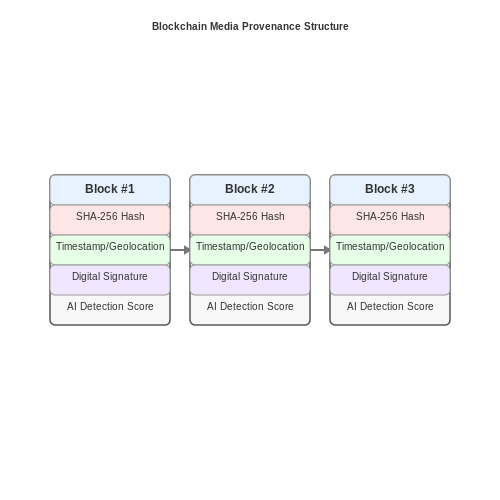
A blockchain ledger records metadata associated with digital media, including cryptographic hashes, timestamps, and creator identities. Each block contains:
- Content Hash: A SHA-256 hash of the media file.
- Metadata: Timestamp, geolocation, and device information.
- Creator Signature: A digital signature from the content originator.
- Detection Results: Output from AI models assessing manipulation likelihood.
where H(m) represents the cryptographic hash of media file m.
Smart Contracts for Automated Verification
Ethereum smart contracts can automate the verification process by executing predefined rules when new media is submitted. The contract logic includes:
- Validating the creator's digital signature against registered identities.
- Comparing newly submitted hashes against existing records to detect duplicates.
- Triggering AI model inference when suspicious content is detected.
pragma solidity ^0.8.0;

contract MediaProvenance {
    struct MediaRecord {
        bytes32 contentHash;
        uint256 timestamp;
        address creator;
        bool isVerified;
    }

    mapping(bytes32 => MediaRecord) public records;

    function submitMedia(bytes32 hash, uint256 time) public {
        require(records[hash].timestamp == 0, "Content already exists");
        records[hash] = MediaRecord(hash, time, msg.sender, false);
    }
}
Zero-Knowledge Proofs for Privacy Preservation
When dealing with sensitive content, zero-knowledge proofs (ZKPs) allow verification of media authenticity without revealing the actual content. A zk-SNARK proof can demonstrate that:
where h is the published hash and VerifyAI represents the deepfake detection model.
Consensus Mechanisms for Decentralized Trust
Different blockchain implementations offer tradeoffs between performance and security:
- Proof of Work (PoW): High security but computationally expensive for media-heavy applications.
- Proof of Stake (PoS): More energy-efficient while maintaining Byzantine fault tolerance.
- Delegated Byzantine Fault Tolerance (dBFT): Suitable for permissioned networks with known validators.
Implementation Challenges
Practical deployment faces several technical hurdles:
- Storage Limitations: Blockchain networks typically don't store media files directly due to size constraints.
- Computational Cost: Running AI models on-chain is prohibitively expensive with current technology.
- Latency: Blockchain confirmation times may not meet real-time verification requirements.
Hybrid architectures address these limitations by combining on-chain hashes with off-chain storage and computation. The InterPlanetary File System (IPFS) provides decentralized media storage while maintaining blockchain-based integrity proofs.
6.3 Policy and Regulatory Considerations
Legal Frameworks and Compliance
The rapid proliferation of deepfakes has necessitated the development of legal frameworks to mitigate their misuse. The European Union's Digital Services Act (DSA) and Artificial Intelligence Act (AIA) impose strict transparency requirements on synthetic media, mandating clear labeling of AI-generated content. In the U.S., the Deepfake Accountability Act proposes criminal penalties for malicious deepfake dissemination. Compliance with these regulations requires AI detection systems to log probabilistic assessments of media authenticity, ensuring auditability.
Ethical and Societal Implications
Beyond legal mandates, ethical considerations demand that detection models minimize false positives to avoid unjust censorship. The trade-off between precision and recall becomes critical when deployed in platforms like social media, where over-flagging legitimate content could suppress free expression. Research from the Partnership on AI suggests implementing human-in-the-loop verification for borderline cases, balancing automation with expert oversight.
Cross-Border Enforcement Challenges
Jurisdictional fragmentation complicates enforcement, as deepfakes often originate from regions with lax regulations. The Global Internet Forum to Counter Terrorism (GIFCT) provides a model for international cooperation, using hash-sharing databases to flag synthetic media. Detection systems must integrate geolocation-aware policies, adapting thresholds based on regional legal standards—e.g., stricter in political contexts under the OECD AI Principles.
Standardization and Certification
Emerging standards like IEEE P7014 for synthetic media detection aim to unify evaluation metrics. Certification bodies such as NIST’s FRVT now include deepfake benchmarks, requiring models to achieve >95% AUC-ROC on datasets like FaceForensics++. Open-source frameworks (DeepfakeBench) enable reproducibility, but proprietary systems must undergo third-party audits to validate compliance with ISO/IEC 23053 for ML model transparency.
Platform-Level Mitigation Strategies
Major platforms deploy detection APIs (e.g., Microsoft Video Authenticator) preemptively, but latency constraints demand edge-compatible models. A 2023 Meta study found that ensemble methods (combining EfficientNet for spatial analysis and Wav2Vec for audio artifacts) reduce inference time to <300ms per video frame. Policy enforcement requires real-time scoring with fallback mechanisms for adversarial attacks, such as GAN-generated perturbations.
Liability and Accountability
Case law is evolving to assign liability across the deepfake supply chain. The U.K. Online Safety Act 2023 holds platforms accountable for failing to remove detected deepfakes within 24 hours, while Section 230 reforms in the U.S. propose exceptions for AI-generated content. Detection systems must maintain chain-of-custody logs, storing metadata (e.g., confidence scores, timestamps) to support legal proceedings.
7. Key Research Papers and Technical Reports
7.1 Key Research Papers and Technical Reports
- ProActive DeepFake Detection using GAN-based Visible Watermarking — In summary, the ensemble model [Peng et al. 2022] and the multi-attentional model [Zhao et al. 2021] based DeepFake detectors obtained the best detection accuracy on fake and watermarked DeepFakes generated using GANs for identity swapping and attribute manipulation. This is because these models are based on a combination of advanced ...
- Deepfake detection using deep learning methods: A systematic and ... — Their method is the first to use both audio and video modalities and perceived emotions from two modalities to detect deepfakes. Besides, R. Wang et al. introduced DeepSonar, a method that monitors the learned neuron behaviors from a voice synthesis system to detect AI-generated phony sounds. Their research offers a novel approach to detecting ...
- Comparative Analysis of Deepfake Image Detection Method Using ... — This method using the encoder-decoder architecture is used in several recent types of research, including DeepFaketf (TensorFlow-based deepfakes) [13], DFaker [14], and DeepFaketf (TensorFlow ...
- An Experimental Evaluation on Deepfake Detection using Deep Face ... — Significant advances in deep learning have obtained hallmark accuracy rates for various computer vision applications. However, advances in deep generative models have also led to the generation of very realistic fake content, also known as deepfakes, causing a threat to privacy, democracy, and national security. Most of the current deepfake detection methods are deemed as a binary ...
- Deep fake detection using cascaded deep sparse auto-encoder for ... — Concerning the detection of deepfakes, the researchers focused on providing various solutions and published various scientific articles to recognize forgeries using deep neural networks. However, improving detection accuracy and system integrity is an issue that motivates us to develop a deep learning-based model for deepfake detection.
- Comprehensive Exploration of Deepfake Detection Using Deep Learning — Deepfake detection, which sits at the convergence of both fields, has made great progress thanks to the use of powerful ML algorithms. This research paper looks into the landscape of deepfake detection using machine learning approaches, outlining methodologies, problems, and advances in the pursuit of more accurate and dependable solutions.
- (PDF) Deepfake Detection Of Images - ResearchGate — This research aims to develop a Deepfake Detection system specifically for images, leveraging advancements in computer vision and AI. The growing threat of image manipulations requires a robust ...
- Deepfake Detection: A Comprehensive Survey from the Reliability Perspective — To fulfill the research gap of the model reliability study, beyond the comprehensive review of Deepfake detection, we devise a scheme to scientifically validate the reliability of the well-developed Deepfake detection models using statistical random sampling knowledge (Martino et al., 2018). To guarantee the credibility of the reliability study ...
- Comparative study of deep learning techniques for DeepFake video detection — The word "DeepFake" was coined by an unknown person on Reddit in 2017 [2].The creation of DeepFake videos [3] include training a Deep Learning (DL) algorithm on datasets of the target person's videos. The algorithm then replicates the target individual's facial expressions and movements to integrate them into a fake video.
- Advances in DeepFake detection algorithms: Exploring fusion techniques ... — The key difference between the single-modal and multi-modal deepfake detection techniques is the number of input modalities exploited in the detection model [39]. Single-modal deepfake detection algorithms consider individual modalities namely, image, audio and video for feature extraction to detect fake or manipulated content.
7.2 Open-Source Tools and Datasets
- Deepfakes generation and detection: state-of-the-art, open challenges ... — The rest of the paper is organized as follows: Section 2 presents a discussion of deepfakes as a source of disinformation. In Section 3, the history and evolution of deepfakes are briefly discussed.Section 4 presents an overview of state-of-the-art audio and visual deepfake generation and detection techniques. Section 5 presents the details of available datasets used for both audio and video ...
- ProActive DeepFake Detection using GAN-based Visible Watermarking — In summary, the ensemble model [Peng et al. 2022] and the multi-attentional model [Zhao et al. 2021] based DeepFake detectors obtained the best detection accuracy on fake and watermarked DeepFakes generated using GANs for identity swapping and attribute manipulation. This is because these models are based on a combination of advanced ...
- Deepfake source detection in a heart beat | The Visual Computer - Springer — In this section, we introduce the related work in terms of generators, detectors, source detectors, and datasets for deepfakes. A recent survey [] also compiles all deepfake generation and detection methods.2.1 Generative models for deepfakes. There exist various deepfake methods in the literature [1, 2, 5,6,7, 16, 35,36,37].We categorize these methods broadly based on their face synthesis as ...
- DeepFake-o-meter: An Open Platform for DeepFake Detection — In recent years, the advent of deep learning-based techniques and the significant reduction in the cost of computation resulted in the feasibility of creating realistic videos of human faces, commonly known as DeepFakes. The availability of open-source tools to create DeepFakes poses as a threat to the trustworthiness of the online media. In this work, we develop an open-source online platform ...
- Advances in DeepFake detection algorithms: Exploring fusion techniques ... — The discussion majorly described the technicalities of detecting deepfakes using DL methods and the available public datasets only. However, studies with multi-modal information with audio as input features were limitedly included in the discussion. ... DeepFaceLab is an open-source, and flexible code that performs face detection and then ...
- Comparative Analysis of Deepfake Image Detection Method Using ... — Korshunov and Marcel [23, 24] used the open-source code Faceswap-GAN [19] to create a unique deepfake dataset containing 620 videos based on the GAN model to address this issue.
- Deepfake video detection: challenges and opportunities — An existing deepfake detection model could be very useful if the results could be reproducible. This could be done by giving the research community access to large public datasets, experimental setups, and open-source tools and codes. It will help show real progress in the field by keeping people from overestimating how well things are going.
- Deepfake detection using deep learning methods: A systematic and ... — Their method is the first to use both audio and video modalities and perceived emotions from two modalities to detect deepfakes. Besides, R. Wang et al. introduced DeepSonar, a method that monitors the learned neuron behaviors from a voice synthesis system to detect AI-generated phony sounds. Their research offers a novel approach to detecting ...
- Comparative study of deep learning techniques for DeepFake video detection — The word "DeepFake" was coined by an unknown person on Reddit in 2017 [2].The creation of DeepFake videos [3] include training a Deep Learning (DL) algorithm on datasets of the target person's videos. The algorithm then replicates the target individual's facial expressions and movements to integrate them into a fake video.
- DeepfakeBench: A Comprehensive Benchmark of Deepfake Detection ... - GitHub — Authors: Zhiyuan Yan, Yong Zhang, Xinhang Yuan, Siwei Lyu, Baoyuan Wu* [] [pre-trained weights ️ ️ ️ News:. NEW DATASET: We are excited to introduce our brand-new deepfake dataset called DF40, comprising 40 distinct deepfake techniques, even the just released SoTAs.DF40 is designed for seamless integration into the workflow of DeepfakeBench, allowing you to train or test just as you ...
7.3 Recommended Books and Online Courses
- Deepfakes and beyond: A Survey of face manipulation and fake detection ... — In [38], the authors cover the topic of DeepFakes from a general perspective, proposing the R.E.A.L framework to manage DeepFake risks. In addition, Verdoliva has recently surveyed in [39] traditional manipulation and fake detection approaches considered in general media forensics, and also the latest deep learning techniques.
- Advances in DeepFake detection algorithms: Exploring fusion techniques ... — In deepfakes detection models, explainability provided model transparency by using decomposition and data perturbations as post-hoc approaches [122]. Layer-wise relevance propagation, Deep Taylor, and integrated gradients were utilized for evaluating the model sensitivity, attribution, and input relevance.
- Deepfake video detection: challenges and opportunities — A model bias occurs when systems are better at recognising real videos than detecting deepfakes. Methods addressing imbalanced labels To solve this issue, researchers are using sophisticated data augmentation techniques and investigating the development of synthetic data to increase the resilience of our models and achieve a balance between our ...
- Exposing the Forgery Clues of DeepFakes via ... - Wiley Online Library — The pervasive prevalence of DeepFakes poses a profound threat to individual privacy and the stability of society. Believing the synthetic videos of a celebrity and trumping up impersonated forgery videos as authentic are just a few consequences generated by DeepFakes. We investigate current detectors that blindly deploy deep learning techniques that are not effective in capturing subtle clues ...
- OceanofPDF.com AI and Emerging Technologies - Purvi Pokhariyal | PDF ... — It oftenraises complex questions regarding concerns of deepfakes in variouscontext, use of AI to enhance digital forensics, impact of technologies indecision-making, various ethical consideration of using technologies, etc.
- Deepfakes and the Future of Trust in Video — Much of the research on the use of deep learning methods to detect and label deepfakes (as briefly summarized earlier) aims to provide this sort of 'expert' external validation (but through automation) of people's trust in videos they encounter online.
- Comprehensive Exploration of Deepfake Detection Using Deep Learning — Deepfake detection, which sits at the convergence of both fields, has made great progress thanks to the use of powerful ML algorithms. This research paper looks into the landscape of deepfake detection using machine learning approaches, outlining methodologies, problems, and advances in the pursuit of more accurate and dependable solutions.
- Deepfake detection using deep learning methods: A systematic and ... — This study gives a complete assessment of the literature on deepfake detection strategies using DL-based algorithms. We categorize deepfake detection methods in this work based on their applications, which include video detection, image detection, audio detection, and hybrid multimedia detection.
- A comprehensive evaluation of feature-based AI techniques ... - Springer — 1.1 Motivation Deepfakes are a type of computer-generated synthetic media that employs AI algorithms to edit photos, videos, or audio recordings to create convincing but fake content; the goal of deepfake detection is to counteract the potential harm caused by deepfakes.
- Comparative study of deep learning techniques for DeepFake video detection — To develop a DeepFake video, an individual in the original video is replaced with someone else using deep learning. Various deep learning-based techniques have been proposed to detect DeepFakes. In this work, we extensively analyse DeepFake video detection techniques considering their strengths and limitations.