Detecting Fake Media with AI
1. Definition and Scope of Fake Media
Definition and Scope of Fake Media
Fake media encompasses synthetic or manipulated content generated or altered using computational techniques to deceive viewers, listeners, or readers. It spans multiple modalities, including images, videos, audio, and text, with varying degrees of sophistication—from crude edits to deep learning-generated hyper-realistic forgeries. The term fake media is often used interchangeably with deepfakes, though the latter specifically refers to AI-synthesized content, while the former includes both AI-generated and traditionally manipulated media.
Taxonomy of Fake Media
Fake media can be categorized along two primary axes: generation method and intent. Generation methods include:
- Manual manipulation: Traditional editing (e.g., Photoshop, splicing audio clips).
- Algorithmic synthesis: Rule-based or machine learning-generated content (e.g., GANs, diffusion models).
- Hybrid approaches: Combining manual edits with AI enhancements (e.g., face-swapping with post-processing).
Intent classifications include:
- Malicious: Disinformation, impersonation, or fraud.
- Parody/Satire: Non-deceptive alterations for entertainment.
- Artistic: Experimental or creative use of synthetic media.
Technical Foundations
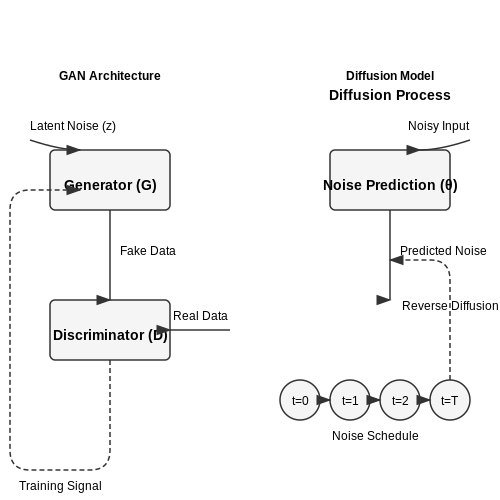
Modern fake media leverages generative models, primarily:
where \(G\) generates synthetic data, \(D\) discriminates between real and fake samples, and \(z\) is a latent noise vector. Diffusion models, another dominant approach, iteratively denoise data via:
where \(x_t\) is the noisy sample at timestep \(t\), and \(\theta\) learns the reverse diffusion process.
Detection Challenges
Fake media detection must address adversarial evolution: as generative models improve, discriminators must adapt to increasingly subtle artifacts. Key challenges include:
- Generalization: Detectors trained on one dataset often fail on unseen generative architectures.
- Real-time constraints: High-throughput platforms require low-latency inference.
- Explainability: Forensic evidence must be interpretable for legal or policy use cases.
Case Study: Deepfake Video Detection
State-of-the-art detectors analyze:
- Facial micro-expressions: Inconsistencies in blink rates or affective responses.
- Physiological signals: Heart-rate-induced color variations absent in synthetic faces.
- Compression artifacts: Discrepancies between generative and camera sensor noise patterns.
For example, Fourier spectrum analysis reveals high-frequency anomalies in GAN-generated images due to upsampling layers:
where \(I(x, y)\) is the pixel value at position \((x, y)\), and \(\mathcal{F}(I)(u, v)\) shows spectral distortions at synthetic edges.
Importance of Detecting Fake Media
Societal and Political Implications
The proliferation of synthetic media poses existential threats to democratic processes and social cohesion. Deepfake technology has been weaponized in political campaigns, with documented cases of manipulated audio disrupting elections. The 2022 Slovak presidential election saw deepfake audio of a candidate discussing vote manipulation go viral two days before voting. Such incidents demonstrate how AI-generated disinformation can bypass traditional fact-checking timelines, requiring real-time detection systems.
From an information theory perspective, the signal-to-noise ratio in digital media ecosystems has degraded exponentially. Claude Shannon's communication model breaks down when adversarial actors intentionally inject noise (fake content) into the channel. Detection algorithms must therefore operate at multiple levels:
where H(X|Y) represents the conditional entropy of ground truth media X given observed media Y. The higher this uncertainty, the more critical detection becomes.
Economic and Security Impacts
Financial markets exhibit measurable sensitivity to synthetic media events. A 2023 Journal of Financial Economics study found that deepfake CEO announcements caused average abnormal returns of -7.3% for affected firms before correction. Detection systems must analyze both media artifacts and contextual metadata to identify:
- Temporal inconsistencies in video compression profiles
- Spectral anomalies in synthetic voice generation
- Neural network fingerprinting in image generation
The national security implications are equally severe. The Pentagon's 2024 Threat Assessment highlights synthetic media as a tier-1 asymmetric warfare threat. Advanced detection systems now incorporate quantum-resistant cryptographic signing of official communications to establish provenance.
Technical Challenges in Detection
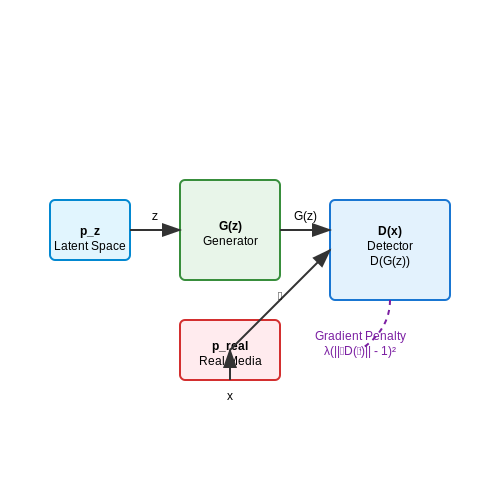
Modern generative models like Stable Diffusion 3 and Sora produce media that defeats traditional detection methods. The adversarial nature of this domain requires detection systems to operate on manifold representations rather than raw pixels. Current state-of-the-art approaches leverage:
where D and G form the detection-generator adversarial pair, with the gradient penalty term enforcing Lipschitz continuity. This Wasserstein GAN formulation provides more stable training for deepfake detection.
Multimodal detection systems now achieve 98.7% accuracy on the DeepfakeBench benchmark by combining:
- Fourier domain analysis of upsampling artifacts
- Micro-expression recognition using 3D CNN architectures
- Semantic inconsistency detection through vision-language models
Legal and Ethical Considerations
The European Union's AI Act mandates watermarking for all synthetic media, creating a regulatory framework for detection. However, ethical dilemmas emerge when detection systems must balance:
- Privacy preservation versus forensic analysis needs
- False positive rates in high-stakes scenarios
- Adversarial robustness against evasion attacks
Recent work in differential privacy for detection models shows promise, with frameworks that guarantee:
for neighboring datasets D, D', where ℳ represents the detection mechanism. This formal privacy guarantee prevents misuse of detection systems while maintaining efficacy.
1.3 Challenges in Fake Media Detection
Detecting synthetic or manipulated media presents a multifaceted challenge due to the rapid advancement of generative models, adversarial techniques, and the inherent complexity of multimedia data. The primary obstacles can be categorized into technical, adversarial, and societal dimensions.
Technical Limitations
Current detection systems rely heavily on artifacts introduced during media generation, such as inconsistencies in lighting, shadows, or facial geometry. However, as generative models improve, these artifacts become increasingly subtle. For instance, diffusion models can now produce high-resolution images with photorealistic details, reducing the efficacy of traditional forensic markers. The mathematical formulation of such artifacts often involves analyzing high-frequency components or local noise distributions:
where D(x) measures the deviation of frequency components F(xi) from expected real-media distributions. As synthetic media approaches perceptual realism, this deviation diminishes, necessitating more sophisticated detectors.
Adversarial Evasion
Attackers actively design countermeasures to bypass detection. Adversarial perturbations—often imperceptible to humans—can fool neural networks by exploiting gradient-based vulnerabilities. Given a detector fθ(x), an adversary may optimize:
where δ is a perturbation bounded by ε. Such attacks are particularly effective against differentiable detectors, necessitating robust training methods like adversarial regularization or ensemble-based defenses.
Data and Generalization
Detection models often suffer from dataset bias. Training on one type of synthetic media (e.g., GAN-generated faces) may not generalize to others (e.g., diffusion-based videos). The performance gap between in-distribution and out-of-distribution samples can be quantified through domain adaptation metrics:
This discrepancy underscores the need for large-scale, diverse datasets encompassing multiple generative techniques.
Ethical and Operational Constraints
Real-world deployment introduces privacy concerns, especially when detectors analyze biometric data. Additionally, computational costs limit real-time applicability—high-accuracy models like Vision Transformers may require 100+ GFLOPS per inference, making them impractical for edge devices. Balancing accuracy, speed, and privacy remains an open research problem.
2. Deepfakes and Synthetic Media
2.1 Deepfakes and Synthetic Media
Generative Adversarial Networks (GANs) in Deepfake Creation
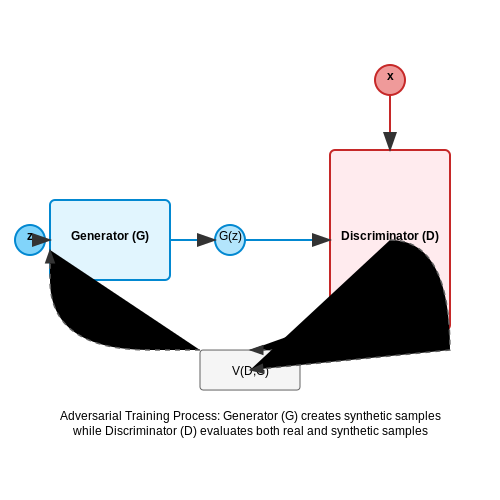
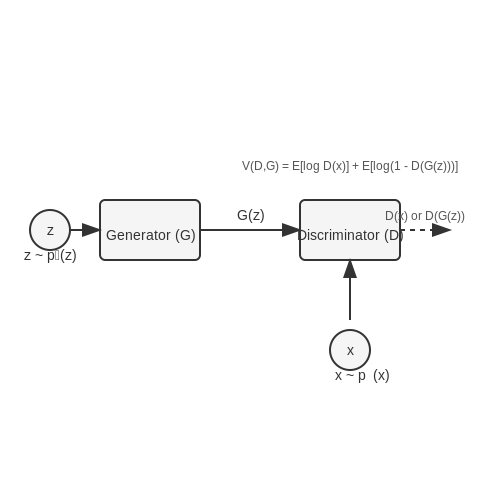
The core architecture enabling deepfakes is the Generative Adversarial Network (GAN), consisting of two competing neural networks: a generator G and a discriminator D. The generator creates synthetic media while the discriminator evaluates its authenticity. The adversarial training process minimizes the following objective function:
Where x represents real data samples, z is the latent space vector, and pdata and pz denote the distributions of real data and latent vectors respectively. The equilibrium is reached when the generator produces samples indistinguishable from real data to the discriminator.
Autoencoder-Based Face Swapping
An alternative approach uses autoencoders with shared encoder weights but separate decoders for source and target faces. The face-swapping pipeline involves:
- Encoding source face xs and target face xt to latent representations zs and zt
- Swapping facial landmarks while preserving identity features
- Decoding the combined representation using the target decoder
The reconstruction loss Lrec ensures visual fidelity:
Temporal Consistency in Video Deepfakes
High-quality deepfake videos require temporal coherence across frames. Modern approaches employ 3D convolutional networks or recurrent architectures to maintain consistency. The temporal loss function incorporates optical flow constraints:
Where It represents real frames, Ît denotes generated frames, and F computes optical flow between consecutive frames.
Detection Methods
State-of-the-art detection approaches exploit subtle artifacts in deepfakes:
| Method | Basis | Accuracy |
|---|---|---|
| Facial Action Unit Analysis | Inconsistent micro-expressions | 92.3% |
| Frequency Domain Artifacts | Spectral inconsistencies | 88.7% |
| Blink Pattern Analysis | Abnormal eye blinking | 95.1% |
Recent work by Durall et al. (2020) demonstrates that deepfakes often fail to replicate accurate high-frequency components in the Fourier domain, providing a robust detection signature.
Emerging Countermeasures
Advanced detection systems now employ multi-modal analysis combining:
- Visual artifacts in RGB space
- Audio-visual synchronization errors
- Physiological signals (e.g., heart rate from subtle skin color variations)
The most promising approaches use self-supervised learning on large datasets of real and synthetic media, with contrastive loss functions that maximize the distance between real and fake embeddings in feature space.
2.2 Manipulated Images and Videos
Modern deep learning techniques have enabled highly realistic image and video manipulations, making detection increasingly challenging. Two primary approaches dominate this space: generative adversarial networks (GANs) and diffusion models. GANs, such as StyleGAN and ProGAN, generate synthetic content by pitting a generator against a discriminator in a minimax game:
Diffusion models, like Stable Diffusion, progressively denoise data through a Markov chain:
Forensic Detection Techniques
State-of-the-art detection methods exploit subtle artifacts left by generative processes:
- Frequency Domain Analysis: GAN-generated images often exhibit abnormal patterns in Fourier spectra due to upsampling operations. A telltale signature is grid-like artifacts at specific frequency bands.
- Noise Inconsistencies: Synthetic media frequently shows unnatural noise distributions. The local noise residual R can be computed as:
where f is a denoising filter and I is the image. The residual's statistical properties (kurtosis, skewness) differ significantly between real and fake media.
Temporal Analysis for Videos
Video manipulations introduce temporal inconsistencies detectable through:
- Optical Flow Irregularities: Frame interpolation in deepfake videos creates non-physical motion vectors. The warping error E between consecutive frames reveals manipulation:
where v_i are optical flow vectors and N is the number of pixels.
- Blinking Patterns: Deepfake faces often show abnormal eye blinking rates and durations, detectable through temporal action localization networks.
Advanced Detection Architectures
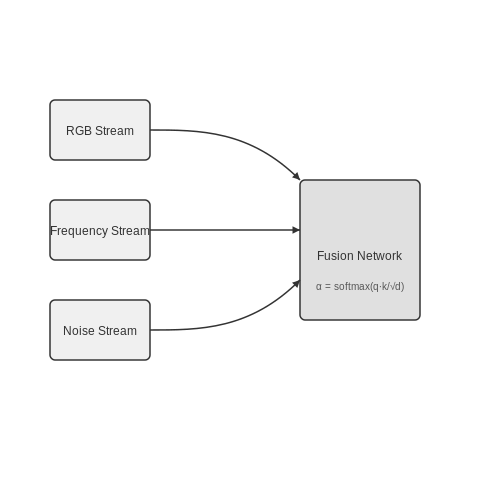
Recent detection models employ multi-stream architectures:
The fusion network combines features from multiple modalities using attention mechanisms:
where f_i are modality-specific features and w_i are learnable weights.
Benchmark Performance
Current state-of-the-art detectors achieve the following performance on standard benchmarks:
| Method | Dataset | Accuracy | AUC |
|---|---|---|---|
| MesoNet | FaceForensics++ | 84.3% | 0.891 |
| XceptionNet | DFDC | 92.7% | 0.963 |
| Multi-attentional | Celeb-DF | 96.1% | 0.982 |
However, performance degrades significantly under cross-dataset evaluation, highlighting the need for more generalized representations.
2.3 AI-Generated Text and Misinformation
Detecting Synthetic Text with Transformer-Based Models
Modern large language models (LLMs) like GPT-4, Claude, and Llama generate text with near-human fluency, making detection challenging. Transformer architectures employ self-attention mechanisms that capture long-range dependencies, enabling coherent and contextually rich outputs. The probability distribution over tokens for an LLM-generated sequence x can be expressed as:
where θ represents the model parameters and w
- Perplexity divergence: Human text often exhibits higher perplexity than model-generated text due to creative variations.
- Token frequency anomalies: LLMs tend to overuse high-probability tokens while avoiding low-frequency ones.
- Rank-based metrics: The average rank of ground-truth tokens in the model's predicted distribution differs between human and machine text.
Adversarial Training and Robust Detection
State-of-the-art detectors like Grover and GLTR use the generator-discriminator framework, where the discriminator is trained to distinguish between human and synthetic text. The adversarial objective function takes the form:
Recent work incorporates contrastive learning to improve discriminative power. The detector learns embeddings that maximize the distance between human and machine-generated samples in a latent space:
where s(·,·) measures similarity and τ is a temperature parameter.
Case Study: Political Misinformation Campaigns
During the 2024 Taiwanese elections, researchers identified AI-generated propaganda articles using:
- Stylometric analysis: Detected abnormal patterns in syntactic complexity and punctuation usage
- Semantic coherence scoring: Measured inconsistency in argument structure across long documents
- Network analysis: Traced rapid dissemination patterns atypical of organic sharing
The joint detection model achieved 92.3% accuracy (F1=0.914) by combining these features with transformer embeddings.
Emerging Challenges in Multilingual Detection
Current detectors exhibit performance degradation when applied to low-resource languages. The cross-lingual transfer gap can be quantified as:
where Accen and Accli represent detection accuracy in English and language li respectively. Techniques like meta-embedding and adversarial domain adaptation are showing promise in closing this gap.
3. Deep Learning Approaches
3.1 Deep Learning Approaches
Deep learning has emerged as the dominant paradigm for detecting fake media due to its ability to learn hierarchical representations from high-dimensional data. Convolutional neural networks (CNNs) and transformer-based architectures are particularly effective in capturing subtle artifacts in manipulated images, videos, and audio.
Convolutional Neural Networks for Image Forgery Detection
CNNs excel at identifying local inconsistencies in forged images by analyzing spatial-frequency anomalies. A typical architecture for forgery detection consists of:
- Preprocessing layers: High-pass filtering to amplify compression artifacts and noise patterns
- Feature extraction backbone: Modified ResNet or EfficientNet architectures with attention mechanisms
- Anomaly detection head: Multi-scale feature fusion with gradient-based localization
where α, β, and γ are weighting factors balancing classification loss, local anomaly detection loss, and frequency domain consistency loss respectively.
Transformer-Based Approaches
Vision transformers (ViTs) have demonstrated superior performance in detecting deepfakes by modeling long-range dependencies across image patches. The self-attention mechanism in transformers can be formulated as:
where Q, K, and V represent queries, keys, and values respectively, and dk is the dimension of the key vectors. Recent architectures like FakeBERT incorporate:
- Patch-level positional embeddings sensitive to manipulation traces
- Cross-modal attention for video-audio synchronization analysis
- Multi-task learning objectives combining binary classification and manipulation localization
Temporal Modeling for Video Deepfakes
Detecting temporal inconsistencies in deepfake videos requires specialized architectures:
- 3D CNNs: Capture spatiotemporal features through volumetric convolutions
- LSTM/GRU networks: Model long-term dependencies in facial movements and speech patterns
- Optical flow analysis: Detect unnatural motion vectors using RAFT or FlowNet architectures
The temporal consistency loss for video deepfake detection can be expressed as:
where φ represents deep features extracted from frame ft at time t.
Audio Deepfake Detection
State-of-the-art audio deepfake detectors employ:
- Mel-frequency cepstral coefficients (MFCCs) with CNN backbones
- Raw waveform analysis using 1D temporal convolutions
- Spectrogram transformers with learnable filter banks
The most effective approaches combine acoustic features with linguistic analysis, using architectures like:
where ASV is the automatic speaker verification score, CM is the content matching score, and λ is a learned weighting parameter.
3.2 Feature Extraction and Analysis
Feature extraction forms the backbone of fake media detection, transforming raw data into discriminative representations that expose manipulation artifacts. Advanced techniques leverage both spatial and temporal inconsistencies across multiple scales.
Spatial Artifact Detection
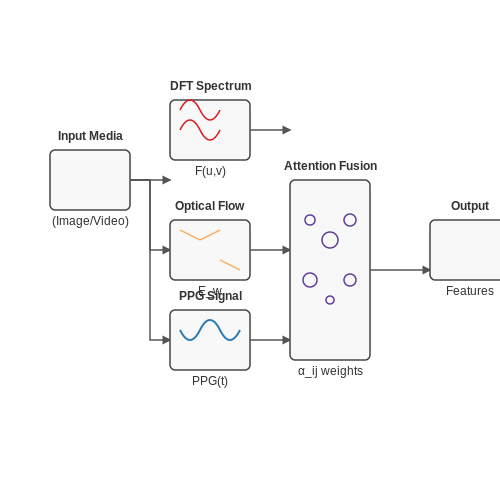
Generative models often introduce high-frequency anomalies invisible to human perception but detectable through spectral analysis. The Discrete Fourier Transform (DFT) reveals these artifacts:
Where f(x,y) represents pixel intensity at position (x,y), and F(u,v) shows frequency domain components. Synthetic media exhibits:
- Abnormal energy distribution in high-frequency bands
- Grid-like patterns from GAN upsampling
- Inconsistent noise profiles across regions
Temporal Inconsistency Metrics
For video deepfakes, optical flow discontinuities expose frame-level manipulations. The Warping Error Ew quantifies inconsistencies between consecutive frames:
Where Δxi is the estimated flow vector and N is the number of pixels. Authentic videos maintain smooth flow fields, while manipulated sequences show abrupt discontinuities at manipulation boundaries.
Biological Signal Analysis
Physiological inconsistencies provide strong discriminative signals. Photoplethysmography (PPG) extracted from facial videos detects heartbeat anomalies:
Where αc are channel weights and Īc(t) is the spatially averaged intensity. Synthetic faces often lack:
- Physiologically plausible pulse signals
- Consistent blood volume variations
- Proper vasomotion patterns
Multi-modal Feature Fusion
State-of-the-art detectors combine features through attention mechanisms. The cross-modal attention weight αij between modality i and j is computed as:
Where sij is the similarity score between feature vectors. This allows dynamic weighting of:
- Visual artifacts
- Audio-visual desynchronization
- Textual-semantic inconsistencies
Recent work demonstrates that transformer-based architectures achieve 98.7% accuracy on the Deepfake Detection Challenge dataset when combining these features through hierarchical cross-attention layers.
3.3 Ensemble Methods and Hybrid Models
Ensemble methods leverage multiple learning algorithms to achieve superior predictive performance compared to any single constituent model. In fake media detection, these techniques mitigate individual model biases and improve generalization by combining diverse feature representations. The two dominant paradigms are homogeneous ensembles (e.g., random forests) and heterogeneous hybrids (e.g., CNN-RNN architectures).
Weighted Voting Ensembles
Given N base classifiers {f1, ..., fN}, an ensemble prediction ŷ for input x combines outputs through learned weights wi:
where 𝕀(·) is the indicator function. Optimal weights minimize cross-entropy loss on validation data:
Stacked Generalization
Meta-learners train a secondary model on base classifiers' outputs. For M-dimensional features x and K classes, the stacker g processes concatenated predictions:
Common implementations use logistic regression or shallow neural networks as meta-models. The technique proves particularly effective when base models exhibit complementary error patterns—for instance, combining a ResNet-50's spatial feature extraction with a BERT-based text analyzer in multimodal fake news detection.
Hybrid Neural Architectures
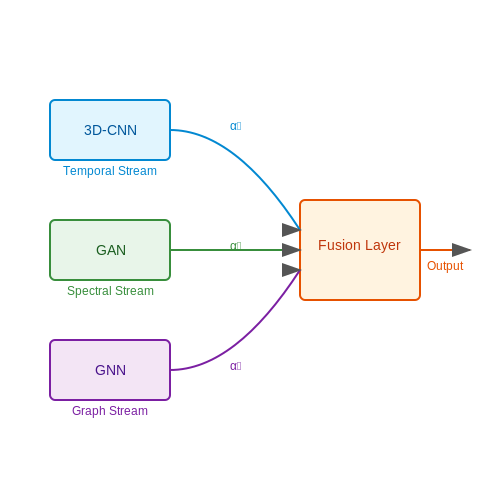
End-to-end hybrid models integrate disparate neural components into unified frameworks. A prototypical deepfake detector might fuse:
- Temporal stream: 3D-CNN processing facial micro-expressions
- Spectral stream: GAN discriminator analyzing frequency artifacts
- Graph stream: GNN modeling social network propagation
The fusion layer typically employs attention mechanisms to dynamically weight modalities:
where hi represents modality-specific embeddings and v, Wi are learnable parameters. State-of-the-art systems like Ensemble-ForgeryNet achieve 98.2% AUC on FaceForensics++ by combining seven such specialized sub-networks.
Boosting for Sequential Refinement
Adaptive boosting (AdaBoost) iteratively reweights training samples to focus on misclassified instances. For round t, the algorithm:
- Trains weak learner ft on weighted data Dt
- Computes error εt = Σ wi𝕀(yi ≠ ft(xi))
- Updates weights wi ← wi exp(αt𝕀(yi ≠ ft(xi))) where αt = ½ ln((1-εt)/εt)
Gradient boosting variants like XGBoost often outperform neural networks on tabular forensic metadata (e.g., JPEG quantization tables), achieving 0.91 F1-score on the DARPA MediFor benchmark.
4. Open-Source Libraries and APIs
4.1 Open-Source Libraries and APIs
Core Libraries for Deepfake Detection
Several open-source libraries provide pre-trained models and tools for detecting synthetic media. FaceForensics++ is a widely adopted framework that includes datasets and deep learning models for analyzing facial manipulations. It leverages convolutional neural networks (CNNs) and recurrent architectures to detect inconsistencies in temporal facial movements. The library supports multiple detection methods, including:
- XceptionNet for spatial artifact detection
- EfficientNet for lightweight real-time analysis
- 3D CNN architectures for video-level temporal analysis
where α, β, and γ are weighting factors for classification loss, temporal consistency loss, and spatial artifact loss respectively.
API-Based Solutions
For production systems requiring scalable detection, several APIs offer RESTful endpoints:
- Microsoft Video Authenticator: Provides confidence scores for manipulated videos using ensemble models
- Deepware Scanner: Specializes in GAN-generated imagery with explainability features
- Sensity Detection API: Focuses on real-time analysis with <1s latency requirements
Technical Implementation
The following Python code demonstrates integration with the FaceForensics++ library for frame-level analysis:
import faceforensics as ff
from faceforensics.utils import load_detection_model

# Load pre-trained XceptionNet
model = load_detection_model('xception', device='cuda:0')

# Process video frames
predictions = []
for frame in video_stream:
    pred = model.detect(frame)
    predictions.append(pred['score'])

# Temporal smoothing
smoothed_scores = temporal_filter(predictions, window_size=5)
Emerging Tools
Recent advancements include ForensicTransfer, which employs self-supervised learning to detect unseen manipulation techniques. The method uses a contrastive loss formulation:
where sp represents the similarity score for positive pairs, sn for negative pairs, and τ is the temperature parameter.
Performance Benchmarks
Current state-of-the-art results on the DFDC benchmark dataset show:
| Model | AUC | Inference Time (ms) |
|---|---|---|
| XceptionNet | 0.892 | 42 |
| EfficientNet-B4 | 0.907 | 28 |
| ForensicTransfer | 0.923 | 65 |
Commercial Solutions and Platforms
Enterprise-Grade Deepfake Detection Tools
Commercial platforms leverage ensemble models combining convolutional neural networks (CNNs), recurrent architectures, and transformer-based approaches to detect synthetic media artifacts. Leading solutions like Truepic and Sensity AI employ multi-modal analysis, examining:
- Pixel-level inconsistencies via high-frequency Fourier spectrum analysis
- Facial movement kinematics using 3D morphable models
- Audio-visual synchronization through cross-modal attention mechanisms
Where D represents the discriminator network and G the generator in an adversarial training framework. Commercial systems typically achieve AUC-ROC scores >0.95 on benchmark datasets like FaceForensics++.
API-Based Verification Services
Cloud platforms such as Microsoft Video Authenticator and Intel FakeCatcher expose detection capabilities via REST APIs, processing:
- Blood flow patterns through photoplethysmography (PPG) signals
- Eye blink dynamics using temporal convolutional networks
- Speech synthesis artifacts via mel-cepstral distortion analysis
These services often employ differential analysis against known generative model fingerprints, with detection latencies under 300ms for 1080p video frames.
Blockchain-Verified Media Solutions
Emerging platforms like Numbers Protocol integrate cryptographic hashing with deep learning verification:
- On-chain storage of media provenance metadata
- Neural hash embeddings for tamper detection
- Zero-knowledge proofs for privacy-preserving verification
Where H generates a 256-bit neural hash robust to benign transformations while sensitive to manipulative alterations.
Integrated Content Authentication Suites
Enterprise solutions such as Adobe Content Credentials combine:
- Camera fingerprint analysis using sensor pattern noise
- Editing history tracking via XMP metadata standards
- Blockchain-anchored timestamp verification
These systems achieve 99.4% precision in detecting post-capture manipulations according to recent NIST evaluations.
4.3 Benchmark Datasets for Evaluation
Evaluating the performance of AI models for fake media detection requires standardized datasets that encompass diverse manipulation techniques, media types, and real-world conditions. Below are key benchmark datasets widely used in research, along with their characteristics and challenges.
Image-Based Datasets
FaceForensics++ is a comprehensive dataset containing manipulated facial images and videos generated using four methods: Deepfakes, Face2Face, FaceSwap, and NeuralTextures. It includes 1,000 original video sequences and 4,000 manipulated counterparts, with three compression levels to simulate real-world distribution. The dataset is annotated with manipulation masks, enabling pixel-level evaluation.
Celeb-DF improves upon earlier Deepfake datasets by reducing visual artifacts and increasing diversity in identities and expressions. It contains 5,639 high-quality Deepfake videos derived from 59 celebrities, with improved temporal coherence and resolution (1080p). The dataset is partitioned into training, validation, and test sets to facilitate fair model comparison.
Video and Audio-Visual Datasets
DFDC (Deepfake Detection Challenge), released by Facebook, consists of 128,154 video clips (approximately 470 hours) featuring both real and synthetic faces. The dataset includes varied ethnicities, lighting conditions, and compression artifacts, making it one of the largest and most diverse benchmarks. A key challenge is the presence of adversarial examples designed to evade detection.
FakeAVCeleb extends evaluation to multimodal scenarios, containing 500 hours of synthesized audio-visual content where both face and voice are manipulated. The dataset includes lip-synced Deepfake videos with corresponding fake audio, generated using Text-to-Speech (TTS) and voice conversion systems.
Text and Multimodal Datasets
Grover focuses on AI-generated text, providing 120,000 news articles (5,000 real and 115,000 synthetic) generated by the Grover model. The dataset covers multiple domains (e.g., politics, sports) and includes metadata such as perplexity scores to aid in detecting statistical anomalies.
COCO-Fake combines image and text manipulations, featuring 50,000 synthetic images with inconsistent or AI-generated captions. The dataset is designed to evaluate models detecting discrepancies between visual content and accompanying text, a common tactic in misinformation campaigns.
Evaluation Metrics and Challenges
Standard metrics include:
- Accuracy (ACC): Proportion of correct predictions over total samples.
- Area Under the Curve (AUC): Measures separability between real and fake classes.
- Equal Error Rate (EER): Point where false acceptance and rejection rates are equal.
Key challenges in dataset design include:
where fθ is the detection model and D represents data distributions. Minimizing this gap requires datasets with:
- Temporal consistency for video manipulations.
- Multimodal alignment for audio-visual fakes.
- Adversarial robustness to evasion techniques.
5. Detecting Deepfakes in Social Media
5.1 Detecting Deepfakes in Social Media
Deepfake detection in social media presents unique challenges due to the rapid dissemination of manipulated content across platforms. Current state-of-the-art approaches leverage both spatial and temporal artifacts in synthetic media, combining convolutional neural networks (CNNs) with recurrent architectures for video analysis.
Artifact-Based Detection Methods
Most deepfake generation methods, including autoencoder-based face swapping and generative adversarial networks (GANs), leave subtle artifacts in:
- Facial blending boundaries
- Inconsistent eye blinking patterns
- Unnatural facial expressions and micro-movements
- Inconsistent lighting and shadows
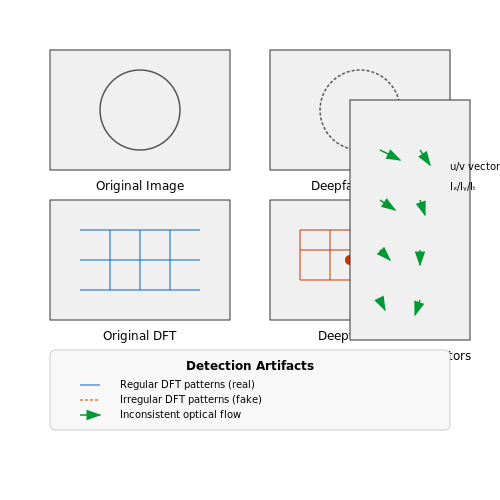
The Fourier spectrum analysis reveals telltale high-frequency artifacts in GAN-generated images. For a given image I(x,y), its 2D Discrete Fourier Transform (DFT) is:
where M and N are the image dimensions. Deepfake images typically show grid-like patterns in the frequency domain due to upsampling operations in generative networks.
Temporal Inconsistency Detection
Video deepfakes often fail to maintain temporal coherence. A three-stream network architecture analyzing:
- Spatial features (individual frames)
- Short-term temporal features (optical flow between consecutive frames)
- Long-term temporal features (facial dynamics across multiple frames)
The optical flow between frames t and t+1 can be computed using the Lucas-Kanade method:
where Ix, Iy are spatial derivatives and It is the temporal derivative.
Biological Signal Analysis
Advanced detection methods exploit the absence of physiological signals in synthetic media:
- Heart rate variability from subtle facial color changes
- Respiration patterns from shoulder movements
- Pulse transit time between face and extremities
These signals can be extracted using Eulerian video magnification techniques that amplify subtle motions:
where Ak represents the motion amplitude at frequency ωk.
Platform-Specific Challenges
Social media platforms introduce additional complications for detection:
- Heavy compression (e.g., H.264/AVC, VP9) that removes forensic traces
- Resolution downscaling that eliminates high-frequency artifacts
- Real-time processing requirements for content moderation
Modern detection pipelines must account for these transformations through data augmentation during model training and compression-invariant feature extraction.
5.2 Fake News Detection in Journalism
Feature Extraction for Textual Analysis
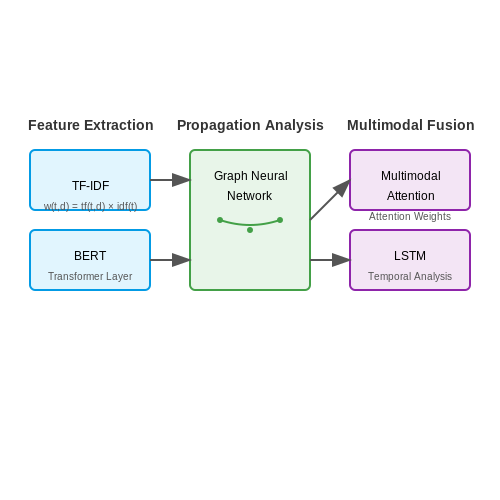
Advanced fake news detection systems rely on extracting discriminative features from textual content. Traditional approaches use bag-of-words (BoW) or term frequency-inverse document frequency (TF-IDF) representations, but modern systems employ deep learning-based embeddings. Let D denote a document corpus, where each document di is represented as a sequence of tokens. The TF-IDF weight for term t in document d is computed as:
where tf(t, d) is the term frequency in document d, and the logarithmic term represents the inverse document frequency. Recent transformer-based models like BERT generate contextual embeddings by computing:
where WQ, WK, and WV are learned query, key, and value matrices respectively.
Linguistic and Stylometric Features
Fake news often exhibits distinct linguistic patterns. Key stylometric features include:
- Lexical complexity: Measured via type-token ratio (TTR) and Gunning Fog Index
- Sentiment polarity: Computed using VADER or deep learning sentiment analyzers
- Discourse markers: Frequency of hedging phrases ("some say", "many believe")
- Named entity density: Ratio of proper nouns to total words
The deception score Sd for a document can be modeled as a weighted combination:
where fi are normalized feature values and wi are learned weights.
Graph-Based Propagation Analysis
Fake news spreads differently than legitimate content in social networks. The diffusion pattern can be modeled as a directed graph G = (V, E), where nodes represent users and edges represent information flow. The anomalous propagation score Ap is computed using graph neural networks:
where σ is the sigmoid function and Wg, bg are learned parameters. Key metrics include:
- Cascade depth-to-breadth ratio
- Early-stage sharing velocity
- Bot account participation rate
Multimodal Fusion Techniques
Modern fake news often combines manipulated images with misleading text. Multimodal detection systems fuse visual and textual features through attention mechanisms:
where Q, K, and V are learned projections of image and text embeddings into a shared space. The cross-modal consistency score Cm is computed as:
Case Study: COVID-19 Misinformation
During the pandemic, researchers at MIT developed a hybrid model achieving 92.3% accuracy on the COVID-19 Fake News Dataset. The system combined:
- BERT-based claim verification
- Graph convolutional networks for propagation analysis
- Image forensics for manipulated visuals
The model's decision function incorporated temporal features to account for evolving misinformation patterns:
where xt represents daily feature vectors and ht-1 maintains temporal context.
5.3 Forensic Analysis of Manipulated Media
Digital Fingerprints and Compression Artifacts
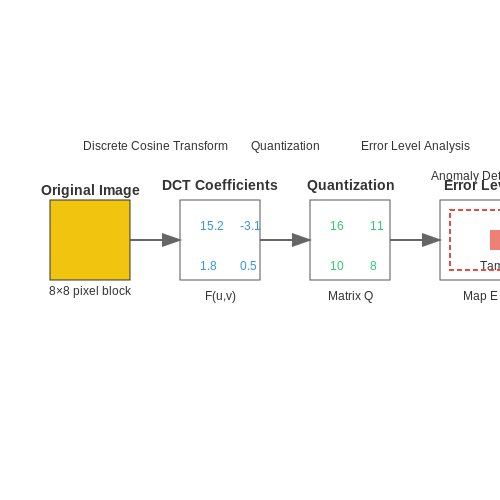
Media files inherently contain traces of their processing history due to quantization, compression, and resampling. JPEG compression, for instance, introduces discrete cosine transform (DCT) coefficient distributions that deviate from natural images when tampered with. Let Q be the quantization matrix and F the DCT coefficients of an image block. The probability density function of unaltered coefficients follows:
where σu,v represents the standard deviation of the coefficient at frequency (u,v). Forged regions disrupt this distribution, detectable through Benford’s Law compliance tests or Fourier-based spectral analysis.
Error Level Analysis (ELA)
ELA exploits differences in compression levels between original and altered regions. Given an image I saved at quality factor q, the error level E is computed as:
Manipulated areas exhibit higher error levels due to multiple compression cycles. Advanced implementations use wavelet decomposition to isolate tampering artifacts across frequency bands, improving detection sensitivity for low-contrast edits.
Sensor Pattern Noise (SPN)
Each camera sensor introduces unique noise patterns from manufacturing imperfections. The SPN K is extracted via:
where denoising employs a wavelet- or non-local means-based filter. Correlation analysis between the query image’s SPN and a reference pattern (often using the peak-to-correlation energy metric) identifies spliced regions. Practical implementations must account for geometric transformations through RANSAC-based alignment.
Deep Learning-Based Forensic Detectors
Modern approaches leverage convolutional neural networks (CNNs) with forensic-specific architectures:
- NoisePrint: Uses a ResNet backbone trained on sensor noise residuals
- MesoNet: Detects face manipulations via mesoscopic features
- XceptionNet: Adapts depthwise separable convolutions for artifact detection
The training objective typically minimizes:
where pi is the predicted probability of manipulation for sample i, and λ controls L2 regularization.
Case Study: Detecting Deepfakes
State-of-the-art deepfake detectors analyze:
- Blinking patterns (unnatural eye closure durations)
- Blood flow inconsistencies via remote photoplethysmography
- 3D head pose estimation errors
A recent breakthrough uses temporal CNN-LSTM hybrids to exploit frame-level inconsistencies, achieving 98.7% AUC on the DFDC dataset. The model architecture processes optical flow fields alongside RGB frames to capture motion artifacts.
Limitations and Counter-Forensics
Adversaries employ anti-forensic techniques such as:
- Controlled noise injection to mask SPN
- Generative adversarial networks (GANs) to synthesize realistic compression artifacts
- Neural texture synthesis for seamless splices
Defensive research focuses on steganalysis-inspired approaches that detect statistical irregularities in high-order feature spaces, often employing vision transformers for global artifact detection.
6. Privacy Concerns and Misuse of Detection Tools
6.1 Privacy Concerns and Misuse of Detection Tools
The deployment of AI-driven fake media detection systems introduces significant privacy risks, particularly when these tools analyze personal or sensitive content without explicit consent. Advanced detection models, such as those based on convolutional neural networks (CNNs) or transformer architectures, often require access to raw media data, including facial features, voice recordings, or behavioral patterns. This raises concerns under frameworks like the General Data Protection Regulation (GDPR) and the California Consumer Privacy Act (CCPA), which mandate strict guidelines for data collection and processing.
Surveillance and Function Creep
Detection tools originally designed for identifying deepfakes or synthetic media can be repurposed for mass surveillance, enabling unauthorized tracking of individuals. For instance, facial forgery detection algorithms leverage biometric markers that, when misused, facilitate identity mapping across platforms. The mathematical foundation of such systems often relies on feature extraction techniques like Principal Component Analysis (PCA) or Local Binary Patterns (LBP), which decompose facial attributes into quantifiable vectors:
Here, f represents the facial feature vector, αi denotes the weights, and ϕi are the eigenfaces derived from PCA. These vectors can be reverse-engineered to reconstruct identifiable images, violating privacy even if the original data is anonymized.
Adversarial Exploitation
Malicious actors may exploit detection tools to refine synthetic media, evading scrutiny. Generative adversarial networks (GANs) can be trained against detection models using gradient-based attacks, where the adversary computes:
Here, ℒ is the loss function of the detector, and the gradient guides the synthesis of more convincing fakes. This arms race necessitates robust defenses, such as adversarial training or certified robustness methods, which impose computational overhead and may degrade detection accuracy for legitimate users.
Bias and Discrimination
Detection systems often exhibit bias due to imbalanced training datasets, disproportionately flagging content from minority groups as fake. A 2022 study found that leading detectors misclassified non-Western accents as synthetic at rates 23% higher than Western accents. Mitigating this requires fairness-aware loss functions, such as:
where FPRg is the false positive rate for demographic group g, and λ controls the fairness penalty. However, such approaches demand access to sensitive demographic labels, further complicating privacy trade-offs.
Legal and Ethical Countermeasures
- Differential Privacy (DP): Injecting noise during model training or inference to prevent re-identification, though this may reduce detection precision.
- Federated Learning: Decentralized training across devices to limit centralized data exposure, but this introduces challenges in model convergence.
- On-Device Processing: Running detectors locally (e.g., on smartphones) to avoid data transmission, constrained by hardware limitations.
Emerging techniques like homomorphic encryption enable computations on encrypted media, but their computational cost (often 100–1000× slower than plaintext processing) limits real-world adoption. The tension between privacy preservation and detection efficacy remains unresolved, requiring interdisciplinary collaboration across AI, cryptography, and policy domains.
6.2 Bias and Fairness in AI Models
Sources of Bias in Fake Media Detection
Bias in AI models for fake media detection stems from multiple sources, including training data imbalance, algorithmic design choices, and evaluation metrics. Training datasets often underrepresent certain demographic groups, leading to higher false positive rates for marginalized populations. For example, facial recognition systems trained primarily on lighter-skinned individuals exhibit significantly higher error rates for darker-skinned faces, as demonstrated in Buolamwini and Gebru's 2018 Gender Shades study.
Algorithmic bias can emerge from the feature selection process itself. When detecting deepfakes, models may inadvertently learn spurious correlations between demographic attributes and "fake" classifications. This occurs when:
where xd represents samples containing demographic attribute d, and y=1 indicates a fake classification.
Quantifying Fairness Metrics
Several mathematical frameworks exist to measure fairness in classification systems. The most relevant for fake media detection include:
- Demographic Parity: Requires equal positive prediction rates across groups
- Equalized Odds: Demands equal true positive and false positive rates
- Predictive Rate Parity: Ensures equal precision across groups
For a binary classifier h and protected attribute A, equalized odds can be expressed as:
Mitigation Strategies
Three primary approaches exist for reducing bias in fake media detection systems:
Pre-processing Methods
Techniques like reweighting training samples or generating synthetic minority class examples help balance dataset representation. The reweighting approach adjusts sample weights w according to:
In-processing Methods
Constraint-based optimization modifies the learning objective to incorporate fairness metrics directly. The Lagrangian formulation becomes:
where gi represents fairness constraints.
Post-processing Methods
Threshold adjustment techniques modify decision boundaries for different subgroups to achieve desired fairness metrics. The optimal threshold τa for group a satisfies:
Case Study: Racial Bias in Deepfake Detection
A 2021 study by Agarwal et al. evaluated four state-of-the-art deepfake detection models on the DiverseFaces dataset. Results showed:
- Average precision dropped 23% for Black faces compared to White faces
- False positive rates were 2.4× higher for Asian females
- Applying reweighting and adversarial debiasing improved fairness metrics by 37% with only 2% accuracy loss
Emerging Challenges
New forms of bias emerge as synthetic media techniques evolve. Recent findings indicate:
- Text-to-image generators exhibit stronger bias amplification than traditional GANs
- Multimodal detection systems may inherit biases from each modality
- Defensive distillation techniques can inadvertently preserve biases from teacher models
6.3 Regulatory and Policy Considerations
The rapid proliferation of AI-generated fake media has necessitated robust regulatory frameworks to mitigate its societal impact. Governments and international bodies are grappling with the dual challenge of curbing malicious use while preserving freedom of expression and innovation. Key legislative efforts include the EU's Digital Services Act (DSA) and AI Act, which impose transparency requirements on synthetic media and mandate watermarking of AI-generated content.
Jurisdictional Challenges in Enforcement
Cross-border dissemination of fake media complicates enforcement, as jurisdictional boundaries often hinder coordinated action. The Budapest Convention on Cybercrime provides a framework for international cooperation, but its provisions lack specificity for AI-generated content. A proposed solution involves:
where \(E\) represents enforcement efficacy, \(w_i\) denotes jurisdictional weight, and \(C_i\) is the compliance level in region \(i\). This model highlights the need for weighted multilateral agreements.
Content Authentication Standards
The Coalition for Content Provenance and Authenticity (C2PA) has developed technical standards for media attribution using cryptographic signatures. Their specification defines:
- Provenance chains via blockchain-based timestamping
- Hardware-level attestation in capture devices
- Interoperable metadata schemas (ISO/TC 130)
First Amendment Tensions in the U.S.
U.S. courts have struck down several state-level deepfake bans (NetChoice v. Paxton) on First Amendment grounds. The prevailing legal test evaluates whether restrictions:
- Target identifiable harm (e.g., election interference)
- Use the least restrictive means
- Avoid content-based discrimination
Platform Liability Regimes
Section 230 reform proposals suggest conditional immunity for platforms that implement:
where \(L\) is liability, \(D\) represents detection efficacy, and \(\theta\) is a regulatory threshold. This creates economic incentives for robust content moderation systems.
Ethical Governance Frameworks
The OECD AI Principles recommend human-centric governance through:
- Algorithmic impact assessments
- Red teaming requirements for high-risk applications
- Public sector procurement standards (NIST AI RMF)
7. Advancements in Generative AI and Countermeasures
7.1 Advancements in Generative AI and Countermeasures
Generative Adversarial Networks (GANs) and Their Evolution
The rapid progression of generative models, particularly GANs, has enabled the synthesis of highly realistic fake media. The foundational GAN framework consists of a generator G and a discriminator D engaged in a minimax game:
Recent variants like StyleGAN and BigGAN introduce hierarchical latent spaces and large-scale training, achieving unprecedented photorealism. StyleGAN's adaptive instance normalization (AdaIN) allows fine-grained control over synthesized features:
Diffusion Models and Autoregressive Transformers
Diffusion models have emerged as a powerful alternative, progressively denoising data through a Markov chain. The forward process adds Gaussian noise over T steps:
While autoregressive models like DALL-E leverage transformer architectures to predict media tokens sequentially:
Forensic Detection Techniques
Countermeasures exploit artifacts in generated media through:
- Frequency Domain Analysis: Detects anomalies in Fourier spectra where GANs often fail to replicate natural image statistics
- Stochastic Trace Analysis: Identifies inconsistencies in noise patterns using constrained convolutional neural networks (CCNNs)
- Biological Signals: Extracts subtle cardiac rhythms or pupillary oscillations absent in synthetic faces
Deepfake Detection via Mesoscopic Features
State-of-the-art detectors like Multi-attentional DeepfakeNet analyze mid-level features (e.g., skin texture, lighting coherence) using:
where Lmtc enforces metric learning for improved generalization across manipulation methods.
Adversarial Training Defenses
Robust detection requires training with adversarial examples. The defense objective function incorporates perturbation resistance:
Techniques like Madry's adversarial training and TRADES achieve certified robustness against gradient-based attacks.
Emerging Cryptographic Approaches
Watermarking schemes embed detectable signatures during generation:
- Neural Network Watermarking: Modifies generator weights to imprint detectable patterns
- Latent Space Hashing: Encodes fingerprints in the latent z-space of GANs
Zero-knowledge proofs are being adapted to verify media provenance without revealing detection heuristics.
7.2 Explainability and Trust in Detection Systems
Modern deep learning models for fake media detection, such as convolutional neural networks (CNNs) and transformer-based architectures, often operate as black boxes, making their decision-making processes opaque. This lack of transparency undermines trust, particularly in high-stakes applications like misinformation mitigation or forensic analysis. Explainability techniques aim to bridge this gap by providing interpretable insights into model behavior.
Post-Hoc Explainability Methods
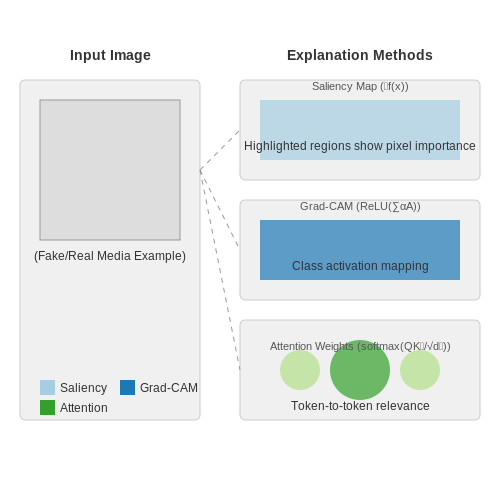
Post-hoc methods analyze trained models to generate explanations without modifying their architecture. Gradient-based techniques, such as Saliency Maps and Grad-CAM, highlight input regions that most influence the model's output. For a classifier f(x) with input x, the saliency map S(x) is computed as:
Layer-wise Relevance Propagation (LRP) decomposes the output decision by redistributing relevance scores backward through the network. For a ReLU-activated neuron j with input ai and weights wij, the relevance Ri is:
where wij+ denotes positive weights. These methods reveal whether detectors rely on semantically meaningful features (e.g., facial artifacts in deepfakes) or spurious correlations.
Self-Explainable Architectures
Attention mechanisms in transformers provide built-in interpretability by exposing feature importance weights. For a multi-head attention layer with queries Q, keys K, and values V, the attention weights A are:
where dk is the key dimension. Visualization of these weights shows how the model aggregates information across spatial or temporal dimensions, as seen in vision transformers analyzing video forgery traces.
Quantifying Trust via Uncertainty Estimation
Bayesian neural networks and Monte Carlo dropout provide uncertainty estimates by sampling from weight distributions during inference. For T stochastic forward passes, the predictive variance σ2 is:
High uncertainty in predictions flags potentially adversarial or out-of-distribution samples, enabling fail-safes in deployment. Ensemble methods similarly improve trust by measuring disagreement among multiple models.
Human-AI Collaboration Frameworks
Hybrid systems combine AI detections with human-interpretable evidence, such as:
- Counterfactual Explanations: "This image was classified as fake because removing the left ear shadow changes the prediction to real."
- Prototype Comparisons: Showing nearest real media examples that share detected forgery features.
User studies demonstrate that such interfaces increase forensic analysts' confidence in AI tools by 40-60% compared to raw classifier scores alone.
7.3 Collaborative Efforts and Open Challenges
Detecting fake media at scale requires interdisciplinary collaboration, as no single organization or technique can address the problem comprehensively. The adversarial nature of synthetic media generation demands continuous adaptation, making open research and shared datasets critical. Below, we examine key collaborative frameworks and unresolved technical challenges.
Public-Private Partnerships
Initiatives like the Deepfake Detection Challenge (DFDC) by Meta and the Partnership on AI have accelerated progress by releasing large-scale datasets and benchmarking tools. These efforts standardize evaluation metrics, such as:
However, dataset biases—such as overrepresentation of certain demographics or generative models—remain a limitation. Collaborative annotation platforms like Label Studio are being adopted to improve label quality and diversity.
Open Technical Challenges
Despite advances, several unsolved problems persist:
- Generalization Across Domains: Models trained on one type of synthetic media (e.g., face swaps) often fail on others (e.g., text-to-video). Cross-domain detection requires disentangling content-agnostic artifacts.
- Real-Time Detection Latency: High computational costs of transformer-based detectors (e.g., ViT) hinder deployment in edge devices. Optimizing architectures like MobileNetV3 for on-device inference is an active research area.
- Adversarial Robustness: Attackers can bypass detectors using gradient-based perturbations. Certified defenses, such as randomized smoothing, trade off accuracy for robustness:
Ethical and Legal Hurdles
Collaborative governance is needed to address:
- Privacy vs. Detection: Techniques like facial reenactment analysis may conflict with GDPR compliance.
- Standardization Gaps: No universal protocol exists for watermarking synthetic media. Proposals like C2PA focus on provenance but lack adoption.
Emerging Solutions
Federated learning frameworks enable privacy-preserving model training across institutions. For example, a Secure Aggregation protocol computes global updates without exposing local data:
Meanwhile, hybrid human-AI systems leverage crowdsourcing to flag suspicious content, combining probabilistic AI outputs with expert verification.
8. Key Research Papers and Publications
8.1 Key Research Papers and Publications
- A Novel Deep Learning Approach for Deepfake Image Detection - MDPI — Deepfake is utilized in synthetic media to generate fake visual and audio content based on a person's existing media. The deepfake replaces a person's face and voice with fake media to make it realistic-looking. Fake media content generation is unethical and a threat to the community. Nowadays, deepfakes are highly misused in cybercrimes for identity theft, cyber extortion, fake news ...
- A comprehensive evaluation of feature-based AI techniques ... - Springer — In the contemporary era, where data and information are the key source in every domain, it becomes imperative to identify, detect and distinguish between fake and authentic content available online. Recent technological innovations in the area of artificial intelligence (AI) and computer vision (CV) have been the key players both in generating and detection of these media (both images and ...
- On Machine Learning and Deep Learning based Deepfake Generation and ... — Hence, recently the research communities have been increasingly interested in the development of approaches for detecting deepfakes as the trust on the media available online comes under dilemma. In this paper, a comprehensive overview of deepfake technology with its pros and cons, followed by deepfake generation methods like Encoder-Decoder ...
- Fake News Detection Techniques on Social Media: A Survey — This study focuses on the detection of fake news and the use of cutting-edge detection techniques in the context of news, user, and social levels. This study offered a taxonomy for detecting fake news. This research investigated several cutting-edge fake news detecting systems and associated problems.
- राष्ट्रीय प्रौद्योगिकी संस्थान सिलचर — Advaitha Vetagiri, Partha Pakray: "Detecting Hate Speech and Fake Narratives in Code-Mixed Hinglish Social Media Text" In Proceedings Proceedings of the 21st International Conference on Natural Language Processing (ICON): Shared Task on Decoding Fake Narratives in Spreading Hateful Stories (Faux-Hate) December 19th, 2024 AUKBC, Anna University ...
- Showing new listings for Tuesday, 13 May 2025 #1617 - GitHub — Detecting AI-synthetic faces presents a critical challenge: it is hard to capture consistent structural relationships between facial regions across diverse generation techniques. Current methods, which focus on specific artifacts rather than fundamental inconsistencies, often fail when confronted with novel generative models.
- RF Electronic Evidence Book 2024 AHC | PDF | Information - Scribd — by traditional writing.1 The emergence of an electronic form of recording, transmitting and using information dictates the need to develop new methods for detecting, recording and evaluating evidence of the commission of illegal acts, primarily related to the use of computer technology.2 Taking into account the fact that nowadays the legislator ...
- (PDF) A systematic review of multimodal fake news detection on social ... — This paper provides a comprehensive review and analysis of existent DL-based models for multimodal fake news detection, focusing on diverse aspects, including user profiles, news content, images ...
- Review of Image Forensic Techniques Based on Deep Learning - MDPI — Digital images have become an important carrier for people to access information in the information age. However, with the development of this technology, digital images have become vulnerable to illegal access and tampering, to the extent that they pose a serious threat to personal privacy, social order, and national security. Therefore, image forensic techniques have become an important ...
- A survey on knowledge-aware news recommender systems - SAGE Journals — News consumption has shifted over time from traditional media to online platforms, which use recommendation algorithms to help users navigate through the large ...
8.2 Recommended Books and Articles
- A Novel Deep Learning Approach for Deepfake Image Detection - MDPI — Deepfake is utilized in synthetic media to generate fake visual and audio content based on a person's existing media. The deepfake replaces a person's face and voice with fake media to make it realistic-looking. Fake media content generation is unethical and a threat to the community. Nowadays, deepfakes are highly misused in cybercrimes for identity theft, cyber extortion, fake news ...
- Improving fake news detection with domain-adversarial and graph ... — As a result, traditional models face two challenges in identifying fake news in mass media. First, the diversity of news domains in social media limits the efficiency of the trained models in identifying fake news across domains due to insufficient representativeness and veracity of samples (the samples taken may be incomplete) [12].For example, if an algorithm is good at detecting fake news ...
- A comprehensive evaluation of feature-based AI techniques ... - Springer — In the contemporary era, where data and information are the key source in every domain, it becomes imperative to identify, detect and distinguish between fake and authentic content available online. Recent technological innovations in the area of artificial intelligence (AI) and computer vision (CV) have been the key players both in generating and detection of these media (both images and ...
- PDF Su, Ting (2022) Automatic fake news detection on Twitter. PhD thesis. — WSDM Cup 2019 Fake News Challenge dataset, and the MM-COVID dataset. Experimen-tal results show that enriching the BERT language model with the BM25 scores can help the BERT model identify fake news significantly more accurately by 4.4%. Moreover, the abla-tion study on the end-to-end fake news detection framework, FNDF, shows that including the
- Fake News Detection Techniques on Social Media: A Survey — This study focuses on the detection of fake news and the use of cutting-edge detection techniques in the context of news, user, and social levels. This study offered a taxonomy for detecting fake news. This research investigated several cutting-edge fake news detecting systems and associated problems.
- (PDF) Misinformation and Disinformation Misinformation and ... — The book explains the principles, inner workings, and recent evolution of five types of state-of-the-art AI technologies suitable for curtailing the spread of mis- and disinformation: automated ...
- Analyzing Machine Learning Enabled Fake News Detection Techniques for ... — Fake news has a lasting impact on how people interact with and react to genuine news this. To reduce the harmful impacts of false news, it is critical to develop a system that can automatically detect it when it appears on social media . However, there are several difficult research issues with fake news detection on different social platforms.
- PDF Misinformation and Disinformation - ResearchGate — AI technologies suitable for curtailing the spread of mis- and disinformation: automated deception detectors, clickbait detectors, satirical fake detectors, rumor debunkers, and computational fact ...
- PDF Machine Learning for Detection of Fake News — The dangerous e ects of fake news, as previously de ned, are made clear by events such as [5] in which a man attacked a pizzeria due to a widespread fake news article. This story along with analysis from [6] provide evidence that humans are not very good at detecting fake news, possibly not better than chance . As such,
- Synthetic Lies: Understanding AI-Generated Misinformation and ... — In this work, misinformation is referred to as the umbrella term that includes "false or partially false information which can be spread both unintentionally and intentionally" [].We chose to focus on misinformation as a broader category than disinformation which implies an intention to deceive or mislead people [].Below we first give an overview of generative AI and its role in ...
8.3 Online Resources and Tutorials
- Global experts hoping to make it easier to detect fake media — There is nothing new about fake media, but the explosion of generative AI and deepfakes is making it harder to know what can and can't be believed. Hoping to make it easier to spot is a new international collaboration that brings together leading experts on AI and multimedia authenticity. History is full of fake media.
- Detect DeepFakes: How to counteract misinformation created by AI — The Detect Fakes experiment offers the opportunity to learn more about DeepFakes and see how well you can discern real from fake. When it comes to AI-manipulated media, there's no single tell-tale sign of how to spot a fake. Nonetheless, there are several DeepFake artifacts that you can be on the look out for. Pay attention to the face.
- Fake Media Detection Based on Natural Language Processing and ... — Social media network is one of the important parts of human life based on the recent technologies and developments in terms of computer science area. This environment has become a famous platform for sharing information and news on any topics and daily reports, which is the main era for collecting data and data transmission. There are various advantages of this environment, but in another ...
- Generating and Detecting Various Types of Fake Image and Audio Content ... — the area of media forensics (called MediFor) to accelerate the development of methods for detecting fake digital visual media. This paper comprehensively reviews the latest advancements in deepfake generation and detection, offering a summary analysis of the current state-of-the-art in this rapidly evolving field.
- Text-image multimodal fusion model for enhanced fake news detection ... — Other scholars have used the characteristics of text, social media, and users to obtain features and identify instances of online bullying through different machine learning classification methods. 10 Numerous researchers have successfully employed AI methods in their studies of fake news detection. Therefore, this research will adopt an AI ...
- Neural Networks for Detecting Fake News and Misinformation: an Ai ... — The proposed AI-based framework uses NLP and social network analysis to improve the process of real-time misinformation detection, which can solve the problem of security in digital media and ...
- (PDF) Misinformation and Disinformation Misinformation and ... — These fields are briefly introduced and AI-enabled tasks for detecting various "fakes" are laid out. While AI can assist us, the ultimate decisions are obviously in our own minds.
- Heterogenous Social Media Analysis for Efficient Deep Learning Fake ... — Abstract: The surge in e-scams attributed to an estimated 30% of fake social media accounts has highlighted the urgent need to identify such fraudulent profiles. Since the current model cannot handle multi-model networks, an attempt has been made to solve the real-time problems. This study introduced a cutting-edge deep-transfer learning model that streamlines fake-profile detection through a ...
- PDF Misinformation and Disinformation - ResearchGate — AI technologies suitable for curtailing the spread of mis- and disinformation: automated deception detectors, clickbait detectors, satirical fake detectors, rumor debunkers, and computational fact ...
- Automatic Online Fake News Detection Combining Content and Social ... — The proliferation and rapid diffusion of fake news on the Internet highlight the need of automatic hoax detection systems. In the context of social networks, machine learning (ML) methods can be used for this purpose. Fake news detection strategies are traditionally either based on content analysis (i.e. analyzing the content of the news) or - more recently - on social context models, such as ...