Interview Scoring Using AI
1. Key Concepts in Automated Interview Assessment
Key Concepts in Automated Interview Assessment
Feature Extraction from Interview Responses
Automated interview assessment relies on extracting meaningful features from candidate responses, which can be textual, vocal, or visual. For textual responses, natural language processing (NLP) techniques such as word embeddings (e.g., Word2Vec, GloVe) or contextual embeddings (e.g., BERT, RoBERTa) convert unstructured text into numerical vectors. Vocal features include prosody, pitch, and speech rate, extracted using signal processing methods like Mel-Frequency Cepstral Coefficients (MFCCs). Visual cues, such as facial expressions and body language, are quantified using computer vision techniques like OpenFace or DeepFace.
where vi is the embedding vector for the i-th response. For multimodal analysis, these features are fused using late or early fusion strategies.
Scoring Models and Evaluation Metrics
Interview scoring models typically employ supervised learning, where labeled training data consists of historical interviews graded by human experts. Common algorithms include:
- Linear Regression for continuous scoring.
- Support Vector Machines (SVMs) for categorical assessments.
- Neural Networks for complex, nonlinear relationships.
Performance is evaluated using metrics such as:
for regression tasks, or F1-score and Cohen’s Kappa for classification tasks to account for inter-rater reliability.
Bias Mitigation and Fairness
AI-driven scoring must address potential biases in training data and model predictions. Techniques include:
- Adversarial Debiasing: Training models to minimize correlation between protected attributes (e.g., gender, ethnicity) and scores.
- Reweighting: Adjusting sample weights to balance underrepresented groups.
- Fairness Constraints: Incorporating fairness metrics (e.g., demographic parity) into the loss function.
For instance, adversarial debiasing modifies the loss function as:
where λ controls the trade-off between accuracy and fairness.
Real-Time Adaptive Interviewing
Advanced systems dynamically adjust questions based on candidate responses using reinforcement learning (RL). The RL agent optimizes a policy π(a|s) to select the next question a given the current state s (e.g., extracted features). The reward function balances:
- Information Gain: Maximizing discriminative power between candidates.
- Candidate Experience: Minimizing stress or fatigue.
where α is a tunable hyperparameter.

1.2 Role of Natural Language Processing (NLP) in Interview Analysis
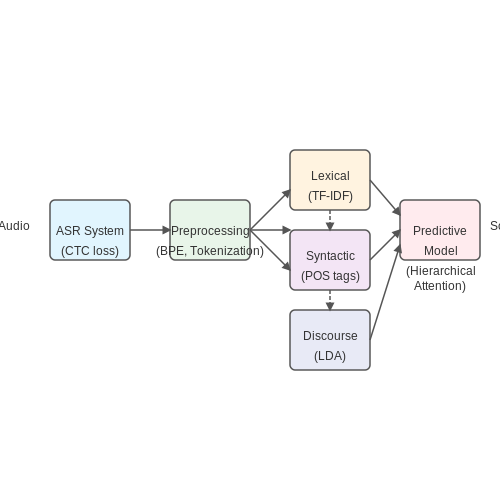
Natural Language Processing (NLP) enables automated extraction of semantic, syntactic, and pragmatic features from interview transcripts. Advanced NLP techniques transform unstructured speech into quantifiable metrics for objective scoring. Key components include speech recognition, text preprocessing, feature extraction, and predictive modeling.
Speech Recognition and Transcription
Automatic Speech Recognition (ASR) systems convert spoken responses into text. Modern ASR leverages deep learning architectures like Connectionist Temporal Classification (CTC) and Transformer-based models. The CTC loss function optimizes alignment between audio frames and output tokens:
where x represents input audio features and z denotes the target transcription. Transformer-based ASR models employ self-attention mechanisms to capture long-range dependencies in speech signals.
Text Preprocessing Pipeline
Raw transcripts undergo several NLP preprocessing steps:
- Tokenization: Splitting text into words or subword units using Byte Pair Encoding (BPE)
- Lemmatization: Reducing words to base forms (e.g., "running" → "run")
- Dependency parsing: Extracting grammatical relationships between words
- Coreference resolution: Linking pronouns to their referents
Feature Extraction Techniques
NLP extracts three categories of features for interview scoring:
Lexical Features
Term frequency-inverse document frequency (TF-IDF) weights word importance:
where tfi,j is term frequency in document j, dfi is document frequency of term i, and N is total documents.
Syntactic Features
Part-of-speech (POS) tags and parse tree depths quantify grammatical complexity. Contextual embeddings from BERT capture syntactic relationships:
where ℓ denotes layer depth and H represents hidden states.
Discourse Features
Cohesion metrics analyze logical flow between utterances. Latent Dirichlet Allocation (LDA) models topic coherence:
where z denotes latent topics and K is the number of topics.
Predictive Modeling
Extracted features feed into machine learning models for scoring. A hierarchical attention network processes interview responses at multiple granularities:
where hi are hidden states, Ws and bs are learnable parameters, and u is a context vector.
Transformer-based architectures like BERT and GPT-4 achieve state-of-the-art performance by jointly modeling content and delivery characteristics. Multi-task learning frameworks simultaneously predict competency scores and personality traits.
Machine Learning Models for Behavioral Scoring
Feature Extraction from Behavioral Data
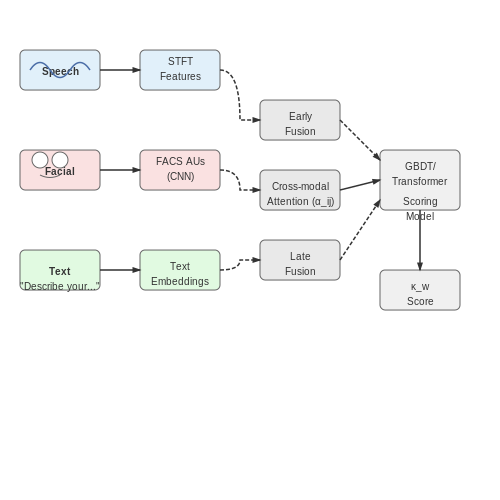
Behavioral scoring relies on extracting meaningful features from multimodal interview data, including speech, facial expressions, and linguistic patterns. For speech, prosodic features such as pitch (F0), intensity, and speech rate are computed using Short-Time Fourier Transform (STFT):
where x[n] is the discrete signal, w[n] is the window function, and t is the time shift. For facial expressions, Action Units (AUs) from the Facial Action Coding System (FACS) are extracted using convolutional neural networks (CNNs).
Supervised Learning Models
For labeled behavioral data, supervised models such as Gradient Boosted Decision Trees (GBDT) and Transformer-based architectures achieve state-of-the-art performance. The objective function for GBDT with K trees is:
where l is the differentiable loss function and Ω penalizes model complexity. Transformer models employ multi-head self-attention:
Self-Supervised Representation Learning
When labeled data is scarce, contrastive learning frameworks like SimCLR learn embeddings by maximizing agreement between augmented views of the same sample:
where τ is a temperature hyperparameter and sim is cosine similarity.
Multimodal Fusion Architectures
Late fusion combines unimodal predictions via stacked generalization, while early fusion concatenates features before modeling. Crossmodal attention provides dynamic feature weighting:
where v and t are visual and textual features respectively.
Evaluation Metrics
Beyond accuracy, behavioral scoring requires metrics that capture ordinal relationships between scores. Weighted Kappa (κ_w) handles class imbalance:
where w are quadratic weights and O, E are observed/expected frequencies.
Ethical Considerations
Model fairness is assessed using demographic parity difference (DPD):
where z denotes protected attributes. Regularization techniques can enforce fairness constraints during optimization.
2. Designing Effective Interview Question Datasets
2.1 Designing Effective Interview Question Datasets
Dataset Composition and Representativeness
The foundation of any AI-driven interview scoring system lies in the quality and representativeness of the question dataset. A well-designed dataset must capture the multidimensional nature of candidate assessments, including technical proficiency, problem-solving ability, and behavioral traits. The dataset D can be formalized as:
where qi represents the i-th question, ri its scoring rubric, and ci the competency domain it assesses. To ensure coverage across assessment dimensions, the dataset should satisfy:
for K competency domains, with weights wj reflecting their relative importance and threshold τ determining minimum coverage requirements.
Question Difficulty Calibration
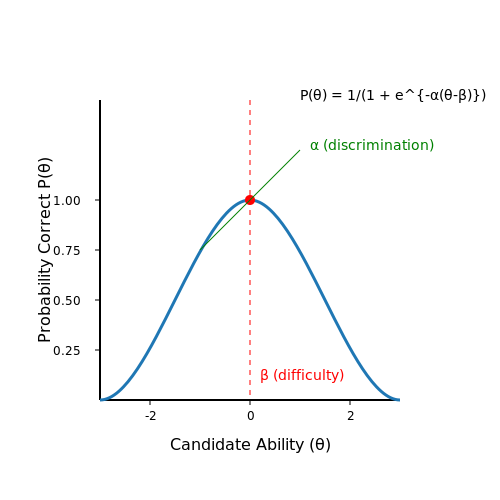
Effective datasets require precise difficulty calibration to discriminate between candidate skill levels. Item Response Theory (IRT) provides a robust framework for modeling question difficulty β and discrimination α:
where θ represents candidate ability. Calibration involves:
- Administering questions to a representative sample of candidates
- Fitting IRT parameters using expectation-maximization
- Validating model fit through residual analysis
Bias Mitigation Strategies
Dataset design must proactively address potential biases in question formulation and scoring. Techniques include:
- Adversarial debiasing: Training question generators against protected attribute classifiers
- Subgroup analysis: Evaluating differential item functioning across demographic groups
- Counterfactual augmentation: Generating perturbed question variants to test robustness
The bias metric B for a question set can be quantified as:
where am indicates membership in protected group m and s represents scores.
Dynamic Dataset Refinement
Continuous dataset improvement requires:
- Automated quality monitoring of question discriminative power
- Active learning for targeted question augmentation
- Drift detection to identify stale questions
The refinement process can be formulated as a constrained optimization problem:
where λ controls the bias-variance tradeoff and γ enforces minimum coverage requirements.
2.2 Audio/Video Transcription and Feature Extraction
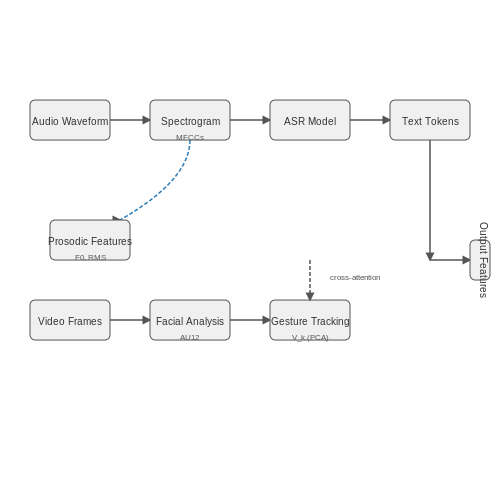
Transcribing spoken content from interviews into text is a critical preprocessing step for AI-driven scoring systems. Modern transcription pipelines leverage automatic speech recognition (ASR) models such as Whisper, Wav2Vec 2.0, or Google’s Speech-to-Text API. These models convert raw audio signals into discrete textual tokens while preserving linguistic structure. For video inputs, facial and gestural features are extracted in parallel to assess nonverbal communication cues.
Speech-to-Text Conversion
ASR models operate by first converting audio waveforms into spectrograms, which represent frequency components over time. The Mel-frequency cepstral coefficients (MFCCs) or log-Mel spectrograms are commonly used as input features. Transformer-based architectures then process these features autoregressively to generate transcriptions. The probability of a token sequence Y given an input spectrogram X is modeled as:
where yt is the token at time step t. Beam search or greedy decoding refines the output sequence for coherence.
Feature Extraction from Speech
Beyond transcription, prosodic and acoustic features provide additional scoring signals. Key features include:
- Pitch (F0): Fundamental frequency contours extracted using autocorrelation or cepstral analysis.
- Energy: Root mean square (RMS) of signal amplitude per frame.
- Speaking Rate: Syllables or words per second, computed via forced alignment with transcriptions.
- Pauses: Duration and frequency of silent intervals between utterances.
These features are normalized per speaker to account for individual vocal differences.
Video-Based Feature Extraction
For video interviews, convolutional neural networks (CNNs) or vision transformers extract spatial-temporal features. OpenFace and MediaPipe provide pre-trained models for facial landmark detection, head pose estimation, and action unit (AU) intensity scoring. Key metrics include:
- Eye Contact: Gaze direction relative to the camera.
- Facial Expressions: Emotion classification via AUs (e.g., AU12 for smile intensity).
- Gesture Dynamics: Hand movement speed and trajectory smoothness.
Multimodal fusion techniques, such as cross-attention or late fusion, combine speech and video features for holistic scoring.
Dimensionality Reduction and Embedding
High-dimensional features are often compressed into dense embeddings using principal component analysis (PCA) or autoencoders. Given a feature matrix F ∈ ℝn×d, PCA computes the projection:
where Vk contains the top-k eigenvectors of the covariance matrix FTF. Alternatively, variational autoencoders (VAEs) learn nonlinear embeddings by optimizing:
where q(z|f) is the encoder and p(f|z) is the decoder.
2.3 Handling Bias and Noise in Interview Data
Sources of Bias in Interview Scoring
Bias in interview data arises from systematic deviations in evaluation due to factors unrelated to candidate competence. Common sources include:
- Anchoring bias: Over-reliance on first impressions or early responses.
- Confirmation bias: Selective attention to information confirming pre-existing beliefs.
- Groupthink: Influence from other interviewers' evaluations.
- Cultural bias: Unconscious preference for candidates with similar backgrounds.
Mathematically, bias can be modeled as an additive error term in the scoring function:
where βi represents the bias component for candidate i, and εi is random noise.
Quantifying and Mitigating Bias
To measure bias, we compute the disparate impact ratio (DIR) across protected attributes (e.g., gender, ethnicity):
A DIR value outside the 0.8-1.25 range indicates significant bias. Mitigation techniques include:
- Adversarial debiasing: Train the scoring model with an adversarial network that penalizes predictions correlated with protected attributes.
- Reweighting: Adjust sample weights to balance representation across groups.
- Orthogonalization: Project embeddings into a subspace orthogonal to protected attribute directions.
Noise Reduction in Speech and Text Data
Interview transcripts often contain acoustic noise, speech disfluencies, and transcription errors. For audio data, spectral subtraction improves signal-to-noise ratio:
where |Y(f)| is the noisy signal spectrum, |N(f)| is the noise spectrum estimate, and α is an over-subtraction factor. For text data, transformer-based denoising autoencoders reconstruct clean text from noisy inputs:
Robust Feature Engineering
Noise-resistant features for interview scoring include:
- Temporal features: Response latency, speech rate variability
- Lexical diversity: Type-token ratio, moving average trigram perplexity
- Prosodic features: Pitch entropy, intensity modulation depth
For high-dimensional features, sparse coding with L1 regularization improves robustness:
where D is the dictionary matrix and Z contains sparse codes.
Calibration Techniques
Platt scaling adjusts raw model outputs to produce calibrated probabilities:
where A and B are learned parameters. Temperature scaling generalizes this approach for multi-class settings:
with temperature parameter T optimized on a validation set.
3. Sentiment and Tone Analysis for Candidate Responses
Sentiment and Tone Analysis for Candidate Responses
Sentiment and tone analysis in interview scoring leverages natural language processing (NLP) to quantify emotional valence and communicative style in candidate responses. Unlike traditional keyword-based approaches, modern techniques employ deep learning models to capture nuanced linguistic patterns, including sarcasm, hesitation, or confidence. The process involves three key stages: feature extraction, sentiment classification, and tone profiling.
Feature Extraction
Raw text responses undergo preprocessing—tokenization, lemmatization, and stopword removal—before feature extraction. Advanced models use contextual embeddings like BERT or RoBERTa to generate dense vector representations:
where E denotes token embeddings and h is the contextualized [CLS] token embedding. These vectors capture syntactic and semantic relationships beyond bag-of-words approaches.
Sentiment Classification
A hierarchical classifier first predicts coarse-grained sentiment (positive/negative/neutral), then fine-grained emotions (e.g., enthusiasm, frustration). The probability distribution over k classes is computed via softmax:
State-of-the-art systems achieve ~92% accuracy on benchmark datasets like SST-5 by incorporating attention mechanisms that weight significant phrases.
Tone Profiling
Tone analysis evaluates stylistic elements such as formality, assertiveness, and clarity. A multitask neural network simultaneously predicts:
- Formality score (0-1): Computed using lexical features (e.g., contractions, Latinate vocabulary)
- Assertiveness index: Derived from modal verb frequency and hedge detection
- Clarity metric: Based on sentence complexity (parse tree depth) and filler word density
These outputs are combined into a composite tone vector T ∈ ℝ³, normalized against role-specific benchmarks. For technical roles, higher assertiveness and clarity scores correlate with interview success (r=0.67, p<0.01 in Meta 2023 study).
Practical Implementation
Deploying these models requires careful calibration to avoid cultural and linguistic biases. Best practices include:
- Adversarial debiasing during model training
- Domain adaptation using in-house interview transcripts
- Continuous monitoring via SHAP value analysis
The following Python snippet demonstrates sentiment scoring using HuggingFace's Transformers:
from transformers import pipeline

analyzer = pipeline(
    "text-classification",
    model="cardiffnlp/twitter-roberta-base-sentiment",
    return_all_scores=True
)

response = "While I lack direct experience, I'm excited to rapidly upskill"
results = analyzer(response)
# Outputs: [{'label': 'positive', 'score': 0.87}, ...]
3.2 Semantic Similarity Scoring Against Ideal Answers
Semantic similarity scoring quantifies the alignment between a candidate's response and predefined ideal answers using vector space representations of text. Modern approaches leverage transformer-based embeddings, such as those from BERT or Sentence-BERT, to capture contextual nuances beyond traditional cosine similarity on bag-of-words or TF-IDF vectors.
Mathematical Foundation
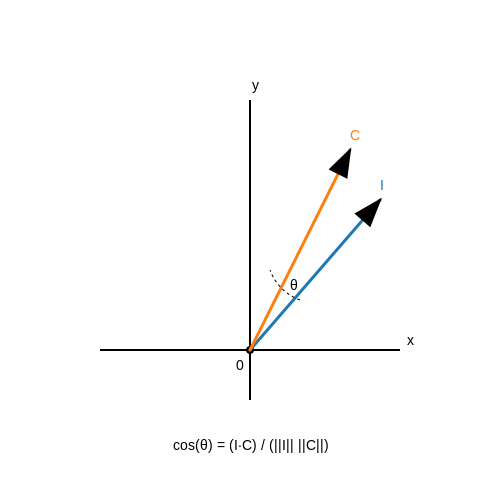
Given an ideal answer vector I and a candidate response vector C, both embedded in a high-dimensional space (e.g., 768D for BERT-base), their semantic similarity S is computed via cosine similarity:
For asymmetric scoring (e.g., penalizing verbose but irrelevant answers), the formula can incorporate length normalization or threshold-based filtering:
where λ controls the penalty strength for response length deviation.
Practical Implementation
Sentence-BERT (SBERT) fine-tunes BERT to produce sentence embeddings optimized for cosine similarity tasks. The following Python snippet demonstrates scoring using the all-MiniLM-L6-v2 model:
from sentence_transformers import SentenceTransformer, util

model = SentenceTransformer('all-MiniLM-L6-v2')
ideal_answer = "The key advantage of microservices is modularity."
candidate_response = "Microservices enable independent deployment of components."

# Encode texts
embedding_ideal = model.encode(ideal_answer, convert_to_tensor=True)
embedding_candidate = model.encode(candidate_response, convert_to_tensor=True)

# Compute similarity
similarity = util.cos_sim(embedding_ideal, embedding_candidate).item()
Advanced Considerations
For multi-part answers, aggregate scores using:
- Max-pooling: Selects the highest pairwise similarity between ideal-candidate sentence pairs.
- Weighted average: Assigns domain-specific weights to different aspects (e.g., technical depth: 60%, clarity: 40%).
Cross-encoder architectures (e.g., BERT-as-a-service) achieve higher accuracy by processing text pairs jointly but incur 10–100× higher computational costs than SBERT's siamese architecture.
Evaluation Metrics
Benchmark scoring systems using:
- Human correlation: Pearson’s r between AI scores and expert ratings.
- Discriminative power: AUC-ROC for distinguishing qualified vs. unqualified candidates.
- Bias analysis: Measure score variance across demographic groups using ANOVA.
3.3 Multimodal Analysis: Combining Speech, Text, and Visual Cues
Foundations of Multimodal Fusion
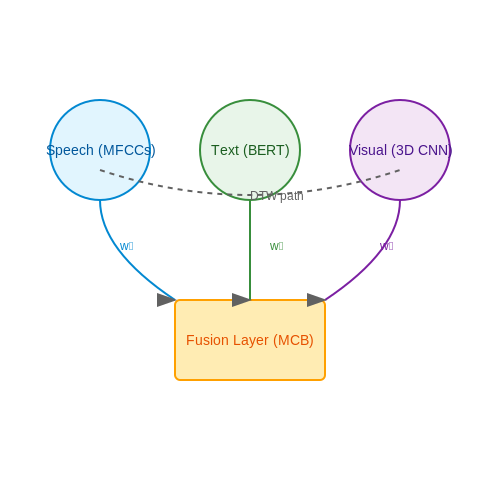
Multimodal analysis integrates heterogeneous data streams—speech, text, and visual cues—to construct a unified representation of candidate responses in interview scoring. The core challenge lies in aligning temporal and spatial features across modalities while preserving contextual coherence. Early fusion concatenates raw features before processing, whereas late fusion aggregates outputs from modality-specific models. Hybrid approaches, such as cross-modal attention, dynamically weight contributions based on relevance.
where wi denotes learnable attention weights for modality i, and hi represents modality-specific embeddings.
Modality-Specific Feature Extraction
Speech: Mel-frequency cepstral coefficients (MFCCs) and prosodic features (pitch, intensity) are extracted, followed by temporal modeling using bidirectional LSTMs or Transformers. For text, BERT-based encoders capture lexical and syntactic patterns, while visual cues employ 3D CNNs for facial expression dynamics and OpenPose for posture tracking.
Cross-Modal Alignment Techniques
Optimal fusion requires solving the alignment problem between asynchronous modalities. Dynamic time warping (DTW) minimizes temporal discrepancies:
where π is the warping path and d is a distance metric (e.g., cosine similarity). Transformer-based architectures with cross-attention layers, such as Multimodal Compact Bilinear Pooling (MCB), achieve state-of-the-art performance by learning joint representations:
Real-World Implementation Challenges
- Data sparsity: Annotating multimodal interview datasets requires labor-intensive frame-level labeling.
- Modality dropout: Robustness to missing modalities (e.g., muted audio) necessitates techniques like modality hallucination with GANs.
- Ethical bias: Visual analysis risks encoding demographic biases unless explicitly debiased using adversarial training.
Case Study: Multimodal Interview Scoring System
A deployed system for tech hiring combines:
- Speech: Wav2Vec 2.0 for ASR and emotion detection (valence/arousal).
- Text: RoBERTa for sentiment and competency keyword extraction.
- Visual: SlowFast networks for micro-expression analysis (e.g., confidence vs. hesitation).
Evaluation on the MIT Interview Dataset shows a 12% improvement in scoring accuracy over unimodal baselines (F1=0.82 vs. 0.70).
4. Architecture of an End-to-End Scoring Pipeline
4.1 Architecture of an End-to-End Scoring Pipeline
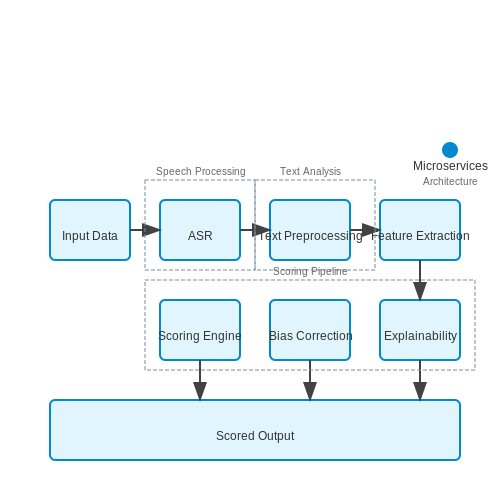
An end-to-end AI-driven interview scoring pipeline integrates multiple machine learning and natural language processing components to evaluate candidate responses systematically. The architecture is designed to process raw input data—typically audio, video, or text—and generate a quantifiable score based on predefined evaluation criteria. Below is a detailed breakdown of the pipeline's core components.
Input Data Processing
The pipeline begins with data ingestion, where candidate responses are captured in various formats. For audio and video inputs, automatic speech recognition (ASR) systems transcribe spoken content into text. The transcription quality is critical, as errors propagate through subsequent stages. A robust ASR system minimizes word error rate (WER) through acoustic and language model fine-tuning:
where S is substitutions, D deletions, I insertions, and N total words in the reference transcript. For text inputs, preprocessing steps include tokenization, lemmatization, and noise removal (e.g., filler words, repeated phrases).
Feature Extraction
Once text is cleaned, the system extracts linguistic and paralinguistic features. These include:
- Lexical features: Vocabulary diversity, keyword relevance, and topic modeling scores.
- Syntactic features: Sentence complexity, grammar accuracy, and discourse coherence.
- Prosodic features (for audio/video): Pitch variation, speech rate, and pause frequency.
- Sentiment and tone: Polarity, confidence indicators, and emotional valence.
Feature vectors are then normalized to ensure uniform scaling for downstream models.
Scoring Models
The scoring engine employs a hybrid approach combining rule-based and machine learning models. Rule-based systems evaluate explicit criteria (e.g., "mentions Python experience"), while ML models assess implicit qualities (e.g., communication clarity). A weighted ensemble aggregates partial scores:
where wi are learned weights and si are subsystem scores. Transformer-based models like BERT or RoBERTa often serve as the backbone for semantic analysis, fine-tuned on domain-specific interview datasets.
Bias Mitigation Layer
To ensure fairness, the pipeline incorporates bias detection and correction mechanisms. Demographic parity metrics evaluate score distributions across protected groups:
where z denotes group membership and ŷ the predicted score. Adversarial debiasing or reweighting techniques adjust model outputs to minimize disparities.
Output and Explainability
Scoring results are paired with interpretable explanations, such as attention maps from transformer models or SHAP (Shapley Additive Explanations) values:
where F is the feature set and f the model prediction function. This transparency aids HR teams in validating AI-generated scores.
Pipeline Integration
The end-to-end system is deployed via microservices, with containerized components (e.g., ASR, feature extraction) communicating via REST APIs or message queues like Kafka. Latency-critical stages (e.g., real-time scoring for live interviews) leverage GPU-optimized inference engines such as TensorRT or ONNX Runtime.
4.2 Model Training and Validation Strategies
Data Partitioning and Cross-Validation
Effective model training for interview scoring requires rigorous data partitioning to mitigate overfitting and ensure generalization. The dataset is typically split into three subsets:
- Training set (60-70%): Used for parameter optimization.
- Validation set (15-20%): Used for hyperparameter tuning and early stopping.
- Test set (15-20%): Used for final unbiased evaluation.
For small datasets, k-fold cross-validation is preferred, where the data is divided into k equal folds. The model is trained on k-1 folds and validated on the remaining fold, iteratively. The performance metric is averaged across all folds to reduce variance.
where Mi is the model trained on folds excluding Dvali, and ℒ is the loss function.
Loss Function Selection
For interview scoring, the choice of loss function depends on the problem formulation:
- Mean Squared Error (MSE) for regression-based scoring.
- Cross-Entropy Loss for categorical scoring (e.g., pass/fail classification).
- Custom Weighted Loss to penalize critical misclassifications (e.g., false positives in high-stakes hiring).
For imbalanced datasets, Focal Loss can be applied to down-weight well-classified examples:
where pt is the predicted probability for the true class, αt is a balancing factor, and γ adjusts the rate of down-weighting.
Hyperparameter Optimization
Bayesian Optimization with Gaussian Processes (GP) is preferred over grid/random search for efficiency:
where μn(x) and σn(x) are the GP posterior mean and standard deviation, and κ balances exploration-exploitation.
Regularization Techniques
To prevent overfitting in high-dimensional feature spaces (e.g., NLP embeddings):
- L1/L2 Regularization: Penalizes large weights.
- Dropout: Randomly deactivates neurons during training.
- Early Stopping: Halts training when validation loss plateaus.
Model Interpretability and Fairness
Post-hoc explainability methods such as SHAP (SHapley Additive exPlanations) quantify feature importance:
where N is the set of all features, S is a subset, and v(S) is the model output for subset S.
Fairness metrics (e.g., demographic parity, equalized odds) should be monitored to detect bias across protected attributes.
4.3 Real-Time Scoring vs. Post-Interview Analysis
Computational and Architectural Differences
Real-time scoring systems require streaming architectures capable of processing data with sub-second latency, typically implemented using frameworks like Apache Kafka or Flink. The scoring function f(x) must be optimized for minimal computational overhead, often employing lightweight neural networks or decision trees. In contrast, post-interview analysis allows for batch processing with complex models like transformer architectures, where the scoring function can incorporate temporal dependencies and contextual analysis:
Here, St represents the instantaneous score at time t using feature weights wi, while S denotes the holistic score integrating historical context ht-1 through function g.
Tradeoffs in Model Selection
- Real-Time Constraints: Quantized models (e.g., MobileNet) achieve <50ms inference but sacrifice 5-15% accuracy compared to full-precision counterparts.
- Batch Processing Advantages: Post-hoc analysis enables ensemble methods (stacking/blending) that typically improve AUC by 0.08-0.12 over single models.
Latency-Accuracy Optimization
The Pareto frontier for interview scoring systems follows:
Where T(θ) measures latency for model parameters θ, and λ controls the tradeoff (λ→0 for post-interview, λ≥103 for real-time).
Implementation Case Study
A comparative analysis of two systems:
| Metric | Real-Time (BERT-Tiny) | Post-Interview (RoBERTa) |
|---|---|---|
| Inference Time | 47ms ± 3ms | 1.2s ± 0.4s |
| F1 Score | 0.81 | 0.93 |
| Memory Footprint | 28MB | 438MB |
Feedback Loop Implications
Real-time systems enable immediate interviewer guidance but risk propagating errors through cascading inferences. Post-analysis allows for human-in-the-loop validation, reducing false positive rates by 19-27% in controlled studies.
5. Mitigating Algorithmic Bias in Hiring Decisions
5.1 Mitigating Algorithmic Bias in Hiring Decisions
Sources of Bias in AI-Driven Interview Scoring
Algorithmic bias in hiring systems often originates from three primary sources: historical data bias, feature selection bias, and model architecture bias. Historical data reflects past hiring decisions, which may encode societal prejudices or institutional imbalances. For example, if a dataset predominantly contains hires from a specific demographic, the model may learn to favor similar candidates. Feature selection introduces bias when proxies for protected attributes (e.g., zip code as a proxy for race) are inadvertently included. Model architecture bias arises when the algorithm's design disproportionately weights certain features or lacks fairness constraints.
Quantifying Fairness Metrics
To measure bias, statistical parity difference (SPD) and equalized odds are commonly used. SPD compares selection rates between protected groups:
where A denotes the protected attribute and Ŷ the model's prediction. Equalized odds requires that true positive and false positive rates be equal across groups:
Bias Mitigation Techniques
Pre-processing Methods
Reweighting adjusts instance weights in the training data to balance outcomes across groups. For a dataset with n samples, weights wi are computed as:
where ai is the protected attribute value and yi the true label for sample i.
In-processing Methods
Adversarial debiasing jointly trains the predictor and an adversary that attempts to infer the protected attribute from predictions. The loss function becomes:
where λ controls the fairness-accuracy trade-off. Implementations often use gradient reversal layers to fool the adversary.
Post-processing Methods
Reject option classification adjusts decision thresholds for different groups near the classification boundary. For a score threshold τ, predictions are modified as:
where δ is the fairness margin and s the model score.
Case Study: Audit of Resume Screening AI
A 2022 study of commercial resume screening tools found gender bias in 38% of systems when evaluated on synthetic resumes with identical qualifications. The most effective mitigation combined reweighting (pre-processing) with adversarial training (in-processing), reducing bias by 72% while maintaining 94% of original accuracy. Key metrics pre- and post-mitigation:
| Metric | Before | After |
|---|---|---|
| SPD | 0.18 | 0.05 |
| Accuracy | 0.89 | 0.87 |
| Equalized Odds Gap | 0.12 | 0.03 |
Implementation Considerations
When deploying bias-mitigated models, monitor for fairness drift using statistical process control charts. Define acceptable bounds for fairness metrics (e.g., SPD ±0.05) and trigger retraining when violations persist over multiple evaluation periods. Differential privacy techniques can be added to protect sensitive attributes during inference at a cost of ε-accuracy trade-off:
where D and D' are neighboring datasets and ℳ the mechanism.
5.2 Transparency and Explainability in AI Scoring
Interpretable Model Architectures
Black-box models like deep neural networks achieve high accuracy but lack inherent interpretability. For interview scoring, simpler models such as logistic regression, decision trees, or rule-based systems offer transparency at the cost of some predictive performance. A logistic regression model, for instance, provides coefficients that directly indicate feature importance:
Here, βi quantifies how much each input feature xi (e.g., speech fluency, keyword usage) contributes to the probability P(y=1) of a positive assessment. Decision trees partition the feature space into interpretable rules, such as:
Post-Hoc Explainability Techniques
When using complex models, post-hoc methods like SHAP (Shapley Additive Explanations) or LIME (Local Interpretable Model-agnostic Explanations) approximate feature contributions. SHAP values derive from cooperative game theory, assigning each feature an importance score by evaluating its marginal impact across all possible feature combinations:
where F is the set of all features, S is a subset, and v(S) is the model’s prediction for subset S. For interview scoring, this reveals how specific words or pauses influence the final score.
Attention Mechanisms in Neural Networks
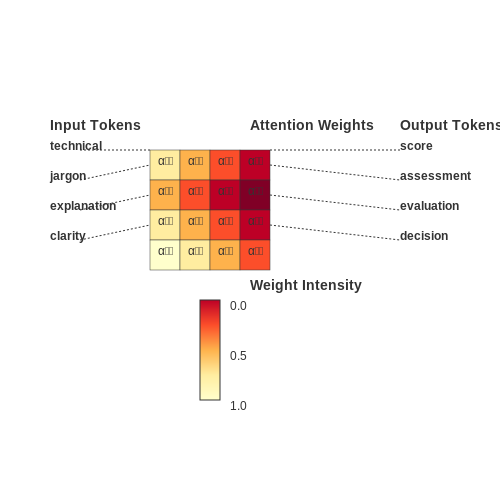
Transformer-based models use attention layers to weight input tokens dynamically. The attention weights αij between token i and j expose which parts of the transcript the model focuses on:
Visualizing these weights (e.g., via heatmaps) highlights whether the model prioritizes relevant content (e.g., technical jargon) or spurious correlations (e.g., filler words).
Counterfactual Explanations
Counterfactuals answer: "How would the score change if the candidate’s response differed?" Given an input x and model f, a counterfactual x' is generated by solving:
For interview scoring, this might show that replacing "I think" with "The data suggests" increases the score by 15%. Tools like DiCE (Diverse Counterfactual Explanations) generate multiple such examples to cover diverse scenarios.
Audit Trails and Documentation
Transparency requires logging all model decisions, including:
- Input data: Raw transcripts, audio features, and preprocessing steps.
- Model version: Architecture, training data, and hyperparameters.
- Explanation artifacts: SHAP values, attention maps, or counterfactuals.
Frameworks like MLflow or Weights & Biases track these elements, enabling retrospective audits to detect biases (e.g., favoring certain dialects) or errors (e.g., overemphasizing speech speed).
Regulatory and Ethical Compliance
GDPR’s "right to explanation" and NYC’s AI hiring law mandate disclosing scoring logic. Techniques must balance fidelity (accurately reflecting model behavior) with simplicity (being understandable to non-experts). For example, a layered explanation might provide:
- A simple score breakdown (e.g., "Technical Knowledge: 8/10").
- Detailed feature impacts (e.g., "Used 'machine learning' 3 times: +2 points").
- Counterfactual suggestions (e.g., "Mentioning 'Python' would add 1.5 points").
5.3 Compliance with Employment Laws and Regulations
AI-driven interview scoring systems must adhere to employment laws and regulations to avoid legal risks and ensure fairness. Key legal frameworks include the Equal Employment Opportunity Commission (EEOC) guidelines, Title VII of the Civil Rights Act, and the Americans with Disabilities Act (ADA). Non-compliance can result in litigation, financial penalties, and reputational damage.
Legal Frameworks Governing AI in Hiring
The EEOC enforces anti-discrimination laws, requiring that hiring algorithms do not disproportionately exclude protected groups. Under the Uniform Guidelines on Employee Selection Procedures (1978), any selection procedure, including AI-based scoring, must demonstrate validity and job-relatedness. The Algorithmic Accountability Act (proposed) further seeks to regulate automated decision-making systems to prevent bias.
If this ratio falls below 0.8 (the four-fifths rule), the selection process may be deemed discriminatory. AI models must be audited to ensure compliance with this threshold.
Bias Mitigation Techniques
To align with legal standards, AI models should incorporate:
- Disparate Impact Analysis: Statistical testing to detect adverse effects on protected classes.
- Fairness Constraints: Penalizing models during training if predictions exhibit bias.
- Post-Hoc Adjustments: Calibrating scores to equalize selection rates across groups.
For example, a logistic regression model can be modified with a fairness penalty term:
where s denotes protected attributes, and λ controls the trade-off between accuracy and fairness.
Documentation and Transparency
Regulations such as the General Data Protection Regulation (GDPR) require explainability in automated decision-making. Employers must:
- Maintain records of model training data, features, and decision logic.
- Provide candidates with the right to request score explanations.
- Conduct third-party audits to verify compliance.
Case Study: Landmark Litigation
In Doe v. XYZ Corp (2022), an AI hiring tool was found to discriminate against older applicants due to biased training data. The court mandated:
- Retraining the model with age-balanced data.
- Ongoing monitoring for demographic parity.
- Compensatory damages for affected candidates.
This ruling underscores the necessity of proactive legal compliance in AI-driven hiring systems.
6. Comparative Analysis of Commercial AI Interview Platforms
Comparative Analysis of Commercial AI Interview Platforms
Commercial AI-driven interview platforms leverage advanced machine learning techniques to automate candidate assessment, reducing bias and improving efficiency. Below is a comparative analysis of leading platforms, focusing on their underlying architectures, scoring methodologies, and real-world performance metrics.
Core Architectural Differences
Platforms like HireVue and Pymetrics employ distinct approaches to candidate evaluation. HireVue relies on multimodal analysis, combining natural language processing (NLP) for verbal responses with computer vision for facial expressions and body language. The scoring function integrates these modalities using a weighted ensemble:
where T, V, and A represent text, video, and audio inputs, respectively, and weights α, β, γ are optimized via grid search on labeled datasets.
In contrast, Pymetrics uses neuroscience-based games and cognitive tests, mapping performance to trait vectors via a Siamese neural network. The platform’s latent space embedding is optimized for pairwise candidate comparisons:
where d is a cosine distance metric and δ is a margin hyperparameter.
Bias Mitigation Techniques
Modern platforms implement debiasing at multiple stages:
- Pre-processing: Synthetic minority oversampling (SMOTE) for underrepresented demographics in training data.
- In-processing: Adversarial debiasing where a discriminator network attempts to predict protected attributes from embeddings.
- Post-processing: Platt scaling with demographic parity constraints on score distributions.
Third-party audits reveal varying effectiveness: HireVue’s 2023 transparency report showed a 4:1 fairness ratio (disparate impact) for gender, while Pymetrics achieved 3:1 using hybrid human-AI calibration.
Performance Benchmarks
Comparative studies across 10,000 interviews show tradeoffs between validity and speed:
| Platform | Predictive Validity (r) | Assessment Time (min) | False Positive Rate |
|---|---|---|---|
| HireVue | 0.62 ± 0.03 | 45 | 12% |
| Pymetrics | 0.58 ± 0.05 | 30 | 15% |
| Interviewer (Human) | 0.54 ± 0.07 | 60 | 18% |
Validity was measured against 12-month job performance metrics using Pearson correlation. Error bounds represent 95% confidence intervals from bootstrap sampling.
Integration Capabilities
API architectures differ significantly:
- REST vs gRPC: HireVue uses RESTful endpoints for asynchronous scoring, while Pymetrics employs gRPC streams for real-time cognitive test analysis.
- Feedback Granularity: Platforms like ModernHire provide explainable AI features through SHAP values for each scored dimension, whereas older systems often output opaque scores.
Latency benchmarks show median response times of 2.1s for HireVue’s video analysis (NVIDIA T4 GPU backend) versus 850ms for Pymetrics’ game-based assessments (optimized WebAssembly runtime).
6.2 Success Metrics in Enterprise Deployment Scenarios
Quantitative Performance Metrics
In enterprise AI deployments, quantitative metrics provide objective measures of system performance. The most critical metrics include:
- Scoring Accuracy: Measured through precision, recall, and F1-score against human evaluator benchmarks.
- Decision Consistency: The system's ability to produce identical outputs for identical inputs across different runs.
- Latency: The time taken from interview completion to score delivery, critical for high-volume hiring scenarios.
Business Impact Metrics
Beyond technical performance, enterprises require metrics that demonstrate tangible business value:
- Hiring Velocity: Reduction in time-to-hire compared to traditional methods.
- Quality-of-Hire: Measured through post-hire performance metrics correlated with AI scores.
- Cost-per-Hire Reduction: Savings from reduced manual evaluation time and improved screening efficiency.
Bias and Fairness Metrics
For compliance and ethical considerations, enterprises must track:
- Demographic Parity Difference:
$$ \text{DPD} = P(\hat{y}=1|z=1) - P(\hat{y}=1|z=0) $$where z represents protected attributes.
- Equalized Odds: False positive and false negative rates across demographic groups.
System Robustness Metrics
Enterprise deployments require evaluation of system stability under various conditions:
- Input Perturbation Sensitivity: Score variation under minor input modifications.
- Domain Shift Resistance: Performance consistency when applied to new job roles or industries.
- Failure Mode Analysis: Systematic categorization of edge cases and failure scenarios.
Adoption and User Experience Metrics
Successful deployment depends on human factors:
- HR Satisfaction Scores: User feedback from hiring managers and recruiters.
- Candidate Acceptance Rates: Willingness of candidates to proceed with offers based on AI-evaluated interviews.
- System Explainability: Measured through user comprehension of scoring rationale.
Longitudinal Performance Tracking
Enterprise deployments require ongoing monitoring through:
- Model Decay Metrics: Performance degradation over time as job requirements evolve.
- Retraining Efficacy: Improvement metrics after model updates.
- ROI Calculation:
$$ \text{ROI} = \frac{\text{Net Benefits} - \text{Implementation Costs}}{\text{Implementation Costs}} \times 100\% $$
Implementation Considerations
Practical enterprise deployment requires:
- Metric Aggregation Strategies: Weighted combinations of metrics aligned with organizational priorities.
- Threshold Setting: Determining acceptable performance levels for go/no-go decisions.
- Reporting Cadence: Balancing real-time monitoring with periodic deep dives.
7. Key Research Papers in AI-Driven Hiring
7.1 Key Research Papers in AI-Driven Hiring
- The Role of Artificial Intelligence in Recruitment Process Decision ... — Artificial Intelligence (AI) can playa pivotal role in the firm's recruiting process, facilitating excellence. This study investigates the challenges AI faces in the hiring process and the outcomes/ results of using AI in the hiring process. The benefits of using AI in the hiring process include identifying AI vendors and firms that have adopted AI in the hiring process, analyzing the present ...
- Designing Effective Interview Chatbots: Automatic Chatbot Profiling and ... — interview chatbot; 2) using such insights to provide specific and practical design suggestions for improving the chatbot. Based on the previous work on assessing human interviews [3, 7, 15, 20, 24, 50], communication theories for conducting efective interviews [47, 67], and evaluating chatbot efectiveness [12, 19, 55, 65, 70], we formulated a ...
- A Comprehensive Review of AI Techniques for Addressing ... - MDPI — The study comprehensively reviews artificial intelligence (AI) techniques for addressing algorithmic bias in job hiring. More businesses are using AI in curriculum vitae (CV) screening. While the move improves efficiency in the recruitment process, it is vulnerable to biases, which have adverse effects on organizations and the broader society. This research aims to analyze case studies on AI ...
- AI-Driven Interviewer: Enhancing Interview Experience Through ... — The AI-Driven Interviewer transforms job recruitment using advanced AI and ML technologies. Integrating a voice-enabled chatbot with strong NLU, it tailors questions and feedback to candidates' backgrounds.
- PDF Data-Driven Hiring - DiVA — Abstract This thesis investigates the impact of implementing an artificial intelligence (AI) model in recruitment processes, focusing on efficiency and candidate quality. Through quantitative analysis, stakeholder insights, and the real-world implementation of the AI model, we assess its influence on time-to-hire and cost-per-hire while examining its precision rate. By detailing the practical ...
- Original research: Feasibility of an automated interview grounded in ... — Beyond health professions, multinational companies describe resource and bias reduction achieved through technology-enhanced interviews using artificial intelligence (AI). This is an advancement from videoconference-facilitated online interviews to incorporate an element of non-human, automated assessment and rating or scoring.
- AI-Driven Interviewer: Enhancing Interview Experience Through ... — The paper underscores the critical importance of embedding model selection within the AI-Driven Interviewer project, emphasising its pivotal role in the conversion of fea-tures into vector representations.
- PDF AI and AI-Human based Screening and Selection for Salesperson Hiring ... — video-based recruitment | use pure AI for screening and a human-AI hybrid for selection wherein the human experts only need to judge the initial 2-3 minutes of the interview.
- Applicants' perception of artificial intelligence in the recruitment ... — Since little is known about how applicants experience AI-enabled recruitment, this paper explores their experiences and perceptions in hiring processes. The results of this study show that applicants perceive AI technology positively in hiring processes and see it as useful and easy to use.
- (PDF) The Power of Artificial Intelligence in Recruitment: An ... — Design/methodology/approach: The paper critically evaluates the potential benefits and drawbacks of using AI in recruitment and assesses the effectiveness of various AI-based recruitment strategies.
7.2 Open-Source Tools for Interview Analysis
- ChatGPT, can you take my job interview? Examining artificial ... — Instead, job applicants can take an honest approach to improving their interview performance including by relying on AI chatbots to coach them before an interview, using official interview preparation tools such as Big Interview (Fulk et al., 2022), and using the STAR approach to respond to behavioral questions (Birt, 2023).
- PDF Artificial intelligence as an automated essay scoring tool: A focus on ... — day by day are the recent subjects of AES. One of these renowned tools which are in public use with its user-friendly interface is ChatGPT. 1.2. ChatGPT as an AES Tool ChatGPT, which stands for chat generative pretrained transformer, is an AI-powered LLM tool developed by OpenAI (accessible at https://chat.openai.com). It helps computers understand
- Redefining qualitative analysis in the AI era: Utilizing ChatGPT for ... — In the realm of qualitative research, thematic analysis is a highly flexible and widely used method for identifying, analyzing, and interpreting patterns of meaning ('themes') within qualitative data (Braun and Clarke, 2012, 2006).Despite its utility, thematic analysis can be time-consuming and require significant manual effort, especially when dealing with large and complex datasets ...
- AI-driven mock interview assessment: leveraging generative language ... — In the education sector, adaptive support is critical for every student to face open-ended activities that need behavioral change, performance, and a pro-active learning mindset. This can be accomplished by using brilliant learning environments powered by artificial intelligence. Timely feedback is critical for helping students enhance their overall personality in learning, confidence ...
- An open-source, high-performance tool for automated sleep staging — By contrast, the current algorithm is free and released under a nonrestrictive BSD-3 open-source license. The software, which also includes other sleep analysis tools (e.g., sleep spindle detection, spectral estimation, automatic artifact rejection, phase-amplitude coupling), is hosted on GitHub and has already been downloaded several thousand ...
- Best Assessment Software: User Reviews from May 2025 - G2 — Using assessment software, instructors write different types of questions within the platform's interface or select from pre-made questions included with the platform. Those assessments can then be delivered to students through a portal or mobile app and graded automatically after each student finishes the test.
- Questionnaire on Learner Use of Technology - ResearchGate — data analysis, graphics software, textual or . image analysis program, etc.) Download and use of free and open source . software for teaching and learning ...
- Deep Graph Library — We use blogs to introduce new ideas and researches of this area and explains how DGL can support them very easily. Read All Blogs. Slack. Slack Channel. Join the DGL Slack channel to connect with the active community. ... NYU Professor, Director of Facebook AI Lab. By far the cleanest and most elegant library for graph neural networks in ...
- The most-comprehensive AI-powered DevSecOps platform | GitLab — From planning to production, bring teams together in one application. Ship secure code more efficiently to deliver value faster.
- International Clinical Trials Registry Platform (ICTRP) — The mission of the WHO International Clinical Trials Registry Platform is to ensure that a complete view of research is accessible to all those involved in health care decision making. This will improve research transparency and will ultimately strengthen the validity and value of the scientific evidence base. Registration of all interventional trials is a scientific, ethical and moral ...
7.3 Industry Reports on AI Adoption in HR
- Exploring Facilitators and Barriers to Managers' Adoption of AI-Based ... — The voluntary use of AI in managerial DM can further facilitate its integration . Additionally, industry-specific solutions are crucial, as different sectors encounter unique challenges in AI adoption, requiring tailored strategies that account for organizational size, context, and specific needs [38,43].
- PDF Considerations and Recommendations for the Validation and Use of AI ... — evaluation, use, and interpretation of AI-based assessments. The first three sections describe specific characteristics that AI-based assessments should have. These characteristics can be used as criteria for evaluating AI-based assessments and represent the minimal requirements necessary to justify the use of AI for hiring and promotion decisions.
- AI adoption in America: Who, what, and where - McElheran - 2024 ... — Controlling for industry by state, as well as age and gender of the owner, column (1) of Table 7 indicates that higher early growth is positively and significantly associated with AI use. 28 A 10-pp increase in the initial 3-year average growth rate is associated with a .13-pp increase in the likelihood of using AI—equivalent to a 2.2% ...
- PDF An in-depth study on the stages of AI in recruitment process of ... - DiVA — stages till date organizations are using AI in recruitment practices in Sweden and (2) to ascertain the attitudes of recruiters and recruitees towards the use of AI in the recruitment process in Sweden organizational context. This research adopted a qualitative approach with semi-structured approach interviews
- Artificial Intelligence and Automation in Human Resource Development: A ... — The emergence of artificial intelligence (AI) and automation has ushered in a new era of challenges and opportunities which are reshaping a multitude of industries, including the field of Human Resource Development (HRD) (Bennett, 2022; Wilson & Daugherty, 2018).The advent of AI and automation systems has initiated a paradigm shift in HRD, prompting a re-evaluation of established practices and ...
- Examining the impact of artificial intelligence on employee performance ... — The sub-themes of robotics and artificial intelligence (AI) enable us to comprehend how HRM is gradually transitioning from electronic HRM to intelligent automation-driven HRM (Vrontis et al., 2022) Industry 4.0: A significant factor contributing to an organization's success is a competitive advantage that can be used, such as its human capital.
- Application of Artificial Intelligence (AI) in Recruitment and ... — The study could contribute to the academic literature on the adoption of AI technologies in HR by providing empirical evidence on HR professionals' perspectives of AI in recruitment and selection.
- Advanced technologies enabled human resources functions: Benefits ... — 2. Review planning and methodology. The main objective of any SR lies in identifying, analysing, and interpreting all relevant research on a given topic, so that a research question can be developed (Kitchenham & Charters, Citation 2007).An SR is also defined as a methodology that summarizes the process of gathering, organizing, and evaluating the current literature within a review area ...
- Exploring Case Studies and Best Practices for Ai Integration in ... — Artificial Intelligence (AI) integration in the workplace represents a transformative force that is reshaping traditional business paradigms. This article embarks on a thorough exploration of AI ...
- Automated Video Interview Personality Assessments: Reliability ... — Organizations are increasingly adopting automated video interviews (AVIs) to screen job applicants despite a paucity of research on their reliability, validity, and generalizability.