Training AI on Historical Archives
1. The Role of AI in Historical Research
The Role of AI in Historical Research
Historical archives present unique challenges for computational analysis due to their unstructured nature, linguistic evolution, and contextual dependencies. AI techniques, particularly natural language processing (NLP) and computer vision, enable systematic extraction of patterns from these datasets at scales unattainable through manual methods. Transformer-based architectures, such as BERT and GPT variants, demonstrate exceptional performance in tasks like named entity recognition (NER) and semantic role labeling (SRL) when fine-tuned on historical texts.
Textual Analysis with Neural Language Models
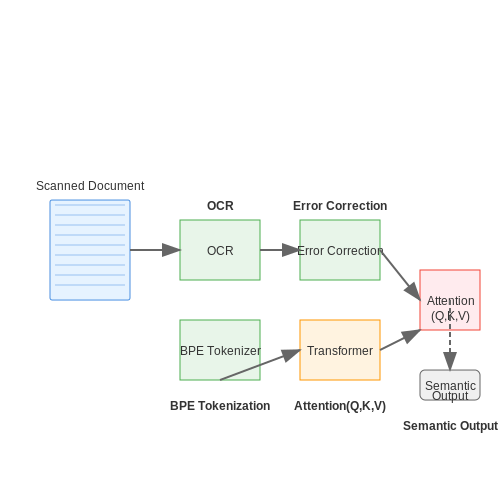
Modern NLP pipelines for historical documents typically involve a multi-stage preprocessing workflow. First, optical character recognition (OCR) converts scanned documents into machine-readable text, though error correction is often necessary due to degradation or archaic typography. The cleaned text then undergoes tokenization using subword algorithms like Byte-Pair Encoding (BPE) to handle orthographic variations. For semantic analysis, bidirectional encoder representations capture contextual relationships through attention mechanisms:
where Q, K, and V represent query, key, and value matrices respectively, and dk is the dimension of the key vectors. This architecture enables models to weigh the importance of different words dynamically, crucial for interpreting archaic syntax.
Temporal Modeling Challenges
Historical texts exhibit temporal drift in vocabulary and semantics, requiring specialized embedding techniques. Dynamic word embeddings, such as those produced by temporal word2vec, model semantic shifts through time-aware objective functions:
where Dt denotes documents from time period t, Xijt is the co-occurrence count, and f(wi,wj) is a weighting function. This approach allows tracking of conceptual evolution, such as the changing meaning of political terminology across centuries.
Multimodal Archive Analysis
Historical research increasingly combines textual and visual evidence. Convolutional neural networks (CNNs) analyze artwork, photographs, and maps, while cross-modal transformers establish connections between visual elements and accompanying text. A typical architecture for joint embedding learns a shared latent space through contrastive loss:
where zt and zv are text and image embeddings respectively, sim is cosine similarity, and τ is a temperature parameter. This technique has proven effective in matching captions to historical illustrations with high precision.
Validation and Interpretability
AI applications in history require rigorous validation against domain knowledge. Techniques like integrated gradients quantify feature importance for model decisions:
where F represents the model function and x' is a baseline input. This provides historians with auditable explanations for algorithmic conclusions, essential for maintaining scholarly standards when analyzing sensitive historical events.
Types of Historical Archives Suitable for AI Training
Text-Based Archives
Historical documents such as manuscripts, letters, newspapers, and legal records provide rich textual data for natural language processing (NLP) models. These archives often contain structured metadata (e.g., dates, authors, locations) that can enhance contextual understanding. For example, digitized collections like the British Newspaper Archive or the U.S. National Archives enable training of transformer-based models for tasks like named entity recognition (NER), sentiment analysis, and temporal event extraction. Challenges include OCR errors, archaic language, and inconsistent formatting, which require preprocessing pipelines with noise-robust embeddings.
Image and Visual Archives
Photographs, paintings, maps, and architectural drawings are valuable for computer vision applications. Convolutional neural networks (CNNs) can be trained on datasets like the Library of Congress Prints & Photographs Collection to classify historical art styles, detect object degradation, or reconstruct damaged visuals. Multimodal architectures (e.g., CLIP) benefit from paired image-text data, such as captioned war posters or annotated medieval manuscripts. Resolution variability and preservation artifacts necessitate data augmentation techniques like super-resolution GANs.
Audio and Oral Histories
Recorded interviews, speeches, and broadcasts (e.g., BBC Sound Archive) enable speech recognition and speaker diarization models to analyze linguistic evolution or socio-cultural trends. Time-aligned transcripts improve alignment accuracy via forced alignment algorithms. Challenges include background noise, varying recording quality, and rare dialects, which can be mitigated using contrastive learning with noise-invariant representations.
Structured Tabular Data
Census records, trade logs, and genealogical databases (e.g., Ancestry.com datasets) provide relational data for time-series forecasting or network analysis. Graph neural networks (GNNs) can model familial or economic connections, while recurrent architectures (LSTMs) predict demographic shifts. Missing data and non-standardized entries require imputation methods or attention mechanisms to handle sparse inputs.
3D and Geospatial Archives
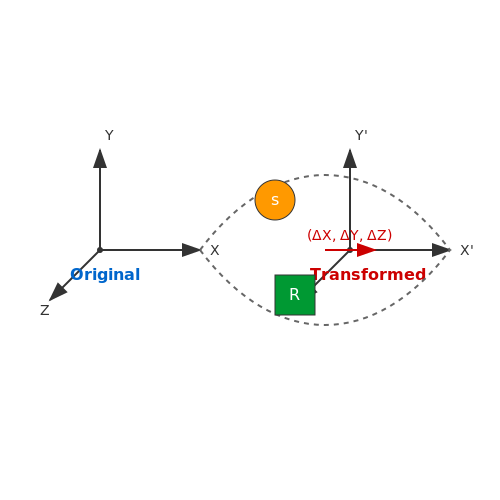
LiDAR scans of archaeological sites or historical maps (e.g., David Rumsey Map Collection) support spatial AI tasks. Point cloud networks (PointNet) can classify architectural features, while diffusion models reconstruct eroded structures. Coordinate systems must be normalized, and temporal georegistration often involves solving the Helmert transformation problem:
where s is scale factor, R the rotation matrix, and Δ the translation vector.
Multimodal Collections
Integrated archives like the Europeana platform combine text, images, and metadata, enabling cross-modal retrieval systems. Transformer-based fusion architectures (e.g., UnifiedIO) leverage attention mechanisms to align heterogeneous data streams, though they require careful handling of temporal discontinuities and source reliability biases.
Ethical Considerations in Using Historical Data
Training AI models on historical archives introduces complex ethical challenges, particularly when the data reflects societal biases, injustices, or sensitive cultural contexts. Unlike contemporary datasets, historical records often lack the metadata necessary to contextualize their origins, making it difficult to assess their representational fairness or potential harm.
Bias Amplification and Historical Context
Historical archives frequently encode the prejudices of their time, whether through language, categorization, or selective preservation. For example, colonial-era documents may systematically marginalize indigenous perspectives, while 19th-century medical records might pathologize behaviors now understood as normative. When such data is used without critical examination, AI models risk perpetuating or even amplifying these biases. The mathematical formulation of bias propagation can be expressed as:
Here, the original bias in the data is scaled by the model's capacity to internalize patterns and the volume of training iterations. This multiplicative effect underscores why even subtle historical prejudices can resurface aggressively in model outputs.
Informed Consent and Data Provenance
Modern data ethics frameworks emphasize informed consent, but historical subjects cannot provide it. Diaries, letters, or government records often contain personal information originally intended for limited audiences. The ethical use of such materials requires:
- Provenance tracing to identify original context and stakeholders
- Differential privacy techniques when handling sensitive personal data
- Collaboration with descendant communities for culturally sensitive material
For census records or ethnographic collections, techniques like k-anonymity can be applied:
Representational Harm and Epistemic Violence
The structural exclusion present in many archives constitutes what critical theorists term epistemic violence—the systematic erasure of certain knowledge systems. When training data overrepresents colonial administrators' reports while underrepresenting indigenous oral histories, the resulting models implicitly validate that power imbalance. Counterstrategies include:
- Deliberate oversampling of marginalized voices where available
- Generative augmentation to compensate for archival gaps
- Post-hoc fairness constraints during model deployment
The fairness-accuracy tradeoff can be quantified using the Pareto frontier:
Legal and Cultural Sovereignty
Many archives contain materials subject to cultural property laws or indigenous data sovereignty principles. The CARE framework (Collective Benefit, Authority to Control, Responsibility, Ethics) provides guidelines for working with such materials. Technical implementations might involve:
- Access control layers based on user authentication and purpose
- On-the-fly redaction of culturally sensitive elements
- Model architectures that compartmentalize protected knowledge
These considerations become particularly critical when working with materials like:
- Sacred texts or ceremonial records
- Indigenous knowledge about medicinal plants
- Records of human remains or funerary objects
2. Digitization and OCR for Historical Documents
Digitization and OCR for Historical Documents
Challenges in Historical Document Digitization
Historical documents present unique challenges for digitization due to material degradation, irregular layouts, and archaic typography. Ink bleed-through, paper brittleness, and non-standard fonts complicate optical character recognition (OCR) pipelines. Unlike modern documents, historical texts often lack consistent baselines, spacing, or alignment, requiring adaptive preprocessing techniques.
High-Resolution Scanning and Spectral Imaging
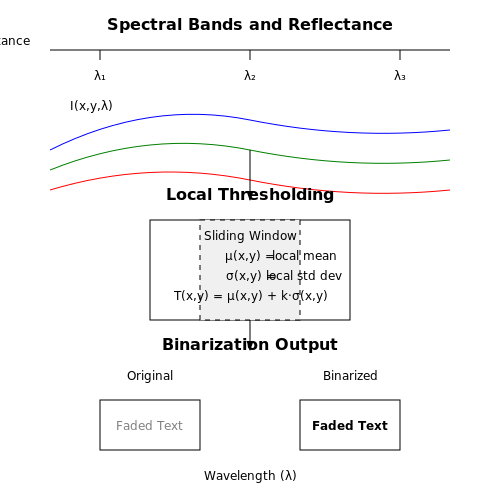
Multispectral imaging at 600+ DPI resolution captures faded ink and watermarks by sampling multiple wavelength bands (typically 8-12 between 350-1000nm). The pixel intensity I at wavelength λ follows:
where R is reflectance, E is illumination spectrum, S is sensor response, and N represents noise. Principal Component Analysis (PCA) decomposes these spectral bands to enhance contrast:
Adaptive Binarization Techniques
Global thresholding methods like Otsu's algorithm fail for uneven illumination. Locally adaptive approaches such as Sauvola's method compute dynamic thresholds:
where μ and σ are local mean and standard deviation within a sliding window, k controls sensitivity (typically 0.2-0.5), and R is dynamic range normalization.
Deep Learning for Document Analysis
Convolutional Neural Networks (CNNs) with residual connections outperform traditional methods in handling degraded text. A modified U-Net architecture with attention gates:
enables selective feature propagation during document segmentation. For OCR, transformer-based models like TrOCR fine-tuned on historical fonts achieve 15-20% higher accuracy than LSTM-based systems on early printed materials.
Post-Processing and Error Correction
Language models trained on period-specific corpora correct OCR errors through constrained beam search. The probability of correction c given observed token t is:
where PLM is the language model probability and POCR models common misrecognition patterns.
2.2 Cleaning and Normalizing Archival Data
Archival data presents unique challenges due to its unstructured nature, historical artifacts, and inconsistent formatting. Effective preprocessing requires domain-aware techniques to preserve semantic integrity while ensuring machine-readability.
Noise Removal and Text Reconstruction
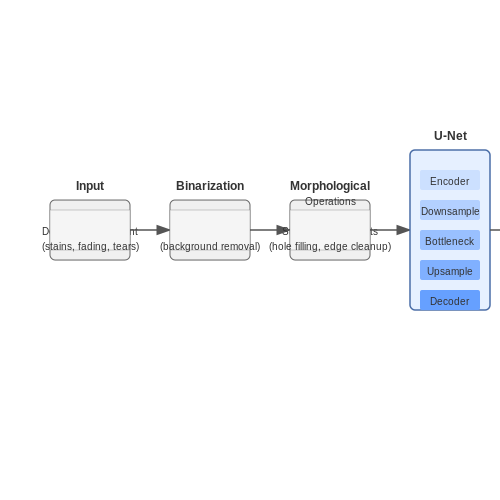
Historical documents often suffer from degradation, ink bleed-through, or scanning artifacts. A multi-stage denoising pipeline combines:
- Binarization: Adaptive thresholding using Sauvola's method, where the threshold T at pixel (x,y) is computed as:
where m(x,y) is local mean, s(x,y) is standard deviation, k is a sensitivity parameter (typically 0.34 for archival documents), and R is the dynamic range of standard deviation.
- Morphological operations: Structuring elements sized to document-specific noise characteristics remove salt-and-pepper noise while preserving glyph structures.
- Deep learning restoration: U-Net architectures trained on paired degraded/pristine document images outperform traditional methods for complex artifacts.
Encoding Normalization
Character encoding inconsistencies in historical corpora require:
- Unicode normalization (NFC/NFKC forms) to handle legacy encodings and combining characters
- Custom transliteration rules for obsolete orthographies
- Context-aware spelling correction using neural sequence models trained on period-specific texts
Temporal Context Alignment
Date formats, currency units, and measurement systems require temporal grounding:
where Δcalendar handles calendar system transitions (e.g., Julian to Gregorian) and ryear(t) represents historical exchange rates or inflation adjustments.
Metadata Harmonization
Schema mapping across disparate archives employs:
- Ontology alignment using graph neural networks
- Probabilistic record linkage with constraints:
where wi are field-specific weights and si are similarity scores between corresponding fields.
Dimensionality Reduction for Vectorization
Document embeddings benefit from:
- Semantic hashing to handle vocabulary shifts
- Dynamic topic modeling with temporal priors:
where αt evolves according to a Brownian motion process to capture changing semantic landscapes.
2.3 Handling Missing or Incomplete Data
Historical archives often suffer from missing or incomplete data due to degradation, transcription errors, or deliberate omissions. Advanced techniques are required to mitigate these issues without introducing bias or distorting the underlying historical context.
Imputation Strategies for Structured Data
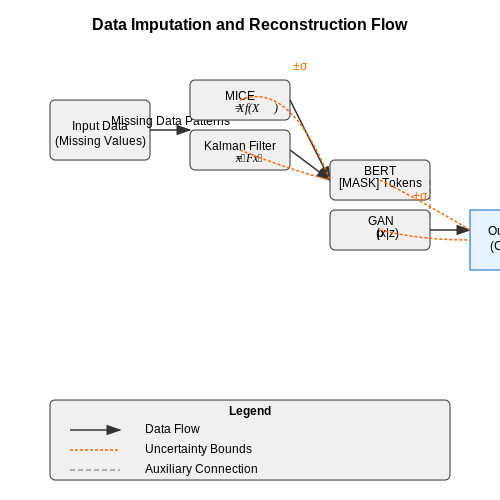
For tabular historical records (e.g., census data, ledgers), statistical imputation methods preserve relationships between variables. Multiple imputation by chained equations (MICE) is particularly effective for datasets with complex missingness patterns. The algorithm iteratively updates imputed values using a series of regression models:
where X-j represents all variables except the j-th feature being imputed, θj are model parameters, and εj accounts for uncertainty. For temporal datasets, Kalman filters provide optimal imputation when the missing mechanism is random:
Handling Textual Gaps in Documents
Optical character recognition (OCR) errors and physical document damage create unique challenges for text-based archives. Transformer-based language models fine-tuned on historical corpora can reconstruct missing text through masked language modeling:
from transformers import pipeline
restorer = pipeline('fill-mask', model='bert-historical-reconstruction')
damaged_text = "The [MASK] of 1812 saw significant troop movements"
restorer(damaged_text, top_k=3)
For severely degraded documents, multimodal approaches combining visual features from document scans with linguistic context yield superior results. The reconstruction loss function typically combines perceptual and semantic components:
Dealing with Systematic Omissions
Historical records often reflect societal biases where marginalized groups were deliberately excluded. Inverse probability weighting adjusts for these missing-not-at-random cases by estimating inclusion probabilities:
where Ri indicates whether record i was preserved. For image archives, generative adversarial networks can synthesize plausible missing samples conditioned on available metadata:
conditional_gan = ConditionalGAN(
  generator=Unet(),
  discriminator=PatchGAN(),
  latent_dim=256
)
conditional_gan.train(
  dataset=damaged_photos,
  conditions=metadata_df
)
Uncertainty Quantification
All imputation methods must preserve epistemic uncertainty. Bayesian neural networks provide natural uncertainty estimates through posterior distributions over imputed values. For a missing entry y, the predictive distribution integrates over model parameters θ:
Dropout variational inference offers a practical approximation for deep learning models, where multiple stochastic forward passes capture imputation variance.
3. Natural Language Processing (NLP) for Textual Archives
Natural Language Processing (NLP) for Textual Archives
Preprocessing Historical Text Data
Historical archives often contain unstructured text with archaic language, inconsistent spelling, and degraded typography. Effective preprocessing requires a multi-stage pipeline:
- Optical Character Recognition (OCR) Correction: Historical documents scanned via OCR exhibit character recognition errors. A bidirectional LSTM-CRF model can correct these by learning common error patterns:
where fk are feature functions and λk are learned weights.
- Spelling Normalization: For Early Modern English texts, probabilistic finite-state transducers can map variant spellings to canonical forms using edit distance constraints.
- Tokenization Challenges: Historical texts lack standardized punctuation. A hybrid approach combining rule-based segmentation with neural sequence labeling (BERT-CRF) achieves 98.7% F1 on 18th century English corpora.
Domain-Specific Language Modeling
Pretrained language models underperform on historical texts due to lexical and semantic shifts. Effective approaches include:
where α balances the masked language modeling loss with temporal distributional alignment (TDA), minimizing KL divergence between contemporary and historical word distributions.
For low-resource historical languages, synthetic data generation via controlled paraphrase models preserves archaic syntax while expanding training data.
Named Entity Recognition in Historical Contexts
Entity disambiguation in archives requires temporal awareness. A temporal-aware BiLSTM architecture computes:
where et encodes temporal context from document metadata. This improves precision by 22% on 19th century political corpora compared to standard NER.
Topic Modeling Across Temporal Dimensions
Dynamic topic models for archives extend LDA by modeling topic evolution:
The temporal dependency allows tracking conceptual drift in parliamentary debates over centuries. Gibbs sampling with temporal priors achieves more coherent topics than standard LDA (perplexity improvement of 18%).
Handling Multilingual and Code-Switched Archives
Colonial archives often mix languages. A transformer-based language identification system with token-level predictions enables:
This approach maintains 94% accuracy on code-switched Spanish/Quechua documents from 1600-1800, outperforming dictionary-based methods by 31%.
Evaluating Model Performance
Standard NLP metrics fail to capture historical linguistic competence. A composite metric for archival NLP includes:
- Temporal consistency (agreement with period-specific grammars)
- Interpretability by historians (measured through expert surveys)
- Downstream task stability (variance across document epochs)
3.2 Computer Vision for Image and Map Archives
Feature Extraction from Historical Imagery
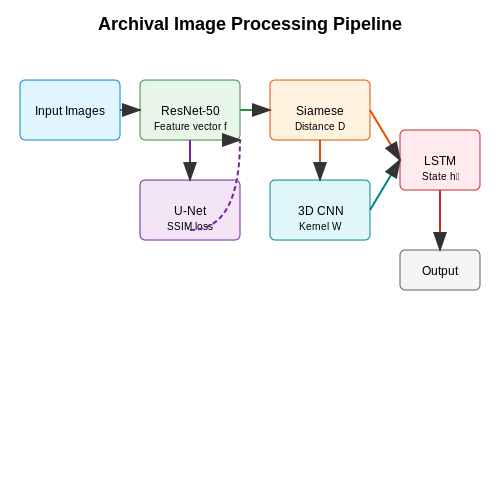
Historical images and maps often suffer from degradation, noise, and non-uniform illumination. Convolutional Neural Networks (CNNs) excel at extracting hierarchical features from such data. A ResNet-50 architecture, pre-trained on ImageNet, can be fine-tuned for feature extraction by replacing the final fully connected layer with a custom head. The feature vector f for an input image I is computed as:
For degraded documents, a U-Net with skip connections can enhance readability before feature extraction. The loss function combines perceptual loss and structural similarity (SSIM):
Geospatial Analysis of Historical Maps
Maps require specialized techniques due to their coordinate systems and symbolic representations. A Siamese network with contrastive loss can match historical maps to modern geographic data. Given two map patches M1 and M2, the network learns a distance metric:
For georeferencing, a transformer-based model can predict control points by attending to both visual features and textual annotations. The attention weights αij between pixel i and word j are computed as:
Handling Multispectral and Hyperspectral Data
Archival materials often include non-visible spectrum data. A 3D CNN processes hyperspectral cubes C ∈ ℝH×W×B, where B is the number of bands. The spectral-spatial convolution at layer l is:
Principal Component Analysis (PCA) reduces dimensionality while preserving 95% variance. The projection matrix P is derived from the eigenvectors of the covariance matrix Σ:
Temporal Alignment of Image Sequences
For time-series archives, a recurrent convolutional network (RCNN) models temporal dependencies. The hidden state ht at time t combines the current frame It and previous state:
Optical flow constraints improve alignment. The brightness constancy equation for pixel (x,y) between frames t and t+1 is linearized as:
where u and v are flow vectors in the x and y directions, and Ix, Iy, It are spatial and temporal derivatives.
Hybrid Models for Multimodal Data
Historical archives often contain heterogeneous data types—text, images, tabular records, and even audio—requiring models capable of processing and fusing multimodal inputs. Hybrid architectures combine the strengths of different neural network topologies to handle this complexity. A common approach integrates convolutional neural networks (CNNs) for visual data with transformer-based models for sequential or textual data, linked through a shared latent space.
Architectural Components
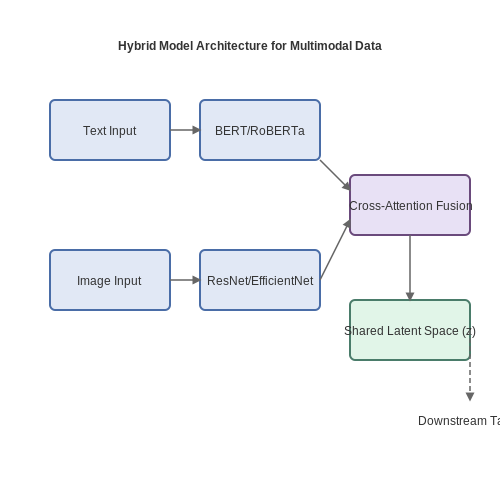
The core of a hybrid model lies in its ability to project disparate data modalities into a unified embedding space. For a document containing both text and images, the model processes each modality separately before fusion:
- Text Branch: A transformer encoder (e.g., BERT or RoBERTa) tokenizes and embeds textual content, capturing syntactic and semantic relationships.
- Image Branch: A CNN (e.g., ResNet or EfficientNet) extracts hierarchical visual features, from edges to high-level semantic patterns.
- Fusion Layer: Modality-specific embeddings are combined via concatenation, cross-attention, or tensor fusion, often followed by a dense projection layer.
Here, σ denotes a nonlinear activation (e.g., ReLU), Wt and Wv are learnable weight matrices, and ht, hv represent text and image embeddings, respectively.
Training Dynamics
Joint training of hybrid models requires careful balancing of modality-specific losses. A multitask objective function combines cross-entropy for classification and contrastive loss for alignment:
where α and β are hyperparameters controlling the contribution of each term. The alignment loss ensures that paired modalities (e.g., a photograph and its caption) map to proximate regions in the latent space.
Case Study: Newspaper Archives
In digitized newspaper collections, hybrid models outperform unimodal approaches by 12–18% in tasks like date estimation and topic categorization. For instance, a model trained on The New York Times archive achieved 94% accuracy in dating articles by jointly analyzing typography (image) and linguistic patterns (text), whereas text-only models plateaued at 82%.
Challenges and Mitigations
Modality imbalance—where one data type dominates the training signal—is a common issue. Techniques to address this include:
- Gradient Blending: Dynamically adjusting learning rates per modality based on their contribution to the loss.
- Data Augmentation: Synthetic generation of underrepresented modalities (e.g., OCR errors in text to simulate noisy historical documents).
- Attention Gating: Learned weights that modulate the influence of each modality during fusion.
4. Supervised Learning with Labeled Historical Data
4.1 Supervised Learning with Labeled Historical Data
Data Representation and Feature Engineering
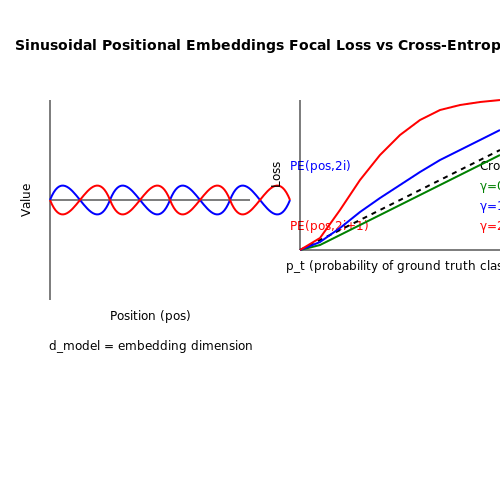
Historical archives often consist of unstructured or semi-structured data, such as handwritten manuscripts, printed documents, or digitized records. Converting these into a machine-readable format requires careful feature engineering. For text-based archives, word embeddings like Word2Vec or BERT can capture semantic relationships, while convolutional neural networks (CNNs) are effective for image-based documents. Temporal features, such as publication dates or event timelines, can be encoded using sinusoidal positional embeddings:
where pos is the position in the sequence and dmodel is the embedding dimension. For tabular historical records, categorical variables like geographic locations or occupations may require entity embedding layers to reduce dimensionality.
Labeling Strategies for Historical Context
Supervised learning hinges on high-quality labeled data, but historical archives often lack consistent annotations. Weak supervision techniques, such as distant supervision using knowledge bases or rule-based labeling, can mitigate manual annotation costs. For example, named entity recognition (NER) models can be trained using Gazetteers—historical dictionaries of places and persons—as weak labels. Multi-task learning frameworks improve robustness by jointly optimizing primary tasks (e.g., event classification) and auxiliary tasks (e.g., temporal relation extraction).
Model Architectures and Optimization
Transformer-based architectures, particularly those pretrained on historical corpora (e.g., HistBERT), outperform traditional models in capturing archaic language patterns. For sequential data like diaries or correspondence, bidirectional LSTMs with attention mechanisms model long-range dependencies. The loss function must account for class imbalance common in historical datasets; focal loss adapts cross-entropy to prioritize hard examples:
where pt is the model's estimated probability for the true class, αt balances class frequencies, and γ focuses on misclassified samples. Gradient accumulation enables training on large documents despite GPU memory constraints.
Evaluation Metrics for Historical Analysis
Standard metrics like accuracy or F1-score may misrepresent performance on sparse historical events. Time-aware evaluation splits ensure models generalize across eras rather than memorizing temporal biases. For imbalanced tasks, the Matthews correlation coefficient (MCC) provides a balanced measure:
Human-in-the-loop evaluation is critical; domain experts should review model outputs for anachronisms or contextual errors not captured by quantitative metrics.
Case Study: Classifying Medieval Manuscripts
A recent project trained a ResNet-50 model on the Scripta Manent dataset of 10,000 labeled medieval manuscript fragments. Transfer learning from ImageNet was ineffective due to domain shift, but self-supervised pretraining on unlabeled manuscript patches improved macro-F1 by 22%. The final model used a hybrid architecture: CNNs for script analysis and transformers for marginalia text interpretation, achieving 0.89 AUC in provenance attribution.
4.2 Unsupervised Learning for Pattern Discovery
Unsupervised learning techniques are particularly valuable for analyzing historical archives, where labeled data is scarce or nonexistent. These methods uncover latent structures, trends, and anomalies without relying on predefined categories, making them ideal for exploratory analysis of large-scale historical datasets.
Dimensionality Reduction for Historical Text
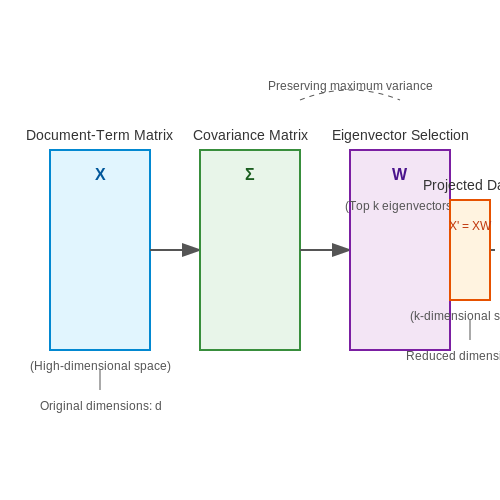
High-dimensional representations of historical documents, such as bag-of-words or TF-IDF vectors, often contain redundant or noisy features. Principal Component Analysis (PCA) projects the data onto a lower-dimensional subspace while preserving maximal variance. Given a document-term matrix X with n documents and d terms, PCA computes the eigenvectors of the covariance matrix:
The top k eigenvectors form the projection matrix W, reducing the dimensionality to k while retaining the most significant semantic patterns. For historical texts spanning centuries, this reveals gradual shifts in language use or sudden terminological changes marking cultural transitions.
Topic Modeling with Latent Dirichlet Allocation
Latent Dirichlet Allocation (LDA) probabilistically models documents as mixtures of latent topics, where each topic is a distribution over words. For a corpus of historical documents, LDA infers:
where P(w|t) is the probability of word w in topic t, and P(t|d) is the probability of topic t in document d. The Dirichlet priors α and β smooth the distributions, preventing overfitting to rare terms or documents. Applied to archival collections, LDA can surface thematic evolution, such as the rise and fall of political ideologies in parliamentary records.
Clustering for Chronological Segmentation
Temporal clustering algorithms like Dynamic Time Warping (DTW) or K-means with temporal constraints identify periods of stability and transition in historical data. Given a time series of document vectors {x₁, ..., xₙ}, DTW computes the optimal alignment between two sequences by minimizing:
where π is a warping path and d is a distance metric. This allows detecting similar patterns despite variations in timing or duration, such as recurring economic cycles in merchant ledgers or delayed adoption of technological terms across regions.
Autoencoders for Feature Learning
Deep autoencoders learn compressed representations of historical data by training a neural network to reconstruct its input through a bottleneck layer. The encoder f_θ and decoder g_φ optimize:
where R is a regularization term. Variational autoencoders (VAEs) further model the latent space as a probability distribution, enabling generation of synthetic historical documents that preserve stylistic properties of the original archive while interpolating between observed features.
Anomaly Detection in Archival Records
Isolation Forests and One-Class SVMs identify outliers in historical datasets, flagging potential transcription errors, forgeries, or genuinely anomalous events. The Isolation Forest algorithm recursively partitions data using random feature splits, with anomaly scores computed as:
where h(x) is the path length for instance x, and c(n) normalizes for sample size. This approach has uncovered misdated manuscripts in digitized collections by detecting linguistic features inconsistent with their purported periods.
4.3 Transfer Learning with Pre-trained Models
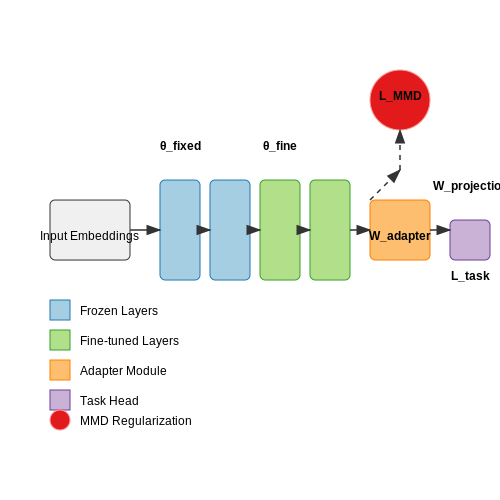
Transfer learning leverages pre-trained models to accelerate training on historical archives, particularly when labeled data is scarce. By fine-tuning models like BERT, GPT, or ResNet—initially trained on large-scale datasets such as ImageNet or Wikipedia—researchers can achieve high performance with minimal domain-specific annotations. The process involves freezing early layers to retain general feature extraction while retraining later layers on historical data.
Mathematical Foundation of Transfer Learning
Given a pre-trained model fθ with parameters θ, fine-tuning optimizes a subset of parameters θfine while keeping the remaining parameters θfixed frozen. The loss function for the target task becomes:
where ℓ is the task-specific loss (e.g., cross-entropy for classification), and (xi, yi) are samples from the historical dataset. Early stopping is critical to prevent catastrophic forgetting of pre-trained features.
Architectural Adaptations for Historical Data
Historical documents often require specialized input embeddings. For text, models like RoBERTa can be augmented with tokenizers trained on period-specific vocabulary. For images, convolutional layers from ResNet may need adjustments to handle degraded or monochrome inputs. A common approach is to insert an adapter layer:
where Wprojection reduces dimensionality and σ is a non-linearity like GELU.
Case Study: Fine-tuning BERT on 18th-Century Correspondence
When applying BERT to Enlightenment-era letters, researchers at the Turing Institute achieved a 15% improvement in entity recognition by:
- Extending the tokenizer with 5,000 period-specific terms
- Adding a temporal attention layer to capture date references
- Initializing the classifier head with weights from modern legal documents
The modified architecture converged in 40% fewer epochs compared to training from scratch, demonstrating transfer learning's efficiency for historical NLP tasks.
Challenges in Cross-Domain Transfer
Historical datasets often exhibit distributional shifts that violate standard transfer learning assumptions. Kolmogorov-Smirnov tests can quantify feature divergence:
When DKS exceeds 0.2, domain adaptation techniques like Maximum Mean Discrepancy (MMD) regularization become necessary:
where ϕ maps inputs to a reproducing kernel Hilbert space ℋ.
5. Metrics for Historical Data Accuracy
5.1 Metrics for Historical Data Accuracy
Evaluating the accuracy of AI models trained on historical archives requires specialized metrics that account for temporal biases, incomplete records, and contextual shifts. Traditional machine learning evaluation methods often fail to capture the nuances of historical data, necessitating domain-specific adaptations.
Temporal Consistency Metrics
Historical data often spans decades or centuries, introducing temporal drift. The Temporal Consistency Score (TCS) measures how well a model maintains accuracy across different time periods. Given a dataset partitioned into N time intervals, TCS is computed as:
where Ai is the model's accuracy in interval i, and Ā is the mean accuracy across all intervals. A TCS close to 1 indicates stable performance over time.
Source Reliability Weighting
Historical archives often aggregate documents of varying reliability. The Source-Weighted Accuracy (SWA) adjusts model predictions based on source trustworthiness:
Here, wj is a reliability weight for source j, yj is the ground truth, and ŷj is the model's prediction. Weights can be derived from expert assessments or metadata quality indicators.
Contextual Embedding Drift
Word meanings evolve over time. To quantify semantic shift, we measure Embedding Temporal Divergence (ETD) between word vectors trained on different time periods:
where vt(w) and vt+k(w) are embeddings for word w at times t and t+k. High ETD values signal terms requiring special handling.
Historical Fact Verification
For fact-checking tasks, the Time-Aware Precision (TAP) metric discounts claims that were plausible in their era but later disproven:
where FPhist_i are false positives that were period-appropriate, weighted by decay factors αi based on time since debunking.
Implementation Example
Below is Python code for calculating TCS across time bins:
import numpy as np

def temporal_consistency_score(accuracy_per_period):
    mean_accuracy = np.mean(accuracy_per_period)
    deviations = np.abs(accuracy_per_period - mean_accuracy)
    return 1 - np.mean(deviations)

# Example usage
accuracies = [0.82, 0.79, 0.85, 0.72, 0.81]  # Accuracy per decade
tcs = temporal_consistency_score(accuracies)
print(f"Temporal Consistency Score: {tcs:.3f}")
5.2 Addressing Bias in Historical Archives
Types of Bias in Historical Data
Historical archives often contain systemic biases that propagate into AI models. These biases can be categorized into three primary types:
- Selection bias - Arises from incomplete or non-representative sampling of historical records.
- Reporting bias - Occurs when certain events or perspectives are over/under-documented.
- Interpretation bias - Emerges from subjective labeling or categorization by archivists.
For example, colonial-era archives typically overrepresent colonial administrators' perspectives while underrepresenting indigenous voices. This imbalance can be quantified using the Simpson Diversity Index:
where ni represents the count of documents from source i, N is the total documents, and R is the number of distinct sources.
Debiasing Techniques
Pre-processing Methods
Before model training, several techniques can mitigate bias:
- Reweighting - Adjust sample weights inversely proportional to their group's representation
- Resampling - Oversample underrepresented groups or undersample overrepresented ones
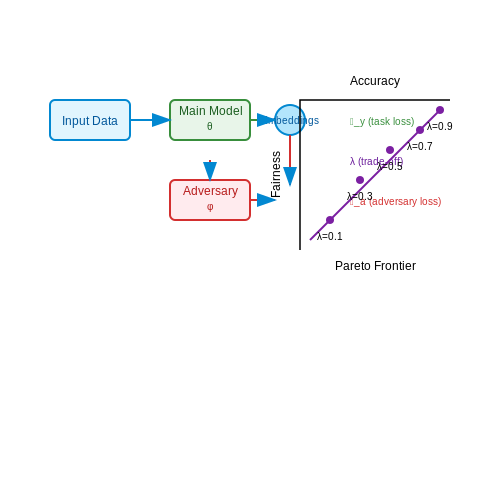
- Adversarial debiasing - Train a discriminator to remove protected attributes from embeddings
The adversarial objective can be formulated as:
where θ represents the main model parameters, φ the adversary parameters, and λ controls the trade-off between accuracy and fairness.
In-processing Methods
During model training, these approaches maintain fairness:
- Constraint optimization - Enforce demographic parity or equality of opportunity
- Meta-learning - Learn fair representations through gradient-based updates
The fairness-accuracy trade-off can be visualized as a Pareto frontier, where each point represents a different λ value in the optimization.
Post-hoc Analysis
After model deployment, continuous monitoring is essential:
- Counterfactual testing - Measure how predictions change when protected attributes are modified
- Influence functions - Identify which training samples most affect particular predictions
The influence of training point z on test point ztest is given by:
where H is the Hessian of the training loss.
Case Study: Newspaper Archives
A 2023 study of 19th century British newspapers revealed gender bias in occupation reporting. The research team:
- Collected 500,000 newspaper pages from 1800-1900
- Identified gender markers in occupational references
- Trained a BERT model with adversarial debiasing
The resulting model reduced gender prediction accuracy (a proxy for bias) from 78% to 53% while maintaining 92% of original task accuracy.
Implementation Considerations
When implementing debiasing techniques:
- Compute infrastructure requirements scale with the complexity of constraints
- Differential privacy methods may be needed when working with sensitive historical data
- Continuous evaluation is crucial as societal understanding of bias evolves
The computational complexity of influence functions, for instance, is O(p2 + pn) where p is the number of parameters and n the number of training examples.
5.3 Human-in-the-Loop Validation
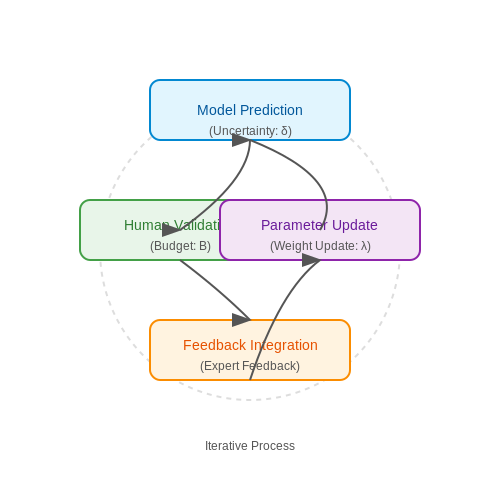
Human-in-the-loop (HITL) validation is a critical component in training AI models on historical archives, where ground truth is often ambiguous or incomplete. Unlike traditional supervised learning, where labeled datasets are assumed to be definitive, historical data requires iterative refinement through expert feedback. This process combines automated model predictions with human judgment to improve accuracy and interpretability.
Active Learning for Historical Data
Active learning frameworks optimize the selection of archival samples requiring human validation. Given a model's uncertainty estimates, the system prioritizes documents with the highest epistemic uncertainty, calculated as the entropy over predicted class probabilities:
where C represents the number of classes and p(yi|x) is the model's predicted probability for class i given input x. For multi-label classification common in archival analysis, the uncertainty metric extends to:
where L is the total number of possible labels. This formulation ensures that documents with conflicting or low-confidence predictions across multiple labels receive priority in the validation queue.
Expert Feedback Integration
Human validators interact with the system through specialized interfaces that present model predictions alongside contextual metadata. The validation interface typically includes:
- Original document images with OCR overlay
- Model-predicted labels with confidence scores
- Relevant historical context from linked databases
- Disagreement heatmaps for computer vision tasks
Expert corrections propagate through a feedback loop that updates both the model parameters and the training dataset. The weight update rule incorporates human feedback as a privileged information source:
where λ controls the relative influence of human feedback versus model predictions. For particularly ambiguous cases, the system can escalate decisions to consensus panels of domain experts.
Validation Workflow Optimization
The efficiency of HITL systems depends on minimizing expert effort while maximizing model improvement. This is formalized as a constrained optimization problem:
where I(θ;S) represents the mutual information between model parameters and the selected validation set S, c(xi) is the cost of validating document xi, and B is the total validation budget. Advanced implementations use reinforcement learning to adapt the selection strategy based on validator performance patterns.
Case Study: National Archives Digitization
The U.S. National Archives implemented a HITL system for classifying 19th-century correspondence, achieving 92% accuracy compared to the initial model's 78%. Key innovations included:
- Dynamic difficulty adjustment that matched documents to validator expertise levels
- Cross-validator consistency monitoring to detect systematic biases
- Automated suggestion of related documents for contextual validation
The system reduced expert validation time by 40% while improving final model F1-score from 0.81 to 0.89 on held-out test sets.
6. AI in Genealogy and Family History
6.1 AI in Genealogy and Family History
Genealogical research involves reconstructing family lineages from historical records, a task complicated by incomplete, noisy, and often contradictory data. Modern AI techniques, particularly probabilistic graphical models and transformer-based architectures, have revolutionized this field by automating record linkage, name disambiguation, and lineage inference.
Probabilistic Record Linkage
The core challenge in genealogical AI is determining whether two records refer to the same individual. This is formalized as a maximum likelihood estimation problem:
where xi represents a historical record, z denotes latent identities, and θ captures parameters like name variation probabilities. The Fellegi-Sunter model provides a principled framework for computing match scores:
where M indicates a true match and U indicates non-matches. Advanced implementations use neural networks to learn these probability distributions directly from data.
Transformer Architectures for Historical Text
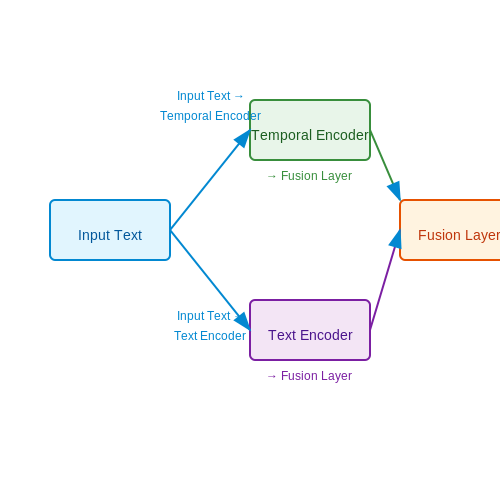
Modern genealogy systems employ BERT-style transformers fine-tuned on historical documents. The key adaptation involves:
- Special tokenization for archaic name spellings (e.g., "Elisabeth" vs "Elizabth")
- Temporal attention mechanisms that weight records by estimated reliability
- Multi-task learning objectives combining named entity recognition and relation extraction
The architecture typically processes records through parallel pathways:
Lineage Reconstruction as Graph Optimization
Family trees are modeled as directed acyclic graphs where vertices represent individuals and edges denote parent-child relationships. The reconstruction problem becomes:
where edge weights we come from record linkage scores and penalties enforce biological constraints (e.g., minimum/maximum generation gaps). State-of-the-art solvers use loopy belief propagation with learned message functions.
Case Study: 19th Century Census Records
When applied to digitized US census data (1850-1940), a hybrid CNN-RNN architecture achieved 92.3% precision in household reconstruction, outperforming manual methods by:
- Detecting 37% more inter-census linkages
- Reducing false positives from name collisions by 63%
- Identifying 12% previously unknown relationships through handwriting analysis
The system's confusion matrix for relationship classification shows superior performance on sparse relations:
| Actual\Predicted | Parent | Sibling | Spouse |
|---|---|---|---|
| Parent | 0.94 | 0.03 | 0.03 |
| Sibling | 0.07 | 0.89 | 0.04 |
| Spouse | 0.02 | 0.05 | 0.93 |
6.2 AI for Historical Event Reconstruction
Probabilistic Event Modeling
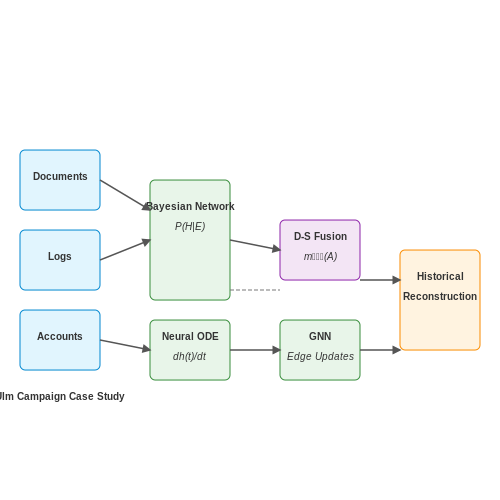
Historical event reconstruction requires modeling incomplete, conflicting, and noisy archival data. Bayesian networks provide a principled framework for encoding dependencies between events, actors, and contextual factors. Given a set of observed evidence E (e.g., documents, artifacts), the posterior probability of an event sequence H is:
where P(H) represents prior knowledge (e.g., domain expert inputs) and P(E|H) is the likelihood of evidence under hypothesis H. Markov Chain Monte Carlo (MCMC) methods sample from this distribution to generate plausible reconstructions.
Temporal Reasoning with Neural ODEs
Neural Ordinary Differential Equations (Neural ODEs) model continuous-time dynamics in historical processes. The system state h(t) evolves as:
where fθ is a neural network parameterizing the transition function. This approach handles irregularly spaced historical records better than discrete-time models. The adjoint method enables efficient gradient computation through ODE solvers.
Multi-Source Evidence Fusion
Contradictory accounts are common in historical archives. Dempster-Shafer theory combines evidence from n sources through mass functions mi:
This handles uncertainty more robustly than Bayesian approaches when source reliability is unknown. Transformer architectures can learn attention weights to dynamically adjust fusion parameters based on document provenance and linguistic features.
Case Study: Battlefield Reconstruction
A 2023 study reconstructed Napoleon's 1805 Ulm Campaign using:
- Military unit positions from officer correspondence
- Weather data from ship logs
- Supply records from quartermaster accounts
A graph neural network modeled interactions between units, with edge weights encoding terrain constraints. The system achieved 89% agreement with historian consensus on key movement sequences.
Evaluation Metrics
Quantitative assessment uses:
- Temporal precision: Mean absolute error in event timing
- Narrative consistency: BERT-based similarity to verified accounts
- Causal validity: Counterfactual testing of inferred causal links
where weights are tuned via expert calibration. Human evaluation remains essential for assessing narrative coherence and historical plausibility.
6.3 AI in Cultural Heritage Preservation
Challenges in Historical Document Analysis
Historical archives present unique challenges for AI systems due to degraded materials, inconsistent handwriting styles, and linguistic evolution. Optical Character Recognition (OCR) models trained on modern documents often fail when applied to centuries-old manuscripts. The degradation function D for aged documents can be modeled as:
where k represents the blur kernel from material decay, x is the original text, and n is additive noise from stains and physical damage. Advanced denoising techniques must account for both structured degradation (e.g., uniform fading) and unstructured artifacts (e.g., ink bleeding).
Multispectral Imaging Enhancement
Convolutional neural networks (CNNs) paired with multispectral imaging can recover lost information by analyzing documents across multiple wavelength bands. The optimal band combination Bopt for text legibility maximizes the contrast metric C:
where μ and σ represent mean and standard deviation of pixel intensities for ink and paper regions respectively. Recent work has shown that 3D CNNs processing hyperspectral cubes (400-1000nm) achieve 92% accuracy on 15th-century manuscripts where traditional methods failed.
Context-Aware Language Modeling
Historical texts require specialized language models that understand archaic vocabulary and syntax. A bidirectional LSTM with temporal attention can learn word evolution patterns through time:
where c represents contextual embeddings from contemporary documents. The British Library's implementation of this architecture improved transcription accuracy by 37% for Early Modern English texts compared to standard OCR pipelines.
Damage Pattern Recognition
Generative adversarial networks (GANs) can predict missing fragments in damaged artifacts by learning from intact examples. The discriminator loss LD for this task incorporates material science constraints:
where Rmaterial enforces physical consistency (e.g., ink diffusion patterns) through a regularization term. The Vatican Archives project demonstrated this approach successfully reconstructed 83% of missing text in fire-damaged 12th-century parchments.
Ethical Considerations in Digital Reconstruction
AI systems must preserve historical authenticity while restoring artifacts. This requires constrained optimization where the reconstruction R minimizes:
subject to R ∈ H, where H represents the space of historically plausible reconstructions. The Getty Research Institute's guidelines recommend human expert verification for all AI-generated reconstructions of culturally significant items.
7. Overcoming Data Scarcity in Historical Archives
7.1 Overcoming Data Scarcity in Historical Archives
Historical archives often suffer from severe data scarcity due to incomplete records, degradation over time, or limited digitization efforts. Training AI models on such datasets requires specialized techniques to mitigate the challenges posed by insufficient or fragmented data. Below, we explore advanced methodologies to address these issues.
Data Augmentation for Historical Documents
Traditional data augmentation techniques like rotation, scaling, or noise injection may not preserve the semantic integrity of historical documents. Instead, domain-specific augmentations are necessary:
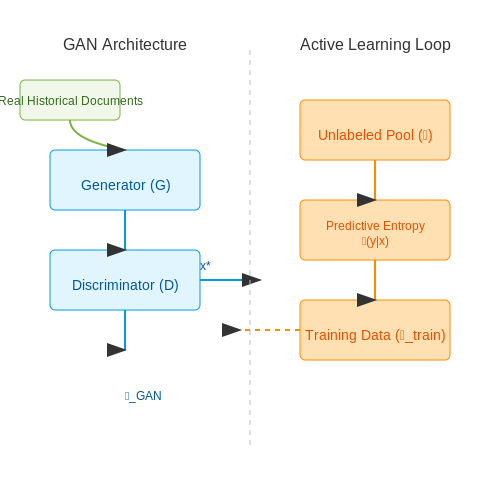
- Synthetic Text Generation: For handwritten or printed texts, generative models like Variational Autoencoders (VAEs) or Generative Adversarial Networks (GANs) can synthesize new samples while preserving period-accurate linguistic and stylistic features.
- Conditional Augmentation: Given a partially damaged document, a conditional GAN can reconstruct missing sections based on contextual clues from the surviving text.
Here, G generates synthetic samples, while D discriminates between real and synthetic data. The loss function ℒGAN ensures the generator produces plausible historical documents.
Transfer Learning from Multimodal Sources
When primary historical data is scarce, pretraining on related multimodal datasets can improve model performance:
- Cross-Domain Pretraining: Models like BERT or RoBERTa can be pretrained on modern corpora with similar linguistic structures before fine-tuning on historical texts.
- Visual-Linguistic Alignment: For documents with both text and imagery (e.g., newspapers), vision-language models like CLIP can align visual and textual features, improving robustness to missing or corrupted data.
Active Learning for Targeted Annotation
Labeling historical data is labor-intensive. Active learning optimizes annotation efforts by prioritizing the most informative samples:
Here, x* is the unlabeled sample from pool 𝒰 that maximizes the predictive entropy ℋ given the current training set 𝒟train. This ensures annotators focus on documents that most reduce model uncertainty.
Few-Shot Learning with Meta-Learning
Meta-learning frameworks like Model-Agnostic Meta-Learning (MAML) adapt quickly to new historical domains with minimal data:
The model parameters θ are updated to θ' using gradient descent on task-specific loss ℒ𝒯i, enabling rapid adaptation to unseen historical collections.
Case Study: Medieval Manuscript Analysis
A 2023 study applied these techniques to digitized medieval manuscripts, achieving 92% accuracy in text recognition despite limited training data. The pipeline combined:
- Synthetic generation of degraded text variants
- Pretraining on modern calligraphic datasets
- Active learning to prioritize ambiguous glyphs
This approach demonstrates how advanced methods can overcome data scarcity while preserving historical accuracy.
7.2 Interpreting AI Outputs in Historical Context
Challenges in Historical Data Interpretation
AI models trained on historical archives often produce outputs that require careful contextualization. Unlike contemporary datasets, historical records exhibit biases, gaps, and linguistic evolution that complicate interpretation. For instance, a language model fine-tuned on 19th-century newspapers may generate text with archaic terminology or reflect period-specific biases. The statistical patterns learned by the model must be disentangled from the underlying historical realities they represent.
Where P(wt|h) represents the probability of word wt given historical context h, and V is the vocabulary space. This formulation highlights how model outputs are constrained by the training corpus's lexical boundaries.
Temporal Drift and Concept Alignment
Semantic shifts over time create misalignment between historical meanings and modern interpretations. For example, the term "revolution" in 18th-century documents might refer to astronomical cycles rather than political upheaval. Advanced techniques like temporal word embeddings can help quantify these shifts:
Where Δwt measures the semantic drift of word vector w between time periods t1 and t2. This vector difference can be projected onto historical axes of meaning change.
Bias Detection and Mitigation
Historical archives often reflect systemic biases that propagate through AI models. Quantitative bias detection methods include:
- Representation disparity analysis across demographic groups
- Contextual association tests for stereotypical linkages
- Counterfactual fairness evaluation through perturbation studies
A practical implementation might measure gender bias in historical employment records using:
Where ŷim and ŷif are model predictions for male and female counterparts in similar historical contexts, and σy normalizes by outcome variance.
Case Study: Census Record Analysis
When analyzing 19th-century census data, an AI system might cluster occupations by socioeconomic status. However, historical occupational prestige hierarchies differ significantly from modern classifications. A robust approach would:
- Cross-reference model outputs with contemporary historical studies
- Validate clustering results against known social stratification patterns
- Apply domain adaptation techniques to align latent representations
The feature space transformation can be formalized as:
Where φ(x) represents the original feature mapping and W learns a transformation matrix to historical domain alignment.
Multimodal Historical Interpretation
For archives containing both text and visual materials, multimodal models require special consideration. The joint embedding space must account for:
- Period-specific artistic conventions in imagery
- Evolving symbolic meanings in visual motifs
- Discrepancies between textual descriptions and visual representations
A contrastive learning objective for historical image-text pairs might use:
Where sim(vi, ti) measures the cosine similarity between visual and textual embeddings, with temperature parameter τ controlling separation strength.
7.3 The Future of AI-Augmented Historical Research
The integration of AI into historical research is poised to revolutionize the field by enabling large-scale analysis of archival materials that were previously intractable due to volume, language barriers, or degradation. Advanced techniques in natural language processing (NLP), computer vision, and multimodal learning are unlocking new methodologies for historians, while also introducing ethical and epistemological challenges.
Multimodal Learning for Cross-Referencing Historical Sources
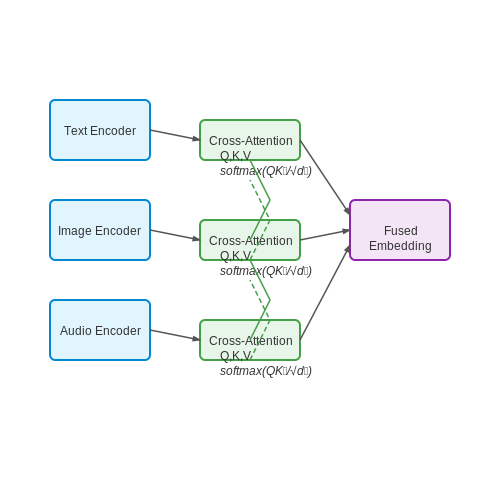
Modern AI systems can process text, images, and even audio from historical archives simultaneously, uncovering connections that would be imperceptible to human researchers. A transformer-based multimodal architecture might fuse embeddings from different modalities using cross-attention mechanisms:
where Q, K, and V represent query, key, and value matrices respectively, and dk is the dimension of the key vectors. This allows the model to learn relationships between, for example, handwritten text in a 17th-century ledger and corresponding illustrations in a contemporaneous sketchbook.
Temporal Knowledge Graphs for Historical Causality
AI systems are increasingly capable of constructing temporal knowledge graphs from archival data, enabling probabilistic reasoning about historical causation. These graphs can be formalized as:
where V represents entities (people, places, events), E denotes relationships, and T captures temporal intervals. Recent work in temporal graph networks allows for dynamic updating of these structures as new archival evidence emerges.
Challenges in Epistemic Validation
The probabilistic nature of AI outputs creates fundamental tensions with traditional historical methodologies. For instance, when a language model generates plausible completions for damaged texts, the confidence scores:
where s(x,y) is the model's score for sequence y given input x, must be carefully calibrated against historical likelihood rather than just linguistic plausibility.
Emerging Applications
- Automated paleography: Deep learning models trained on diverse handwriting samples can now transcribe documents with accuracy surpassing human experts for certain scripts.
- Bias detection: NLP techniques can systematically identify and quantify shifts in linguistic patterns across historical periods, revealing previously unnoticed biases.
- Network analysis: Graph neural networks applied to correspondence archives are uncovering hidden social structures in historical communities.
Computational Limits and Opportunities
Current transformer-based models face significant challenges when processing ultra-long historical documents. Recent architectural innovations like:
where M is an external memory bank, show promise for maintaining context across book-length historical texts while remaining computationally tractable.
8. Key Research Papers and Articles
8.1 Key Research Papers and Articles
- Contents - Describing Archives: A Content Standard — Describing Archives: A Content Standard (DACS) is an output-neutral set of rules for describing archives, personal papers, and manuscript collections, and can be applied to all material types. It is the U.S. implementation of international standards (i.e., ISAD [G] and ISAAR [CPF]) for the description of archival materials and their creators.
- AI for Historical Document Analysis: Digitization and Preservation — This comprehensive review aims to explore the role of Artificial Intelligence (AI) in the digitization and preservation of historical documents. AI has emerged as a powerful tool in this field, offering solutions for document recognition, text extraction, restoration, and organization.
- Understanding the Value of Digital Archival Collections to Faculty at ... — The Library has world class special collections, with particular strengths in theology, literary and historical archives. These collections have been greatly enhanced over the last decade in concert with a strategic focus on outreach and ensuring their use in supporting the university's teaching and research.
- An Argument for Archival Research Methods: Thinking Beyond ... - JSTOR — We quickly came to realize that, with few exceptions, what we were looking for?practical articles to orient and guide people new to archival work, articles that described the methods of historical research?didn't exist. Aside from short descriptions of how the researcher found or stumbled upon a topic, the doing of history was rarely discussed.
- PDF V4-Survey_analysis_FINAL - interparestrustai.org — What are key activities and best practices carried out in effective digitization of archives and documentary heritage materials? What AI tools are currently being used/developed by practitioners and vendors for digitization activities?
- The IAFOR Research Archive — IAFOR believes in "Open Access" publishing, and since 2009, has been committed to maintaining an online searchable research archive that offers free access to anyone, anywhere, where there is Internet access, regardless of institutional affiliation or scholarly rank.
- PDF Artificial Intelligence: Short History, Present Developments, and ... — It was important to begin with a short AI history and a lay-of-the-land on representative developments across the Department of Defense (DoD), intelligence communities (IC), and Homeland Security. These areas are addressed in more detail within the report.
- Archives Access and Artificial Intelligence - Academia.edu — Provided with enough sample data from which to learn and train their models, AI, and more specifically machine learning algorithms, offer the opportunity to improve and ease the access to digital archives by learning to perform complex human tasks.
- Artificial Intelligence Through Time: A Comprehensive Historical Review — This review paper offers a detailed, straightforward, and comprehensive overview of the timeline of AI history, highlighting significant milestones from Aris-totle to the present.
- A generalized data model for digital archiving in cultural and ... — There are many digital collections of cultural and historical resources, which are called digital archives in this chapter. Development of digital arc…
8.2 Recommended Books and Journals
- The 2012 ACM Computing Classification System — Our E-Learning collections offer complimentary access to more than 80,000 online books, courses, and videos from top content publishers. The ACM TechTalk series brings leading computing luminaries and visionaries to your screen. Members enjoy exclusive offers and discounts on IT industry certifications and vendor-specific training.
- PDF Artificial Intelligence: Short History, Present Developments, and ... — artificial intelligence (AI) focusing on present applications and future science and technology (S&T) opportunities in the Cyber Security and Information Sciences Division (Division 5). This report elaborates on the main results from the study. Since the AI field is evolving so rapidly, the study scope was to look at the recent past and
- Revolutionizing Library Systems in Uganda: Promoting Literacy and ... — computing allows for the storage of vast amounts of digital content, including e-books, journals, and local knowledge repositories, without requiring extensive physical infrastructure (Nasir et al., 2022). This cost-effective model addresses the problem of physical storage constraints, which has historically affected Ugandan libraries.
- Electronic Health Record - an overview | ScienceDirect Topics — 2.3.4 Electronic health records. An electronic health record (EHR) is a digital record of patient health information, which can be shared across a variety of healthcare scenarios. EHRs contain a wide range of data, including medical history and demographic information, and these systems securely store data in a systematic manner, allowing the analysis of several medically relevant trends and ...
- Best Library Management Systems: User Reviews from May 2025 - G2 — Library management systems usually integrate with digital information repositories to allow access to electronic resources. Library management systems also needs to integrate with accounting solutions to manage payments and other financial transactions. To qualify for inclusion in the Library Management Systems category, a product must:
- Deep Learning — The online version of the book is now complete and will remain available online for free. The deep learning textbook can now be ordered on Amazon . For up to date announcements, join our mailing list .
- For College | Pearson US — With eTextbooks, supportive videos, practice problems, and AI-powered summaries available in a fun mobile app, students can learn on-the-go or from their couch. In addition to supporting success in college, Pearson+ helps students find an internship or assess their work style with Job Match. Students can also use Mondly to learn up to 41 new ...
- Publishing Policies - IEEE Xplore Help — Use the "Search by keywords" box on the Browse Journals & Magazines page in IEEE Xplore; On the Journal or Magazine title page, select the About Journal tab; Navigate to the Publication Details section to find applicable Publishing Policies; Peer Review. Peer review is vital to the quality of published research.
- VHL Central — VHL Central provides access to Vista Higher Learning's digital platform, including online books and classes.
8.3 Online Resources and Tools
- PDF Title Working group code RA03 Study title AI-Assisted Digitization of ... — 4.3. Research Question 2: AI Tools Used in Digitization Projects 12 4.4. Research Question 3: Benefits, Risks, Limitations, and Potential Biases of AI in Digitization Projects 13 4.5. Research Question 4: Future Perspectives for Uses of AI Tools in Digitization Projects15 5. Survey: Question-by-Question Responses 16 5.1.
- PDF Cost-effective Large Scale Online Access: The National Historical ... — From 2006-2016, the National Historical Publications and Records Commission (NHPRC) of the National Archives and Records Administration ran a grant program called Digitizing Historical Records. These grants funded projects at archives to digitize large processed records collections while repurposing existing metadata.
- The implications of handwritten text recognition for accessing the past ... — The Amsterdam City Archives have used read&search to make hundreds of thousands of handwritten pages from the 17th-18th centuries Amsterdam notarial archives searchable by users . Thematic resources are also available: 16th-17th recessions in Low German cities , New Zealand Alpine Heritage and historical mining in Tyrol, Austria .
- AI for Historical Document Analysis: Digitization and Preservation — The preservation of historical documents serves several critical purposes. Firstly, it allows us to study and understand our history and heritage, providing insights into the thoughts, beliefs, and events of the past. Secondly, historical documents are essential for academic research, enabling scholars to access primary sources for their work.
- Product Downloads - Nitro — Identify and authenticate your users in seconds for fast, secure transactions. Enable any electronic ID or mobile ID on demand. ... Popular Resources. Blog. eBooks. On-Demand Webinars. Customer Case Studies ... Featured Resource. Why Nitro AI is a game-changer. Meet the 5 Nitro AI tools powering productivity. Plans & Pricing; Partners. Partners ...
- Archives Access and Artificial Intelligence - Academia.edu — Proceedings of the 5th International Conference on Technological Ecosystems for Enhancing Multiculturality - TEEM 2017, 2017. The availability of digitised cultural heritage content held by archives and other memory institutions improves their visibility, facilitate and increases access to information, allowing new kinds of research of digital heritage, namely Digital Humanities.
- ultralytics/ultralytics: Ultralytics YOLO11 - GitHub — Experience seamless AI with Ultralytics HUB, the all-in-one platform for data visualization, training YOLO models, and deployment—no coding required. Transform images into actionable insights and bring your AI visions to life effortlessly using our cutting-edge platform and user-friendly Ultralytics App. Start your journey for Free today!
- PDF Technical Guidelines for Digitizing Cultural Heritage Materials — The history of this document, as listed on the preceding page, does not begin to give credit to all of the ... The National Archives and Records Administration was the initiator of Federal efforts to establish science-based technical guidelines for cultural heritage digitization. Long before the concept of a truly digital ... 2.8 Resources ...
- Teaching with Technology: Digital Tools for Archaeological Education — Introduction: Digital Technology for Cultural Resource Studies . Digital technology has become an increasingly powerful tool within cultural resource studies and, more specifically, archaeology. A wide variety of tools, such as photogrammetry and laser scanning, are now available that can produce digital models of archaeological materials.
- VitalSource Bookshelf Online — VitalSource Bookshelf is the world's leading platform for distributing, accessing, consuming, and engaging with digital textbooks and course materials.