


Rain Alarm Circuit-Science project with rain detector circuit-Working
#rain detector
#alarm circuit
#sensor
#science project
#circuit diagram
#weather detection
#electronic project
#DIY electronics
#home automation
#moisture sensor
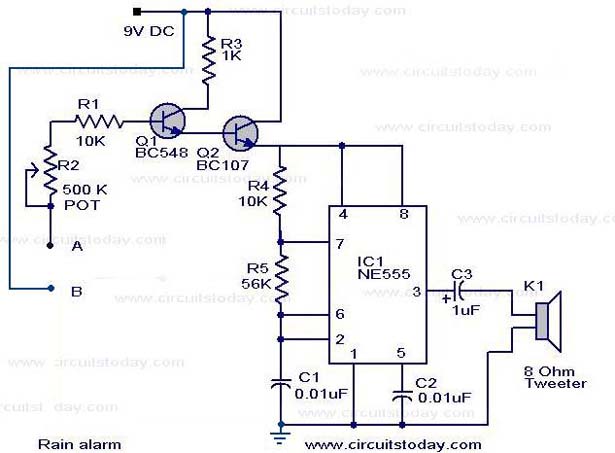
Description: The operation of the rain alarm circuit is explained in detail. The rain alarm project is outlined along with a circuit diagram.
The rain alarm circuit is designed to detect the presence of rain and alert users through an audible or visual signal. The fundamental components of this circuit typically include a rain sensor, a microcontroller or comparator, a power supply, and an output mechanism such as a buzzer or LED.
The rain sensor is the primary element that detects moisture. It usually consists of two conductive plates that, when wet, allow current to flow between them. This change in conductivity can be monitored by the microcontroller or comparator, which processes the signal to determine whether rain is present.
When the sensor detects moisture, the microcontroller activates the output mechanism. This could be a buzzer that emits sound to alert the user or an LED that lights up to provide a visual indication of rain. The circuit may also include additional features such as adjustable sensitivity settings or a delay timer to prevent false alarms from brief rain showers.
Power supply considerations are crucial for the circuit's operation. A battery or a regulated power source is typically used to ensure that the circuit operates reliably under varying environmental conditions.
A schematic diagram of the rain alarm circuit will illustrate the connections between these components, showcasing how the sensor interfaces with the microcontroller and the output devices. Proper layout and component selection are essential for ensuring optimal performance and longevity of the circuit.The rain alarm circuit working is explained in detail. The rain alarm project is explained with circuit diagram..
The rain alarm circuit is designed to detect the presence of rain and alert users through an audible or visual signal. The fundamental components of this circuit typically include a rain sensor, a microcontroller or comparator, a power supply, and an output mechanism such as a buzzer or LED.
The rain sensor is the primary element that detects moisture. It usually consists of two conductive plates that, when wet, allow current to flow between them. This change in conductivity can be monitored by the microcontroller or comparator, which processes the signal to determine whether rain is present.
When the sensor detects moisture, the microcontroller activates the output mechanism. This could be a buzzer that emits sound to alert the user or an LED that lights up to provide a visual indication of rain. The circuit may also include additional features such as adjustable sensitivity settings or a delay timer to prevent false alarms from brief rain showers.
Power supply considerations are crucial for the circuit's operation. A battery or a regulated power source is typically used to ensure that the circuit operates reliably under varying environmental conditions.
A schematic diagram of the rain alarm circuit will illustrate the connections between these components, showcasing how the sensor interfaces with the microcontroller and the output devices. Proper layout and component selection are essential for ensuring optimal performance and longevity of the circuit.The rain alarm circuit working is explained in detail. The rain alarm project is explained with circuit diagram..

A three-alarm phase circuits
The circuit features intermediate relays KAi, KA2, and KA3, which are connected to the outlet end of the low-voltage circuit breakers. An alarm circuit is linked to a backup power supply or a battery power supply. This configuration serves to...
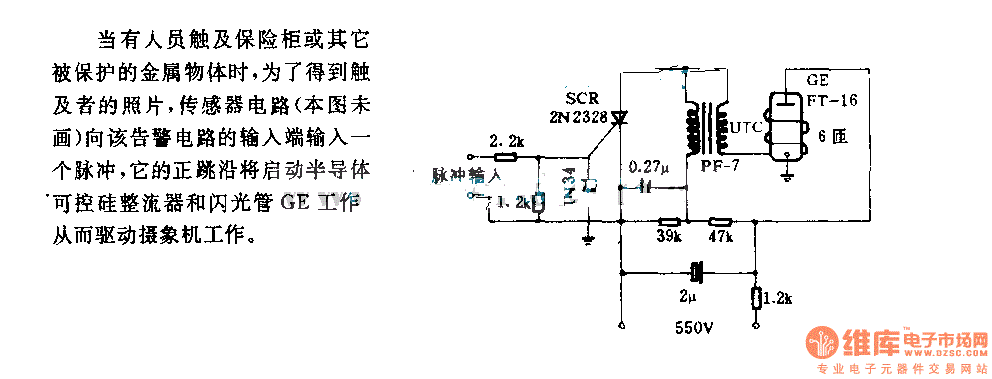
The alarm circuit diagram for safety box and other metal objects
When an individual touches the safety box or other protected metal objects, the sensor circuit generates a pulse to the alarm circuit. The positive edge of this pulse activates the semiconductor and thyristor flash GE, subsequently triggering the camera to...

Pot plant water tester
This simple device checks if there is water in a pot plant. You stick the two probes (paperclips) into the pot plant and if the LED lights, it means there is water in the pot plant.
The described device operates as...

Rain Detector Circuit Using NE555
This weblog discusses electronic circuit schematics, PCB design, DIY kits, and electronic project diagrams. The rain detector operates on the principle of an astable multivibrator using the 555 timer IC, which is equipped with a sensor capable of detecting water....

Field disturbance sensor-alarm
The change in ambient light triggers the alarm by changing the resistance of LDR1 and LDR2.
The circuit utilizes two light-dependent resistors (LDR1 and LDR2) to detect variations in ambient light levels. LDRs are passive components that exhibit a change in...
Pot plant water tester
This simple device checks if there is water in a pot plant. You stick the two probes (paperclips) into the pot plant and if the LED lights, it means there is water in the pot plant.
The described device operates as...

Sensor-Activated Relay Pulser Circuit
A sensor activates transistor Q1 to turn on the low-frequency 555 oscillator, which generates pulses to control LAMP II. The sensor may respond to variations in light or temperature. Either resistor RA or RB can function as the sensor, depending...

Rain Detectors
This rain detector alerts users immediately when it starts to rain, providing enough time to close windows and secure belongings. The battery-operated circuit consumes minimal current when the sensor is dry and maintains low current consumption when the buzzer is...

5 Zone Alarm Circuit
Each zone uses a normally closed contact. These can be micro switches or standard alarm contacts (usually reed switches). Zone 1 is a timed zone which must be used as the entry and exit point of the building. Zones 2...