


Stethoscope with TL072
#stethoscope
#TL072
#low-noise preamp
#Butterworth filter
#electret microphone
#Sallen and Key
#heartbeat sounds
#low-pass filter
#audio amplification

Description: U1a operates as a low-noise microphone preamp. Its gain is only about 3.9 because the high output impedance of the drain of the FET inside the electret microphone causes U1a's effective input resistor to be about 12.2K. C2 has a fairly high value in order to pass very low frequency (about 20 to 30Hz) heartbeat sounds. U1b operates as a low-noise Sallen and Key, Butterworth low-pass-filter with a cutoff frequency of about 103Hz. R7 and R8 provide a gain of about 1.6 and allow the use of equal values for C3 and C4 but still producing a sharp Butterworth response. The rolloff rate is 12dB/octave. C3 and C4 can be reduced to 4.7nF to increase the cutoff frequency to 1KHz to hear respiratory or mechanical (automobile engine) sounds. The U4 circuit is optional and has a gain of 71 to drive the bi-colour LED. U5 is a 1/4W power amplifier IC with built-in biasing and inputs that are referred to ground. It has a gain of 20. It can drive any type of headphones including low impedance (8 ohms) ones. Stethoscope head or jar lid, Rubber Sleeve for microphone. 1) Assemble the circuit using Veroboard (stripboard) or a PCB. 2) Use a shielded cable for the microphone as shown on the schematic. 3) Fasten the microphone to the stethoscope head with a rubber isolating sleeve or use a short piece of rubber tubing on its nipple. A thick jar lid can be used as a stethoscope head. The microphone must be spaced away from the skin but the stethoscope head must be pressed to the skin, sealing the microphone from background noises and avoiding acoustical feedback with your headphones. 4) The microphone/stethoscope head must not be moved while listening to heartbeats to avoid friction noises. 5) Protect your hearing. Keep the microphone away from your headphones to avoid acoustical feedback.
The circuit described involves a low-noise microphone preamplifier (U1a) that is designed to amplify audio signals, particularly those in the low-frequency range associated with heartbeats. The preamp achieves a gain of approximately 3.9, which is influenced by the high output impedance from the electret microphone's FET. The effective input resistance of U1a is approximately 12.2K, which is crucial for the preamp's performance.
Capacitor C2 is selected with a high capacitance value to ensure that it can effectively pass very low frequency signals, specifically in the range of 20 to 30 Hz, which corresponds to the typical frequency of heartbeats. The subsequent stage in the signal chain is U1b, which functions as a low-noise Sallen and Key Butterworth low-pass filter. This filter is designed with a cutoff frequency of around 103 Hz, allowing it to retain the desired heartbeat signals while attenuating higher frequency noise. Resistors R7 and R8 are configured to provide a gain of approximately 1.6, facilitating the use of equal capacitance values for capacitors C3 and C4. This configuration ensures a sharp Butterworth response with a roll-off rate of 12 dB/octave. For applications requiring higher cutoff frequencies, C3 and C4 can be replaced with 4.7nF capacitors, raising the cutoff frequency to 1 kHz, which is suitable for detecting respiratory or mechanical sounds.
An optional circuit (U4) is included, which provides a gain of 71 to drive a bi-colour LED, enhancing the visual feedback of the system. The power amplification stage (U5) utilizes a 1/4W power amplifier IC that includes built-in biasing and ground-referred inputs. This amplifier has a gain of 20 and is capable of driving headphones, including low-impedance models (down to 8 ohms).
For assembly, the circuit can be constructed on Veroboard (stripboard) or a printed circuit board (PCB). A shielded cable is recommended for connecting the microphone to minimize interference. The microphone should be securely attached to the stethoscope head using a rubber isolating sleeve or tubing, ensuring that it is positioned away from the skin while the stethoscope head is pressed against the skin. This setup helps to isolate the microphone from ambient noise and prevents acoustic feedback when using headphones. Care should be taken to avoid movement of the microphone/stethoscope head during audio monitoring to prevent unwanted friction noises. Additionally, precautions should be implemented to protect hearing, particularly by maintaining a safe distance between the microphone and headphones to avoid feedback issues.U1a operates as a low-noise microphone preamp. Its gain is only about 3.9 because the high output impedance of the drain of the FET inside the electret microphone causes U1a?s effective input resistor to be about 12.2K. C2 has a fairly high value in order to pass very low frequency (about 20 to 30Hz) heartbeat sounds.? U1b operates as a low-noise Sallen and Key, Butterworth low-pass-filter with a cutoff frequency of about 103Hz.
R7 and R8 provide a gain of about 1.6 and allow the use of equal values for C3 and C4 but still producing a sharp Butterworth response. The rolloff rate is 12dB/octave. C3 and C4 can be reduced to 4.7nF to increase the cutoff frequency to 1KHz to hear respiratory or mechanical (automobile engine) sounds.
? The U4 circuit is optional and has a gain of 71 to drive the bi-colour LED.? U5 is a 1/4W power amplifier IC with built-in biasing and inputs that are referred to ground. It has a gain of 20. It can drive any type of headphones including low impedance (8 ohms) ones. Stethoscope head or jar lid, Rubber Sleeve for microphone. 1) Assemble the circuit using Veroboard (stripboard) or a PCB. 2) Use a shielded cable for the microphone as shown on the schematic. 3) Fasten the microphone to the stethoscope head with a rubber isolating sleeve or use a short piece of rubber tubing on its nipple. A thick jar lid can be used as a stethoscope head. The microphone must be spaced away from the skin but the stethoscope head must be pressed to the skin, sealing the microphone from background noises and avoiding acoustical feedback with your headphones.
4) The microphone/stethoscope head must not be moved while listening to heartbeats to avoid friction noises. 5) Protect your hearing. Keep the microphone away from your headphones to avoid acoustical feedback.
The circuit described involves a low-noise microphone preamplifier (U1a) that is designed to amplify audio signals, particularly those in the low-frequency range associated with heartbeats. The preamp achieves a gain of approximately 3.9, which is influenced by the high output impedance from the electret microphone's FET. The effective input resistance of U1a is approximately 12.2K, which is crucial for the preamp's performance.
Capacitor C2 is selected with a high capacitance value to ensure that it can effectively pass very low frequency signals, specifically in the range of 20 to 30 Hz, which corresponds to the typical frequency of heartbeats. The subsequent stage in the signal chain is U1b, which functions as a low-noise Sallen and Key Butterworth low-pass filter. This filter is designed with a cutoff frequency of around 103 Hz, allowing it to retain the desired heartbeat signals while attenuating higher frequency noise. Resistors R7 and R8 are configured to provide a gain of approximately 1.6, facilitating the use of equal capacitance values for capacitors C3 and C4. This configuration ensures a sharp Butterworth response with a roll-off rate of 12 dB/octave. For applications requiring higher cutoff frequencies, C3 and C4 can be replaced with 4.7nF capacitors, raising the cutoff frequency to 1 kHz, which is suitable for detecting respiratory or mechanical sounds.
An optional circuit (U4) is included, which provides a gain of 71 to drive a bi-colour LED, enhancing the visual feedback of the system. The power amplification stage (U5) utilizes a 1/4W power amplifier IC that includes built-in biasing and ground-referred inputs. This amplifier has a gain of 20 and is capable of driving headphones, including low-impedance models (down to 8 ohms).
For assembly, the circuit can be constructed on Veroboard (stripboard) or a printed circuit board (PCB). A shielded cable is recommended for connecting the microphone to minimize interference. The microphone should be securely attached to the stethoscope head using a rubber isolating sleeve or tubing, ensuring that it is positioned away from the skin while the stethoscope head is pressed against the skin. This setup helps to isolate the microphone from ambient noise and prevents acoustic feedback when using headphones. Care should be taken to avoid movement of the microphone/stethoscope head during audio monitoring to prevent unwanted friction noises. Additionally, precautions should be implemented to protect hearing, particularly by maintaining a safe distance between the microphone and headphones to avoid feedback issues.U1a operates as a low-noise microphone preamp. Its gain is only about 3.9 because the high output impedance of the drain of the FET inside the electret microphone causes U1a?s effective input resistor to be about 12.2K. C2 has a fairly high value in order to pass very low frequency (about 20 to 30Hz) heartbeat sounds.? U1b operates as a low-noise Sallen and Key, Butterworth low-pass-filter with a cutoff frequency of about 103Hz.
R7 and R8 provide a gain of about 1.6 and allow the use of equal values for C3 and C4 but still producing a sharp Butterworth response. The rolloff rate is 12dB/octave. C3 and C4 can be reduced to 4.7nF to increase the cutoff frequency to 1KHz to hear respiratory or mechanical (automobile engine) sounds.
? The U4 circuit is optional and has a gain of 71 to drive the bi-colour LED.? U5 is a 1/4W power amplifier IC with built-in biasing and inputs that are referred to ground. It has a gain of 20. It can drive any type of headphones including low impedance (8 ohms) ones. Stethoscope head or jar lid, Rubber Sleeve for microphone. 1) Assemble the circuit using Veroboard (stripboard) or a PCB. 2) Use a shielded cable for the microphone as shown on the schematic. 3) Fasten the microphone to the stethoscope head with a rubber isolating sleeve or use a short piece of rubber tubing on its nipple. A thick jar lid can be used as a stethoscope head. The microphone must be spaced away from the skin but the stethoscope head must be pressed to the skin, sealing the microphone from background noises and avoiding acoustical feedback with your headphones.
4) The microphone/stethoscope head must not be moved while listening to heartbeats to avoid friction noises. 5) Protect your hearing. Keep the microphone away from your headphones to avoid acoustical feedback.

Powering Electret Microphones
A condenser microphone (electret type with two terminals) is to be powered. A resistor of 1 kΩ and a capacitor of 10 µF have been connected to its positive terminal, while the other terminal is grounded.
To power an electret condenser...
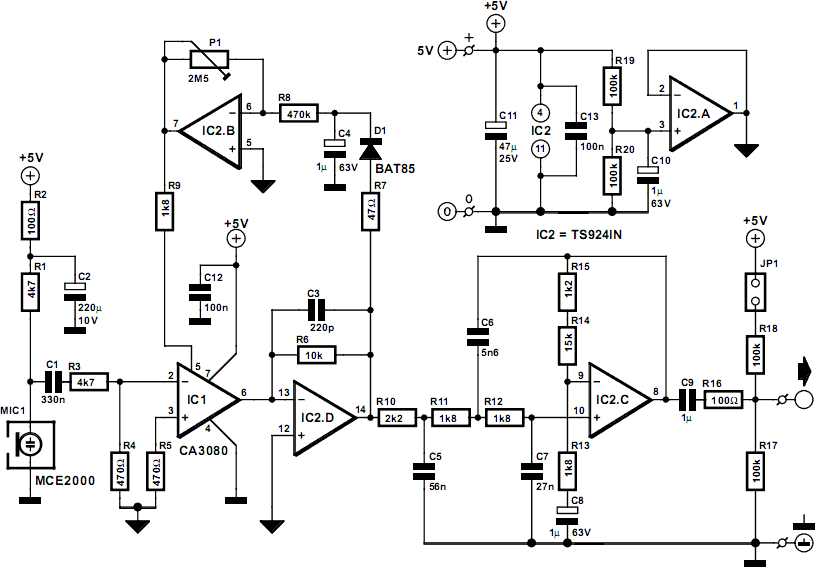
Compressor For Electret Microphone
The FM Remote Control Receiver, found in the Infra-red circuits section of this website, features a connector that provides an analogue output. To create a simple intercom or public address (P.A.) system, a microphone pre-amplifier is required to ensure the...

Low-pass filter
This circuit is useful where fast signal acquisition and high precision are required, such as in electronic scales. The filter's time constant is determined by the 2-ohm resistor and the 1 µF capacitor until comparator No. 1 activates. After this...

tl072 car subwoofer filter circuit
The circuit diagram depicts a simple subwoofer filter that operates on a 12V DC supply, making it particularly useful for automobile subwoofer applications. This circuit functions as a low-pass filter, with an adjustable pass frequency ranging from 60 to 160...
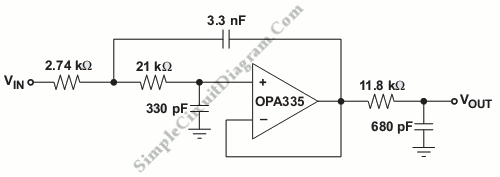
A 20-kHz Third-Order Low-Pass Filter
This is a third-order low pass filter with a corner frequency of 20 kHz, which is twice the auto-zero clock frequency.
The third-order low pass filter is designed to attenuate high-frequency signals while allowing low-frequency signals to pass through with...
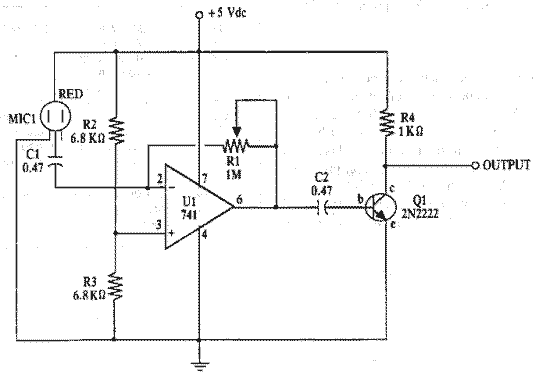
Electret Mic AmplifierCircuit Project
All resistors have a tolerance of 5 or 10 percent and are rated for 1/4 watt. All capacitors have a tolerance of 10 percent and are rated for 35 volts or higher. This circuit effectively amplifies the output of a...

Fast-Response (Settling) Low-Pass Filter
By introducing an additional transmission zero to the stopband of a low-pass filter, a sharper roll-off characteristic can be achieved. The filter design example illustrated in Figure 30-1(a) demonstrates that the time-domain performance of the low-pass section can also be...

Using the same parameters more convenient level 36dB-oct low-pass filter design
A 36 dB/octave Butterworth filter consists of three sub-structures, each stage containing two filter sections. The design aims to achieve specific 3 dB frequency characteristics. The filter needs to be normalized to a value of 0 across all levels, which...

TL072 op-amp configured as voltage comparator
The Maya utilized several calendars concurrently, one of which is known as the "long count." This calendar is a continuous record of days starting from a zero date that corresponds to August 13, 3114 BC. According to the Maya calendar,...