


Transmitting Voice Wirelessly Using Laser
#laser communication
#wireless transmission
#voice transmission
#optical communication
#DIY electronics
#signal modulation
#audio transmission
#light-based communication
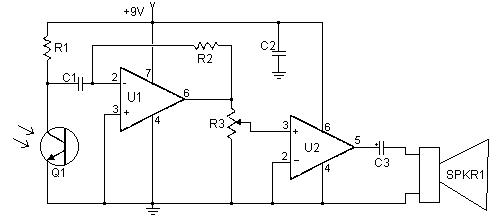
Description: Transmitting voice wirelessly using laser technology, along with tips and tweaks to enhance your computer operating system experience.
The concept of transmitting voice wirelessly using laser involves utilizing modulated laser beams to carry audio signals over distances without the need for conventional radio frequency transmission methods. This technique capitalizes on the properties of light to achieve high fidelity audio transmission.
In a typical setup, a laser diode is used as the transmitter, which converts electrical audio signals into light pulses. The audio signal is first modulated onto the laser beam, often employing techniques such as amplitude modulation (AM) or frequency modulation (FM). The modulated light is then directed towards a photodetector, which is positioned at a distance to receive the signal. The photodetector converts the light back into an electrical signal, which can then be amplified and processed to reproduce the original audio.
Key components of this system include:
1. **Laser Diode**: The source of the laser light, which should be capable of modulating at the audio frequency range.
2. **Modulation Circuit**: This circuit is essential for encoding the audio signal onto the laser beam. It typically includes an operational amplifier to ensure the signal is strong enough for modulation.
3. **Optical Lens**: Used to focus the laser beam to minimize divergence and maximize the distance over which the audio can be transmitted.
4. **Receiver Photodetector**: A photodiode or phototransistor that detects the incoming laser light and converts it back into an electrical audio signal.
5. **Amplifier**: An audio amplifier may be required at the receiver end to enhance the output signal for clearer audio reproduction.
For optimal performance, it is crucial to consider environmental factors such as ambient light interference, which can affect the transmission quality. Implementing filters or using modulation techniques that are less susceptible to interference can help mitigate these issues.
In addition to the hardware components, software tweaks and settings in the operating system can improve the user experience when interfacing with audio applications. Adjustments in audio settings, driver updates, and system optimizations can enhance overall performance and reduce latency in audio transmission.
This method of voice transmission represents a novel approach to wireless communication, leveraging the advantages of light-based technology for efficient and high-quality audio delivery.Transmitting Voice Wirelessly Using Laser, Tips & Tweaks, Windows tips and tweaks to enrich your computer operating system experience ..
The concept of transmitting voice wirelessly using laser involves utilizing modulated laser beams to carry audio signals over distances without the need for conventional radio frequency transmission methods. This technique capitalizes on the properties of light to achieve high fidelity audio transmission.
In a typical setup, a laser diode is used as the transmitter, which converts electrical audio signals into light pulses. The audio signal is first modulated onto the laser beam, often employing techniques such as amplitude modulation (AM) or frequency modulation (FM). The modulated light is then directed towards a photodetector, which is positioned at a distance to receive the signal. The photodetector converts the light back into an electrical signal, which can then be amplified and processed to reproduce the original audio.
Key components of this system include:
1. **Laser Diode**: The source of the laser light, which should be capable of modulating at the audio frequency range.
2. **Modulation Circuit**: This circuit is essential for encoding the audio signal onto the laser beam. It typically includes an operational amplifier to ensure the signal is strong enough for modulation.
3. **Optical Lens**: Used to focus the laser beam to minimize divergence and maximize the distance over which the audio can be transmitted.
4. **Receiver Photodetector**: A photodiode or phototransistor that detects the incoming laser light and converts it back into an electrical audio signal.
5. **Amplifier**: An audio amplifier may be required at the receiver end to enhance the output signal for clearer audio reproduction.
For optimal performance, it is crucial to consider environmental factors such as ambient light interference, which can affect the transmission quality. Implementing filters or using modulation techniques that are less susceptible to interference can help mitigate these issues.
In addition to the hardware components, software tweaks and settings in the operating system can improve the user experience when interfacing with audio applications. Adjustments in audio settings, driver updates, and system optimizations can enhance overall performance and reduce latency in audio transmission.
This method of voice transmission represents a novel approach to wireless communication, leveraging the advantages of light-based technology for efficient and high-quality audio delivery.Transmitting Voice Wirelessly Using Laser, Tips & Tweaks, Windows tips and tweaks to enrich your computer operating system experience ..
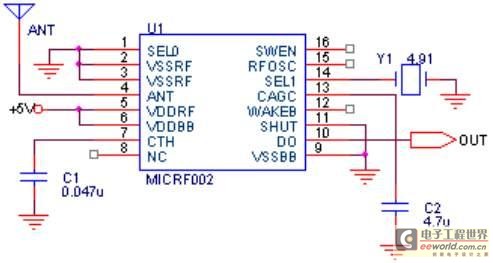
Duplexing wireless series transmission scheme of the one-chip computer
The maximum coverage of the RSR232 serial port transport protocol is 10 meters, which poses significant challenges for remote transmission control. To address this issue, a design has been developed utilizing ultra-high frequency (above 300 MHz) for transmission. This design...
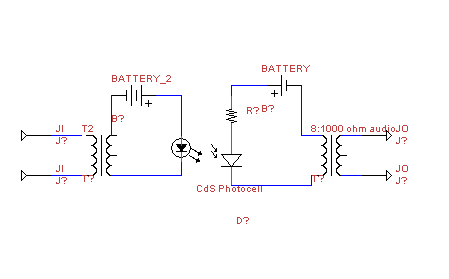
Transmitting audio over laser or LED
This circuit transmits audio information using light waves. It employs amplitude modulation (AM) to vary the intensity of an LED, which is detected by a cadmium sulfide photocell that changes its resistance based on light intensity. The circuit includes two...

Laser Communication (Transmitter-Receiver)
Laser communication system circuit diagram. The circuit module consists of a transmitter and a receiver that utilize the IC LM386. It is powered by a 9V battery.
The laser communication system is designed to facilitate wireless data transmission using modulated laser...

1RE30 DATA TRANSMISSION USING LASER
Free-space optical (FSO) communication utilizes light as a medium for data transmission. Communication was established between two computers using a laser, independent of any conventional communication methods. Text messages were sent from one PC to another using a system referred...

USB Free Space Communicator
During an optical communications course, an idea was conceived to establish a free space communication link between two PCs using a laser. As part of a B.Tech curriculum, a mini project is to be submitted. The project involves developing a...

Advanced Projects in Laser Communication
The previous section discussed several basic free-air laser light communication projects. It covered the modulation of a He-Ne laser beam using a transformer, transistor, and a piece of Mylar foil stretched in a needlepoint hoop. Various methods for electronically modulating...

Optical communication system
The simple modulator stage will accommodate most common LEDs. By adjusting the potentiometer, the bias of the transistor is varied until the LED is at its half output point. Then, audio will cause it to vary above and below this...

Optical communication system
The circuit modulates the light emitted by an LED using either a crystal microphone or a loudspeaker output. To achieve maximum range, the optical system must operate efficiently. A convex lens or a concave mirror can be utilized to transform...