


PCI-Bus with 3.3V Auxiliary Hot Swap Controller
#hot swap controller
#PCI-bus
#3.3V auxiliary
#N-channel transistors
#voltage control
#board protection
#live insertion
#power management
#external transistors
#supply control

Description: The LTC 4241 is a Hot Swap controller that enables safe insertion and removal of a board from a live PCI-bus slot. It features a primary controller that manages the four PCI supplies, along with an independent auxiliary controller for the 3.3V auxiliary supply. External N-channel transistors are employed to regulate the 3.3V, 5V, and 3.3V auxiliary supplies, while on-chip switches manage the 12V and 12V supplies. The 3.3V, 5V, and 3.3V auxiliary supplies can be increased at an adjustable rate. Electronic circuit breakers safeguard all five supplies against overcurrent faults. The foldback current limit functionality minimizes current spikes and power dissipation during short circuits. The PWRGD output from the primary controller signals when all four PCI supplies are within acceptable limits. The FAULT output indicates an overcurrent condition for any of the five supplies.
The LTC 4241 Hot Swap controller is designed for integration into systems requiring reliable power management during board insertion and removal in live environments, particularly in PCI-bus applications. The architecture consists of a primary controller that oversees the four primary PCI power supplies, ensuring that they are activated in a controlled manner to prevent system instability. The auxiliary controller specifically manages the 3.3V auxiliary supply, allowing for independent operation and monitoring.
External N-channel MOSFETs are utilized for the control of the 3.3V, 5V, and auxiliary supplies, providing flexibility in the design and allowing for higher current handling capabilities. The use of on-chip switches for the 12V supply simplifies the design and reduces the number of external components required, thereby enhancing reliability.
The adjustable ramp-up feature for the 3.3V, 5V, and auxiliary supplies allows for customization of the power-up sequence, which is crucial in avoiding inrush current that could potentially damage sensitive components. The electronic circuit breakers integrated into the design are vital for protecting the supplies from overcurrent conditions, automatically disconnecting the power in case of fault conditions, thus ensuring the safety of the entire system.
The foldback current limit feature is particularly important in applications where short circuits may occur. By reducing the current during fault conditions, it minimizes the thermal stress on the components and reduces power dissipation, which is essential for maintaining system integrity.
The PWRGD (Power Good) output serves as a vital feedback mechanism, indicating to the system when the power supplies are stable and within acceptable voltage ranges. Conversely, the FAULT output provides immediate notification of any overcurrent conditions, allowing for quick response actions to prevent damage to the system.
Overall, the LTC 4241 offers a comprehensive solution for safe and efficient power management in live PCI-bus environments, combining advanced features that enhance reliability and performance in electronic designs.The LTC ®4241 is a Hot Swap controller that allows a board to be safely inserted and removed from a live PCI-bus slot. It has a primary controller that controls the four PCI supplies and an independent auxiliary controller to controlthe 3.
3V auxiliary supply. External N-channel transistors are used to control the 3. 3V, 5V and 3. 3V auxiliary suppli es while on-chip switches control the 12V and 12V supplies. The 3. 3V, 5V and 3. 3V auxiliary supplies can be ramped upat an adjustable rate. Electronic circuit breakers protect all five supplies against overcurrent faults. The foldback current limit feature reduces current spikes and power dissipation when shorts occur. The PWRGD output of the primary controller indicates when all four PCI supplies are within tolerance. The FAULT output indicates an overcurrent condition for any of the five supplies.
The LTC 4241 Hot Swap controller is designed for integration into systems requiring reliable power management during board insertion and removal in live environments, particularly in PCI-bus applications. The architecture consists of a primary controller that oversees the four primary PCI power supplies, ensuring that they are activated in a controlled manner to prevent system instability. The auxiliary controller specifically manages the 3.3V auxiliary supply, allowing for independent operation and monitoring.
External N-channel MOSFETs are utilized for the control of the 3.3V, 5V, and auxiliary supplies, providing flexibility in the design and allowing for higher current handling capabilities. The use of on-chip switches for the 12V supply simplifies the design and reduces the number of external components required, thereby enhancing reliability.
The adjustable ramp-up feature for the 3.3V, 5V, and auxiliary supplies allows for customization of the power-up sequence, which is crucial in avoiding inrush current that could potentially damage sensitive components. The electronic circuit breakers integrated into the design are vital for protecting the supplies from overcurrent conditions, automatically disconnecting the power in case of fault conditions, thus ensuring the safety of the entire system.
The foldback current limit feature is particularly important in applications where short circuits may occur. By reducing the current during fault conditions, it minimizes the thermal stress on the components and reduces power dissipation, which is essential for maintaining system integrity.
The PWRGD (Power Good) output serves as a vital feedback mechanism, indicating to the system when the power supplies are stable and within acceptable voltage ranges. Conversely, the FAULT output provides immediate notification of any overcurrent conditions, allowing for quick response actions to prevent damage to the system.
Overall, the LTC 4241 offers a comprehensive solution for safe and efficient power management in live PCI-bus environments, combining advanced features that enhance reliability and performance in electronic designs.The LTC ®4241 is a Hot Swap controller that allows a board to be safely inserted and removed from a live PCI-bus slot. It has a primary controller that controls the four PCI supplies and an independent auxiliary controller to controlthe 3.
3V auxiliary supply. External N-channel transistors are used to control the 3. 3V, 5V and 3. 3V auxiliary suppli es while on-chip switches control the 12V and 12V supplies. The 3. 3V, 5V and 3. 3V auxiliary supplies can be ramped upat an adjustable rate. Electronic circuit breakers protect all five supplies against overcurrent faults. The foldback current limit feature reduces current spikes and power dissipation when shorts occur. The PWRGD output of the primary controller indicates when all four PCI supplies are within tolerance. The FAULT output indicates an overcurrent condition for any of the five supplies.
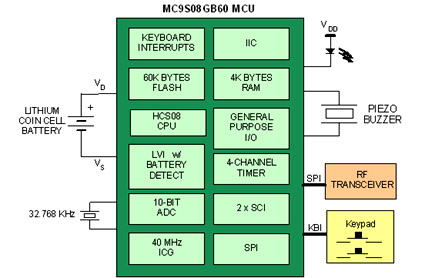
How to extend the battery life of your microcontroller based design
Battery-powered devices, such as electric toothbrushes, shavers, cell phones, PDAs, MP3 players, and remote controls, are integral to daily life. Consequently, power management has become a critical consideration for embedded designers. Microcontrollers (MCUs) provide various methods for managing power requirements...
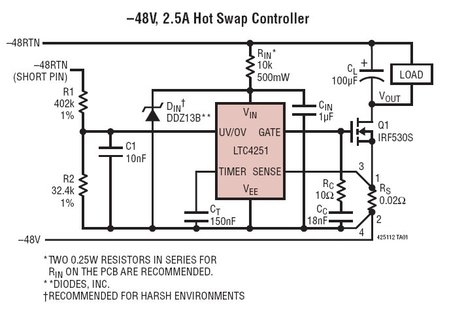
Negative Voltage Hot Swap Controllers in SOT-23
The LTC4251, LTC4251-1, and LTC4251-2 are negative voltage Hot Swap controllers designed to enable the safe insertion and removal of a board from a live backplane. The output current is managed through three stages of current limiting: a timed circuit...

Voltage Controlled Switch
This is a small circuit designed for use as a charging controller or voltage limiter. It is particularly useful for creating a solar charger. The assembly of the circuit allows for modifications according to personal preferences. The circuit is intended...

Computer Off Switch
How often does it happen that a user shuts down Windows and then forgets to turn off the computer? This circuit automates that process. After Windows is shut down, a click occurs a second later, disconnecting the PC from the...

smart amp delay
This system is designed as a Windows service that detects various power events, including Suspend, Hibernate, Reboot, and Shutdown. It can send appropriate responses to a control circuit, specifically a Heartbeat or Kill signal. The trigger mechanism is also regulated...

A Power Management Interface Circuit For Telecom Hot Swap With Local Dc/dc Conve
New cellular phones have incorporated high-resolution cameras that require bright illumination of the surrounding area to achieve high-quality pictures. Traditional xenon-filled photo flashes cannot be used due to the limited space available in cellular phone cameras. Instead, design engineers utilize...

Power Path Management Battery Charger
Powering the system is required by many applications while charging the battery simultaneously. Interaction between the system and charger may result in a...
Power management in electronic systems is critical, particularly in applications that necessitate simultaneous operation and battery charging. This...

Mains Manager
It is common to forget to turn off peripherals such as monitors, scanners, and printers when shutting down a PC. Typically, these devices are connected to a four-way trailing socket, which is plugged into a wall outlet. If this outlet...
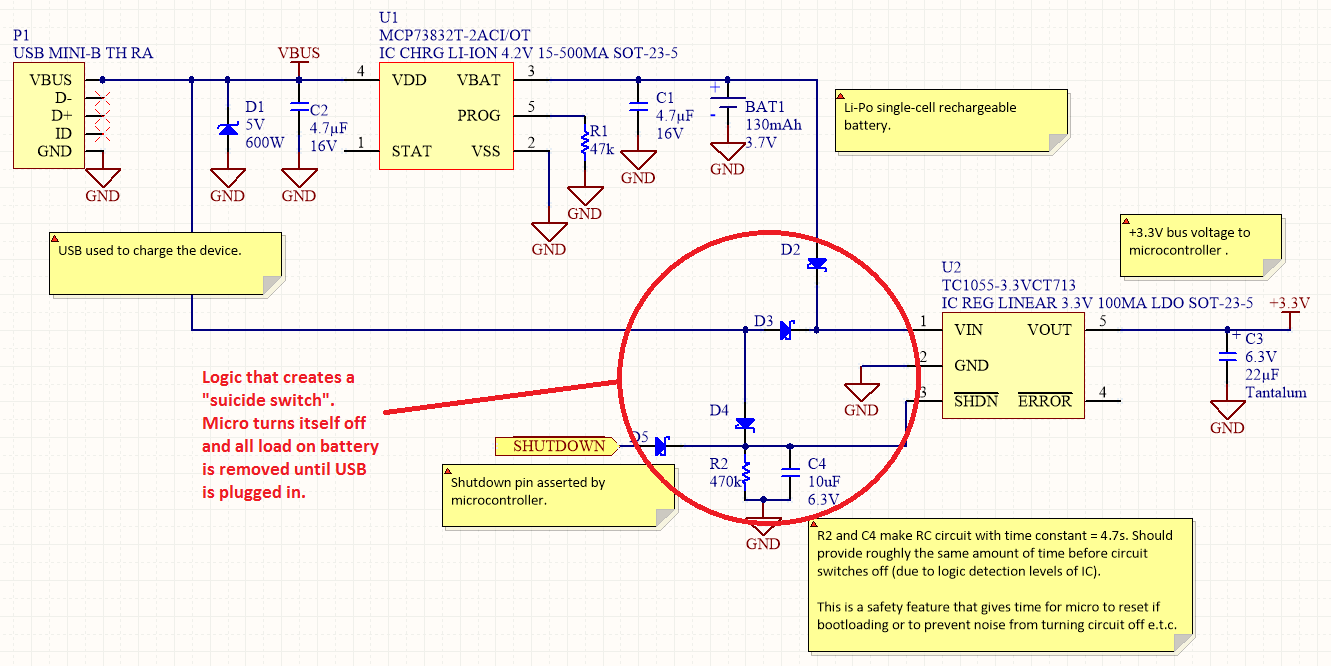
Power Management
Overview Disabling Sections of a Circuit The "Suicide Switch" Overview Power management is a significant design consideration for battery-powered devices.
Power management is a crucial aspect of circuit design, particularly in battery-powered applications where energy efficiency directly impacts the operational lifespan...