


Heat Sensor Circuit

Description: Two heat sensor circuits are presented. The first circuit is constructed using a 4060 integrated circuit (IC), while the second circuit is simpler and contains fewer components. This serves as a conceptual idea.
The first heat sensor circuit utilizing the 4060 IC is based on the principle of temperature detection through a thermistor or similar temperature-sensitive component. The 4060 IC functions as an oscillator, generating a frequency output that varies with temperature changes. The thermistor is connected to a resistor, forming a voltage divider that provides an input to the 4060. As the temperature increases or decreases, the resistance of the thermistor changes, thereby altering the voltage at the input of the IC. This change in voltage leads to a corresponding change in the frequency output, which can be monitored or used to trigger other components in the circuit, such as alarms or indicators.
The second heat sensor circuit is designed to be more straightforward, likely employing a basic transistor or operational amplifier configuration to sense temperature changes. This circuit may use a thermistor directly connected to a comparator circuit, where the output changes state based on a predefined temperature threshold. Fewer components in this design make it easier to assemble and potentially more cost-effective, though it may lack some of the advanced features provided by the 4060-based circuit.
Both circuits can be utilized in various applications, such as temperature monitoring systems, fire detection systems, and HVAC controls, showcasing the versatility of heat sensing technologies in electronic design.Here are 2 heat sensor circuits, first one is build with the 4060 IC, the second one is simpler than the one before and has fewer components. It is an idea..
The first heat sensor circuit utilizing the 4060 IC is based on the principle of temperature detection through a thermistor or similar temperature-sensitive component. The 4060 IC functions as an oscillator, generating a frequency output that varies with temperature changes. The thermistor is connected to a resistor, forming a voltage divider that provides an input to the 4060. As the temperature increases or decreases, the resistance of the thermistor changes, thereby altering the voltage at the input of the IC. This change in voltage leads to a corresponding change in the frequency output, which can be monitored or used to trigger other components in the circuit, such as alarms or indicators.
The second heat sensor circuit is designed to be more straightforward, likely employing a basic transistor or operational amplifier configuration to sense temperature changes. This circuit may use a thermistor directly connected to a comparator circuit, where the output changes state based on a predefined temperature threshold. Fewer components in this design make it easier to assemble and potentially more cost-effective, though it may lack some of the advanced features provided by the 4060-based circuit.
Both circuits can be utilized in various applications, such as temperature monitoring systems, fire detection systems, and HVAC controls, showcasing the versatility of heat sensing technologies in electronic design.Here are 2 heat sensor circuits, first one is build with the 4060 IC, the second one is simpler than the one before and has fewer components. It is an idea..
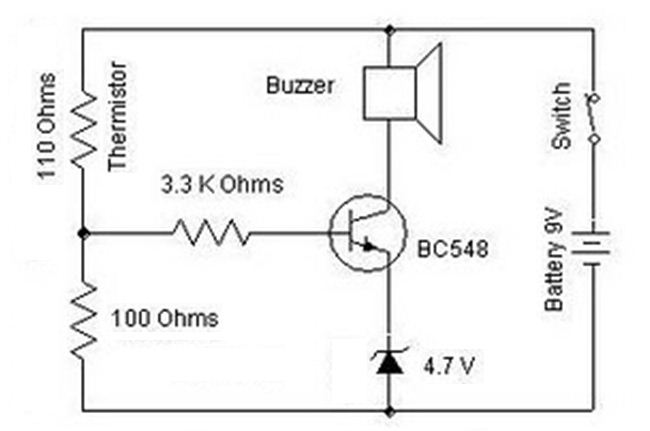
BC548 Heat Sensor Diagram Circuit
A heat sensor circuit can be utilized to control any device using a heat sensor. In this circuit, a thermistor and a resistor are connected in series, forming a potential divider circuit. The thermistor is of the Negative Temperature Coefficient...

case stepper
Beige Bag Software has been offering affordable and innovative circuit design tools since 1990. B2 Spice provides schematics as well as analog, digital, and mixed-mode electronic circuit simulation. It integrates with EAGLE and CADSTAR PCB software.
B2 Spice is a powerful...

Heat Sensor
This simple heat sensor circuit can detect heat from various electronic devices such as computers and amplifiers, generating a warning alarm when overheating occurs. It can also sense heat from the environment, but it is primarily designed for use in...

HEAT SENSOR image
This simple circuit senses heat from electronic devices and provides a warning alarm. It is an ideal add-on circuit for monitoring heat in CD players, amplifiers, and similar equipment. The circuit utilizes a 14-stage ripple-free binary counter IC, the CD4060....

Electronic Projects
This program includes circuit design CAD, simulation, and auto-routing PC layout. PSPICE is also utilized at Unisys, which offers more capabilities but costs six times as much and requires annual renewal. With these requirements and others in mind, a variation...
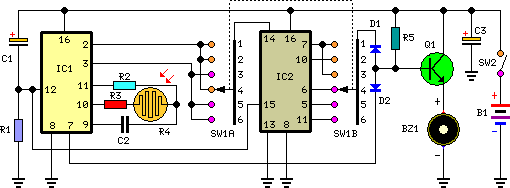
Tan TimerCircuit With 4060 IC
This device is designed for individuals seeking to achieve a tan while minimizing excessive exposure to sunlight. It utilizes electrolytic capacitors as one of its components.
The tanning device operates by utilizing a controlled exposure mechanism that regulates the intensity and...
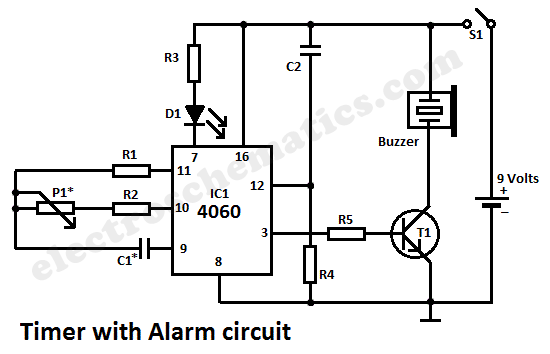
Timer with alarm circuit
This simple alarm timer circuit is constructed using a 4060 IC, which features an integrated oscillator known for its good stability and relatively wide frequency range.
The 4060 integrated circuit (IC) serves as the core component of this alarm timer circuit....

Heat Sensor Circuit using LM741
The following page outlines detail information on how to step by step design a Simple Heat Sensor Circuit. This circuit design utilized LM741 as the operational amplifier. More: Circuit Parts/Components List: Re1 = 12V relay R1 = 47K R2 =...