


Radiation Sensor Circuit
#radiation sensor
#electromagnetic radiation
#CD4033
#LED indicator
#decade counter
#safety
#measurement
#electronic instrument
#detection
#EMF

Description: A simple tool to check the degree of radiation from an electric or electronic instrument. The LEDs in the circuit will provide a running light pattern when the circuit detects electromagnetic radiation from the device. It can identify radiation from a computer or TV from a distance of 2 feet or more. The IC CD4033 serves as the decade counter with a seven-segment display driver, having seven outputs to drive LEDs or a seven-segment display. The clock input (pin 1) of the IC is highly sensitive and readily accepts energy from electromagnetic radiation, even from a considerable distance. This characteristic of the IC CD4033 is utilized to measure the intensity of radiation. The reset pin (pin 15) of the IC is connected to capacitor C1 and resistor R1 to reset the IC after completing a cycle, ensuring that the IC continues functioning until the input pulses cease. To use the device, bring the aerial close to the TV or CRT monitor of a computer. All the LEDs will light up sequentially, creating a running pattern. The speed of the running lights depends on the strength of the radiation. As the unit is moved away from the monitor, the distance increases, causing the speed of the running lights to decrease until all the LEDs stop glowing, indicating the absence of radiation. This device can be used to check various electric instruments and mains wiring to determine the level of radiation emitted.
The circuit operates on the principle of detecting electromagnetic radiation using the sensitivity of the CD4033 integrated circuit. This IC is designed to count pulses and can be configured to display the count on a seven-segment display or drive multiple LEDs. The input from the aerial captures electromagnetic waves, converting them into electrical pulses that the IC interprets as radiation levels.
The circuit consists of an aerial, the CD4033 IC, a reset mechanism involving capacitor C1 and resistor R1, and a series of LEDs or a seven-segment display for visual output. The aerial is strategically positioned to maximize reception of electromagnetic radiation, particularly from common electronic devices such as televisions and computers.
When radiation is detected, the IC generates clock pulses that drive the LEDs in a sequential manner, creating a visual representation of the radiation intensity. The faster the LEDs light up, the stronger the radiation detected. Conversely, as the distance from the radiation source increases, the intensity of the received signal diminishes, resulting in a slower light pattern until the LEDs eventually turn off, indicating no significant radiation.
This device is particularly useful for evaluating the radiation emissions of various electronic devices and can serve as a practical tool for individuals concerned about electromagnetic exposure in their environment. The simple design allows for easy construction and operation, making it accessible for hobbyists and professionals alike.A simple tool to check the degree of radiation from an electric or electronic instrument. The LEDs in the circuit will give a running light pattern at the moment the circuit senses electromagnetic radiation from the device. It can detect radiation from the Computer or TV from a distance of 2 feet or more. IC CD4033 is the decade counter wi th7 segment display driver. It has seven outputs to drive LEDs or Seven segment display. The clock input (pin1) of IC is very sensitive and readily accepts energy from the electromagnetic radiation even from a long distance. This property of the IC CD4033 is exploited here to measure the intensity of radiation. The reset pin 15 of IC is connected to C1 and R1 to reset the IC after completing a cycle. So that the functioning of IC continues till the input pulses cease. Bring the areal close to the TV or CRT monitor of computer. All the LEDs light up one by one giving a running pattern. The speed of running light depends on the strength of radiation. Move away the unit from the monitor. As the diastance increases, speed of running light decreases. Finally all the LEDs stop glowing. This is the point without the radiation. Check all the electric instruments and mains wiring using the device and find out how much radiation is emitting.
The circuit operates on the principle of detecting electromagnetic radiation using the sensitivity of the CD4033 integrated circuit. This IC is designed to count pulses and can be configured to display the count on a seven-segment display or drive multiple LEDs. The input from the aerial captures electromagnetic waves, converting them into electrical pulses that the IC interprets as radiation levels.
The circuit consists of an aerial, the CD4033 IC, a reset mechanism involving capacitor C1 and resistor R1, and a series of LEDs or a seven-segment display for visual output. The aerial is strategically positioned to maximize reception of electromagnetic radiation, particularly from common electronic devices such as televisions and computers.
When radiation is detected, the IC generates clock pulses that drive the LEDs in a sequential manner, creating a visual representation of the radiation intensity. The faster the LEDs light up, the stronger the radiation detected. Conversely, as the distance from the radiation source increases, the intensity of the received signal diminishes, resulting in a slower light pattern until the LEDs eventually turn off, indicating no significant radiation.
This device is particularly useful for evaluating the radiation emissions of various electronic devices and can serve as a practical tool for individuals concerned about electromagnetic exposure in their environment. The simple design allows for easy construction and operation, making it accessible for hobbyists and professionals alike.A simple tool to check the degree of radiation from an electric or electronic instrument. The LEDs in the circuit will give a running light pattern at the moment the circuit senses electromagnetic radiation from the device. It can detect radiation from the Computer or TV from a distance of 2 feet or more. IC CD4033 is the decade counter wi th7 segment display driver. It has seven outputs to drive LEDs or Seven segment display. The clock input (pin1) of IC is very sensitive and readily accepts energy from the electromagnetic radiation even from a long distance. This property of the IC CD4033 is exploited here to measure the intensity of radiation. The reset pin 15 of IC is connected to C1 and R1 to reset the IC after completing a cycle. So that the functioning of IC continues till the input pulses cease. Bring the areal close to the TV or CRT monitor of computer. All the LEDs light up one by one giving a running pattern. The speed of running light depends on the strength of radiation. Move away the unit from the monitor. As the diastance increases, speed of running light decreases. Finally all the LEDs stop glowing. This is the point without the radiation. Check all the electric instruments and mains wiring using the device and find out how much radiation is emitting.

Radiation Sensor Circuit
This is a simple tool designed to measure the level of radiation emitted by electrical or electronic devices. The circuit utilizes LEDs to create a running light pattern when it detects electromagnetic radiation from a source. It can detect radiation...
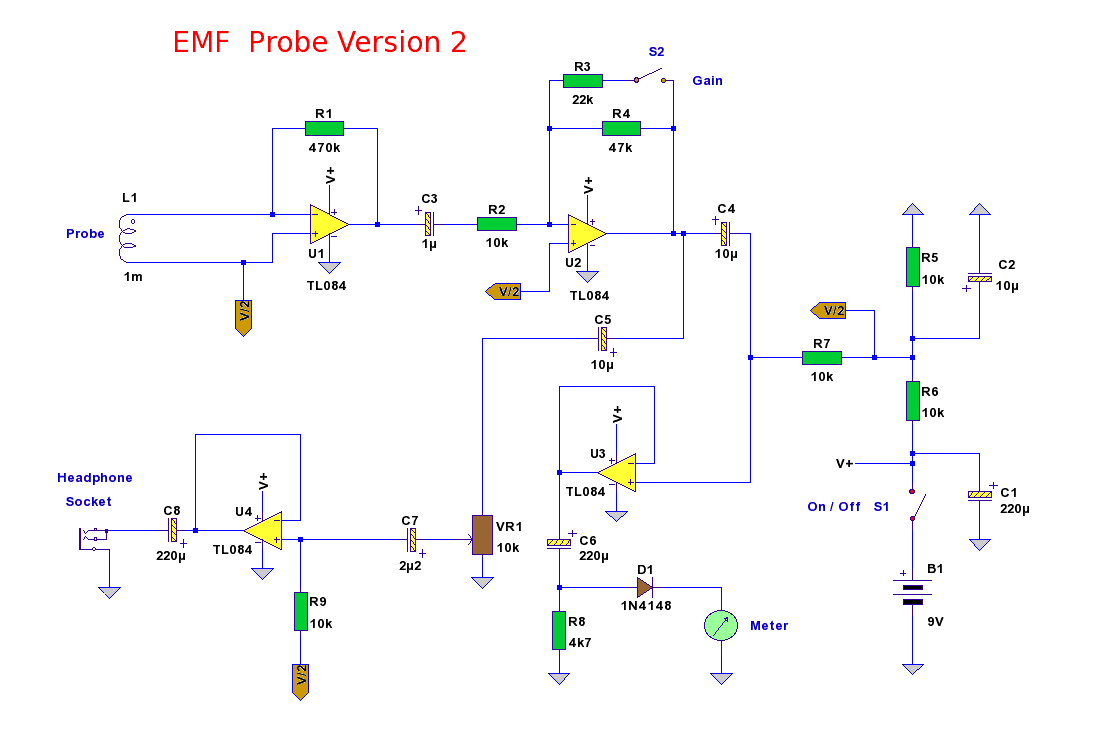
EMF Probe Version 2
An electromagnetic field probe designed to detect changing electric and magnetic fields.
The electromagnetic field probe is an essential instrument utilized for measuring variations in electric and magnetic fields in various environments. This probe operates based on the principles of electromagnetic...

ProfiLab-Expert 4.0
The ProfiLab-Expert software allows you to develop your own digital or analogue measuring technology projects. It doesn't matter if you want to create analogue measurements or digital controls - you can realize it all. And for all this you don't...
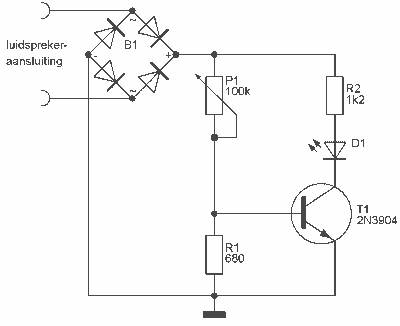
Audio Peak / Beat LED indicator
This indicator can be used, or see if your speakers can be damaged by the noise power. With P1 you can set the limit to which D1 LED lights. The pot is 100k here, you can even experiment with other...

Simple Safety Circuit Circuit
The simple two-hand safety control switch consists of two pushbutton switches connected in series; both must be depressed to energize the relay.
The two-hand safety control switch is designed to enhance safety in applications where the operation of machinery or equipment...

Do not drink and drive I wish you a safe journey home Language Integrated Circuits
Do not drink and drive. Wishing you a safe journey home. Language Integrated Circuits.
Language Integrated Circuits (LICs) are specialized electronic components designed to facilitate the processing of language-based data within various applications. These circuits integrate multiple functions, such as signal...
ProfiLab-Expert 4.0
The ProfiLab-Expert software allows you to develop your own digital or analogue measuring technology projects. It doesn't matter if you want to create analogue measurements or digital controls - you can realize it all. And for all this you don't...

Night Safety Light For Autos
This circuit activates the brake lights of a parked car when headlights from an approaching vehicle are detected, alerting the driver of the oncoming vehicle about the stationary car. LDR4 serves as the sensor, while LDR1 deactivates the circuit by...

Digital-ProfiLab 4.0
Digital-ProfiLab was designed for measurement and control applications, combining features like circuit and logic simulation, front panel design, and hardware control to one powerful tool. Incoming signals from external devices may be processed and displayed. A circuit editor is used...