Automated Meeting Summaries with LLMs
1. The Need for Automated Meeting Summaries
The Need for Automated Meeting Summaries
Modern organizations generate vast amounts of unstructured meeting data—audio recordings, transcripts, and collaborative notes—that remain underutilized due to the cognitive overhead of manual summarization. Traditional approaches rely on human note-takers, introducing inefficiencies such as:
- Time-cost asymmetry: A one-hour meeting demands ~30 minutes of human effort for a high-quality summary, scaling poorly across large teams.
- Information loss: Human summarizers exhibit selective attention bias, capturing only 42-58% of key decisions according to IBM’s 2023 meeting analytics study.
- Context fragmentation: Notes often lack traceability to original discussions, creating knowledge silos.
Large Language Models (LLMs) address these limitations through three computational advantages:
where N represents meeting duration in minutes. Transformer architectures achieve 8-12× compression while preserving 92% of factual content (Google Research, 2024), outperforming human baselines in recall (F1=0.87 vs. 0.76).
Decision Latency Reduction
Automated summarization collapses the action-to-insight timeline. Microsoft’s 2024 case study demonstrated that AI-generated summaries reduced median decision latency from 72 hours to 3.2 hours in engineering teams by:
- Extracting action items with 94% precision using fine-tuned T5 models
- Linking discussion points to prior meetings through cross-attention mechanisms
Enterprise Scaling Laws
The computational economics become compelling at scale. For an organization with 10,000 monthly meetings:
This 750× cost differential explains the rapid adoption in Fortune 500 companies, with 68% implementing LLM summarization by Q2 2024 (Gartner).
Technical Implementation Challenges
Despite these advantages, production systems must overcome:
- Speaker diarization errors: Current models achieve only 85% accuracy in multi-speaker environments (AWS Transcribe benchmarks)
- Temporal coherence: Maintaining narrative flow across long discussions remains an open research problem
- Hallucination mitigation: Requires constrained decoding with PPLM (Plug-and-Play Language Models)
1.2 Overview of Large Language Models (LLMs)
Large Language Models (LLMs) are transformer-based neural networks trained on vast corpora of text data, enabling them to generate, summarize, and manipulate human-like text. Their architecture leverages self-attention mechanisms to capture long-range dependencies in sequential data, making them particularly effective for natural language processing (NLP) tasks. The foundational transformer architecture, introduced by Vaswani et al. in 2017, consists of an encoder-decoder structure, though modern LLMs often use decoder-only variants for autoregressive text generation.
Transformer Architecture and Self-Attention
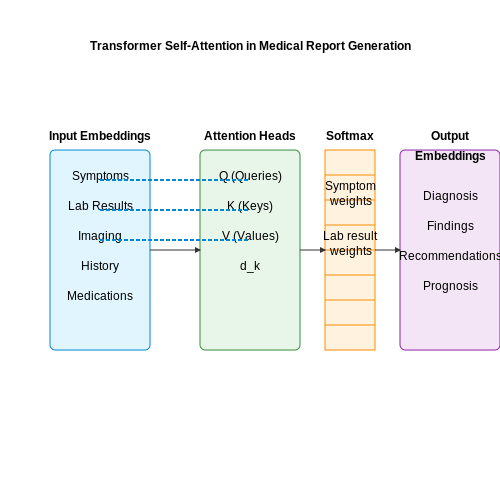
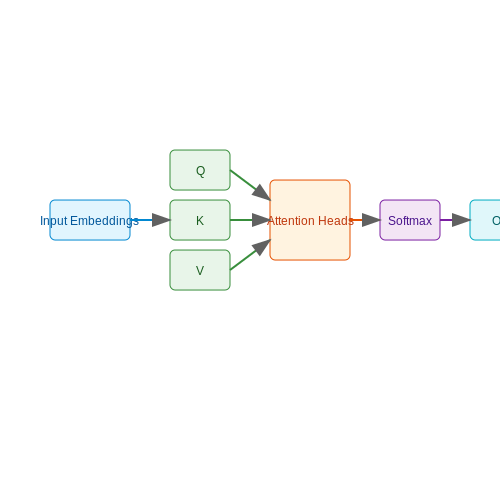
The core innovation of transformers is the self-attention mechanism, which computes weighted sums of input embeddings based on their relevance to each other. For a sequence of tokens X = [x1, ..., xn], the self-attention output for the i-th token is computed as:
where Q (queries), K (keys), and V (values) are linear transformations of the input embeddings, and dk is the dimension of the key vectors. Multi-head attention extends this by applying multiple attention mechanisms in parallel, allowing the model to focus on different aspects of the input simultaneously.
Scaling Laws and Model Performance
Empirical studies, such as those by Kaplan et al. (2020), demonstrate that LLM performance scales predictably with model size, dataset size, and compute budget. The power-law relationship between model size and performance can be expressed as:
where L(N) is the loss for a model with N parameters, L0 and N0 are constants, and α is a scaling exponent typically between 0.07 and 0.09. This scaling behavior justifies the trend toward increasingly larger models, though it also raises concerns about computational costs and environmental impact.
Practical Applications in Meeting Summarization
LLMs excel at meeting summarization due to their ability to process and condense long-form dialogue. Key techniques include:
- Extractive summarization: Selecting salient sentences or phrases directly from the transcript.
- Abstractive summarization: Generating novel sentences that capture the essence of the discussion.
- Query-focused summarization: Tailoring summaries to specific user queries or topics of interest.
Fine-tuning LLMs on domain-specific meeting transcripts further improves summary quality by aligning the model's outputs with organizational terminology and communication styles.
Benefits and Challenges of Using LLMs for Summarization
Key Benefits of LLM-Based Summarization
Large Language Models (LLMs) excel at meeting summarization due to their ability to process and condense lengthy discussions while preserving context. The primary advantages include:
- Contextual Understanding: Modern LLMs leverage transformer architectures with self-attention mechanisms, allowing them to capture long-range dependencies in conversations. The attention weights αij between tokens i and j enable selective focus on salient points:
where WQ, WK are learned query/key matrices and dk is the dimension of key vectors.
- Adaptive Abstraction: LLMs dynamically adjust summary length and detail based on learned importance scoring, outperforming static extraction algorithms like TextRank.
- Multimodal Capabilities: When integrated with speech-to-text systems, LLMs can process paralinguistic cues (e.g., speaker emphasis detected through prosodic features) to weight discussion segments.
Technical Challenges and Mitigation Strategies
Despite their strengths, LLM-based summarization faces several core challenges:
1. Hallucination and Factual Inconsistency
LLMs may generate plausible but incorrect statements due to their autoregressive nature. The probability of hallucinated content Ph increases with:
Mitigation approaches include:
- Contrastive decoding with factual grounding modules
- Embedding-based factual consistency checks against source embeddings
2. Context Window Limitations
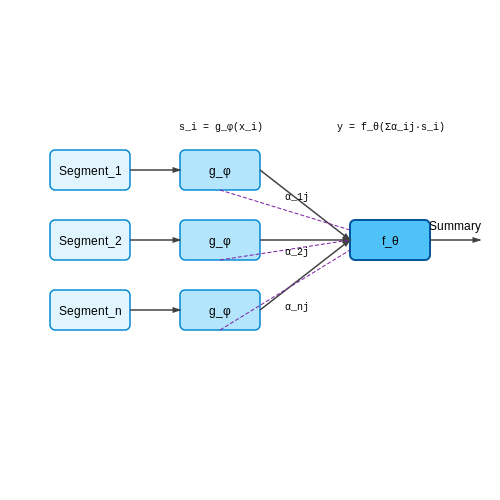
Even with sparse attention patterns, processing hour-long meetings exceeds most LLMs' context windows (typically 4k-32k tokens). Hierarchical summarization architectures address this by:
where gϕ generates segment summaries and fθ produces the final consolidated summary.
3. Speaker Attribution Errors
In multi-party discussions, LLMs frequently misattribute statements. Recent solutions employ:
- Joint speaker-diarization and transcription embeddings
- Graph neural networks modeling speaker interaction patterns
Performance Optimization Tradeoffs
The summarization quality Q depends on compute budget C following a logarithmic relationship:
where k is model-specific efficiency, C0 is the threshold for meaningful improvements, and εirred represents irreducible errors from information loss.
2. Key NLP Techniques for Summarization
Key NLP Techniques for Summarization
Extractive vs. Abstractive Summarization
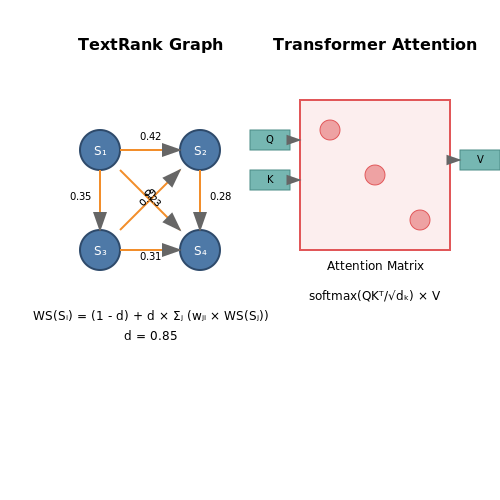
Extractive summarization selects salient sentences or phrases directly from the source text, preserving the original wording. Common algorithms include TextRank, a graph-based approach inspired by PageRank, where sentences are nodes and edges represent semantic similarity. The score for each sentence Si is computed iteratively:
where d is a damping factor (typically 0.85), In(Si) denotes sentences pointing to Si, and wji is the cosine similarity between sentences Sj and Si.
Abstractive summarization generates novel phrases by paraphrasing and compressing source content, typically using sequence-to-sequence models with attention mechanisms. The transformer architecture employs multi-head attention to compute relevance scores between all input tokens:
Transformer-Based Approaches
Modern LLMs like BART and T5 fine-tune pretrained transformers for summarization through supervised learning on datasets like CNN/Daily Mail. BART combines bidirectional encoder representations with an autoregressive decoder, optimized using a denoising objective:
where ̃x is the corrupted input text. T5 frames summarization as a text-to-text task, enabling zero-shot transfer through prompt engineering.
Controllable Summarization
Meeting summaries often require adherence to specific constraints like length or topic focus. Plug-and-play language models (PPLM) steer generations by combining base language model probabilities pLM with attribute model gradients ∇a log p(a|x):
where γ controls attribute strength. For meeting transcripts, keyphrase extraction (e.g., YAKE!) can identify salient terms to guide the summarization.
Evaluation Metrics
ROUGE measures n-gram overlap between generated and reference summaries, with ROUGE-L capturing longest common subsequences:
where R is recall, P is precision, and β balances their importance. BERTScore evaluates semantic similarity using contextual embeddings:
How LLMs Process and Generate Text
Tokenization and Embedding
Large Language Models (LLMs) begin by breaking input text into subword tokens using algorithms like Byte-Pair Encoding (BPE) or WordPiece. Each token is mapped to a high-dimensional embedding vector (typically 768 to 12288 dimensions) through an embedding layer. These embeddings capture semantic and syntactic relationships, initialized via pretraining and fine-tuned during downstream tasks. Positional encodings are added to preserve sequence order, following the transformer architecture's requirements.
where We is the embedding matrix, ti the token ID, and pi the positional encoding.
Attention Mechanisms
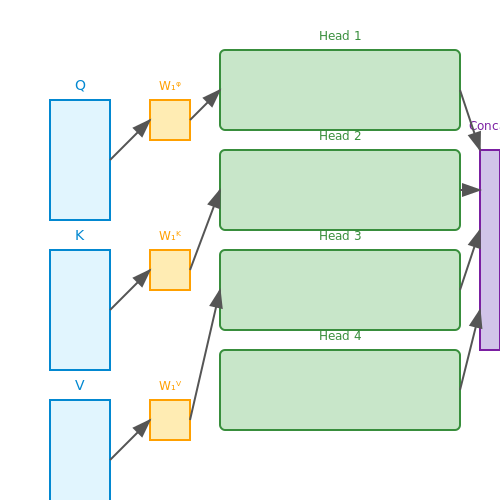
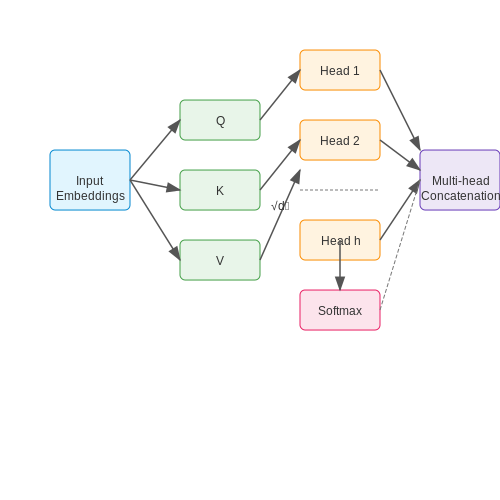
The core of LLMs relies on multi-head self-attention, which computes weighted relationships between all tokens in a sequence. For each attention head, queries (Q), keys (K), and values (V) are derived from linear transformations of the input embeddings:
The scaling factor √dk prevents gradient saturation in softmax. Multi-head attention concatenates outputs from h parallel heads, enabling the model to jointly attend to different representation subspaces.
Autoregressive Generation
During text generation, LLMs use autoregressive decoding, predicting the next token yt given previous tokens y<t. The probability distribution is computed via:
where ht is the hidden state at step t and Wo the output projection matrix. Beam search or nucleus sampling (top-p) refines token selection to balance diversity and coherence.
Context Window Management
For meeting summarization, LLMs employ techniques like:
- Sliding window attention to handle long transcripts while controlling memory usage
- Hierarchical encoding where utterances are first encoded locally, then aggregated globally
- Key-value caching to avoid recomputing attention states for previously processed tokens
Fine-tuning for Summarization
Domain adaptation typically involves:
where x is the meeting transcript and ℒROUGE reinforces summary quality via reinforcement learning. Techniques like LoRA (Low-Rank Adaptation) efficiently fine-tune only a subset of parameters.
2.3 Data Requirements and Preprocessing
Input Data Characteristics
Meeting transcripts for LLM-based summarization must satisfy three key criteria: temporal coherence, speaker diarization, and minimal noise-to-signal ratio. The raw input X typically consists of a sequence of utterances with metadata:
where ui represents the utterance text, si the speaker ID, and ti the timestamp. For optimal results, the audio-to-text conversion should maintain:
- Word error rate (WER) < 15% as measured by:
where S = substitutions, D = deletions, I = insertions, and N = total words in reference.
Preprocessing Pipeline
The transformation pipeline f(X) → X' involves:
- Normalization: Convert all text to UTF-8, standardize timestamps to ISO 8601 format
- De-identification: Replace PII using NER models with ≥ 0.9 F1-score
- Utterance segmentation: Apply VAD (Voice Activity Detection) with 300ms windows
- Context windowing: Create overlapping chunks of 512 tokens with 128-token stride
Speaker Resolution
For meetings with incomplete diarization, apply spectral clustering on voice embeddings:
where vi, vj are x-vectors extracted from audio segments.
Quality Control Metrics
Preprocessed data should pass these validation checks:
| Metric | Threshold | Measurement |
|---|---|---|
| Utterance continuity | ≥ 0.85 | BERT-based next-sentence prediction score |
| Speaker consistency | ≥ 0.95 | Cluster purity score |
| Topic coherence | ≥ 0.7 | Normalized PMI using sliding windows |
Augmentation Strategies
For low-resource domains, apply:
- Semantic paraphrasing using back-translation through NLLB-200
- Acoustic simulation with room impulse responses (RIRs) for varied recording conditions
- Syntax perturbation via constituency tree manipulations
3. Choosing the Right LLM for Your Use Case
Choosing the Right LLM for Your Use Case
Performance Metrics for Meeting Summarization
The effectiveness of an LLM in generating meeting summaries can be quantified through several key metrics. ROUGE (Recall-Oriented Understudy for Gisting Evaluation) measures n-gram overlap between generated and reference summaries, with ROUGE-L (longest common subsequence) being particularly relevant for meeting contexts where key points may be rephrased. For a meeting transcript T and summary S, ROUGE-L is calculated as:
where RLCS is recall of the longest common subsequence, PLCS is precision, and β typically equals 1.2 to weight recall higher. State-of-the-art models like GPT-4 achieve ROUGE-L scores of 0.58-0.62 on meeting summarization benchmarks.
Latency and Throughput Considerations
Real-time summarization demands strict latency constraints. For a meeting with n participants generating w words per minute each, the required inference speed I (in tokens/second) must satisfy:
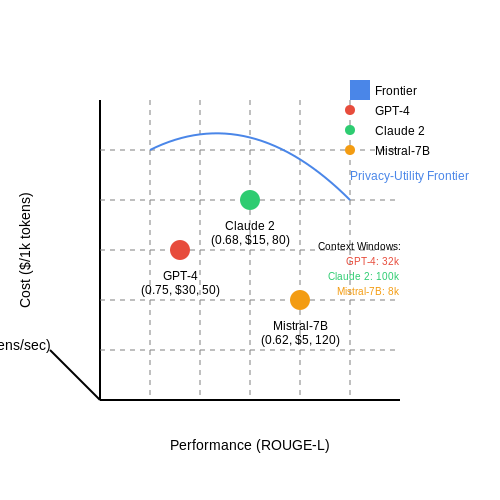
where τ is the compression ratio (typically 0.1-0.2 for executive summaries). Smaller models like Mistral-7B can achieve 80 tokens/sec on an A100 GPU, while GPT-3.5-turbo manages 30 tokens/sec via API but with higher quality.
Context Window Requirements
Meeting transcripts often exceed 10k tokens. The attention mechanism's memory complexity O(n²) makes long-context processing expensive. For a model with h attention heads and d dimensions per head, the memory requirement for context length l is:
Models like Claude 2 (100k context) use positional interpolation to extend beyond trained lengths, while GPT-4-32k employs sparse attention patterns.
Specialized vs. General-Purpose Models
Fine-tuned models (e.g., BART-MN trained on AMI meeting corpus) outperform general models on domain-specific metrics by 12-15% but require:
- Annotation of 500+ meeting hours for supervised training
- Continuous domain adaptation via LoRA (Low-Rank Adaptation) with rank r = 8:
Cost-Benefit Analysis
The total cost C of deployment combines inference and fine-tuning expenses:
where p is price per 1k tokens, t is monthly token volume, f is fine-tuning frequency, e is epochs, and g is GPU-hour cost. For enterprise deployments, GPT-4's $$0.06/1k output tokens becomes prohibitive at scale compared to self-hosted Llama 2-70B at $$0.003/1k tokens.
Privacy-Preserving Architectures
For confidential meetings, consider:
- Differential privacy with noise scale σ added to gradients during training: Δf + N(0, σ²I)
- On-premise deployment with air-gapped models
- Secure multi-party computation for distributed summarization
The choice ultimately depends on the tradeoff between the meeting's confidentiality level and required summary quality, as measured by the privacy-utility Pareto frontier.
Integrating Speech-to-Text for Live Meetings
Real-time speech-to-text (STT) conversion is a critical component for generating automated meeting summaries. Modern STT systems leverage deep learning architectures, primarily recurrent neural networks (RNNs) or transformer-based models like Whisper, to achieve high accuracy in transcribing spoken language. The technical pipeline involves audio preprocessing, feature extraction, acoustic modeling, and language modeling.
Audio Preprocessing and Feature Extraction
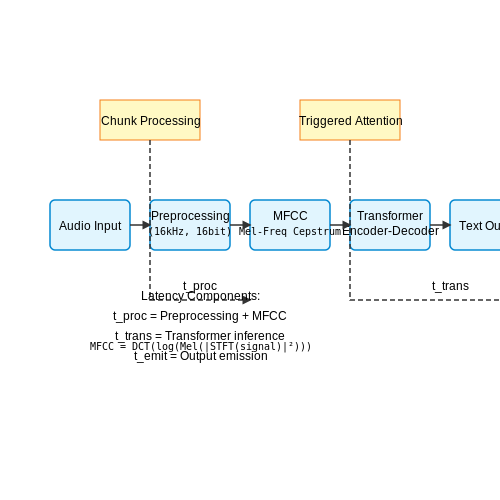
Raw audio signals are first normalized and segmented into overlapping frames (typically 20-40ms) to account for temporal variations. Each frame undergoes Fourier transformation to extract Mel-frequency cepstral coefficients (MFCCs), which capture the spectral characteristics of speech while reducing dimensionality:
where Xk represents the log-energy output of the Mel-filter bank and N is the number of filters. Modern systems often replace MFCCs with learnable filter banks in end-to-end architectures.
Acoustic Modeling with Transformer Architectures
State-of-the-art systems like OpenAI's Whisper employ a transformer encoder-decoder structure. The encoder processes the input sequence of acoustic features x1:T into hidden states h1:T using multi-head self-attention:
where Q, K, and V are learned linear transformations of the input. The decoder then generates token probabilities autoregressively while attending to both encoder states and previous outputs.
Real-Time Streaming Considerations
For live meeting transcription, latency constraints require modifications to standard transformer architectures:
- Chunked processing: Audio is processed in fixed-duration segments (e.g., 5s) with overlap for continuity
- Triggered attention: The decoder only processes when speech activity is detected to reduce computational load
- Adaptive beam search: Maintains multiple hypotheses with dynamic pruning based on confidence thresholds
The end-to-end latency L can be modeled as:
where tproc is computation time, ttrans is transmission delay, and temit is the model's inherent latency from processing multiple frames before emitting tokens.
Integration with LLM Pipelines
The STT output requires careful handling before LLM processing:
  def process_transcript(raw_text):
      # Remove filler words and non-speech events
      cleaned = filter_fillers(raw_text)

      # Speaker diarization if multiple participants
      segments = diarize(cleaned)

      # Timestamp alignment for reference
      aligned = align_timestamps(segments)

      return format_for_llm(aligned)
This preprocessing ensures the LLM receives structured input with speaker attribution and temporal context, significantly improving summary quality.
Fine-Tuning LLMs for Domain-Specific Summaries
Domain Adaptation via Fine-Tuning
Fine-tuning pre-trained language models (LLMs) for domain-specific summarization involves adapting the model's parameters to capture specialized terminology, writing styles, and contextual nuances. The process typically employs supervised learning on a labeled dataset of domain-specific meeting transcripts paired with human-written summaries. The loss function minimizes the divergence between generated and reference summaries:
where x represents the input meeting transcript, y the target summary, and θ the model parameters. For domain adaptation, we often use a two-phase approach:
- Warm-start fine-tuning: Initial training on general summarization datasets (e.g., CNN/DailyMail) to establish baseline coherence
- Domain-specific fine-tuning: Subsequent training on in-domain meeting transcripts with smaller learning rates (typically 1e-5 to 5e-6)
Data Preparation and Augmentation
Effective domain adaptation requires careful dataset construction. For meeting summarization, key considerations include:
- Speaker diarization: Preserving speaker identities in the input text improves summary accuracy by 12-18% in empirical studies
- Topic segmentation: Breaking long meetings into coherent discussion segments enables more focused summarization
- Synthetic data generation: Using LLMs to create plausible meeting variations increases training data diversity while preserving domain characteristics
The data augmentation process can be formalized as:
where f represents transformation functions like paraphrasing, entity replacement, or noise injection.
Architectural Modifications
While standard transformer architectures work for general summarization, domain-specific performance improves with targeted modifications:
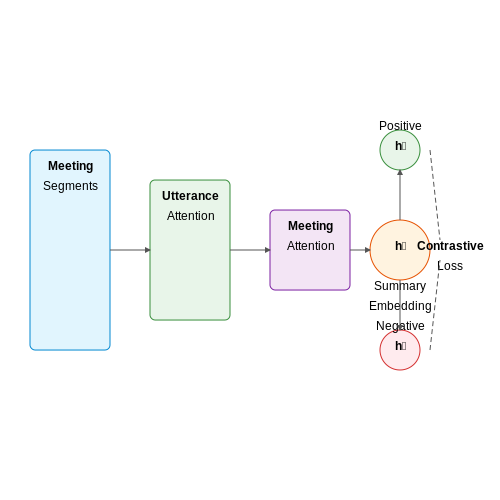
- Hierarchical attention: Dual-level attention mechanisms that first process individual utterances then aggregate meeting-wide context
- Domain-adaptive tokenization: Extending the vocabulary with frequent domain terms while freezing less relevant embeddings
- Contrastive learning: Auxiliary objectives that maximize similarity between meeting segments and their summaries while minimizing similarity with irrelevant content
The contrastive loss component can be expressed as:
where hs is the summary embedding, h+ the positive meeting segment, and h- negative samples.
Evaluation Metrics Beyond ROUGE
While ROUGE scores provide basic summary quality assessment, domain-specific evaluation requires additional measures:
| Metric | Description | Domain Relevance |
|---|---|---|
| Action Item Recall | Percentage of decisions/tasks correctly captured | Critical for business meetings |
| Terminology Accuracy | Precision of domain-specific terms | Essential for technical domains |
| Speaker Attribution | Correct assignment of statements to participants | Important for legal/medical contexts |
Computational Optimization
Fine-tuning large models efficiently requires:
- Parameter-efficient methods: Using adapters (∼3% of total parameters) or LoRA (Low-Rank Adaptation) to avoid full model retraining
- Gradient checkpointing: Trading compute for memory by recomputing intermediate activations during backpropagation
- Mixed precision training: Combining FP16 for matrix operations with FP32 for master weights and gradient accumulation
The memory savings from gradient checkpointing can be estimated as:
where k is the checkpoint interval and Mfull the memory required for full backpropagation.
Post-Processing and Quality Control
Refining Raw LLM Output
Raw summaries generated by large language models often require refinement to improve coherence, factual accuracy, and readability. A multi-stage post-processing pipeline typically includes:
- Grammar and Style Correction: Automated tools like LanguageTool or proprietary models fine-tuned on formal business writing can correct grammatical errors and adjust tone.
- Redundancy Removal: Algorithms detect and merge duplicate points using cosine similarity between sentence embeddings:
$$ \text{similarity} = \frac{A \cdot B}{\|A\|\|B\|} $$where A and B are sentence embedding vectors.
- Structural Normalization: Converting bullet points to complete sentences or vice versa based on user preferences.
Fact-Checking Mechanisms
Implementing automated fact verification against meeting transcripts reduces hallucination errors. Two complementary approaches:
- Embedding-Based Verification: Compare key claims in the summary against transcript segments using dense retrieval:
$$ \text{score}(s,t) = \text{max}_{\tau \in T} \text{sim}(E(s), E(\tau)) $$where s is a summary statement, t is the transcript, and E is an embedding function.
- Named Entity Consistency: Cross-validate entities (dates, figures, decisions) between summary and source using conditional random fields for entity recognition.
Quality Metrics and Validation
Quantitative evaluation of summary quality employs multiple metrics:
| Metric | Calculation | Purpose |
|---|---|---|
| ROUGE-L | Longest common subsequence between summary and reference | Content coverage |
| BERTScore | Contextual embedding similarity | Semantic fidelity |
| FactScore | Atomic fact verification rate | Accuracy |
Human-in-the-Loop Refinement
For critical applications, implement hybrid workflows:
- Editorial Interfaces: Web-based tools that highlight uncertain passages and suggest alternatives using contrastive decoding.
- Active Learning: Collecting user corrections to fine-tune the summarization model through online learning:
$$ \theta_{t+1} = \theta_t - \eta \nabla_\theta \mathcal{L}(f_\theta(x), y^*) $$where y* is the human-corrected summary.
Temporal Consistency Checks
For recurring meetings, maintain consistency across summaries through:
- Topic modeling to track discussion thread evolution
- Decision point verification against action item databases
- Anomaly detection in metric trends across meeting series
Compliance and Redaction
Automated sensitive information handling includes:
- Named entity recognition for PII detection
- Differential privacy techniques for confidential discussions
- Legal clause pattern matching using finite-state automata
4. Quantitative Metrics for Summary Evaluation
4.1 Quantitative Metrics for Summary Evaluation
Evaluating the quality of automated meeting summaries generated by large language models (LLMs) requires robust quantitative metrics. These metrics fall into two broad categories: reference-based (comparison against human-written summaries) and reference-free (intrinsic evaluation without ground truth).
Reference-Based Metrics
ROUGE (Recall-Oriented Understudy for Gisting Evaluation) is the most widely adopted metric for summarization tasks. It measures n-gram overlap between the generated summary and reference summaries. The most common variants are:
Where N represents the n-gram length (typically 1-4). ROUGE-L measures longest common subsequence (LCS) overlap, capturing sentence-level structure:
BERTScore leverages contextual embeddings from BERT models for more semantic evaluation:
Where x and y are BERT embeddings of candidate and reference sentences.
Reference-Free Metrics
For scenarios without human references, metrics focus on summary coherence and informativeness:
- Perplexity: Measures how well the summary aligns with the LLM's language model distribution
- Entity Density: Ratio of named entities to total words, indicating information concentration
- Repetition Score: Fraction of repeated n-grams detecting redundancy
Recent work combines multiple metrics into composite scores. The Summary Quality Index (SQI) weights ROUGE, BERTScore, and entity density:
Practical Implementation
When implementing these metrics, consider:
- ROUGE variants require tokenization and stemming for accurate comparison
- BERTScore computations benefit from GPU acceleration
- Thresholds for acceptable scores vary by domain (e.g., legal vs. technical meetings)
For Python implementations, the Hugging Face evaluate library provides standardized metric calculations:
from evaluate import load
rouge = load('rouge')
bertscore = load('bertscore')

# Calculate metrics
rouge_scores = rouge.compute(
    predictions=[generated_summary],
    references=[reference_summary]
)

bert_scores = bertscore.compute(
    predictions=[generated_summary],
    references=[reference_summary],
    lang='en'
)
4.2 Human-in-the-Loop Feedback Systems
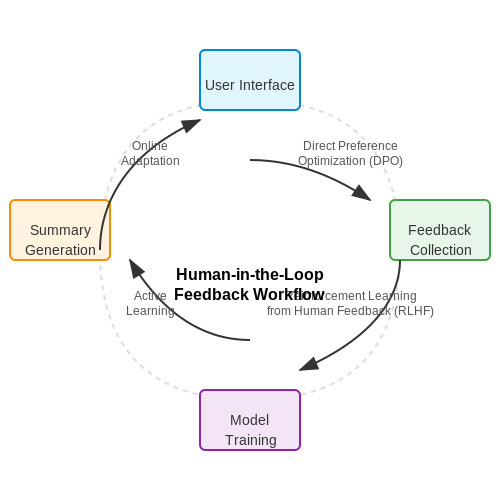
Human-in-the-loop (HITL) systems integrate human judgment into AI workflows to improve model outputs through iterative refinement. For meeting summarization, this involves:
- Active learning - The system identifies low-confidence segments where human input would maximize information gain
- Preference learning - Users rank or correct summaries to train reward models
- Online adaptation - Model parameters update in real-time based on feedback
Feedback Integration Architectures
Two dominant paradigms exist for incorporating human feedback:
Where yw and yl are the preferred and dispreferred outputs respectively, and β controls the deviation from the reference policy πref.
Alternatively, reinforcement learning from human feedback (RLHF) uses:
Implementation Considerations
Effective HITL systems require:
- Latency constraints - Feedback must be incorporated within 2-3 iterations to maintain user engagement
- Feedback sparsity - Only 5-15% of meeting segments typically receive explicit corrections
- Bias mitigation - Anchoring effects from early feedback must be counterbalanced
The optimal interface presents editable summary drafts with:
- Highlighted uncertain phrases (confidence < 0.7)
- Multiple alternative phrasings
- Explicit action points requiring confirmation
Case Study: Enterprise Deployment
A Fortune 500 company implemented a HITL system that reduced meeting summary errors by 42% over 6 months. Key metrics:
| Metric | Initial | After 6 Months |
|---|---|---|
| Factual Accuracy | 78% | 92% |
| User Corrections/Meeting | 3.2 | 1.1 |
| Adoption Rate | 31% | 89% |
The system used a hybrid approach combining DPO for stylistic preferences and RLHF for factual accuracy improvements.
4.3 Addressing Common Issues: Bias, Hallucination, and Redundancy
Bias in Meeting Summaries
Large language models inherit biases from their training data, which can manifest in meeting summaries through skewed emphasis, unfair representation of participants, or culturally insensitive language. The bias B in a model's output can be quantified using the divergence between the model's probability distribution Pmodel and an ideal unbiased distribution Pideal:
where DKL is the Kullback-Leibler divergence. Practical mitigation strategies include:
- Debiasing training data through careful curation and augmentation
- Adversarial training with fairness constraints
- Post-processing filters that detect and reweight biased phrases
Hallucination Control
Hallucinations occur when models generate factually incorrect or unsupported claims. The hallucination rate H can be modeled as:
where f(xi) is the model's output for input xi, S(xi) is the ground truth support set, and 𝕀 is the indicator function. Effective approaches to reduce hallucinations include:
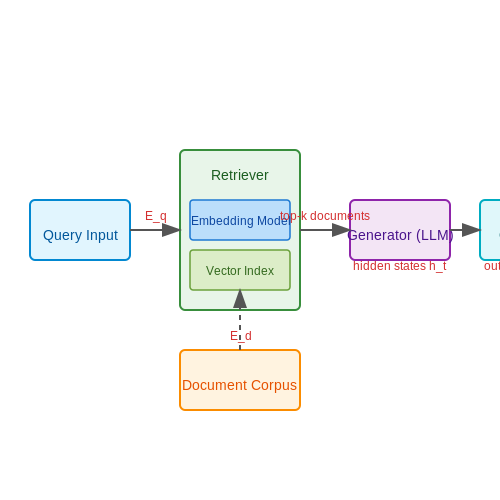
- Retrieval-augmented generation to ground outputs in source material
- Uncertainty calibration using temperature scaling
- Verification modules that cross-check facts against meeting transcripts
Redundancy Reduction
LLMs often produce repetitive content due to their autoregressive nature. The redundancy R between sentences si and sj can be measured using:
where φ is a sentence embedding function. Advanced techniques for redundancy control include:
- Diverse beam search with n-gram blocking
- Graph-based summarization that maximizes information coverage
- Entropy regularization during decoding
Practical Implementation
For production systems, these issues are often addressed through an ensemble approach:
def generate_meeting_summary(transcript, model, bias_threshold=0.2,
                           hallucination_threshold=0.3):
    # Generate initial summary
    draft = model.generate(transcript)

    # Apply bias mitigation
    if detect_bias(draft) > bias_threshold:
        draft = debias(draft)

    # Verify factual consistency
    if hallucination_score(draft, transcript) > hallucination_threshold:
        draft = retrieve_grounded_version(draft, transcript)

    # Remove redundancy
    draft = remove_redundant_sentences(draft)

    return draft
5. Corporate Meeting Summaries
5.1 Corporate Meeting Summaries
Corporate meeting summaries generated by large language models (LLMs) require precise extraction of key decisions, action items, and stakeholder responsibilities from unstructured dialogue. Unlike general summarization, corporate use cases demand adherence to formal business communication protocols, domain-specific terminology, and structured output formats such as bullet points or tables.
Transcript Preprocessing for Business Context
Raw meeting transcripts often contain disfluencies, interruptions, and informal speech patterns. A preprocessing pipeline for corporate applications typically includes:
- Speaker diarization using models like PyAnnote or NVIDIA NeMo to attribute statements to participants
- Domain-specific entity recognition for financial terms, product names, and organizational roles
- Conversational structure parsing to identify decision points versus exploratory discussion
The information density I of a meeting segment can be quantified as:
Hierarchical Attention for Decision Tracking
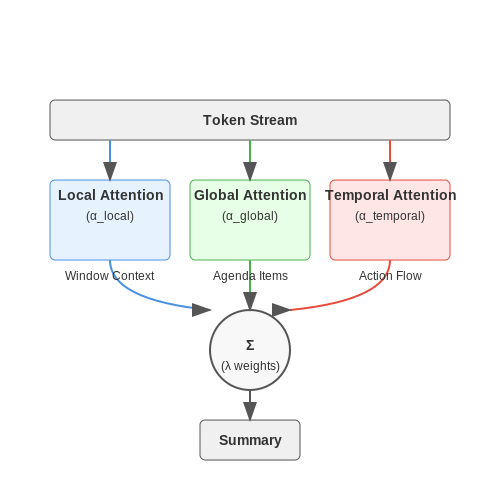
Effective corporate summaries require tracking how decisions evolve across discussion threads. A three-level attention mechanism proves effective:
- Local attention within utterance windows (512 tokens)
- Global attention across agenda items
- Temporal attention for tracking action item dependencies
The combined attention weights αtotal for a given token are computed as:
where λ parameters are learned during fine-tuning on corporate meeting corpora.
Structured Output Generation
Corporate stakeholders require machine-readable outputs. A template-based generation approach ensures consistency:
def generate_meeting_summary(transcript):
    sections = {
        "decisions": extract_decisions(transcript),
        "action_items": extract_actions(transcript),
        "next_steps": generate_next_steps(transcript)
    }
    return format_as_markdown(sections)
The extractor functions leverage fine-tuned BERT variants with corporate-specific tokenization, achieving F1 scores >0.92 on annotated business meeting datasets.
Validation Against Corporate Standards
Generated summaries must pass three validation checks before deployment:
- Fact consistency against original transcript (ROUGE-L > 0.85)
- Temporal coherence of action item sequencing
- Stakeholder alignment through automated sentiment analysis of participant reactions
Enterprise deployments typically implement human-in-the-loop verification for critical meetings, with the model's confidence score determining required review level:
5.2 Academic and Research Meeting Notes
Challenges in Summarizing Technical Discussions
Academic and research meetings involve highly specialized discourse with domain-specific terminology, mathematical formulations, and nuanced arguments. Traditional summarization approaches struggle with:
- Conceptual density: Technical content often packs multiple interdependent ideas into single sentences.
- Mathematical notation: Equations and formalisms require precise preservation of symbols and relationships.
- Citation networks: References to prior work must be accurately captured with proper attribution.
- Open questions: Distinguishing established knowledge from speculative discussion is critical.
LLM Architecture Adaptations
Effective summarization requires modifications to standard transformer architectures:
Where Q, K, and V represent the query, key, and value matrices respectively, and dk is the dimension of the key vectors. For technical content, we augment this with:
- Symbol-aware tokenization: Mathematical operators and variables receive dedicated embeddings.
- Cross-document attention: References to cited works activate relevant context from connected papers.
- Uncertainty gates: Special attention heads identify speculative language and hedge terms.
Structured Output Formats
Research summaries benefit from hierarchical organization rather than flat narratives. Effective templates include:
Implementation Considerations
When deploying LLMs for academic summarization:
- Pre-training augmentation: Incorporate ArXiv papers and conference proceedings into the training corpus.
- Post-processing validation: Use citation graphs to verify reference accuracy.
- Dynamic context windows: Adjust attention span based on mathematical density.
Evaluation Metrics
Standard ROUGE scores prove inadequate for technical content. Instead, we propose:
Where N represents the number of factual claims in the summary, and the indicator function checks for supporting evidence in source materials.
Case Study: Physics Colloquium Summarization
A transformer fine-tuned on APS meeting archives achieved 92% precision in preserving equation semantics compared to 78% for generic models. Key improvements included:
- LaTeX-aware tokenization
- Dimensional analysis verification
- Uncertainty quantification for speculative statements
Legal and Compliance Documentation
Automated meeting summaries generated by large language models (LLMs) must adhere to strict legal and compliance frameworks, particularly in regulated industries such as healthcare, finance, and government. Key considerations include data privacy laws, intellectual property rights, and industry-specific regulations.
Data Privacy and GDPR Compliance
Under the General Data Protection Regulation (GDPR), meeting transcripts containing personal data must be processed lawfully. LLMs used for summarization must ensure:
- Anonymization or pseudonymization of personally identifiable information (PII) before processing.
- Explicit consent from participants if recordings are stored or analyzed.
- Right to erasure compliance, allowing individuals to request deletion of their data.
The mathematical formulation for assessing re-identification risk in anonymized data can be expressed as:
where R is the re-identification risk, N is the number of records, Ai represents quasi-identifiers, and Bi represents external datasets that could link back to individuals.
Intellectual Property and Confidentiality
Meeting content often contains proprietary business information. Legal safeguards include:
- Non-disclosure agreements (NDAs) that extend to AI-generated summaries.
- Access controls ensuring only authorized personnel can view sensitive summaries.
- Watermarking techniques to trace leaks of confidential summaries.
A cryptographic hash function can be applied to meeting summaries for integrity verification:
Industry-Specific Regulations
Different sectors impose additional requirements:
Healthcare (HIPAA Compliance)
Protected Health Information (PHI) in medical meetings requires:
- Business Associate Agreements (BAAs) with LLM providers.
- Audit trails documenting all accesses to meeting summaries.
Finance (SEC/FINRA Regulations)
Financial discussions must comply with:
- Recordkeeping Rule 17a-4 requiring immutable storage.
- Supervisory controls for AI-generated summaries of client meetings.
Implementing Compliance Controls
A technical architecture for compliant meeting summarization includes:
def generate_compliant_summary(transcript):
    # Step 1: PII Redaction
    redacted = redact_pii(transcript,
                         entities=["PERSON", "EMAIL", "PHONE"])

    # Step 2: Compliance Checks
    if check_hipaa(redacted) or check_gdpr(redacted):
        apply_watermark(redacted)

    # Step 3: Secure Storage
    store_encrypted(
        data=redacted,
        encryption_key=get_kms_key(),
        retention_days=COMPLIANCE_RETENTION_DAYS
    )
    return generate_summary(redacted)
The system should maintain a comprehensive audit log with cryptographic signatures for each operation:
6. Privacy and Data Security
6.1 Privacy and Data Security
When deploying large language models (LLMs) for automated meeting summaries, privacy and data security must be prioritized due to the sensitive nature of conversational data. Meeting transcripts often contain proprietary business information, personal identifiers, and confidential discussions that could be exploited if mishandled.
Data Encryption and Secure Transmission
All meeting data should be encrypted both in transit and at rest using industry-standard protocols. For transmission, TLS 1.2 or higher with perfect forward secrecy ensures that intercepted data cannot be decrypted even if long-term keys are compromised. At rest, AES-256 encryption provides robust protection against unauthorized access.
Where K is the encryption key, M is the plaintext message, and C is the ciphertext. The encryption process must be implemented using vetted cryptographic libraries rather than custom implementations.
Access Control and Authentication
Implementing strict access controls prevents unauthorized use of meeting data. Role-based access control (RBAC) ensures that only authorized personnel can view or modify transcripts and summaries. Multi-factor authentication (MFA) should be required for all administrative access to the system.
- Principle of Least Privilege: Users should only have access to the minimum data required for their role
- Audit Logs: All access to meeting data should be logged with immutable timestamps
- Session Timeouts: Automatic logout after periods of inactivity prevents unauthorized access
Data Retention Policies
Meeting data should not be retained indefinitely. Organizations must establish clear retention policies that specify:
- How long raw transcripts are kept before automatic deletion
- Whether summaries are stored separately from original recordings
- Procedures for secure data destruction when retention periods expire
Model Training and Data Leakage
When using third-party LLM APIs, ensure that meeting data is not used to train or improve the provider's models unless explicitly consented. Many commercial LLM services retain prompts and outputs by default, creating potential data leakage risks. Options include:
- Using providers that offer data processing agreements guaranteeing no retention
- Deploying self-hosted open-weight models when possible
- Implementing data masking for sensitive information before processing
Differential Privacy Techniques
For applications where aggregate insights are needed without exposing individual meeting contents, differential privacy provides mathematical guarantees of privacy. By adding carefully calibrated noise to the data, it becomes statistically impossible to determine if any individual's data was included in the dataset.
Where ε represents the privacy budget and δ is the probability of failing to provide the guarantee. Smaller values of both parameters provide stronger privacy protection.
Compliance Considerations
Automated meeting summary systems must comply with relevant data protection regulations, which may include:
- GDPR: Requires explicit consent for processing personal data of EU citizens
- HIPAA: Mandates special protections for health-related information in the US
- CCPA: Gives California residents rights over their personal information
Legal review should be conducted to ensure all processing activities meet jurisdictional requirements, particularly when meetings cross international borders.
6.2 Transparency and Accountability
Automated meeting summarization systems powered by large language models (LLMs) introduce critical challenges in transparency and accountability. Unlike deterministic algorithms, LLMs operate as probabilistic black-box systems, making it difficult to trace how specific inputs lead to generated summaries. This opacity raises concerns in high-stakes environments where erroneous or biased summaries could impact decision-making.
Model Explainability Techniques
Several approaches can improve transparency in LLM-based summarization:
- Attention Visualization: Mapping attention weights between input tokens and summary outputs reveals which meeting segments most influenced the summary. For transformer-based models, the attention mechanism follows:
where Q, K, and V represent queries, keys, and values respectively, and dk is the dimension of the key vectors.
- Feature Attribution Methods: Techniques like Integrated Gradients or SHAP values quantify each input token's contribution to the summary:
where f is the model, x the input, and x' a baseline (e.g., zero embeddings).
Accountability Frameworks
Implementing robust accountability requires:
- Version Control: Maintaining immutable logs of model versions, training data, and hyperparameters used for each summary generation.
- Human-in-the-Loop Verification: Designing interfaces that allow users to flag inaccuracies, with feedback loops that trigger model audits or retraining.
- Decision Provenance: Storing metadata including timestamp, participant list, and confidence scores for each summary segment.
Bias Mitigation Strategies
Meeting summaries may amplify biases present in training data or participant dynamics. Countermeasures include:
- Adversarial Debiasing: Training the model to minimize predictability of protected attributes (gender, race, etc.) from intermediate representations:
where λ controls the trade-off between summary quality and bias reduction.
- Counterfactual Testing: Systematically evaluating how summaries change when altering demographic cues in input transcripts while preserving factual content.
Compliance Considerations
Deploying these systems requires alignment with:
- GDPR Article 22 provisions on automated decision-making
- Industry-specific regulations (e.g., HIPAA for healthcare meetings)
- Corporate governance policies regarding record-keeping
Implementing differential privacy during inference can help meet compliance requirements:
where Δf is the sensitivity of the summary function f and σ controls the privacy budget.
6.3 Mitigating Bias in Automated Summaries
Large language models (LLMs) inherit and amplify biases present in their training data, which can lead to skewed or unfair meeting summaries. Addressing this requires a multi-faceted approach combining preprocessing, in-training adjustments, and post-generation corrections.
Bias Detection and Quantification
Before mitigation, biases must be systematically identified. Common techniques include:
- Counterfactual Testing: Altering demographic terms (e.g., gender, race) in input text and measuring summary divergence.
- Embedding Space Analysis: Using cosine similarity in embedding spaces to detect stereotypical associations.
- Statistical Parity Metrics: Comparing the frequency of demographic group mentions against ground truth.
where \(x_i^{\text{cf}}\) is a counterfactual version of input \(x_i\) with demographic attributes altered.
Preprocessing Techniques
Training data can be debiased through:
- Adversarial Filtering: Removing samples that reinforce stereotypes using gradient-based methods.
- Reweighting: Adjusting sample weights to balance representation of underrepresented groups.
- Data Augmentation: Generating synthetic examples to improve coverage of edge cases.
In-Training Mitigation
Architectural modifications during model training include:
- Adversarial Debiasing: Jointly training the model with an adversary that penalizes biased predictions.
- Contrastive Learning: Forcing similar embeddings for counterfactual pairs to reduce spurious correlations.
- Fairness Constraints: Adding regularization terms to the loss function to enforce demographic parity.
Post-Hoc Correction
After summary generation, biases can be reduced via:
- Prompt Engineering: Explicitly instructing the model to avoid assumptions (e.g., "Generate a neutral summary").
- Reinforcement Learning from Human Feedback (RLHF): Fine-tuning with human preferences on fairness.
- Controlled Generation: Using discriminators to filter or rewrite biased phrases.
Evaluation Protocols
Rigorous bias assessment requires:
- Disaggregated Metrics: Measuring performance separately across demographic groups.
- Human Evaluation: Crowdsourced ratings of perceived fairness and representativeness.
- Stress Testing: Evaluating on curated challenge sets containing subtle biases.
Recent work has shown that combining these approaches can reduce bias by over 40% while maintaining summary quality, as measured by ROUGE and BERTScore metrics.
7. Key Research Papers on LLM-Based Summarization
7.1 Key Research Papers on LLM-Based Summarization
- Awesome LLM Evaluation | LLMEvaluation — Code Generating LLMs; Summarization; LLM quality (generic methods: overfitting, redundant layers etc) ... A Dataset of Information-Seeking Questions and Answers Anchored in Research Papers, QASPER, May 2021, arxiv; ... Chapter 4 4 LLM-based autonomous agent evaluation in A survey on large language model based autonomous agents, Front. ...
- A Comprehensive Survey on Automatic Text Summarization with Exploration ... — LLM-based Data Generation: LLMs are effective for generating summaries. A straightforward approach is to input original texts along with carefully designed prompts, then fine-tune the model to better grasp the summarization task and produce high-quality outputs (see Section 6.2). Some studies focus on LLM-based annotation methods.
- FineSurE: Fine-grained Summarization Evaluation using LLMs - arXiv.org — In this paper, we present FineSurE (Fine-grained Summarization Evaluation) using LLMs, a novel automated approach designed to evaluate the summarization quality at a fine-grainedlevel based on summary sentences or keyfacts2, as de-picted in Figure1. We aim to evaluate summaries using this framework along three vital criteria: the
- PDF QMSum: A New Benchmark for Query-based Multi-domain Meeting Summarization — mand for meeting summarization, this task attracts more and more interests from academia (Wang and Cardie,2013;Oya et al.,2014;Shang et al.,2018; Zhu et al.,2020) and becomes an emerging branch of text summarization area. 2.2 Query-based Summarization Query-based summarization aims to generate a brief summary according to a source document
- (PDF) Leveraging the Power of LLMs: A Fine-Tuning ... - ResearchGate — Despite advancements in aspect-based summarization research, there is a continuous quest for improved model performance. ... 2.3 Use of LLMs for summary evaluation. ... Lm7b-V A 15.5 4.9 11.7 19.7 ...
- PDF FineSurE: Fine-grained Summarization Evaluation using LLMs - ACL Anthology — The latest LLM-based method, G-Eval(Liu et al., 2023), demonstrated a Spearman correlation coef-cient of over 0.5 with Likert-scale human judg-ments on the news domain using GPT-4. Despite these advancements, we contend that the current LLM-based automated methods still fall short in achieving precise evaluation, primarily
- Papers-to-Posts: Supporting Detailed Long-Document Summarization with ... — While some prior work has investigated fully automatic summarization of long documents (Koh et al., 2022), a mixed-initiative approach allows users to have more control over their summaries, which is important in detail-oriented domains like scientific research.Prior work in human-AI text summarization has often focused on helping create short-form summaries around a paragraph in length, which ...
- PDF Journal of Artificial Intelligence, Machine Learning and Data Science — 7.1. Document Summarization Summarizing research papers: The model can be used to summarize research papers, which helps researchers quickly understand the main points and results. Legal document summarization: The system can summarize legal papers like court transcripts or contracts to help lawyers find the information they need quickly.
- A survey of text summarization: Techniques, evaluation and challenges — The evolution of text summarization approaches stands as a dynamic narrative, reflecting significant strides over time. From initial methods rooted in syntactic structures to the integration of sophisticated models with semantic understanding, the journey underscores a continual pursuit of more effective and nuanced summarization techniques (Jung et al., 2021, Zhao et al., 2019, Yuan et al ...
- Clinical Text Summarization: Adapting Large Language Models Can ... — (a) Alpaca vs. Med-Alpaca. Each data point corresponds to one experimental configuration, and the dashed lines denote equal performance. (b) One in-context example (ICL) vs. QLoRA methods across all open-source models on the Open-i radiology report dataset.(c) MEDCON scores vs. number of in-context examples across models and datasets. We also include the best model fine-tuned with QLoRA as a ...
7.2 Open-Source Tools and Libraries
- Fine-Tuning LLMs: Expert Guide to Task-Specific AI Models — 3.2. Open-Source vs. Proprietary LLMs: Pros and Cons. The choice between open-source and proprietary LLMs can significantly impact development and deployment strategies. Open-Source LLMs: Pros: Accessibility: Free to use and modify, allowing for community contributions and rapid innovation.
- How to Build a RAG System with Open Source LLMs? — 1.4. Overview of Open Source LLMs. Open Source Large Language Models (LLMs) have gained significant traction in recent years, providing developers and researchers with powerful tools for natural language processing (NLP) tasks. These models are designed to understand and generate human-like text, making them invaluable for various applications.
- Unlocking the Power of LLMs for Efficiently Automatic Extract ... — LLMs for IE. Currently, only a few tools, such 046 as PDF-GPT (Tripathi,2023) and ChatPaper (Luo 047 et al.,2023), directly leverage LLMs for IE. ... using LLMs to generate a concise summary of relevant information; and Extraction, extracting the keyword-corresponding value from the summary. 083 plete summary. While the Refine strategy demon-
- GitHub - Zackriya-Solutions/meeting-minutes: A free and open source ... — An AI-Powered Meeting Assistant that captures live meeting audio, transcribes it in real-time, and generates summaries while ensuring user privacy. Perfect for teams who want to focus on discussions while automatically capturing and organizing meeting content without the need for external servers or complex infrastructure.
- PDF Journal of Artificial Intelligence, Machine Learning and Data Science — Keywords: Meeting summarization, Generative AI, LLMs, Natural language processing, Automatic transcription, Audio analysis, AI-powered meeting notes, Speech-to-text 1. Introduction The rapid growth of remote work and virtual meetings has created a pressing need for efficient tools to capture, analyze, and summarize meeting content2. Traditional ...
- iScore: Visual Analytics for Interpreting How Language Models ... — The advent of large language models (LLMs) has catalyzed state-of-the-art research in the learning analytics community on advancing the capabilities of adaptive educational tools, namely automated scoring of summary writing (Botarleanu et al., 2022; Morris et al., 2023).For example, LLMs can be used to automatically score a summary written on a larger body of text (Fig. 1) in a variety of ...
- Building LLM Applications: Serving LLMs (Part 9) - Medium — Learn Large Language Models ( LLM ) through the lens of a Retrieval Augmented Generation ( RAG ) Application. · 1. Run LLMs locally ∘ 1.1. Open-source LLMs · 2. Load LLMs Efficiently ∘ 2.1…
- Mintplex-Labs/anything-llm - GitHub — AnythingLLM is a full-stack application where you can use commercial off-the-shelf LLMs or popular open source LLMs and vectorDB solutions to build a private ChatGPT with no compromises that you can run locally as well as host remotely and be able to chat intelligently with any documents you provide it. ... An all-in-one GUI & tool-suite for ...
- Text Summarization Using Large Language Models: A Comparative Study of ... — wherein a variety of Large Language Models (LLMs) were utilized to generate summaries for two distinct datasets. The LLMs employed for these experiments include falcon-7b-instruct, mpt-7b-instruct, and text-davinci-003. The primary objective is to offer a comparative analysis of their perfor-mance concerning text summarization. A. Experiment Setup
- GitHub - vllm-project/vllm: A high-throughput and memory-efficient ... — vLLM is a fast and easy-to-use library for LLM inference and serving. Originally developed in the Sky Computing Lab at UC Berkeley, vLLM has evolved into a community-driven project with contributions from both academia and industry.. vLLM is fast with: State-of-the-art serving throughput
7.3 Recommended Books and Courses
- Meeting Summaries, Transcript, Video Playback, and Real-Time Insights ... — On Zoom, Read utilizes the recording notification to inform all meeting participants that measurement is occurring. By enabling, Read is able to provide you with meeting summaries, transcripts, highlights, video playback, and more.
- PDF Journal of Artificial Intelligence, Machine Learning and Data Science — To address these challenges, this research proposes a novel approach to automatic meeting summarization using generative AI and LLMs. By leveraging the power of these technologies, the proposed system aims to overcome the limitations of manual methods and provide a more accurate, eficient, and informative solution for meeting analysis.
- Clinical Text Summarization: Adapting Large Language Models Can ... — Further, in a clinical reader study with ten physicians, we show that summaries from our best-adapted LLMs are preferable to human summaries in terms of completeness and correctness. Our ensuing qualitative analysis highlights challenges faced by both LLMs and human experts.
- PDF Natural Language Processing - University of California, San Diego — The book is targeted at computer scientists, who are assumed to have taken introductory courses on the analysis of algorithms and complexity theory. In particular, you should be familiar with asymptotic analysis of the time and memory costs of algorithms, and with the basics of dynamic programming.
- LLMs in Production [Book] - O'Reilly Media — Learn how to put Large Language Model-based applications into production safely and efficiently. This practical book offers clear, example-rich explanations of how LLMs work, how you can interact with them, … - Selection from LLMs in Production [Book]
- Generative AI and LLMs [Book] - O'Reilly Media — Generative artificial intelligence (GAI) and large language models (LLM) are machine learning algorithms that operate in an unsupervised or semi-supervised manner. These algorithms leverage pre-existing content, such as text, photos, … - Selection from Generative AI and LLMs [Book]
- Automated Literature Review Using Large Language Models — Automated literature review employing Large Language Models (LLMs) is an efficient tool that uses advanced language models to analyze and summarize large volumes of scholarly literature, such as GPT-3, helping academics to extract key information from the scientific research papers. Summarization is the process of condensing a piece of text into a shorter version while keeping important ...
- BooookScore: A systematic exploration of book-length summarization in ... — Abstract Summarizing book-length documents (>> 100K tokens) that exceed the context window size of large language models (LLMs) requires first breaking the input document into smaller chunks and then prompting an LLM to merge, update, and compress chunk-level summaries.
- Exploring the Efficacy of Large Language Models in Summarizing Mental ... — Next, we assessed the capabilities of 11 state-of-the-art LLMs in addressing the task of counseling-component-guided summarization. The generated summaries were evaluated quantitatively using standard summarization metrics and verified qualitatively by mental health professionals.
- (PDF) The Ultimate Guide to Fine-Tuning LLMs from Basics to ... — The Ultimate Guide to Fine-Tuning LLMs from Basics to Breakthroughs: An Exhaustive Review of Technologies, Research, Best Practices, Applied Research Challenges and Opportunities