


Prototype: Bus Pirate 3EEPROM explorer board

Description: This is an outdated version; refer to the latest version on the documentation wiki. If you have one of Hack a Day's Bus Pirates, what should you do with it? Explore 1-Wire, I2C, and SPI EEPROMs using the 3EEPROM explorer board (pronounced THREE-PROM, with emphasis on the EE). EEPROM is a type of memory chip that retains data without requiring continuous power.
The 3EEPROM explorer board is designed to facilitate the exploration and understanding of various communication protocols, specifically 1-Wire, I2C, and SPI, through the use of EEPROM (Electrically Erasable Programmable Read-Only Memory) chips. This board serves as a versatile tool for both beginners and experienced engineers who wish to delve into memory interfacing and data storage applications.
The board is equipped with multiple EEPROM chips that support different protocols, allowing users to experiment with and compare the characteristics and performance of each protocol. The 1-Wire protocol, for example, is known for its simplicity and minimal wiring requirements, making it suitable for applications where space and complexity need to be minimized. In contrast, I2C and SPI are more robust protocols that allow for higher data rates and support multiple devices on the same bus, which is beneficial in more complex systems.
Users can connect the 3EEPROM explorer board to the Hack a Day Bus Pirate, which acts as a bridge between the board and a computer. The Bus Pirate provides a command-line interface to interact with the EEPROMs, enabling users to send and receive data, perform read and write operations, and analyze the behavior of the memory chips under different conditions.
The board's design typically includes indicator LEDs to provide visual feedback on the status of the communication and power. Additionally, it may feature jumpers or switches to configure the operational parameters, such as selecting the active EEPROM chip or setting the communication speed.
Overall, the 3EEPROM explorer board is an invaluable resource for anyone looking to gain practical experience with EEPROM technology and communication protocols, offering hands-on learning opportunities that enhance understanding of data storage and retrieval processes in electronic systems.This is an old version, see the latest version on the documentation wiki. Now you`ve got one of Hack a Day`s Bus Pirates, what do you do with it? Learn about 1-wire, I2C, and SPI EEPROMs with the 3EEPROM explorer board (we pronounce it THREE-PROM, emphasis on the EE). EEPROM is a type of memory chip that stores data without a continuous.
The 3EEPROM explorer board is designed to facilitate the exploration and understanding of various communication protocols, specifically 1-Wire, I2C, and SPI, through the use of EEPROM (Electrically Erasable Programmable Read-Only Memory) chips. This board serves as a versatile tool for both beginners and experienced engineers who wish to delve into memory interfacing and data storage applications.
The board is equipped with multiple EEPROM chips that support different protocols, allowing users to experiment with and compare the characteristics and performance of each protocol. The 1-Wire protocol, for example, is known for its simplicity and minimal wiring requirements, making it suitable for applications where space and complexity need to be minimized. In contrast, I2C and SPI are more robust protocols that allow for higher data rates and support multiple devices on the same bus, which is beneficial in more complex systems.
Users can connect the 3EEPROM explorer board to the Hack a Day Bus Pirate, which acts as a bridge between the board and a computer. The Bus Pirate provides a command-line interface to interact with the EEPROMs, enabling users to send and receive data, perform read and write operations, and analyze the behavior of the memory chips under different conditions.
The board's design typically includes indicator LEDs to provide visual feedback on the status of the communication and power. Additionally, it may feature jumpers or switches to configure the operational parameters, such as selecting the active EEPROM chip or setting the communication speed.
Overall, the 3EEPROM explorer board is an invaluable resource for anyone looking to gain practical experience with EEPROM technology and communication protocols, offering hands-on learning opportunities that enhance understanding of data storage and retrieval processes in electronic systems.This is an old version, see the latest version on the documentation wiki. Now you`ve got one of Hack a Day`s Bus Pirates, what do you do with it? Learn about 1-wire, I2C, and SPI EEPROMs with the 3EEPROM explorer board (we pronounce it THREE-PROM, emphasis on the EE). EEPROM is a type of memory chip that stores data without a continuous.

SPI Interface Big 7-Seg LED
The circuit is an easy-to-build and use general-purpose Big LED with SPI serial interfacing. It is expandable for multiple digits while utilizing only three wires to receive data from any microcontroller boards. The design incorporates a serial-in-parallel-out shift register, the...

Advanced 1-Wire Network Driver
Schematic and operation of a microcontroller-based driver circuit for large 1-Wire networks; includes software flowcharts and scope traces.
The schematic details a microcontroller-driven circuit designed to manage extensive 1-Wire networks, which are commonly used for communication and control in various electronic...
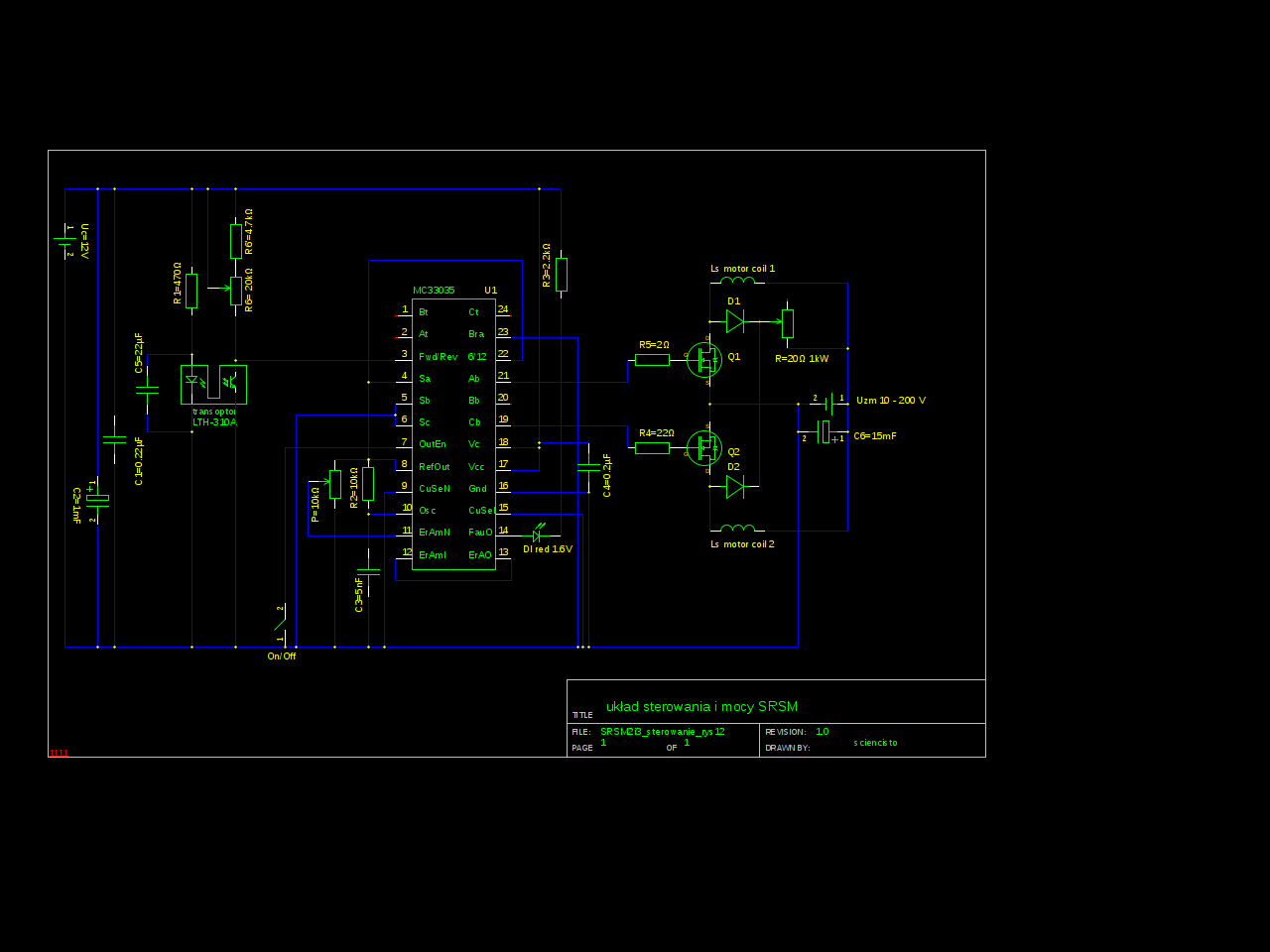
Flunn paralell path
An RPM test was uploaded, conducted a few months ago with the initial prototype of the PPMM, designated SRSM1. The video can be found on the YouTube channel of scienculo.
The RPM test involves measuring the rotational speed of a motor...
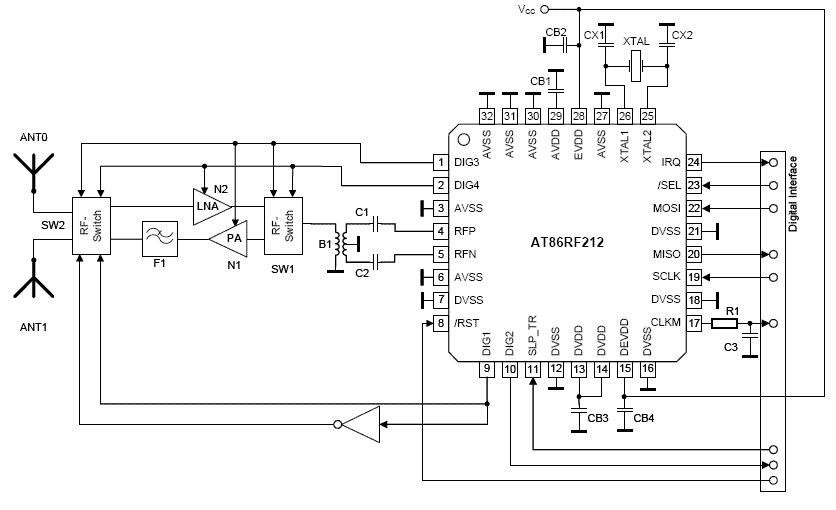
spi circuit
SPI Integrated Circuit Bus, IC Buses, an IC, Chip-to-Chip Bus Serial Peripheral Interface, Integrated Circuit Bus types, and IC Bus Electrical Interface Descriptions. The Peripheral Interface (SPI) circuit is a.
The Serial Peripheral Interface (SPI) is a synchronous serial communication protocol...

I2C Anemometer cheap wind data logger
The board is relatively simple and is based on a PCF8574, which provides the output of a CD 4040 counter to the I2C bus. A DIP switch is included to select the PCF8574 address, along with some LEDs for power...

digital thermometer or talk I2C to your atmel microcontroller
A prerequisite for this article is that the GCC AVR programming environment is installed as described in the article "Programming the AVR microcontroller with GCC, libc 1.0.4." To avoid installation issues, using the AVR programming CD is recommended. When utilizing...

24C32 32K 5.0V I2C Smart Serial EEPROM
This EEPROM programmer is designed to read, write, and erase 24C EEPROM devices. It features a PC serial port interface and requires a 5V DC power supply. The programmer can read or write one page (16 bytes) at a time...

I2C Interfacing Acceleration Sensing PCF8591
This section of the I2C interfacing project focuses on constructing an acceleration sensor while also addressing two additional aspects: the advanced application of the PCF8591 chip (previously discussed in the context of the pressure sensor) and operating the bus at...

1-Wire Barometer
Construction of a 1-Wire Barometer. This page shows the circuit and provides construction and calibration details. This barometer connects to a Dallas Semiconductor 1-Wire network.
The 1-Wire Barometer is designed to measure atmospheric pressure and transmit this data over a 1-Wire...