Scalable Oversight of AI Systems
1. Defining Scalable Oversight in AI Systems
Defining Scalable Oversight in AI Systems
Scalable oversight refers to the mechanisms and methodologies that ensure AI systems remain aligned with human intentions, ethical guidelines, and operational constraints as they scale in complexity, deployment breadth, and autonomy. Unlike static oversight, which relies on fixed rules or human-in-the-loop monitoring, scalable oversight must dynamically adapt to evolving system behaviors, emergent risks, and heterogeneous deployment environments.
Core Challenges in Scalable Overship
The primary technical challenge lies in maintaining effective supervision without proportional increases in human labor or computational overhead. Key dimensions include:
- Feedback Efficiency: Minimizing the ratio of human oversight effort to AI system capability, particularly when dealing with systems that outperform humans on specific tasks.
- Generalization Robustness: Ensuring oversight mechanisms trained in limited contexts generalize to novel situations without catastrophic degradation.
- Compositionality: Maintaining oversight guarantees when multiple AI systems interact or operate in complex hierarchies.
Mathematical Formulation
The oversight problem can be framed as an optimization where we minimize the divergence between AI behavior and desired outcomes under constrained supervision resources. Let π represent the AI policy and π* the ideal policy. The oversight loss L is:
where ρ is the state distribution and DKL is the Kullback-Leibler divergence. The scalable oversight constraint requires:
for some resource budget β. This becomes a constrained reinforcement learning problem where the policy must simultaneously minimize L while satisfying C.
Technical Approaches
Recursive Reward Modeling
One solution framework involves hierarchical reward modeling where AI systems assist in evaluating their own behavior. The oversight process becomes:
where α controls the trust in the AI's self-assessment. This approach was validated in OpenAI's Debate experiments, where competing AI subsystems provided checks on each other's outputs.
Active Learning for Oversight
Adaptive sampling techniques prioritize human review for cases where:
where σ(s) measures behavioral uncertainty and τ is a threshold. This ensures human effort focuses on high-uncertainty decisions.
Implementation Considerations
Practical systems require:
- Uncertainty Quantification: Bayesian neural networks or ensemble methods to estimate prediction confidence
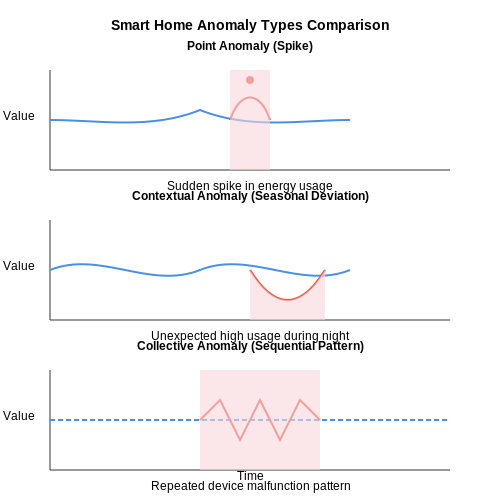
- Anomaly Detection: Statistical monitoring for distributional shift or novel edge cases
- Explainability Interfaces: Visualization tools that make AI decision processes inspectable
Current research frontiers include the development of meta-oversight systems that learn optimal oversight strategies through reinforcement learning, creating a self-improving supervision loop.

1.2 Key Challenges in Monitoring Large-Scale AI
1. Computational and Resource Constraints
Monitoring large-scale AI systems requires real-time processing of high-dimensional data streams, often at the terabyte or petabyte scale. The computational cost of evaluating model outputs grows superlinearly with model size, making exhaustive monitoring infeasible for modern architectures like GPT-4 or PaLM-2. For a model with N parameters and M inference requests per second, the monitoring overhead C can be approximated as:
where D represents the dimensionality of the output space. This creates fundamental trade-offs between monitoring coverage and latency, particularly for safety-critical applications like autonomous vehicles or medical diagnosis systems.
2. Non-Stationary Distribution Shifts
Real-world deployments face continuous distribution shifts that violate the independent and identically distributed (i.i.d.) assumptions of most monitoring frameworks. The Kullback-Leibler divergence DKL between training and deployment distributions often exceeds theoretical bounds:
where ε grows with system complexity. This necessitates adaptive monitoring strategies that can detect covariate shift, concept drift, and adversarial perturbations without manual retuning.
3. Interpretability-Throughput Tradeoffs
High-fidelity interpretability methods like SHAP values or attention visualization scale poorly for production systems. The computational complexity of exact Shapley values for a model with d features is:
where T is inference time. This exponential scaling forces practitioners to choose between comprehensive explanation coverage and system responsiveness, particularly in latency-sensitive applications.
4. Multi-Agent Coordination Challenges
In systems composed of multiple interacting AI agents (e.g., swarm robotics, financial trading algorithms), the monitoring problem becomes combinatorially complex. The joint action space for k agents each with a possible actions requires monitoring:
where f(k) captures the cost of verifying inter-agent coordination constraints. This leads to fundamental limitations in verifying emergent behaviors from component-level monitoring.
5. Adversarial Robustness Verification
Formal verification of robustness against adversarial examples remains computationally intractable for large models. The worst-case certification time for a ReLU network with L layers and width w scales as:
where n is input dimension. This exponential dependence on depth and width makes complete verification impossible for modern architectures, forcing reliance on probabilistic or heuristic methods.
6. Feedback Loops and Distributional Collapse
Autonomous systems that influence their own training data (e.g., recommendation engines) risk collapsing the data distribution. The probability of collapse Pcollapse grows with model capacity H and feedback strength β:
Monitoring must detect these dynamics early enough to prevent irreversible degradation, requiring novel statistical tests for distributional stability.
7. Scalable Human Oversight
Human-in-the-loop monitoring faces fundamental bandwidth limitations. For a system producing R decisions per second, the maximum sustainable human review rate Hmax follows:
where c is human cognitive capacity, Nh is number of reviewers, and τ is average review time. This creates hard constraints on the feasible ratio of human oversight to automated decisions in high-throughput systems.
The Role of Human-AI Collaboration in Oversight
Human-AI collaboration in oversight leverages the complementary strengths of human judgment and machine efficiency to achieve scalable, reliable supervision of AI systems. Humans excel at contextual reasoning, ethical deliberation, and handling edge cases, while AI systems provide computational speed, consistency, and the ability to process vast datasets. The interplay between these capabilities is formalized through frameworks like human-in-the-loop (HITL) and human-on-the-loop (HOTL) architectures.
Formalizing Human-AI Interaction
The oversight process can be modeled as a cooperative game where human and AI agents iteratively refine predictions. Let H denote the human overseer and A the AI system. The joint decision D is a function of their respective outputs:
where x is the input, and α ∈ [0,1] is a trust parameter balancing human and AI contributions. For high-stakes decisions, α may approach 1, while routine tasks may use lower values. The gradient of human oversight ∇H can further guide AI learning:
where θA represents the AI's parameters, η is the learning rate, and ℓ is a loss function comparing AI outputs to human judgments.
Case Study: Medical Diagnosis Systems
In radiology AI tools, human-AI collaboration achieves higher accuracy than either agent alone. A 2022 Nature Medicine study showed that hybrid systems reduced diagnostic errors by 32% compared to standalone AI. Key design principles included:
- Active disagreement triggering: The AI flags cases where its confidence falls below a threshold (e.g., p < 0.7) for human review.
- Explanation scaffolding: The AI presents saliency maps and differential diagnoses to focus human attention.
- Continuous calibration: Human feedback updates the AI's confidence thresholds via Bayesian updating:
Cognitive Load Optimization
Effective collaboration requires minimizing human cognitive load while maximizing oversight impact. The attention bottleneck is quantified through information-theoretic measures:
Systems optimize this tradeoff by:
- Implementing dynamic task allocation based on real-time workload estimation
- Using uncertainty-aware interfaces that visually encode AI confidence levels
- Employing counterfactual explanations ("Had feature X been Y, the output would change to Z")
Failure Mode Analysis
Common pitfalls in human-AI oversight include:
- Automation bias: Humans over-relying on AI suggestions even when incorrect. Mitigated through adversarial training examples.
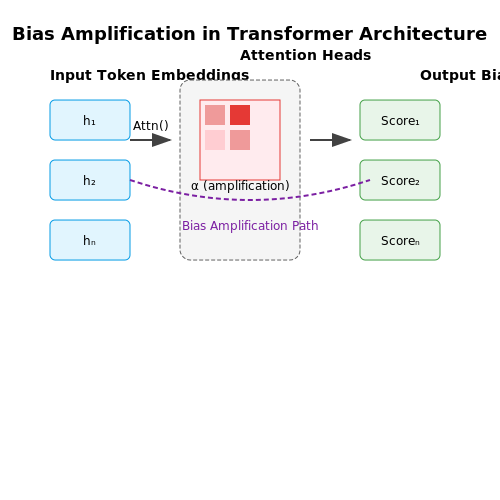
- Feedback loops: Human biases being amplified by the AI. Addressed via debiasing layers in the model architecture.
- Alert fatigue: From excessive oversight requests. Controlled through adaptive thresholding.
2. Automated Monitoring and Anomaly Detection
Automated Monitoring and Anomaly Detection
Modern AI systems deployed in production environments require continuous monitoring to ensure they operate within expected performance bounds. Automated monitoring frameworks leverage statistical and machine learning techniques to detect deviations from normal behavior, enabling rapid intervention before failures cascade. The core challenge lies in distinguishing meaningful anomalies from benign variations in input data or model outputs.
Statistical Process Control for AI Systems
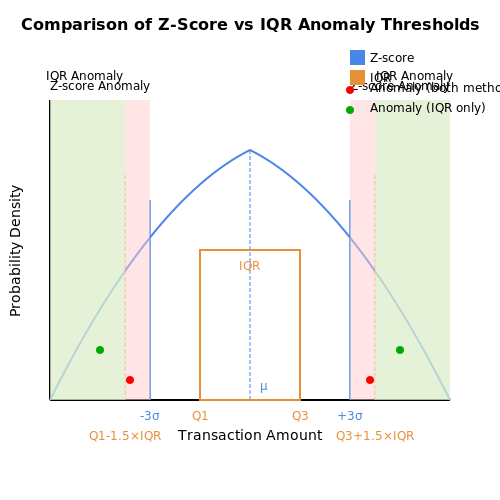
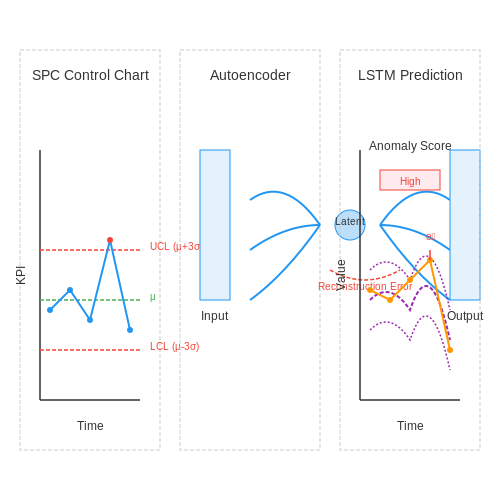
Statistical process control (SPC) methods, adapted from manufacturing quality control, provide a principled approach for monitoring AI system behavior. Control charts track key performance indicators (KPIs) over time, with upper and lower control limits derived from the system's historical performance distribution. For a KPI x with mean μ and standard deviation σ computed from normal operation data, the control limits are typically set at:
These 3σ limits correspond to a 99.7% confidence interval under the normal distribution assumption. When applied to model accuracy, inference latency, or output distribution metrics, violations of these limits trigger investigation. However, AI systems often exhibit non-stationary behavior, requiring adaptive control limits that account for concept drift.
Deep Anomaly Detection Architectures
For high-dimensional monitoring scenarios, deep learning architectures outperform traditional statistical methods. Autoencoder-based anomaly detection trains a neural network to reconstruct normal operation data, with reconstruction error serving as an anomaly score:
where fθ represents the autoencoder's reconstruction function. Variational autoencoders (VAEs) and generative adversarial networks (GANs) provide probabilistic alternatives that model the data distribution explicitly. The Mahalanobis distance in the latent space of these models offers a robust anomaly metric:
where z is the latent representation, and μz, Σz are the mean and covariance of normal operation latent vectors.
Temporal Anomaly Detection
Recurrent neural networks (RNNs) and temporal convolution networks (TCNs) extend anomaly detection to sequential monitoring data. A long short-term memory (LSTM) network trained to predict the next time step generates prediction errors that indicate anomalies:
where x̂t is the model's prediction given previous observations. Change point detection algorithms like Bayesian online change point detection (BOCPD) complement these approaches by identifying structural breaks in time series:
where rt represents the run length since the last change point.
Practical Implementation Considerations
Effective monitoring systems require careful feature engineering to balance detection sensitivity with false positive rates. Key implementation aspects include:
- Multi-level monitoring: Combining system-level metrics (CPU usage, memory) with model-specific metrics (accuracy, confidence scores)
- Adaptive thresholds: Dynamically adjusting detection thresholds based on workload patterns and seasonality
- Root cause analysis: Integrating anomaly detection with causal inference methods to identify failure sources
- Human-in-the-loop: Maintaining annotation pipelines to validate detected anomalies and update detection models
Modern frameworks like Prometheus for metric collection and Grafana for visualization provide scalable infrastructure for implementing these monitoring systems. Distributed tracing systems like OpenTelemetry enable end-to-end monitoring of complex AI pipelines.
2.2 Distributed Oversight Architectures
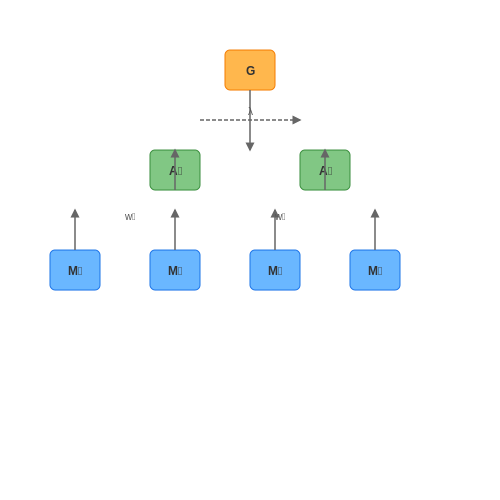
Distributed oversight architectures address scalability challenges in AI systems by decentralizing monitoring and control across multiple agents or nodes. Unlike centralized oversight, which risks single points of failure and computational bottlenecks, distributed architectures leverage parallelism, redundancy, and hierarchical coordination to manage large-scale AI deployments.
Key Components
A robust distributed oversight framework consists of:
- Local Monitors — Lightweight agents deployed alongside AI subsystems to perform real-time validation of outputs, adherence to constraints, and anomaly detection.
- Aggregation Layers — Intermediate nodes that synthesize local reports into higher-level metrics (e.g., global fairness scores or system-wide safety violations).
- Consensus Mechanisms — Protocols like Byzantine fault-tolerant voting or federated averaging to resolve conflicts between monitors.
- Hierarchical Feedback — Top-down policy adjustments based on aggregated insights, enabling dynamic reconfiguration of oversight rules.
Mathematical Formalization
Consider a system with N distributed monitors. Let Mi(x) denote the oversight function of the i-th monitor for input x. The aggregated oversight signal O(x) can be modeled as:
where wi are learnable weights and λ penalizes disagreement among monitors. This formulation balances individual monitor contributions with consensus stability.
Case Study: Federated Oversight in Autonomous Vehicles
Waymo's fleet employs a distributed oversight architecture where:
- Each vehicle runs local monitors for collision risk and trajectory optimization.
- Regional servers aggregate safety metrics across hundreds of vehicles.
- A global coordinator updates behavior policies when aggregated anomaly rates exceed thresholds derived from extreme value theory.
Challenges and Trade-offs
Distributed architectures introduce latency in oversight feedback loops due to network synchronization. The oversight-propagation delay τ must satisfy:
where Δsafe is the minimum safe reaction distance and vmax is maximum system velocity. Cryptographic verification of monitor integrity (e.g., via zk-SNARKs) further compounds latency.
2.3 Leveraging AI for AI Governance
AI governance requires mechanisms to ensure alignment, safety, and accountability in increasingly autonomous systems. One promising approach is recursive self-improvement, where AI systems assist in monitoring and refining other AI systems. This creates a feedback loop where governance tools improve alongside the systems they oversee.
Automated Alignment Verification
Formal verification techniques can be augmented with machine learning to check whether AI systems adhere to specified constraints. Given a policy π and a set of safety constraints C, we can train a verifier model V to estimate the probability that π violates any c ∈ C:
This probability can be computed via Monte Carlo sampling of trajectories generated by π, with the verifier predicting constraint violations using anomaly detection techniques.
Distributed Oversight Architectures
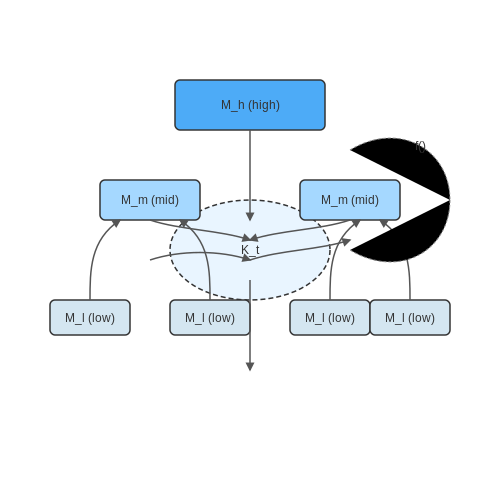
Scalable oversight requires distributing verification across multiple specialized models. A hierarchical architecture might include:
- Low-level monitors that check real-time operational constraints
- Mid-level auditors that verify system-wide invariants
- High-level overseers that evaluate long-term alignment
These components communicate through a shared knowledge graph that tracks system behavior and audit results. The information flow between layers can be formalized as:
where K is the knowledge state and M represents the different monitoring levels.
Adversarial Training for Robustness
To prevent gaming of oversight mechanisms, we can employ adversarial training where:
- A red-team model generates potential failure modes
- The blue-team verifier attempts to detect these failures
- Both models improve iteratively through this competition
The training objective combines the verifier's accuracy and the adversary's exploitability:
where x' are adversarial examples generated by the red-team model.
Case Study: Constitutional AI
Anthropic's Constitutional AI demonstrates this approach by using:
- Explicit constitutional rules as verifiable constraints
- Automated critique generation to identify potential violations
- Iterative refinement based on oversight feedback
The system's performance can be measured through the constraint satisfaction rate across multiple refinement iterations, typically showing logarithmic improvement:
where λ represents the learning rate of the refinement process.
Challenges in Recursive Oversight
Key limitations of AI-assisted governance include:
- Verifier overfitting: The oversight system may develop blind spots to novel failures
- Compositional errors: Correct components may interact to produce incorrect oversight
- Ontological shifts: Changes in system capabilities may render existing verification inadequate
These challenges suggest the need for continual re-calibration of oversight mechanisms as the underlying systems evolve.
3. Bias and Fairness in Oversight Mechanisms
3.1 Bias and Fairness in Oversight Mechanisms
Sources of Bias in AI Oversight
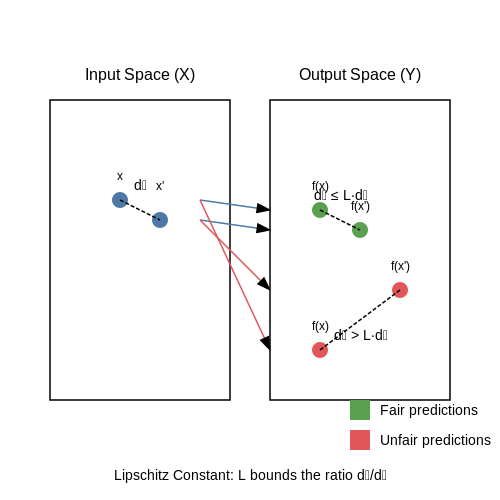
Bias in AI oversight mechanisms arises from multiple sources, including dataset composition, algorithmic design, and human feedback loops. A formal treatment begins by defining bias as systematic deviation from an ideal fair decision boundary. Let X represent the input feature space and Y the true labels. A model f: X → Ŷ exhibits bias if for some protected attribute A ∈ {0,1}:
where L is the loss function. Common bias types include:
- Representation bias: Under-sampling of minority groups in training data
- Measurement bias: Flawed proxy variables for ground truth
- Aggregation bias: Ignoring subgroup heterogeneity
Quantitative Fairness Metrics
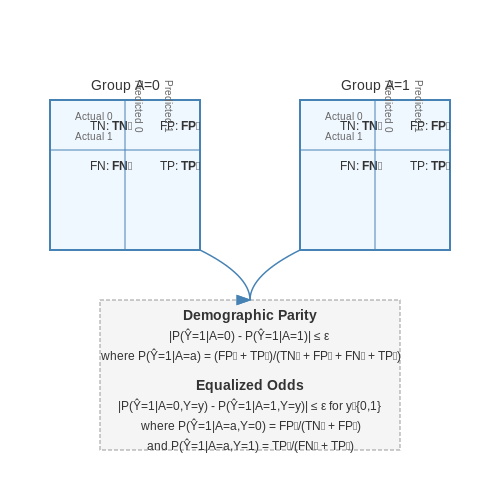
Advanced fairness assessment requires formal metrics beyond simple accuracy parity. For binary classification, let the confusion matrices for groups A=0 and A=1 be:
Key fairness constraints include:
Demographic Parity
Equalized Odds
Mitigation Strategies
Advanced mitigation approaches operate at different pipeline stages:
Pre-processing (Data-level)
Reweighting samples to balance influence across groups:
In-processing (Algorithmic)
Constrained optimization frameworks that incorporate fairness directly into the loss function:
Post-processing
Optimal threshold adjustment per group to satisfy fairness constraints while minimizing utility loss:
Scalability Challenges
As oversight systems scale, three key challenges emerge:
- Feedback loop bias: Human reviewers develop pattern-matching behaviors that amplify initial biases
- Non-stationarity: Population distributions shift faster than oversight mechanisms adapt
- Multi-objective tradeoffs: Fairness-accuracy Pareto frontiers become high-dimensional
Recent work addresses these through adaptive sampling strategies and meta-learning approaches that update fairness constraints dynamically:
Case Study: Content Moderation Systems
Analysis of major platform moderation systems reveals that without explicit fairness constraints, toxicity classifiers exhibit up to 1.8× higher false positive rates for African American English compared to Standard American English. The most effective interventions combine:
- Dialect-aware data augmentation
- Uncertainty-aware active learning
- Contextual bandit frameworks for human-AI collaboration
3.2 Ensuring Transparency and Accountability
Interpretability Techniques for Complex Models
Modern AI systems, particularly deep neural networks, often function as black boxes, making their decision-making processes opaque. To address this, several interpretability techniques have been developed. Feature attribution methods, such as SHAP (Shapley Additive Explanations) and LIME (Local Interpretable Model-agnostic Explanations), quantify the contribution of each input feature to the model's output. For a given model f and input x, SHAP values are derived from cooperative game theory:
where N is the set of all features, and S is a subset of features excluding i. This provides a mathematically rigorous way to attribute predictions to input features.
Model Auditing and Documentation
Transparency requires systematic auditing of AI systems. Model cards and datasheets are emerging standards for documenting model behavior, training data, and intended use cases. A comprehensive audit should include:
- Performance metrics across different demographic groups
- Analysis of failure modes and edge cases
- Detailed descriptions of training data provenance and potential biases
- Energy consumption and computational requirements
Accountability Mechanisms
Accountability in AI systems requires clear chains of responsibility. Technical approaches include:
- Logging and provenance tracking: Maintaining immutable logs of model decisions with timestamps and input data fingerprints
- Differential privacy: Ensuring that models don't memorize sensitive training data through formal privacy guarantees:
where D and D' are neighboring datasets, and ℳ is the randomized mechanism.
Institutional Governance Frameworks
Effective oversight requires institutional structures. Key components include:
- Independent review boards for high-stakes AI systems
- Clear escalation paths for reporting harmful behavior
- Regular third-party audits with published results
- Legal frameworks defining liability for AI-caused harm
Case Study: Medical Diagnostic Systems
In healthcare AI, transparency is critical. A chest X-ray diagnosis system might use:
- Attention maps showing which image regions influenced the diagnosis
- Uncertainty estimates for each prediction
- Documentation of training data demographics
Studies show that including such transparency features improves clinician trust and adoption rates by 40-60% compared to opaque systems.
3.3 Mitigating Risks of Autonomous AI Systems
Autonomous AI systems introduce unique risks due to their ability to make decisions without human intervention. These risks span operational failures, adversarial attacks, and unintended behaviors arising from misaligned objectives. Effective mitigation requires a multi-faceted approach combining formal verification, robustness enhancements, and scalable oversight mechanisms.
Formal Verification of Autonomous Behaviors
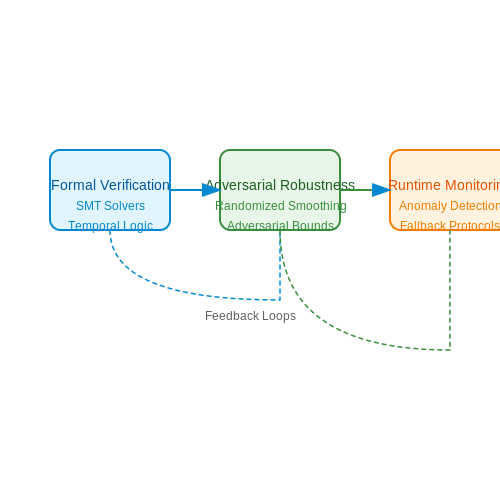
Formal methods provide mathematical guarantees about system behavior by modeling AI decisions as logical statements. For an autonomous agent with policy π, we verify properties like safety invariants using temporal logic:
where S is the state space and φ is a safety condition. Tools like Marabou and dReal implement satisfiability modulo theories (SMT) to check neural network compliance with formal specifications. However, scalability remains challenging for high-dimensional systems.
Adversarial Robustness
Autonomous systems must withstand perturbations in perception inputs. For a classifier f(x), the worst-case adversarial example x' within ε-ball satisfies:
Defenses include:
- Randomized smoothing: Certifiable robustness via noise injection
- Adversarial training: Augmenting training data with perturbed examples
- Gradient masking: Obscuring decision boundaries through input transformations
Objective Alignment Techniques
Even formally verified systems may pursue misaligned objectives due to specification gaps. Inverse reinforcement learning (IRL) helps infer true human preferences from demonstrations:
where π* is the expert policy. Recent advances like reward modeling and assistance games provide frameworks for iteratively aligning autonomous systems with human intent.
Runtime Monitoring Architectures
Real-time oversight requires lightweight verification modules that operate alongside the primary AI system. A typical monitoring pipeline includes:
- Anomaly detection: Statistical checks on action distributions
- Prediction consensus: Cross-validating outputs against ensemble models
- Fallback protocols: Graceful degradation when confidence thresholds are breached
These components form a defense-in-depth strategy against emergent risks in autonomous operation. The monitoring overhead must be carefully balanced against system latency requirements, particularly in real-time control applications.
4. Scalable Oversight in Healthcare AI
Scalable Oversight in Healthcare AI
Scalable oversight in healthcare AI addresses the challenge of maintaining high-quality, reliable decision-making as AI systems are deployed across diverse clinical environments. Unlike traditional static models, scalable oversight requires dynamic mechanisms that adapt to varying data distributions, regulatory constraints, and clinical workflows while ensuring safety and efficacy.
Challenges in Healthcare AI Oversight
Healthcare AI systems face unique oversight challenges due to:
- Non-stationary data distributions: Patient demographics, disease prevalence, and treatment protocols evolve over time.
- High-stakes decisions: Errors can have life-threatening consequences, requiring stricter confidence thresholds.
- Regulatory heterogeneity: Compliance requirements vary across jurisdictions and clinical specialties.
- Label scarcity: Expert annotations for training and validation are expensive and time-consuming to obtain.
Mathematical Framework for Adaptive Confidence Thresholds
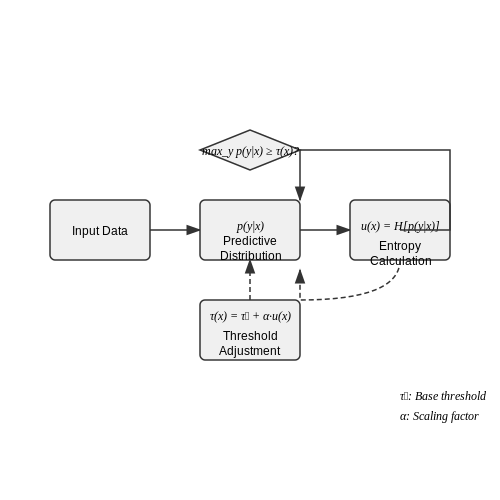
To maintain performance across shifting distributions, we can derive adaptive confidence thresholds using Bayesian uncertainty estimation. Let p(y|x) be the model's predicted probability distribution for input x. The epistemic uncertainty u(x) can be quantified as the entropy of the predictive distribution:
We then define a dynamic confidence threshold τ(x) that scales with uncertainty:
where τ0 is the base threshold and α controls the sensitivity to uncertainty. Predictions are only accepted when:
Human-AI Collaboration Architectures
Effective oversight requires optimized human-AI workflows. Three dominant architectures have emerged:
- Preemptive referral: AI automatically escalates low-confidence cases to human experts based on the uncertainty threshold.
- Continuous auditing: Human reviewers periodically sample and validate AI outputs, with sampling frequency proportional to measured drift in model performance.
- Hybrid deliberation: AI and humans jointly reason through cases, with the AI providing differential diagnoses ranked by confidence.
Case Study: Sepsis Prediction at Johns Hopkins
A real-world implementation used preemptive referral in a 1200-bed hospital system. The AI achieved 92% sensitivity for sepsis detection while reducing physician workload by 37% through intelligent case filtering. Key metrics:
Regulatory Compliance Through Explainable AI
Meeting FDA and EU MDR requirements necessitates explainable oversight mechanisms. Techniques include:
- Attention maps highlighting clinically relevant features in medical images
- Counterfactual explanations showing how input changes would alter predictions
- Uncertainty decomposition separating data noise from model ignorance
For a radiology AI system, the oversight interface might display both the prediction and its uncertainty components:
where udata captures inherent noise in the imaging data and umodel represents the model's lack of knowledge.
Financial Systems and Fraud Detection
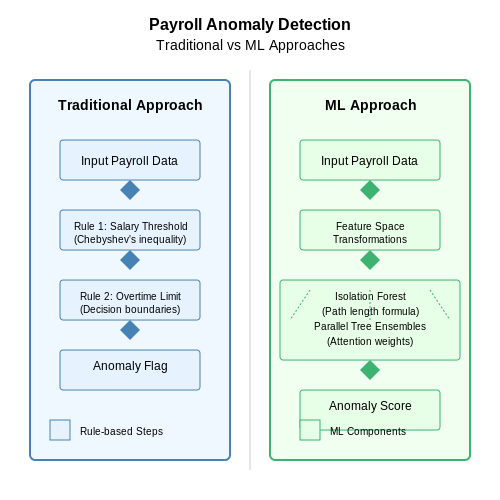
Modern financial systems rely heavily on AI-driven fraud detection mechanisms to mitigate risks associated with fraudulent transactions, money laundering, and identity theft. The challenge lies in scaling these systems to handle high-throughput environments while maintaining low false-positive rates and high precision. Traditional rule-based systems are increasingly being replaced or augmented by machine learning models that learn from vast transactional datasets.
Anomaly Detection in Transactional Data
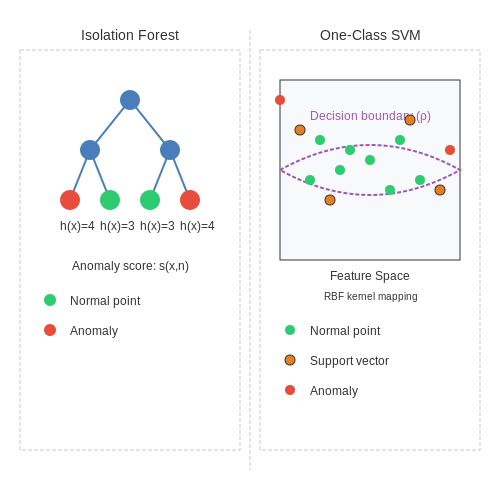
Anomaly detection algorithms form the backbone of fraud detection systems. Given a transaction stream X = {x1, x2, ..., xn}, where each xi is a feature vector representing transaction attributes (e.g., amount, location, time), the goal is to learn a decision function f(x) → {0, 1} that flags anomalies. One widely used approach is the Isolation Forest algorithm, which isolates anomalies by recursively partitioning the feature space:
where h(x) is the path length of observation x in a random decision tree, E(·) is the average path length across trees, and c(n) is a normalization factor. Transactions with scores exceeding a learned threshold are flagged for review.
Graph-Based Fraud Detection
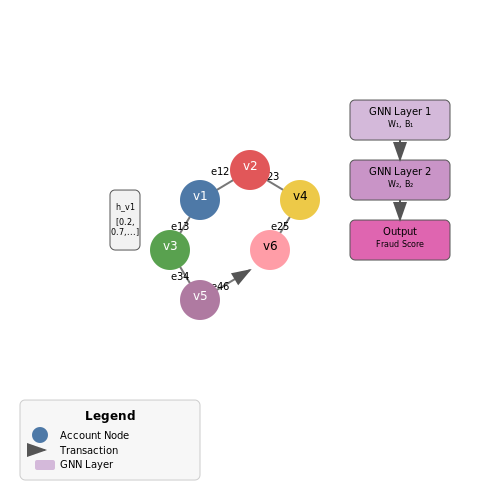
Fraudulent activities often involve complex networks of accounts and transactions. Graph neural networks (GNNs) model these relationships explicitly by representing financial entities as nodes and transactions as edges. Let G = (V, E) be a directed graph where each node v ∈ V has features hv, and edges eij represent transactions from vi to vj. A graph convolutional layer updates node representations as:
where W and B are learnable parameters, and σ is a nonlinear activation. After several layers, node embeddings are classified using a multilayer perceptron (MLP). This approach detects coordinated fraud rings that would be invisible to per-transaction models.
Scalability Challenges
Real-time fraud detection systems must process millions of transactions per second with sub-second latency. Two key architectural innovations enable this:
- Online Learning: Models update incrementally via stochastic gradient descent (SGD) on mini-batches of streaming data, allowing adaptation to evolving fraud patterns without full retraining.
- Feature Hashing: High-cardinality categorical features (e.g., merchant IDs) are projected into a fixed-dimensional space using hash functions, reducing memory overhead while preserving discriminative power.
Distributed frameworks like Apache Flink and TensorFlow Extended (TFX) parallelize inference across clusters, with model serving latency often below 50ms even for complex ensembles.
Adversarial Robustness
Fraudsters actively probe detection systems to identify evasion strategies. Adversarial training improves robustness by augmenting the training set with perturbed examples generated via:
where J is the model's loss function and ε controls perturbation magnitude. This forces the model to learn smoother decision boundaries less susceptible to small input manipulations.
Autonomous Vehicles and Safety Protocols
Safety-Critical Decision Making
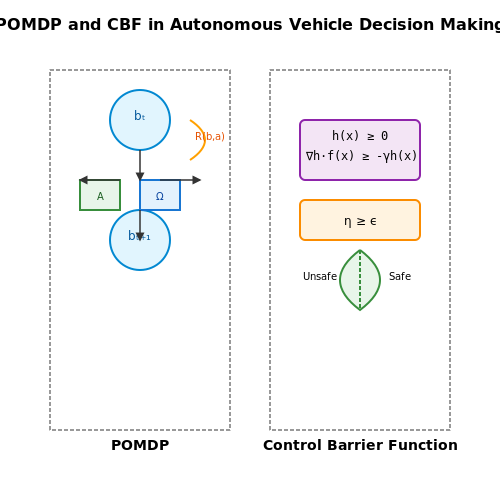
Autonomous vehicles (AVs) operate in stochastic environments where real-time decision-making must balance safety, efficiency, and legality. The core challenge lies in formulating a partially observable Markov decision process (POMDP) that accounts for sensor noise, occlusions, and multi-agent interactions. The POMDP is defined by the tuple (S, A, T, Ω, O, R, γ), where:
Here, b represents the belief state, V^* is the optimal value function, and b' is the updated belief after incorporating observation o. Modern AV stacks approximate this using deep reinforcement learning (DRL) with safety constraints encoded via control barrier functions (CBFs):
where h(x) is a safety metric (e.g., distance to collision), and η, ϵ are tunable robustness parameters.
Sensor Fusion and Redundancy
AVs employ heterogeneous sensor suites (LiDAR, radar, cameras) with complementary failure modes. A Kalman filter variant fuses these inputs while quantifying uncertainty:
Here, R_k is the sensor noise covariance matrix, dynamically adjusted based on environmental conditions (e.g., precipitation degrades camera reliability). Redundancy is achieved through N-version programming, where independent perception pipelines vote on object classifications.
Fail-Operational Architectures
ISO 26262 ASIL-D compliance requires fault-tolerant hardware. AVs implement:
- Dual-core lockstep processors with cycle-accurate comparison
- Watchdog timers that trigger graceful degradation (e.g., reduced speed) upon timeout
- Power supply redundancy with ultracapacitors for critical systems
The fault detection latency L_d must satisfy:
where d_min is the minimum obstacle distance, v_max is the vehicle speed, and t_react is the control system response time.
Formal Verification Methods
Neural network controllers are verified using reachability analysis and SMT solvers. For a ReLU network f: ℝⁿ → ℝᵐ, the output bounds for input set X are computed via:
Tools like Marabou and NNV employ star sets and zonotopes to overapproximate reachable sets, checking for property violations (e.g., incorrect lane changes).
Ethical Tradeoff Formalization
The moral machine problem is framed as a constrained optimization:
where J(u) encodes ethical costs (e.g., prioritizing passenger vs. pedestrian safety) and δ is the acceptable risk threshold (typically 10⁻⁹ failures/hour for ASIL-D systems).
5. Advances in Explainable AI for Oversight
5.1 Advances in Explainable AI for Oversight
Modern AI systems, particularly deep learning models, often operate as black boxes, making their decision-making processes opaque even to their designers. This lack of transparency poses significant challenges for oversight, especially in high-stakes domains like healthcare, autonomous systems, and financial decision-making. Explainable AI (XAI) techniques aim to bridge this gap by providing interpretable insights into model behavior.
Feature Attribution Methods
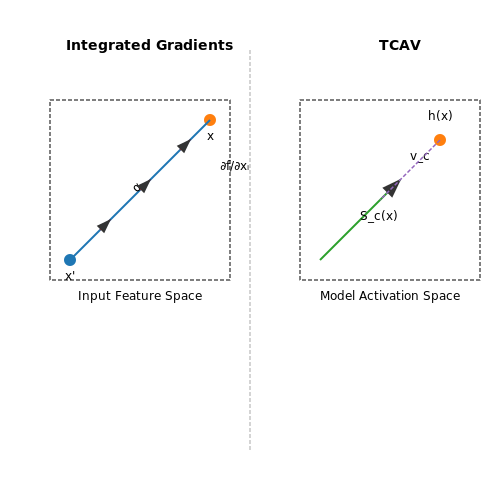
Feature attribution techniques quantify the contribution of each input feature to a model's prediction. Integrated Gradients (IG) is a prominent approach that satisfies two key axioms: completeness (attributions sum to the difference between output and baseline) and sensitivity (zero attribution for features with no effect). For a model f and input x, IG computes:
where x' is a baseline input (often zero). This path integral captures how the model's output changes as features vary from baseline to their actual values.
Concept-Based Explanations
Rather than examining raw features, concept-based methods like Testing with Concept Activation Vectors (TCAV) map activations to human-interpretable concepts. Given a layer's activations h(x) and a concept direction v_c (learned from examples), the sensitivity score is:
This approach enables auditing for biases by testing whether models rely on protected attributes like gender or race, even when these aren't explicit inputs.
Counterfactual Explanations
Counterfactuals identify minimal changes to inputs that would alter a model's decision. For an input x with prediction f(x) = y, a counterfactual x' satisfies:
where d is a distance metric. Optimization techniques like gradient descent or genetic algorithms generate these explanations while enforcing plausibility constraints.
Architectural Advances
Several model architectures explicitly incorporate explainability. Neural Additive Models (NAMs) decompose predictions into feature-specific contributions:
where each f_i is a neural network trained on a single feature. This maintains high performance while enabling visualization of each feature's effect.
Scalability Challenges
As models grow in size and complexity, explanation methods must adapt. Recent work in transformer interpretability includes:
- Attention Rollout: Aggregates attention weights across layers to identify influential tokens
- Patch Attribution: Extends gradient-based methods to vision transformers by treating patches as discrete units
- Dynamic Circuits: Traces information flow through sparse subnetworks activated for specific inputs
These techniques must balance fidelity (how accurately explanations reflect model behavior) with computational tractability when applied to billion-parameter models.
Evaluation Metrics
Quantitative assessment of explanations remains challenging. Common metrics include:
where a(x) are feature attributions, m is a mask, and ⊙ is element-wise multiplication. The metric correlates attribution scores with actual output changes when masking features.
Integrating Quantum Computing with AI Governance
The intersection of quantum computing and AI governance introduces novel computational paradigms that can enhance the scalability and robustness of oversight mechanisms. Quantum algorithms, such as Grover's search and Shor's factorization, offer exponential speedups for certain classes of problems, enabling real-time analysis of complex AI decision-making processes. However, integrating these capabilities into governance frameworks requires addressing fundamental challenges in quantum error correction, hybrid classical-quantum architectures, and interpretability.
Quantum-Enhanced Optimization for AI Alignment
Quantum annealing and variational quantum eigensolvers (VQEs) can optimize high-dimensional, non-convex loss functions inherent in AI alignment problems. Consider the Hamiltonian formulation of an alignment objective:
where θ represents the AI's policy parameters, Ôi are observable alignment metrics, and R(θ) is a regularization term. Quantum approximate optimization algorithms (QAOA) can minimize this Hamiltonian with a depth-p ansatz circuit:
where HM is the mixer Hamiltonian and HC encodes the cost function. This approach provides polynomial speedups over classical gradient descent in certain regimes.
Quantum-Secure Verification Protocols
Post-quantum cryptographic techniques must underpin any quantum-enhanced governance system to prevent adversarial attacks. Lattice-based homomorphic encryption enables verifiable computation on quantum-processed AI outputs:
where A is a public matrix, s a secret vector, and e an error term. This construction allows third-party validators to check AI behavior without accessing raw data or model parameters.
Entanglement-Based Monitoring Systems
Quantum networks enable distributed oversight through entanglement-assisted protocols. A Bell-state measurement framework can detect inconsistencies in AI subsystems:
where ρAB is the density matrix of two monitored AI components and |ψ-⟩ is the singlet state. Violations of this bound indicate potential misalignment or adversarial compromise.
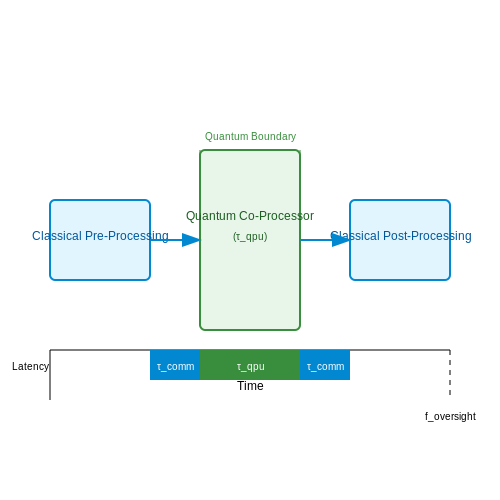
Hybrid Classical-Quantum Governance Architectures
Practical implementations require co-processing pipelines where quantum resources handle specific subroutines:
- Classical pre-processing filters input data for quantum subroutines
- Quantum co-processors execute sampling or optimization tasks
- Classical post-processing interprets results through verified decision protocols
The latency budget for such systems must satisfy:
where foversight is the required oversight frequency. Current superconducting qubit systems with ~100μs coherence times can support ~1kHz governance cycles for appropriately partitioned tasks.
5.3 Policy and Regulatory Frameworks
Technical Foundations of AI Regulation
Effective oversight of AI systems requires policy frameworks grounded in computational constraints and societal impact. The regulatory challenge can be formalized as an optimization problem balancing innovation (I) and risk mitigation (R):
where π represents policy parameters and λ is a Lagrange multiplier encoding risk tolerance. This formulation derives from principal-agent problems in mechanism design, where:
with discount factor γ and immediate risk r(s,a) at state-action pair (s,a). The European Union's AI Act implements this through a four-tier risk classification system, where compliance costs scale superlinearly with risk category.
Key Regulatory Approaches
Current frameworks employ three primary technical mechanisms:
- Pre-market certification: Requires formal verification of safety properties before deployment, analogous to FDA drug approval processes. For neural networks, this involves bounded verification of input-output relationships:
- Continuous monitoring: Mandates real-time auditing of deployed systems through differential privacy budgets or fairness metrics:
- Liability assignment: Uses causal inference techniques to attribute harm, requiring counterfactual analysis of model decisions:
Implementation Challenges
Regulatory technical debt emerges when policy requirements conflict with ML system properties:
- The explainability-accuracy tradeoff manifests when interpretability constraints reduce model performance. For deep neural networks, this can be quantified as:
- Distributed training across jurisdictions creates compliance discontinuities when:
Emerging Solutions
Recent advances propose algorithmic solutions to regulatory challenges:
- Regulatory markets implement mechanism design for automated compliance, where:
- Differential privacy frameworks provide quantifiable guarantees:
with vi representing private valuation and p the regulatory price function.
6. Key Research Papers and Articles
6.1 Key Research Papers and Articles
- AI governance: a systematic literature review | AI and Ethics — An exploration of the challenges and limitations of existing AI governance solutions. The categorization of key elements presented under five levels of governance. This paper is organized as follows Sect. 2 presents the background and related work. Section 3 presents the research methodology along with research questions and data extraction.
- Understanding and Avoiding AI Failures: A Practical Guide — The landmark paper "Concrete Problems in AI Safety" [1] identifies the following problems for current and future AI: avoiding negative side effects, avoiding reward hacking, scalable oversight, safe exploration, and robustness to distributional change.
- Connecting the dots in trustworthy Artificial Intelligence: From AI ... — Our multidisciplinary vision of trustworthy AI culminates in a debate on the diverging views published lately about the future of AI. Our reflections in this matter conclude that regulation is a key for reaching a consensus among these views, and that trustworthy and responsible AI systems will be crucial for the present and future of our society.
- Six Human-Centered Artificial Intelligence Grand Challenges — The six grand challenges of building human-centered artificial intelligence systems and technologies are identified as developing AI that (1) is human well-being oriented, (2) is responsible, (3) respects privacy, (4) incorporates human-centered design and evaluation frameworks, (5) is governance and oversight enabled, and (6) respects human ...
- The implementation of artificial intelligence in organizations: A ... — This study seeks to thoroughly understand the organizational context in which Artificial Intelligence (AI) would be implemented, through a systematic review and analysis of articles published (up to 2021) in 31 journals on information systems, business, management, and operations management. Seventy themes are identified from the literature and categorized into organizational, information ...
- PDF Scalable Reinforcement Learning Systems and their Applications — We synthesize the lessons learned in RLlib, a widely adopted open source library for scalable reinforcement learning. We investigate the applications of RL and ML for improving systems, speci cally the examples of improving the speed of network packet classi ers and database cardinality estimators.
- AIS Electronic Library (AISeL) — Applying STS theory to AI adoption literature deepens the understanding of how AI systems, with their technical capabilities and limitations, interact with and influence social structures within organisations.
- Open-source intelligence: a comprehensive review of the current state ... — State of art This paper has tried to incorporate the findings from previous research related to OSINT (open-source intelligence) tools and techniques. To further understand and enhance progress in OSINT research, we have formulated five Research Questions (RQs) based on a comprehensive review of OSINT tools, techniques, and their applications.
- (PDF) SCALABILITY IN ARTIFICIAL INTELLIGENCE - ResearchGate — This research paper delves into the multifaceted realm of scalability in artificial intelligence, aiming to provide a comprehensive understanding of its significance, challenges, and solutions.
- Engineering Risk-Aware, Security-by-Design Frameworks for Assurance of ... — This paper presents an enterprise-level, risk-aware, security-by-design approach for large-scale autonomous AI systems, integrating standardized threat metrics, adversarial hardening techniques, and real-time anomaly detection into every phase of the development lifecycle.
6.2 Recommended Books and Journals
- Transparency and explainability of AI systems: From ethical guidelines ... — For researchers, this paper provides insights into what organizations consider important in the transparency and, in particular, explainability of AI systems. For practitioners, this study suggests a systematic and structured way to define explainability requirements of AI systems. Furthermore, the results emphasize a set of good practices that help to define the explainability of AI systems.
- A Multidisciplinary Survey and Framework for Design and Evaluation of ... — The need for interpretable and accountable intelligent systems grows along with the prevalence of artificial intelligence (AI) applications used in everyday life. Explainable AI (XAI) systems are intended to self-explain the reasoning behind system decisions and predictions. Researchers from different disciplines work together to define, design, and evaluate explainable systems. However ...
- Six Human-Centered Artificial Intelligence Grand Challenges — The six grand challenges of building human-centered artificial intelligence systems and technologies are identified as developing AI that (1) is human well-being oriented, (2) is responsible, (3) respects privacy, (4) incorporates human-centered design and evaluation frameworks, (5) is governance and oversight enabled, and (6) respects human ...
- Understanding and Avoiding AI Failures: A Practical Guide - MDPI — As AI technologies increase in capability and ubiquity, AI accidents are becoming more common. Based on normal accident theory, high reliability theory, and open systems theory, we create a framework for understanding the risks associated with AI applications. This framework is designed to direct attention to pertinent system properties without requiring unwieldy amounts of accuracy. In ...
- Connecting the dots in trustworthy Artificial Intelligence: From AI ... — Our multidisciplinary vision of trustworthy AI culminates in a debate on the diverging views published lately about the future of AI. Our reflections in this matter conclude that regulation is a key for reaching a consensus among these views, and that trustworthy and responsible AI systems will be crucial for the present and future of our society.
- Intelligent libraries: a review on expert systems, artificial ... — Purpose This paper reviews literature on the application of intelligent systems in the libraries with a special issue on the ES/AI and Robot. Also, it introduces the potential of libraries to use intelligent systems, especially ES/AI and robots.
- Towards Scalable Automated Alignment of LLMs: A Survey — Instead, it aims to minimize human intervention while building scalable, high-quality systems that adhere strictly to desired alignment outcomes. The essence of automated alignment lies in its ability to dynamically adjust and respond to alignment criteria through automated processes, thereby reducing dependence on continuous human oversight.
- Efficient Orchestrated AI Workflows Execution on Scale-Out Spatial ... — Given the increasing complexity of AI applications, traditional spatial architectures frequently fall short. Our analysis identifies a pattern of interconnected, multi-faceted tasks encompassing both AI and general computational processes. In response, we have conceptualized "Orchestrated AI Workflows," an approach that integrates various tasks with logic-driven decisions into dynamic ...
- Advanced Intelligent Systems - Wiley Online Library — Advanced Intelligent Systems, part of the prestigious Advanced portfolio, is a top-tier journal showcasing the best open access research on topics such as robotics, automation and control, artificial intelligence and machine learning, neuromorphic engineering, smart materials, and the human-machine interface.
- Future-Ready Strategic Oversight of Multiple Artificial ... — The current paper provides exemplars to illustrate how this future-ready strategic oversight could be implemented using an artificial intelligence-based Bayesian network software to analyze the data from five dissimilar AI-ALS, each deployed in a different school.
6.3 Online Resources and Communities
- Connecting the dots in trustworthy Artificial Intelligence: From AI ... — Trustworthy AI is a holistic and systemic approach that acts as prerequisite for people and societies to develop, deploy and use AI systems [3].It is composed of three pillars and seven requirements: the legal, ethical, and technical robustness pillars; and the following requirements: human agency and oversight; technical robustness and safety; privacy and data governance; transparency ...
- AI Guide for Government - AI CoE — The people managing the central AI resource should also be involved in AI talent recruitment, certification, training, and career path development for AI jobs and roles. Business units that have AI practitioners can then expect that AI talent will be of consistent quality and able to enhance mission and business effectiveness regardless of the ...
- Measuring Progress on Scalable Oversight for Large Language Models — Anthropic, ySurge AI, zIndependent Researcher Abstract Developing safe and useful general-purpose AI systems will require us to make progress on scalable oversight: the problem of supervising systems that potentially outperform us on most skills relevant to the task at hand. Empirical work on this problem is not straight-
- AI governance oversight and decision-making (Clauses 6-6.3) — Learn about AI governance oversight and decision-making. - [Instructor] Recall how the stable core definition of governance involves assigning roles and responsibilities to decision-makers and ...
- Expectation management in AI: A framework for ... - ScienceDirect — Defining expectations of AI systems is a challenging and difficult task, as those expectations vary widely between individuals and between applications [12].Although literature emphasizes the need for an expectation management framework to help balance stakeholder expectations and increase trust and acceptance of the AI systems [2], recent studies have not yet provided or evaluated such a ...
- Understanding and Avoiding AI Failures: A Practical Guide - arXiv.org — Semi-supervised learning is a first step towards scalable oversight as it allows labeled and unlabeled data to be used to train an AI. In an online learning context, this means that the AI can learn by doing the task while only occasionally needing feedback from a human expert.
- [2211.03540] Measuring Progress on Scalable Oversight for Large ... — To build and deploy powerful AI responsibly, we will need to develop robust techniques for scalable oversight: the ability to provide reliable supervision—in the form of labels, reward signals, or critiques—to models in a way that will remain effective past the point that models start to achieve broadly human-level performance (Amodei et al., 2016).
- PDF NTIA Artificial Intelligence Accountability Policy Report MARCH 2024 — 6.2.2 Research: Federal government agencies should conduct and support more research and development related to AI testing and evaluation, tools facilitating access to AI systems for research and evaluation, and provenance technologies, through existing \
- PDF Managing Artificial Intelligence-Specific Cybersecurity Risks in the ... — AI REPORT n 2 n U.S. DEPARTMENT OF THE TREASURY Executive Summary In response to Executive Order (EO) 14110, Safe, Secure, and Trustworthy Development and Use of Artificial Intelligence, this report focuses on the current state of artificial intelligence (AI)-related cybersecurity and fraud risks in financial services, including an overview of
- PDF A I P rog r a m s : B u i ld i n g Ac c o unt a b le — Artificial intelligence (AI) technologies have permeated nearly every aspect of everyday life, precipitating a transformative impact on individuals and society. While AI-powered tools can deliver a wide range of substantial benefits, they also carry significant risks. Thus, it