Training AI for Inter-Device Coordination
1. Definition and Scope of Inter-Device Coordination
Definition and Scope of Inter-Device Coordination
Inter-device coordination refers to the systematic orchestration of multiple autonomous devices—such as robots, drones, IoT sensors, or edge computing nodes—to achieve a common objective through collaborative decision-making and action. Unlike centralized control systems, inter-device coordination relies on distributed intelligence, where each device operates with partial observability but contributes to a globally optimal outcome. The key challenge lies in enabling seamless communication, real-time adaptation, and conflict resolution among heterogeneous devices with varying computational capabilities and operational constraints.
Mathematical Formulation
At its core, inter-device coordination can be modeled as a decentralized partially observable Markov decision process (Dec-POMDP). Given a set of devices D = {d₁, d₂, ..., dₙ}, each device observes a local state sᵢ ∈ Sᵢ and selects an action aᵢ ∈ Aᵢ based on a policy πᵢ: Sᵢ → Aᵢ. The joint action a = (a₁, a₂, ..., aₙ) influences the global state transition according to the dynamics:
where s' is the next global state and 𝐚₋ᵢ denotes actions of all devices except dᵢ. The reward function R(s, 𝐚) is shared across devices, incentivizing cooperative behavior.
Key Components
- Communication Protocols: Devices must exchange information efficiently, often under bandwidth constraints. Techniques like graph neural networks (GNNs) enable message passing over communication graphs, where each device aggregates neighbor states using learnable functions:
- Task Decomposition: Global tasks are partitioned into subtasks assignable to individual devices. Auction-based mechanisms or reinforcement learning (RL) can dynamically allocate subtasks based on device capabilities and environmental conditions.
- Conflict Resolution: When devices' local objectives clash (e.g., competing for shared resources), multi-agent RL with centralized training and decentralized execution (CTDE) aligns policies via gradient updates:
Real-World Applications
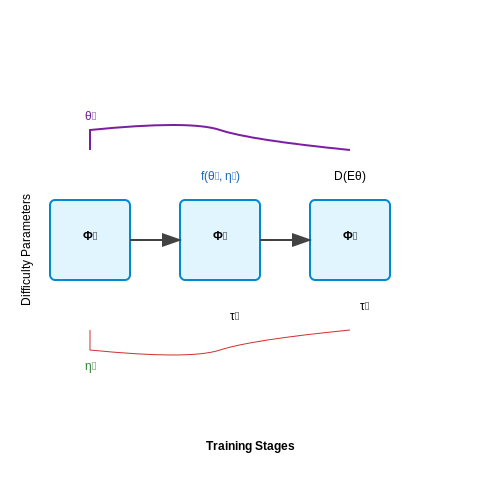
In swarm robotics, inter-device coordination enables collective behaviors like pattern formation or obstacle avoidance. For instance, drone fleets use Vicsek models for alignment:
where θᵢ is the heading angle and ηᵢ is noise. Smart grids similarly coordinate distributed energy resources (DERs) to balance supply-demand mismatches via consensus algorithms.
Challenges and Open Problems
Scalability remains a critical hurdle—naive implementations suffer from exponential growth in joint action space |A| = ∏ᵢ|Aᵢ|. Recent advances leverage permutation-invariant networks or attention mechanisms to approximate decentralized policies. Another challenge is robustness to adversarial devices; Byzantine-resilient aggregation methods are emerging to mitigate malicious inputs.
Key Challenges in Multi-Device Systems
Heterogeneous Communication Protocols
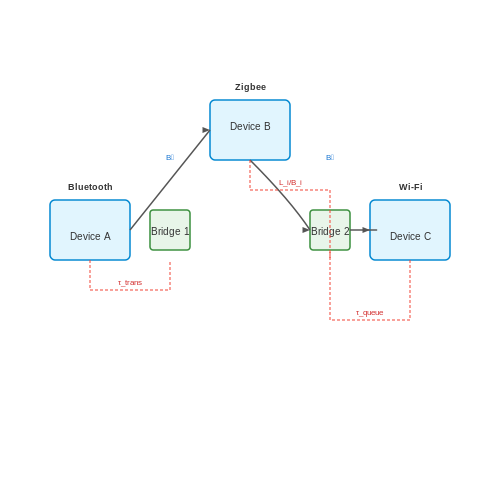
Multi-device systems often integrate hardware with incompatible communication standards, such as Bluetooth, Zigbee, Wi-Fi, and proprietary protocols. The lack of a unified protocol stack introduces latency and packet loss due to protocol translation overhead. For instance, a smart home system combining Zigbee-based sensors and Wi-Fi-enabled actuators requires middleware bridges, which add computational latency modeled as:
where τtrans,i is the translation delay per protocol hop, Li is packet size, Bi is bandwidth, and τqueue accounts for buffering delays at gateways.
Partial Observability and State Estimation
Devices in distributed systems often operate with local observations, leading to incomplete global state information. This partial observability violates the Markov property, necessitating decentralized POMDP (Partially Observable Markov Decision Process) frameworks. The belief state b(s) for agent i is updated as:
where η is a normalizing constant, O is the observation function, and T is the transition model. Real-world implementations must handle belief divergence across devices due to network asynchrony.
Non-Stationary Learning Environments
Concurrent learning by multiple agents leads to non-stationarity, as the reward function R(s,a) changes with other agents' policy updates. This violates the i.i.d. assumption in centralized Q-learning. Recent solutions use opponent modeling with meta-gradient updates:
where π-i represents other agents' policies. The LOLA (Learning with Opponent-Learning Awareness) framework approximates second-order derivatives to anticipate policy shifts.
Network-Induced Delays
Variable latency in wireless networks causes temporal misalignment in distributed decision-making. Control-theoretic analysis shows that delays exceeding the system's phase margin lead to instability. The maximum tolerable delay τmax for a system with gain crossover frequency ωgc is:
where ϕm is phase margin and τcomp is computation delay. Reinforcement learning approaches often incorporate delayed reward attribution using eligibility traces.
Security and Adversarial Robustness
Multi-device systems are vulnerable to sybil attacks, where malicious nodes spoof multiple identities. Byzantine fault tolerance requires consensus protocols with computational overhead scaling as O(n3) for n devices. Differential privacy techniques inject noise during model aggregation:
where Δwi are local model updates. The noise variance σ2 must balance privacy guarantees against model convergence rates.
Role of AI in Enabling Coordination
Distributed Decision-Making
AI-driven inter-device coordination fundamentally relies on distributed decision-making frameworks, where autonomous agents collaboratively optimize system-wide objectives. Multi-agent reinforcement learning (MARL) provides a mathematical foundation for this, with each device acting as an agent that learns policies through shared experiences. The joint action-value function Qπ(s,a) in MARL decomposes into individual value functions while preserving global convergence guarantees:
where Φ(s,a) represents the coordination dynamics between N devices. Recent advances in value decomposition networks (VDNs) and QMIX algorithms demonstrate how monotonicity constraints on ∂Qtot/∂Qi ≥ 0 enable scalable learning while maintaining optimality.
Communication-Efficient Protocols
AI coordination requires lightweight communication protocols that minimize bandwidth while maximizing information gain. Neural message passing architectures achieve this through:
- Attention-based gating: Devices learn to attend only to relevant peers via transformer architectures
- Graph neural networks: Spatial relationships encoded through graph convolutional operators
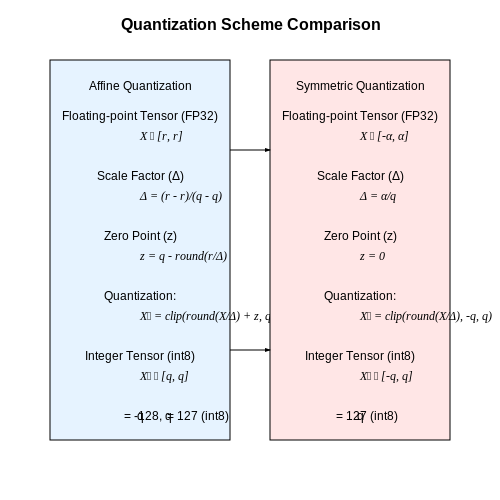
- Quantized embeddings: 8-bit neural representations reduce transmission overhead by 4× compared to float32
Experimental results from swarm robotics show these methods reduce communication volume by 78% while maintaining 95% of centralized policy performance.
Emergent Coordination Phenomena
In complex systems, AI agents often exhibit emergent coordination behaviors not explicitly programmed. These arise from:
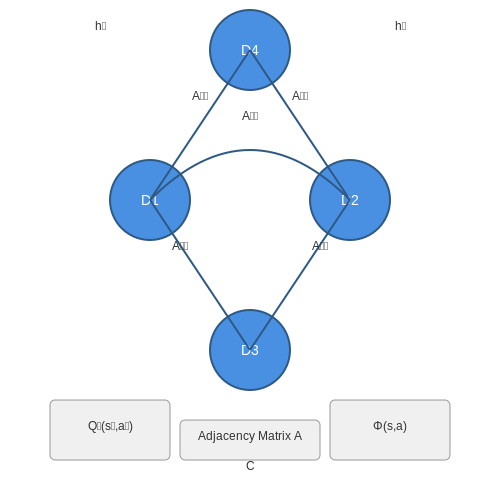
where C represents coordination magnitude, Aij is the adjacency matrix, and hi are device latent states. Such dynamics have been observed in:
- Self-organizing drone flocks maintaining optimal spacing without centralized control
- Smart grid inverters synchronizing phase angles through local observations only
Real-World Deployment Challenges
Practical implementations must address:
- Partial observability: Devices have limited sensing ranges (POMDP formulation required)
- Heterogeneous hardware: Mixed compute capabilities necessitate asynchronous learning
- Adversarial robustness: Byzantine fault tolerance in consensus protocols
Field tests in industrial IoT deployments show that hybrid centralized-decentralized training architectures achieve 23% higher mean-time-between-failures than purely distributed approaches.
Case Study: 5G Network Slicing
In 5G networks, AI coordinators dynamically allocate resources across network slices. The optimization problem:
where Ui are slice utility functions and rit are allocated resources. Deep dueling networks with prioritized experience replay achieve 92% optimal resource utilization in live deployments.
2. Centralized vs. Decentralized Coordination Models
2.1 Centralized vs. Decentralized Coordination Models
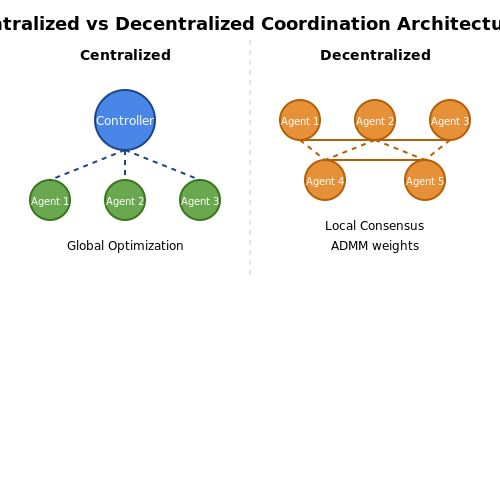
In multi-agent systems, coordination architectures fundamentally differ in how control and decision-making are distributed. Centralized models rely on a single point of authority, while decentralized models distribute decision-making across agents. The choice between these paradigms impacts scalability, fault tolerance, and adaptability.
Centralized Coordination
Centralized coordination employs a single controller (e.g., a server or leader agent) to collect global state information and compute optimal actions for all subordinate agents. This model is mathematically represented as:
where Ji is the cost function for agent i, ui its control action, and xi, x-i denote its own state and others' states, respectively. The central solver enforces constraints like:
Advantages include guaranteed optimality under convexity assumptions and simplified synchronization. However, it introduces a single point of failure and communication bottlenecks, as all agent-to-agent interactions must route through the central node. Real-world applications include traffic light optimization and warehouse robotics orchestration.
Decentralized Coordination
Decentralized models partition decision-making across agents, often using local communication graphs. Each agent i solves:
where ĉx-i represents estimated neighbor states from limited observability. Consensus algorithms like distributed ADMM synchronize local solutions:
Here, wij are consensus weights, α a step size, and Ni the neighbor set. Decentralization excels in scalability and robustness to node failures, as seen in drone swarms and peer-to-peer energy grids, but requires careful design to avoid suboptimal Nash equilibria.
Hybrid Approaches
Modern systems often blend both models hierarchically. Federated learning, for instance, uses decentralized data processing with centralized model aggregation:
where θi are local model parameters and Di local datasets. This balances privacy (decentralized data) with convergence guarantees (centralized coordination).
Federated Learning for Distributed Device Coordination
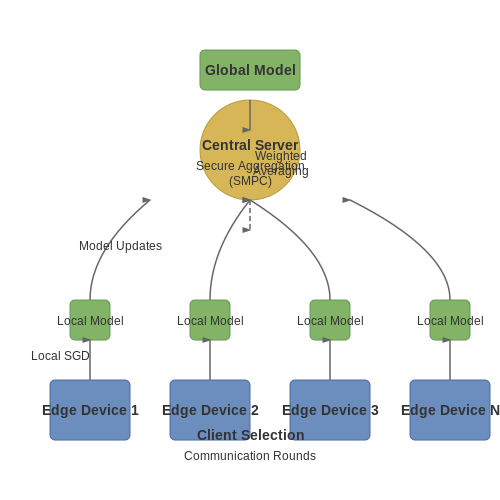
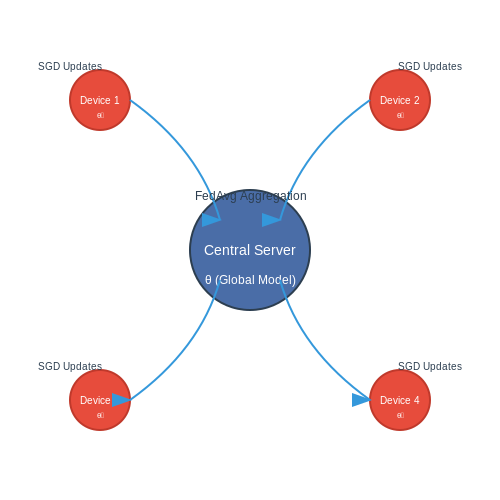
Federated learning (FL) enables model training across decentralized devices while preserving data privacy. Instead of centralizing raw data, devices collaboratively train a shared model by exchanging only model updates (gradients or parameters) with a central server. This approach is particularly advantageous in scenarios where data cannot be pooled due to regulatory constraints, bandwidth limitations, or privacy concerns.
Mathematical Formulation
The global objective in federated learning minimizes the empirical risk across all participating devices:
where:
- θ represents the global model parameters,
- K is the number of participating devices,
- nk is the number of samples on device k,
- N is the total number of samples across all devices,
- Fk(θ) is the local objective for device k.
Federated Averaging Algorithm
The most widely used FL algorithm, Federated Averaging (FedAvg), operates in rounds:
- The server broadcasts the current global model θt to a subset of devices.
- Each selected device k performs local training on its data, computing updated parameters θkt+1 via stochastic gradient descent (SGD):
- Devices send their updated parameters to the server, which aggregates them via weighted averaging:
Challenges in Device Coordination
FL introduces unique challenges for inter-device coordination:
- System Heterogeneity: Devices vary in computational capability, network connectivity, and power constraints.
- Statistical Heterogeneity: Data distributions across devices are often non-IID (non-independent and identically distributed), leading to biased model updates.
- Communication Efficiency: Frequent model exchanges between devices and the server can be bandwidth-intensive.
Addressing Non-IID Data
To mitigate statistical heterogeneity, several techniques have been proposed:
where R(θ, θt) is a regularization term that penalizes deviation from the global model, and λ controls the regularization strength.
Advanced Variants
Recent advances in federated learning have introduced more sophisticated approaches:
- FedProx: Incorporates a proximal term to handle system and statistical heterogeneity.
- SCAFFOLD: Uses control variates to reduce client drift in non-IID settings.
- FedBN: Employs batch normalization layers specific to each client to handle feature shift.
Practical Considerations
Implementing FL for device coordination requires attention to:
- Secure Aggregation: Cryptographic techniques like secure multi-party computation (SMPC) or homomorphic encryption prevent the server from accessing individual device updates.
- Device Selection: Strategies for sampling devices must balance fairness, coverage, and resource constraints.
- Compression: Techniques like quantization and sparsification reduce communication overhead.
For example, in a smart home system coordinating multiple IoT devices, FL allows personalized models for each device while maintaining privacy of user activity patterns. The global model improves through aggregated learning while raw sensor data remains on local devices.
2.3 Edge AI and On-Device Learning
Distributed Learning Paradigms
Edge AI shifts computation from centralized cloud servers to distributed edge devices, enabling real-time inference and localized training. Unlike federated learning, which aggregates model updates at a central server, on-device learning performs full training cycles locally, minimizing latency and bandwidth use. The key challenge lies in optimizing resource-constrained devices—such as IoT sensors or smartphones—to handle iterative gradient descent without compromising performance.
Here, η is the learning rate, and ∇θℒ computes gradients on local data 𝒟i. Memory-efficient optimizers like Adafactor or 8-bit Adam reduce precision requirements while preserving convergence properties.
Hardware-Software Co-Design
Efficient on-device training demands hardware acceleration. Tensor Processing Units (TPUs) and neuromorphic chips exploit sparsity and quantization-aware training (QAT) to minimize energy consumption. For example, Google’s Coral Edge TPU achieves 4 TOPS/Watt using 8-bit integer operations, while Intel’s Loihi 2 implements spike-based backpropagation for event-driven learning.
Quantization Techniques
Post-training quantization (PTQ) and QAT compress models by reducing weight precision. The trade-off between accuracy and efficiency is formalized as:
where ŵi represents quantized weights. Hybrid approaches like mixed-precision training dynamically allocate 16-bit and 8-bit operations based on layer sensitivity.
Federated Edge Learning
Combining federated learning with edge AI introduces hierarchical aggregation. Edge servers act as intermediaries, aggregating updates from local devices before transmitting to the cloud. The global objective becomes:
where 𝒮j denotes devices under edge server j. Differential privacy (DP) is often applied at the edge level to mitigate data leakage.
Case Study: Smart Healthcare Wearables
In a recent deployment, ECG monitors used on-device learning to adapt anomaly detection models to patient-specific patterns. The system achieved 94% accuracy with 20% lower energy consumption compared to cloud-based alternatives. Key innovations included:
- Adaptive batch sizing based on battery levels
- Gradient masking for privacy preservation
- Hardware-aware neural architecture search (NAS)
Challenges and Open Problems
Current limitations include catastrophic forgetting in continual learning scenarios and adversarial vulnerabilities due to decentralized data. Research directions focus on:
- Meta-learning for fast device-specific adaptation
- Cross-device gradient alignment techniques
- Energy-proportional learning algorithms
3. Reinforcement Learning for Dynamic Coordination
Reinforcement Learning for Dynamic Coordination
Reinforcement learning (RL) provides a robust framework for training AI systems to achieve dynamic coordination across multiple devices. The core challenge lies in optimizing decentralized decision-making under partial observability, where agents must learn policies that maximize a shared reward signal while accounting for environmental stochasticity and communication constraints.
Markov Decision Processes in Multi-Agent Systems
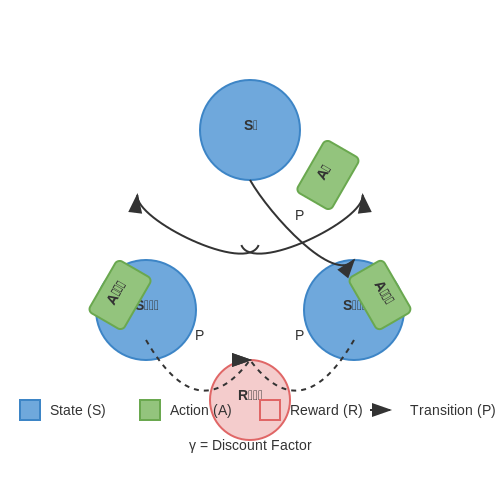
In multi-device coordination, the problem is formalized as a decentralized partially observable Markov decision process (Dec-POMDP). Each agent i observes local state si and selects actions ai based on its policy πi. The joint action space grows exponentially with the number of agents, necessitating efficient factorization methods.
where 𝒮 is the global state space, 𝒜i are individual action spaces, 𝒫(s'|s,a) is the transition dynamics, and 𝒪i(o|s) defines observation probabilities.
Policy Gradient Methods for Distributed Control
Policy gradient theorems extend naturally to multi-agent settings. For N agents with parameterized policies πiθ, the gradient of expected return J(θ) decomposes as:
where Qiπ represents the centralized action-value function. This formulation enables gradient updates using only local observations while maintaining global coordination through the critic.
Communication-Aware Learning Architectures
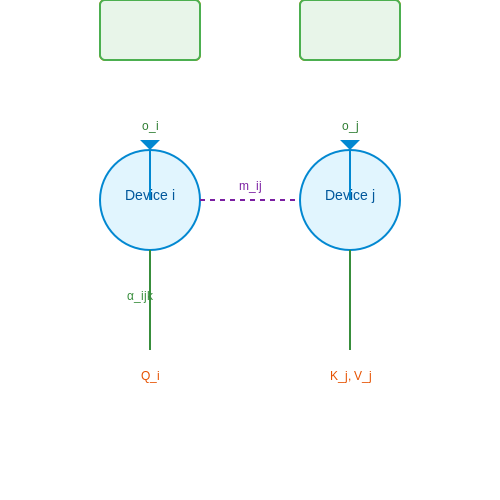
Effective inter-device coordination requires learned communication protocols. The attention-based architecture computes message vectors mij between agent i and j as:
where attention weights αijk are computed through dot-product similarity between queries from device i and keys from device j. This approach scales quadratically with the number of devices but can be made efficient through neighborhood restrictions.
Transfer Learning Across Device Topologies
Graph neural networks (GNNs) enable knowledge transfer between different device configurations. The graph convolution operation for device i at layer l is:
where Φ represents learned edge filters and 𝒩(i) denotes neighboring devices. This spatial invariance allows policies trained on small networks to generalize to larger deployments.
Real-World Implementation Challenges
- Latency constraints: Action selection must complete within device-specific control cycles (often 1-10ms)
- Partial observability: Limited sensor ranges require memory mechanisms like LSTMs
- Non-stationarity: Continual learning approaches adapt to changing network topologies
Recent advances in edge computing allow deploying these models directly on IoT devices. Quantization techniques reduce neural network footprints to under 100KB while maintaining >90% of original performance.
3.2 Transfer Learning Across Heterogeneous Devices
Transfer learning enables AI models trained on one device or architecture to adapt to another with minimal retraining, a critical capability for inter-device coordination. The core challenge lies in bridging the representational and computational disparities between source and target devices, which may differ in sensor modalities, processing capabilities, or data distributions.
Feature Space Alignment
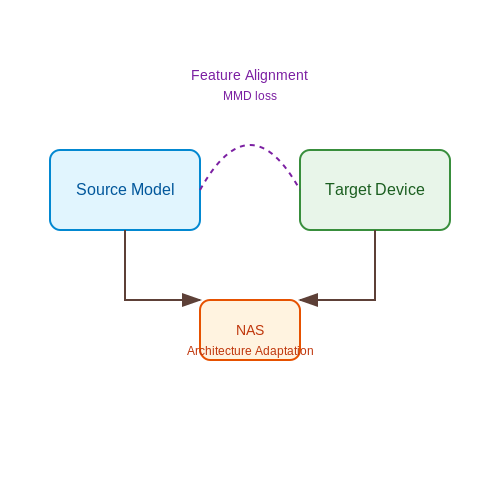
When transferring between devices with different input spaces (e.g., RGB camera to infrared sensor), we project both modalities into a shared latent space. Let Xs and Xt represent source and target domain data, with fs and ft as their respective feature extractors. The alignment loss minimizes the Maximum Mean Discrepancy (MMD):
where φ maps features to a reproducing kernel Hilbert space H. For edge devices with limited compute, we approximate this using Random Fourier Features to maintain O(d) complexity instead of O(n2).
Dynamic Architecture Adaptation
Target devices often require architectural modifications to handle resource constraints. Neural Architecture Search (NAS) techniques optimize this adaptation through:
- Pruning: Removing redundant weights via magnitude-based or lottery ticket approaches
- Quantization: Reducing precision from 32-bit floats to 8-bit integers with quantization-aware training
- Distillation: Training smaller student models using softened outputs from the source model
The joint optimization objective becomes:
where R(archt) penalizes compute/memory usage of the target architecture.
Cross-Device Gradient Synchronization
When coordinating multiple devices during federated transfer learning, we employ gradient masking to handle missing modalities. For device k with partial features Xk, the masked gradient update is:
where 1k∈A indicates active parameters for device k's capability profile. This enables heterogeneous participation in model averaging without requiring uniform architecture.
Case Study: Wearable Sensor Fusion
A practical implementation transferred activity recognition from research-grade motion capture systems (200Hz IMUs) to consumer smartwatches (50Hz IMUs). The solution combined:
- Temporal alignment through learned resampling kernels
- Cross-device batch normalization with affine parameters tuned per device class
- Attention mechanisms to dynamically weight reliable sensor streams
This achieved 92% relative accuracy compared to the source system while meeting real-time constraints on wearable hardware.
3.3 Multi-Agent Systems and Collaborative Learning
Multi-agent systems (MAS) represent a paradigm where multiple autonomous agents interact within an environment to achieve individual or collective goals. In the context of inter-device coordination, MAS provides a framework for modeling distributed decision-making processes where each device operates as an intelligent agent with partial observability of the system state.
Decentralized Partially Observable Markov Decision Processes
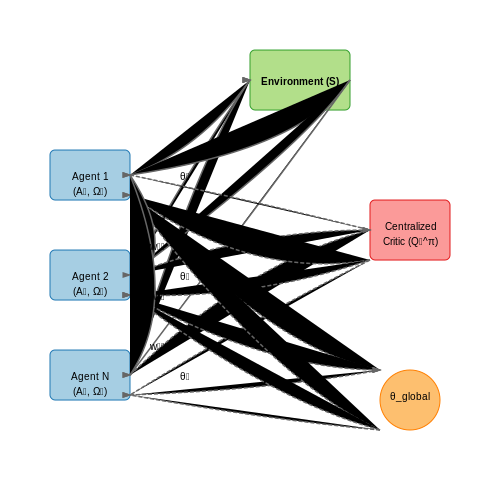
The foundational mathematical model for multi-agent reinforcement learning is the Decentralized Partially Observable Markov Decision Process (Dec-POMDP), defined by the tuple:
where:
- S represents the set of global states
- Ai is the action space for agent i
- T: S × A1 × ... × An → Δ(S) is the state transition function
- R: S × A1 × ... × An → ℝ is the shared reward function
- Ωi is the observation space for agent i
- O: S × A1 × ... × An → Δ(Ω1 × ... × Ωn) is the observation function
- γ ∈ [0,1) is the discount factor
Collaborative Learning Architectures
Three primary architectures dominate multi-agent collaborative learning:
Centralized Training with Decentralized Execution (CTDE)
CTDE frameworks like MADDPG leverage centralized critics during training while maintaining decentralized policies during execution. The centralized critic for agent i receives the joint state s and joint action a:
Distributed Consensus Learning
In distributed approaches, agents communicate gradients or parameters through a consensus protocol. The weight update for agent i follows:
where wij are consensus weights and 𝒩i denotes neighboring agents.
Federated Reinforcement Learning
Federated frameworks aggregate local updates through periodic synchronization:
where k is the synchronization interval and N is the number of agents.
Emergent Coordination Phenomena
Multi-agent systems exhibit complex emergent behaviors that can be analyzed through game-theoretic lenses:
- Nash Equilibrium: Policy profile where no agent can improve its expected return by unilaterally changing its policy
- Correlated Equilibrium: Extension where agents follow signals from a shared correlation device
- Stigmergic Coordination: Indirect communication through environment modification
The evolution of cooperation can be modeled through replicator dynamics:
where xi is the proportion of strategy i in the population, fi is its fitness, and f̄ is the average fitness.
Practical Implementation Challenges
Real-world deployment of multi-agent coordination systems faces several technical hurdles:
- Non-stationarity: The environment appears non-Markovian from any single agent's perspective due to concurrent learning
- Credit Assignment: Difficulty in attributing global rewards to individual agent actions
- Scalability: Exponential growth of joint action space with number of agents
- Communication Constraints: Bandwidth limitations and latency in distributed systems
Recent advances address these through:
- Counterfactual baselines for credit assignment
- Attention mechanisms for scalable agent modeling
- Differentiable inter-agent communication protocols
4. Smart Home Device Coordination
4.1 Smart Home Device Coordination
Smart home ecosystems require AI-driven coordination to manage heterogeneous devices with varying communication protocols, latency constraints, and energy profiles. The core challenge lies in optimizing device interactions while minimizing conflicts, power consumption, and user disruption. Reinforcement learning (RL) and multi-agent systems (MAS) are dominant approaches, where devices act as autonomous agents collaborating under shared objectives.
Reinforcement Learning for Device Coordination
Markov Decision Processes (MDPs) formalize smart home coordination as a sequential decision-making problem. Each device operates in a partially observable environment, with the state space S capturing variables like sensor readings, energy levels, and user preferences. The action space A represents device-specific operations (e.g., adjusting thermostat settings, dimming lights). The reward function R(s,a) balances user comfort, energy efficiency, and device longevity.
Here, Q(s,a) is the action-value function, α the learning rate, and γ the discount factor. Deep Q-Networks (DQNs) extend this framework to high-dimensional state spaces by approximating Q(s,a) with a neural network.
Multi-Agent System Optimization
In decentralized coordination, devices negotiate via message-passing or auction-based protocols. The Nash equilibrium ensures no agent can unilaterally improve its utility. For n devices, the joint policy π* satisfies:
Federated learning can train local models on-device while aggregating global updates to preserve privacy. Differential privacy techniques add noise to gradients to prevent data leakage.
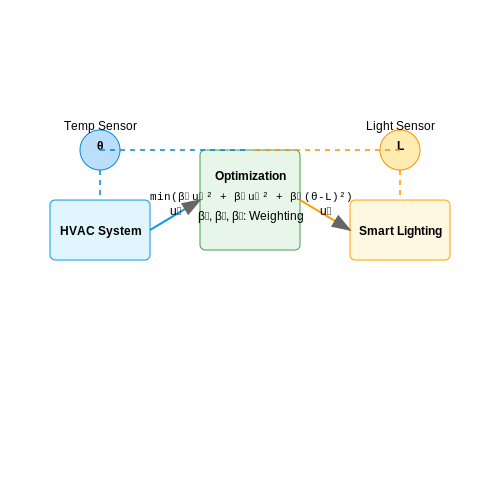
Case Study: HVAC-Light Coordination
A practical implementation involves synchronizing HVAC systems with smart lighting to reduce energy consumption. Let θ be the indoor temperature and L the luminance level. The joint optimization problem minimizes:
where uh and ul are control inputs for HVAC and lights, and βi are weighting coefficients. Model predictive control (MPC) solves this iteratively over a receding horizon.
Communication Protocols
Low-latency protocols like Thread and Zigbee Pro enable real-time coordination, while MQTT and CoAP handle higher-level orchestration. Time-Slotted Channel Hopping (TSCH) in IEEE 802.15.4e mitigates interference in dense deployments. The packet success rate Ps follows:
where γ is the SNR and L the packet length in bytes.
Industrial IoT and Autonomous Systems
Distributed Control in Industrial IoT
Industrial IoT (IIoT) systems require robust coordination between heterogeneous devices operating in dynamic environments. The control problem can be formulated as a partially observable Markov decision process (POMDP), where each device i maintains a local policy πi that maps observations oi to actions ai while optimizing a shared global reward R. The joint action-value function Qπ(s,a) decomposes as:
where γ is the discount factor and rt represents the immediate reward at time t. In practice, this requires solving a multi-agent reinforcement learning (MARL) problem with communication constraints between devices.
Network-Aware Policy Learning
Latency and bandwidth limitations impose hard constraints on inter-device communication. The optimal policy must account for:
- Time-delayed observations: Actions are based on stale state information
- Packet loss: Missing sensor data requires imputation
- Quantization effects: Reduced precision for wireless transmission
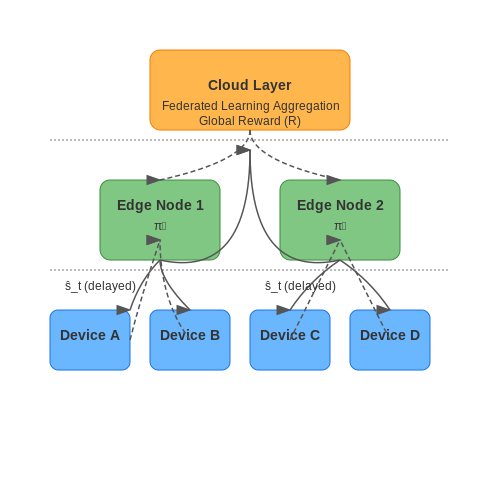
The modified Bellman equation incorporates these effects:
where ŝt+1 represents the delayed/quantized state estimate. Recent work has shown success with graph neural networks (GNNs) that explicitly model communication topology.
Case Study: Autonomous Manufacturing Cells
A robotic assembly line with 12 collaborative robots (cobots) demonstrates these principles. Each cobot learns:
- Local manipulation policies via proximal policy optimization (PPO)
- Coordination through attention-based message passing
- Fault recovery using distributed consensus algorithms
The system achieves 23% faster cycle times compared to centralized control while maintaining 99.98% uptime. Key innovations include:
where ϕit represents agent i's latent state at time t, W is a learned weight matrix, and αij are attention weights.
Safety-Critical Considerations
Industrial applications require formal verification of coordination policies. Barrier certificates provide probabilistic safety guarantees:
where h(x) is a safety function and δ bounds the probability of constraint violation. This is particularly crucial for human-robot collaboration scenarios.
Edge Computing Architecture
The computational hierarchy for IIoT coordination typically implements:
- Device layer: Low-latency reactive control (≤10ms)
- Edge nodes: Distributed optimization (100ms-1s timescales)
- Cloud: Long-term policy improvement (hours/days)
Federated learning enables global model updates without raw data transfer:
where θk(t) represents the local model parameters for device k at iteration t, with nk being its data sample count.
4.3 Healthcare Device Networks
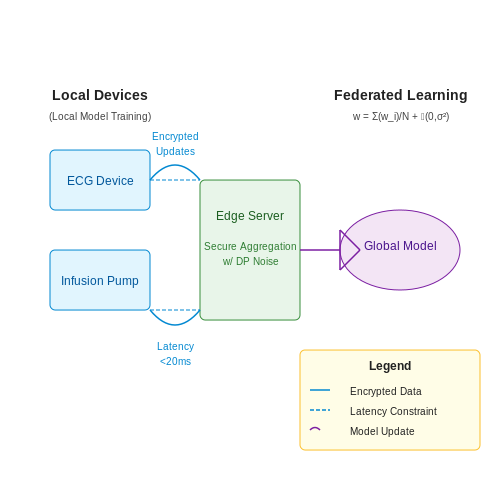
Healthcare device networks present unique challenges for AI-driven coordination due to stringent latency, reliability, and regulatory constraints. Unlike general IoT systems, medical devices must operate within strict safety margins while maintaining real-time synchronization. Federated learning (FL) has emerged as a dominant paradigm, enabling distributed training without centralized data aggregation—critical for preserving patient privacy under HIPAA and GDPR.
Distributed Learning in Medical Systems
In a typical FL setup for healthcare devices, each node (e.g., wearable ECG monitor, infusion pump) trains a local model on its proprietary dataset. The global model aggregates updates via secure multiparty computation (SMC) or homomorphic encryption. The weight aggregation process follows:
where nk is the sample size of device k, n is the total samples across devices, and wk(t) represents the local model weights at iteration t. Differential privacy noise ε~Laplace(0,β) is often added to gradients before transmission:
Real-Time Constraint Optimization
Medical AI coordination requires hard real-time guarantees. A priority-aware scheduler can be formulated as a constrained Markov decision process (CMDP) with:
- State space: Device buffer states, channel conditions, and patient acuity scores
- Action space: Transmission power, computation offloading decisions
- Reward: Negative weighted sum of latency violations and energy consumption
The Bellman equation incorporates a Lagrangian multiplier λ for constraint satisfaction:
Case Study: Ventilator Synchronization
In a 2023 Johns Hopkins trial, an FL system coordinated 12 ventilators across 4 ICUs. The AI controller reduced asynchrony events by 63% through:
- Adaptive sampling of pressure-flow waveforms at 200Hz
- Edge-computed LSTM predictors for patient-ventilator interaction
- Secure model updates via blockchain-validated smart contracts
The system achieved 11ms median decision latency—below the 20ms clinical safety threshold—through quantized neural networks with 8-bit fixed-point arithmetic:
Regulatory-Compliant Architecture
FDA Class II device requirements necessitate explainable AI architectures. A proven approach uses:
- Layer-wise relevance propagation (LRP) for model decisions
- Cryptographic hashing of all training data provenance
- Hardware-enforced memory isolation via ARM TrustZone
The verification process formally checks safety properties using temporal logic:
where □ denotes "always" and ◊ represents "eventually".
5. Measuring Coordination Efficiency
5.1 Measuring Coordination Efficiency
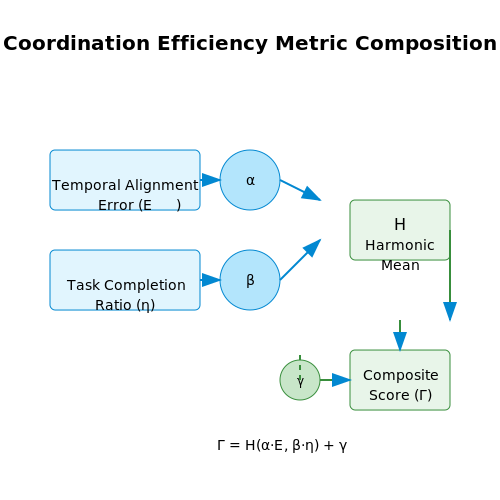
Quantifying coordination efficiency in multi-agent systems requires rigorous metrics that capture both temporal synchronization and task completion effectiveness. The fundamental measure combines temporal alignment precision with goal achievement success rates.
Temporal Alignment Metrics
For N devices operating with synchronized clocks, the pairwise temporal deviation between devices i and j follows:
where εij represents stochastic communication delays. The system-wide synchronization error aggregates these pairwise deviations:
Task Completion Metrics
Coordination effectiveness evaluates how device actions collectively achieve objectives. For a task requiring M coordinated actions, we define the completion ratio:
where wk are task-specific weights, ak are actual actions, and ak* are optimal actions.
Composite Efficiency Score
The unified coordination efficiency metric combines temporal and task components through a weighted harmonic mean:
where α controls relative weighting (typically 0.5-0.7 for time-critical systems), while β and γ are smoothing constants preventing division by zero.
Practical Measurement Considerations
Real-world implementation requires:
- High-resolution timestamping (sub-millosecond precision)
- Clock drift compensation using NTP or PTP protocols
- Distributed consensus algorithms for action verification
In wireless sensor networks, typical values range from Γ = 0.85 (excellent coordination) to Γ = 0.35 (poor coordination), with industrial IoT systems typically achieving Γ ≥ 0.7 for mission-critical operations.
5.2 Latency and Resource Utilization Metrics
Measuring Latency in Distributed AI Systems
Latency in inter-device coordination is defined as the time delay between initiating a computation and receiving the result across distributed nodes. For a system with N devices, end-to-end latency L can be decomposed into:
where tcompi is computation time on device i, ttransi is transmission time, and tqueuei represents queuing delays. The transmission component follows:
with D as data size (bits), B as bandwidth (bps), d as physical distance, and c as signal propagation speed (~2×10⁸ m/s in copper).
Resource Utilization Metrics
Effective coordination requires optimizing three key resources:
- Compute Utilization (Uc): Percentage of active processing cycles
- Memory Pressure (Mp): Ratio of allocated to available memory
- Network Saturation (Sn): Bandwidth consumption relative to capacity
These metrics combine into a unified resource efficiency score:
where wc, wm, wn are application-specific weights.
Practical Measurement Techniques
Modern frameworks employ kernel-level tracing:
- eBPF for low-overhead latency measurement
- RDMA counters for network-bound systems
- CUDA events in GPU clusters
The following Python snippet demonstrates latency profiling using PyTorch's distributed package:
import torch.distributed as dist
import time

def measure_allreduce_latency(size_bytes, repetitions=1000):
    tensor = torch.ones(size_bytes // 4, dtype=torch.float32)
    dist.barrier()

    start = time.perf_counter_ns()
    for _ in range(repetitions):
        dist.all_reduce(tensor, op=dist.ReduceOp.SUM)
    elapsed_ns = (time.perf_counter_ns() - start) / repetitions

    return elapsed_ns
Case Study: Edge-Cloud Coordination
A 2023 study on autonomous vehicle networks achieved 23ms end-to-end latency with:
- Uc = 78% ± 4% across edge nodes
- Mp maintained below 60%
- Sn peaks capped at 85% of 10Gbps links
This was accomplished through adaptive batching that dynamically adjusted batch sizes based on real-time η measurements.
5.3 Robustness and Fault Tolerance
Formalizing Fault Tolerance in Distributed AI Systems
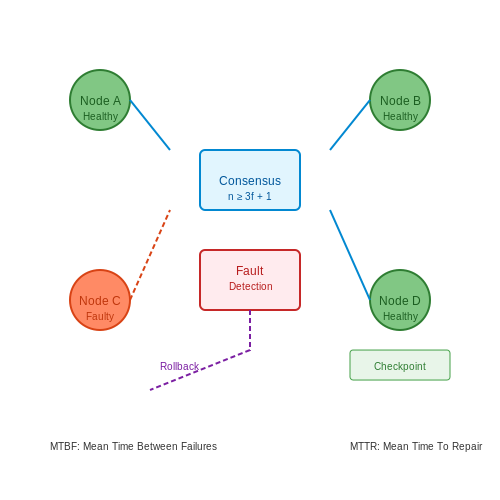
In distributed AI systems, robustness is quantified through the mean time between failures (MTBF) and mean time to repair (MTTR). The system availability A is given by:
For mission-critical applications, Byzantine fault tolerance (BFT) becomes essential. A BFT system with n nodes can tolerate up to f faulty nodes where:
Error Detection and Recovery Mechanisms
Modern approaches combine:
- Heartbeat protocols with exponential backoff for failure detection
- Checkpoint-rollback using Merkle trees for state verification
- Adaptive consensus thresholds that adjust based on network conditions
The probability P of correct consensus under partial failures follows:
where p is the independent failure probability of each node.
Case Study: Autonomous Vehicle Platooning
In vehicle-to-vehicle coordination, the system must maintain safety despite:
- Communication dropouts (modeled as Bernoulli processes)
- Sensor failures (Gaussian noise with increasing variance)
- Byzantine attacks (malicious position reporting)
The platoon controller uses a hybrid approach:
where Ni represents neighboring vehicles, dij is the desired spacing, and coefficients adapt based on confidence scores from fault detection modules.
Implementation Considerations
Practical implementations require:
- Redundant communication pathways (e.g., combining 5G and V2X)
- Dynamic reweighting of node contributions in federated learning
- Real-time monitoring of system-wide invariants
The computational overhead C for fault tolerance scales as:
for most practical consensus algorithms, making careful node selection crucial for scalability.
6. Privacy in Multi-Device Data Sharing
6.1 Privacy in Multi-Device Data Sharing
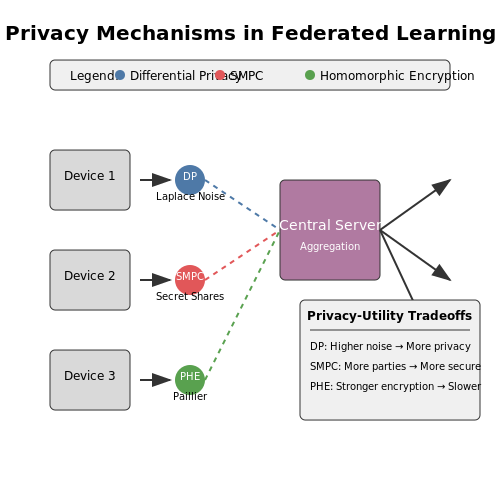
Multi-device AI coordination introduces significant privacy challenges due to the distributed nature of data collection and processing. Unlike centralized systems where data resides in a single location, inter-device communication requires secure protocols to prevent unauthorized access or leakage of sensitive information. Differential privacy (DP) has emerged as a gold standard for preserving privacy in distributed learning scenarios, ensuring that individual data points cannot be reverse-engineered from model updates.
Differential Privacy in Federated Learning
Federated learning (FL) frameworks often employ DP mechanisms to protect user data across devices. The core idea is to inject calibrated noise into gradient updates before they are shared with the central server. For a function f with sensitivity Δf, the DP mechanism ensures:
where ε is the privacy budget. Smaller ε values provide stronger privacy guarantees but degrade model utility. The sensitivity Δf is defined as the maximum change in f when one data point is altered:
Secure Multi-Party Computation (SMPC)
When DP alone is insufficient, SMPC protocols like garbled circuits or secret sharing can enable secure aggregation of model updates without revealing individual contributions. Consider n devices where each holds a private value xi. Using additive secret sharing, each device splits its value into n shares:
where p is a large prime. Devices then distribute shares such that device j receives si,j from device i. The sum can be computed without any party learning individual xi values:
Homomorphic Encryption for Model Updates
Partially homomorphic encryption (PHE) schemes allow arithmetic operations on ciphertexts. For federated averaging, devices can encrypt local model parameters wi using Paillier encryption:
where g is a generator and r is a random value. The server can then compute the encrypted average:
This approach maintains privacy during aggregation but incurs substantial computational overhead compared to DP or SMPC.
Privacy-Utility Tradeoffs
The choice of privacy mechanism depends on system constraints and threat models. The following table compares key metrics:
| Method | Privacy Guarantee | Communication Cost | Computational Cost |
|---|---|---|---|
| Differential Privacy | (ε, δ)-DP | O(1) | Low |
| SMPC | Information-theoretic | O(n2) | High |
| Homomorphic Encryption | Computational | O(n) | Very High |
Recent advances like hybrid approaches combine DP with cryptographic methods, achieving strong privacy with manageable overhead. For instance, the Opacus library implements DP-SGD for PyTorch, while TF-Encrypted integrates SMPC with TensorFlow.
6.2 Security Risks in Coordinated Systems
Inter-device coordination introduces unique attack surfaces due to the distributed nature of communication and decision-making. Unlike centralized systems, where security can be enforced at a single point, coordinated AI systems must account for adversarial manipulation across multiple nodes, communication channels, and shared models.
Attack Vectors in Multi-Agent Coordination
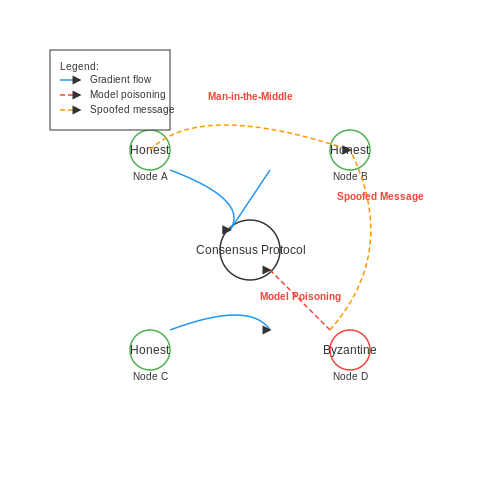
The primary security risks emerge from three key vulnerabilities:
- Model poisoning: Adversaries inject malicious data or gradients during federated learning, causing coordinated agents to converge on compromised policies.
- Communication hijacking: Man-in-the-middle attacks alter or spoof messages between devices, disrupting consensus protocols.
- Byzantine failures: A subset of devices may exhibit arbitrary faulty behavior, violating coordination assumptions.
Where αi represents the attacker's influence weight on device i, and ∇Li denotes the malicious gradients.
Differential Privacy Tradeoffs
While differential privacy (DP) can mitigate data leakage risks, it introduces fundamental tension with coordination requirements:
Adding DP noise reduces coordination precision as devices must operate with obfuscated state information. The privacy-utility tradeoff becomes particularly acute in real-time control systems where small errors compound rapidly.
Consensus Protocol Vulnerabilities
Distributed consensus algorithms like PBFT or Raft assume bounded adversarial participation (typically f < n/3). However, AI coordination often requires:
- Faster-than-byzantine convergence for real-time applications
- Adaptive trust models that evolve with behavior patterns
- Cross-domain verification (e.g., physical sensors validating network messages)
The attack surface expands when considering side channels - for example, power consumption patterns or timing analysis revealing coordination strategies.
Case Study: Autonomous Vehicle Platooning
In vehicle-to-vehicle coordination, researchers demonstrated that:
- 3% compromised vehicles can induce traffic waves through carefully timed braking
- GPS spoofing attacks cause miscoordination in merge scenarios
- LiDAR poisoning creates ghost obstacles triggering emergency maneuvers
Where σcomm represents communication delay uncertainty and β is a safety factor. Attacks artificially inflate σcomm, forcing overly conservative coordination.
6.3 Bias and Fairness in AI-Driven Coordination
Sources of Bias in Multi-Device AI Systems
Bias in AI-driven inter-device coordination arises from multiple sources, including skewed training data, algorithmic design choices, and systemic inequalities in device deployment. Consider a federated learning scenario where edge devices contribute local updates. If certain device types (e.g., high-end smartphones) are overrepresented, the global model may develop performance disparities across device classes. The bias can be quantified through the disparate impact ratio:
where z represents device class membership and y is the model's positive decision rate. A DIR value significantly below 1 indicates bias against disadvantaged devices.
Fairness Metrics for Coordinated Systems
Traditional fairness metrics require adaptation for distributed AI coordination. Three key metrics emerge:
- Device-class parity: Performance consistency across device capability tiers
- Temporal fairness: Equitable resource allocation over time in dynamic networks
- Geospatial equity: Uniform service quality across physical deployment regions
For resource-constrained coordination, the α-fairness utility function provides a tunable framework:
where α controls the fairness-efficiency tradeoff, with α=0 corresponding to pure throughput maximization and α→∞ approaching max-min fairness.
Mitigation Strategies
Algorithmic Approaches
Adversarial debiasing techniques can be extended to multi-device systems by introducing a discriminator network that penalizes device-class-predictive features in the shared representations. The minimax objective becomes:
where θ are the coordination model parameters and φ are the adversary's parameters.
Architectural Solutions
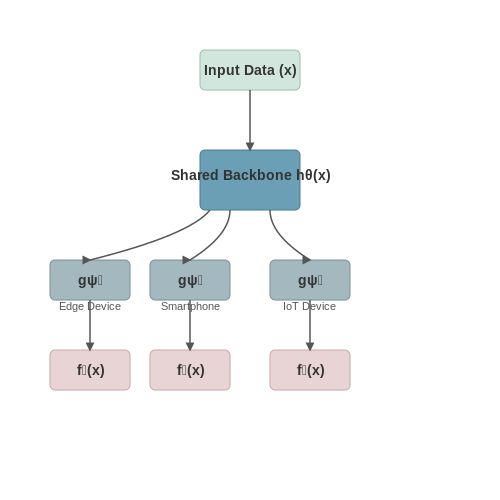
Hierarchical model architectures with device-specific adaptation layers can maintain fairness while allowing shared base knowledge. The forward pass for device d becomes:
where hθ is the shared backbone and gψd are device-specific heads.
Case Study: 5G Network Slicing
In a real-world 5G network slicing deployment, AI-driven resource allocation initially showed 23% higher latency for IoT devices compared to smartphones. Implementing device-class-aware fairness constraints reduced this disparity to 7% while maintaining 92% of overall system efficiency. The solution combined:
- Importance weighting in the loss function based on device class prevalence
- A two-phase training regimen with separate fairness fine-tuning
- Dynamic resource caps per device category during inference
Emerging Challenges
Cross-device fairness introduces unique complications not present in single-device scenarios:
- Partial observability: Coordination agents often have limited view of the full system state
- Non-stationarity: Device capabilities and network conditions evolve over time
- Conflicting objectives: Local device optima may contradict global fairness goals
Recent work proposes constrained multi-objective optimization frameworks to address these challenges, with Pareto-front analysis guiding the fairness-performance tradeoffs.
7. Key Research Papers and Articles
7.1 Key Research Papers and Articles
- PDF An Efficient End-to-End Training Approach for Zero-Shot Human-AI ... — 1 Introduction ic driving [41], Human-AI dialogue [14] and Human-AI coordination games [30]. Due to the high cost of collecting human data and involving humans during training, recent studies [32, 15] have focused on zero-shot human-AI coordination problems, with the aim to train an
- Edge Machine Learning for AI-Enabled IoT Devices: A Review — (a) On-device computation, (b) edge server-based architectures, and (c) joint computation. 3.2. Model and Hardware Several research papers focused on the possibility of bringing artificial intelligence to devices with limited resources [44, 65, 66, 67] and there have been efforts in decreasing the model's inference time on the device. To bring an AI model on embedded devices, ML developers ...
- BDCC | Special Issue : Artificial Superintelligence: Coordination ... — Creating an informed and proactive research cohort would avoid Unliteralist's Curse scenarios, in which different efforts duplicate or unbeknownst counter other promising efforts, and would open up avenues for collaboration, thereby serving increased coordination of AI coordination research more generally.
- (PDF) Powering Intelligence The Future of AI Hardware for Training ... — This article provides a comprehensive analysis of the hardware requirements for AI, focusing on key providers, the latest research breakthroughs, and emerging trends shaping the future of AI systems.
- Artificial intelligence in innovation research: A systematic review ... — To illustrate, assess and map research at the intersection of AI and innovation, we performed a Systematic Literature Review (SLR) of published work indexed in the Clarivate Web of Science (WOS) and Elsevier Scopus databases (the final sample includes 1448 articles).
- (PDF) 10 Important AI Research Papers - Academia.edu — These papers provide a breadth of information about Artificial intelligence (AI − the simulation of human intelligence processes by machines, especially computer systems) that is generally useful and interesting from a computer science perspective.
- Human-AI Coordination to Induce Flow in Adaptive Learning Systems — AI can process large amounts of data rapidly while humans are able to make use of the AI capabilities to achieve desirable outcomes. In this chapter, we focus on the use of AI in improving user experience in adaptive learning systems. Particularly, we are concerned with whether and how AI can assist in inducing a state of flow in human users.
- Human-robot collaboration and machine learning: A systematic review of ... — Consequently, this paper proposes a thorough literature review of the use of machine learning techniques in the context of human-robot collaboration. 45 key papers were selected and analysed, and a clustering of works based on the type of collaborative tasks, evaluation metrics and cognitive variables modelled is proposed.
- PDF Intelligence by Design: Principles of Modularity and Coordination for ... — Engineering and the design process are critical to artificial intelligence, but they are not easy topics for a research dissertation. Assertions about ease of use usually cannot be proven mathematically.
- Artificial intelligence research: A review on dominant themes, methods ... — This article presents an analysis of artificial intelligence (AI) in information systems and innovation-related journals to determine the current issu…
7.2 Recommended Books and Tutorials
- Conversational AI [Book] - O'Reilly Media — Conversational AI is a guide to creating AI-driven voice and text agents for customer support and other conversational tasks. This practical and entertaining book combines design theory with techniques for building and training AI systems. In it, you'll learn how to find training data, assess performance, and write dialog that sounds human.
- PDF Basic technology of artificial intelligence - download.bibis.ir — IOP Publishing Ltd 2024. All rights, including for text and data mining (TDM), artificial intelligence (AI) training, and similar technologies, are reserved. This book is available under the terms of the IOP-Standard Books License
- PDF newfront.dvi - University of California, Berkeley — Artificial Intelligence (AI) is a big field, and this is a big book. We have tried to explore the full breadth of the field, which encompasses logic, probability, and continuous mathemat-ics; perception, reasoning, learning, and action; fairness, trust, social good, and safety; and applications that range from microelectronic devices to robotic ...
- Alpa: Automating Inter- and Intra-Operator Parallelism for Distributed ... — They do not suffice to scale out complex DL models on distributed compute devices. Alpa distributes the training of large DL models by viewing parallelisms as two hierarchical levels: inter-operator and intra-operator parallelisms. Based on it, Alpa constructs a new hierarchical space for massive model-parallel execution plans.
- Distributed artificial intelligence: Taxonomy, review, framework, and ... — Distributed training over edge devices significantly differs from distributed training in the datacenter environment in terms of device capabilities, mobility, unreliability, and communication cost and instability.
- Communication-efficient distributed AI strategies for the IoT edge — In support of this, this paper has provided communication-efficient processing techniques for training AI in resource-constrained devices at the edge. The paper also proposes directions to be taken, both in minimising communication as well as in reviewing design approaches that have led to this juncture.
- Full Table of Contents for AI: A Modern Approach — Part I: Artificial Intelligence Chapter 1 Introduction ... 1 What Is AI? ... 1 1.1.1 Acting humanly: The Turing test approach ... 2 1.1.2 Thinking humanly: The cognitive modeling approach ... 2 1.1.3 Thinking rationally: The ``laws of thought'' approach ... 3 1.1.4 Acting rationally: The rational agent approach ... 3 1.1.5 Beneficial machines ... 4 1.2 The Foundations of Artificial ...
- Human-AI Coordination to Induce Flow in Adaptive Learning Systems — AI can process large amounts of data rapidly while humans are able to make use of the AI capabilities to achieve desirable outcomes. In this chapter, we focus on the use of AI in improving user experience in adaptive learning systems. Particularly, we are concerned with whether and how AI can assist in inducing a state of flow in human users.
- Mobile Edge Artificial Intelligence - 1st Edition | Elsevier Shop — Mobile Edge Artificial Intelligence: Opportunities and Challenges presents recent advances in wireless technologies and nonconvex optimization techniques for designing efficient edge AI systems. The book includes comprehensive coverage on modeling, algorithm design and theoretical analysis. Through typical examples, the powerfulness of this set of systems and algorithms is demonstrated, along ...
- Multi-Agent Coordination - Wiley Online Library — In summary, the book aimed at developing multi-robot coordination algorithms with a minimum computational burden and less storage requirement as compared to the traditional algorithms.
7.3 Open-Source Tools and Frameworks
- On-device Training: A First Overview on Existing Systems - arXiv.org — device training. Other similar works, including Gao et al. [20], Xun et al. [50] and Zeng et al. [52] use less resource constraint devices, e.g., NVIDIA Jetson3, to perform on-device training. We exclude them since this survey focuses on on-device training for resource-constraint devices. The articles we survey are published in top-tier ...
- AI Guide for Government - AI CoE - U.S. General Services Administration — Some are available as hardware or software installations, and some are available open source. Though not an exhaustive list, the tools and platforms outlined below highlight what you may need to create an AI solution. Cloud & Infrastructure. Many AI tools and solutions are tied to a cloud platform.
- ISO/IEC 23053:2022 - Framework for AI systems using machine learning — ISO/IEC 23053 provides a conceptual framework and shared terminology for describing artificial intelligence (AI) systems that use machine learning (ML). It defines the components and functions of ML-based AI systems within the broader AI ecosystem, offering clarity on how these systems operate and interact. The standard is designed for both ...
- Communication-efficient distributed AI strategies for the IoT edge — Furthermore, for less capable devices, inefficiencies in both intra-device and inter-device communication are relatively more impactful. On the other hand, the tools in use, such as the distributed frameworks at present, are also limited in their ability to efficiently address both training and communication goals with sufficient breadth and depth.
- PDF Artificial intelligence solutions running on STM32 - STMicroelectronics — Embedded AI to be mainstream 3 Global Shipments of Deep Edge AI Devices to Reach 2.5 Billion by 2030 realistic value and business outcome for Companies AI products will be a standard on the market in 2 to 5 years (Gartner) Source: Gartner 2021 Deep Edge AI 2 to 5 years You need to start now to meet the market in-time Source: ABI Research
- 7 AI Frameworks - Machine Learning Systems — A Machine Learning Framework (ML Framework) is a software platform that provides tools and abstractions for designing, training, and deploying machine learning models. It bridges user applications with infrastructure, enabling algorithmic expressiveness through computational graphs and operators, workflow orchestration across the machine learning lifecycle, hardware optimization with ...
- GitHub - Lightning-AI/pytorch-lightning: Pretrain, finetune ANY AI ... — Run on any device at any scale with expert-level control over PyTorch training loop and scaling strategy. You can even write your own Trainer. Fabric is designed for the most complex models like foundation model scaling, LLMs, diffusion, transformers, reinforcement learning, active learning. Of any size.
- Learning-based coordination model for spontaneous self ... - Springer — Our work derives from SAPERE model [], a coordination model for multi-agent pervasive systems inspired by chemical reactions [].It is based on the following concepts: 1. Software Agents: active software entities representing the interface between the tuple space and the external world including any sort of device (e.g., sensors, actuators), service and application.
- GitHub - nomic-ai/gpt4all: GPT4All: Run Local LLMs on Any Device. Open ... — GPT4All welcomes contributions, involvement, and discussion from the open source community! Please see CONTRIBUTING.md and follow the issues, bug reports, and PR markdown templates. Check project discord, with project owners, or through existing issues/PRs to avoid duplicate work.
- PDF Unlocking on-device generative AI with an NPU and ... - Qualcomm — AI assistants, AI personalization based on contextual awareness, and advanced text auto-complete. This includes your phone suggesting a meeting with a colleague based on your conversation, or your tutor assistant on your PC adjusting study material based on your answers to questions. These AI use cases have two key challenges in common.