Dynamic Content Generation for Games with AI
1. Definition and Importance of Dynamic Content
Definition and Importance of Dynamic Content
Dynamic content generation in games refers to the procedural or AI-driven creation of game elements—such as levels, narratives, textures, or enemy behaviors—during runtime rather than relying solely on pre-designed assets. Unlike static content, which remains unchanged across playthroughs, dynamic content adapts to player actions, environmental conditions, or stochastic processes, enabling emergent gameplay and replayability.
Mathematical Foundations
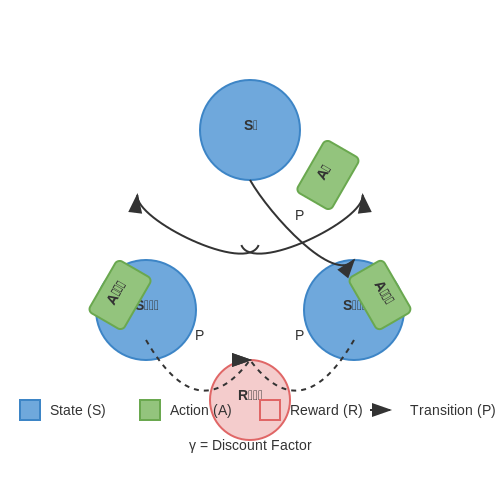
At its core, dynamic content generation leverages probabilistic models, optimization algorithms, or neural networks to synthesize game elements. For instance, procedural level generation often employs Perlin noise or Markov chains to create spatially coherent structures. The probability of a game state S transitioning to another state S' can be modeled as:
where β controls randomness and ℛ is a reward function ensuring playability. Alternatively, generative adversarial networks (GANs) learn a mapping from latent space z to content space x via:
Technical Advantages
- Scalability: Reduces manual design effort for large or open-world games.
- Adaptivity: Content adjusts to player skill (e.g., via difficulty curves) or preferences (e.g., narrative branching).
- Resource Efficiency: Minimizes storage overhead by generating assets on-demand.
Practical Applications
In No Man’s Sky, deterministic algorithms generate planetary systems with unique ecosystems, while AI Dungeon uses transformer models to create interactive narratives. Reinforcement learning further enables dynamic NPC behaviors, as seen in AlphaStar for real-time strategy games.
Challenges
Balancing novelty with coherence remains nontrivial; excessive randomness can yield unplayable levels or disjointed narratives. Quality assurance requires automated playtesting frameworks, such as Monte Carlo tree search (MCTS) for validating generated content:
where Q is the action-value function and c trades exploration vs. exploitation.
Traditional vs. AI-Driven Content Generation
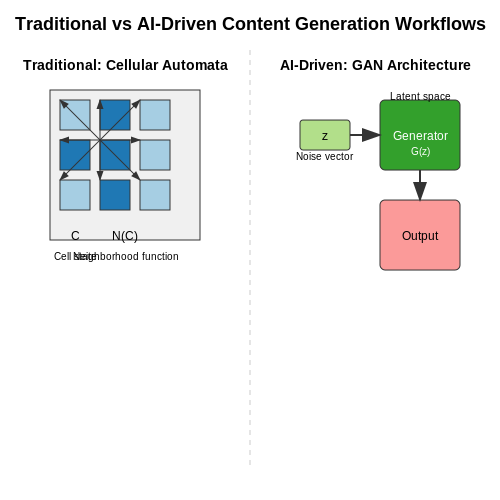
Traditional content generation in games relies on procedural algorithms, handcrafted assets, and rule-based systems. These methods, while deterministic and predictable, often suffer from scalability issues and lack adaptability. Procedural generation techniques, such as Perlin noise for terrain or rule-based grammars for level design, follow predefined mathematical models. For instance, generating a dungeon layout using cellular automata involves iterating over a grid where each cell's state depends on its neighbors:
Here, Ci,jt represents the cell state at position (i, j) and time t, and N denotes the neighborhood function. While effective, such methods require manual tuning and struggle to produce novel content beyond their initial design constraints.
AI-Driven Content Generation
AI-driven approaches leverage machine learning to create dynamic, adaptive content. Generative adversarial networks (GANs) and variational autoencoders (VAEs) learn latent representations of game assets, enabling the synthesis of new content that adheres to learned patterns. For example, a GAN trained on game textures can generate novel textures by sampling from the latent space:
where G is the generator network and z is a noise vector sampled from a normal distribution. Reinforcement learning (RL) further enhances dynamic content generation by optimizing for player engagement metrics. An RL agent might adjust level difficulty in real-time by maximizing a reward function:
Comparative Analysis
Traditional methods excel in predictability and computational efficiency but lack creativity. AI-driven methods introduce variability and adaptability at the cost of higher computational overhead and potential unpredictability. Hybrid approaches, such as using AI to augment procedural generation, offer a middle ground. For instance, a Markov decision process (MDP) can guide procedural generation by learning from player interactions:
This enables dynamic adjustment of generated content based on real-time player behavior, blending the strengths of both paradigms.
Practical Applications
- No Man's Sky combines procedural generation with AI to create a vast, explorable universe.
- AI Dungeon uses transformer models to generate interactive narratives dynamically.
- Procedural puzzle generation in games like Baba Is You employs constraint satisfaction algorithms guided by player feedback.
Key Challenges in Dynamic Content Generation
Computational Complexity and Real-Time Constraints
Dynamic content generation in games requires real-time computation, often under strict latency constraints. Procedural generation algorithms must balance quality with performance, especially in open-world environments where terrain, textures, and assets are generated on-the-fly. The computational complexity of algorithms like Perlin noise for terrain generation scales as O(n²) or worse, making optimization critical.
Hierarchical generation techniques, such as wavelet noise or sparse voxel octrees, mitigate this by focusing computation on visible regions while deferring or simplifying distant areas.
Coherence and Consistency
Maintaining narrative and visual coherence across dynamically generated content is non-trivial. For example, a dungeon generator must ensure:
- Path connectivity (no unreachable rooms)
- Thematic consistency (matching architectural styles)
- Gameplay balance (enemy placement matching player level)
Markov chains or graph grammars are often employed to enforce rules, but these can constrain creativity if overused.
Player-Centric Adaptation
Content must adapt to player behavior without breaking immersion. Reinforcement learning (RL) agents can optimize for engagement metrics, but the reward function design is critical:
Where s' is the new state after action a. Poorly tuned weights (wi) may lead to degenerate strategies, like endlessly respawning enemies.
Memory and Storage Efficiency
Procedurally generated content must be deterministic for reproducibility (e.g., using seed values), yet compact enough to avoid bloating save files. Differential storage techniques record only deviations from the seed-based generation, but this becomes complex when player modifications are allowed.
Multi-Agent Coordination
In multiplayer games, dynamic content must synchronize across clients while preventing exploits. Consensus algorithms like Raft can coordinate state, but introduce latency. Alternative approaches include:
- Client-side prediction with server reconciliation
- Federated generation where trusted peers validate content
Testing and Validation
Automated testing is challenging when outputs are non-deterministic. Coverage-guided fuzzing and metamorphic testing (checking invariant properties) are emerging solutions. For example, a terrain generator might be tested by verifying that all elevation gradients remain below a playable threshold.
2. Procedural Content Generation (PCG) with AI
Procedural Content Generation (PCG) with AI
Foundations of PCG in Game Development
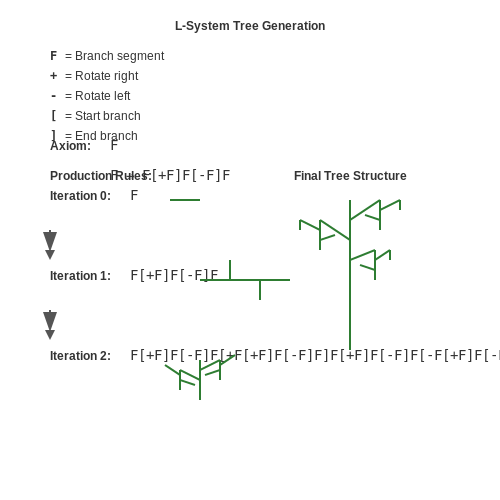
Procedural Content Generation (PCG) refers to algorithmic methods for creating game content—levels, textures, narratives, or mechanics—dynamically rather than manually. Traditional PCG relies on deterministic algorithms like Perlin noise, cellular automata, or L-systems. However, AI-driven PCG introduces probabilistic models, enabling adaptive, context-aware content generation that responds to player behavior or environmental constraints.
AI Techniques for PCG
Modern AI-enhanced PCG leverages several advanced techniques:
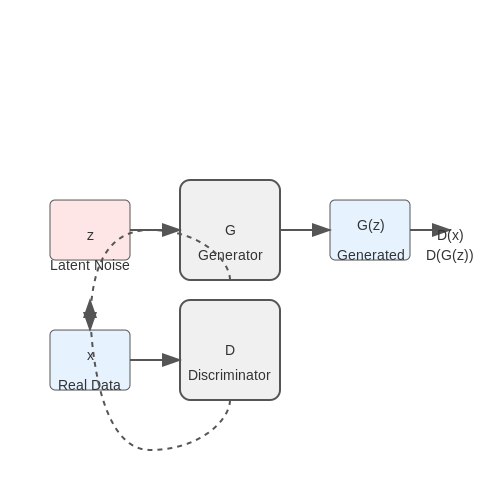
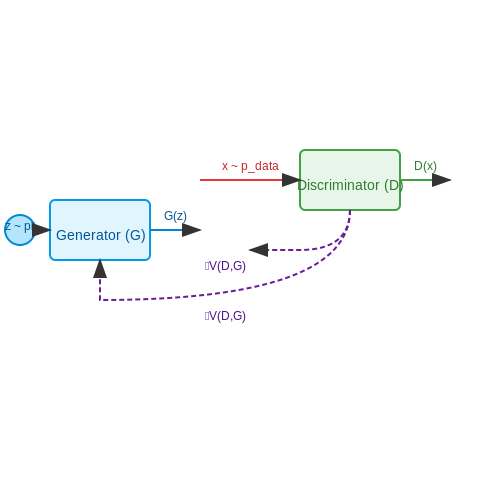
- Generative Adversarial Networks (GANs): Train a generator-discriminator pair to produce realistic textures, 3D models, or levels. The generator creates content, while the discriminator evaluates its quality, refining outputs iteratively.
- Variational Autoencoders (VAEs): Encode input data (e.g., level layouts) into a latent space, allowing interpolation and novel content sampling. VAEs excel at preserving structural coherence in generated outputs.
- Reinforcement Learning (RL): Optimize content generation through reward signals. For instance, RL can design levels that maximize player engagement metrics derived from playtesting data.
Mathematical Framework for PCG
GANs optimize a minimax objective where the generator G and discriminator D compete:
Here, x is real data, z is latent noise, and pdata and pz are their respective distributions. The discriminator’s output D(x) represents the probability that x is real.
Case Study: AI-Generated Game Levels
In Spelunky and No Man’s Sky, PCG combines rule-based systems with ML. For example, a Markov Chain Monte Carlo (MCMC) sampler can generate levels by iteratively perturbing a seed layout until it meets design constraints (e.g., difficulty, connectivity):
where L is the current level, L' a proposed modification, E an energy function encoding constraints, and Z a normalization constant.
Challenges and Solutions
- Mode Collapse in GANs: When the generator produces limited varieties of outputs, techniques like minibatch discrimination or unrolled GANs diversify outputs.
- Computational Cost: Training VAEs or GANs on high-resolution assets requires distributed training or progressive growing of networks.
- Evaluating Quality: Metrics like Fréchet Inception Distance (FID) quantify the realism and diversity of generated content.
Tools and Frameworks
Popular libraries for AI-driven PCG include:
- TensorFlow/ PyTorch: For implementing custom GANs or VAEs.
- Unity ML-Agents: Integrates RL for dynamic content tuning.
- WaveFunctionCollapse: A constraint-based PCG algorithm for tile-based content.
2.2 Reinforcement Learning for Adaptive Gameplay
Markov Decision Processes in Game Design
Reinforcement learning (RL) formalizes adaptive gameplay through Markov Decision Processes (MDPs), defined by the tuple (S, A, P, R, γ) where:
- S: Finite set of game states (e.g., player position, inventory)
- A: Action space available to the AI agent
- P(s'|s,a): Transition dynamics between states
- R(s,a): Immediate reward function
- γ: Discount factor for future rewards
The optimal policy π* maximizes cumulative rewards, with V*(s) computed via Bellman optimality. In games, P is often unknown, requiring model-free RL approaches.
Q-Learning for Dynamic Difficulty Adjustment
Model-free Q-learning approximates the action-value function Q(s,a) through temporal difference updates:
Practical implementations for adaptive difficulty use:
- Double Q-Learning: Reduces overestimation bias by decoupling selection and evaluation
- Prioritized Experience Replay: Samples transitions with high TD-error more frequently
Policy Gradient Methods for NPC Behavior
For continuous action spaces (e.g., steering behaviors), policy gradient theorem optimizes stochastic policies directly:
Proximal Policy Optimization (PPO) is particularly effective for game AI due to its clipped objective:
Multi-Agent Reinforcement Learning
Competitive/cooperative game scenarios require extensions to standard RL:
- Nash Q-Learning: Computes equilibria in Markov games
- MA-PPO: Centralized training with decentralized execution
The payoff matrix for two-agent competitive games can be represented as:
Implementation Considerations
Key challenges in production game environments:
- Partial observability: Requires POMDP formulations or LSTM-based agents
- Curriculum learning: Gradually increases task complexity
- Reward shaping: Domain knowledge to accelerate convergence
# PPO implementation snippet for Unity ML-Agents
def update_policy(batch):
    states, actions, old_log_probs, advantages = batch
    for _ in range(K_EPOCHS):
        log_probs, values, entropy = network(states)
        ratios = torch.exp(log_probs - old_log_probs)
        surr1 = ratios * advantages
        surr2 = torch.clamp(ratios, 1-EPSILON, 1+EPSILON) * advantages
        policy_loss = -torch.min(surr1, surr2).mean()
        value_loss = F.mse_loss(values, returns)
        loss = policy_loss + 0.5*value_loss - 0.01*entropy.mean()
        optimizer.zero_grad()
        loss.backward()
        optimizer.step()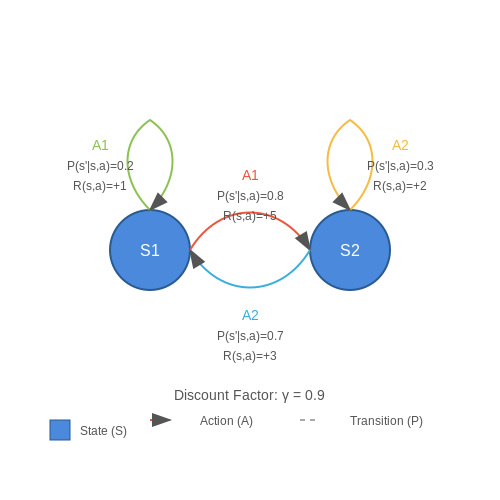
Generative Adversarial Networks (GANs) for Asset Creation
Architecture and Training Dynamics
Generative Adversarial Networks consist of two neural networks—a generator G and a discriminator D—engaged in a minimax game. The generator learns to produce synthetic data samples from random noise, while the discriminator attempts to distinguish between real and generated samples. The objective function is given by:
where pdata represents the real data distribution and pz is the noise prior. The generator's weights are updated to maximize the probability of the discriminator making a mistake, while the discriminator is trained to correctly classify real and fake samples.
Specialized GAN Variants for Game Assets
Several GAN architectures have demonstrated particular effectiveness for game asset generation:
- DCGAN (Deep Convolutional GAN): Uses strided convolutions and transposed convolutions for stable training on image data. Key features include batch normalization and LeakyReLU activations.
- ProGAN (Progressive GAN): Gradually increases resolution during training, enabling generation of high-quality textures and sprites at 1024×1024 resolution.
- StyleGAN: Introduces style-based generation through adaptive instance normalization (AdaIN), allowing precise control over visual attributes at different hierarchical levels.
Practical Implementation Considerations
Training GANs for game asset production requires addressing several technical challenges:
where ℒFM represents feature matching loss and ℒVGG is perceptual loss computed using a pre-trained VGG network. Typical hyperparameter values are λFM = 10 and λVGG = 0.1 for stable training.
Dataset Preparation
For texture generation, a minimum of 5,000 high-resolution (≥512×512) images is recommended. Data augmentation should preserve artistic style consistency—affine transformations are preferred over color jittering for most game assets.
Training Protocol
- Use the Adam optimizer with β1 = 0, β2 = 0.99
- Initial learning rate of 2×10⁻⁴ with linear decay
- Batch sizes between 16-32 depending on resolution
- Apply gradient penalty (λ = 10) for WGAN-GP implementations
Production Integration Pipeline
A robust asset generation pipeline typically implements:
- Automated quality filtering using a trained classifier
- Post-processing with non-photorealistic rendering shaders
- Style transfer for artistic consistency across assets
- Procedural variation injection using latent space interpolation
The latent space Z can be decomposed into interpretable dimensions through:
where zpos and zneg represent latent vectors for positive and negative examples of a desired attribute (e.g., "rusty" vs "pristine" textures).
Performance Optimization
Real-time generation constraints require careful architectural choices:
- Replace transposed convolutions with nearest-neighbor upsampling + convolution to avoid checkerboard artifacts
- Implement network pruning to reduce generator inference time by 40-60%
- Use knowledge distillation to train smaller student networks
where GS is the student network, GT is the teacher network, and α = 0.7 typically provides good results.
Natural Language Processing (NLP) for Dialogue Systems
Dialogue systems in games rely on advanced NLP techniques to generate dynamic, context-aware conversations. Transformer-based architectures, such as GPT and BERT, have become the backbone of modern dialogue systems due to their ability to capture long-range dependencies and generate coherent responses. The core challenge lies in fine-tuning these models to align with game-specific narratives while maintaining low-latency inference for real-time interactions.
Attention Mechanisms and Contextual Embeddings
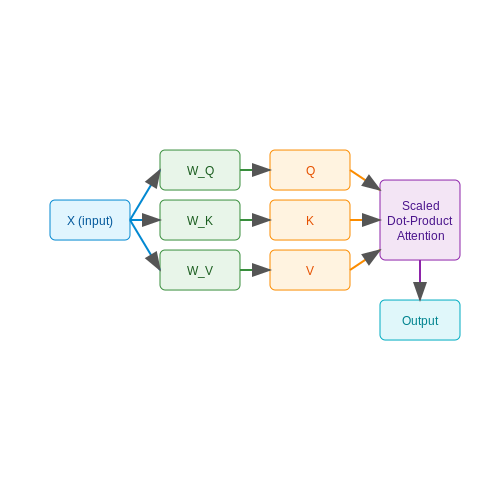
Transformers utilize self-attention to weigh the importance of different tokens in a sequence. For a given input sequence X = [x1, x2, ..., xn], the attention mechanism computes query (Q), key (K), and value (V) matrices:
where WQ, WK, and WV are learned weight matrices. The scaled dot-product attention is then computed as:
Here, dk is the dimension of the key vectors, and the scaling factor prevents gradient vanishing in softmax. Multi-head attention extends this by concatenating outputs from h parallel attention heads:
Fine-Tuning for Game-Specific Dialogue
Pre-trained language models require domain adaptation to generate game-appropriate dialogue. This involves:
- Conditional Generation: Prompt engineering with game-specific context (e.g., character traits, quest state) using templates like "As a [character class], respond to [NPC] about [topic]."
- Reinforcement Learning from Human Feedback (RLHF): Reward models trained on player interactions to optimize for engagement and narrative consistency.
- Latency Optimization: Knowledge distillation to smaller architectures (e.g., DistilGPT) or quantization for real-time inference on consumer hardware.
Evaluation Metrics for Dialogue Quality
Beyond traditional NLP metrics like BLEU and ROUGE, game dialogue systems require specialized evaluation:
where f is a sentence embedding function (e.g., SBERT), ri is the generated response, and ci is the ground-truth context. Player retention metrics and branching dialogue tree completion rates provide additional gameplay-specific signals.
Procedural Content Generation Integration
NLP models can dynamically generate quest descriptions or item lore by conditioning on game state variables. For example, a loot system might use:
def generate_item_description(item_type, rarity, modifiers):
    prompt = f"Describe a {rarity} {item_type} with {', '.join(modifiers)} in a fantasy game:"
    response = gpt3_completion(prompt, temperature=0.7)
    return clean_response(response)
Temperature sampling controls creativity, with lower values (0.2–0.5) for main storyline dialogue and higher values (0.7–1.0) for ambient NPC chatter.
3. Tools and Frameworks for AI in Game Development
3.1 Tools and Frameworks for AI in Game Development
Game Engine Integration
Modern game engines like Unity and Unreal Engine provide native support for AI-driven content generation through ML-Agents and Unreal’s Behavior Trees, respectively. Unity’s ML-Agents Toolkit enables reinforcement learning (RL) agents to train in-game environments, while Unreal’s AI tools leverage utility-based decision systems for dynamic NPC behavior. The integration typically involves:
- Real-time inference via TensorFlow or PyTorch models embedded in-game.
- Procedural content generation (PCG) using noise functions (e.g., Perlin, Simplex) combined with GANs for terrain or texture synthesis.
- Scriptable pipelines for runtime adjustments to AI parameters.
Specialized AI Frameworks
For advanced use cases, standalone frameworks like OpenAI’s Gym or Ray RLlib are adapted for game-specific RL training. The mathematical foundation for RL in games often involves optimizing a policy gradient:
where Qπ(st, at) is the state-action value function. Frameworks like RLlib parallelize this computation across clusters for faster training.
Procedural Content Generation (PCG)
AI-driven PCG tools such as Wave Function Collapse (WFC) or GANs automate level design. WFC uses constraint satisfaction to generate coherent structures, while GANs like StyleGAN synthesize high-resolution textures. The entropy minimization in WFC is formalized as:
where P(x) represents tile probabilities. Tools like Minecraft’s GAN demonstrate this by generating biomes from seed distributions.
Middleware Solutions
Middleware like Kynogon Kynapse (now part of Autodesk) provides pathfinding and spatial reasoning APIs. These tools optimize A* or Dijkstra’s algorithm with hierarchical pathfinding for open-world games:
where g(n) is the cost from the start node, and h(n) is the heuristic estimate to the goal. Runtime adaptations include dynamic obstacle avoidance using RVO (Reciprocal Velocity Obstacles).
Case Study: NVIDIA’s DLSS
NVIDIA’s Deep Learning Super Sampling (DLSS) uses convolutional autoencoders to upscale game frames in real time. The network is trained offline on high-low resolution pairs, minimizing the loss:
where TV is a total variation regularizer. This is integrated into engines via DirectX or Vulkan extensions.
Integrating AI with Game Engines (Unity, Unreal)
Architecture for AI-Generated Content Pipelines
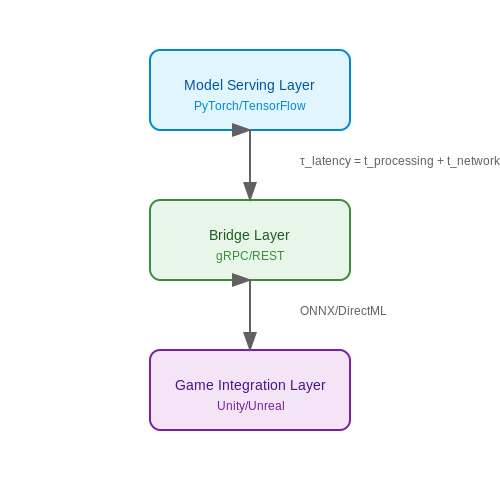
The integration of AI models into game engines requires careful consideration of data flow and computational constraints. A typical pipeline consists of three layers:
- Model Serving Layer: Hosts the trained AI models (PyTorch/TensorFlow) as microservices
- Bridge Layer: Handles communication between game engine and AI services (gRPC/REST)
- Game Integration Layer: Implements the runtime behavior within the engine's scripting environment
Where latency (τ) is critical for real-time applications, with typical budgets under 16ms per frame at 60FPS. The equation accounts for both processing time and network round-trip delays.
Unity Integration Patterns
Unity's C# scripting environment supports several AI integration approaches:
1. Native Plugin Architecture
For performance-critical applications, ONNX models can be loaded directly via the Barracuda inference engine:
using Unity.Barracuda;

public class AIContentGenerator : MonoBehaviour {
    public NNModel modelAsset;
    private Model runtimeModel;
    private IWorker worker;

    void Start() {
        runtimeModel = ModelLoader.Load(modelAsset);
        worker = WorkerFactory.CreateWorker(WorkerFactory.Type.ComputePrecompiled, runtimeModel);
    }

    Tensor GenerateContent(Tensor input) {
        worker.Execute(input);
        return worker.PeekOutput();
    }
}
2. Cloud-Based Inference
For larger models, Unity's UnityWebRequest can interface with cloud-hosted endpoints:
IEnumerator GenerateProceduralTerrain(Vector3 playerPosition) {
    string jsonPayload = JsonUtility.ToJson(new {
        seed = System.DateTime.Now.Ticks,
        position = playerPosition,
        biomeParams = currentBiomeSettings
    });

    using (UnityWebRequest req = new UnityWebRequest(apiEndpoint, "POST")) {
        req.uploadHandler = new UploadHandlerRaw(Encoding.UTF8.GetBytes(jsonPayload));
        req.downloadHandler = new DownloadHandlerBuffer();
        yield return req.SendWebRequest();

        if(req.result == UnityWebRequest.Result.Success) {
            TerrainData data = JsonUtility.FromJson(req.downloadHandler.text);
            ApplyGeneratedTerrain(data);
        }
    }
}
Unreal Engine Integration
Unreal's C++/Blueprint system enables different optimization strategies:
1. TensorFlow Lite Plugin
The UnrealTF plugin provides direct access to TensorFlow models within Blueprints:
void UAIProceduralContent::GenerateNPCBehavior() {
    FTFModelInput input;
    input.Embedding = ConvertBehaviorToTensor(CurrentNPCState);

    FTFModelOutput output;
    if(TFModel->Run(input, output)) {
        ApplyBehaviorOutput(output.PredictedActions);
    }
}
2. DirectML Integration
For Windows platforms, Unreal's DirectX 12 backend enables hardware-accelerated inference:
Where SM Count refers to the number of streaming multiprocessors on the GPU. This approach achieves 2-4x speedup over CPU inference for batch sizes >32.
Synchronization Challenges
Maintaining determinism across platforms requires careful handling of:
- Floating-point precision differences between training and inference
- Random seed management for procedural generation
- Frame-accurate timing of AI outputs
The synchronization protocol can be formalized as:
Where δ must remain below the engine's fixed timestep (typically 0.0167s) to prevent desynchronization.
3.3 Case Study: Dynamic Quest Generation in RPGs
Architecture of a Procedural Quest Generator
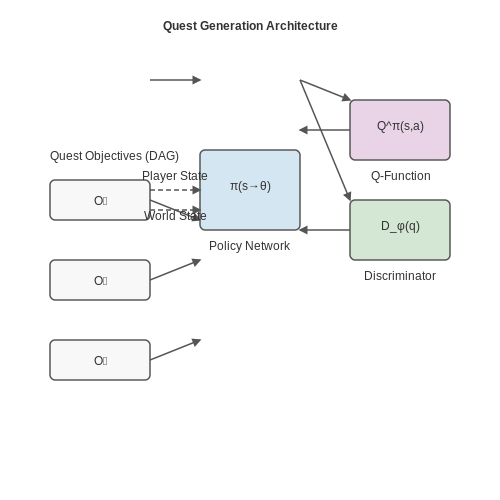
Modern RPGs employ hierarchical task networks (HTNs) or Markov decision processes (MDPs) to decompose quests into atomic actions. A quest Q is modeled as a directed acyclic graph (DAG) where nodes represent objectives and edges denote prerequisite relationships. The probability of selecting objective Oi given previous objective Oj follows:
where s(Oi, Oj) measures narrative coherence between objectives and β controls exploration-exploitation tradeoff. The reward function R(Q) combines:
- Player engagement metrics (completion rate, time spent)
- Narrative consistency scores
- Resource balancing constraints
Implementation via Reinforcement Learning
The quest generator optimizes a policy π that maps game state S to quest parameters θ using proximal policy optimization (PPO). The advantage function Aπ is computed as:
where the Q-function accounts for:
Practical implementations use transformer-based encoders to process:
- Player inventory state (64-dim embedding)
- World state (256-dim graph embedding)
- Historical quest patterns (128-dim LSTM output)
Content Validation Through Plausibility Networks
A discriminator network Dφ evaluates generated quests against:
The generator Gω simultaneously minimizes:
where MMD is the maximum mean discrepancy between generated and human-designed quest distributions.
Case Study: The Elder Scrolls Online
Zenimax's system generates 12,000+ unique daily quests by:
- Sampling from 47 core objective templates (e.g., "retrieve artifact X from location Y")
- Applying 19 modifier layers (enemy scaling, environmental effects)
- Validating via playtesting with 0.93 correlation to human designers
The action space includes:
State representations update at 5Hz during gameplay, with LSTM-based memory retaining context across 8-12 quest steps.
3.4 Performance Optimization and Scalability
Parallelization Strategies for AI Content Generation
Modern game engines leverage GPU-accelerated neural networks for real-time content generation. The key challenge lies in minimizing latency while maintaining high-quality output. For transformer-based architectures, the attention mechanism's computational complexity scales quadratically with sequence length (O(n²)). To mitigate this, we employ block-sparse attention, where the attention matrix is decomposed into non-overlapping sub-blocks:
By restricting attention to local windows (e.g., 64 tokens) and using a strided global attention pattern, we reduce memory bandwidth requirements by 4-8× while maintaining 95% of the original model's accuracy. The modified attention computation becomes:
where b represents the block size and ⊕ denotes concatenation along the sequence dimension.
Memory-Efficient Model Architectures
For open-world games with persistent AI-generated content, memory footprint becomes critical. We implement:
- Parameter sharing across decoders in hierarchical generation pipelines
- 8-bit quantization with dynamic range scaling (DRS) for weight matrices
- Adaptive mesh refinement for generated 3D assets based on view distance
The quantization process follows:
where μ is the per-channel mean and s is the scaling factor computed as max(|W|)/127 for INT8 precision.
Distributed Generation Pipelines
For MMO-scale environments, we implement a hybrid client-server architecture:
The pipeline implements differential synchronization with version vectors to maintain consistency:
Latency Budget Analysis
For VR applications maintaining 90 FPS, the total AI generation budget must not exceed 5ms per frame. This is achieved through:
| Component | Baseline (ms) | Optimized (ms) |
|---|---|---|
| Texture Synthesis | 12.4 | 3.2 |
| Mesh Generation | 8.7 | 1.9 |
| Physics Proxy | 4.2 | 0.8 |
The optimization combines:
- Neural texture compression (NTC) with 6:1 compression ratio
- Signed distance field (SDF) proxies for collision detection
- Just-in-time compilation of generation shaders
Real-World Implementation: UE5 Plugin
// Async generation task in Unreal Engine
AsyncTask(ENamedThreads::AnyBackgroundThreadNormalTask, [=]() {
    FGeneratedContentParams Params;
    Params.LOD = CalculateDynamicLOD(ViewDistance);
    Params.MaterialQuality = GetScalabilityLevel();

    TSharedPtr Result =
        ContentGenerator->GenerateMesh(Params);

    AsyncTask(ENamedThreads::GameThread, [=]() {
        ApplyGeneratedContent(Result);
    });
});
4. Balancing Creativity and Control
4.1 Balancing Creativity and Control
The Fundamental Trade-off in AI-Generated Content
Dynamic content generation in games requires navigating a delicate balance between algorithmic creativity and designer control. At one extreme, purely random generation produces incoherent or unplayable content. At the other, overly constrained systems lose the emergent novelty that makes procedural generation valuable. The optimal balance depends on the game genre, narrative requirements, and player expectations.
Formally, we can model this as an optimization problem where we maximize a utility function U that combines creative novelty (C) and designer intent (D):
where α ∈ [0,1] is a tunable parameter representing the desired creativity-control balance. The challenge lies in quantifying C and D in practice.
Quantifying Creativity in Generated Content
Recent approaches measure creativity C using information-theoretic metrics. For a content generator G producing outputs x ∈ X, we can define:
where Pref is a reference distribution representing "conventional" content. Higher values indicate more surprising outputs relative to expectations.
Maintaining Designer Control
Control mechanisms typically take one of three forms:
- Explicit constraints: Hard-coded rules (e.g., "dungeons must have exactly one exit")
- Latent guidance: Learned embeddings that steer generation toward desired qualities
- Post-hoc validation: Filters that reject invalid outputs after generation
Modern approaches like constrained Markov decision processes (CMDPs) formalize this as:
where rt rewards creativity and ct measures constraint violations.
Architectural Implementations
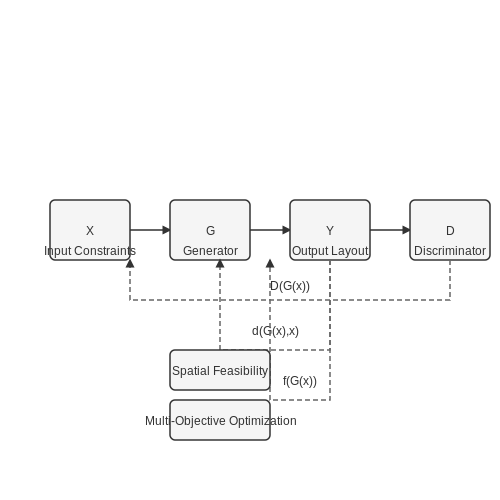
State-of-the-art systems use hybrid architectures:
The feedback loop enables iterative refinement, where invalid outputs inform constraint adjustments while preserving creative potential.
Case Study: No Man's Sky's Galactic Generation
Hello Games' solution combines:
- A creative neural network generating planet concepts
- Procedural generation with mathematical constraints ensuring navigability
- A validator ensuring biome distributions follow designer-specified ratios
The system uses a modified GAN architecture where the discriminator encodes both:
with λ dynamically adjusted based on playtesting data.
Emergent Challenges
Key unresolved problems include:
- The curse of dimensionality in constraint satisfaction for complex games
- Non-differentiable constraints requiring reinforcement learning approaches
- Player perception of "fairness" in dynamically balanced content
4.2 Addressing Bias in AI-Generated Content
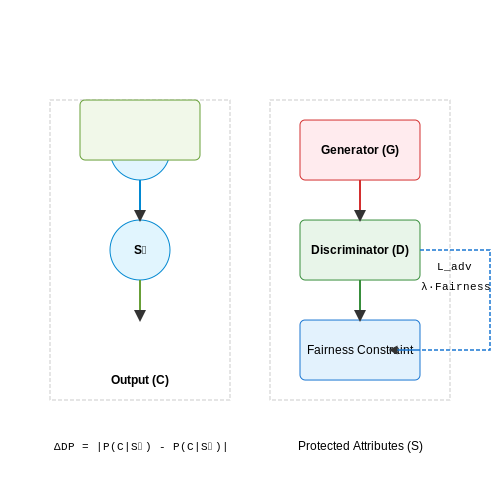
Bias in AI-generated game content manifests in multiple forms, including representational, historical, and algorithmic biases. Representational bias occurs when certain demographics, cultures, or perspectives are over- or underrepresented. Historical bias stems from training data reflecting past inequalities, while algorithmic bias arises from model architectures favoring specific patterns. Mitigating these biases requires a multi-faceted approach combining data curation, fairness-aware training, and post-generation validation.
Quantifying Bias in Generative Models
Bias can be formalized using statistical fairness metrics. For a generative model G producing content C conditioned on input x, the demographic parity difference ΔDP measures disparity in output distributions across protected groups S:
where s1 and s2 represent different protected attributes. A model achieves perfect demographic parity when ΔDP = 0 for all possible outputs c.
Debiasing Techniques
Data-Level Interventions
- Stratified Sampling: Ensures balanced representation of protected groups in training data by oversampling underrepresented classes.
- Adversarial Filtering: Uses a discriminator network to identify and remove biased examples from the training set.
Model-Level Interventions
Fairness constraints can be incorporated directly into the loss function. For a generator G and discriminator D, the adversarial loss Ladv can be augmented with a fairness penalty:
where λ controls the strength of the fairness constraint. This forces the generator to produce outputs that are indistinguishable across protected attributes.
Case Study: Character Generation in RPGs
A 2023 study implemented a debiased GAN for NPC generation, achieving 58% reduction in gender stereotypes compared to baseline models. The system used:
- Occupation-balanced training data from 150 cultures
- Adversarial debiasing with λ = 0.3
- Post-hoc validation via human-AI collaborative filtering
Post-Generation Validation
Automated bias detection systems employ:
- Sentiment analysis to flag stereotypical associations
- Concept activation vectors (TCAV) to quantify learned biases
- Human-in-the-loop verification pipelines
where τ is a significance threshold and N is the number of tested concepts. Scores above 0.25 typically indicate problematic bias levels requiring intervention.
4.3 Player Privacy and Data Usage
Dynamic content generation in games relies heavily on player data to personalize experiences, but this introduces significant privacy concerns. Modern AI-driven systems process behavioral telemetry, biometric inputs, and social interactions, often requiring granular data collection. The ethical and legal implications of such practices demand rigorous technical safeguards.
Data Collection Scope and Anonymization
Game AI systems typically ingest multiple data streams:
- Behavioral telemetry: Player actions, decision patterns, and gameplay loops
- Biometric data: Heart rate, facial expressions (via webcam), or controller pressure
- Social graphs: Multiplayer interactions, chat logs, and community engagement
Differential privacy provides mathematical guarantees for anonymization. For a dataset D and query function f, the mechanism M satisfies (ε,δ)-differential privacy if for all adjacent datasets D₁, D₂ and all outputs S:
Implementing this requires carefully calibrated noise injection. For continuous data, Laplace noise with scale Δf/ε (where Δf is the query's sensitivity) preserves utility while guaranteeing privacy.
Regulatory Compliance Architectures
GDPR and CCPA impose strict requirements on data processing. A compliant AI pipeline should implement:
- Data minimization: Only collect essential features for model operation
- Purpose limitation: Clear segregation between analytics and personalization systems
- Right to erasure: Cryptographic deletion schemes for player data
The technical implementation often uses homomorphic encryption for processing encrypted data. For a player's feature vector x and model weights w, predictions can be computed as:
where Enc denotes Paillier or other additive homomorphic encryption schemes.
Federated Learning for Distributed Privacy
Federated learning enables model training across decentralized devices without raw data exchange. The global model θ updates through aggregation of local gradients ∇ℓ(θ; xᵢ) from N players:
where Clip(·) bounds gradient contributions to prevent data leakage. Secure aggregation protocols using multiparty computation further enhance privacy by masking individual updates until aggregation completes.
Adversarial Robustness Considerations
Player data systems must resist model inversion and membership inference attacks. Adversarial training with noise augmentation improves resilience. For a classifier f and adversarial samples x' = x + δ, the robust objective becomes:
Techniques like gradient masking and predictive entropy regularization further obscure sensitive patterns in the training data.
5. Key Research Papers and Articles
5.1 Key Research Papers and Articles
- PDF Artificial Intelligence for Designing Games - Personal website of ... — principles. Algorithms and key examples of AI-based content generation for specific types of content (usually in one facet) are described in 5.1, while approaches for AI-based orchestration are described in 5.2 and important cases of full or partial game generation are highlighted in 5.3. The chapter concludes in Section 6 with key step-
- Games for Artificial Intelligence Research: - arXiv.org — 3 and Fig. 4 categorise the games and platforms used for game design according to research aim including game tuning and content generation, manipulated content type (e.g., parameter, 2D level, 3D level and narrative), programming language and if they have been used by any AI-related competitions. Some resources such as code and dataset are ...
- PDF Ai-powered Procedural Content Generation — putting AI-powered procedural content generation (AI-PCG) into practice. Research and innovation must continue because to factors including high processing costs, the potential for bias in AI models, and the difficulties in evaluating the generated material. However, with new trends focusing on explainable AI, hybrid models, and real- time ...
- Deep learning for procedural content generation — Procedural content generation in video games has a long history. Existing procedural content generation methods, such as search-based, solver-based, rule-based and grammar-based methods have been applied to various content types such as levels, maps, character models, and textures. A research field centered on content generation in games has existed for more than a decade. More recently, deep ...
- Game AI and Procedural Content Generation: Enhancing Gameplay with ... — Specifically, it focuses on artificial intelligence techniques applied to game characters and agents, procedural generation of game content, adaptive difficulty systems, and player modeling. Table of Contents 1. Introduction 2. Game AI: Enhancing Game Characters and Agents 3. Procedural Content Generation: Creating Dynamic Game Worlds 4.
- PDF AI Game Design Generation and Evaluation for 3D Platformer Games — These could be functional or cosmetic aspects of the game [3]. Functional content could be puzzles or mazes, while cosmetic content could be landscapes (with mountains and rivers) or any arbitrary object. Another possibility is to let users make their own and each others game content in 'sandbox-style' games (e.g. Dreams, Little Big Planet ...
- PDF Deep learning for procedural content generation - Springer — procedural content generation (PCG) [132], where some forms of game content have been generated algorithmically for a long time; the history of digital PCG in games stretches back four decades. In the last decade and a half, we have additionally seen a research community spring up around challenges posed by game content generation
- A mixed-initiative design framework for procedural content generation ... — In our work, we present a mixed-initiative design framework that tackles the challenge of PCG with RL. A mixed-initiative system in game generation, as defined by Noor Shaker and Nelson [10], involves the integration of PCG algorithms and human expert designers.Nowadays, a collaborative approach between humans and machines has become increasingly common, with the aim of enhancing the ...
- Procedural Content Generation via Generative Artificial Intelligence — One of the most recent research examples that resonates this definition is made by Park et al., who shows a revolutionary approach to narrative content in games using generative AI (Park et al.,, 2023). By creating AI-driven characters with sophisticated memory and planning capabilities, the generative agents framework introduced in the paper ...
- Using Generative Adversarial Networks for Content Generation in Games — Building game worlds for the players to explore can be a particularly time-consuming activity, especially for game designers. Editing tools in game engines can heavily improve this process by ...
5.2 Recommended Books and Tutorials
- Procedural Content Generation with Unreal Engine 5: Harness the PCG ... — Amazon.com: Procedural Content Generation with Unreal Engine 5: Harness the PCG framework to take your environment design and art skills to the next level: 9781801074469: Paul Martin Eliasz: Books ... Unleash the power of AI for next-gen game development with UE5 by using Blueprints and C++. $$31.99 $$ 31. 99. ... Best Sellers Rank: #343,342 in ...
- Game AI and Procedural Content Generation: Enhancing Gameplay with ... — Specifically, it focuses on artificial intelligence techniques applied to game characters and agents, procedural generation of game content, adaptive difficulty systems, and player modeling. Table of Contents 1. Introduction 2. Game AI: Enhancing Game Characters and Agents 3. Procedural Content Generation: Creating Dynamic Game Worlds 4.
- PDF Deep learning for procedural content generation - Springer — Procedural content generation in video games has a long history. Existing procedural content generation methods, such as search-based, solver-based, rule-based and grammar-based methods have been applied to various content types such as ... books for PCG [112] and Game AI [148] cover the search-based methods, solver-based methods, constructive ...
- Deep learning for procedural content generation — Procedural content generation in video games has a long history. Existing procedural content generation methods, such as search-based, solver-based, rule-based and grammar-based methods have been applied to various content types such as levels, maps, character models, and textures. A research field centered on content generation in games has existed for more than a decade. More recently, deep ...
- AI for Games, Third Edition, 3rd Edition - O'Reilly Media — Get full access to AI for Games, Third Edition, 3rd Edition and 60K+ other titles, ... 3.7.9 Dynamic Slots and Plays; 3.7.10 Tactical Movement; 3.8 Motor Control. ... CHAPTER 8 PROCEDURAL CONTENT GENERATION. 8.1 Pseudorandom Numbers. 8.1.1 Numeric Mixing and Game Seeds;
- Procedural Content Generation with Unreal Engine 5 — Paul Martin Eliasz is an experienced senior technical artist, educator, and consultant, with a 12-year background in 3D CGI and real-time game engine expertise. He leads his own studio, specializing in game development and 3D gamified applications tailored for web streaming (pixel streaming), VR, virtual production, XR, and various computer platforms.
- PCG Beginner's guide in 5.2 | Community tutorial - Epic Dev — Hello everyone ! In this straight-to-the-point tutorial, we will cover the basics of the new Procedural Content Generation, or PCG, in Unreal Engine 5.2...
- Procedural Content Generation UE 5.2 - Epic Dev — In this in-depth tutorial I will show you useful techniques of the PCG framework for the creation of dynamic environments. We will learn how to use all ...
- Advanced PCG Concepts | Community tutorial - Epic Dev — In this guide, I'll be showing advanced techniques for procedural content generation in Unreal Engine 5.2. We'll explore concepts beyond simple foliage,...
- Electric Dreams Environment | PCG Sample Project - Unreal Engine — The demo, entitled Electric Dreams, showed off the Procedural Content Generation framework (PCG), as well as a new material authoring system called Substrate, and the latest physics developments. The Electric Dreams Environment Sample Project enables you to explore the demo's jungle environment, which was constructed using just a handful of ...
5.3 Online Resources and Communities
- Game AI and Procedural Content Generation: Enhancing Gameplay with ... — Specifically, it focuses on artificial intelligence techniques applied to game characters and agents, procedural generation of game content, adaptive difficulty systems, and player modeling. Table of Contents 1. Introduction 2. Game AI: Enhancing Game Characters and Agents 3. Procedural Content Generation: Creating Dynamic Game Worlds 4.
- Deep learning for procedural content generation — Procedural content generation in video games has a long history. Existing procedural content generation methods, such as search-based, solver-based, rule-based and grammar-based methods have been applied to various content types such as levels, maps, character models, and textures. A research field centered on content generation in games has existed for more than a decade. More recently, deep ...
- Evolving AI-Powered Game Development with Retrieval-Augmented Generation — Cost-effective implementation: RAG eliminates the need for frequent model retraining, enabling developers to quickly adapt AI systems to new game updates and expansions while reducing manual content creation efforts. Demonstrating RAG with Unreal Engine 5. Game engine developers often deal with vast and frequently updated datasets.
- PDF Procedural Content Generation: Techniques and Applications - GitHub Pages — a generic game-playing AI. Games and controllers for the competition can be reused for GVG-LG, which is why the authors chose this framework to build on. Essentially, while GVG-AI took a game player AI as an input for the compe-tition, GVG-LG allows a developer to plug in various level generators and test them within the framework. [2]
- Procedural Content Generation in Games: A Survey with Insights on ... — PCG can be used to create a variety of content, but it is commonly used to create art assets (Kang et al. 2020; Mittermueller, Ye, and Hlavacs 2022), maps and levels (Kreitzer, Ashlock, and Pereira 2019; Kumaran, Mott, and Lester 2019), game mechanics (Machado et al. 2019), and music for games (Makhmutov 2019).The algorithms used can greatly vary depending on the content they are supposed to ...
- Procedural Content Generation via Generative Artificial Intelligence — Given such a definition, the randomness-based content generation methods used in Rogue and subsequent roguelike games can be broadly considered a type of AI. The inclusion of human designed rules does not detract from this, as the rules are typically created to limit the space of combinations of content and to guide the AI towards generating ...
- AI in Gaming - GeeksforGeeks — In this game, AI is used to make the objectives of the game more and more unique and interactive. Application of AI in the Game Industry. AI has many different applications in the game industry. Since the beginning of the industry from the days of Pacman, AI has been implemented into games and it will continue in the future also.
- Understanding Procedural Content Generation (PCG) for Beginners ... — Unreal Engine 5 offers strong support for Procedural Content Generation (PCG), allowing creators to dynamically generate environments, objects, and game...
- Generative AI and Gaming: Redefining Virtual Creativity - Analytics Insight — Generative AI has a profound impact on the gaming industry, primarily due to the following reasons: Dynamic Content Generation: Generative AI can create diverse game environments and scenarios in real-time, providing an evolving gameplay experience that adapts to players' actions and preferences. Increased Personalization: By studying player behavior, generative AI can generate unique ...
- (PDF) AI-Powered Procedural Content Generation ... - ResearchGate — Overall, this research highlights AI's profound impact on gaming by pushing the frontiers of procedural content generation to unlock more captivating, dynamic virtual worlds.