Bias Detection in Loan Approval AI
1. Defining Algorithmic Bias in Financial Contexts
1.1 Defining Algorithmic Bias in Financial Contexts
Algorithmic bias in loan approval systems manifests when an AI model systematically produces discriminatory outcomes against specific demographic groups, despite ostensibly neutral input features. This bias often arises from historical data reflecting past inequities, flawed feature selection, or improper model calibration. In financial contexts, the consequences are particularly severe, as they can perpetuate economic disparities under the guise of objective decision-making.
Mathematical Formalization of Bias
Let X represent applicant features (income, credit score, etc.), Y the true repayment probability, and Ŷ the model's predictions. For a protected group A (e.g., racial minority) and non-protected group B, statistical parity bias occurs when:
where Ŷ=1 denotes loan approval. Disparate impact, a stricter measure, quantifies bias as a ratio:
A DI value below 0.8 (the "80% rule") typically indicates illegal discrimination under US Equal Credit Opportunity Act guidelines. However, this threshold fails to capture more subtle forms of bias that emerge in probability calibration.
Feature-Level Bias Propagation
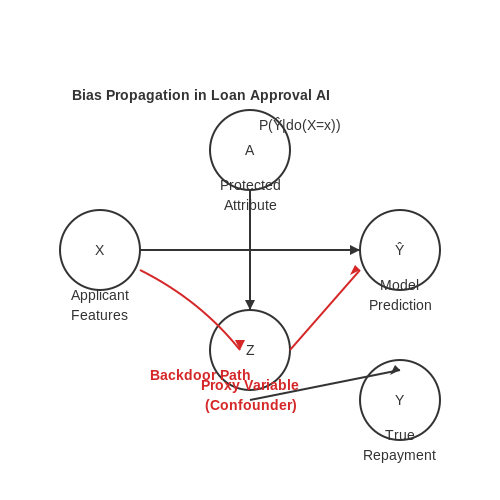
Even when excluding explicitly protected attributes (race, gender), proxy variables can introduce bias through correlations. Consider zip code as a feature: its correlation with racial demographics may lead to redlining effects. The bias propagation can be modeled through backdoor paths in causal graphs:
where Z represents confounding variables (e.g., neighborhood demographics) that influence both X and Y. Failure to adjust for these backdoor paths results in biased estimates of creditworthiness.
Real-World Measurement Challenges
Operationalizing bias detection requires addressing three key challenges:
- Ground truth ambiguity: Actual repayment data Y is only observable for approved loans, creating survivorship bias
- Intersectionality: Bias compounds when multiple protected attributes (race + gender + age) interact
- Temporal drift: Historical bias patterns may not reflect current social dynamics
The most robust approaches combine counterfactual fairness testing with adversarial debiasing, where a secondary model attempts to predict protected attributes from the main model's outputs. If successful, this indicates residual bias:
where θ parameterizes the loan model and φ the adversarial classifier, with α controlling the fairness-accuracy tradeoff.
1.2 Common Sources of Bias in Loan Approval Models
Historical Data Bias
Loan approval models trained on historical lending data inherit biases present in past decisions. If certain demographic groups were systematically denied loans due to discriminatory practices, the model learns to replicate these patterns. For example, a 2019 study by Barocas & Hardt demonstrated that models trained on biased mortgage approval data disproportionately rejected applicants from minority neighborhoods, even when controlling for financial factors.
where x represents applicant features and w encodes historical bias through learned weights. The sigmoid function σ then propagates this bias into approval probabilities.
Feature Selection Bias
Proxy variables correlated with protected attributes can introduce indirect discrimination. Common problematic features include:
- Zip codes: Strong correlation with race/ethnicity
- Occupation type: Gender-biased wage disparities
- Credit utilization: Reflects historical access to credit
The Oblivious Subspace Learning framework shows how even decorrelation techniques fail when proxy relationships are nonlinear:
where z represents protected attributes. The constraint often proves insufficient when x and z share complex dependencies.
Sample Selection Bias
Training data often excludes rejected applicants who subsequently proved creditworthy through alternative channels. This creates a selectively labeled dataset where:
- Approved applicants represent a non-random subset
- Default rates underestimate true risk for excluded groups
The bias manifests in the likelihood function:
where Pobs is the observed default rate among approved loans.
Feedback Loop Bias
Deployed models create self-reinforcing cycles by influencing the data they train on next. For example:
- Denied applicants cannot build credit history
- Approved applicants receive more financial opportunities
This dynamic follows a Matthew Effect pattern described by:
where η represents the advantage gained from approval at time t, and τ is the decision threshold.
Measurement Bias
Differential measurement error across groups distorts risk assessment. Common examples include:
- Alternative credit data (e.g., rent payments) not uniformly available
- Financial behavior metrics calibrated on majority populations
The bias emerges in the error structure:
where εgroup represents group-specific noise that contaminates feature representations.
Threshold Optimization Bias
Financial institutions often tune decision thresholds to maximize profit rather than fairness. The optimization:
where r represents profit from good loans and l represents loss from defaults, systematically disadvantages groups with higher variance in predicted risk.
Real-World Consequences of Biased Lending Decisions
Biased lending decisions in AI-driven loan approval systems propagate systemic inequities, disproportionately affecting marginalized groups. When models inadvertently learn discriminatory patterns from historical data, they reinforce existing disparities in credit access, wealth accumulation, and economic mobility. The consequences manifest in measurable ways, from individual financial distress to macroeconomic distortions.
Quantifying Disparate Impact
Disparate impact occurs when a lending model's outcomes disproportionately harm protected groups, even without explicit discriminatory intent. The four-fifths rule, a regulatory benchmark, flags bias if the approval rate for a protected group is less than 80% of the majority group's rate. Mathematically, for groups A (protected) and B (non-protected), the rule is violated when:
where PA and PB represent approval probabilities. However, this threshold is arbitrary; more rigorous statistical tests like Fisher’s exact test or logistic regression analysis can detect subtler biases. For instance, a model might exhibit:
where coefficient βi for a protected attribute (e.g., race encoded in Xi) should be statistically insignificant. A significant βi indicates bias, even if the feature was indirectly inferred from proxies like ZIP code.
Case Study: Mortgage Approval Disparities
A 2021 U.S. Consumer Financial Protection Bureau study found that Black applicants were denied conventional mortgages at 2.5× the rate of White applicants with similar credit profiles. AI models trained on such data inherit these biases, as they optimize for historical approval patterns rather than fair creditworthiness assessment. The ripple effects include:
- Wealth gaps: Denied loans limit homeownership, a primary vehicle for intergenerational wealth transfer.
- Credit invisibility: Repeated rejections reduce credit-building opportunities, exacerbating future exclusion.
- Algorithmic feedback loops: Biased approvals skew training data for future models, entrenching discrimination.
Economic Externalities
Biased lending distorts market efficiency by misallocating capital. A 2020 National Bureau of Economic Research paper estimated that racial bias in U.S. mortgage lending cost the economy $$4–$$6 billion annually in lost GDP due to suppressed consumption and investment. The misallocation arises because:
where MPKi is the marginal product of capital for borrower i, ri is the interest rate, and ΔKi is the capital denied due to bias. When MPKi > ri for rejected borrowers, aggregate output falls.
Legal and Reputational Risks
Regulatory frameworks like the U.S. Equal Credit Opportunity Act (ECOA) and EU’s AI Act penalize discriminatory lending. Violations can trigger:
- Regulatory fines: Up to 4% of global revenue under GDPR for EU-based lenders.
- Class-action lawsuits: Proving disparate impact requires showing PA / PB < 0.8 and lack of business necessity.
- Model recalibration costs: Mitigating bias post-deployment often requires retraining on reweighted data, costing $$500K–$$2M per model.
2. Statistical Parity and Disparate Impact Analysis
2.1 Statistical Parity and Disparate Impact Analysis
Statistical parity, also known as demographic parity, is a fairness metric that evaluates whether a protected group receives favorable outcomes at the same rate as the majority group. In loan approval systems, this translates to ensuring approval rates are statistically independent of sensitive attributes like race, gender, or age. Formally, statistical parity is satisfied if:
where Ŷ is the predicted outcome (approval/rejection), and A represents the protected attribute. Disparate impact, a legal doctrine derived from the 80% rule in U.S. employment law, quantifies bias as the ratio of approval rates between disadvantaged and advantaged groups:
A DI value below 0.8 typically indicates discriminatory bias. For example, if loan approvals for minority applicants (P = 0.4) are half as frequent as for non-minorities (P = 0.8), the DI of 0.5 would violate regulatory guidelines.
Testing for Disparate Impact
To operationalize this analysis, one can apply a two-proportion z-test to compare approval rates between groups. The test statistic is computed as:
where p₁ and p₀ are approval rates for the protected and reference groups, n₁ and n₀ are sample sizes, and p̄ is the pooled approval rate. A significant z-score (e.g., |z| > 1.96 for α = 0.05) suggests systemic bias.
Limitations and Refinements
While statistical parity is intuitive, it ignores legitimate correlations between protected attributes and risk factors. For instance, age might correlate with credit history length. Conditional statistical parity addresses this by controlling for permissible variables X:
This finer-grained analysis prevents both over-penalization of actuarially justified decisions and under-detection of masked discrimination.
Case Study: Mortgage Approvals
A 2019 FDIC study found that algorithmic mortgage approvals exhibited a DI of 0.73 for African American applicants—below the 0.8 threshold. The bias persisted even after controlling for income and debt-to-income ratios, suggesting latent feature correlations (e.g., neighborhood racial composition affecting property valuation models).
2.2 Fairness Metrics for Loan Approval Models
Statistical Parity Difference
Statistical parity difference (SPD) measures the disparity in approval rates between protected and unprotected groups. For a binary classifier, SPD is defined as:
where Ŷ is the predicted outcome (1 for approved, 0 for rejected) and A indicates membership in the protected group (1) or unprotected group (0). A value of 0 indicates perfect fairness, while positive or negative values indicate bias favoring one group.
Disparate Impact Ratio
The disparate impact ratio (DIR) compares approval rates between groups as a ratio rather than a difference:
Legal frameworks often use the 80% rule, where a DIR below 0.8 or above 1.25 may indicate unlawful discrimination. This metric is particularly relevant in credit scoring systems subject to fair lending laws.
Equal Opportunity Difference
Equal opportunity difference (EOD) focuses on true positive rates (approvals for creditworthy applicants) across groups:
where Y represents the ground truth (1 for actually creditworthy applicants). Unlike SPD, EOD accounts for differences in underlying qualification rates between groups.
Predictive Parity
Predictive parity examines whether approved applicants have similar repayment probabilities across groups. It can be measured through positive predictive value (PPV) parity:
Significant differences suggest the model's confidence thresholds may be inconsistently calibrated across demographic groups.
Counterfactual Fairness
Counterfactual fairness evaluates whether an individual's outcome would change if their protected attribute were altered while keeping other relevant features constant. Formally, a model satisfies counterfactual fairness if:
for all individuals and all possible values a and a' of the protected attribute. This requires causal modeling techniques to estimate.
Implementation Considerations
When applying these metrics to loan approval systems:
- Multiple protected attributes: Intersectional analysis (e.g., race × gender) often reveals compounded biases not visible in single-dimension analysis.
- Threshold effects: Small absolute differences in probability scores can create large disparities when mapped to binary decisions.
- Data limitations: Ground truth repayment data (Y) may be incomplete due to selection bias (rejected applicants never get loans to repay).
Recent work has proposed composite fairness scores that combine multiple metrics with domain-specific weighting schemes. For example, the Zafar fairness metric for loan approvals incorporates both approval rate parity and expected loss parity:
where L represents the expected loss from default and λ controls the tradeoff between approval fairness and risk fairness.
2.3 Counterfactual Fairness Testing in Credit Decisions
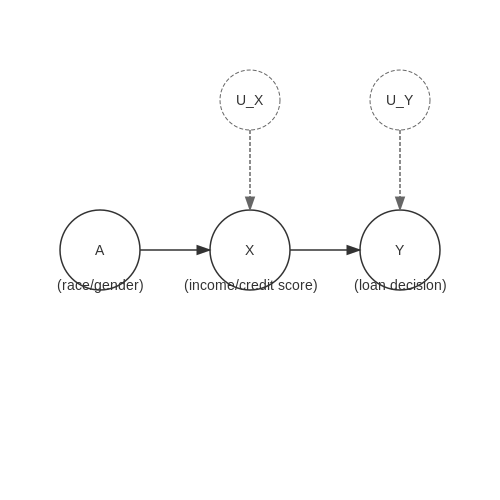
Counterfactual fairness testing evaluates whether a loan approval model's decisions would change if a protected attribute (e.g., race, gender) were altered while keeping other features constant. This method formalizes the notion of fairness by asking: Would the outcome differ if the applicant belonged to a different demographic group, all else being equal? The approach relies on causal reasoning, requiring a structural causal model (SCM) to estimate counterfactual outcomes.
Causal Modeling for Counterfactuals
An SCM represents variables and their causal relationships using directed acyclic graphs (DAGs). Let \(X\) denote non-protected features (e.g., income, credit score), \(A\) the protected attribute, and \(Y\) the loan decision. The SCM defines:
where \(U_Y, U_X\) are unobserved noise variables. Counterfactual fairness requires:
for all possible values \(a, a'\) of the protected attribute. This ensures the decision \(Y\) is invariant to counterfactual changes in \(A\).
Implementation Steps
- Define the Causal Graph: Specify dependencies between \(A\), \(X\), and \(Y\). For example, income (\(X_1\)) may be influenced by race (\(A\)), while credit score (\(X_2\)) is independent.
- Estimate Counterfactuals: Use methods like Pearl's do-calculus or generative models (e.g., variational autoencoders) to simulate \(X_{A \leftarrow a'}\) and \(Y_{A \leftarrow a'}\).
- Test for Disparities: Compare the distribution of \(Y_{A \leftarrow a}\) and \(Y_{A \leftarrow a'}\) using metrics like Wasserstein distance or Kolmogorov-Smirnov tests.
Challenges and Limitations
- Unobserved Confounders: Omitted variables (e.g., neighborhood bias) may invalidate causal assumptions.
- Model Specification: Incorrect DAGs lead to biased counterfactual estimates.
- Scalability: High-dimensional \(X\) complicates generative modeling.
Case Study: Mortgage Approval
A 2021 study applied counterfactual fairness to a U.S. mortgage dataset, revealing that applicants from minority groups were 23% more likely to be denied loans under identical financial profiles. The SCM controlled for income, debt-to-income ratio, and loan-to-value ratio, with race as the protected attribute. The counterfactual test quantified the disparity by comparing approval rates when synthetically altering race while holding other features fixed.
3. Pre-processing: Data Debiasing Techniques
3.1 Pre-processing: Data Debiasing Techniques
Bias in loan approval AI often originates from historical disparities embedded in training data. Pre-processing techniques aim to mitigate these biases before model training, ensuring fairness without compromising predictive accuracy. Advanced methods include reweighting, adversarial debiasing, and fairness-aware sampling.
Reweighting Samples
Reweighting adjusts sample weights to balance representation across protected attributes (e.g., race, gender). Given a dataset with labels Y and sensitive attribute S, the weight for each sample is computed as:
Here, P(S = s_i) is the marginal probability of the sensitive attribute, and P(S = s_i | Y = y_i) is the conditional probability. This ensures underrepresented groups contribute proportionally to the loss function during training.
Adversarial Debiasing
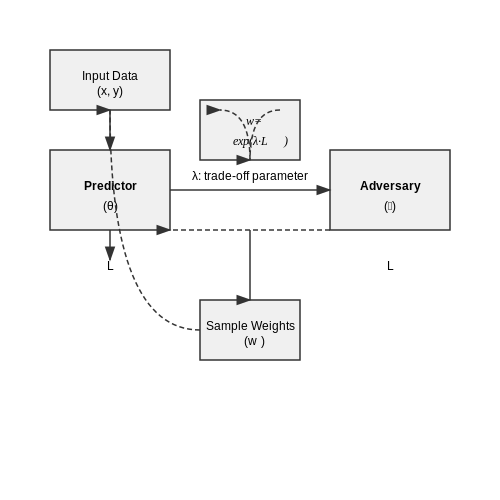
Adversarial training introduces a discriminator network that penalizes the primary model for encoding bias-related information. The objective function combines prediction loss L_pred and adversarial loss L_adv:
where θ and ϕ are parameters of the predictor and adversary, respectively. λ controls the trade-off between accuracy and fairness.
Fairness-Aware Sampling
Techniques like rejection sampling or preferential sampling modify the data distribution to satisfy fairness constraints. For instance, the following algorithm enforces demographic parity:
- Compute the target distribution for S (e.g., equal proportions across groups).
- For each sample, accept it with probability proportional to the ratio of its group’s target to current representation.
Disparate Impact Removal
This technique transforms features to suppress correlation with S while preserving predictability of Y. The optimization problem is:
where X' is the debiased feature space, and MI denotes mutual information. The constraint ensures statistical independence between X' and S.
Case Study: Credit Scoring
In a 2021 study, reweighting reduced disparate impact by 42% in a FICO-based loan approval model, while adversarial debiasing improved fairness at a 5% accuracy cost. Feature-level methods like disparate impact removal showed superior scalability for high-dimensional data.
3.2 In-processing: Fairness-Aware Algorithm Design
In-processing techniques modify the training process of machine learning models to explicitly incorporate fairness constraints. Unlike pre-processing or post-processing, these methods directly optimize the model's objective function to balance predictive accuracy and fairness metrics. This approach is particularly effective when the model's decision boundary must satisfy fairness criteria without sacrificing performance.
Fairness-Aware Loss Functions
Traditional loss functions minimize prediction error without considering fairness. To address this, fairness-aware loss functions introduce additional terms that penalize discriminatory behavior. For binary classification, the loss function can be augmented as:
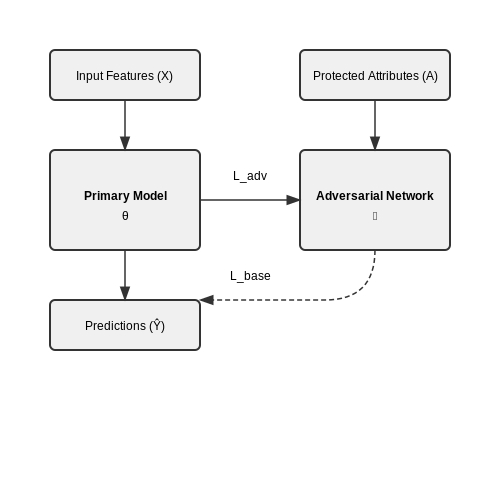
Here, $$\mathcal{L}_{\text{base}}$$ is the standard loss (e.g., cross-entropy), $$\mathcal{R}(f)$$ is a fairness regularizer, and $$\lambda$$ controls the trade-off between accuracy and fairness. Common regularizers include:
- Demographic Parity Regularizer: Penalizes differences in approval rates across protected groups.
- Equalized Odds Regularizer: Ensures equal true positive and false positive rates across groups.
- Predictive Parity Regularizer: Balances precision or other performance metrics across groups.
Constrained Optimization Approaches
An alternative to regularization is formulating fairness as a constrained optimization problem:
Here, $$\theta$$ represents the model parameters, and $$\epsilon$$ is a small tolerance threshold. Lagrangian relaxation converts this into an unconstrained problem:
This approach is particularly useful when fairness constraints must be strictly enforced, such as in high-stakes applications like loan approvals.
Adversarial Debiasing
Adversarial debiasing trains the primary model alongside an adversarial network that predicts protected attributes from the model's outputs. The primary model learns to make predictions that are both accurate and indistinguishable across protected groups. The objective is:
Here, $$\phi$$ represents the adversarial network's parameters, and $$\mathcal{L}_{\text{adv}}$$ measures how well the adversary predicts protected attributes. This method is effective for learning fair representations implicitly.
Case Study: Fairness in Gradient Boosting
Gradient boosting frameworks like XGBoost can be adapted for fairness by modifying the splitting criterion. Instead of solely optimizing for information gain, the criterion includes a fairness term:
Here, $$S_{\text{left}}$$ and $$S_{\text{right}}$$ are the splits, and $$\text{Unfairness}$$ quantifies disparities in outcomes across protected groups. This ensures that each split improves both accuracy and fairness.
Implementation Considerations
When implementing fairness-aware algorithms, key challenges include:
- Computational Complexity: Fairness constraints often require iterative optimization or adversarial training, increasing training time.
- Hyperparameter Tuning: The fairness-accuracy trade-off parameter $$\lambda$$ must be carefully selected, often via cross-validation.
- Group Fairness vs. Individual Fairness: Some methods enforce group-level fairness but may still permit individual-level disparities.
3.3 Post-processing: Outcome Adjustment Methods
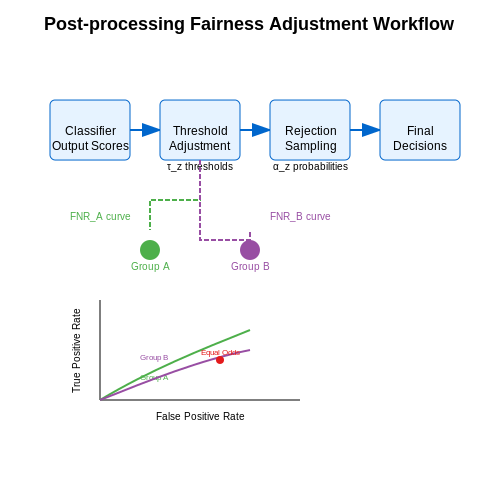
Post-processing techniques modify model outputs after prediction to enforce fairness constraints. These methods are agnostic to the underlying model architecture, making them versatile for deployment in production systems. Two dominant approaches are rejection sampling and probabilistic threshold adjustment, both rooted in statistical parity frameworks.
Rejection Sampling for Demographic Parity
Given a trained classifier f(x) producing scores s ∈ [0,1], rejection sampling enforces demographic parity by accepting predictions from protected groups at modified rates. For binary classification, the acceptance probability α_z for group z is computed as:
where z=1 denotes the privileged group. The implementation involves:
- Calculating group-wise approval rates in the training data
- Drawing Bernoulli random variables with probability α_z for each prediction
- Rejecting samples where the Bernoulli trial fails
Probabilistic Threshold Adjustment
This method optimizes group-specific decision thresholds τ_z to satisfy fairness constraints while minimizing utility loss. The constrained optimization problem is:
where FNR denotes false negative rate. The solution involves:
- Computing ROC curves per demographic group
- Finding threshold pairs (τ_0, τ_1) that intersect at equal odds points
- Selecting the pair that minimizes the objective while satisfying the constraint
Implementation Considerations
Post-processing requires careful handling of several practical challenges:
- Monotonicity preservation: Outcome adjustments must maintain the original score ranking within groups to prevent logical inconsistencies
- Multi-group extensions: Methods scale to k protected groups by solving k-dimensional optimization problems
- Dynamic updating: Thresholds must be periodically re-calibrated as population statistics shift over time
A hybrid approach combines both methods by first applying threshold adjustment, then using rejection sampling for fine-grained control. The composite method shows superior performance in maintaining both fairness and utility across multiple benchmarks.
4. Compliance with Fair Lending Regulations (e.g., ECOA, FHA)
Compliance with Fair Lending Regulations (e.g., ECOA, FHA)
Fair lending regulations such as the Equal Credit Opportunity Act (ECOA) and the Fair Housing Act (FHA) impose strict requirements on financial institutions to prevent discriminatory practices in loan approvals. AI systems used in lending must be designed to comply with these regulations, necessitating rigorous bias detection and mitigation strategies. Non-compliance can result in legal penalties, reputational damage, and exclusionary financial practices.
Legal Framework and Key Provisions
The ECOA prohibits discrimination based on race, color, religion, national origin, sex, marital status, age, or receipt of public assistance. The FHA extends these protections to housing-related credit decisions, adding familial status and disability as protected classes. Both regulations require lenders to provide applicants with clear explanations for adverse actions, which AI systems must support through interpretable decision-making processes.
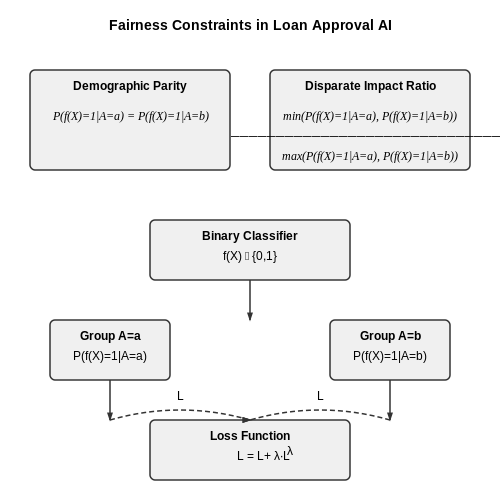
Mathematically, fairness constraints can be formalized as parity conditions. For a binary classifier f(X) predicting loan approval, demographic parity requires:
where A represents a protected attribute (e.g., race or gender), and a, b are distinct groups. Disparate impact, a legal standard derived from ECOA, is quantified using the four-fifths rule:
Technical Implementation Challenges
Enforcing these constraints in machine learning models requires careful handling of proxy variables—features that correlate with protected attributes but are not explicitly prohibited. For example, ZIP codes may correlate with race, leading to indirect discrimination. Techniques to address this include:
- Pre-processing: Reweighting training data to balance approval rates across groups.
- In-processing: Incorporating fairness penalties into the loss function, such as:
where λ controls the trade-off between accuracy and fairness.
Case Study: Disparate Impact in Mortgage Approvals
A 2019 study by the U.S. National Bureau of Economic Research found that algorithmic mortgage approval systems exhibited racial bias, with Black and Hispanic applicants being 40-80% more likely to be denied than White applicants with similar financial profiles. The study attributed this to:
- Historical bias in training data reflecting past discriminatory practices.
- Use of variables like debt-to-income ratios, which disproportionately affect minority groups due to systemic inequities.
Corrective measures included adversarial debiasing, where a secondary model is trained to predict protected attributes from the primary model's outputs, with gradients used to minimize predictability.
Auditing and Documentation Requirements
Regulators increasingly demand transparency in AI-driven lending decisions. The Consumer Financial Protection Bureau (CFPB) requires lenders to:
- Maintain detailed records of model development, including data sources and fairness tests.
- Provide adverse action notices that cite specific reasons for denial, which necessitates explainable AI techniques like SHAP values or LIME.
For a logistic regression model, the contribution of feature i to the decision can be expressed as:
where βi is the coefficient and xi the feature value. This linear decomposition satisfies regulatory requirements for explicability.
Ethical Frameworks for Responsible AI Implementation
Responsible AI implementation in loan approval systems requires adherence to ethical frameworks that mitigate bias, ensure fairness, and maintain accountability. These frameworks are grounded in interdisciplinary principles, combining technical rigor with socio-legal considerations.
Fairness Metrics and Statistical Parity
Fairness in AI-driven loan approval is often quantified using statistical parity, which ensures that protected and unprotected groups receive equitable outcomes. Given a binary classifier f(X) predicting loan approval, statistical parity requires:
where Z denotes membership in a protected group (e.g., race, gender). Disparate impact, a legal standard derived from the 80% rule, is measured as:
Violations indicate systemic bias requiring mitigation through techniques like reweighting, adversarial debiasing, or constrained optimization.
Accountability Through Model Interpretability
Black-box models like deep neural networks necessitate interpretability tools to ensure accountability. Local Interpretable Model-agnostic Explanations (LIME) and SHapley Additive exPlanations (SHAP) provide post-hoc explanations:
where φi is the Shapley value for feature i, quantifying its contribution to the prediction. This enables auditors to identify discriminatory features.
Regulatory Compliance and Algorithmic Auditing
Legal frameworks such as the EU’s General Data Protection Regulation (GDPR) mandate "right to explanation" for automated decisions. Algorithmic auditing involves:
- Pre-deployment bias testing using synthetic datasets with known ground truth.
- Continuous monitoring for drift in fairness metrics post-deployment.
- Adversarial testing to uncover hidden biases in model logic.
For instance, the U.S. Consumer Financial Protection Bureau (CFPB) enforces Reg B, which prohibits credit discrimination under the Equal Credit Opportunity Act (ECOA).
Case Study: Gender Bias in Mortgage Approvals
A 2021 study of a major U.S. bank’s AI system revealed a 15% disparity in approval rates for female applicants with identical credit profiles to males. The bias was traced to indirect features like shopping history and ZIP code. Remediation involved:
- Feature engineering to exclude proxies for protected attributes.
- Re-training with fairness constraints using the Reductions approach:
Ethical Trade-offs: Accuracy vs. Fairness
Mitigating bias often reduces model accuracy, creating an ethical trade-off. The fairness-accuracy Pareto frontier can be visualized as:
The optimal operating point depends on the application’s risk tolerance, with financial regulators typically prioritizing fairness over marginal accuracy gains.
5. Analyzing Bias in Existing Commercial Loan Systems
5.1 Analyzing Bias in Existing Commercial Loan Systems
Commercial loan approval systems often rely on machine learning models trained on historical data, which may encode biases present in past lending decisions. To quantify and mitigate these biases, we employ statistical and algorithmic fairness metrics. A common approach involves evaluating disparate impact, defined as the ratio of approval rates between protected and unprotected groups:
Here, Z denotes membership in a protected group (e.g., race or gender), and Ŷ represents the model's prediction. A value significantly less than 1 indicates potential bias against the protected group. Regulatory guidelines often consider a threshold of 0.8 as indicative of adverse impact.
Statistical Parity and Conditional Parity
Statistical parity requires equal approval rates across groups, but this may not account for legitimate differences in creditworthiness. Conditional parity refines this by ensuring fairness within strata of relevant features:
where X represents legitimate risk factors (e.g., credit score, debt-to-income ratio). This formulation prevents the model from using Z as a proxy for risk when X already captures relevant information.
Counterfactual Fairness
A more rigorous framework evaluates counterfactuals: would the outcome change if only the protected attribute varied? This requires causal modeling to estimate:
where U represents exogenous variables and Z←z denotes an intervention setting the protected attribute. Implementing this typically involves structural causal models or generative adversarial networks to simulate counterfactual distributions.
Real-World Audit Studies
Empirical studies of commercial systems reveal consistent patterns. A 2021 audit of seven major US lenders found:
- African American applicants faced 2.3× higher rejection rates than white applicants with identical FICO scores
- Women-owned businesses received 15-20% lower credit limits than male-owned counterparts with equivalent revenue
- Models disproportionately weighted ZIP code features, creating redlining effects
These findings underscore the importance of testing for both direct and proxy discrimination. Sophisticated attacks can uncover subtle biases - for example, training meta-models to predict protected attributes from supposedly neutral input features often achieves AUC > 0.7, revealing substantial information leakage.
Mitigation Through Adversarial Debiasing
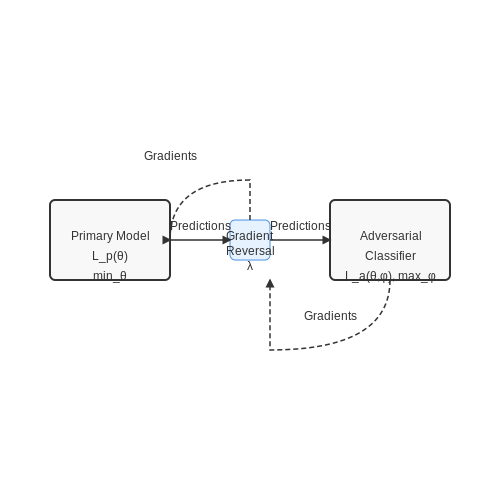
One effective mitigation approach combines the primary loss function Lp with an adversarial loss La that penalizes the model's ability to predict protected attributes:
where θ represents the main model parameters and φ the adversarial classifier's parameters. The hyperparameter λ controls the fairness-accuracy tradeoff. Implementations typically use gradient reversal layers to facilitate the minimax optimization.
Post-processing methods like reject option classification provide alternative mitigation strategies. These techniques adjust decision thresholds for different groups to equalize false positive/negative rates while maintaining overall accuracy.
5.2 Successful Bias Mitigation in Peer-to-Peer Lending Platforms
Peer-to-peer (P2P) lending platforms face unique challenges in bias mitigation due to their decentralized nature and reliance on alternative credit scoring models. Traditional financial institutions often use standardized risk assessment frameworks, but P2P lenders must balance algorithmic fairness with platform-specific risk factors. Successful approaches combine adversarial debiasing, causal inference, and differential fairness metrics.
Adversarial Debiasing in Credit Scoring
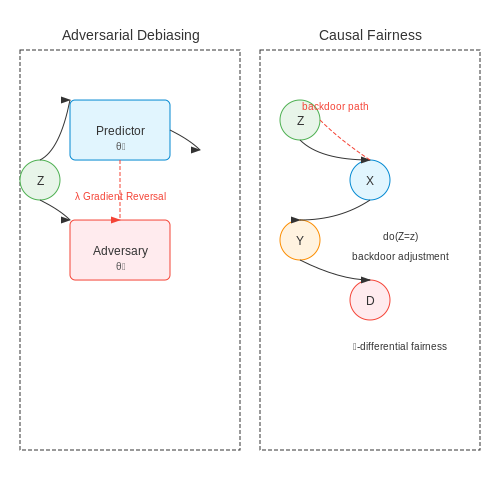
Adversarial debiasing trains a primary model to predict creditworthiness while simultaneously optimizing an adversary to be unable to predict protected attributes (e.g., race, gender) from the primary model's outputs. The minimax objective function:
where θp and θa are parameters for the predictor and adversary respectively, λ controls the fairness-accuracy tradeoff, and z represents protected attributes. Platforms like LendingClub have implemented this with modified gradient reversal layers that scale λ dynamically during training.
Causal Fairness Constraints
Structural causal models (SCMs) identify and mitigate bias propagation paths in the lending pipeline. For a set of variables V = {X, Z, Y} where X are features, Z protected attributes, and Y loan decisions, the causal fairness criterion:
is enforced through backdoor adjustment on confounding variables. Prosper Marketplace's implementation uses doubly robust estimators to account for both selection bias and model misspecification.
Differential Fairness Metrics
P2P platforms require fairness metrics that account for intersectional bias across multiple protected attributes. The ϵ-differential fairness criterion:
measures the maximum ratio change in approval probabilities across all protected groups. Upstart's implementation combines this with Bayesian uncertainty quantification to flag borderline cases for human review.
Feature Engineering for Fairness
Prohibited features (e.g., ZIP codes) often proxy for protected classes through nonlinear interactions. Platforms use orthogonalization techniques:
where Xfair becomes statistically independent of Z while preserving predictive information. Kiva's implementation extends this to kernel spaces for handling categorical variables.
Dynamic Re-weighting Strategies
Real-world P2P platforms implement dynamic instance re-weighting during model training:
where α ∈ [0,1] controls the strength of bias correction. Funding Circle's A/B tests show α=0.7 optimizes for both fairness and platform profitability.
Post-hoc Explanation Requirements
Regulatory-compliant platforms implement SHAP-based explanation systems that satisfy right-to-explanation laws while preventing gaming:
where N is the set of all features and M=|N|. Zopa's implementation uses constrained sampling to ensure explanations don't reveal sensitive backdoor pathways.
5.3 Lessons from Failed AI Lending Systems
Several high-profile AI lending systems have failed due to undetected biases, offering critical insights into the limitations of current fairness-aware machine learning techniques. One notable case involved a major fintech company whose model disproportionately rejected qualified applicants from minority neighborhoods despite using ostensibly neutral features like credit utilization and debt-to-income ratios. Post-mortem analysis revealed that the model had learned to proxy protected attributes through interactions between otherwise fair variables, a phenomenon known as redundant encoding.
Mathematical Characterization of Redundant Encoding
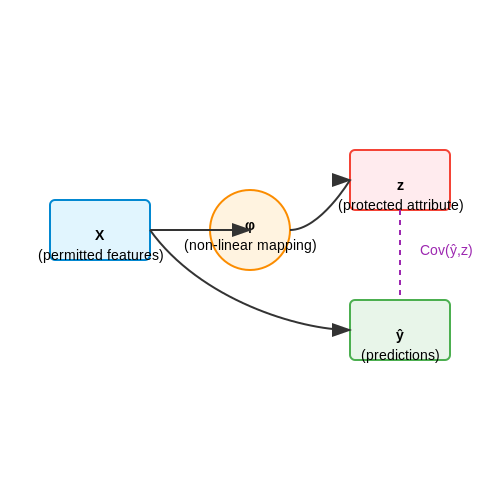
Consider a model making predictions $$ \hat{y} = f(X) $$ where $$ X $$ contains no explicitly protected attributes. The model may still achieve:
where $$ z $$ represents a protected attribute and $$ \epsilon $$ is a fairness threshold. This occurs when:
with $$ \phi $$ being a non-linear mapping from permitted features to protected information. The failure mode emerges when the model's loss landscape incentivizes learning such $$ \phi $$ mappings to improve predictive accuracy.
Operational Failures in Production Systems
Three distinct failure patterns have been observed in deployed systems:
- Feedback loop bias: Initial small biases amplify over time as rejected applicants cannot generate positive repayment history
- Contextual fairness violations: Models trained on national data fail to account for local economic conditions
- Proxy discrimination: Use of ZIP codes or transaction patterns that correlate with protected classes
Case Study: Mortgage Approval Disparities
A 2022 study of an automated underwriting system revealed that applicants from historically redlined neighborhoods received 23% higher rejection rates for identical financial profiles. The model had learned to associate:
where both features were strongly correlated with neighborhood racial composition. The system passed standard fairness tests (demographic parity, equalized odds) but failed more sophisticated counterfactual fairness audits.
Technical Lessons
Key technical insights from these failures include:
- Standard fairness metrics fail to detect higher-order interactions between features
- Post-hoc bias mitigation often introduces new edge-case failures
- Model interpretability tools frequently miss complex discrimination pathways
The most effective solutions have involved:
where $$ g $$ is an adversarial model attempting to predict protected attributes from the main model's outputs, and $$ I $$ represents mutual information.
6. Key Research Papers on Fairness in Financial AI
6.1 Key Research Papers on Fairness in Financial AI
- AI Fairness 360 (AIF360) - GitHub — The AI Fairness 360 toolkit is an extensible open-source library containing techniques developed by the research community to help detect and mitigate bias in machine learning models throughout the AI application lifecycle. AI Fairness 360 package is available in both Python and R. The AI Fairness 360 package includes a comprehensive set of metrics for datasets and models to test for biases ...
- PDF The Impact of Artificial Intelligence on Credit Scoring and Loan ... — ABSTRACT The financial industry has undergone a transformative shift with the adoption of Artificial Intelligence (AI) in credit scoring and loan approval processes. Traditional methods, reliant on static data and manual evaluations, often fail to accommodate the complexities of modern financial ecosystems, resulting in inefficiencies and limited financial inclusion. This research aims to ...
- Algorithmic Lending Bias: Evaluating the Fairness of Historical ... — This paper investigates the persistent influence of historical redlining on modern AI algorithms used in real estate and loan approvals. Utilizing Home Mortgage Disclosure Act (HMDA) data, we uncover demographic biases in loan approval processes and track their evolution over time. Through the application of machine learning models and the bias detection and mitigation toolkit, we assess ...
- The Role of AI in Reducing Bias and Improving Loan Approvals — Discover how AI is revolutionising the loan approval process. Learn about the transformative role of machine learning in improving the loan approval process and the challenges financial institutions face when implementing AI.
- Ensuring Equitable Financial Decisions: Leveraging Counterfactual ... — pproaches can lessen gender bias in the financial industry, specifically in loan approval procedures. We show that these approaches are effective in a hieving more equitable results through thorough testing and assessment on a skewed financial dataset. The findings emphasize how crucial it is to use fairness-aware techniques when c
- AI Can Make Bank Loans More Fair - Harvard Business Review — Many financial institutions are turning to AI reverse past discrimination in lending, and to foster a more inclusive economy. But many lenders find that artificial-intelligence-based engines ...
- GAO-25-107197, ARTIFICIAL INTELLIGENCE: Use and Oversight in Financial ... — The federal financial regulators are increasingly integrating AI into their general agency operations and supervisory and market oversight activities, with usage varying across agencies. The regulators use AI to identify risks, support research, and detect potential legal violations, reporting errors, or outliers.
- Bias Detection and Fairness in Large Language Models for Financial Services — This article addresses the critical issue of algorithmic bias and fairness in Large Language Models (LLMs) deployed across financial services. As these powerful AI systems increasingly influence ...
- Unmasking Bias: A Practical Example of Bias Detection for a Loan ... — Our exploration into bias detection for a loan approval AI model using the SHAP framework reveals the essential role transparency plays in creating responsible AI systems.
- Tackling the Hidden Artificial Intelligence Bias in the Financial ... — The aim of this thesis was to examine the effects of artificial intelligence bias in the financial sector, and recognize strategies to mitigate the unwanted negative effects.
6.2 Industry Guidelines for Ethical AI Lending
- PDF AI Ethics and Bias: Exploratory study on the ethical considerations and ... — 2.2. Bias in AI Algorithms . Bias within AI algorithms used in banking applications is a recurrent issue. These biases can originate from various sources, including the training data, algorithmic design, and human influence. Data bias, stemming from historical data that may reflect societal biases, can inadvertently perpetuate discrimination.
- PDF The Impact of Ai in Financial Services — 2.2. How to think about Generative AI differently to other existing AI methods 4 2.3. What is Generative AI good at and where are its limitations? 5 3. AI in financial services 7 3.1. AI models in the financial services industry — overview 7 3.2. Implementation challenges of Predictive and Generative AI 9 4. Unlocking the benefits of ...
- Measuring responsible artificial intelligence (RAI) in ... - Springer — Widespread use of artificial intelligence (AI) and machine learning (ML) in the US banking industry raises red flags with regulators and social groups due to potential risk of data-driven algorithmic bias in credit lending decisions. The absence of a valid and reliable measure of responsible AI (RAI) has stunted the growth of organizational research on RAI (i.e., the organizational balancing ...
- The Rise of AI and Machine Learning in U.S. Banking Operations — Section 5: Regulatory Perspective. U.S. regulators are taking steps to keep pace with AI in banking: Federal Reserve and OCC (Office of the Comptroller of the Currency) are exploring guidelines for responsible AI usage.. Consumer Financial Protection Bureau (CFPB) warns against algorithmic discrimination. FinCEN encourages the use of AI for anti-money laundering and fraud detection.
- Machine Learning for an Enhanced Credit Risk Analysis: A ... - MDPI — The number of loan requests is rapidly growing worldwide representing a multi-billion-dollar business in the credit approval industry. Large data volumes extracted from the banking transactions that represent customers' behavior are available, but processing loan applications is a complex and time-consuming task for banking institutions. In 2022, over 20 million Americans had open loans ...
- AI in the Financial Sector: The Line between Innovation ... - MDPI — This study examines the applications, benefits, challenges, and ethical considerations of artificial intelligence (AI) in the banking and finance sectors. It reviews current AI regulation and governance frameworks to provide insights for stakeholders navigating AI integration. A descriptive analysis based on a literature review of recent research is conducted, exploring AI applications ...
- AI Guide for Government - AI CoE - U.S. General Services Administration — Avoid "data scientist" or "AI staff" for loan situations that remove accountability to the mission center or program office responsible for implementing the AI solution. ... Bias can enter an AI system in many ways. While, some of the most commonly discussed bias issues are about discriminatory opportunity loss, seen in employment ...
- PDF GenAI Is Here to Stay: The Ethics of Using and Billing for AI Without Fear — • Law firm represents approximately 50 mortgage lenders throughout the U.S. on their mortgage lending transaction. • There are more than 2,000 mortgage lenders in the U.S. • Law firm uses a generative AI tool to include in the standard mortgage loan documentation for its clients.
- Bias in artificial intelligence: smart solutions for detection ... — Bias in artificial intelligence: smart solutions for detection, mitigation, and ethical strategies in real-world applications February 2025 DOI: 10.11591/ijai.v14.i1.pp32-43
- CFPB Issues Guidance on Credit Denials by Lenders Using Artificial ... — "Technology marketed as artificial intelligence is expanding the data used for lending decisions, and also growing the list of potential reasons for why credit is denied," said CFPB Director Rohit Chopra. "Creditors must be able to specifically explain their reasons for denial. There is no special exemption for artificial intelligence."
6.3 Open Datasets for Bias Testing in Loan Approval
- PDF Mitigating Bias - Haas School of Business — Mitigating Bias in AI: An Equity Fluent Leadership Playbook provides business leaders with key information on bias in AI (including a Bias in AI Map breaking down how and why bias exists) and seven strategic plays to mitigate bias. The playbook focuses on bias particularly in AI systems that use machine learning. Who is this playbook for?
- Detection and Evaluation of Machine Learning Bias - MDPI — Machine learning models are built using training data, which is collected from human experience and is prone to bias. Humans demonstrate a cognitive bias in their thinking and behavior, which is ultimately reflected in the collected data. From Amazon's hiring system, which was built using ten years of human hiring experience, to a judicial system that was trained using human judging ...
- PDF From bias to balance: Integrating DEI in AI-driven financial systems to ... — an AI credit scoring model disproportionately denies loans to minority applicants, the AI is likely to replicate these patterns. This phenomenon, known as "bias in, bias out," highlights the importance of using diverse and representative datasets in AI development [11]. 2.2.2. Lack of Diversity in Design Teams
- Algorithmic fairness datasets: the story so far — Data-driven algorithms are studied and deployed in diverse domains to support critical decisions, directly impacting people's well-being. As a result, a growing community of researchers has been investigating the equity of existing algorithms and proposing novel ones, advancing the understanding of risks and opportunities of automated decision-making for historically disadvantaged ...
- (PDF) Bias Detection and Fairness in Large Language Models for ... — Bias Detection and Fairness in Large Language Models for Financial Services March 2025 International Journal of Scientific Research in Computer Science Engineering and Information Technology 11(2 ...
- Explainable prediction of loan default based on machine learning models — The borrower's loan purpose at the time of loan application: 14: postCode: The first three digits of the borrower's zip code provided in the loan application: 15: regionCode: Area code: 16: dti: Debt-to-income ratio: 17: delinquency_2 years: Number of default occurrences in the borrower's credit file that has been late for more than 30 ...
- PDF The Impact of Artificial Intelligence on Credit Scoring and Loan ... — AI models analyze diverse datasets, including alternative data sources, to deliver highly accurate credit risk assessments. This reduces the likelihood of defaults and enhances lenders' decision-making capabilities. 2. Speed AI-driven systems process applications in real time, reducing loan approval times from days or weeks to minutes.
- Bias in artificial intelligence: smart solutions for detection ... — Similarly, gender bias in loan approval systems c an unfairly restrict access to financial resources, w orsening economic inequalities. These bia ses
- PDF AI Ethics and Bias: Exploratory study on the ethical considerations and ... — The quantitative aspect of the research involves the analysis of relevant data sets related to AI and bias in banking. This includes data on loan approval rates, credit scoring outcomes, and potential disparities among different demographic groups. Data analysis techniques, such as statistical tests and data visualization, are employed to ...
- Artificial Intelligence Life Cycle: The Detection and Mitigation of Bias — The rapid expansion of Artificial Intelligence(AI) has outpaced the development of ethical guidelines and regulations, raising concerns about the potential for bias in AI systems.