


Automatic Windshield Washer Control

Description: Most recent cars are equipped with a significant amount of electronics, including ABS brake systems, engine control with injection calculators, airbag activation, and various comfort functions. One such function, which is often overlooked due to its commonality, is the automatic activation of windshield wipers after the windshield washer is used. This feature is essential as it prevents excess rinse fluid from dripping onto a freshly cleaned windshield. However, many lower-end or older vehicles lack this convenience. The proposed circuit is simple and requires only a few components that are typically available to any electronics hobbyist. This project keeps the windshield wiper activated for a few seconds after the windshield washer control is released. While the windshield washer pump operates, the 12 volts from the battery charge capacitor C1. Once the washer stops, C1 discharges through resistors R2, P1, R3, and the emitter-base junction of transistor T1, aided by diode D1. This keeps T1 conductive for a duration determined by P1's setting. T1 saturates T2, which in turn saturates T3, activating relay Re1 that maintains the wiper operation via a work contact wired in parallel with the control switch. When C1 discharges sufficiently, T1 becomes blocked, subsequently blocking T2 and T3, which deactivates relay Re1. The specific component types are not critical, although a low-power npn transistor with a gain over 25 is recommended for T3. Relay Re1 must be an automotive relay, capable of handling around 20 amps at 12 volts. Identifying the control wire for the windshield pump and the wiper motor is crucial, and this can be accomplished using a voltmeter to observe the connections.
The circuit operates by utilizing a simple timing mechanism based on the charging and discharging of capacitor C1. When the windshield washer is activated, the circuit receives a 12V supply, which charges the capacitor. The charging time is relatively short, allowing for quick activation of the wipers immediately after the washer is turned on. The diode D1 plays a critical role by ensuring that the discharge path for C1 is controlled, preventing backflow and ensuring that the timing is accurate.
Transistor T1 acts as a switch that is kept on by the charge stored in C1. The resistor R2 helps control the discharge rate of the capacitor, while potentiometer P1 allows for adjustment of the timing based on user preference. This adjustability is important for different environmental conditions, such as varying amounts of washer fluid used or differing amounts of residual fluid on the windshield.
Relay Re1 is crucial as it acts as the intermediary that connects the wiper motor to the power supply. The relay must be rated for automotive use to handle the high currents typically associated with windshield wiper motors. The parallel connection with the control switch ensures that the wipers will continue to operate even after the washer has been turned off, providing a seamless transition and enhancing driver visibility.
Proper identification of the control wires is essential for the successful implementation of this circuit. The use of a voltmeter to test connections will aid in accurately locating the appropriate wires for the windshield washer pump and wiper motor. This circuit can be a valuable addition to older or lower-end vehicles, enhancing their functionality and improving user convenience.Most, if not all, recent cars have an impressive amount of electronics, whether it be ABS brake systems, engine control with injection calculators, airbag activation, or other various functions, called comfort functions. Among them is one which we tend to forget because it has become so common today. It turns on the windshield wipers automatically for a few seconds after the windshield cleaner. This practice is almost indispensable because it avoids any dripping of excess rinse product right in the middle of a just-cleaned windshield. Unfortunately, many low end` cars or some of the older cars are not equipped with this automatic function which is a very nice convenience to have.
So, since all that is required is a handful of components that any electronics hobbyist worthy of the name already has in his/her drawer, we will discuss the circuit proposed here. This project is super simple and simply keeps the windshield wiper activated for a few seconds after the windshield washer control contact has been released.
While the windshield washer pump is operating, the 12 volts delivered by the battery are present at the terminals and are therefore charging capacitor C1. Once the windshield washer has stopped, this capacitor can only discharge through R2, P1, R3, and the T1 emitter-base junction, due to the presence of diode D1.
It thus keeps T1 in the conductive state during a certain time, the exact period of which depends on the setting of P1. T1 in turn saturates T2, which then does the same for T3. The Re1 relay is therefore connected which maintains the windshield wiper in operation because its work contact is wired in parallel to the control switch.
Once C1 is sufficiently discharged, T1 is blocked, which then blocks T2 and T3 and deactivates relay Re1. The type of components is not really critical, even if we indicate specific reference numbers for T3, any low-power npn transistor with a gain over 25 will work.
However, considering the amount of power consumed by the windshield wiper motor, relay Re1 will imperatively be an automobile` relay. You can find very low-priced ones at many car accessory shops (and even at some component retailers).
These relays maintain contact under 12 volts and often do not have more than one work contact but they are, in general, capable of cutting off about 20 amps. Finally, the only delicate point of this project is to properly identify the control wire for the windshield pump on one hand, and the windshield wiper motor on the other.
Observing what is happening at the various connections with a simple voltmeter, should get it right without too much difficulty.
The circuit operates by utilizing a simple timing mechanism based on the charging and discharging of capacitor C1. When the windshield washer is activated, the circuit receives a 12V supply, which charges the capacitor. The charging time is relatively short, allowing for quick activation of the wipers immediately after the washer is turned on. The diode D1 plays a critical role by ensuring that the discharge path for C1 is controlled, preventing backflow and ensuring that the timing is accurate.
Transistor T1 acts as a switch that is kept on by the charge stored in C1. The resistor R2 helps control the discharge rate of the capacitor, while potentiometer P1 allows for adjustment of the timing based on user preference. This adjustability is important for different environmental conditions, such as varying amounts of washer fluid used or differing amounts of residual fluid on the windshield.
Relay Re1 is crucial as it acts as the intermediary that connects the wiper motor to the power supply. The relay must be rated for automotive use to handle the high currents typically associated with windshield wiper motors. The parallel connection with the control switch ensures that the wipers will continue to operate even after the washer has been turned off, providing a seamless transition and enhancing driver visibility.
Proper identification of the control wires is essential for the successful implementation of this circuit. The use of a voltmeter to test connections will aid in accurately locating the appropriate wires for the windshield washer pump and wiper motor. This circuit can be a valuable addition to older or lower-end vehicles, enhancing their functionality and improving user convenience.Most, if not all, recent cars have an impressive amount of electronics, whether it be ABS brake systems, engine control with injection calculators, airbag activation, or other various functions, called comfort functions. Among them is one which we tend to forget because it has become so common today. It turns on the windshield wipers automatically for a few seconds after the windshield cleaner. This practice is almost indispensable because it avoids any dripping of excess rinse product right in the middle of a just-cleaned windshield. Unfortunately, many low end` cars or some of the older cars are not equipped with this automatic function which is a very nice convenience to have.
So, since all that is required is a handful of components that any electronics hobbyist worthy of the name already has in his/her drawer, we will discuss the circuit proposed here. This project is super simple and simply keeps the windshield wiper activated for a few seconds after the windshield washer control contact has been released.
While the windshield washer pump is operating, the 12 volts delivered by the battery are present at the terminals and are therefore charging capacitor C1. Once the windshield washer has stopped, this capacitor can only discharge through R2, P1, R3, and the T1 emitter-base junction, due to the presence of diode D1.
It thus keeps T1 in the conductive state during a certain time, the exact period of which depends on the setting of P1. T1 in turn saturates T2, which then does the same for T3. The Re1 relay is therefore connected which maintains the windshield wiper in operation because its work contact is wired in parallel to the control switch.
Once C1 is sufficiently discharged, T1 is blocked, which then blocks T2 and T3 and deactivates relay Re1. The type of components is not really critical, even if we indicate specific reference numbers for T3, any low-power npn transistor with a gain over 25 will work.
However, considering the amount of power consumed by the windshield wiper motor, relay Re1 will imperatively be an automobile` relay. You can find very low-priced ones at many car accessory shops (and even at some component retailers).
These relays maintain contact under 12 volts and often do not have more than one work contact but they are, in general, capable of cutting off about 20 amps. Finally, the only delicate point of this project is to properly identify the control wire for the windshield pump on one hand, and the windshield wiper motor on the other.
Observing what is happening at the various connections with a simple voltmeter, should get it right without too much difficulty.
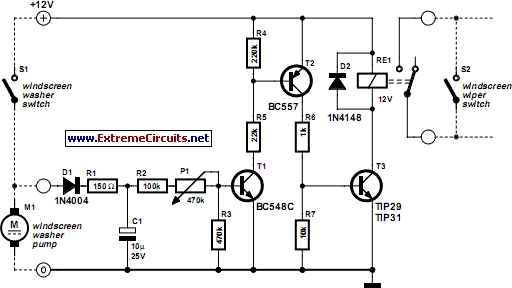
automatic windshield washer
Most recent cars are equipped with a significant amount of electronics, including ABS brake systems, engine control with injection calculators, airbag activation, and various comfort functions. One such function, which is often overlooked, is the automatic activation of windshield wipers...
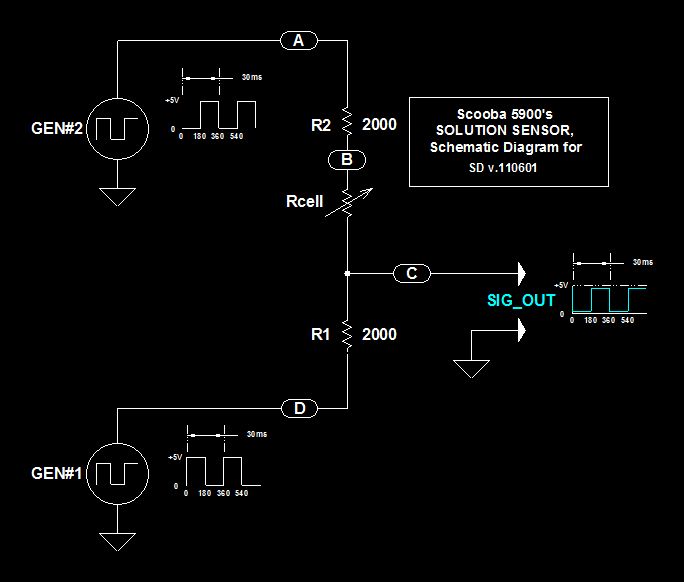
Scoobas Solution Sensing Tactic
This document serves multiple purposes, primarily to document the methods employed by a Scooba robot to detect: a) the presence of an acceptable cleaning solution being delivered to its pump, and b) the excess presence of used solution collected off...

Windshield Wiper Interval Controller
The windshield wiper interval circuit described here is compact and notable for utilizing two thyristors instead of a relay. It features only two connections and operates smoothly, even with multistage wiper circuits. The wire connecting the wiper motor to terminal...

automatic street light control system
An automatic street light system is increasingly common, providing an intelligent mechanism for street lighting. It automatically illuminates during the night and utilizes incandescent lamps instead of LEDs for energy savings. This document outlines the process of constructing an electronic...

Wire Break Sensor Alarm Circuit Schematic
The circuit of a loop sensor-based simple security alarm is described here. The sensor loop consists of a short length of thin enamelled copper wire.
The loop sensor security alarm operates on the principle of detecting interruptions in the circuit formed...

Automatic light regulator circuit diagram
This circuit is designed to automatically adjust the brightness of lights based on the ambient light intensity. In bright conditions, the lights remain off, while in low ambient brightness, the lights are activated. The circuit incorporates a thyristor (VT1) and...
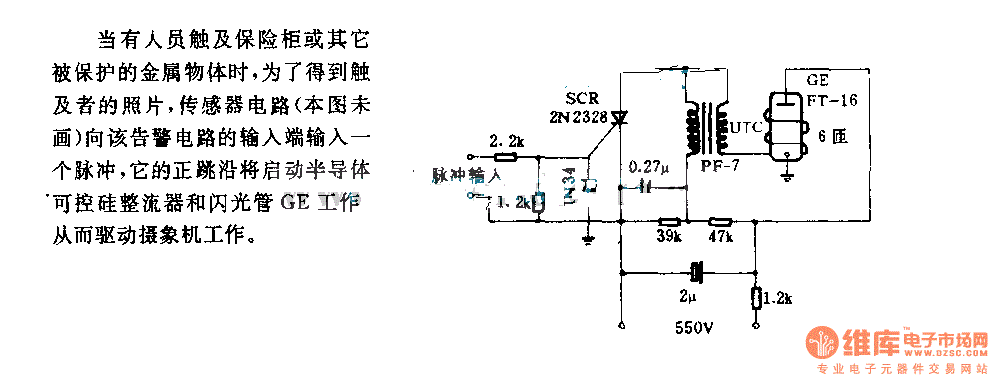
The alarm circuit diagram for safety box and other metal objects
When an individual touches the safety box or other protected metal objects, the sensor circuit generates a pulse to the alarm circuit. The positive edge of this pulse activates the semiconductor and thyristor flash GE, subsequently triggering the camera to...

Automatic light control one lamp lighting circuit b
An automatic light control circuit is designed to illuminate a lamp when it is dark and to turn off the light at daybreak. The circuit, as shown in Figure 2-86, employs bidirectional thyristor tubes and features a straightforward design. In...

Car windshield wiper delay
The circuit facilitates a windshield wiper delay, dynamic braking, and ensures that the windshield wipers return to their resting position. This design prevents the wiper blades from stopping at a location that could obstruct the driver's view. When the original...