Digital Clocks
1. Definition and Purpose of Digital Clocks
1.1 Definition and Purpose of Digital Clocks
Digital clocks, characterized by their numerical display of time, have become ubiquitous in modern society, paralleling advancements in electronic technology. Unlike analog clocks, which use hands to indicate time on a dial, digital clocks generate and display time in numeric format—typically in hours, minutes, and seconds. This conveyance of information is made possible through the use of electronic components that manipulate and display data accurately.
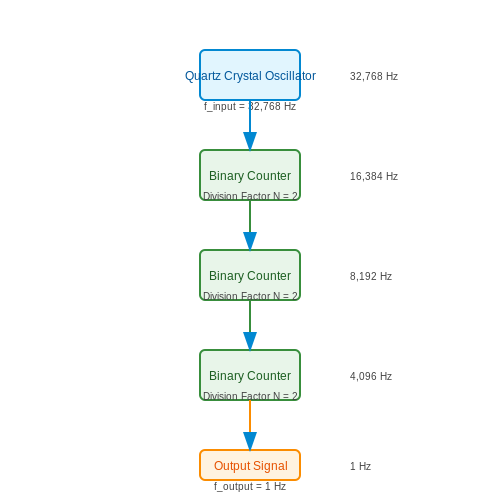
At their core, digital clocks serve a fundamental purpose: to measure and represent the passage of time. This function is realized through the integration of various components that create a cohesive timekeeping system. The primary mechanism within most digital clocks is a crystal oscillator, usually made from quartz. This quartz crystal, when subjected to an electrical field, vibrates at a precise frequency—typically 32,768 Hz. This property is leveraged to create an accurate and stable timekeeping element.
Mechanism and Operation
The operation of digital clocks fundamentally relies on the principles of frequency division. The high-frequency oscillation produced by the quartz crystal is divided down through a series of binary counters. Each subsequent division reduces the frequency until it yields a signal that represents one-second intervals, which effectively corresponds to the conventional measurement of time. The design behind this process can be represented mathematically as follows:
In this equation:
- foutput is the output frequency (1 Hz for one-second intervals),
- finput represents the quartz crystal's operating frequency (32,768 Hz),
- N is the division factor, which in this case is 32,768.
Upon reaching the one-second interval, a counter increments the displayed time, and the output is sent to a digital display, usually a liquid crystal display (LCD) or light-emitting diode (LED). The clarity of this display allows users to easily read the time, a significant advantage of digital over analog clocks.
Real-World Applications
The applications of digital clocks span a wide range of fields, from home appliances to specialized industrial uses. In consumer electronics, digital clocks are often integrated into microwave ovens, alarm systems, and smartphones, providing users with the convenience of accurate timekeeping. Beyond personal devices, digital clocks also play critical roles in aviation, telecommunications, and instrumentation.
For instance, in industrial settings, precision timekeeping is essential for processes that depend on synchronized timing. Digital clocks equipped with additional features, such as atomic timekeeping capabilities, offer an unparalleled level of accuracy, ensuring that operations remain aligned with universal time standards—an essential requirement in the global economy.
In conclusion, digital clocks exemplify the intersection of electronics and practical utility. Their ability to consolidate complex timekeeping mechanics into user-friendly formats showcases advancements in technology while meeting the timeless human need to track time accurately.
1.2 Comparison Between Digital and Analog Clocks
Both digital and analog clocks are used extensively for timekeeping, yet they embody fundamentally different principles in their design and functionality. The distinction between the two types extends beyond mere aesthetics; it sheds light on underlying electrical and mechanical processes, user interface design, and practical applications in daily life and critical systems.
Mechanical vs Electronic Timekeeping
At the core of the comparison is the method of timekeeping employed. Analog clocks utilize a mechanical system where gears translate the movement of a pendulum or a spring-driven escapement into the sweeping hands that indicate the time. This mechanical operation is a classical example of harmonic motion, where components work together in a precise manner to display time continuously.
In contrast, digital clocks operate based on electronic circuits that use oscillators (typically quartz crystals) to derive accurate time. The quartz crystal vibrates at a precise frequency when an electrical current is applied, producing a steady signal that can be translated into precise time increments. The relationship between frequency and time can be mathematically expressed as:
Where f is the frequency in hertz and T is the period in seconds. Since quartz oscillators can maintain consistent frequencies, digital clocks often outperform their analog counterparts in terms of precision and accuracy.
User Interaction and Readability
While analog clocks provide an intuitive representation of time through their circular layout and moving hands, they may pose difficulties in precise reading, especially at a quick glance. Digital clocks, on the other hand, employ numerals which can convey time aspects with clarity, as well as provide additional information such as date, alarm status, and in some cases, environmental data.
However, the aesthetic appeal of analog clocks is often deemed superior; their fluid motion and intricate designs reflect craftsmanship that resonates in various settings—homes, offices, and even art installations. Thus, in applications where aesthetic design is paramount, analog clocks may be preferred over their digital cousins despite the superior accuracy of digital clocks.
Practical Applications and Systems Design
The choice between digital and analog clocks often depends on the specific context of use. In industrial settings, where precision timing is critical, such as in manufacturing or laboratory environments, digital clocks are favored due to their accuracy. They may also be integrated into digital systems, providing time stamps for data logging and synchronization across multiple devices.
Meanwhile, analog clocks continue to thrive in situations where tradition and visual representation hold value. They are also more commonly found in portable applications such as wristwatches, where the compact design and minimal power requirements are significant advantages.
Ultimately, the ongoing evolution of both technologies reflects a balance between practical utility and user preference, and understanding these distinctions can inform better design choices in engineering and product development.
1.3 Benefits of Using Digital Clocks
Digital clocks have become an integral part of our daily lives, serving as fundamental timekeeping devices in various applications ranging from household appliances to sophisticated navigational equipment. The benefits of digital clocks extend beyond mere aesthetics; they embody precise engineering and practical advantages which are critical in both everyday use and advanced applications.Accuracy and Precision
One of the most significant advantages of digital clocks is their superior accuracy. Unlike traditional analog clocks which rely on mechanical gears and springs, digital clocks utilize electronic oscillators, such as quartz crystals, to maintain time. The oscillations of a quartz crystal are highly stable and can ensure accuracy within a few seconds per month. Mathematically, the time keeping precision can be analyzed using the frequency stability of the oscillator. For instance, if the oscillator has a frequency of \( f \) Hz and a stability of \( \Delta f/f \), the time error \( \Delta t \) can be approximated by:Readability and Display Innovation
Digital clocks offer superior readability, particularly under poor lighting conditions. The use of LCD or LED displays allows for bright, clear numerals that can be read from a distance and at various angles. This has significant implications in fields such as aviation and public transportation, where visibility of time readings is crucial. Moreover, digital clocks often present additional information beyond just the time, incorporating features like date displays, countdown timers, and alarms, which can enhance the functionality for users.Automation and Integration
Another profound benefit of digital clocks is their compatibility with automated systems. Digital clocks can be easily synchronized with computers and networks, enabling precise time management in various technological applications. In industries where automation is key, such as manufacturing and robotics, the ability to synchronize digital clocks with machinery can lead to enhanced efficiency. Additionally, digital clocks can serve as a component in integrated circuit designs, allowing them to interface with other electronic devices for tasks such as time-stamping events or logging data in experimentation. This is particularly useful in research applications where temporal precision is critical, for instance, in controlled experiments in physics or engineering.Energy Efficiency
From an energy consumption standpoint, modern digital clocks, especially those utilizing LED technology, are far more energy-efficient than traditional clocks. Most digital clocks draw minimal power, often relying on batteries or low-voltage supplies, making them eco-friendly options that can operate for extended periods without maintenance. In settings such as smart homes, energy efficiency not only saves resources but also contributes to cost-effectiveness. This is particularly relevant as society progresses toward sustainability and seeks to reduce carbon footprints.Conclusion
The impact of digital clocks cannot be overstated. Their accuracy, enhanced readability, ability to integrate with automated systems, and energy efficiency not only make them preferable over traditional timekeeping devices but also essential in specialized applications across various fields. As technology continues to evolve, so too will the capabilities and applications of digital clocks, further solidifying their role in modern electronic devices.2. Timekeeping Mechanisms: Quartz Crystal Oscillator
2.1 Timekeeping Mechanisms: Quartz Crystal Oscillator
In the world of digital clocks, precise timekeeping is indispensable. One of the most widely utilized mechanisms for achieving this precision is the quartz crystal oscillator. This device transforms electrical energy into mechanical energy through the unique properties of quartz crystals, resulting in a highly stable and accurate frequency output.
Understanding the Quartz Crystal
At the heart of the quartz crystal oscillator is a cut piece of quartz, a silica-based mineral known for its piezoelectric properties. Piezoelectricity refers to the ability of certain materials to generate an electric charge in response to applied mechanical stress. The quartz crystal is typically shaped to oscillate at a specific frequency when an electric field is applied.
The fundamental resonance frequency of a quartz crystal is determined by its cut, size, and shape, with common frequencies ranging from 32 kHz to several MHz. This frequency stability makes it ideal for timekeeping applications where consistency over temperature variations and aging is critical.
Operating Principle
The operating principle of the quartz crystal oscillator hinges on the piezoelectric effect. When an oscillating voltage is applied across the crystal, it undergoes mechanical deformation, resulting in oscillations. These oscillations maintain a stable frequency due to the resonant characteristics of the crystal, which dampen unwanted frequencies and enhance the desired oscillation.
The characteristic frequency $$\nu$$ of the oscillator can be described by the relationship:
In this equation, $$L$$ represents the effective inductance, and $$C$$ denotes the capacitance in the oscillator circuit. The precise nature of these quantities allows engineers and physicists to design oscillators with exact operating frequencies required for various applications.
Circuit Configuration
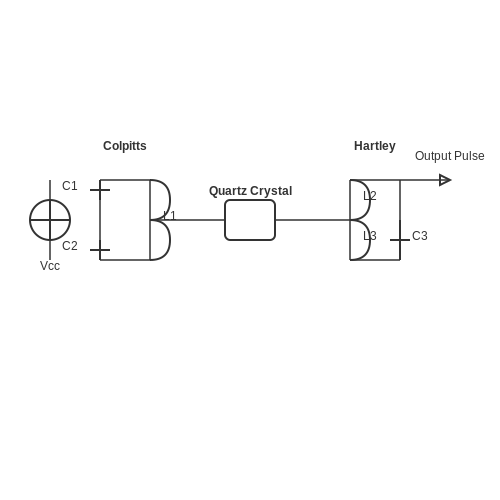
Typically, a quartz crystal is integrated into an oscillator circuit which can be configured in several ways. The two most common configurations are the Colpitts and the Hartley oscillators. Both configurations leverage feedback to sustain oscillations, but they differ primarily in how the feedback path is established.
In an oscillator circuit, the role of the crystal is to control the frequency of oscillation, allowing for the generation of a precise clock pulse. This clock pulse can be further divided using digital counters to generate time intervals such as seconds, minutes, and hours, which can then be displayed on digital clocks.
Applications and Innovations
The implications of quartz crystal oscillators extend well beyond simple wall clocks. Their precision has led to their incorporation into a wide variety of electronic devices including:
- Smartphones and computers for timing critical processes.
- GPS systems utilizing synchronized time information for accurate positioning.
- High-frequency trading systems where nanosecond precision can mean the difference between profit and loss.
- Automotive systems for timing engine management and safety features.
Recent advancements have even explored temperature-compensated crystal oscillators (TCXOs) and oven-controlled crystal oscillators (OCXOs), enhancing stability further by mitigating the effects of temperature variations on frequency output.
The precision and reliability of quartz crystal oscillators continue to define modern electronics. As future technologies emerge, the fundamental principles behind these oscillators will potentially integrate with evolving materials science and nanotechnology to produce even more accurate timekeeping solutions.
2.2 Display Technologies: LED vs. LCD
In the realm of digital clocks, display technologies are pivotal in determining both functionality and user experience. Understanding the underlying principles of Light Emitting Diodes (LEDs) and Liquid Crystal Displays (LCDs) facilitates better design choices. In this subsection, we will explore the fundamental differences, advantages, and disadvantages of these two prevalent display technologies, along with their applications in modern digital clocks.Understanding LED Technology
LED displays utilize a grid of small light-emitting diodes to produce numeric or graphic representations of time. Each LED operates on the principle of electroluminescence, which involves the emission of light when an electric current passes through a semiconductor material. The key characteristics of LEDs include:- Brightness: LEDs are exceptionally bright, allowing them to be easily visible even in direct sunlight.
- Efficiency: LEDs consume significantly less power compared to traditional incandescent bulbs or other light sources.
- Longevity: The operational lifespan of an LED can exceed 25,000 hours, resulting in reduced replacement frequency.
Dissecting LCD Technology
Conversely, LCDs operate based on the manipulation of light rather than its direct emission. An LCD consists of liquid crystal molecules sandwiched between two polarizing filters. When a voltage is applied, these liquid crystals align in a manner that either permits or blocks light from passing through, thus forming the visible image. The pros of LCD technology include:- Spatial Resolution: LCDs can achieve high spatial resolutions, making them suitable for displaying detailed information.
- Viewing Angles: Modern LCDs, particularly those utilizing IPS (In-Plane Switching) technology, provide better viewing angles than RGB LEDs.
- Power Consumption: While they are generally less efficient than LEDs, advancements in technology have made LCDs increasingly power-efficient.
Comparative Analysis in Digital Clock Applications
When evaluating the two technologies for digital clocks, the choice will often depend on the intended use. For outdoor applications where visibility is paramount, LEDs are favored due to their brightness and energy efficiency. In contrast, for indoor settings, particularly in environments that require detailed information display such as programmable settings, LCDs may be more suitable. In terms of cost, LED technologies tend to be more expensive initially, thanks to their sophisticated manufacturing processes. However, considering their longevity and lower operating costs, they can be more economically viable in the long term.Practical Example: The Emergence of Hybrid Systems
Recent trends indicate a growing interest in hybrid display systems that combine the strengths of both LED and LCD technologies. For example, a digital clock might use an LED backlight to enhance visibility while employing an LCD screen for detailed numeric displays. Such configurations optimize user experience by offering vibrant colors alongside clarity of information. In conclusion, the selection between LED and LCD technologies in the design of digital clocks hinges on specific application requirements, among other factors. As technology continues to evolve, further innovations in display systems are likely to emerge, potentially leading to even more advanced hybrids. Back to Top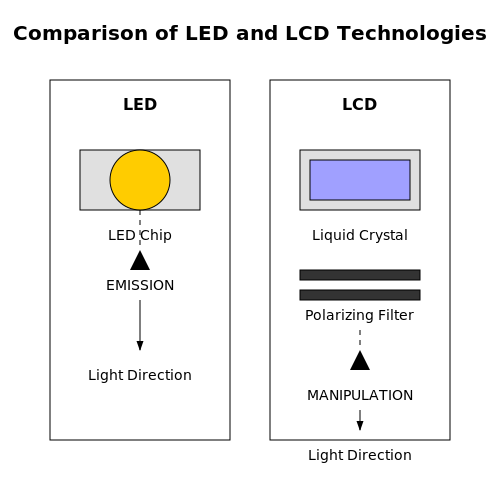
2.3 Power Supply Options for Digital Clocks
Digital clocks, with their precision timing and display functionalities, require reliable power supply systems to ensure accurate operation. The choice of power supply not only impacts the performance of the clock but also significantly influences its durability, power efficiency, and environmental adaptation. In this section, we will explore various power supply options and their implications for digital clock designs.Understanding Power Supply Requirements
Before delving into specific power supply options, it’s crucial to comprehend the basic power supply requirements for digital clocks. These devices typically require:- Voltage Regulation: Most digital clocks operate on low-voltage DC power, usually between 1.5V and 12V.
- Current Needs: The average current requirements can range from a few milliamps to over a hundred milliamps, depending on the additional functionalities like backlighting or alarm systems.
- Power Stability: Fluctuations in power supply can lead to timing errors; hence, a stable power source is essential.
Power Supply Options
Digital clocks can rely on various power supply options. Each of these has distinct characteristics that may suit different applications and design paradigms.1. Battery-Powered Systems
Battery operation is arguably the most common power supply option for portable digital clocks. Advantages:- Portability: No dependence on mains electricity allows for use in various environments.
- Backup: In case of power failures, battery backups ensure continuous timekeeping.
2. AC to DC Converters
For digital clocks that are fixed installations (like those on walls), AC to DC power adapters are common. These devices convert mains alternating current (AC) to the required direct current (DC). Advantages:- Consistent Power Supply: Mains power provides a stable source, minimizing the risk of timing errors due to power fluctuations.
- Lower Operating Costs: Unlike batteries, direct connection to AC power eliminates the need for frequent replacements.
3. Energy Harvesting Technologies
The exploration of energy harvesting techniques, such as solar power or kinetic energy capture, has garnered significant interest in recent years. Advantages:- Environmental Sustainability: Using renewable energy sources minimizes ecological footprints.
- Independence from External Power Sources: This enhances clock portability and reliability in remote locations.
Real-World Applications
The choice of power supply can determine the suitability of digital clocks for different applications. For instance, battery-powered clocks are ideal for emergency lighting systems, while solar-powered clocks find use in outdoor settings, reducing maintenance costs. Conversely, fixed installations often employ AC to DC converters, utilized in wall clock applications or synchronized clock systems in institutions. In summary, understanding the diverse power supply options for digital clocks empowers engineers to design systems tailored to specific needs, ensuring efficient and reliable timekeeping across varied environments. In the following section, we will discuss the mechanisms by which digital clocks keep accurate time, laying the groundwork for how power supply choices influence overall performance.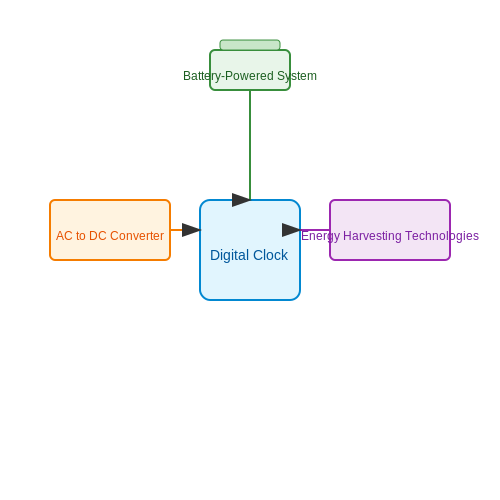
3. Basic Circuit Diagram Overview
3.1 Basic Circuit Diagram Overview
In the realm of digital electronics, the digital clock stands as a quintessential example of timekeeping technology, creatively merging various electronic components into a coherent system. Understanding its basic circuit diagram is paramount for engineers and researchers engaged in circuit design and embedded systems development. At the heart of a digital clock, we primarily observe components such as an oscillator, a frequency divider, a counter, and a display driver. Each element plays a crucial role in translating the continuous oscillation of clock pulses into a numerical time format. To provide a comprehensive overview, we will dissect these components and illustrate how they interconnect.Key Components of a Digital Clock Circuit
Oscillator: The oscillator is typically a crystal oscillator, which generates a stable and precise frequency, commonly 32.768 kHz for wristwatches and digital clocks. The oscillator's function is to produce high-frequency signals that will serve as the timing reference for the entire clock system. Frequency Divider: Following the oscillator, we have the frequency divider which reduces the frequency of the oscillation down to a manageable level. For digital clocks, the standard operation is to divide the 32.768 kHz output to a 1 Hz signal, which represents one-second intervals. Counter: The counter receives the 1 Hz pulse and counts these pulses to track the current time in seconds, minutes, and hours. Most digital clocks employ binary-coded decimal (BCD) counters which facilitate easier conversion of counted values into decimal format for readability. Display Driver: Finally, we have the display driver that converts the binary output from the counter into a visual representation. This can be configured for either seven-segment displays or liquid crystal displays (LCD), often making the clock's output easy to read.Circuit Diagram Synopsis
The basic circuit diagram of a digital clock encapsulates these components as follows: Starting from the oscillator, the output feeds into the frequency divider. The divided output is routed to the counter, and subsequently, the counter's outputs connect to the display driver. This results in a streamlined flow of signals that transitions seamlessly from one component to another. The interconnected nature of these components can be visualized in a diagram. It features an oscillator at the top, feeding into a frequency divider, which then connects to a counter, culminating in the display driver at the output stage: This simplicity in design makes the digital clock not only practical for timekeeping but also an excellent educational tool for those venturing into the field of electronics.Real-World Applications
Digital clocks have penetrated various applications, from wristwatches and household appliances to digital billboards and advanced computing systems, with required precision. Their design principles serve as a springboard for numerous projects in embedded systems, where timing and frequency control are integral aspects. In conclusion, a robust understanding of the basic circuit diagram of a digital clock equips engineers and physicists with insight into designing timekeeping systems and further explores the synergy between oscillation, counting, and displaying in the realm of electronics. By mastering these concepts, one lays the groundwork for more advanced projects in digital electronics, potentially leading to innovations in timing accuracy and display technologies.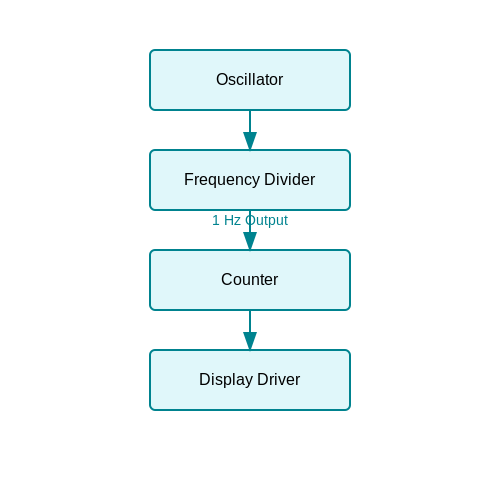
3.2 Role of Microcontrollers in Digital Clocks
The advent of microcontroller technology has fundamentally transformed the design and functionality of digital clocks. Unlike traditional analog timekeeping mechanisms that rely on gears and springs, modern digital clocks are predominantly based on electronic components that offer high precision, versatility, and programmability. This section will delve into the critical role that microcontrollers play in digital clocks, illustrating their operation, advantages, and practical applications.
Microcontroller Fundamentals in Timekeeping
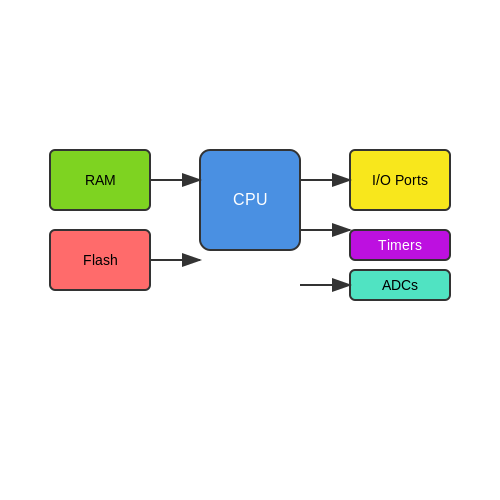
Microcontrollers are integrated circuits that contain a processor core, memory, and programmable input/output peripherals. Due to their compact size and low power consumption, they are ideal for applications requiring precise control and timing. In the context of digital clocks, microcontrollers serve as the central processing unit that synchronizes multiple tasks, including timekeeping and user interface management.
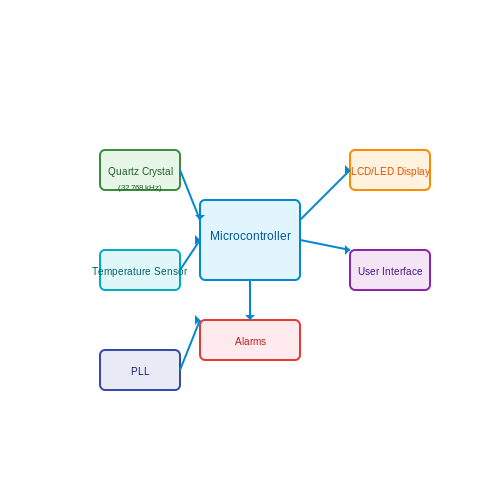
One of the primary functions of the microcontroller in a digital clock is to maintain time accurately. It achieves this through an internal timer that counts clock pulses generated by a crystal oscillator. Typically, a quartz crystal oscillates at a frequency of 32.768 kHz, which is purportedly chosen for its ability to divide neatly down to 1 Hz, matching the one-second intervals necessary for precise timekeeping. This frequency is converted into time units by the microcontroller, offering a relatively simple calculation:
Where N is the number of oscillation counts and F is the frequency (32.768 kHz). The microcontroller divides the oscillation frequency to deliver a stable one-second pulse that can be used to increment the internal clock count.
Timekeeping Accuracy and Calibration
Accuracy in digital clocks is primarily achieved through calibration processes. Microcontrollers possess the capability to adjust timekeeping through user input or even external signals, ensuring minimal drift over long periods. This is accomplished by:
- Phase-Locked Loop (PLL): Employed in some clocks to maintain synchronization with an external clock signal.
- Temperature Compensation: Utilizing internal sensors to compensate for time drift associated with temperature variations.
- User Calibration: Offering a user interface to manually set or adjust the time as needed.
Enhanced Features and Functionality
Beyond basic timekeeping, microcontrollers enable numerous advanced features in digital clocks that significantly enhance their utility. These include:
- Alarms and Timers: Programming multiple alarms and countdown timers, which require minimal code complexity and can be easily set via a user interface.
- Display Management: Driving LCD or LED displays to show time, date, and other relevant information with varying formats and brightness levels.
- Wireless Communication: Implementing protocols such as Bluetooth or Wi-Fi allows clocks to synchronize time automatically from network time servers.
Furthermore, user interfaces can be enriched with tactile buttons, touch screens, or even voice recognition, thanks to the versatility of microcontroller inputs and outputs.
Real-World Applications
The integration of microcontrollers in digital clock systems is not merely limited to household clocks. Their ubiquitous presence spans various sectors, including:
- Consumer Electronics: Smart devices such as watches, home assistants, and appliances that require precise timing.
- Industrial Automation: Clocks used in manufacturing processes where accurate timing is essential for operations and safety.
- Scientific Instruments: Equipment that requires time-stamped data collection and experiments to maintain accurate records.
In conclusion, the role of microcontrollers in digital clocks extends far beyond mere timekeeping. They offer extensive functionalities that render digital clocks as essential components in our increasingly interconnected and automated world.
3.3 Timekeeping Circuits and Their Functionality
Timekeeping circuits are fundamental components in digital clocks, providing accurate and reliable ways to keep track of time. Unlike traditional mechanical clocks, which rely on physical processes, digital clocks employ electronic components to regulate timekeeping. This section delves into the core functionalities of these circuits, emphasizing their design, operation, and applications.
Oscillator Circuits
At the heart of a digital clock's timekeeping functionality lies the oscillator circuit. Oscillators generate periodic signals—commonly square waves—that serve as timing references for counting time. The most prevalent type of oscillator in digital clocks is the crystal oscillator. These devices exploit the piezoelectric properties of quartz crystals, which vibrate at a precise frequency when an electric current is applied. The accuracy of quartz-based oscillators typically ranges from ±10 to ±100 parts per million (ppm), making them suitable for timekeeping applications.
The working principle of a crystal oscillator is based on the relationship between frequency and capacitance. When the crystal is subjected to an alternating voltage, it undergoes mechanical vibrations. The oscillation frequency can be modeled using the equation:
where f is the frequency, L is the inductance, and C is the capacitance of the circuit. In digital clocks, typically, a crystal with a frequency of 32.768 kHz is used, which allows the circuit to divide this frequency down to obtain a stable one-second timing signal.
Frequency Division
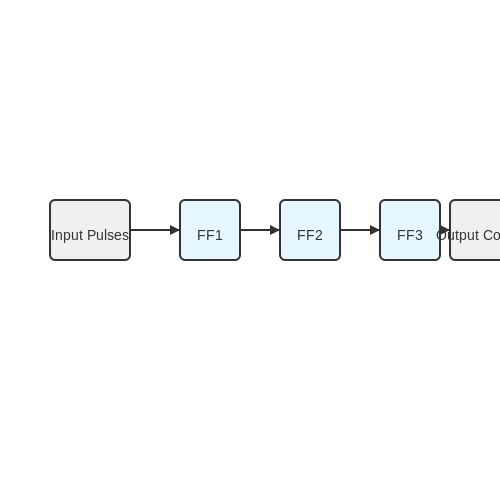
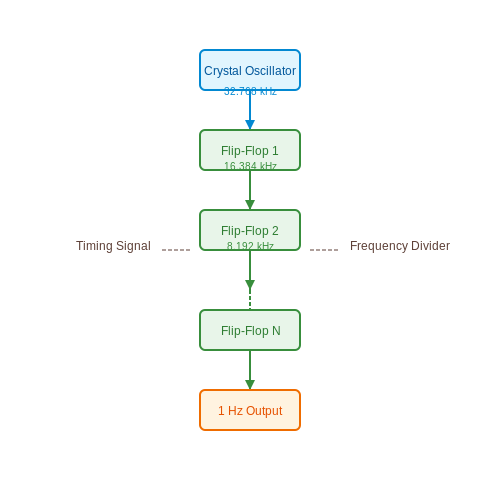
Considering the frequency of 32.768 kHz, it is essential for digital clocks to accurately count this frequency down to one second for practical timekeeping. This is achieved through a binary counting mechanism, using a series of flip-flops configured in a frequency divider configuration. Each flip-flop divides the incoming frequency by 2, resulting in the following relationships:
- The first flip-flop divides the frequency to 16.384 kHz.
- The second flip-flop further divides to 8.192 kHz.
- This division continues until the output reaches 1 Hz, corresponding to one pulse per second.
This division process can be described mathematically, where the output frequency fout is given by:
where fin is the input frequency, and n is the number of flip-flop stages. The 1 Hz signal acts as a clock pulse, facilitating the movement of the digital display.
Digital Logic and Timekeeping Control
Alongside oscillators and frequency dividers, digital clocks integrate various logic circuits that process the time data. Typically, this includes counters and multiplexers. The clock pulse generated from the frequency division drives a binary counter, which counts seconds, minutes, and hours. The binary-coded decimal (BCD) representation is common in digital clocks, enabling easy interface with display systems.
Furthermore, multiplexers play a critical role in the display of current time. Rather than illuminating all segments of the display simultaneously, a multiplexer sequentially activates segments to show the correct time while conserving energy and reducing wear on the display components.
Applications and Advancements
The advances in timekeeping circuits have notably enhanced the functionality of digital clocks. Applications range from straightforward alarm clocks to sophisticated timekeeping solutions integrated into computers and smartphones. The reliability of timing circuits has significant importance in synchronizing various systems, such as GPS satellites and networked computing systems.
Moreover, the rise of Internet of Things (IoT) devices has necessitated developments in real-time clocks (RTCs), which provide accurate time even during power interruptions. RTCs typically incorporate battery-backed oscillators, ensuring continuity in timekeeping regardless of the primary power source.
In summary, timekeeping circuits are a marvel of modern electronics, with their operation based on oscillation, division, and digital logic. Understanding these components is essential for engineers and researchers working on developments in digital timekeeping solutions and related fields.
4. Introduction to Clock Timing Algorithms
4.1 Introduction to Clock Timing Algorithms
The digital clock functions as a fundamental component in various electronic systems, ranging from simple appliances to complex synchronization devices. Understanding the intricacies of clock timing algorithms is vital for engineers and researchers aiming to develop reliable and efficient timekeeping mechanisms. These algorithms dictate how digital clocks maintain accurate time while balancing power consumption and computational efficiency.
At its core, a digital clock relies on a clock signal—a series of pulses generated at regular intervals. This signal provides the timing reference for all operations within the system. Different algorithms adapt this timing reference for various applications, leading to innovations in precision and scalability. We will explore the pivotal clock timing algorithms that underpin digital clocks, their operation, and their practical implications.
Understanding Timing Algorithms
Timing algorithms are essential for translating the continuous flow of time into discrete units. These units might be seconds, minutes, or hours, depending on the application's requirements. Among the most widely used types of timing algorithms are:
- Integer Division Techniques: Common in simple digital clocks, these algorithms use a binary counter to count clock pulses, which are then divided to produce time in a readable format.
- Phase-Locked Loops (PLLs): A more advanced method, PLLs synchronize the clock signal with a reference frequency, often providing improved stability and accuracy in timekeeping.
- Real-Time Clocks (RTCs): These devices integrate timing algorithms to maintain time even during power outages and are essential for systems requiring accurate time stamps for logging events.
Integer Division Techniques
The most fundamental algorithm involves counting incoming clock pulses. Typically, a high-frequency oscillator generates these pulses. For instance, a 32.768 kHz signal—often found in digital watches—can be divided down to achieve a 1 Hz output, effectively ticking once per second. The division process can be described by the following equation:
In this expression, \(T_{\text{output}}\) represents the periodic output time (1 second, in our case), \(T_{\text{input}}\) is the period of the input clock signal, and \(N\) is the integer division factor. The implementation of this division is typically done using binary counting within a digital circuit, ensuring efficiency and reliability.
Phase-Locked Loops (PLLs)
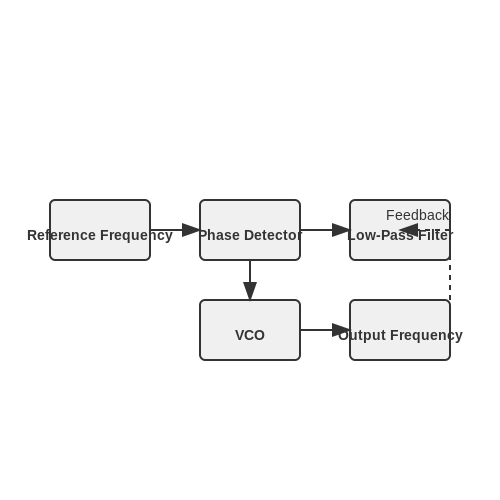
PLLs further enhance the timing accuracy by continuously adjusting the frequency of the output signal to match a reference frequency. This algorithm involves three main components: a phase detector, a low-pass filter, and a voltage-controlled oscillator (VCO). The phase detector compares the frequency of the clock signal to the reference frequency, and the results dictate the adjustments made by the VCO.
This feedback mechanism is vital in applications where precision timing is crucial, such as in telecommunications and audio equipment. By reducing phase noise and jitter, PLLs significantly improve the stability of the timing signal, making them indispensable in modern clock designs.
Real-Time Clocks (RTCs)
RTCs extend the functionality of basic timing algorithms. They incorporate not only the timing mechanisms but also additional features, such as alarms, calendar functions, and non-volatile memory to retain time information during power failures. This makes RTCs especially relevant for embedded systems that require consistent timekeeping, like in smart devices and industrial applications.
To sum up, clock timing algorithms form the backbone of digital clocks and play a critical role in numerous applications within electronics. As device complexity increases, so too does the necessity for more sophisticated timing algorithms—leading to innovations that continually redefine how we perceive and utilize time in technology.
4.2 Implementing Time Display Formats
Digital clocks utilize various formats to convey time effectively, catering to different cultural preferences and practical applications. This section will delve into the most common formats—12-hour, 24-hour, and additional variants—highlighting their mathematical underpinnings, advantages, and typical usages in both consumer electronics and industrial applications.
12-Hour and 24-Hour Formats
The two primary formats for displaying time are the 12-hour and 24-hour formats, each with its unique methods of representation and context of use. The 12-hour format divides the day into two cycles, AM (Ante Meridiem) for hours before noon and PM (Post Meridiem) for hours after. In contrast, the 24-hour format provides a continuous count of hours from 00 (midnight) to 23 (11 PM), eliminating the potential for confusion between AM and PM.
Mathematics of Time Conversion
Understanding the conversion between these two formats is essential for developing digital clock systems. The conversion can be mathematically represented as follows:
For a given hour in 12-hour format (H) and minute (M), the conversion to 24-hour format (HH:MM) can be expressed as:
This formula systematically accounts for the distinctions in hour representation depending on whether it is AM or PM. Conversely, to convert from 24-hour format back to 12-hour, you can apply:
The above equations are vital in programming microcontrollers for accurate timekeeping in digital clocks. Understanding how to implement these conversions is essential for engineers working on embedded systems that relate to time measurement and representation.
Other Display Variations
Beyond the standard formats, there are various other time display conventions employed in specialized contexts. For instance, certain digital clocks may showcase time in the ISO 8601 format, which represents time as YYYY-MM-DDTHH:MM:SS, offering a clear and unambiguous structure especially useful in data systems and specific applications involving international standards.
Moreover, variations such as military time operate similarly to the 24-hour format but often omit the leading zero, e.g., 1:00 PM appears as 1300. Such formats are primarily utilized in fields requiring precision and clarity, such as aviation and healthcare.
Visual Representation of Time Formats
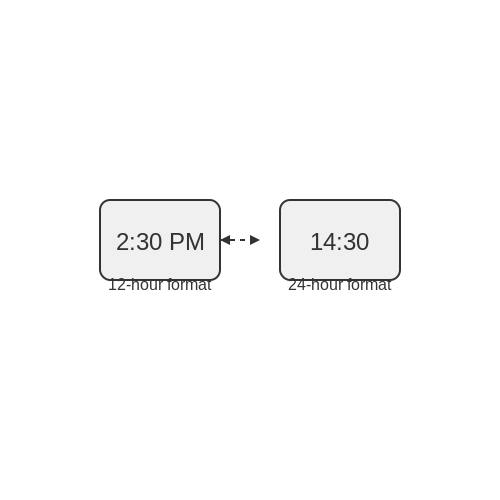
To better understand these concepts, consider a digital clock display illustrating both the 12-hour and 24-hour formats simultaneously. The display might show "2:30 PM" on the left side, indicating the time in the 12-hour format, while the right could exhibit "14:30," representing the same moment in 24-hour format. This allows for a quick visual comprehension of the equivalency between formats without extensive calculation.
Implementing such dual representations can enhance user experience in applications like mobile devices and smart home systems, where users may switch between formats based on personal preference.
As digital interfaces continue to evolve, understanding the practical applications of various time formats will remain a valuable asset for engineers and designers in the field of electronics.
4.3 Troubleshooting Common Programming Issues
When working with digital clocks in electronic and embedded systems, programmers often encounter a series of common challenges that can easily disrupt the intended functionality. Understanding and troubleshooting these issues not only enhances debugging skills but also reinforces a deeper grasp of the digital clock's operation and architecture.
Identifying and Resolving Timing Issues
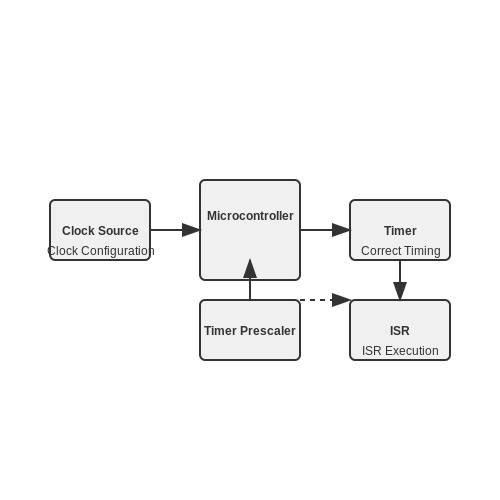
Timing discrepancies are among the most prevalent issues faced when programming digital clocks. These issues can stem from improper configuration of the clock source or incorrect handling of timer interrupts. Clock cycles may be lost due to errors in the interrupt service routine (ISR) or incorrect timer prescaler settings. To illustrate, let’s consider a simple timing mechanism utilized by most embedded systems:
When using a microcontroller, a common method to generate accurate time intervals is through the use of a hardware timer. The following approach outlines how to ensure proper timing:
- Clock Configuration: Ensure the clock source (crystal oscillator, internal RC, etc.) is accurately configured to the desired frequency.
- Timer Prescaler: Adjust the timer prescaler such that it counts appropriately for your desired time base. The prescaler divides the input clock frequency to generate a slower clock suitable for timing the clock ticks.
- Interrupts: When using interrupts, confirm that the ISR is not overly lengthy; this could lead to missed ticks. Utilize efficient coding practices to minimize ISR execution time.
Handling Data Overflow and Rollovers
Another significant area of concern in digital clocks is the overflow of data types used to store time values. For instance, if a 32-bit unsigned integer is used to track seconds in a clock program, it can represent values up to 4,294,967,295 seconds (approximately 136 years). However, if the data type rolls over without proper treatment, it can lead to abrupt changes in time representation, resulting in erroneous time displays.
To mitigate such issues, implement a rollover check in the clock algorithm:
Following this equation will help ensure that when the time exceeds a pre-defined maximum value, it resets or rolls over gracefully rather than producing non-sensical results.
Common Programming Pitfalls
As an advanced developer in this space, avoiding common pitfalls is crucial for maintaining a robust digital clock system. Here are some typical programming errors to watch out for:
- Not Accounting for Leap Seconds: Digital clocks should incorporate leap seconds to maintain universal time accuracy. Failure to do so can lead to deviations in timekeeping over long periods.
- Ignoring Timezone Adjustments: When programming clocks that interact with users across different time zones, it's essential to implement a method for handling timezone conversions accurately.
- Inaccurate Time Calculation: When performing time calculations (adding hours, minutes, or seconds), verify that overflow scenarios are correctly handled, particularly when transitioning between days, months, or years.
Tools and Techniques for Debugging
The complexity of digital clock programming often necessitates robust debugging techniques. Utilizing the following tools can aid in troubleshooting:
- Simulators: Emulators like Proteus or LTSpice can simulate the digital clock's behavior before deployment on actual hardware.
- Logic Analyzers: These tools can observe signals in real time, aiding developers in verifying that the clock pulses and signals function as intended.
- Integrated Development Environment (IDE) Debuggers: Leverage IDEs with built-in debugging tools to step through code execution, viewing variables’ values at runtime, which can help isolate issues efficiently.
In summary, troubleshooting common programming issues in digital clocks requires a multifaceted approach that involves a deep understanding of both hardware and software. By systematically identifying issues and applying best practices, one can develop reliable digital clock systems that meet both accuracy and performance expectations.
5. Alarm and Timer Functions
5.1 Alarm and Timer Functions
The evolution of digital clocks has introduced multifunctional capabilities well beyond merely telling time. Among the most significant features of modern digital timepieces are the alarm and timer functions. These features are essential, particularly in applications ranging from everyday life to advanced technical environments.
Alarm Functions
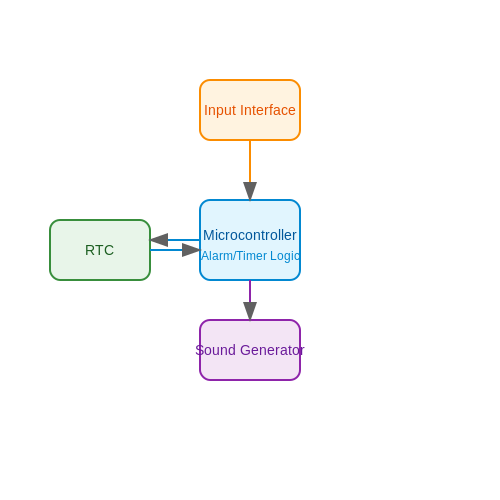
The alarm function in digital clocks is designed to alert users at predetermined times. This functionality typically involves a microcontroller or timer circuitry that tracks time and triggers an alarm mechanism when a specified time is reached. The basic components can include:
- Timekeeping element: This could be a real-time clock (RTC) module that maintains accurate time even when power is off.
- Input interface: Often includes buttons or a touchscreen for setting and modifying alarm times.
- Sound generator: A buzzer or speaker that produces audible alerts.
In designing an alarm function, engineers must consider both hardware and software elements. The microcontroller executes a loop that continuously checks the current time against the alarm time. If it detects a match, the alarm sound is activated.
Theoretical Basis of Alarm Timing
The fundamental operation of an alarm clock can be described mathematically. For instance, suppose we want to set an alarm for a specific time T in hours, minutes, and seconds. The time can be expressed in seconds as:
Where H, M, and S are the hours, minutes, and seconds respectively. The timer continuously checks if the current time C satisfies:
Timer Functions
In addition to alarm functions, digital clocks often include a timer function, which counts down from a specified time interval. This feature is particularly valuable in cooking or scientific experiments where precise time management is crucial. The timer function operates similarly to the alarm but focuses on decrementing time rather than matching it:
- Timer initiation: The user sets the duration for the countdown.
- Countdown logic: The microcontroller decrements the timer based on a clock signal.
- Zero event: Once the timer hits zero, it triggers the sound generator to indicate completion.
The operation can be summarized mathematically as well, where the countdown time T_{count} is defined as:
In this case, D_{H}, D_{M}, and D_{S} represent the countdown hours, minutes, and seconds. The timer continuously checks:
When C equals the total countdown, the zero event is triggered, alerting the user.
Practical Applications
Alarm and timer functionalities can be seen in various real-world applications:
- Home appliances: Microwaves and ovens often integrate timer functions to enhance user efficiency.
- Fitness: Workout timers assist in interval training by alternating between work and rest periods.
- Industrial use: Precision timing in manufacturing processes where cycles and increases in productivity are crucial.
The integration of alarm and timer functions into digital clocks not only enriches user experience but also extends the utility of such devices across diverse fields, making them indispensable in both everyday life and specialized applications.
5.2 Integration with Smart Home Systems
The integration of digital clocks with smart home systems represents a significant evolution in both timekeeping and home automation. As smart homes become increasingly prevalent, the coupling of traditional timekeeping devices, such as digital clocks, with smart technologies enhances functionality and convenience, allowing users to leverage time-based automation in diverse ways.Smart Home Ecosystem Overview
A smart home ecosystem is typically composed of various interconnected devices and systems that communicate with each other over a network, often using protocols like Wi-Fi, Zigbee, or Z-Wave. These devices range from light bulbs and thermostats to security systems and, notably, digital clocks. When integrated effectively, clocks can serve as critical components in automating daily routines, managing schedules, and enhancing energy efficiency. For instance, consider a scenario where a digital clock can communicate with a smart thermostat. The clock could automatically adjust home heating or cooling based on the time of day—cooling during peak hours when electricity costs are higher or heating just before family members arrive home.Connectivity and Communication Protocols
The integration of digital clocks within smart home systems relies heavily on robust connectivity solutions. The necessary communication protocols ensure seamless operation across devices. Here are some of the most commonly employed technologies:- Wi-Fi: Facilitates direct internet connectivity, allowing access to cloud-based functionalities and remote management.
- Zigbee: A low-power mesh networking protocol ideal for connecting devices in close proximity.
- Z-Wave: Similar to Zigbee but incorporates features that make it suitable for home automation.
Data Utilization and Sensor Integration
The integration extends beyond mere timekeeping to include data utilization and sensor input. Digital clocks can incorporate environmental sensors, such as temperature and humidity monitors, which collectively provide users with contextual information. For example, smart clocks can suggest optimal heating or cooling settings based on real-time data while displaying the current environmental conditions. This integration allows for more granular control of home environments, thus enhancing user comfort and energy efficiency. Through machine learning algorithms, the integrated digital clock can learn user preferences over time, optimizing both functionality and user experience.Practical Applications and Scenarios
The practical implications of integrating digital clocks with smart home systems can be illustrated through a series of scenarios:- Automated Morning Routines: A digital clock can trigger a sequence of events including the gradual dimming of bedroom lights, playing morning news through smart speakers, and preheating the coffee maker—all timed perfectly as the user’s alarm goes off.
- Energy Management: By tracking peak energy consumption times, smart clocks can signal other devices to reduce power usage, contributing to cost savings and environmental sustainability.
- Enhanced Security: Clocks can be programmed to simulate occupancy, turning lights on and off at particular intervals, creating the illusion that someone is home even when the residents are away.
Future Directions and Challenges
As the Internet of Things (IoT) continues to evolve, the potential capabilities of integrated digital clocks will expand. Future developments may include advanced biometric sensing technologies, enabling clocks to recognize individual users and provide personalized experiences. However, challenges remain, such as ensuring robust cybersecurity practices to safeguard user data and maintaining user privacy. Additionally, standardization across devices and manufacturers will be crucial for enhancing the compatibility and functionality of integrated systems. The success of such integrations depends heavily on ongoing research and development, addressing both technological and user experience aspects. In conclusion, the integration of digital clocks with smart home environments exemplifies the intersection of technology and daily living, bringing automation, efficiency, and convenience into our homes. As systems become more sophisticated, there lies an exciting potential for further innovation and enhancement in our interaction with timekeeping devices.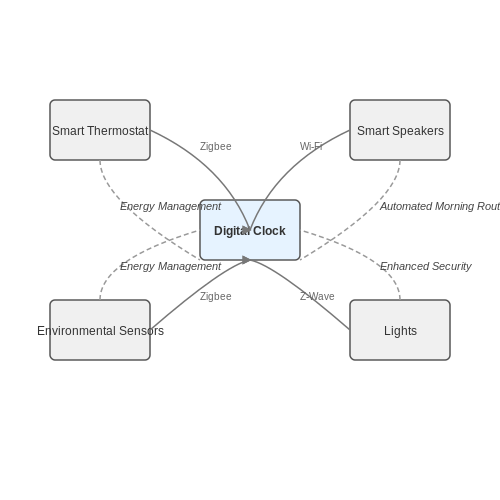
5.3 Customization Options for User Preferences
Digital clocks offer a range of customization options that allow users to tailor the display settings according to their preferences and needs. Customization features enhance usability and can significantly enhance user experience in various environments, from domestic to industrial applications. In this section, we will explore some of the advanced customization options available, the underlying technologies that enable these settings, and real-world applications of such features.
Display Format Preferences
One of the primary customization options in digital clocks involves the choice of display format. Users can often select between 12-hour and 24-hour clocks. The 24-hour format is widely adopted in various fields, such as aviation and military operations, due to its clarity and inability to confuse AM with PM. The hour format selection can be implemented through software settings, which may require the integration of simple embedded systems programming.
Software Implementation Example
To switch between formats programmatically, the core logic can be captured in a simple conditional structure in the microcontroller’s firmware. For instance, consider a basic pseudo-code snippet:
# Pseudo-code for time format selection
if time_format == "12-hour":
    display_time = convert_to_12_hour(current_time)
else:
    display_time = convert_to_24_hour(current_time)
In this example, the functions convert_to_12_hour and convert_to_24_hour handle the logic involved in converting the time format as required. The core consideration here is the time data structure, which can be in the form of hours, minutes, and seconds, typically represented as integers.
Color and Brightness Customization
Another critical aspect of digital clock design is the aesthetic and functional appeal influenced by color and brightness settings. Users can often choose different backgrounds and text colors or rely on ambient light sensors that adjust brightness dynamically based on surrounding light conditions.
For instance, a clock in a bedroom may need reduced brightness during nighttime, whereas a clock in an office may require higher brightness during working hours. The implementation of these features often involves using light-emitting diodes (LEDs) and sensors, combined with microcontroller programming that interprets the sensor's data.
Dynamic Brightness Control Case Study
A practical case of this customization can be found in the smart clock systems used in modern homes. These systems utilize ambient light sensors to control the LED brightness. The algorithm might resemble the following:
// Pseudo-code for dynamic brightness adjustment
if ambient_light < threshold:
    set_brightness(low)
else:
    set_brightness(high)
This example highlights how integration of light sensors and appropriate adjustment algorithms can significantly enhance usability, especially in smart environments.
Alarm and Notification Settings
Customization in digital clocks also extends to alarm and notification settings. Users can set multiple alarms, choose specific tones, and even personalize snooze durations. Depending on the application, more sophisticated notifications like weather updates, calendar alerts, or reminders from connected smart devices may be integrated. This level of customization is becoming increasingly relevant in IoT (Internet of Things) applications, where devices communicate seamlessly with one another.
Advancements in wireless technology enable digital clocks to synchronize with other devices, offering a cohesive user experience. For instance, a clock that not only shows time but also can remind the user of an approaching meeting by syncing with a calendar app exemplifies how digital clocks can serve enhanced roles in contemporary technology.
References and Further Reading
- Electronics Tutorials — A comprehensive resource for learning the theories and applications of electronics, including digital circuits and clock design.
- SparkFun Tutorials — Offers various tutorials on electronics, many of which cover microcontroller programming and customization in digital devices.
- Maxim Integrated Design Guides — Provides insights into implementing various electronic controls, including clocks, embedded systems, and sensor integrations.
- Arduino Tutorial Home — A platform with rich resources for programming Arduino boards, often used in custom digital clock implementations.
- Instructables — A community-driven site featuring DIY projects, including clocks and various electronics, with step-by-step guides and user experiences.
- Research on Digital Clocks — Scholarly article exploring the evolution and functionalities of digital clocks in modern technology.
- Texas Instruments Application Notes — Detailed application notes that provide insights on clock frequency, design considerations, and custom configurations.
6. Use in Household Appliances
6.1 Use in Household Appliances
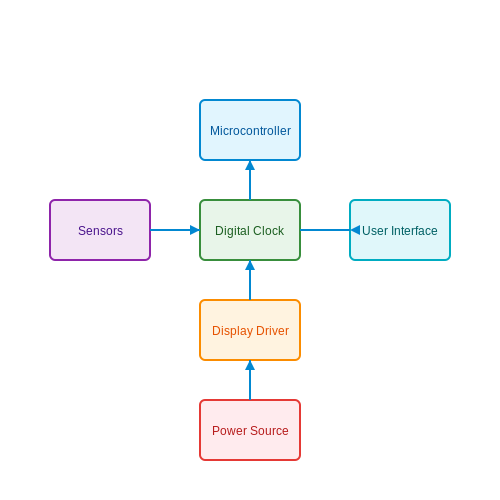
Digital clocks have become ubiquitous in modern household appliances, serving not only as timekeepers but also as integral components that enhance functionality, user interface, and energy management. Understanding their implementation in various devices provides insights into their importance in the continuous evolution of electronics.
Overview of Digital Clocks in Appliances
At the core of many household devices lies a digital clock, which typically operates using either a quartz crystal oscillator or a microcontroller. The former generates precise timekeeping via piezoelectric properties, while the latter often allows for programmable features, making these clocks incredibly versatile.
The use of digital clocks can be categorized across various appliances, including microwave ovens, washing machines, and smart thermostats. Each application leverages the precision of digital clocks in unique ways.
Microwave Ovens
In microwave ovens, the digital clock functions primarily to display cooking time. These appliances utilize a simple microcontroller connected to a user interface where a digital clock maintains timing accuracy. Often, microwave timers will operate with a resolution of one second, enabling precise cooking durations.
The circuit for such functionality may include a dual-purpose timer and display driver that not only keeps track of the elapsed cooking time but can also signal alerts when the cooking cycle is complete. This ensures that users don't accidentally overcook their food.
Implementing Timekeeping in Microwave Ovens
When designing the timekeeping circuit, it's crucial to consider the noise immunity of the oscillator circuit. Quartz crystals can oscillate at a frequency of 32.768 kHz, which is commonly used because it leads to an operational voltage reducing power consumption. The timer's accuracy is often specified in parts per million (ppm) and can be paramount in ensuring a good user experience.
Washing Machines
In advances washing machine designs, digital clocks not only track time but also optimize wash cycles based on user preferences or load sizes. Models equipped with more sophisticated microcontrollers can incorporate algorithms that adjust time dynamically, factoring in variables such as water temperature and detergent type.
The internal programming of these timers requires precise calibration and synchronization with sensors that monitor load and performance metrics. This level of integration embodies the confluence of advanced digital electronics and consumer convenience.
Example Calculation of Cycle Timing
To calculate the total run time based on various load factors, one might use a simple equation:
Where:
- Ttotal is the total wash time.
- Tbase is the base cycle time.
- W is the weight factor derived from load size.
- Tload is the time adjustment per unit weight.
This equation showcases how digital clocks in washing machines utilize real-time data to tailor performance, providing efficiency and effectiveness in laundry tasks.
Smart Thermostats
In contemporary smart home environments, digital clocks play a pivotal role in managing heating and cooling systems. Digital clocks in smart thermostats can learn user schedules, automatically adjusting temperature settings based on the time of day and occupancy, thus enhancing energy efficiency.
The integration of digital clocks with Internet of Things (IoT) technology allows the clock to access real-time weather data and forecast trends, leading to further optimizations in energy usage. Smart thermostats often utilize machine learning algorithms to adaptively modify their behavior based on observed patterns.
Practical Considerations
As with all electronic devices, precision and reliability are essential. Engineers designing smart thermostats must ensure that the digital clocks can cope with potential power interruptions or electronic noise, particularly in residential environments where fluctuations are common.
In conclusion, the role of digital clocks in household appliances extends far beyond simple timekeeping. Their integration into devices such as microwave ovens, washing machines, and smart thermostats underscores their importance in enhancing operational efficiency, user experience, and energy management. Understanding the underlying technology not only illustrates the progression of electronic design but also highlights significant future directions in appliance innovation.
6.2 Role in Consumer Electronics
Digital clocks are more than just timekeeping devices; they play a pivotal role in our daily lives and the functioning of numerous consumer electronics. Their evolution from simple LED displays to sophisticated quartz-controlled units illustrates the intertwined development of technology, user interfaces, and energy efficiency. In this section, we will explore the fundamental aspects of digital clocks in consumer electronics, examining their design, applications, and the technical principles that underlie their operation.
Fundamental Design and Functionality
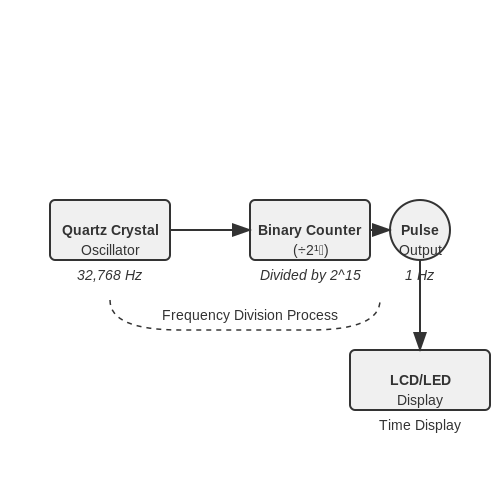
At their core, digital clocks rely on electronic circuitry to keep time. Most modern digital clocks utilize a quartz crystal oscillator, which vibrates at a precise frequency when an electric current is applied. This frequency is typically 32,768 Hz, a value chosen for its mathematical convenience; it can be easily divided down to one pulse per second using binary counters, which form the backbone of digital timekeeping.
This precision allows digital clocks to maintain accurate time over extended periods. The output from the oscillator is fed into a counter circuit, which increments the time displayed by the clock. The digital representation of time is then typically shown on an LCD or LED display, providing both clarity and ease of reading.
Applications in Consumer Electronics
Digital clocks are embedded in a wide array of consumer electronics, serving critical roles in various applications:
- Watches: Digital watches utilize microcontrollers to manage timekeeping functions, alarms, and additional features such as heart rate monitoring.
- Home Appliances: Many microwaves, ovens, and thermostats incorporate digital clocks to provide users with precise timing and scheduling capabilities.
- Computers and Mobile Devices: Operating systems rely on digital clocks to maintain system time, manage file timestamps, and synchronize processes, which is vital in networking environments.
Furthermore, the integration of digital clocks with smart technology has led to the development of smart home devices that not only keep time but also serve as interfaces for automation and control.
Advancements and Future Trends
As technology advances, the design and functionality of digital clocks continue to evolve. With the integration of IoT (Internet of Things), digital clocks are now capable of synchronized timekeeping across devices, allowing for smarter home environments where devices can communicate and cooperate seamlessly.
Additionally, energy efficiency is an increasing focus in modern electronics design. Newer digital clocks incorporate low-power microcontrollers, ensuring prolonged battery life in portable devices while retaining high accuracy. The shift towards renewable energy sources also presents potential for innovations in how these devices are powered, such as utilizing energy-harvesting methods.
In conclusion, digital clocks are foundational components in consumer electronics, influencing not only how we tell time but also how devices interact with each other in an increasingly integrated and efficient world. Understanding the principles behind their design and operation enhances our ability to innovate in this domain.
6.3 Industrial and Commercial Applications
Digital clocks have transcended their basic timekeeping function and become integral components in a variety of industrial and commercial applications. Their precision, reliability, and versatility make them essential for synchronizing operations, ensuring safety, and optimizing productivity across numerous sectors. This section delves into several pertinent applications where digital clocks play a vital role.
Manufacturing and Process Controls
In industrial manufacturing settings, digital clocks help synchronize production lines, ensuring that operations across different machines and processes occur seamlessly. For instance, in automated systems, digital clocks can provide coordination for time-sensitive operations and trigger actions at precise intervals. This facilitates efficiency in processes such as assembly lines, where the timing of each operation is critical.
Additionally, digital clocks are linked to supervisory control and data acquisition (SCADA) systems, which monitor and control industrial processes. The incorporation of timing signals allows for accurate data logging and real-time monitoring, leading to enhanced quality control measures.
Transportation Systems
Digital clocks are essential in transportation systems, serving critical roles in timetabling and synchronization. For transit authorities, accurate timekeeping is vital for maintaining schedules, whether it be for buses, trains, or flights. These clocks ensure that passenger communications relay correct information regarding arrivals and departures, directly affecting customer satisfaction and operational efficiency.
Moreover, in aviation, digital clocks are integrated into navigation systems, where timing is crucial in conjunction with global positioning systems (GPS). The accurate synchronization of time is fundamental for locating aircraft in the airspace and for managing air traffic efficiently.
Telecommunications
Within the telecommunications sector, digital clocks facilitate crucial functions, such as synchronizing data packets in network systems. Timekeeping is essential for protocols like the Network Time Protocol (NTP), which ensures that the different network nodes maintain synchronized time. This synchronization helps mitigate issues related to network latency and improve overall communication efficiency.
As digital communication advances, integrating high-precision atomic clock technology into systems has emerged as a trend. This enables the enhancement of data transmission accuracy and supports emerging technologies such as quantum communication.
Medical and Healthcare Devices
In the healthcare industry, digital clocks are integrated into medical devices to enhance patient care and safety. For instance, they are commonly found in infusion pumps, where timing is critical for administering drugs precisely over specified intervals. Any error in timing could result in either underdosing or overdosing, hence necessitating the high reliability of timekeeping.
Furthermore, in hospital environments, synchronized digital clocks are crucial for maximizing workflow efficiency among medical staff. An essential application here is the coordination of surgical procedures and patient management through time-based scheduling.
Conclusion
The evolution of digital clocks has positioned them as pivotal components in various fields, each requiring precision and dependability. As technology continues to progress, the integration of advanced timing solutions within digital clocks will undoubtedly expand their utility in industrial and commercial applications.
7. Addressing Power Consumption
7.1 Addressing Power Consumption
As digital clocks continue to evolve, the importance of efficient power management becomes paramount, both for enhancing device longevity and for minimizing energy waste. In this section, we shall explore the methodologies and strategies employed to address the power consumption of digital clocks, focusing on circuit design, component selection, and operational techniques.
Understanding Power Consumption in Digital Clocks
The power consumption of a digital clock typically encompasses two primary components: static and dynamic power. Static power consumption arises from the leakage currents in the silicon components, while dynamic power is attributed to the switching activities within the circuit during operation. To effectively design a low-power digital clock, it is crucial to understand the trade-offs of these two components.
Static Power Considerations
Static power can often be reduced by choosing devices with low leakage characteristics. In CMOS technology, the subthreshold leakage becomes significant as transistor dimensions shrink. Implementing high-VTH (threshold voltage) devices can curtail leakage; however, this may increase dynamic power due to slower switching speeds. Thus, the designer must find a compromise, balancing performance with leakage reduction. Techniques such as power gating or using sleep modes can help reduce static consumption during inactive periods.
Dynamic Power Considerations
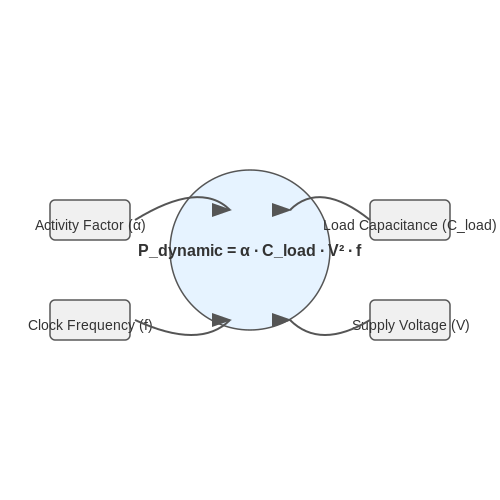
For dynamic power, the relationship is prominently dictated by the equation:
Here, \( \alpha \) represents the activity factor (the fraction of the clock cycle during which the output changes), \( C_{load} \) is the total capacitive load driven by the circuit, \( V \) is the supply voltage, and \( f \) is the clock frequency. This equation emphasizes key leverage points for power reduction. Let’s break these down:
- Reducing Voltage: Lowering the supply voltage \( V \) is a potent method of power reduction, as power scales quadratically with voltage. However, it should not result in insufficient switching strength as it may throttle performance.
- Activity Factor: Reducing the activity factor \( \alpha \) can be achieved by optimizing the circuit to minimize unnecessary transitions. Techniques such as clock gating, where the clock signal is turned off for inactive parts of the circuit, are effective here.
- Clock Frequency: The reduction of clock frequency \( f \) directly impacts dynamic power. By employing techniques of dynamic frequency scaling, the clock can operate at lower frequencies when workloads are light, yielding significant power savings.
Design Techniques for Power Efficiency
In practical applications, various design techniques can be implemented to reduce power consumption in digital clocks. Two notable methods are:
1. Multi-Voltage Designs
By utilizing multi-voltage design, designers can assign different supply voltages to different parts of a digital clock based on their performance requirements. For instance, components that require high-speed operation can receive higher voltage, while less critical components can run on lower voltages, effectively minimizing energy waste.
2. Adaptive Threshold Voltage Scaling
This innovative method involves dynamically adjusting the threshold voltage of transistors based on operational requirements and conditions. Such a technique allows for higher performance when needed while maintaining low power states during less demanding phases.
Case Study: RTC Modules
Real-time clock (RTC) modules represent an excellent study of power consumption in digital clocks. Many RTCs are designed with ultra-low-power consumption in mind, operating in the microampere range. In their design, feature-enhancing methods like temperature compensation circuits, oscillator circuits based on low-power quartz crystals, and intelligent power management systems play crucial roles.
With energy efficiency becoming increasingly critical in today’s tech landscape, innovations in digital clock design—particularly regarding power consumption—are paramount. By leveraging the above considerations and design practices, engineers can significantly enhance the sustainability and operational efficiency of these ubiquitous timekeeping devices.
7.2 Innovative Display Technologies
In the realm of digital clocks, the evolution of display technologies has been pivotal in enhancing not only functionality but also user engagement and aesthetic appeal. As we delve into innovative display technologies, we explore the advancements that have shaped modern digital timepieces, from traditional LED digits to sophisticated OLED and E-Ink displays. Each technology brings unique benefits, paving the way for more advanced and interactive clock designs.Transitioning from LED to OLED
Light Emitting Diodes (LED) have been the predominant technology in digital clock displays for several decades. Their high visibility, low energy consumption, and longevity make them a preferred choice for a wide array of applications. However, as consumer expectations evolved, there emerged a need for displays that offered richer colors, deeper contrasts, and improved power efficiency. Enter Organic Light Emitting Diode (OLED) technology, which utilizes organic compounds that emit light in response to an electric current. Unlike LEDs that require a backlight, OLEDs incorporate light-emitting layers within the display itself, allowing for deeper blacks and potentially thinner designs—a significant innovation for compact electronic devices. Additionally, diminishing power consumption becomes evident when displaying darker images, making OLEDs highly efficient, especially in devices with dimmed display settings.The Role of E-Ink Displays
Another significant alternative is E-Ink (Electronic Ink), predominantly known for its application in e-readers. This technology operates through microcapsules containing black and white particles suspended in a clear fluid. When a voltage is applied, the particles move to the surface, creating visible text or images. E-Ink displays are particularly advantageous for battery-operated devices due to their ultra-low power consumption; they consume energy only during the refresh of the display. The appeal of E-Ink in digital clocks lies in its readability under direct sunlight and its paper-like appearance, which enhances user friendliness. Imagine a digital clock that not only looks sleek but also blends seamlessly with a wide variety of décor—this is the promise E-Ink technology holds.Advancements in Smart Display Technologies
As the Internet of Things (IoT) continues to expand, the interfaces of digital clocks have evolved to accommodate more than just timekeeping. With smart displays, we now see integrated functionalities such as alarm settings, ambient light sensors, and connectivity to other smart devices. Technologies like flexible displays have emerged, enabling clock surfaces that can contour to various shapes, enhancing user interaction. Moreover, projection-based displays are worth mentioning. These allow time to be displayed on any surface, providing an innovative way to check the time without the constraints of traditional screens. Such technology opens new possibilities for use in unconventional environments—think of wall clocks that adapt their display based on where the viewer is standing.Conclusion
In conclusion, the journey of digital clock displays continues to be one of innovation. From the reliable and user-friendly LED to the aesthetically pleasing OLED and the sustainable E-Ink, each technological evolution supports enhanced functionality and experience. With advancements in smart and projection displays, the future of digital timekeeping will surely captivate the imagination, with designs poised to merge seamlessly into our dynamic lifestyles. Exploring these technologies transcends mere functionality; it is about connecting with the user's preferences and contextual needs. The study of these innovative display technologies not only sheds light on current trends but also reveals potential pathways for future development, contributing significantly to the broader field of consumer electronics.7.3 Future Trends in Timekeeping Devices
As digital clocks continue to evolve, various advanced technologies are paving the way for future enhancements and applications. In this subsection, we will explore innovative trends in timekeeping devices, focusing on the integration of quantum technology, advancements in precision timing, and the potential of IoT (Internet of Things) in timekeeping.
Integrating Quantum Technology
Quantum technology offers transformative potential for high-precision timekeeping. Quantum clocks, which utilize the principles of quantum mechanics to measure time, promise unprecedented accuracy. For instance, atomic clocks, which are based on the vibrations of atoms (typically cesium or rubidium), are currently the gold standard for timekeeping. However, researchers are developing next-generation quantum clocks that could achieve accuracies to within a few billionths of a second per year.
The importance of these clocks extends beyond mere timekeeping; they can enhance global positioning systems (GPS) and improve telecommunications by providing more reliable time references. The integration of quantum technologies could redefine synchrony in networks and pave the way for innovations in fields such as general relativistic physics and advanced satellite systems.
Precision Timing Advancements
The demand for precision timing is surging in various industries, including telecommunications, finance, and scientific research. To accommodate this need, researchers are exploring novel techniques to enhance conventional atomic clock designs, focusing on miniaturization and stability. For example, optical lattice clocks harness lasers to trap atoms in a lattice configuration, achieving remarkable stability in their oscillation frequencies.
Here, \( \Delta f \) denotes the uncertainty in the clock frequency, and \( \tau \) represents the coherence time of the light field. The longer the coherence time, the lower the uncertainty, leading to improved timekeeping characteristics.
The implications of precision timing are profound. In finance, microsecond-level synchronization allows high-frequency trading to flourish, while in telecommunications, precision timing is essential for maintaining the integrity of data transmissions and latency reduction.
The Role of IoT in Timekeeping
The Internet of Things (IoT) is transforming various industries, and timekeeping devices are no exception. IoT-enabled clocks can communicate with other devices in real-time, adjusting their time settings based on network standards and providing valuable data analytics on time usage and synchronization. The integration of GPS and other timing protocols within the IoT framework could lead to more efficient and reliable systems.
Moreover, smart cities are leveraging IoT-enabled clocks to synchronize traffic signals and enhance public transport systems, ensuring efficient urban mobility. This interconnectedness reflects the trend towards networked timekeeping devices that operate in a cohesive ecosystem, facilitating better time management across various applications.
Sustainability Considerations
Alongside technological advancements, sustainability concerns are driving the development of environmentally friendly timekeeping devices. As digital clocks become more energy-efficient, the focus is shifting to using renewable energy sources for powering these devices. Innovations in battery technologies, including solid-state and lithium-sulfur batteries, promise a future where timekeeping devices not only operate efficiently but are also environmentally sustainable.
In conclusion, the future of digital clocks appears promising, driven by advancements in quantum technology, precision timing methodologies, the integration of IoT, and sustainability practices. As these trends unfold, we can anticipate a new era of timekeeping devices that will significantly impact various fields, enhancing accuracy, productivity, and sustainability.
8. Recommended Books and Texts
8.1 Recommended Books and Texts
- Digital Design and Computer Architecture — This book presents a modern approach to digital design, covering key concepts such as cabling, logic gates, and advanced design techniques essential for digital electronics and clocks.
- Digital Circuit Design — Ideal for understanding the foundational and advanced principles of digital circuits, this book details critical components and their function in digital clock design.
- Introduction to Digital Timing Analysis — Offers a comprehensive look into timing concepts critical to digital clock performance, including propagation delay and transition times.
- Digital Circuit Design for Computer Science Students — Specifically tailored for students and researchers, this book underscores key digital design fundamentals with real-world logic circuit applications.
- The Art of Electronics — Known for its breadth and depth, this reference provides detailed insights into electronic design relevant to digital clock construction and advanced digital circuits.
- Embedded Software Development for Safety-Critical Systems — Though focused on embedded systems, this text includes practical considerations and designs that are applicable in discrete digital clock systems.
- Understanding Digital Signal Processing — Provides in-depth discussions on signal integrity and processing systems that directly contribute to the timing accuracy in digital clock designs.
- Principles of Digital Communication and Coding — Combines theoretical and practical aspects of digital communication, essential for advanced understanding of digital system timing and reliability.
8.2 Academic Journals and Articles
- SAGE Journal of Time & Frequency — Published by SAGE, this journal explores the latest advances in the science of time measurement, including precision timekeeping and atomic clocks, relevant to understanding digital clock development.
- Digital Signal Processing Journal — Offers insights into the computational aspects of signal processing, crucial for designing digital clock algorithms that ensure accurate time display and synchronization.
- IEEE Transactions on Instrumentation and Measurement — This resource covers topics like precision measurement instruments and clock synchronization techniques, offering a comprehensive view of digital clock systems.
- ACM Transactions on Design Automation of Electronic Systems — Focuses on the automation of electronic systems, including design methodologies for digital clocks, contributing to their efficiency and accuracy.
- Journal of Signal Processing Systems — Offers detailed studies on signal processing systems, providing a foundation for developing algorithms used in digital clock timing mechanisms.
- SciTePress Digital Library — A robust database containing conference papers and journal articles on numerous electronic and computer systems topics, including those related to digital clock innovations.
- Journal of Measurement Science and Technology — Covers advances in metrology, including time measurement, providing foundational knowledge that underpins modern digital clock technology.
- Journal of Circuits, Systems, and Computers — Offers research articles on circuit design and system integration essential for the hardware implementation of digital clocks.
8.3 Online Resources and Tutorials
For advanced-level readers exploring digital clocks, it's essential to delve into diverse online resources that offer in-depth knowledge and practical insights. Below is a curated list of resources that encompass tutorials, theoretical discussions, and practical examples related to digital clocks. These resources are suitable for engineers, physicists, researchers, and graduate students.- Digital Circuits - Clocks — An in-depth discussion on clocking methodologies within digital circuits, including an overview of clock generation and synchronization.
- Digital Clock Generation — A comprehensive guide on generating clock signals in digital circuits, complete with diagrams and simulations to enhance understanding.
- Digital Clock with Arduino — A practical tutorial on how to build a digital clock using the Arduino platform, demonstrating real-world applications of digital timekeeping.
- Digital Electronics - Clock Pulse Generation — This resource explains the principles of clock pulse generation, including duty cycle and frequency considerations in digital circuits.
- Digital Clock Using PIC Microcontroller — A detailed project guide that explores the implementation of a digital clock using PIC microcontrollers, providing valuable insights into embedded system design.
- Digital Clock Design Tool — An online tool for designing and simulating digital clocks, allowing users to experiment with timing configurations and understand timing constraints.
- Application Report on Clock Systems — A technical paper from Texas Instruments that provides insights into clock systems, including clock distribution and synchronization challenges.