Bluetooth Low Energy (BLE)
1. Definition and Purpose
1.1 Definition and Purpose
Bluetooth Low Energy (BLE), a wireless communication technology, has emerged as a pivotal innovation in the field of electronics and communication systems. Specifically designed for low power consumption and cost efficiency, BLE provides the ability for devices to communicate over short distances with minimal energy requirements. As the demand for connectivity increases in devices such as wearables, smart home gadgets, and medical sensors, BLE serves as an ideal solution, allowing these items to function for extended periods on small batteries.
Developed by the Bluetooth Special Interest Group (SIG), BLE operates in the 2.4 GHz ISM (Industrial, Scientific, and Medical) band, sharing the same frequency as traditional Bluetooth, yet with significant distinctions in protocol and architecture. The core purpose of BLE is to facilitate the exchange of data between devices that are often characterized by intermittent connectivity and reduced power budget—a critical requirement for battery-operated systems engaging in sporadic data transfer rather than continuous streaming.
At its essence, BLE achieves energy efficiency through features such as:
- Low Duty Cycle: BLE devices can switch to sleep mode quickly when not in use, dramatically reducing power consumption.
- Short Advertising and Connection Intervals: BLE minimizes the time spent on communication by using short bursts for discovery and connection establishment.
- Optimized Data Packet Size: BLE supports variable data lengths, which allows for tailored data exchanges, further conserving energy and bandwidth.
In terms of applications, BLE enables a vast array of real-world functionalities such as:
- Health Monitoring: Wearable devices that track fitness metrics or vital signs can leverage BLE for seamless data transmission to smartphones or health tracking systems.
- Smart Home Automation: Devices like smart locks, lights, and appliances implement BLE to allow users to control them via smartphones or smart assistants.
- Asset Tracking: BLE beacons are increasingly used for indoor navigation and tracking valuable items in various settings, including hospitals and warehouses.
As we delve deeper into the specifics of BLE, the understanding of its architecture, protocols, and the underlying physics of wireless communication will be crucial. We will explore how BLE manages to balance the demands of connectivity with energy efficiency, further establishing its relevance in modern technological applications.
1.2 Evolution from Classic Bluetooth
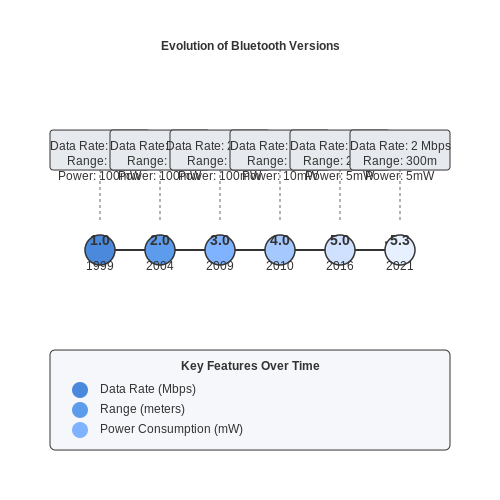
The evolution from Classic Bluetooth to Bluetooth Low Energy (BLE) highlights a transformative shift in wireless communication paradigms, driven by the increasing demand for power efficiency and versatile connectivity in a variety of applications. Classic Bluetooth, standardized in 1998, focused predominately on robust multimedia streaming, offering high data rates (up to 3 Mbps) with transmission ranges typically up to 100 meters. However, in applications such as health monitoring, consumer electronics, and the Internet of Things (IoT), the need for a low-power alternative became evident. As the landscape of wireless communication evolved, so too did the limitations of Classic Bluetooth. Although effective for audio streaming and file transfer, it consumed significantly more power during idle periods, making it unsuitable for devices requiring prolonged battery life. This prompted the development of BLE, which was officially introduced in Bluetooth 4.0 in 2010. BLE emphasizes *energy efficiency* while maintaining a simple connection, enabling devices to stay connected longer with minimal energy consumption.Key Architectural Differences
At its core, BLE retains some fundamental attributes of Classic Bluetooth, such as frequency hopping and packet-based communication. However, several architectural differences distinguish the two:- Connection Interval: BLE's flexible connection interval (typically 7.5 ms to 4 seconds) allows devices to communicate more sporadically, minimizing active transmission time and thereby conserving battery life.
- Data Payload: BLE supports smaller packet sizes, focusing on low-latency data transfers, which is suitable for simple sensor data rather than large audio or video files.
- Advertising and Scanning: BLE introduces an advertising mode that enables devices to broadcast data to any nearby listening devices, enhancing discoverability and connection establishment time.
Practical Relevance and Applications
The ramifications of BLE’s design are particularly notable in real-world applications. Wearable health devices, such as fitness trackers and heart rate monitors, have leveraged BLE to send data to smartphones without compromising battery life. In smart home devices, BLE facilitates seamless interaction between sensors and controllers, enabling ecosystems of interconnected devices to operate efficiently. Additionally, industries such as healthcare have utilized BLE for patient monitoring systems where devices operate reliably for months on a single charge. Ultimately, the evolution from Classic Bluetooth to BLE signifies a pivotal advancement in wireless communication technology, reflecting a growing emphasis on energy conservation and device interconnectivity. As industries continue to innovate, BLE's architecture will likely evolve further, accommodating even more applications with specific energy and data transmission needs. With a firm understanding of BLE and its evolution from Classic Bluetooth, readers can appreciate the nuances of wireless communication technologies and their implications on both current and future development in electronics and IoT landscapes.1.3 Applications and Use Cases
In recent years, the emergence of Bluetooth Low Energy (BLE) has marked a significant milestone in wireless communication technology, specifically tailored for short-range connections with minimal power consumption. This adaptation of Bluetooth technology has opened various avenues for innovative applications across multiple fields. The practicality and efficiency of BLE have made it exceptionally relevant in diverse sectors, from healthcare to consumer electronics and smart home automation.Healthcare Applications
One of the most prominent applications of BLE can be observed in the healthcare sector, where it plays a vital role in remote patient monitoring and medical device communication. Wearable devices, such as fitness trackers and smartwatches, leverage BLE to continuously collect biometric data like heart rate, glucose levels, and activity metrics. This data is then transmitted to smartphones or healthcare systems for analysis, aiding in chronic disease management. Consider the case of a diabetic patient using a BLE-enabled continuous glucose monitor (CGM). The device can wirelessly send glucose readings to an app on the patient's phone or directly to their healthcare provider, allowing for real-time monitoring and prompt intervention when necessary.Smart Home Automation
BLE's low power consumption makes it suitable for the proliferation of smart home devices. Smart thermostats, lights, locks, and security cameras often incorporate BLE technology to facilitate communication across a connected environment. Users can control these devices through their smartphones, integrating them seamlessly into a home automation system. For instance, a BLE-enabled smart bulb can be programmed to change colors or illuminate at specific times, enhancing home security and energy efficiency. Moreover, BLE's capacity to support multiple devices concurrently and manage data interconnectivity at low energy costs further solidifies its role in smart living spaces.Industrial Automation
In industrial settings, BLE is increasingly utilized for asset tracking and management. Companies can equip tools and machinery with BLE tags to monitor their location and manage inventory effectively. This system enhances operational efficiency, minimizes loss, and optimizes supply chain logistics. For example, consider a manufacturing facility where BLE tags are attached to essential tools. By employing BLE technology, supervisors can precisely track the location of equipment in real-time, facilitating better allocation and minimizing downtime caused by misplaced tools.Consumer Electronics
The realm of consumer electronics has truly embraced BLE, as devices become more interconnected. A myriad of products, such as headphones, speakers, and remote controls, now utilize BLE for wireless connectivity. This allows for enhanced functionalities, such as audio streaming and seamless device pairing, while preserving battery life. Additionally, BLE facilitates the development of Internet of Things (IoT) applications, where multiple consumer products can communicate and share data over the web. Use cases include smart refrigerators that alert users when they’re running low on groceries or thermostats that learn user preferences to optimize heating and cooling schedules.Data Transfer and Proximity Applications
Beyond device-to-device communication, BLE also supports various data transfer applications, where tokens or passes can be exchanged for payment or access control. BLE's proximity capabilities enable features such as location-based services, which can enhance user experiences in retail environments. For example, a retail store can use BLE beacons to send personalized promotions to smartphones as customers move through various aisles. This micro-location tracking can help businesses enhance customer engagement and increase sales by sending relevant offers directly to potential buyers. The applications of BLE are vast and continually expanding, reflecting the dynamic evolution of technology in conjunction with the growing need for connectivity with minimal energy consumption. In the age of the Internet of Things and smart environments, the future of BLE promises even more innovative applications and use cases as it integrates further into our daily lives.2. Core Specifications of BLE
2.1 Core Specifications of BLE
Physical Layer and Modulation
A foundational aspect of BLE is its physical (PHY) layer, which operates in the 2.4 GHz ISM band, utilizing a frequency-shift keying modulation scheme known as Gaussian Frequency Shift Keying (GFSK). This modulation technique is optimized for low power, allowing BLE devices to achieve longer battery life compared to traditional Bluetooth. The adoption of a multi-channel structure further enhances the robustness of BLE communications, permitting devices to hop between channels to avoid interference and maximizing data integrity.Data Rate
BLE supports multiple data rates to accommodate various application needs, with the standard data rate set at 1 Mbps since the BLE 4.0 specification. The introduction of BLE 5.0 raised the bar by supporting data transmission rates of up to 2 Mbps, doubling the throughput and significantly benefiting applications requiring rapid data exchange, such as health monitoring systems and automated home controls.Connection and Advertising Behavior
The connection process in BLE involves two key phases: advertising and connection. Devices initiate communication through advertising packets, broadcasting their presence to potential peers. BLE specifies three primary advertising modes:- Connectable Advertising: Allows devices to establish connections.
- Non-connectable Advertising: Used for sensor information that does not require a connection.
- Scannable Advertising: Enables other devices to scan the advertising packets without connection initiation.
GATT and Profiles
BLE leverages the Generic Attribute Profile (GATT) for data exchange and communication hierarchy. GATT structures data into services and characteristics. Services define a collection of related functionalities, while characteristics represent the data values exchanged between devices. For instance, a heart rate monitor may implement a service for heart rate measurement, with characteristics including the average heart rate and the maximum heart rate. The GATT specification maintains flexibility and adaptability, allowing developers to define custom services for niche applications, which is paramount in niche markets like health or industrial applications.Power Consumption
Power efficiency is critical for BLE, where devices can enter sleep modes to conserve energy when not active. The average current consumption in these sleep modes can drop to 0.01 µA, showcasing BLE’s remarkable ability to operate seamlessly in battery-powered applications. The interplay between connection intervals and advertising channels also plays a significant role in optimizing power consumption without compromising communication efficacy. With its rich set of specifications, BLE redefines how devices communicate, ensuring optimal performance while fitting the constraints of modern device capabilities. These attributes not only elevate its performance as a wireless standard but also expand its utility across a diverse range of applications, spanning critical domains like healthcare, smart homes, and environmental monitoring systems.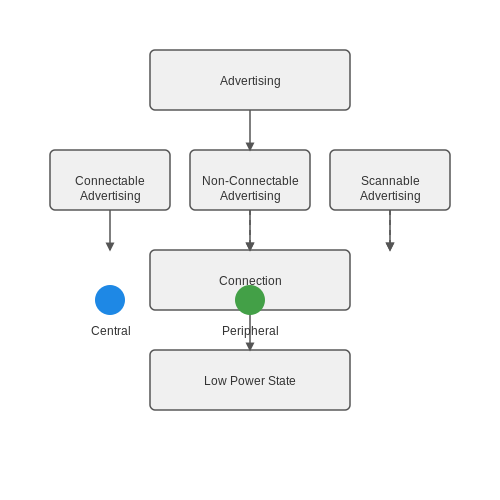
2.2 The BLE Protocol Stack
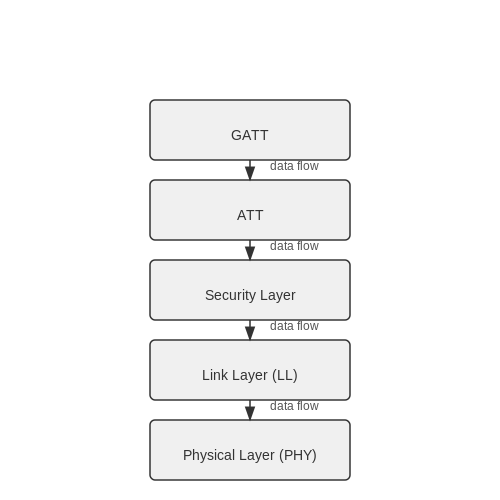
The Bluetooth Low Energy (BLE) protocol stack is a layered architecture designed to facilitate low-power wireless communication among devices with minimal latency. This stack consists of several layers, each serving distinct functions necessary for efficient communication in a variety of applications ranging from fitness trackers to home automation systems.
To understand the BLE protocol stack, it's helpful to envision it as a series of layers that encapsulate various protocols and services, allowing for modularity and interoperability. The BLE stack typically includes the following layers:
1. Physical Layer (PHY)
The lowest part of the BLE stack, the PHY layer, deals with the actual radio frequency transmission and reception. BLE operates within the 2.4 GHz ISM (Industrial, Scientific, and Medical) band, employing frequency-hopping spread spectrum (FHSS) to mitigate interference issues.
The PHY layer is characterized by its support for two different modes:
- 1 Mbps mode
- 2 Mbps mode
These modes enable data rates suitable for various application requirements. The PHY layer's job is to convert digital bit streams from the upper layers into modulated radio signals and vice versa, ensuring reliable transmission despite the inherent noise in wireless communication.
2. Link Layer (LL)
Above the PHY layer is the Link Layer, which is responsible for providing mechanisms for device discovery, connection establishment, and data transfer between devices. It plays a crucial role in managing the connection parameters and ensuring low-power operation.
Notably, the LL includes functionalities such as:
- Advertising: Broadcasting information to announce the device's presence and capabilities.
- Scanning: Listening for advertising packets from nearby devices.
- Connection: Establishing a link with another BLE device and managing the connection state.
- Data Channel Management: Ensuring efficient data transfer via data channels.
3. Attribute Protocol (ATT)
The Attribute Protocol is used for communication between devices regarding low-level data formats. It allows for the hierarchical representation of data via services and characteristics. Each characteristic is essentially a data point (like battery level, temperature, or sensor values) and has properties that define how it can be accessed and manipulated, such as read, write, or notify.
ATT also supports features such as long attributes for data sizes that exceed the default limit, enhancing flexibility in data transmission.
4. Generic Attribute Profile (GATT)
Building on ATT, the Generic Attribute Profile (GATT) provides a framework for using those characteristics. GATT defines how data is structured and the procedures to access this data for devices implementing BLE. It organizes data into services (which group related characteristics) allowing for efficient data handling.
Applications commonly use GATT to define specific behaviors, such as health monitors sending glucose data or wearables providing heart rate information.
5. Security Layer
Ensuring security in BLE environments is paramount. The security mechanisms involve authentication and encryption, tailored for low-power devices. This layer's approach integrates various security methods, including pairing algorithms and various levels of encryption, to protect the data being transmitted.
Practical Relevance
Understanding the BLE protocol stack is critical for engineers and developers who design applications for medical devices, fitness trackers, and smart home products. For instance, choosing the appropriate data rates and connection intervals can significantly affect battery life and performance, impacting user experience. The modular nature of the stack also fosters innovation, as new services can be developed on top of existing layers without needing to redesign the entire protocol.
In summary, the BLE protocol stack is a sophisticated architecture that balances low power consumption with the need for timely and reliable communication. Subsequent sections will delve into the advantages of BLE technology and explore specific applications that leverage its capabilities.
2.3 Advertising and Connection Procedures
Bluetooth Low Energy (BLE) is engineered for efficient communication with low energy consumption while maintaining a robust connection. A key aspect of BLE functionality is its advertising and connection procedures, which dictate how devices find and connect to one another within the available short-range communication spectrum. Understanding these processes is essential for designing and optimizing BLE systems.
Advertising in BLE
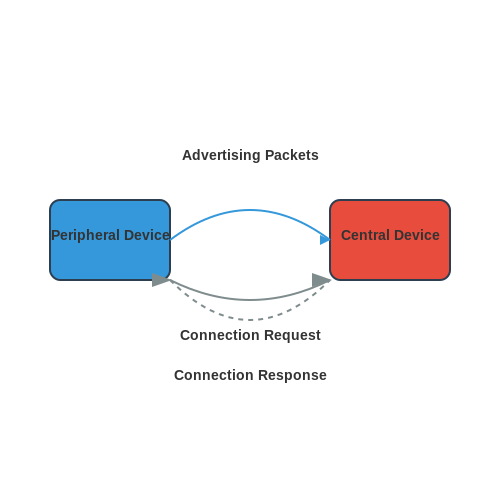
Advertising serves as the first step in establishing a connection between BLE devices. It allows peripheral devices to broadcast their presence and capabilities to nearby central devices. BLE advertising consists of sending small packets of data known as advertising packets, which are transmitted periodically at defined intervals.
There are several types of advertising modes in BLE:
- Non-Connectable Advertising: This mode allows devices to advertise themselves without the intention of establishing a connection. It is typically used for beacons.
- Connectable Advertising: In this mode, devices can accept connection requests from central devices. This is the most common form of advertising.
- Scan Response: After a central device scans an advertising packet, the peripheral can respond with additional data, enabling more comprehensive device discovery.
Each advertising packet includes several fields vital for proper communication. Among these are: Advertiser Address, Advertise Data, and Tx Power Level. The advertising interval varies depending on the application requirements, balancing between responsiveness to connections and energy efficiency. A typical advertising interval may range from 20 ms to 2.5 seconds.
Connection Procedures
Once a central device detects a peripheral through its advertising packets, it can initiate the connection process. The connection procedure fortifies the link between devices and is facilitated by a protocol that ensures secure and reliable communication.
The connection process begins with the central device sending a connection request to the peripheral. This request includes parameters such as the desired connection interval and the latency, defining how data packets should be exchanged. The peripheral responds with a connection response, and upon acceptance, both devices enter an active connection state.
During the connection, both devices maintain a synchronized schedule for communication, often referred to as the connection interval. This interval specifies the frequency of data exchange, typically described in units of milliseconds. Moreover, during active communication, devices can implement connection event intervals to optimize their data transfer rate and energy consumption.
Practical Relevance
The careful orchestration of advertising and connection procedures in BLE makes it pivotal in various real-world applications, including:
- Wearable Devices: Such as fitness trackers that continuously send data to mobile applications.
- Smart Home Automation: Where devices like smart locks and lights utilize BLE to communicate with smartphones efficiently.
- Health Monitoring Systems: Enabling real-time monitoring of medical devices that need to transmit data intermittently to conserve battery life.
In summary, the advertising and connection procedures in BLE are fundamental building blocks that define how devices initiate and maintain communication. By mastering these concepts, engineers and researchers can harness the full potential of BLE technology in innovative applications across different industries.
3. Client-Server Architecture
3.1 Client-Server Architecture
The client-server architecture in Bluetooth Low Energy (BLE) underpins its operational model, defining how devices interact within a network. This model is pivotal for enabling effective communication between devices while optimizing power consumption and maintaining a streamlined user experience. Understanding the intricacies of this architecture is essential for engineers and researchers working with BLE technology. At its core, the client-server architecture is characterized by two fundamental roles: the client and the server. The server is typically a peripheral device, such as a fitness tracker or a smart thermostat, which holds data and services that can be accessed. The client, usually a smartphone or computer, initiates requests to interact with these resources. The protocol relies on the Generic Attribute Profile (GATT), an essential design that outlines how data can be transferred. GATT organizes the data into *services* and *characteristics*, where services represent a collection of related functionalities, and characteristics are the specific data points. For instance, a heart rate monitor could expose a service that comprises multiple characteristics, including the current heart rate and body sensor location. Prior to data transfer, the client device discovers available services through a process known as service discovery. This involves querying the server to identify what services it offers. Once the client learns about the available services, it can initiate read or write operations on the characteristics to retrieve or send data, respectively. This architecture inherently supports asynchronous communication, meaning that the client does not need to wait for a response after sending a request, which is crucial for applications where real-time performance and responsiveness are vital. For instance, in a BLE-enabled smart home system, a user may command the system to lock doors or adjust lighting without delays caused by waiting for responses from each device. The efficiency of this architecture is reflected in its practical applications. BLE’s client-server architecture has revolutionized several industries, particularly in health monitoring, where wearables relay critical health data to smartphones, enabling users to track their fitness regimes seamlessly. In the retail sector, BLE facilitates personalized customer experiences through beacons that communicate with consumer devices, ensuring that relevant advertisements are delivered at strategic moments. In summary, understanding the client-server architecture within BLE is crucial for optimizing data communication and ensuring robust application design in the rapidly evolving landscape of IoT devices. As innovation continues to drive BLE technology, the efficient interplay between clients and servers underpins many of its groundbreaking applications, enabling a new era of connectivity.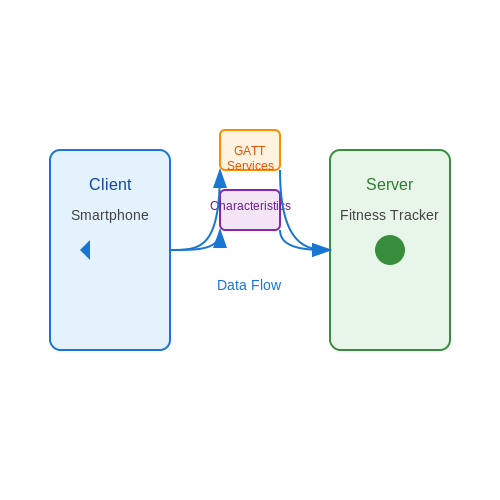
3.2 GATT (Generic Attribute Profile)
Bluetooth Low Energy (BLE) employs a sophisticated hierarchical protocol structure to facilitate efficient communication between devices. At the heart of this structure lies the Generic Attribute Profile (GATT), which is pivotal in providing a standardized way to access and manage data on Bluetooth devices. GATT operates over the Attribute Protocol (ATT) and embodies the interface that enables the interaction with services and characteristics used in BLE communication.
Understanding GATT Architecture
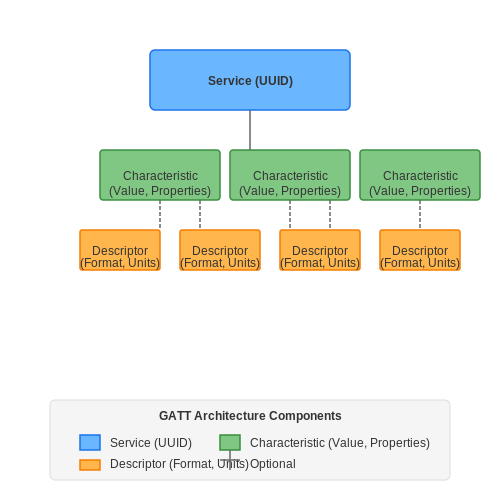
The GATT framework is built upon the concept of services and characteristics. Each Bluetooth device can offer one or more services, which represent a collection of functionalities related to a specific use case. Each service is defined by a unique identifier known as a Universally Unique Identifier (UUID). Within these services, characteristics are utilized to encapsulate attribute data, which can include values that devices communicate.
To grasp the significance of GATT, consider the following elements:
- Services: These are collections of related characteristics. For instance, a Heart Rate service might include characteristics for heart rate measurement, body sensor location, etc.
- Characteristics: Characteristics are the central objects of GATT that contain a value and properties dictating how that value can be used—whether it can be read, written, notified, or indicated.
- Descriptors: Descriptors are optional attributes associated with characteristics, providing additional information like formatting and units.
GATT Operations and Their Relevance
The communication mechanism in GATT is both client-server oriented, where one device acts as a GATT client and the other as a GATT server. The client sends requests to the server to either read, write, or subscribe to notifications from characteristics. The server then responds to these requests, permitting a structured and reliable data exchange.
This interaction model underlines the importance of GATT in real-world applications. For instance:
- Wearable Health Devices: BLE-enabled fitness trackers leverage GATT to relay information about heart rates and activity levels through clearly defined services and characteristics.
- Smart Home Devices: GATT facilitates communication between smart locks, lights, and control hubs, where each device can represent its features via GATT services.
Constructing GATT Profiles
The construction of GATT profiles involves correctly defining the UUIDs for services and characteristics in alignment with the Bluetooth SIG specifications. Developers utilize these UUIDs to ensure interoperability and correct functioning in a largely heterogeneous BLE ecosystem.
To provide a practical approach, consider the implementation of a custom service within a GATT-based application:
# Sample Python code to define a GATT service using Bleak Library

from bleak import BleakServer
from bleak import BleakGATTService

async def define_custom_service():
    service_uuid = "0000180D-0000-1000-8000-00805f9b34fb"  # Heart Rate Service UUID
    characteristic_uuid = "00002A37-0000-1000-8000-00805f9b34fb"  # Heart Rate Measurement UUID
    heart_rate_measurement = BleakGATTService(
        service_uuid,
        characteristics=[{
            'uuid': characteristic_uuid,
            'read': True,
            'notify': True
        }]
    )

    return heart_rate_measurement
# Sample Python code to define a GATT service using Bleak Library

from bleak import BleakServer
from bleak import BleakGATTService

async def define_custom_service():
    service_uuid = "0000180D-0000-1000-8000-00805f9b34fb"  # Heart Rate Service UUID
    characteristic_uuid = "00002A37-0000-1000-8000-00805f9b34fb"  # Heart Rate Measurement UUID
    heart_rate_measurement = BleakGATTService(
        service_uuid,
        characteristics=[{
            'uuid': characteristic_uuid,
            'read': True,
            'notify': True
        }]
    )

    return heart_rate_measurement
The flexibility of GATT allows it not only to serve established profiles but also to enable developers to create custom profiles tailored to unique requirements effectively.
Conclusion
The Generic Attribute Profile (GATT) is a cornerstone of Bluetooth Low Energy communication, providing a structured and efficient framework for data exchange between devices. The intuitive architecture of services and characteristics plays a crucial role in various applications, from health monitoring to home automation. Understanding GATT is essential for engineers and developers working with BLE technologies, as it empowers them to create innovative solutions that leverage the strengths of this versatile communication protocol.
3.3 Services and Characteristics
Bluetooth Low Energy (BLE) distinguishes itself with a structured approach to data organization through mechanisms called services and characteristics. Understanding these components is essential as they define how data is structured and communicated between devices, enabling developers to create versatile and efficient applications.
Understanding Services
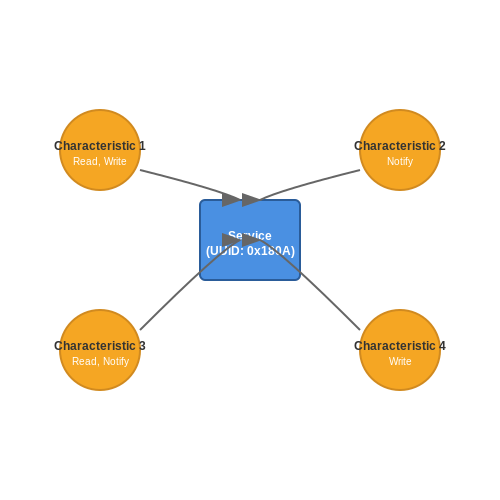
A service in BLE represents a collection of related characteristics that provide a specific function. Each service is identified by a unique 16-bit or 128-bit universally unique identifier (UUID). For instance, a heart rate monitor might expose a heart rate service, which encapsulates various characteristics related to heart rate data. This structured model allows developers to build applications that can intuitively access and make sense of the data presented by different devices.
BLE services are categorized into two primary types:
- Standard Services: Defined by the Bluetooth Special Interest Group (SIG), these services cover widely used functionalities. Examples include the Device Information Service and Battery Service.
- Custom Services: Tailored by developers to meet specific application requirements, these services employ unique UUIDs to avoid conflicts with standard services.
The Role of Characteristics
Within each service, characteristics serve as individual data points or features. Each characteristic has attributes such as a value, a UUID, properties (such as read, write, notify), and descriptors providing additional metadata about the characteristic. For example, in the heart rate service, the heart rate measurement characteristic might hold the real-time heart rate value data, with properties that allow it to be updated and notified to connected devices.
This flexibility facilitates diverse communication patterns: a characteristic can be read to receive data, written to send commands, or notified to signal updates when data changes. Furthermore, the usage of descriptors can enhance the capabilities of characteristics. Descriptors can, for example, define the unit of measurement or provide user-friendly names for characteristics.
Real-World Applications
The services and characteristics framework allows BLE to be applied across numerous domains. Consider a typical smart home environment. Various devices like smart light bulbs, temperature sensors, and door locks may communicate via defined services and characteristics specific to their functionalities. Each device stands as a peripheral, exposing its services and characteristics, which can be accessed by a central device such as a smartphone acting as the user interface.
In the healthcare sector, BLE facilitates remote monitoring through devices such as glucose meters and fitness trackers. These devices can provide services specifically designed for health metrics, enabling seamless data flow to health monitoring applications. The structured access to characteristics allows for efficient data processing, crucial for timely health insights and interventions.
Conclusion
In conclusion, the definitions of services and characteristics in BLE are foundational to the technology’s efficacy and versatility. They not only streamline data organization but also enable a broad range of applications, from consumer electronics to specialized medical devices. As applications continue to evolve, understanding these components becomes increasingly essential for engineers and researchers working with BLE technology.
4. Low Energy Operation Modes
4.1 Low Energy Operation Modes
Bluetooth Low Energy (BLE) is engineered to enable new use cases powered by energy-efficient communication. In this context, understanding the operational modes of BLE is paramount for engineers and researchers seeking to optimize device performance in terms of power consumption and communication efficiency.
Overview of BLE Operation Modes
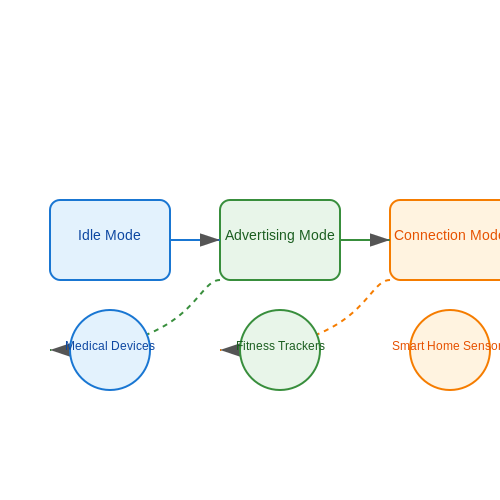
BLE includes several operation modes, primarily designed to maximize battery life while ensuring reliable data transmission. These modes can be categorized into three key states: Idle, Advertising, and Connection. Each mode serves a particular purpose, balancing responsiveness and power consumption.
Idle Mode
In Idle Mode, the BLE device is powered on but not actively transmitting or receiving data. This mode conserves energy, making it ideal for applications requiring long periods of dormancy. When a device is in Idle Mode, its radio is turned off, and only essential system components remain powered. This strategic power management allows BLE devices, such as fitness trackers or health monitors, to extend their operational life significantly.
Advertising Mode
Advertising Mode is crucial for establishing connections with other BLE devices. When a device enters this mode, it broadcasts packets containing service information periodically. There are different advertising channels available, and the parameters such as advertising interval can be adjusted to balance power usage with discovery time. For instance, a shorter advertising interval might be useful for applications like real-time location tracking, whereas a longer interval could suffice for less time-sensitive applications.
When devices receive an advertising packet, they can initiate a connection, transitioning into Connection Mode. The flexibility in configuring the advertising interval makes BLE applicable for a range of use cases, from beacons that signal proximity to more complex interactions like pairing with smartphones.
Connection Mode
Once a connection is established, BLE operates in Connection Mode, characterized by periodic communication between the connected devices. This operation reduces the power consumption compared to traditional Bluetooth because the slave device can sleep between connection events. The connection interval, which dictates how often devices communicate, is adjustable depending on application requirements. For example, devices can utilize shorter intervals for applications needing real-time data transfer, such as medical devices, or lengthen them for applications where latency is less critical, like smart home sensors.
Within the Connection Mode, devices negotiate parameters to ensure optimal data throughput while minimizing energy expenditure. The protocol allows for adaptive Interval, Connection Supervision Timeout, and the Master-Slave relationship, all of which contribute to a BLE device's overall efficiency and longevity in power-constrained environments.
Practical Relevance and Applications
The understanding of these low energy operation modes is not merely theoretical; it has profound implications in the design and deployment of BLE applications. For instance, in medical telemetry, devices can remain in Idle Mode for long durations, transitioning briefly into Connection Mode to transmit vital health data. In smart homes, devices continuously cycle between Advertising Mode to remain discoverable and Connection Mode to interact with home automation systems efficiently.
As the demand for interconnected devices continues to rise, an in-depth understanding of BLE's operational capabilities will empower engineers and researchers to innovate more sustainable and responsive IoT solutions, thereby shaping the future of wireless communications.
4.2 Sleep and Wake-up Procedures
Bluetooth Low Energy (BLE) is designed with power efficiency in mind. One of the main features that enable BLE devices to conserve energy is the implementation of sleep and wake-up procedures. These mechanisms allow BLE devices to enter low power states when not in active communication and to quickly respond to incoming communication requests. This section will dive into the principles behind these procedures and their practical implications.
Understanding Sleep Modes
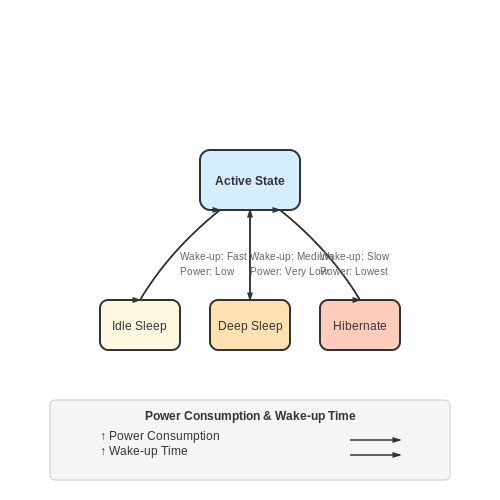
BLE devices operate primarily in two states: active and sleep. In the active state, the device can send and receive data, while in sleep mode, it conserves battery by powering down non-essential components. The transition between these two states is crucial for any BLE application, especially in battery-powered devices, as they significantly extend operational life.
Types of Sleep Modes
BLE devices can implement several types of sleep modes:
- Idle Sleep Mode: The device transitions into this mode when it has no ongoing connections or data transmission but can still wake up quickly (<10ms).
- Deep Sleep Mode: In this mode, the device shuts down most of its electronics, requiring a longer wake-up time (tens of milliseconds) but consuming minimal power.
- Hibernate Mode: This is the lowest power state, where the device's state is saved, and all components except for essential circuitry are powered down. Waking from hibernation can take over a second.
Wake-up Procedures
Waking from sleep is triggered either by an external event, such as a timer or an incoming connection request, or by internal logic. The procedure typically involves the following steps:
- Detection of Wake-up Event: The device continuously or periodically monitors for specific signals causing it to wake up. This is usually handled by a low-power peripheral.
- Signal Processing: Upon detecting a wake-up signal, the device initiates signal processing to determine the nature of the request (e.g., connection request versus interrupt).
- State Transition: Depending on the type of signal detected, the device may transition from sleep to an active state, readying itself for communication or other tasks.
The timing and responsiveness of wake-up procedures greatly influence the user experience in BLE applications, especially those requiring immediate action, such as health monitors or remote controls.
Practical Applications
Ensuring efficient sleep and wake-up procedures is critical in several real-world applications:
- Wearable Technology: In health and fitness trackers, prolonged sleep modes can extend battery life, allowing devices to measure heart rate or steps without frequent charging.
- Smart Home Devices: BLE-enabled sensors that only activate when detecting motion can dramatically reduce power consumption.
- Industrial Monitoring: Sensors placed in remote locations can schedule wake cycles to synchronize with operational checks, ensuring efficient data gathering while conserving power.
In conclusion, understanding and implementing effective sleep and wake-up procedures is essential in enhancing the performance and longevity of BLE devices, particularly in energy-sensitive applications.
4.3 Optimization Techniques for Battery Life
Understanding the energy efficiency of Bluetooth Low Energy (BLE) is crucial, especially for applications where battery longevity is paramount. As devices communicate wirelessly, optimization techniques become essential to prolong battery life while maintaining performance. This section discusses various strategies that engineers and researchers can implement to enhance battery life in BLE applications.
Active and Sleep Modes
One of the fundamental techniques for optimizing battery life in BLE devices is managing the active and sleep modes effectively. BLE devices can transition between two primary states:
- Active Mode: In this state, the device is engaged in data transmission or reception, utilizing its power for short bursts.
- Sleep Mode: When not actively transmitting, the device can enter deep sleep or low-power modes, significantly conserving energy.
The duration spent in sleep mode directly correlates with energy savings. For example, consider a device that has the following specifications: active current consumption of 10 mA and sleep current of 1 µA. The total energy consumed in one hour, assuming the device is active for only 1 minute, is calculated as follows:
Substituting the values:
This illustrates the significant impact that extended periods in sleep mode can have on overall energy consumption, emphasizing the importance of efficient state management.
Connection Parameters
Another critical factor involves optimizing the connection parameters. BLE operates using two main parameters: connection interval and slave latency:
- Connection Interval: This defines how frequently the master device polls the slave. A longer interval allows the device to spend more time in low-power mode, thereby conserving battery.
- Slave Latency: This parameter allows the slave to skip a number of connection events, further reducing the time spent in active mode.
Adjusting these parameters can positively impact energy usage but may compromise response time. Therefore, finding the right balance based on application requirements is crucial. For practical applications such as wearable fitness trackers, a connection interval of 100 ms might be sufficient while allowing significant power savings.
Advertising Strategies
BLE's advertising process is another area ripe for optimization. Devices typically send advertising packets to announce their presence to nearby scanners. However, optimizing advertising intervals and the type of advertisements can minimize energy expenditure.
- Use of non-connectable advertising: For devices that do not need to establish a connection, using non-connectable advertising can save power.
- Optimized Advertising Interval: Adjusting the advertising interval to match expected user interaction decreases unnecessary energy use.
By configuring the advertising parameters to align with real-time requirements, BLE devices can substantially extend their operational lifetime.
Data Payload Optimization
Another strategy involves data optimization where the size and frequency of data transmission are tailored for efficient energy use. A smaller data packet size reduces the time the transmitter is active, thereby decreasing power consumption. Moreover, employing compression techniques can enhance the payload capacity without significantly increasing the packet size.
These strategies highlight the interconnected nature of hardware design and communication protocols in BLE systems. By implementing these optimization techniques, engineers can significantly improve battery life while ensuring that devices meet user expectations for performance and responsiveness.
5. BLE Development Tools and Platforms
5.1 BLE Development Tools and Platforms
Bluetooth Low Energy (BLE) has emerged as a foundational technology for numerous applications in the Internet of Things (IoT), wearables, and smart devices. The rapid adoption of BLE necessitates an array of development tools and platforms that facilitate rapid prototyping, testing, and deployment of BLE-enabled devices. As engineers and researchers delve into BLE development, understanding the available tools can significantly streamline the development process and enhance project outcomes.
Hardware Development Kits (HDKs)
At the heart of BLE development are Hardware Development Kits (HDKs). These kits typically include microcontrollers equipped with built-in BLE capabilities, along with various sensors and interfaces for communication. Popular kits include:
- Nordic Semiconductor nRF52 Series: This series features a dedicated NFC and BLE chip, making it suitable for battery-powered applications. The nRF52832 and nRF52840 offer significant processing power and low energy consumption.
- Texas Instruments CC2650: A flexible and robust platform featuring a multi-protocol BLE architecture, this chip allows developers to experiment with various protocols, including Zigbee and Thread.
- Silicon Labs EFR32: This family includes BLE-enabled SoCs designed specifically for energy-efficient applications. The EFR32BG models support a wide range of peripherals for I/O expansion.
These HDKs often come with an integrated IDE (Integrated Development Environment) and a suite of debugging tools, facilitating a comprehensive development environment from the start.
Software Development Environments
In addition to hardware platforms, a robust software development environment plays a critical role in BLE application development. Some widely used environments include:
- Nordic SDK: This software development kit includes various libraries, examples, and tools for application development on Nordic's nRF series chips. Its modular architecture enables developers to integrate specific functionalities as needed.
- TI SDK: Texas Instruments provides a comprehensive software development kit for the CC2650, integrating tools for configuring BLE stacks and extensive application support.
- Zephyr RTOS: An open-source real-time operating system ideal for resource-constrained devices, Zephyr supports a range of architectures and seamlessly integrates BLE stacks, making it versatile for various applications.
Utilizing such development environments not only accelerates the coding process but also helps in the identification of bugs via extensive debugging features.
Simulation and Testing Tools
The rigorous nature of BLE development necessitates effective simulation and testing tools that can emulate real-world conditions and interactions. Key testing tools include:
- Bluetooth SIG testing tools: Compliance testing against Bluetooth standards is critical for ensuring interoperability among devices. Tools provided by the Bluetooth Special Interest Group include various test suites for BLE applications.
- Packet Sniffers: Tools like the Nordic nRF Sniffer and TI's BLE Packet Sniffer are crucial for monitoring BLE packet communications. These tools can help developers analyze the data exchange and troubleshoot connectivity issues.
- Simulators: Tools such as Cypress's PSoC Creator provide simulation capabilities that enable virtual testing of BLE applications before deployment on actual hardware, saving time and resources.
These testing tools are indispensable for ensuring that BLE devices perform reliably and meet the specifications required for various applications.
Real-World Applications and Case Studies
To understand the practical relevance of these tools, consider BLE’s role in healthcare monitoring systems. Devices like heart rate monitors and glucose meters utilize BLE to transmit real-time data to smartphones for enhanced user engagement and health tracking. Development kits from Nordic and Texas Instruments have empowered developers to rapidly prototype such devices, ultimately leading to quicker deployments and market readiness.
In conclusion, the landscape of BLE development tools and platforms is diverse, encompassing HDKs, software environments, and testing tools. These resources are designed to aid engineers, physicists, and researchers in designing innovative BLE applications, pushing the boundaries of what's possible within the IoT ecosystem. Adopting the right combination of tools can significantly impact the success of BLE projects, allowing for seamless integration of sophisticated functionalities tailored to real-world challenges.
5.2 Programming BLE with SDKs
Bluetooth Low Energy (BLE) programming has become increasingly accessible owing to a range of Software Development Kits (SDKs) that abstract the complexity of the underlying protocols. These SDKs provide developers with tools to facilitate the seamless integration of BLE functionalities into applications, as well as direct interaction with hardware peripherals.
To effectively leverage BLE SDKs, it's crucial to understand the components that comprise them, including API libraries, tools for debugging, and the underlying hardware abstraction layers (HALs) that connect low-level operations with high-level functionalities.
Understanding SDK Components
Typically, BLE SDKs consist of several key elements:
- API Libraries: Facilitate communication between the application layer and the Bluetooth stack.
- Sample Applications: Provide reference implementations showcasing how to use different features of BLE.
- Documentation: Contains guides and tutorials to help developers get started with BLE application development.
Choosing the Right SDK
When selecting an SDK to implement BLE in your project, consider factors such as:
- Device Compatibility: Ensure that the SDK supports the hardware platform you plan to use.
- Community Support: A vibrant community can be invaluable for troubleshooting issues and exchanging ideas.
- Performance and Stability: Look for SDKs that are widely adopted and industry-tested.
Some popular BLE SDKs include:
- Nordic Semiconductor SDK: Widely used for developing applications on Nordic's nRF series of chips.
- Texas Instruments BLE-Stack: Suitable for developing applications on TI's SimpleLink line of microcontrollers.
- Silicon Labs Bluetooth SDK: Provides comprehensive tools for development on Silicon Labs hardware.
Development Process
The development of a BLE application typically follows these steps:
- Environment Setup: Configure the development environment with the necessary SDK and tools. This often includes IDE installations and power-up of any hardware platforms.
- API Familiarization: Understand the core APIs provided by the SDK, focusing on those that handle connection management, data transfer, and event handling.
- Application Development: Begin coding the application using structures and guidelines provided in the SDK documentation and sample apps.
- Testing and Debugging: Utilize the debugging tools and sample applications to iterate on the development, focusing on ensuring robust communication and power management.
Real-world applications of BLE are vast, encompassing areas such as health monitoring (e.g., heart rate monitors), home automation systems, and wearable devices. For instance, a BLE-enabled fitness tracker might use a standard SDK to communicate with a smartphone app, sending real-time data like steps taken or heart rate, while continuously managing power consumption to extend battery life.
Conclusion
In summary, programming for Bluetooth Low Energy using SDKs not only simplifies development but also enhances the capability to create innovative applications that leverage wireless connectivity. By understanding the SDK components, choosing the right tools, and following a structured development process, engineers and developers can tap into the potential of BLE technology, leading to more connected and intelligent devices.
5.3 Testing and Debugging BLE Applications
In the realm of Bluetooth Low Energy (BLE), successful application development hinges on comprehensive testing and debugging practices. This section delves into the nuances of ensuring that your BLE applications are reliable, robust, and efficient. By employing various methodologies and tools, engineers and developers can diagnose issues, enhance performance, and ultimately create smoother end-user experiences.
Understanding BLE Communication
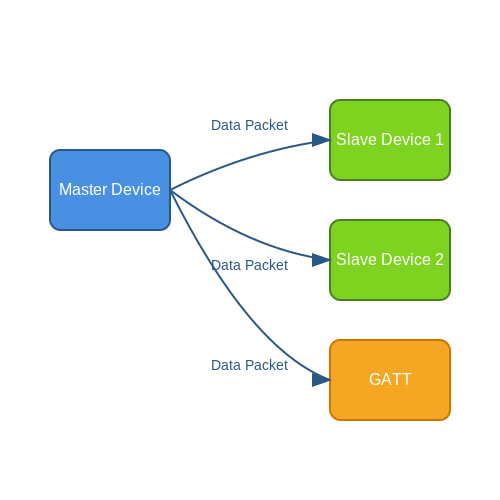
Before diving into the testing and debugging phase, it is crucial to understand the underlying architecture of BLE communication. BLE operates on a master-slave model, where the master device initiates communication with one or more slave devices. This structure necessitates the use of proper message framing and error-handling protocols to mitigate communication issues. Typical data exchange occurs via attributes managed within the Generic Attribute Profile (GATT).
A rigorous testing strategy beginning at this foundational level helps in preemptively identifying potential communication bottlenecks or faults. Various types of testing can be employed, including:
- Unit Testing: Focusing on individual components of the application ensures that each unit performs as designed.
- Integration Testing: Here, multiple components or layers are tested together to evaluate their interactions and data flow.
- System Testing: The complete application undergoes evaluation to ensure it adheres to the specified requirements in a real-world scenario.
Debugging Strategies for BLE Applications
Debugging BLE applications presents unique challenges due to its wireless nature, possible device interferences, and complex state management. Here, we outline several strategies and tools that facilitate effective debugging:
Packet Sniffing
Packet sniffing is an essential technique in BLE debugging, providing visibility into the packets transmitted between devices. Tools such as Wireshark or Ellisys Bluetooth Explorer can be utilized to capture BLE packets, offering insights into the exchanged data, including connection intervals, latency, and throughput.
Log Analysis
Effective logging mechanisms within your BLE applications can help trace execution pathways and error occurrences. Implementing logging at various levels (e.g., debug, info, error) is optimal. Logging frameworks like log4j or SLF4J can facilitate capturing detailed logs that can be analyzed post-execution for irregularities.
Real-Time Debugging Tools
For developers using embedded systems, real-time debugging tools can be incredibly beneficial. Tools such as Segger J-Link or Keil MDK support debugging in real-time, allowing inspection of the system's state while the application is running. This sort of dynamic analysis can aid in identifying race conditions or unintended behaviors during BLE operations.
Performance Metrics in BLE Testing
When testing BLE applications, it's crucial to define performance metrics to evaluate their efficiency and responsiveness. Some vital metrics include:
- Connection Latency: The delay between request and acknowledgment in communication.
- Throughput: The data transfer rate achieved between devices, typically measured in bytes per second.
- Power Consumption: Essential for battery-powered devices, the amount of energy consumed during various operational states must be quantified.
Applications like nRF Connect can assist developers in measuring these metrics in real-world scenarios. By comprehensively assessing common performance traits, developers can refine their applications to enhance user satisfaction.
Automation in Testing
As BLE applications grow in complexity, automating testing processes can drastically improve efficiency. Automated testing frameworks like Appium or Robot Framework can be configured to perform iterative tests on BLE functionalities, simulating user interactions and monitoring device responses. By integrating such automation into your continuous integration/continuous deployment (CI/CD) pipeline, you can ensure that emerging issues are quickly identified before production deployment.
The integration of automated processes allows for repeatable tests, which are invaluable in the agile development environment characteristic of modern software projects.
Conclusion
Testing and debugging BLE applications is a multi-faceted undertaking that requires a combination of theoretical knowledge and practical tools. By utilizing packet sniffing, logging, real-time debugging, performance metrics assessment, and automation, engineers can create highly reliable BLE applications capable of meeting the demands of modern wireless communication. A rigorous testing strategy not only enhances product quality but also significantly reduces maintenance efforts post-deployment.
6. Encryption and Authentication
6.1 Encryption and Authentication
In the realm of wireless communication, the demand for secure data transmission has escalated with the growing adoption of devices utilizing Bluetooth Low Energy (BLE) technology. As a result, encryption and authentication are pivotal elements in ensuring the integrity, confidentiality, and authenticity of the transmitted data. This section delves into the underlying principles and methodologies of encryption and authentication used in BLE, illuminating their practical implications and the intricacies involved.
Encryption in BLE
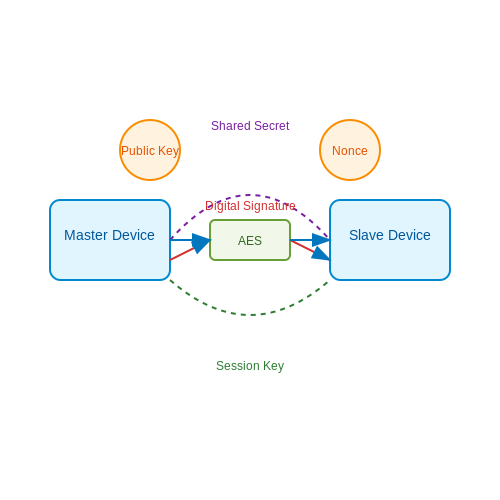
BLE employs advanced encryption techniques to protect the data exchanged between devices. The primary encryption standard utilized is the Advanced Encryption Standard (AES), which functions based on a symmetric key structure. In this method, the same key is used for both encryption and decryption of data. This symmetry necessitates a secure mechanism for key exchange during initialization.
Upon connection initialization, BLE uses the Secure Simple Pairing (SSP) protocol, which incorporates different pairing methods, such as Just Works, Passkey Entry, and Numeric Comparison, to establish a mutual link between devices. Each of these methods has varying levels of security assurance affected by potential eavesdropping and man-in-the-middle attack vectors.
Performing Encryption
The encryption process in BLE is initiated once pairing is successful. The master device generates a session key using the shared secret established during the pairing phase. This session key is fed into an AES encryption function to secure the data packets being transmitted.
Mathematically, the data encryption can be represented as:
Where:
- C = Encrypted data (ciphertext).
- M = Original data (plaintext).
- E_k = Encryption function parameterized by key k.
Similarly, the decryption process flips this equation as follows:
Here, D_k is the decryption function using the same key k. This symmetry underscores why secure key exchange mechanisms are essential prior to the commencement of data transmission.
Authentication in BLE
In conjunction with encryption, authentication serves as a critical layer establishing the trustworthiness of the devices communicating over BLE. The authentication protocols within BLE primarily rely on the use of Public Key Infrastructure (PKI) techniques, along with shared secret keys, to validate device identities.
During the authentication phase, devices can verify their identities through digital signatures. As such, a device uses its private key to sign a nonce generated by the other device, allowing the receiving party to authenticate the sender by decrypting the received signature with the corresponding public key.
To outline this process, let S denote the signature, P the public key, and n the nonce:
Where SK is the private key. The verification is then performed as follows:
This authentication framework not only secures device identities but also builds trust within the communication channel, facilitating a secure environment for data exchange.
Practical Applications and Real-World Implications
The practical relevance of BLE encryption and authentication extends into various domains, including healthcare, smart home applications, and industrial IoT. Devices such as fitness trackers, smart door locks, and sensor networks rely on robust security measures to safeguard sensitive information, such as personal health metrics or access control systems.
Moreover, regulatory standards such as the General Data Protection Regulation (GDPR) call for stringent data protection mechanisms, driving engineers and developers to integrate advanced security protocols in BLE implementations.
Ultimately, a thorough understanding of BLE's encryption and authentication mechanisms is essential for enhancing the security robustness of wireless communications in this rapidly evolving technological landscape.
6.2 Security Considerations
Bluetooth Low Energy (BLE) represents a paradigm shift in personal area networking, facilitating a plethora of applications ranging from smart home devices to health monitoring systems. However, with the rise of interconnected devices, security considerations become paramount, especially given BLE’s inherent vulnerabilities due to its operational characteristics.
Understanding BLE Security Framework
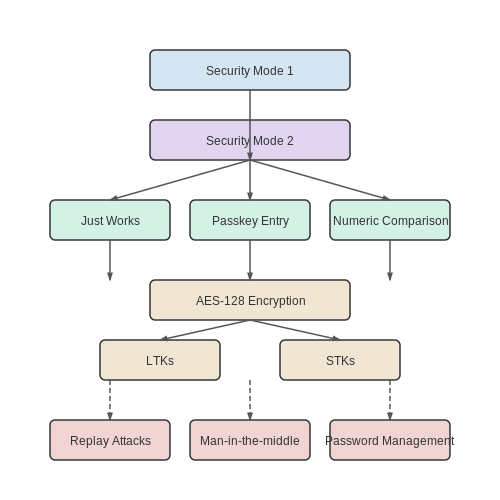
BLE's security architecture comprises multiple layers, primarily focusing on confidentiality, integrity, and authentication. The systems employ several mechanisms to mitigate risks of eavesdropping, man-in-the-middle attacks, and unauthorized access. Central to this framework is the Security Mode and Level.
- Security Mode 1: Offers no encryption, suitable for applications where security is not critical.
- Security Mode 2: Introduces optional encryption, enabling greater protection for classified data transfers.
Each security mode contains various levels that either allow or reject pairing methods, influencing the security strength based on user requirements and application context.
Authentication Mechanisms
Pairing is a crucial phase within BLE security, allowing devices to authenticate each other to establish a trusted connection. There are multiple pairing methods:
- Just Works: No input or display capabilities are required, making it easy to implement but inherently vulnerable to eavesdropping.
- Passkey Entry: One device displays a numeric code, which the other device must enter. This method enhances security but requires user interaction.
- Numeric Comparison: Both devices display the same number that a user must confirm, minimizing the chance of man-in-the-middle attacks.
The selection of an appropriate pairing method often balances user convenience against the required security level. For instance, high-security domains like healthcare transmit sensitive data and should adopt a more robust pairing mechanism compared to a less critical application, such as a toy.
Encryption Techniques
Once paired, communication typically uses the AES-128 encryption algorithm. AES allows for the creation of a secure connection by encrypting data in a way that is nearly impractical to decrypt without the appropriate keys. The strength of AES-128 lies in its short encryption keys, requiring substantial computational resources to crack.
The implementation of secure connections is facilitated through the concept of Long-Term Keys (LTKs) and Short-Term Keys (STKs), where LTKs serve for standard encryption while STKs can be dynamically generated per session to ensure freshness and security.
Potential Vulnerabilities and Their Mitigation
Despite the comprehensive security features, BLE networks are not impervious to threats. Potential vulnerabilities can be categorized mainly into:
- Replay attacks: Where an attacker captures and retransmits valid data.
- Man-in-the-middle attacks: Where an evil actor intercepts and manipulates the communication between two devices.
- Password Management: Weak implementation of passkeys can lead to unauthorized access.
Mitigations against these vulnerabilities involve implementing advanced authentication protocols, periodically updating firmware to rectify known vulnerabilities, and adopting robust password management practices. In high-stakes environments, continuous monitoring for abnormal behaviors and initiating connection re-establishment protocols can also enhance security.
In conclusion, while BLE offers versatile applications, security must be at the forefront of design considerations. Understanding and implementing stringent security measures can significantly decrease the risk profile of BLE-enabled devices, thus ensuring their integrity in increasingly connected ecosystems.
6.3 Mitigating Vulnerabilities
In the context of Bluetooth Low Energy (BLE), securing communication between devices is of paramount importance due to a range of vulnerabilities that can be exploited. The lightweight nature of BLE, designed with energy efficiency in mind, introduces unique challenges, particularly regarding the integrity and confidentiality of the data being transmitted. Understanding how to mitigate these vulnerabilities requires a multifaceted approach that begins with an awareness of the specific types of threats posed to BLE communications. Among the notable vulnerabilities are eavesdropping, man-in-the-middle (MitM) attacks, and replay attacks. Each of these can potentially compromise the security of BLE-enabled applications, from wearable devices to smart home systems.Understanding BLE Vulnerabilities
The increasing adoption of BLE technology in various applications has not gone unnoticed by cybercriminals. Some of the vulnerabilities include:- Eavesdropping: BLE transmissions can be intercepted by unauthorized devices, allowing attackers to collect sensitive information.
- Man-in-the-Middle (MitM) Attacks: This involves an attacker intercepting and potentially altering communication between two legitimate devices.
- Replay Attacks: Attackers may intercept legitimate messages and resend them to unknowingly gain access or privileges.
Mitigation Strategies
To secure BLE communications, several strategies can be employed:1. Enhanced Encryption
BLE employs a default link layer security mechanism based on the AES algorithm for encryption. However, the strength of this encryption can be enhanced by using advanced key management protocols and ensuring the use of longer, more complex encryption keys. Furthermore, integrating public key infrastructure (PKI) can bolster authentication processes, making it significantly harder for attackers to impersonate legitimate devices.2. Device Pairing Mechanisms
Implementing robust device pairing mechanisms is essential for establishing trust between devices. Techniques such as Just Works, Passkey Entry, or Numeric Comparison, notably enhance security during the pairing phase. Numeric comparison is particularly favored in high-security environments, as it requires users to validate a numeric code displayed on both devices, reducing the chances of MitM attacks.3. Regular Firmware Updates
Continuously updating device firmware is vital for closing any identified security loopholes. Manufacturers must provide timely updates to devices to address emerging vulnerabilities. Users should be encouraged to enable automatic updates to ensure they are operating the most secure versions of the firmware.4. Adaptation of Obfuscation Techniques
Obfuscation techniques encompass a variety of strategies to make reverse engineering of BLE applications more difficult. Code obfuscation, for example, alters the readable source code into a format that is challenging to understand without specific knowledge or tools. This approach minimizes the chances of attackers discovering vulnerabilities in application code that might be leveraged for breaking into systems.5. Secure Application Layer Protocols
Incorporating application-layer protocols that emphasize security can provide additional protection. Protocols such as OAuth for authentication and Transport Layer Security (TLS) for end-to-end encryption ensure that the data transmitted over BLE networks remains confidential and is safeguarded against unauthorized access.6. User Education and Awareness
Lastly, fostering user education is essential, especially for consumer devices. Users should be informed about the importance of security settings, the risks inherent in certain BLE applications, and the necessity of recognizing suspicious activities. By establishing a security-aware culture, device producers can encourage end-users to adopt security best practices.Conclusion
Mitigating vulnerabilities in Bluetooth Low Energy communications necessitates a comprehensive and multifaceted strategy that combines technical advancements with user awareness. By implementing stronger encryption standards, secure pairing mechanisms, regular updates, obfuscation techniques, secure application protocols, and educating users, developers can significantly enhance the security posture of BLE applications, paving the way for safer IoT ecosystems.7. Upcoming Features in BLE 5.0 and Beyond
7.1 Upcoming Features in BLE 5.0 and Beyond
Bluetooth Low Energy (BLE) has undergone significant evolution since its inception, with BLE 5.0 marking a substantial leap in functionality and application capabilities. This section delves into the upcoming features that are shaping the future of BLE and their potential implications for a variety of industries.
Enhanced Data Rate and Advertising Capacity
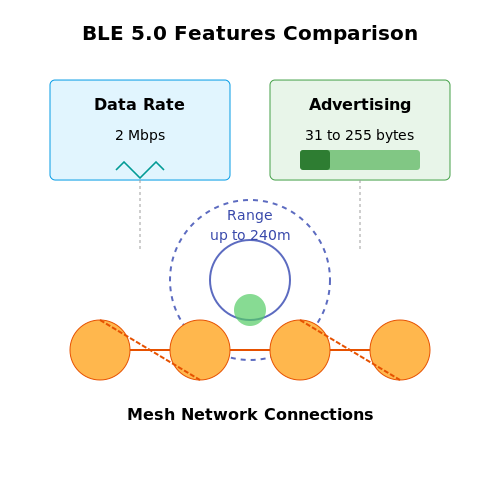
One of the hallmark features of BLE 5.0 is its ability to support increased data rates of up to 2 Mbps. This enhancement significantly reduces the time required to transmit larger data packets, which is crucial for applications that demand rapid communication, such as real-time health monitoring devices. Additionally, BLE 5.0 has expanded the advertising capacity from 31 bytes to a maximum of 255 bytes, allowing more data to be sent during the advertising phase. This is particularly beneficial for location-based services and beacon technology, where large amounts of contextual information can be communicated without the need for a connection.
Longer Range
Another pivotal feature introduced in BLE 5.0 is the improved range, with capabilities to reach up to 240 meters in open space. This is achieved through the introduction of coded PHYs, which enable devices to communicate over longer distances with lower power consumption. The practical application of this is evident in smart home technologies, where devices can maintain connectivity over greater distances, facilitating a more seamless user experience and enhancing the practicality of IoT ecosystems.
Improved Coexistence
As wireless technologies proliferate, ensuring that BLE can coexist efficiently with other protocols has become critical. BLE 5.0 introduces mechanisms for better coexistence with other wireless technologies, particularly Wi-Fi. This is vital in environments with a dense concentration of devices, such as smart buildings or urban settings, where simultaneous connections to multiple devices are required without degrading performance. This coexistence is achieved through adaptive hopping and channel selection techniques that minimize interference.
Mesh Networking Capabilities
One of the most transformative features of BLE heading into the future is the integration of mesh networking capabilities. Although the BLE mesh specification was released after BLE 5.0, the foundation established by BLE 5.0 allows BLE devices to communicate over a larger network of devices rather than point-to-point connections. This significant shift enables scalable wireless communication in applications like smart city infrastructures, where various devices such as sensors, lighting, and security systems can transmit information throughout a vast network. Moreover, mesh networking enhances reliability, as multiple pathways for data transmission can exist, ensuring that a single point of failure does not disrupt the overall system operation.
Practical Applications and Future Implications
The advancements in BLE technology herald a future rich with potential applications across various sectors. For example, in the healthcare industry, wearable devices can collect and transmit patient data efficiently and instantly, paving the way for more proactive care. In retail, BLE can enhance customer engagement through personalized marketing by leveraging the improved advertising capacity and range. Smart cities stand to benefit profoundly from the integration of mesh networking, with connected infrastructure optimizing resource management and enhancing citizen services.
As BLE continues to evolve beyond version 5.0, the focus will remain on not only expanding the capabilities and efficiencies of wireless communication but also aligning with emerging technologies such as AI and edge computing. This alignment promises even greater interoperability, efficiency, and enhanced user experiences across diverse applications.
7.2 Integration with IoT
The integration of Bluetooth Low Energy (BLE) with the Internet of Things (IoT) is a transformative development, significantly enhancing communication protocols between devices. This synergy facilitates the creation of more efficient, low-power, and responsive systems in a variety of applications, ranging from smart homes to industrial automation.
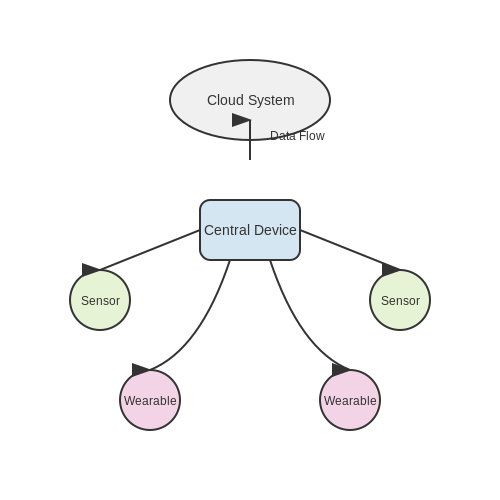
BLE, a wireless personal area network technology, operates in the 2.4 GHz ISM band, enabling devices to transmit small packets of data at regular intervals with minimal power consumption. This makes it particularly suitable for IoT devices, which often rely on batteries and must therefore prioritize energy efficiency. When paired with cloud computing and data analytics, BLE becomes a powerful tool for gathering, transmitting, and interpreting data gathered from various sensors and actuators in real-time.
Communication Protocols and Scalability
BLE utilizes a different communication strategy compared to traditional Bluetooth. It emphasizes short bursts of communication, allowing devices to go into sleep mode and conserve energy. BLE operates on two main roles: the central and the peripheral device. The central device is usually a smartphone or tablet that connects to multiple peripheral devices, which could be sensors, wearables, or other IoT-enabled gadgets. This architecture not only conserves energy but also allows for the scaling of networks without significant overhead costs.
The combination of BLE's efficiency and IoT's vast network potential results in robust systems designed for scalability, where thousands of devices can be managed and monitored from a single point. As devices proliferate, the BLE protocol’s mesh networking capabilities allow for expanded range and reliability, ensuring continuous communication even in dense environments.
Real-World Applications
Real-world applications of BLE in IoT environments demonstrate its versatility and efficiency. Consider smart homes where BLE-enabled devices manage lighting, heating, and security systems through a single interface. The integration allows for seamless control and automation based on user preferences, learned behaviors, or environmental changes. Furthermore, healthcare applications utilize BLE for patient monitoring systems, sending critical health data to cloud systems for real-time analysis. This layer of IoT integration not only improves patient care outcomes but also reduces the cost of healthcare delivery.
In industrial settings, BLE facilitates asset tracking and inventory management. By equipping tools and equipment with BLE beacons, businesses can streamline operations and bolster asset visibility across expansive operations. Additionally, with technologies such as location-based services, BLE can provide precise positioning data within warehouses, enhancing logistics and efficiency through the Internet of Things.
Challenges and Future Directions
Despite its advantages, integrating BLE into IoT faces certain challenges. These include security vulnerabilities inherent in wireless communication, concerns over data privacy, and the need for interoperability between devices from different manufacturers. Ongoing developments in encryption protocols and secure communication over BLE are crucial to address these challenges.
Looking ahead, the future of BLE in IoT is promising. Advances in machine learning and artificial intelligence are set to improve predictive analytics, enabling devices to forecast maintenance needs or user preferences. Moreover, the adoption of IPv6 over BLE will support direct internet connectivity, paving the way for further innovations in IoT ecosystems.
Ultimately, the seamless integration of BLE with IoT enhances not only operational efficiencies across industries but also enriches user experiences, making it a cornerstone technology for future developments in connected systems.
7.3 Market Prospects and Innovations
Bluetooth Low Energy (BLE) has transformed the landscape of wireless communication, especially in sectors demanding energy efficiency and low-cost connectivity. As we delve into the market prospects and innovations surrounding BLE, it is essential to understand its technological advancements, market growth trends, and practical applications that illustrate its relevance in today’s digital ecosystem.
Emergence of BLE in Consumer Electronics
The adoption of BLE in consumer electronics has witnessed remarkable growth, largely driven by the proliferation of smart devices, wearables, and the Internet of Things (IoT). Devices such as fitness trackers, smartwatches, and health monitoring equipment utilize BLE to facilitate seamless data transfer while conserving battery life. Forecasts indicate that the BLE-enabled consumer electronics market is expected to surpass USD 20 billion by 2025, with many manufacturers prioritizing BLE compatibility to enhance user experience and device interconnectivity.
BLE Enhancements and Innovations
The technological advancements in BLE have paved the way for innovative applications. Recent enhancements include:
- Long-range BLE: Introduced with BLE 5.0, this feature allows devices to operate at distances up to 240 meters, significantly improving connectivity and offering new possibilities for remote monitoring applications.
- Increased Data Throughput: BLE 5.0 also doubles the data throughput capability, offering transmission speeds of 2 Mbps, which is advantageous for applications requiring real-time data updates, such as in industrial automation or smart home environments.
- Mesh Networking: With BLE mesh topology, devices can communicate over a broader area, enabling dynamic environments in smart cities and extensive building automation systems without requiring additional infrastructure.
These enhancements reflect the ongoing commitment to evolve BLE technology and its application, positioning it favorably against competing technologies like Wi-Fi Direct and Zigbee.
Market Challenges and Opportunities
The rapid expansion of BLE technology does encounter several challenges, including security vulnerabilities and interoperability issues among various devices and standards. However, these challenges also present opportunities for innovation in developing more robust encryption protocols and standardized frameworks that facilitate a seamless user experience across diverse platforms.
Moreover, the integration of BLE with emerging technologies, such as edge computing and artificial intelligence (AI), offers unprecedented opportunities for real-time analytics and decision-making. For instance, BLE-enabled sensors can collect environmental data that AI algorithms analyze to optimize energy usage in smart homes, providing significant sustainability advantages.
Conclusion
The future of Bluetooth Low Energy is bright, characterized by continuous advancements, expanding market applications, and integration with cutting-edge technologies. As BLE grows in sophistication and versatility, it will undoubtedly play a crucial role in shaping the future of connectivity across various sectors, maximizing both efficiency and user engagement.
8. Key Standards and Documentation
8.1 Key Standards and Documentation
Bluetooth Low Energy (BLE) is a wireless communication technology designed for short-range communication, enabling devices to connect seamlessly with minimal energy consumption. Understanding the key standards and documentation is crucial for advanced practitioners who wish to develop or improve BLE applications and systems.
Bluetooth Specification
The foundation of Bluetooth technology lies in its specification documents, which define the protocol stack and the roles of each layer. The core specification primarily focuses on the fundamental radio components, link layers, and host subsystem protocol layers.
- Core Specification Version 5.2: Introduces various improvements such as LE Audio, enabling high-quality and energy-efficient audio streaming over BLE. It also discusses LE Power Control and the Enhanced Attribute Protocol (EATT).
Bluetooth Special Interest Group (SIG)
The Bluetooth SIG is the organization responsible for defining the Bluetooth standard and overseeing its adoption across industries. Engineers and researchers can access comprehensive documentation through SIG's resources. The SIG provides up-to-date technical specifications and facilitates product qualification processes to ensure interoperability.
Key Documentation Provided by SIG
- Binary Interchange Format (BIF): Offers a detailed layout for binary data, ensuring efficient data transmission across devices.
IEEE 802.15.1 Standard
Released by the Institute of Electrical and Electronics Engineers (IEEE), IEEE 802.15.1 is often referenced in conjunction with BLE due to its historical contribution to Bluetooth technology. While BLE has evolved beyond the original IEEE scope, initial work on WPAN standards laid the groundwork for BLE's development.
Documentation for Developers and Researchers
Developers can utilize the variety of documentation formats provided by SIG and other authoritative bodies. Most manufacturers also supply proprietary SDKs and manuals, aiding in the development of BLE-based applications with reduced time-to-market. These documents typically cover:
- API references that guide developers on leveraging BLE features.
- protocol stack implementations for different use-cases, often optimized for specific operating systems or chipsets.
Testing and Compliance
Ensuring devices meet Bluetooth certification standards is vital for market entry and performance assurance. The Bluetooth Qualification Program (BQP) details compliance testing procedures, while the Bluetooth Test Plan outlines the specific test cases required for certification.
By understanding and utilizing these standards and documentation resources, advanced-level practitioners can effectively navigate the BLE landscape to create innovative and energy-efficient applications.
8.2 Recommended Books and Articles
- Getting Started with Bluetooth Low Energy — This book provides a practical approach to developing and integrating BLE technology into applications. It includes numerous examples and case studies to help engineers understand BLE's implementation.
- Bluetooth Low Energy: The Developer's Handbook — An excellent resource for designers and engineers looking to master BLE technology, offering detailed coverage of protocols, profiles, and the development of energy-efficient applications.
- Bluetooth Low Energy: Beyond Wireless Esperanto — This article explores the global impact of BLE technology, addressing its role in IoT ecosystems, smart devices, and provides insights into its future applications.
- Internet of Things with ESP8266 — Although focused on IoT, this book gives practical context to BLE with the ESP8266 module, ideal for engineers interested in pairing BLE with IoT for innovative solutions.
- Communications Magazine: Bluetooth Low Energy Technology - Features and Protocol Stack — A comprehensive article analyzing BLE's protocol stack, addressing its capabilities, benefits, and limitations as compared to classic Bluetooth.
- A Deep Dive into Bluetooth Low Energy: What is it and How Does it Work? — Provided by the Bluetooth SIG, this page delves into the technical specifications of BLE, highlighting the distinctions between BLE and the traditional Bluetooth protocols.
- Bluetooth Revealed — A detailed exploration of Bluetooth technology, including BLE, with in-depth analyses of its architectural framework, practical implementations, and engineering challenges.
8.3 Online Resources and Communities
Bluetooth Low Energy (BLE) is a fascinating area widely used in various applications, such as IoT devices, wearable technology, and healthcare monitoring systems. Accessing the right resources and tapping into knowledgeable communities can greatly enhance your understanding and expertise in BLE technology. Below is a curated list of top-tier online resources and communities for those looking to deepen their grasp of BLE.
- Bluetooth Technology Website — An authoritative resource for all things Bluetooth, including up-to-date information on BLE specifications, technical documents, and the latest innovations in Bluetooth technology.
- Adafruit Learning System: Bluetooth Low Energy — A beginner-friendly yet comprehensive resource with tutorials on BLE projects, suitable for engineers looking to apply BLE in practical applications.
- Nordic Semiconductor: Bluetooth LE Product Overview — This page provides insights into BLE products and solutions along with developer resources, making it invaluable for hardware engineers working with BLE systems.
- Nordic DevZone — A dedicated community forum where developers gather to discuss issues, solutions, and innovations related to Bluetooth LE and other Nordic products.
- SparkFun Electronics: Bluetooth LE — Provides a range of BLE modules, breakout boards, and accessories along with tutorials, making it a go-to marketplace for both prototyping and project development.
- Electronics Stack Exchange: Bluetooth Low Energy — A popular Q&A forum where professionals and enthusiasts discuss and troubleshoot various BLE-related topics, from technical specifications to code implementations.
- Random Nerd Tutorials: Bluetooth — Offers a wealth of practical guides and articles focused on Bluetooth IoT projects, particularly useful for engineers interested in integrating BLE into smart devices.
- Silicon Labs: Bluetooth Technology — Presents detailed information on Bluetooth modules, development tools, and software stacks, enhancing the toolkit of developers working on advanced BLE solutions.
- Macchina Community Blog: Bluetooth Low Energy — Delivers community-driven content on BLE applications, with a focus on automotive and embedded systems, illustrating real-world applications.
- Bluetooth Devices Community — A hub for discussions and articles on Bluetooth devices, this community offers insights and support for those troubleshooting or enhancing their BLE setups.