Energy Harvesting Circuits

#energy harvesting #solar energy #piezoelectric #thermoelectric #power management #energy conversion #efficiency #storage solutions #electromagnetic #circuit design

1. Definition and Importance

Energy Harvesting Circuits

In this section, we delve into the world of energy harvesting circuits, exploring their definition, importance, and applications in various fields. Energy harvesting circuits, also known as energy scavenging circuits, are systems designed to capture and convert ambient energy from the surroundings into electrical energy that can be used to power electronic devices. These circuits play a crucial role in enabling the development of self-sustainable and autonomous systems by reducing or even eliminating the need for external power sources.

Definition and Importance

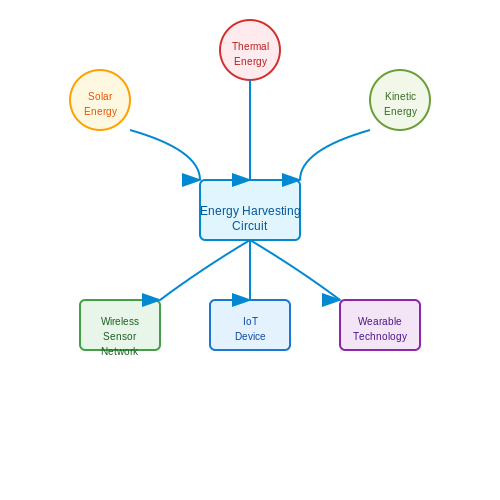
Energy harvesting circuits are integral components of modern electronic systems, especially in scenarios where continuous power supply from traditional sources like batteries or grid connections is impractical or infeasible. These circuits harness energy from diverse sources such as light, heat, vibration, and electromagnetic fields, and efficiently convert it into electrical power. The significance of energy harvesting circuits lies in their ability to extend the operational lifespan of battery-powered devices, reduce maintenance requirements, and enable the deployment of small-scale, low-power electronics in remote or inaccessible locations. By leveraging the ambient energy available in the environment, these circuits contribute to sustainability efforts and facilitate the development of innovative technologies. One key aspect of energy harvesting circuits is their adaptability to various energy sources and scalability to meet different power requirements. Engineers and researchers continually explore new materials, designs, and techniques to enhance the efficiency and effectiveness of energy harvesting systems across a broad range of applications. The practical applications of energy harvesting circuits are diverse and span multiple industries. From powering wireless sensor networks for environmental monitoring to enabling IoT devices in smart homes and buildings, these circuits are transforming the way electronics operate in the modern world. Furthermore, in wearable technology, medical implants, and industrial IoT applications, energy harvesting circuits provide a reliable and renewable source of energy, reducing the need for frequent battery replacements. Overall, energy harvesting circuits represent a fundamental advancement in the field of electronic engineering, offering sustainable solutions for powering electronic devices and opening up new possibilities for autonomous systems in the era of IoT and smart technologies. ---
$$ P = VI \cos(\theta) $$
Definition and Importance in Energy Harvesting Circuits
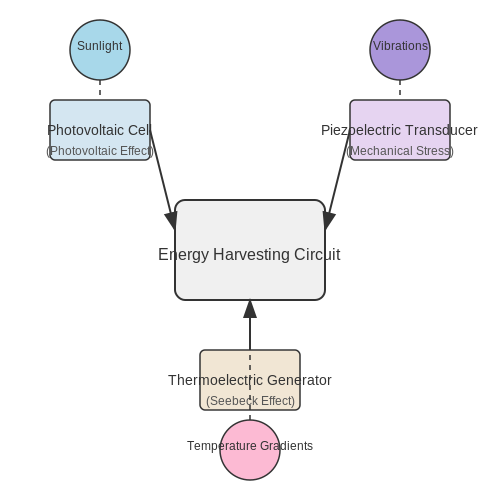
Diagram Description: The diagram would illustrate the various energy sources (like light, heat, vibration, and electromagnetic fields) and their conversion processes within an energy harvesting circuit, showing how ambient energy is transformed into electrical energy. This visual representation would clarify the complex interactions and components involved in these systems.
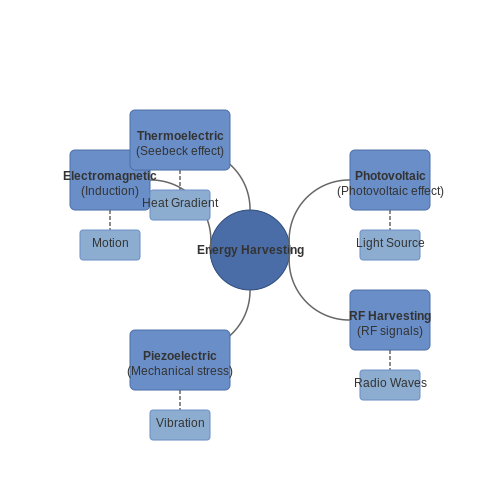
## Energy Harvesting Circuits In the realm of energy harvesting circuits, a fundamental understanding of the various technologies is paramount for engineers, physicists, researchers, and graduate students. These technologies enable the extraction of energy from ambient sources to power electronic devices, thus offering sustainable and efficient solutions. Let's delve into the different types of energy harvesting technologies that play a pivotal role in modern energy systems. ### Types of Energy Harvesting Technologies #### 1. Photovoltaic Cells Photovoltaic cells, commonly known as solar cells, are ubiquitous in energy harvesting applications. These devices convert sunlight directly into electricity through the photovoltaic effect. The semiconductor material within the cell absorbs photons, generating electron-hole pairs that create a voltage potential. This technology is extensively used in solar panels for electricity generation in various scales, from small gadgets to large-scale power plants. #### 2. Piezoelectric Transducers Piezoelectric materials exhibit the ability to generate an electric charge in response to mechanical stress or vibration. Piezoelectric transducers leverage this property to convert vibrational or mechanical energy into electrical energy. These transducers find applications in wearable devices, structural health monitoring, and energy harvesting from ambient vibrations. #### 3. Electromagnetic Induction Based on Faraday's law of electromagnetic induction, devices utilizing this principle can convert varying magnetic fields into electrical energy. Electromagnetic induction is commonly employed in electromagnetic generators and inductive power transfer systems. This technology is ideal for harnessing energy from dynamic sources like wind turbines or vehicle motion. #### 4. Thermoelectric Generators Thermoelectric generators operate on the Seebeck effect, where a temperature gradient across a semiconductor material generates a voltage. This phenomenon enables the conversion of heat energy directly into electrical power. Thermoelectric generators are suitable for applications such as waste heat recovery, remote sensing systems, and temperature gradient-powered devices. #### 5. RF Energy Harvesting RF energy harvesting utilizes antennas to capture ambient radio frequency (RF) signals and convert them into electrical power. This technology is beneficial for harvesting energy from Wi-Fi signals, cellular networks, or RFID systems. RF energy harvesting holds promise for powering low-energy IoT devices and wireless sensors in remote locations. By exploring these diverse energy harvesting technologies, engineers and researchers can design innovative systems that efficiently capture and utilize ambient energy sources. With a deep understanding of these technologies, the path towards sustainable and self-powered electronic applications becomes clearer.
Types of Energy Harvesting Technologies in Energy Harvesting Circuits
Diagram Description: The diagram would visually represent the different energy harvesting technologies, showing the conversion processes from energy sources to electrical energy. It would highlight relationships between the types of energy (solar, mechanical, thermal, RF) and their respective conversion mechanisms.

2. Energy Conversion Principles

2.1 Energy Conversion Principles

Energy harvesting circuits play a vital role in converting ambient energy sources into usable electrical power for various applications. Understanding the principles of energy conversion is foundational to designing effective energy harvesting systems.

Energy Sources

Energy harvesting circuits can leverage diverse energy sources including solar, thermal gradients, vibration, and RF signals. Each source requires specialized circuitry to efficiently extract, condition, and store the harvested energy.

Energy Conversion Techniques

Various conversion techniques are employed based on the nature of the energy source:

  • Solar: Photovoltaic cells convert solar radiation into electrical energy through the photovoltaic effect.
  • Thermal: Thermoelectric generators utilize temperature differentials to generate electrical power.
  • Vibration: Electromagnetic, piezoelectric, or electrostatic transducers convert mechanical vibrations into electricity.
  • RF Signals: RF energy harvesting circuits use antennas and rectifiers to convert radio frequency signals into DC power.

Efficiency Considerations

The efficiency of energy conversion in harvesting circuits is crucial for maximizing the usable power output. Factors such as impedance matching, load regulation, and component selection significantly impact the overall efficiency of the system.

Power Management and Storage

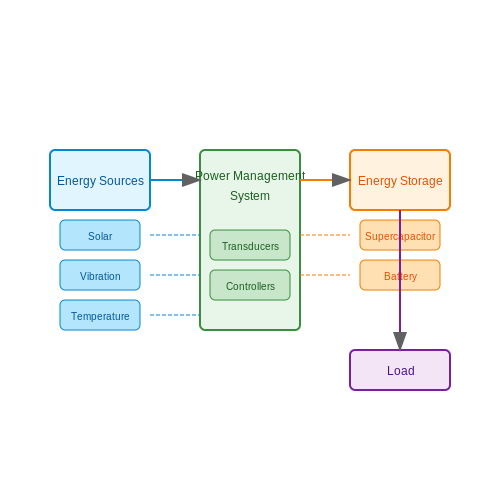
Energy storage elements like supercapacitors, batteries, or hybrid systems play a pivotal role in buffering the harvested energy and ensuring consistent power delivery to the load. Power management circuits regulate the stored energy and optimize its utilization.

Real-World Applications

Energy harvesting circuits find applications in IoT devices, wireless sensor networks, wearable electronics, remote monitoring systems, and self-powered sensors. Their ability to extract energy from the environment enables sustainable and autonomous operation in various scenarios.
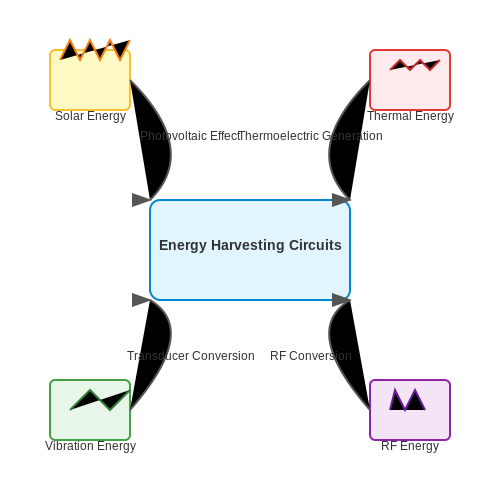
Energy Conversion Principles in Energy Harvesting Circuits
Diagram Description: The diagram would illustrate the different types of energy sources (solar, thermal, vibration, RF) along with their respective energy conversion techniques, showing how each source interfaces with the conversion circuits. This would clearly depict the relationships between various harvesting methods and their components.

2.2 Efficiency in Energy Harvesting

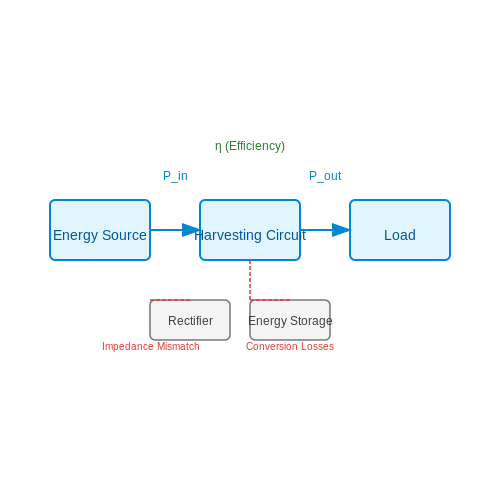
In the realm of energy harvesting circuits, efficiency plays a pivotal role in determining the effectiveness of converting ambient energy into usable electrical power. Efficiency, denoted by the symbol η, is a crucial parameter that reflects the ratio of usable output power to the total input power. In the context of energy harvesting, maximizing efficiency is essential to ensure optimal power extraction from the energy source. ### Efficiency Calculation in Energy Harvesting The efficiency of an energy harvesting circuit can be mathematically expressed as:
$$ \eta = \frac{P_{out}}{P_{in}} \times 100\% $$
Where: - η is the efficiency of the system. - Pout is the output power delivered to the load. - Pin is the input power harvested from the energy source. ### Factors Influencing Efficiency Several factors impact the efficiency of energy harvesting circuits: - Mismatch Losses: Discrepancies in impedance between the energy source and the harvesting circuit can lead to significant losses. - Conversion Efficiency: The efficiency of energy conversion components such as rectifiers and power management circuits affects the overall system efficiency. - Harvesting Environment: Environmental conditions, such as light intensity, temperature, and vibration amplitude, can influence the efficiency of energy harvesting systems. - Storage and Management Losses: Inefficient energy storage systems or management algorithms can contribute to energy losses. ### Engineering for High Efficiency To enhance the efficiency of energy harvesting circuits, engineers employ various design strategies: - Maximum Power Point Tracking (MPPT): Implementing MPPT algorithms ensures that the harvesting circuit operates at its peak efficiency under varying energy source conditions. - Optimized Component Selection: Choosing components with high efficiency ratings and low losses is critical for maximizing overall system efficiency. - Energy Storage Optimization: Efficient energy storage elements, such as supercapacitors or batteries, help mitigate losses in energy transfer and ensure continuous power availability. - System-Level Optimization: Holistic optimization of the entire energy harvesting system, from energy extraction to power delivery, is essential for achieving high efficiency. ### Real-World Applications Efficient energy harvesting circuits find applications in various domains: - Wireless Sensor Networks: Energy harvesting technologies power wireless sensor nodes in IoT applications, eliminating the need for traditional power sources. - Wearable Electronics: Energy harvesting solutions integrated into wearable devices enable self-powered wearables for health monitoring and activity tracking. - Structural Health Monitoring: Energy harvesting systems embedded in infrastructure enable continuous monitoring of structural integrity using harvested energy. By understanding and optimizing the efficiency of energy harvesting circuits, engineers and researchers can unlock the full potential of ambient energy sources for sustainable power generation in diverse applications.
Efficiency in Energy Harvesting in Energy Harvesting Circuits
Diagram Description: The diagram would illustrate the flow of power through an energy harvesting circuit, showing the relationships between input power, output power, and factors affecting efficiency, such as impedance mismatches and energy conversion components.

2.3 Storage Solutions and Power Management

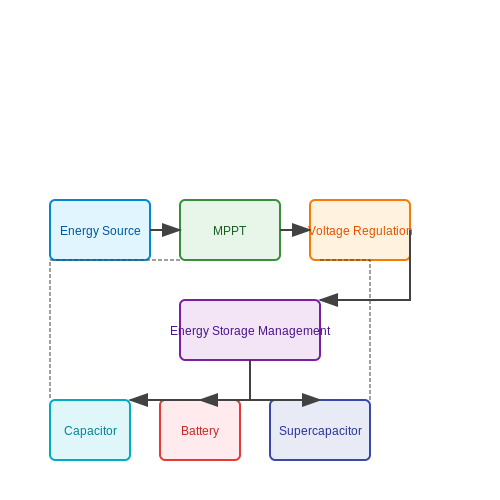
In the realm of energy harvesting circuits, an essential aspect is the efficient storage of harvested energy and its management for optimal utilization. This subsection delves into various storage solutions and strategies for effective power management in energy harvesting systems. ### Energy Storage Devices Energy harvested from ambient sources needs to be stored for later use, especially when the power demand is intermittent or exceeds the harvesting rate. Common energy storage devices include capacitors, batteries, and supercapacitors. #### Capacitors - Key Points: - Capacitors store energy in an electric field between their plates. - They are efficient for high-frequency applications due to their quick charge and discharge capabilities. - Real-World Applications: - Used in low-power wireless sensor networks for temporary energy storage. #### Batteries - Key Points: - Batteries store energy through chemical reactions. - They provide a higher energy density compared to capacitors but have slower charging rates. - Real-World Applications: - Integrated into wearable devices for prolonged energy supply. #### Supercapacitors - Key Points: - Supercapacitors bridge the gap between capacitors and batteries, offering high power density and moderate energy density. - They are suitable for applications requiring frequent charge/discharge cycles. - Real-World Applications: - Employed in regenerative braking systems in electric vehicles. ### Power Management Strategies Efficient power management is crucial in energy harvesting systems to ensure the harvested energy is utilized optimally and the system operates smoothly under dynamic conditions. Key strategies include Maximum Power Point Tracking (MPPT), Voltage Regulation, and Energy Storage Management. #### Maximum Power Point Tracking (MPPT) MPPT techniques maximize the power extraction from the energy source by continuously adjusting the operating conditions to maintain the system at its maximum power point.
$$ P = IV \cos(\theta) $$
#### Voltage Regulation Voltage regulation circuits ensure a stable output voltage regardless of variations in input power levels, enhancing the reliability of the system. #### Energy Storage Management Efficient utilization of stored energy involves strategies such as prioritizing power sources based on availability, balancing energy storage devices, and implementing duty cycling techniques. ### Practical Implementation In practical energy harvesting applications, a combination of energy storage devices, power management techniques, and efficient harvesting circuits is employed to create self-powered systems. Case studies in IoT sensor networks, wearable devices, and remote monitoring systems showcase the real-world impact of energy harvesting circuits. This subsection provides a foundational understanding of energy storage solutions and power management strategies in the context of energy harvesting circuits, highlighting the significance of efficient energy utilization and system reliability in advanced applications. Ensure to integrate these concepts seamlessly in your energy harvesting circuit design for optimal performance and sustainability.
Storage Solutions and Power Management in Energy Harvesting Circuits
Diagram Description: The diagram would visually represent the relationships between different energy storage devices (capacitors, batteries, supercapacitors) and their respective use cases in energy harvesting systems, such as their charge/discharge characteristics and application scenarios. It would also illustrate power management strategies like MPPT and voltage regulation in a block flow format.

3. Solar Energy Harvesting Circuits

3.1 Solar Energy Harvesting Circuits

Solar energy harvesting circuits play a crucial role in converting solar power into usable electrical energy. These circuits are essential for various applications, from small-scale solar devices to large solar panels. Understanding the principles behind solar energy harvesting is key to efficient energy conversion.

Solar Cell Characteristics

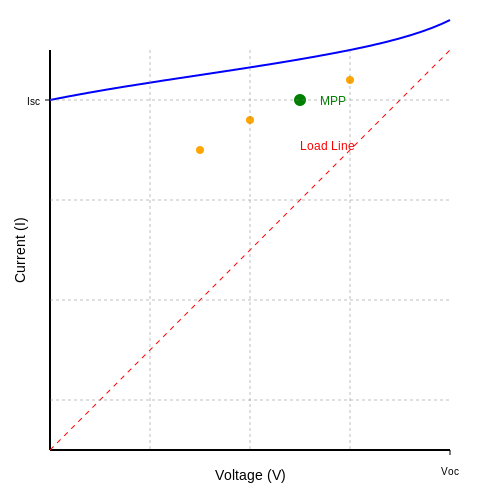
Solar cells are the heart of solar energy harvesting circuits, transforming sunlight into electricity through the photovoltaic effect. They exhibit unique characteristics such as the I-V curve, maximum power point tracking, and efficiency considerations.

Maximum Power Point Tracking (MPPT)

MPPT algorithms optimize the output power of solar panels by dynamically adjusting the load to operate at the maximum power point on the I-V curve. These methods enhance the efficiency of solar energy harvesting systems under varying sunlight conditions.

Solar Energy Management

Efficient solar energy harvesting requires sophisticated management systems handling power distribution, storage, and utilization. DC-DC converters, energy storage elements like batteries or supercapacitors, and control systems are integral parts of solar energy management circuits.

$$ P = VI \cos(\theta) $$

Practical Applications

Solar energy harvesting circuits find applications in off-grid power systems, solar-powered vehicles, wearable electronics, and IoT devices. These circuits enable sustainable energy solutions and reduce reliance on traditional power sources.

Solar Energy Harvesting Circuits in Energy Harvesting Circuits
Diagram Description: The diagram would show the I-V curve of a solar cell, illustrating the relationship between current and voltage, along with the maximum power point and how MPPT adjusts output under varying conditions. This visualization is crucial for understanding power optimization in solar energy harvesting.
##

3.2 Piezoelectric Energy Harvesting Circuits

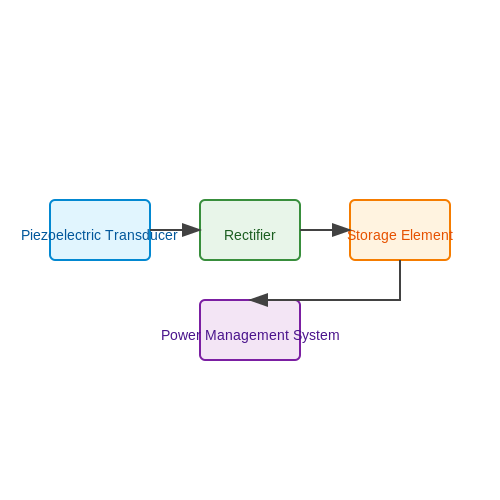
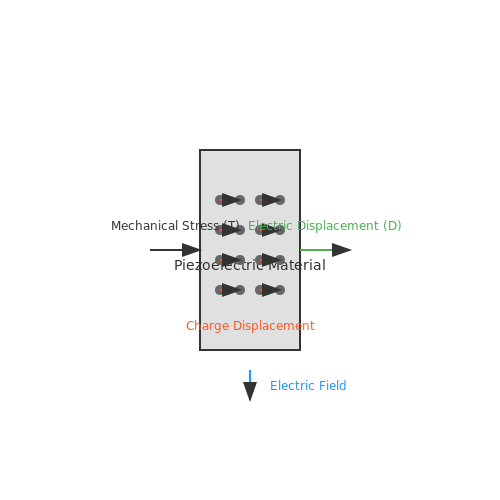
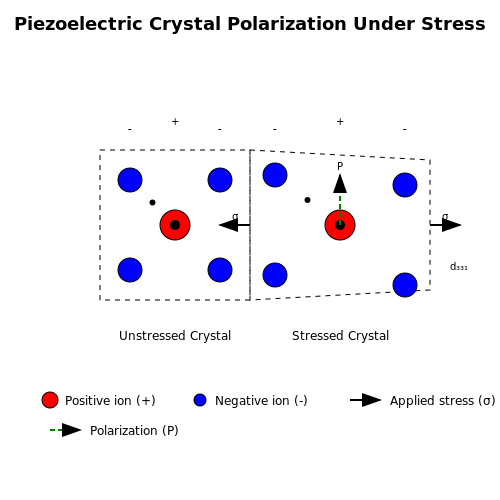
Piezoelectric energy harvesting circuits play a crucial role in converting mechanical vibration or stress into electrical energy. The utilization of piezoelectric materials enables the extraction of power from various sources like footsteps, vibrations, or even natural movements. This subsection will delve into the intricate workings of these circuits and their applications in the realm of energy harvesting. Piezoelectric energy harvesting circuits are designed to efficiently capture and store energy from mechanical vibrations or deformations induced in piezoelectric materials. The key components of such circuits include piezoelectric transducers, energy storage elements (like capacitors or batteries), and power management modules. Principle of Piezoelectric Energy Harvesting: Piezoelectric materials exhibit a unique property where they generate an electric charge in response to applied mechanical stress. This phenomenon allows for the conversion of mechanical energy into electrical energy, providing a sustainable power source for various applications. Circuit Design and Operation: The basic architecture of a piezoelectric energy harvesting circuit consists of a rectifier to convert the AC output from the piezoelectric transducer into DC, a storage element to accumulate the harvested energy, and a power management system to regulate the extracted energy for specific applications. The efficiency of these circuits is optimized by tuning the circuit parameters and selecting appropriate components. Key Concepts in Piezoelectric Energy Harvesting: * Direct and indirect piezoelectric effects. * Impedance matching for maximum power transfer. * Voltage doubling techniques for enhanced energy extraction. * Noise reduction and signal conditioning for improved efficiency. Applications and Case Studies: Piezoelectric energy harvesting circuits find diverse applications in wearable devices, wireless sensor networks, structural health monitoring systems, and IoT devices. For instance, self-powered sensors in industrial environments can leverage piezoelectric energy harvesting to eliminate the need for external power sources, enhancing the efficiency and reliability of the monitoring system. Mathematical Modeling and Analysis: The performance of piezoelectric energy harvesting circuits can be analyzed through mathematical modeling, where parameters such as resonant frequency, capacitance values, and load resistance play a crucial role in determining the overall efficiency of the system. Detailed derivations of equations governing the energy conversion process provide insights into circuit optimization and performance tuning. Future Prospects and Innovations: Ongoing research in the field of piezoelectric energy harvesting circuits focuses on enhancing the energy conversion efficiency, miniaturizing circuit components, and expanding the range of applications through innovative design approaches. The integration of advanced materials and novel circuit topologies holds promise for the development of self-sustaining energy systems. In conclusion, piezoelectric energy harvesting circuits represent a cutting-edge technology with immense potential to revolutionize the way we harness and utilize energy from ambient sources. By exploring the intricate workings and practical implications of these circuits, engineers and researchers can unlock new possibilities in sustainable energy generation and power management.
Piezoelectric Energy Harvesting Circuits in Energy Harvesting Circuits
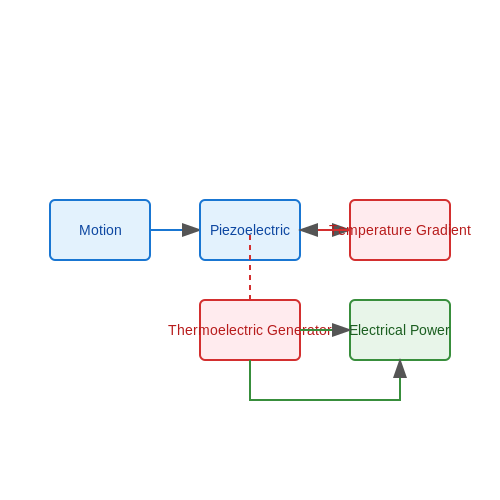
Diagram Description: The diagram would illustrate the basic architecture and flow of energy in a piezoelectric energy harvesting circuit, including components like the piezoelectric transducer, rectifier, storage element, and power management system. This visualization would clarify the relationships and functions of each component within the system.

3.3 Thermoelectric Energy Harvesting Circuits

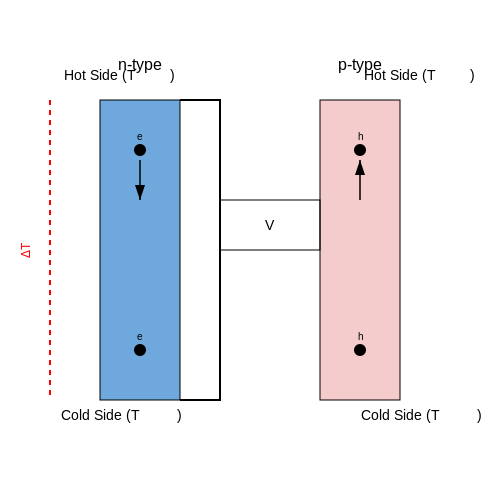
Thermoelectric energy harvesting circuits offer an innovative approach to converting waste heat into usable electrical power. They leverage the Seebeck effect, where a voltage is generated across a thermoelectric material due to a temperature gradient. Thermoelectric generators consist of two types of materials with different Seebeck coefficients connected electrically in series: n-type semiconductor with electrons as charge carriers and p-type semiconductor with holes as charge carriers. The generated voltage \( V_{\text{TE}} \) across the terminals of the thermoelectric material can be expressed as:
$$ V_{\text{TE}} = S \cdot \Delta T $$
Where: - \( S \) is the Seebeck coefficient of the material. - \( \Delta T \) is the temperature gradient across the material. To maximize power output, it is crucial to match the load impedance with the internal impedance of the thermoelectric generator. This is often achieved using a power conditioning circuit that includes a boost converter to efficiently regulate the harvested energy for practical applications. Real-world applications of thermoelectric energy harvesting circuits include powering wireless sensor networks in industrial settings, extending the battery life of wearable electronics, and implementing energy-autonomous systems in remote locations. Thermoelectric energy harvesting circuits play a significant role in sustainable energy solutions by tapping into otherwise wasted thermal energy and converting it into electricity for various applications. The integration of efficient power management and conditioning circuits further enhances their usability in diverse settings. ---
Thermoelectric Energy Harvesting Circuits in Energy Harvesting Circuits
Diagram Description: The diagram would illustrate the structure of a thermoelectric generator, highlighting the n-type and p-type materials and their charge carriers, as well as the relationship between temperature gradient and generated voltage.

3.4 Electromagnetic Energy Harvesting Circuits

In the realm of energy harvesting circuits, electromagnetic energy conversion plays a crucial role in extracting power from ambient sources. By utilizing the principles of electromagnetic induction and Faraday's law, these circuits can harvest energy from various sources, such as electromagnetic fields or vibrations, and convert it into usable electrical power.

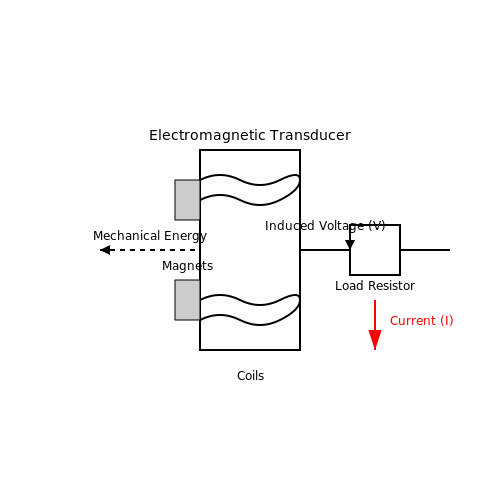
One of the key components in electromagnetic energy harvesting circuits is the electromagnetic transducer, which converts mechanical energy into electrical energy. This transducer typically consists of coils or magnets that interact to induce a voltage across a load resistor when subjected to mechanical vibrations or changes in the magnetic field.

When designing electromagnetic energy harvesting circuits, considerations must be made regarding the optimal coil design, magnetic material selection, and circuit topology to maximize energy conversion efficiency. By carefully tuning these parameters, engineers can enhance the overall performance and power output of the energy harvesting system.

$$ P = VI \cos(\theta) $$

The power harvested by an electromagnetic energy harvesting circuit can be calculated using the above formula, where P represents the power, V is the voltage induced across the load, I is the current flowing through the load, and θ is the phase angle between the voltage and current waveforms.

Moreover, the efficiency of an electromagnetic energy harvesting circuit is influenced by factors such as coil resistance, magnetic coupling, and load impedance matching. Optimal tuning of these parameters is essential to ensure that the harvested energy is efficiently utilized and stored in energy storage elements, such as capacitors or rechargeable batteries.

Real-world applications of electromagnetic energy harvesting circuits span a wide range of fields, including wireless sensor networks, self-powered devices, and IoT systems. By integrating these energy harvesting circuits into autonomous devices, engineers can eliminate the need for traditional power sources and enhance the sustainability and reliability of electronic systems.

Electromagnetic Energy Harvesting Circuits in Energy Harvesting Circuits
Diagram Description: The diagram would illustrate the interaction between the electromagnetic transducer components, such as coils and magnets, and show how mechanical energy leads to voltage generation. Additionally, it could depict the relationship between the voltage, current, and load in the context of power harvesting.

4. Circuit Design Principles

4.1 Circuit Design Principles

Energy harvesting circuits play a crucial role in converting ambient sources of energy into usable electrical power. The design of these circuits requires a deep understanding of both the energy source characteristics and the electronic components used. In this section, we will delve into the fundamental principles that govern the design of energy harvesting circuits for advanced applications.

Energy Source Characteristics

Before delving into the circuit design, it is essential to analyze the characteristics of the energy source being harvested. This could range from solar radiation to vibrations or temperature differentials. Understanding the voltage levels, current limitations, and intermittency of the energy source is critical for designing an efficient energy harvesting circuit.

Power Management System

The heart of an energy harvesting circuit is the power management system that regulates, stores, and distributes the harvested energy. Efficiency in power conversion, voltage regulation, and energy storage optimization are key considerations in the design of this system. Various topologies, such as boost converters, buck-boost converters, and maximum power point tracking (MPPT) techniques, play a vital role in maximizing energy extraction from the source.

Energy Storage Elements

Energy harvesting circuits often incorporate energy storage elements such as supercapacitors, batteries, or ultra-low power storage devices. The choice of energy storage components depends on factors like charge/discharge rates, capacity, and lifetime requirements. Balancing energy storage size with the overall system footprint is a critical design consideration.

Efficient Energy Conversion

Transferring energy from the source to the load efficiently is paramount in energy harvesting circuits. Selecting the appropriate transducers, converters, and control algorithms is essential for maximizing the energy transfer efficiency and minimizing power losses. Techniques like impedance matching and duty cycle optimization are commonly employed to achieve efficient energy conversion.

Real-Time Energy Monitoring and Feedback

Integrating real-time energy monitoring and feedback mechanisms into energy harvesting circuits allows for adaptive power management strategies. Sensor data, load requirements, and energy availability are continuously monitored to optimize power flow and system performance. Implementing intelligent control algorithms and low-power sensing techniques enhance the overall efficiency of the energy harvesting system.

$$ P = VI \cos(\theta) $$

Where:

By applying these principles in the design of energy harvesting circuits, engineers can create sustainable and self-sufficient power solutions for a wide range of applications, from IoT devices to wireless sensor networks.

Circuit Design Principles in Energy Harvesting Circuits
Diagram Description: The diagram would illustrate the flow of energy from various sources through the power management system to energy storage elements, highlighting the role of converters and monitoring systems. This visual representation would clarify the relationships and processes involved in energy harvesting circuits.

4.2 Selecting Components for Harvesting Circuits

When designing energy harvesting circuits, the selection of components plays a crucial role in the efficiency and performance of the system. Each component must be chosen carefully to optimize energy conversion and storage. Here, we will delve into the key considerations for selecting components in energy harvesting circuits.

1. Energy Harvesting Sources and Requirements

Before choosing components, it is essential to understand the characteristics of the energy source being harvested. Different sources such as solar, kinetic, thermal, or RF have varying voltage levels, power outputs, and output impedance. The components selected should match the requirements of the specific energy source to ensure maximum energy extraction.

2. Power Management ICs

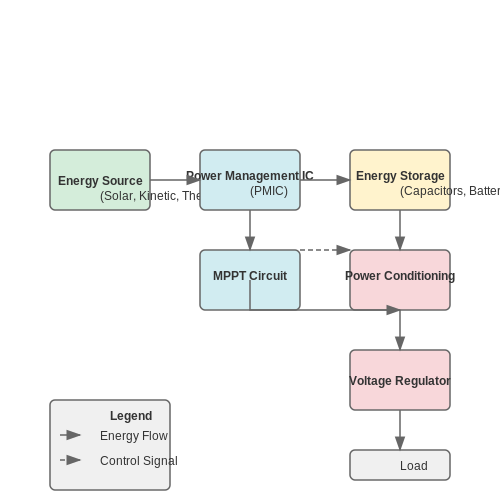
Power management integrated circuits (PMICs) are fundamental in energy harvesting circuits for efficient power conversion and distribution. These ICs regulate voltage levels, manage energy storage, and optimize power transfer between the harvester and storage elements. When selecting PMICs, factors such as efficiency, input voltage range, output voltage levels, and quiescent current should be considered.

3. Energy Storage Devices

Energy storage devices like capacitors, supercapacitors, rechargeable batteries, or thin-film batteries are essential for storing harvested energy for later use. The selection of storage devices depends on parameters such as energy density, charge/discharge rates, self-discharge rates, cycle life, and operating temperature range. Choosing the right storage device ensures energy continuity and system reliability.

4. Power Conditioning Components

Power conditioning components like inductors, capacitors, and resistors are employed to filter, regulate, and stabilize the harvested energy before being supplied to the load or storage element. The values of these components must be carefully chosen to meet the system's voltage, current, and frequency requirements while minimizing losses and maintaining efficiency.

5. Voltage Regulators and Converters

Voltage regulators and DC-DC converters play a critical role in maintaining stable output voltages regardless of fluctuations in the input voltage from the energy source. The selection of these components should consider factors such as efficiency, output voltage range, load regulation, transient response, and input voltage variations to ensure reliable power delivery to the load.

6. Maximum Power Point Tracking (MPPT)

For energy sources like solar panels, MPPT circuits are essential to optimize power extraction by tracking the maximum power point of the source. The selection of MPPT algorithms and controllers is crucial for enhancing energy conversion efficiency and maximizing the harvested power output under varying environmental conditions. By carefully selecting components tailored to the specific requirements of the energy harvesting source and the application, engineers can design efficient and reliable energy harvesting circuits for various real-world applications in IoT devices, wireless sensors, wearable electronics, and autonomous systems.
Selecting Components for Harvesting Circuits in Energy Harvesting Circuits
Diagram Description: A diagram would show the relationships and flow between various components in an energy harvesting circuit, including sources, PMICs, storage, conditioning, and conversion stages. This visual representation would clarify how these components are interconnected and their roles in the overall circuit design.

4.3 Integrating Energy Harvesting with Load Devices

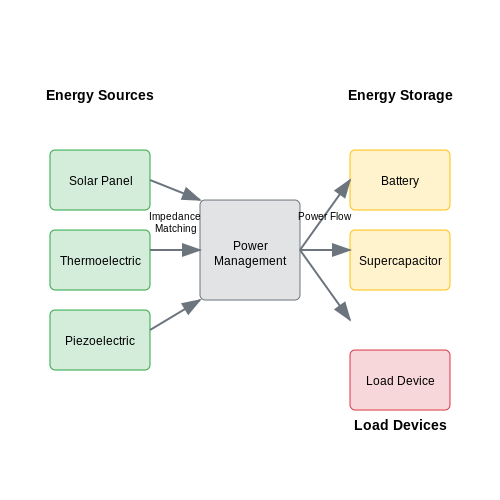
In the pursuit of sustainable energy solutions, integrating energy harvesting circuits with load devices becomes crucial. This integration ensures that harvested energy is efficiently utilized to power various applications. Here, we delve into the intricacies of this integration, focusing on the practical aspects and theoretical underpinnings. Energy harvesting systems typically consist of energy sources such as solar panels, thermoelectric generators, or piezoelectric devices that convert ambient energy into electrical power. Integrating these systems with load devices involves optimizing power transfer, managing energy storage mechanisms, and maximizing overall system efficiency. This section explores the key considerations and methodologies involved in this integration process. ### Power Transfer Efficiency One critical aspect of integrating energy harvesting with load devices is ensuring high power transfer efficiency. The efficiency of power transfer can be influenced by factors such as impedance matching between the energy source and the load, maximum power point tracking algorithms, and voltage regulation mechanisms. Maximizing power transfer efficiency enhances the overall performance of the system and extends the operating time of the load device. ### Energy Storage Management Effective energy storage management is essential for ensuring continuous operation of load devices, especially in scenarios where energy harvesting may not provide a steady power supply. Techniques such as supercapacitors, batteries, or hybrid storage systems can be employed to store excess harvested energy for future use. Balancing the energy storage, retrieval, and consumption processes is crucial for maintaining system stability and reliability. ### System Integration and Optimization Integrating energy harvesting circuits with load devices requires a holistic approach that involves system optimization and performance tuning. This process may include optimizing power electronics components, designing efficient energy conversion pathways, and implementing smart power management strategies. By fine-tuning the system components and parameters, engineers can achieve an optimal balance between energy harvesting, storage, and utilization. ### Practical Applications The integration of energy harvesting circuits with load devices finds applications in various fields, including IoT devices, wireless sensor networks, wearable electronics, and autonomous systems. By harnessing ambient energy sources such as light, heat, vibration, or radiofrequency signals, these systems can operate autonomously and sustainably without relying on external power sources. Real-world implementations showcase the potential of energy harvesting technologies in powering next-generation smart devices and reducing dependence on traditional energy grids. From an engineering perspective, the integration of energy harvesting circuits with load devices involves a multidisciplinary approach that combines principles of electronics, power systems, and control theory. By designing robust and efficient energy management systems, researchers and engineers contribute to the development of innovative solutions for sustainable energy harvesting and utilization.
$$ P = VI \cos(\theta) $$
Integrating Energy Harvesting with Load Devices in Energy Harvesting Circuits
Diagram Description: A diagram could illustrate the connections between energy harvesting devices, energy storage systems, and load devices, showcasing the flow of power and highlighting critical relationships such as impedance matching and energy management. This visualization would clarify the integration process, making it easier to understand the system's components and their interactions.

5. Low-Power Devices

## Energy Harvesting Circuits In this subsection, we will delve into the realm of low-power devices in the context of energy harvesting circuits. Understanding the intricacies of low-power systems is crucial for engineers and researchers working on sustainable energy solutions and IoT devices. ### Low-Power Devices in Energy Harvesting Circuits Low-power devices play a pivotal role in energy harvesting circuits by efficiently utilizing harvested energy from the surrounding environment. These devices are designed to operate on minimal power inputs, making them suitable for applications where traditional power sources are impractical or inaccessible. #### Key Concepts: 1. Energy Efficiency: Low-power devices are optimized to maximize energy conversion and minimize energy losses during operation. 2. Power Management: Efficient power management circuits ensure that energy harvested is stored and utilized effectively to power the device. 3. Sensors and Transducers: Low-power sensors and transducers enable the conversion of ambient energy sources, such as light, vibration, or temperature differentials, into electrical energy. #### Practical Applications: - Wireless Sensor Networks: Low-power devices are integral to sensor networks deployed in remote or harsh environments where battery replacement is challenging. - Wearable Electronics: Energy harvesting circuits power wearable devices, eliminating the need for frequent charging and enhancing user convenience. - Remote Monitoring Systems: Low-power sensors enable the continuous monitoring of infrastructure, environmental parameters, and industrial processes without the need for frequent maintenance. ### Energy Conversion Mechanisms Energy harvesting circuits employ various mechanisms to convert ambient energy into usable electrical power. These mechanisms include photovoltaic cells, piezoelectric transducers, thermoelectric generators, and electromagnetic induction. #### Photovoltaic Cells: Photovoltaic cells, commonly known as solar cells, convert sunlight into electrical energy through the photovoltaic effect. When photons from sunlight strike the cell, they excite electrons, generating a potential difference across the cell. #### Piezoelectric Transducers: Piezoelectric materials generate electrical charge in response to mechanical stress or vibrations. These transducers are used to convert mechanical energy, such as vibrations from machinery or human motion, into electrical energy. #### Thermoelectric Generators: Thermoelectric generators utilize the Seebeck effect to convert temperature differentials into electric voltage. By harnessing the temperature gradient between hot and cold sides of the generator, thermoelectric modules produce usable electrical power. ### Real-World Applications - Solar-Powered IoT Devices: Low-power devices equipped with photovoltaic cells serve as sustainable solutions for IoT applications in remote areas. - Vibration-Powered Sensors: Piezoelectric transducers power sensors in industrial machinery, enabling condition monitoring and predictive maintenance. - Waste Heat Recovery: Thermoelectric generators are utilized to convert waste heat from industrial processes into electricity, reducing energy wastage. By understanding the principles behind low-power devices in energy harvesting circuits and their practical applications, engineers and researchers can contribute to the development of efficient and sustainable energy solutions for the future.
Low-Power Devices in Energy Harvesting Circuits
Diagram Description: The diagram would illustrate the various energy conversion mechanisms in energy harvesting circuits, such as photovoltaic cells, piezoelectric transducers, and thermoelectric generators, showing how ambient energy sources are transformed into electrical energy. This would help visualize the distinct processes and interactions between the energy sources and the conversion mechanisms.
###

5.2 Wearable Technology

Wearable technology has revolutionized the way we interact with electronics, enabling seamless integration into our daily lives. When it comes to energy harvesting circuits in wearable devices, efficiency and compactness are paramount. In this section, we delve into the intricacies of energy harvesting tailored for wearable technology applications. ####

Energy Harvesting for Wearable Devices

Energy harvesting in wearable technology involves the capture and conversion of ambient energy sources, such as motion, heat, or light, into usable electrical power. These devices often integrate various energy harvesting techniques to ensure continuous operation without the need for frequent battery replacements. ####

Power Generation Techniques ##### Kinetic Energy Harvesting One prevalent method in wearable technology is kinetic energy harvesting, where the motion of the wearer is converted into electrical energy. Piezoelectric materials or electromagnetic induction mechanisms can efficiently harness kinetic energy, ensuring a sustainable power source for wearables. ##### Thermoelectric Energy Harvesting Thermoelectric generators are another key player in wearables, utilizing the temperature gradient between the body and the environment to generate power. By exploiting the Seebeck effect, these devices can convert heat differentials into electricity, offering a continuous energy supply for wearable electronics. ####

Integration Challenges and Solutions Ensuring seamless integration of energy harvesting circuits into wearable devices poses certain challenges, including size constraints, power management, and system optimization. By leveraging advanced power management techniques, efficient energy storage solutions, and compact circuit designs, engineers can overcome these obstacles and enhance the performance of wearable technology. ####

Real-World Applications The application of energy harvesting circuits in wearable technology spans a wide range of domains, from health monitoring devices to smart clothing and environmental sensors. By harnessing ambient energy sources, wearables can operate autonomously for extended periods, offering users unmatched convenience and reliability. --- ###

References

Wearable Technology in Energy Harvesting Circuits
Diagram Description: A diagram could visually represent the different energy harvesting methods, including kinetic and thermoelectric harvesting, illustrating how each method converts an energy source into electrical power. This would clarify the relationship between energy sources and the technologies used.
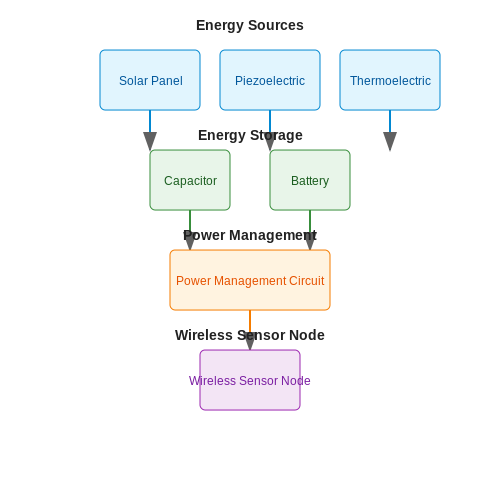
### Energy Harvesting Circuits: Internet of Things (IoT) In the realm of Energy Harvesting Circuits, the integration with the Internet of Things (IoT) has opened avenues for sustainable and autonomous systems. IoT devices leverage energy harvesting techniques to power sensors, transmitters, and processors, enabling efficient and self-sufficient operation. #### Wireless Sensor Networks (WSNs) Integration One prominent application of IoT in energy harvesting circuits is seen in Wireless Sensor Networks (WSNs). These networks consist of distributed sensors that gather data and communicate wirelessly, often in remote or challenging environments where traditional power sources are impractical. Energy harvesting circuits play a critical role in ensuring continuous operation of these sensor nodes by harvesting ambient energy from sources like solar, vibration, or thermal gradients. #### Power Management for IoT Devices Efficient power management is essential in IoT devices powered by energy harvesting circuits. Power management circuits optimize energy usage, store excess harvested energy, and regulate voltage levels to ensure proper functioning of the IoT device components. This ensures that IoT devices remain operational even in fluctuating energy availability scenarios. #### Energy Storage and Harvesting Techniques Various energy storage and harvesting techniques are employed in IoT systems to ensure a steady power supply. Capacitors, supercapacitors, and rechargeable batteries are commonly used to store excess harvested energy efficiently. Harvesting techniques like photovoltaic cells, piezoelectric generators, and thermoelectric modules are employed based on the ambient energy sources available in the IoT device's environment. An understanding of the energy requirements, harvesting sources, and storage capacities is crucial in designing efficient IoT devices powered by energy harvesting circuits. By seamlessly integrating energy harvesting technology with IoT applications, engineers and researchers can create environmentally friendly and sustainable solutions for a wide range of industries. #### Mathematical Modeling of Energy Harvesting Circuits To optimize the performance of energy harvesting circuits in IoT applications, mathematical modeling plays a crucial role. The efficiency of energy conversion, power management algorithms, and storage system design can be mathematically analyzed to fine-tune the IoT device's overall energy autonomy. Key equations involving power conversion efficiencies, storage capacity calculations, and voltage regulation algorithms are fundamental in ensuring the seamless operation of energy harvesting circuits in IoT devices. By bridging the gap between energy harvesting circuits and IoT technologies, engineers and researchers can propel the development of autonomous, self-sustaining systems with a wide array of practical applications, ranging from environmental monitoring to healthcare and industrial automation.
$$ P = VI \cos(\theta) $$
Internet of Things (IoT) in Energy Harvesting Circuits
Diagram Description: The diagram would illustrate the integration of energy harvesting techniques with IoT systems, showing how various energy sources feed into storage and management components to power wireless sensors. It would clarify the relationships between the energy harvesting sources, storage elements, and the power management circuits.

6. Technical Challenges in Energy Harvesting

## `

6.1 Technical Challenges in Energy Harvesting

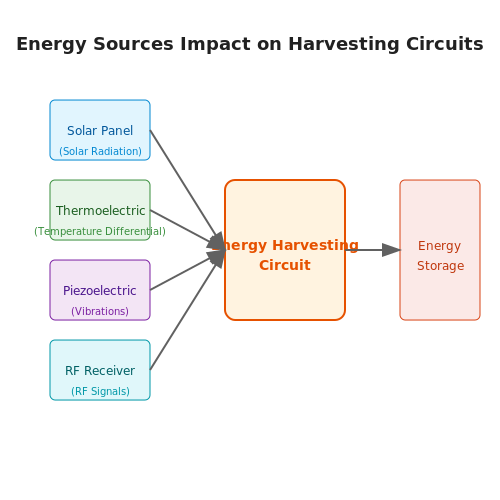
` Energy harvesting circuits play a crucial role in developing sustainable power sources for various applications. While these circuits offer potential benefits in terms of renewable energy generation, they also come with technical challenges that need to be addressed for optimal performance. ### Technical Challenges Overview Energy harvesting circuits face several key technical challenges that impact their efficiency and reliability. Understanding and overcoming these challenges is essential for harnessing energy efficiently from ambient sources. ### 1. Energy Source Variability One of the major technical challenges in energy harvesting circuits is dealing with the variability of energy sources. Ambient energy sources such as solar radiation, temperature differentials, vibrations, and RF signals can exhibit significant fluctuations in intensity and availability. Designing circuits that can adapt to these variations and efficiently harvest energy under varying conditions is a key challenge in energy harvesting systems. ### 2. Power Conversion Efficiency Efficient power conversion is essential in energy harvesting circuits to maximize the energy extracted from ambient sources. Challenges arise in designing power conversion circuits that can operate at high efficiency levels across a wide range of input power levels. Ensuring minimal power losses during energy conversion is crucial for optimizing the overall performance of energy harvesting systems. ### 3. Energy Storage and Management Effective energy storage and management are critical for energy harvesting circuits to provide continuous power supply for IoT devices, sensors, and other low-power applications. Challenges include designing compact and high-capacity energy storage solutions, such as supercapacitors or rechargeable batteries, and implementing efficient energy management algorithms to regulate power flow and usage. ### 4. Harvesting from Non-Ideal Sources Energy harvesting circuits often need to extract energy from non-ideal or unpredictable sources, which can present challenges in terms of energy conversion and utilization. Designing circuits capable of extracting usable power from sources with low energy density or intermittent availability requires innovative approaches and specialized components. ### 5. Environmental Considerations Environmental factors such as temperature variations, humidity, and exposure to external elements can impact the performance and longevity of energy harvesting circuits. Ensuring the robustness and reliability of circuits under different environmental conditions is a key challenge in the design and deployment of energy harvesting systems. ### Real-World Applications Despite the technical challenges, energy harvesting circuits have a wide range of practical applications in diverse fields, including IoT devices, wireless sensor networks, wearable electronics, and autonomous systems. By addressing these challenges through advanced circuit design, innovative technologies, and optimized energy management strategies, researchers and engineers can unlock the full potential of energy harvesting for sustainable power generation.
Technical Challenges in Energy Harvesting in Energy Harvesting Circuits
Diagram Description: The diagram would visually represent the relationships between various energy sources (solar, thermal, vibrational, RF) and their effects on energy harvesting circuit performance, illustrating the concept of energy source variability and its impact on power conversion efficiency.

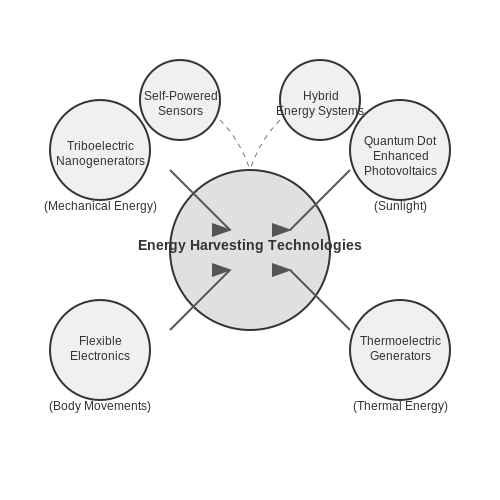
6.2 Emerging Technologies

In the realm of energy harvesting circuits, emerging technologies are constantly pushing the boundaries of efficiency, scalability, and practicality. These advancements not only enhance the overall performance of energy harvesting systems but also open up new avenues for applications across various industries.

1. Triboelectric Nanogenerators (TENGs)

Triboelectric nanogenerators have emerged as a groundbreaking technology for harvesting energy from mechanical movements. By harnessing the triboelectric effect, TENGs can convert mechanical energy into electrical energy through the coupling of contact electrification and electrostatic induction.

2. Quantum Dot Enhanced Photovoltaics

Utilizing quantum dots in photovoltaic devices has shown immense promise in boosting solar energy conversion efficiency. These nanoscale semiconductor particles exhibit unique optical and electronic properties that can be tailored to enhance the absorption and utilization of sunlight, leading to more efficient energy harvesting.

3. Flexible and Stretchable Electronics

The development of flexible and stretchable electronics has revolutionized energy harvesting applications, especially in wearable technology and IoT devices. By integrating energy harvesting capabilities into flexible substrates and stretchable materials, these technologies enable seamless power generation from various sources, including body movements and ambient vibrations.

4. Self-Powered Sensors

Self-powered sensors represent a significant advancement in energy harvesting circuits by integrating sensing functionalities with energy harvesting capabilities. These autonomous sensor nodes can harvest energy from the surrounding environment to power themselves, eliminating the need for external power sources and enhancing the sustainability of monitoring and data collection systems.

5. Thermoelectric Generators

Thermoelectric generators have gained traction in energy harvesting applications by harnessing temperature differentials to generate electricity. This technology utilizes the Seebeck effect to convert heat directly into electrical power, making it ideal for recovering waste heat from industrial processes, automotive systems, and electronic devices.

6. Hybrid Energy Harvesting Systems

Hybrid energy harvesting systems combine multiple energy sources, such as solar, mechanical, thermal, and RF energy, to maximize power output and operational efficiency. By synergistically integrating different harvesting techniques, these systems can adapt to dynamic environmental conditions and provide continuous and reliable power for various applications.

Emerging Technologies in Energy Harvesting Circuits
Diagram Description: A diagram would illustrate the different types of emerging technologies in energy harvesting circuits, showing how each technology converts various forms of energy into electrical energy. It would visually represent the relationship between energy sources and harvesting techniques.

6.3 Future Applications and Market Potential

Energy harvesting circuits have shown great promise in various applications, paving the way for innovative solutions in the energy sector. As technology continues to advance, the potential for these circuits to revolutionize energy generation and conservation is becoming increasingly evident. Let's delve into some future applications and the market potential of energy harvesting circuits. ### Wireless Sensor Networks (WSNs) One of the key areas that can benefit significantly from energy harvesting circuits is wireless sensor networks (WSNs). These networks often consist of numerous sensors distributed over a wide area to monitor and gather data. Energy harvesting circuits can power these sensors, eliminating the need for frequent battery replacements or recharging. This leads to the development of self-sustainable WSNs with extended operational lifespans. ### Internet of Things (IoT) Devices In the realm of IoT, devices are interconnected to exchange data seamlessly. Energy harvesting circuits can play a crucial role in powering IoT devices, particularly those located in remote or inaccessible areas where constant power supply is a challenge. By harnessing ambient sources of energy such as solar, thermal, or kinetic energy, IoT devices can remain operational without relying on traditional power sources. ### Wearable Electronics The integration of energy harvesting circuits in wearable electronics opens up new possibilities in the realm of personalized and portable technology. By utilizing the body's kinetic energy or body heat, these circuits can power wearable devices such as smartwatches, fitness trackers, and health monitors. This not only enhances user convenience but also promotes sustainable energy practices in the wearable technology industry. ### Smart Infrastructure Energy harvesting circuits can also be integrated into various elements of smart infrastructure, including building automation systems, smart grids, and environmental monitoring systems. By capturing energy from the surrounding environment, these circuits can contribute to the development of energy-efficient and sustainable infrastructure solutions. This, in turn, promotes resilience and resource optimization in urban environments. ### Market Potential The increasing demand for energy-efficient solutions, coupled with the growing emphasis on sustainability and environmental consciousness, positions energy harvesting circuits as a key technology with high market potential. Industries such as automotive, aerospace, consumer electronics, and industrial automation are likely to adopt energy harvesting solutions to reduce reliance on traditional power sources and improve operational efficiency. By tapping into renewable sources of energy and enabling autonomous operation, energy harvesting circuits not only enhance the performance of electronic devices but also align with the global shift towards green energy practices. As research and development in this field continue to advance, the market for energy harvesting circuits is projected to expand, offering innovative solutions to diverse industries and applications.
$$ P = VI \cos(\theta) $$
Future Applications and Market Potential in Energy Harvesting Circuits
Diagram Description: The diagram would illustrate the integration of energy harvesting circuits in various applications such as WSNs, IoT devices, and wearable electronics, showing how these circuits capture energy and power different technologies.

7. Key Research Papers

7.1 Key Research Papers

7.2 Recommended Books

7.3 Online Resources