
Applied MPPT Controllers
1. Definition of MPPT
1.1 Definition of MPPT
Maximum Power Point Tracking (MPPT) is a technique employed primarily in solar energy systems to optimize the energy harvest from photovoltaic (PV) modules. By continuously adjusting the electrical load on the solar panels, MPPT controllers ensure that the system operates at its maximum power point, regardless of environmental conditions such as sunlight intensity and temperature variations.
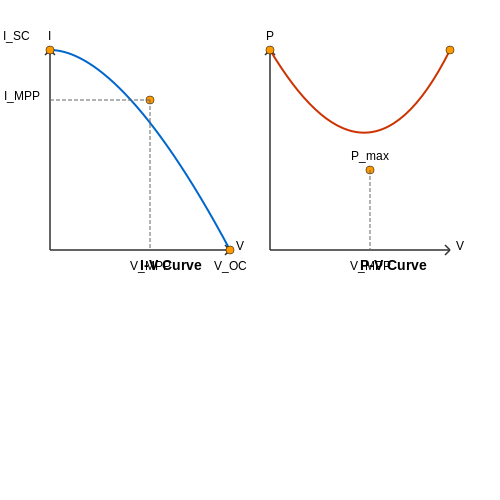
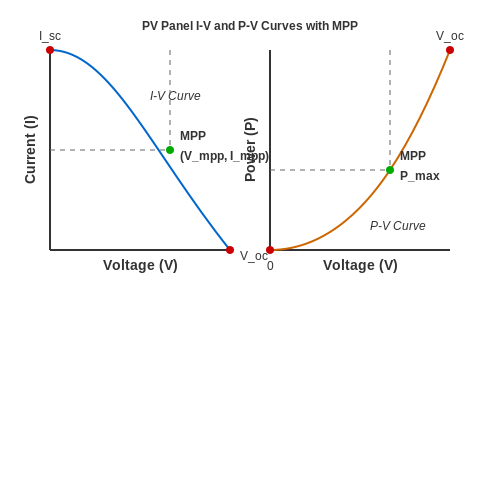
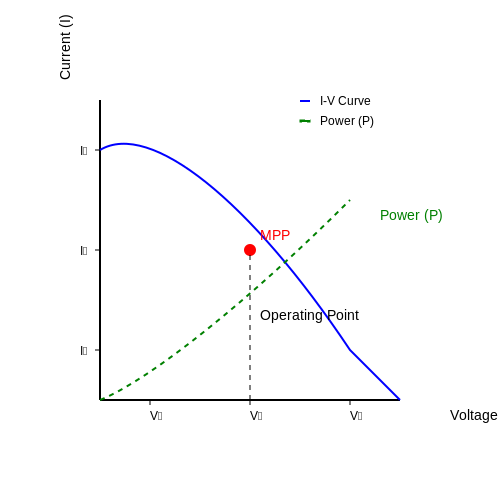
The underlying principle of MPPT relies on the non-linear current-voltage (I-V) characteristics exhibited by solar panels. Each solar panel has a specific voltage at which it produces the maximum power – referred to as the Maximum Power Point (MPP). The objective of an MPPT controller is to dynamically adjust the system’s operating point to track this MPP accurately as external conditions fluctuate.
Theoretical Framework of MPPT
To understand how MPPT works, it is important to delve into the relationships that define power output in solar panels. The power produced by a solar panel can be expressed as:
where P is power, V is voltage, and I is current. The challenge is to maximize this power output while considering the varying current and voltage conditions.
For a solar module, the MPP can be found where the derivative of the power with respect to voltage is equal to zero:
Solving this equation requires both current and voltage measurements across the solar panel, which are used to determine the optimal operating point through algorithms within the MPPT controller. Several algorithms exist, including Perturb and Observe (P&O) and Incremental Conductance methods, each with distinct advantages and trade-offs in terms of responsiveness and efficiency.
Practical Applications of MPPT
The thorough application of MPPT technology is crucial in a variety of contexts:
- Residential Solar Systems: Homeowners benefit from increased efficiency and cost savings by maximizing energy production.
- Grid-Tied Systems: MPPT facilitates the integration of solar energy into the grid, adjusting power levels to match demand.
- Remote Power Generation: In off-grid scenarios, MPPT is essential for ensuring consistent energy generation from solar panels regardless of load changes.
- Electric Vehicles: Solar panels integrated into electric vehicles leverage MPPT to enhance charging efficiency.
In conclusion, the definition and operational principles of MPPT underscore its vital role in modern photovoltaic systems, making it a cornerstone technology aimed at maximizing solar energy utilization. Through understanding the balance between theory and applied practice, engineers and researchers can further innovate in the field of renewable energy systems.
1.2 Importance of MPPT in Renewable Energy Systems
As the global demand for energy increases alongside concerns related to climate change, the role of renewable energy sources has become indispensable. Among these sources, solar photovoltaic (PV) systems stand out as one of the most widely adopted technologies. A crucial component of these systems is the Maximum Power Point Tracking (MPPT) controller, which optimizes the energy harvest from solar panels. Understanding the significance of MPPT in renewable energy systems allows engineers and researchers to enhance energy efficiency and system performance.
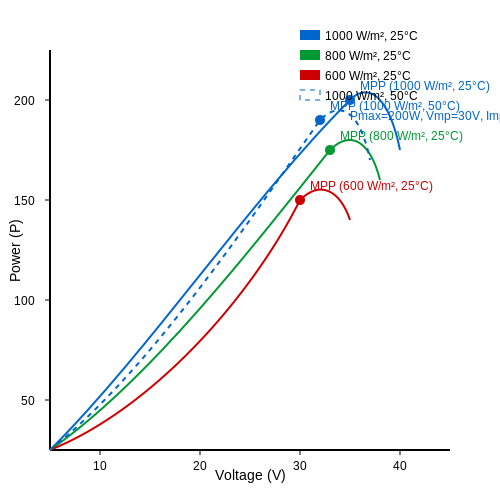
MPPT operates on the principle that solar panels have a unique point at which they deliver the maximum power, known as the Maximum Power Point (MPP). This point is determined by various factors, such as the irradiance, the temperature of the solar cells, and the electrical load connected to the system. One of the most compelling reasons for the implementation of MPPT controllers is their ability to dynamically adapt to changing environmental conditions. Unlike traditional systems, which may deliver fixed voltages, MPPT controllers continuously monitor and adjust the operating point of the solar panels to extract optimal power output.
Technical Mechanics of MPPT Controllers
MPPT controllers are highly efficient power electronics devices that translate changes in solar irradiance and temperature into adjustments in the operating voltage and current of the solar panels. The dynamics of this process can be understood through the relationship between voltage, current, and power, encapsulated in the equation:
Where P is power, V is voltage, and I is current. MPPT algorithms, such as Perturb and Observe (P&O) or Incremental Conductance (IncCond), are employed to continuously seek adjustments to the operating voltage in response to the solar conditions. For instance, in the P&O method, the controller perturbs the voltage and observes the change in power output to ascertain whether to increase or decrease the voltage in the next step. This feedback mechanism enables precise tuning to maximize energy capture.
Impact on System Efficiency
The contribution of MPPT in boosting system efficiency is particularly notable when considering real-world data. Studies indicate that integrating MPPT technology in solar installations can enhance energy yield by approximately 20-30% compared to systems without such controllers. This increased efficiency translates directly to improved financial returns for investors in renewable energy. As governments and organizations worldwide aim to meet renewable energy targets, the role of MPPT becomes even more pertinent.
Moreover, MPPT capabilities extend beyond just solar PV systems. They are also applied in wind energy systems, where similar principles govern the operation of turbines. By dynamically adjusting the load based on wind speed fluctuations, MPPT can maximize energy extraction from wind resources.
With advances in technology, the integration of MPPT into energy management systems has yielded additional benefits, such as improved battery charging efficiency in hybrid systems and the facilitation of energy storage solutions. As utility-scale batteries become more commonplace in balancing energy loads, high-performance MPPT controllers play a critical role in ensuring these systems operate efficiently.
In conclusion, the importance of MPPT controllers in renewable energy systems cannot be overstated. Their ability to optimize energy extraction not only enhances the economic viability of solar installations but also contributes to sustainable energy production and consumption strategies worldwide. With ongoing research and technology development, the future promises even greater efficiencies and innovations in harnessing renewable resources through smart MPPT solutions.
1.3 Basic Working Principle of MPPT Controllers
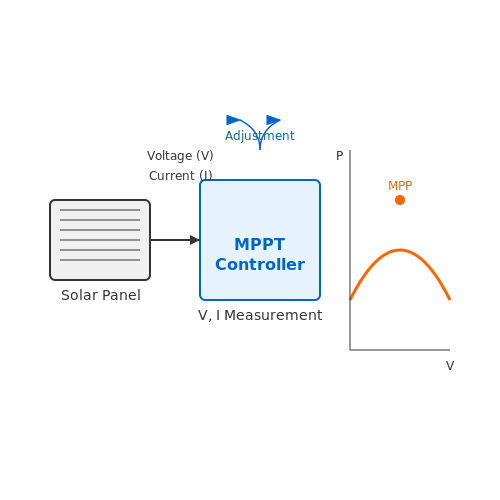
To understand the basic working principle of Maximum Power Point Tracking (MPPT) controllers, it is essential to first grasp the operational characteristics of photovoltaic (PV) cells. PV cells generate electric power by converting sunlight into electricity. The voltage and current output of PV cells varies with atmospheric conditions such as temperature, sunlight intensity, and shading. Notably, there exists an optimal operating point where the product of voltage and current (power) output is maximized. This optimal point is referred to as the Maximum Power Point (MPP). The primary function of an MPPT controller is to adjust the electrical operating point of the PV panels to ensure that the system consistently operates at or near the MPP, thereby maximizing the energy harvested from solar irradiation. To achieve this, MPPT controllers employ techniques that continually measure the output voltage and current of the PV array and adjust the load conditions accordingly. At the heart of MPPT operation lies a feedback control system that enables real-time adjustments. The controller samples the voltage and current output, calculating the power using:Perturb and Observe Algorithm
The P&O method involves slightly adjusting the voltage output and observing the resulting change in power. Specifically, if increasing the voltage results in higher power output, the controller continues to increase voltage. Conversely, if a decrease in power is observed, the voltage adjustment direction is reversed. This algorithm is simple and effective but can lead to oscillations around the MPP under rapidly changing environmental conditions.Incremental Conductance Algorithm
In contrast, the IncCond algorithm evaluates the instantaneous conductance of the PV modules to determine whether to increase or decrease voltage. It specifically quantifies the incremental changes in both current and voltage, allowing the controller to maintain operation at the exact MPP even during rapid fluctuations in environmental conditions. The governing equations are based on the principle that at the MPP:Real-World Applications
MPPT controllers find extensive applications in solar energy systems, particularly in grid-tied and off-grid scenarios to ensure optimal energy conversion. Applications extend beyond just solar photovoltaics to other renewable energy systems like wind turbines, where the principles of MPPT can similarly maximize energy yields. In summary, the basic working principle of MPPT controllers revolves around effectively identifying and maintaining operation at the maximum power point of photovoltaic systems. This optimization is achieved through sophisticated algorithms capable of dynamically adjusting voltage and current in response to real-time environmental changes, significantly impacting system efficiency and energy harvest.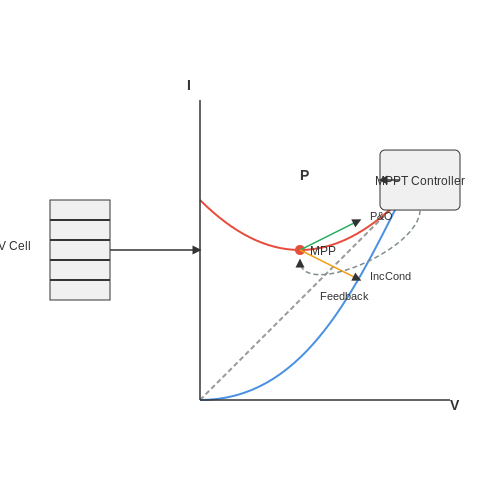
2. Perturb and Observe (P&O) Algorithm
2.1 Perturb and Observe (P&O) Algorithm
The Perturb and Observe (P&O) algorithm is one of the most widely utilized techniques for performing Maximum Power Point Tracking (MPPT) in photovoltaic (PV) systems. Its simplicity and effectiveness make it a favorite among engineers working with solar energy systems, especially in variable environmental conditions.
Understanding the Basics of P&O
The fundamental idea behind the P&O algorithm is to continuously adjust the operating point of a PV system to ensure it captures the maximum possible power. The approach is based on measuring the output voltage and current of the PV array, allowing the algorithm to evaluate the output power.
Mathematically, the power can be expressed as:
Where P is the power, V is the voltage, and I is the current. The algorithm works by introducing a perturbation in the operating voltage and observing the resulting change in power.
Operation of the P&O Algorithm
The algorithm can be summarized in the following steps:
- Measure the current (I) and voltage (V) at the current operating point.
- Calculate the current power (P) using the above-mentioned formula.
- Compare the new power with the previous power.
- If the power has increased, continue perturbing in the same direction; if it has decreased, reverse the direction of perturbation.
This iterative process allows the algorithm to hone in on the maximum power point (MPP) over time. A typical implementation has a fixed perturbation size; however, this can be adjusted dynamically based on environmental conditions to improve tracking efficiency.
Challenges and Considerations
While the P&O algorithm is effective, it does come with certain limitations. One major challenge occurs during rapid changes in environmental conditions, such as passing clouds. In these scenarios, the algorithm may oscillate around the MPP instead of converging. To improve its robustness, many systems incorporate modifications to the basic P&O approach, such as adaptive step sizes or combining it with other techniques.
Real-World Applications
The P&O algorithm has found extensive application in various energy systems beyond simply solar panels. It has been effectively employed in wind energy systems, battery management systems, and fuel cells. Its adaptability and straightforward implementation make it a valuable tool in the field of energy optimization.
Conclusion
In summary, the P&O algorithm stands as a foundational method in MPPT technology, offering both simplicity and effectiveness in tracking maximum power output. As we advance towards more sophisticated control systems, understanding P&O will remain crucial for optimizing energy capture in future renewable energy systems.
2.2 Incremental Conductance (IncCond) Algorithm
The Incremental Conductance (IncCond) algorithm is a widely utilized Maximum Power Point Tracking (MPPT) technique, particularly praised for its robustness and effectiveness under varying environmental conditions. The principle behind IncCond aims to optimize the performance of photovoltaic (PV) systems by continuously assessing and adjusting the operating point to capture maximum power output.
Understanding the Incremental Conductance Method
The IncCond algorithm is based on the relationship between the incremental changes in voltage and current, allowing it to track the Maximum Power Point (MPP) with greater precision. To grasp how this operates, we need to review the PV cell's output characteristics and the role of conductance in this context. The MPP occurs at the point where the derivative of the power with respect to voltage is zero:
Here, power \( P \) is defined as the product of voltage \( V \) and current \( I \):
From the chain rule, we can differentiate power with respect to voltage:
Setting this to zero gives us the condition for finding the MPP:
This leads us to two critical conditions:
- If \( \frac{dI}{dV} > -\frac{I}{V} \), the algorithm needs to increase the voltage.
- If \( \frac{dI}{dV} < -\frac{I}{V} \), the algorithm must decrease the voltage.
- If \( \frac{dI}{dV} = -\frac{I}{V} \), the algorithm is at peak performance at the MPP.
Practical Implementation of the IncCond Algorithm
In practice, the Incremental Conductance method requires real-time measurement of the PV output current and voltage. The algorithm operates by comparing the instantaneous conductance \( \frac{I}{V} \) to the incremental conductance in each cycle. The decision-making loop constantly adjusts the duty ratio in a DC-DC converter, optimizing the operational point of the PV system.
One notable advantage of the IncCond algorithm over simpler methods like Perturb and Observe (P&O) is its ability to accurately locate the MPP even in rapidly changing sunlight conditions, such as those caused by passing clouds. This resilience is crucial in maximizing energy harvest throughout the day, thereby increasing the overall efficiency of solar power installations.
Real-World Applications and Case Studies
The Incremental Conductance algorithm has been implemented in various PV systems globally, from small residential arrays to large-scale solar farms. For instance, a case study involving a photovoltaic array equipped with the IncCond algorithm demonstrated a significant increase in energy yield compared to systems using less sophisticated tracking methods.
Moreover, modern developments in microcontroller technology have facilitated the adoption of the IncCond algorithm in embedded systems for MPPT. These systems allow for the rapid and precise control of solar inverters, further enhancing overall energy efficiency.
As a result, the Incremental Conductance method is not only a theoretically sound approach but also a practical solution that drives advancements in renewable energy efficiency and sustainability across the globe.
2.3 Constant Voltage Method
The Constant Voltage Method (CVM) stands out as a simple yet effective technique for optimizing energy extraction from photovoltaic (PV) systems. This method is particularly relevant in scenarios where intricate algorithms are unnecessary or computational resources are limited. At its core, CVM operates on the principle of maintaining a fixed output voltage to facilitate maximum power point tracking (MPPT).Understanding the Basics of Constant Voltage Method
In the context of PV systems, the output voltage is closely tied to the solar radiation and temperature conditions affecting the solar cells. The Constant Voltage Method targets maintaining an output voltage that approximates the maximum power point (MPP) voltage, which varies with environmental conditions. To begin implementing CVM, it is crucial to understand the concept of the MPP voltage, which can often be approximated via empirical means. For a given PV module, the MPP can usually be determined from the manufacturer’s data, typically represented as a voltage at a specific irradiance level.Mathematical Framework of CVM
To deepen our understanding, let’s analyze the conditions under which CVM can be utilized effectively. Based on the characteristics of a PV module, we know the following relationships hold true: 1. The current-voltage (I-V) relationship is given by: $$ I = I_{ph} - I_0 \left( e^{\frac{qV}{n k T}} - 1 \right) $$ where: - \(I\) is the output current, - \(I_{ph}\) is the photogenerated current, - \(I_0\) is the reverse saturation current, - \(q\) is the elementary charge, - \(V\) is the output voltage, - \(n\) is the ideality factor, - \(k\) is Boltzmann's constant, - \(T\) is the absolute temperature. To identify the optimal output voltage for CVM, the focus is shifted towards continuously adjusting the voltage to a setpoint \(V_{set}\) based on varying climatic conditions.Implementation Steps
1. Setting the Voltage Reference: Initially, a reference voltage \(V_{set}\) is chosen, ideally near the MPP voltage. Historical performance data or the manufacturer's specifications can provide a good estimate. 2. Voltage Regulation: A controller monitors the output voltage of the system and stabilizes it at \(V_{set}\). The controller typically utilizes a feedback loop to minimize the deviation from this setpoint. 3. Power Extraction: As the sunlight intensity changes, fluctuating environmental conditions will alter the PV’s output. The controller continually measures the output voltage and adjusts the load to maintain the voltage at the desired level, thus ensuring optimal power extraction. The effectiveness of the CVM can be demonstrated graphically. Imagine a graph depicting the power vs. voltage characteristics of a solar panel under varying irradiance levels. The MPP will shift as irradiance changes, visually represented as an intersection point on the I-V curve, where the controller aims to maintain stability at \(V_{set}\). The efficiency of this method, however, comes with trade-offs. While it simplifies the electronics and requires fewer computational resources compared to other MPPT techniques like Perturb and Observe or Incremental Conductance methods, it might not be as dynamic in optimizing power under rapidly fluctuating weather conditions.Applications and Suitability
The Constant Voltage Method is especially suitable for systems designed for: - Off-grid applications where battery management is less complex and the load demand is predictable. - Portable solar chargers that benefit from a lightweight and straightforward circuitry. - Educational purposes, where the fundamental principles of MPPT can be demonstrated without advanced electronics. In conclusion, the Constant Voltage Method represents an accessible and practical approach to MPPT in solar energy systems. By resting on the principles of voltage maintenance, it offers straightforward implementation for effective energy harvesting, albeit with its own set of limitations. As technology continues to advance, the integration of CVM within more complex algorithms may enhance performance even further, tailoring solutions to meet the dynamic needs of modern PV implementations.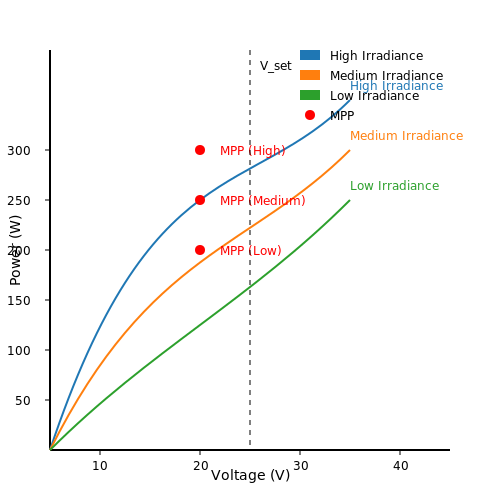
2.4 Other Emerging MPPT Techniques
As the integration of renewable energy sources continues to grow, the quest for more efficient and reliable Maximum Power Point Tracking (MPPT) techniques evolves. Traditionally, methods like Perturb and Observe (P&O) and Incremental Conductance (IncCond) have dominated the landscape. However, these methods come with limitations, especially under rapidly changing environmental conditions. This has led to the emergence of innovative techniques that promise improved efficiency and adaptability.Hybrid MPPT Approaches
One promising direction is the development of hybrid MPPT algorithms that combine the strengths of conventional techniques with advanced strategies. For instance, researchers have explored integrating P&O with Fuzzy Logic Control (FLC). In such a scenario, the P&O algorithm can quickly converge on the maximum power point under stable conditions, while FLC can efficiently handle disturbances caused by rapid changes in irradiance. The hybrid system is designed to harness the advantages of both methodologies, thereby enhancing performance across diverse operating conditions. To illustrate, consider the dynamic response of the hybrid P&O-FLC system. When irradiance suddenly increases due to cloud cover dispersal, the P&O method quickly adjusts the duty cycle, while the FLC modulates the response based on the system's historical performance. This results in minimized power loss during transient conditions.Machine Learning-Based MPPT
The inclusion of machine learning (ML) techniques in MPPT is another area gaining traction. Unlike traditional methods that rely on predetermined algorithms, ML models can learn from historical data and predict optimal operating points in real-time. For example, algorithms such as neural networks have been trained to recognize patterns in solar irradiance data, effectively predicting the MPPT under varying conditions. A notable implementation utilizes a supervised learning approach where data is gathered from different weather patterns and irradiance levels. The trained model then adjusts the PWM signals driving the converter, improving the overall tracking efficiency significantly. Such ML-based MPPT systems are particularly beneficial in environments prone to rapid fluctuations, enabling better stabilization and optimized energy harvest.Sliding Mode Control (SMC)
Sliding Mode Control (SMC) is another technology that has begun to influence MPPT strategies. This control method is known for its robustness against external disturbances and system uncertainties. The principle behind SMC is to drive the system's states sliding along a predetermined surface — the so-called sliding surface — until they reach the desired equilibrium point. The mathematical representation of an SMC system involves defining the sliding surface and the control law to maintain states on this surface. For a system defined by a dynamic model: $$ \dot{x} = f(x) + bu $$ where \( x \) represents the state vector, \( f(x) \) is the system dynamics, and \( u \) is the control input, the sliding mode can be established with the condition: $$ \tilde{s} = \lambda x + \sum_{i=1}^{n} k_i x_i = 0 $$ where \( \lambda \) is a tuning parameter and \( k_i \) are constants determined through system dynamics. The main feature of SMC in MPPT is its ability to quickly respond to changes, thereby ensuring the system remains at maximum efficiency despite external variables.Conclusion and Future Directions
While traditional MPPT methods will continue to play a vital role in solar energy systems, emerging techniques such as hybrid algorithms, machine learning, and sliding mode control present exciting prospects for future developments. As renewable energy technology continues to evolve, the integration of these advanced methodologies offers the potential for significantly enhanced performance, driving us closer to effective energy sustainability. Continued research is vital to seamlessly integrate these innovative solutions within current infrastructures, paving the way for wide-scale adoption in real-world applications.3. Key Components of an MPPT System
3.1 Key Components of an MPPT System
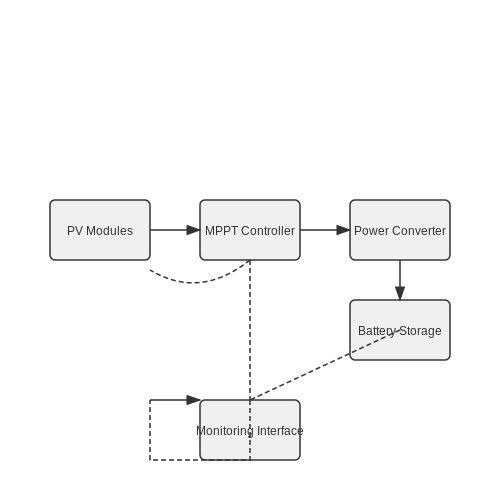
To understand the practical implications of Maximum Power Point Tracking (MPPT) technology in renewable energy systems, it is essential to delve into the core components that facilitate efficient energy conversion and harnessing. An MPPT system primarily integrates:
1. Photovoltaic (PV) Modules
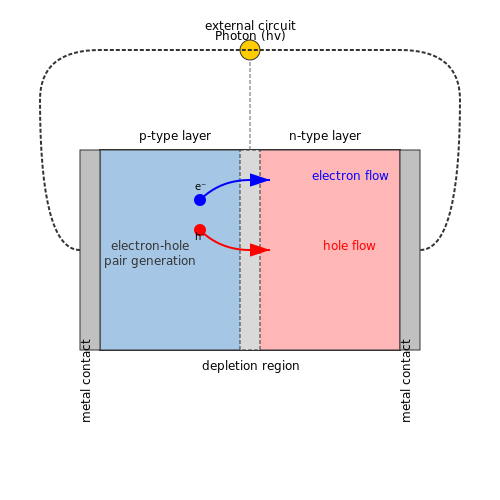
The photovoltaic module is the heart of solar energy systems, comprising multiple solar cells connected in series or parallel. These cells convert sunlight directly into electrical energy through the photovoltaic effect, where photons knock electrons free from their atomic bonds, generating a flow of electric current. The efficiency of a PV module is influenced by factors such as temperature, light intensity, and the angle of incidence.
2. MPPT Controller
The MPPT controller acts as the brain of the system, constantly adjusting the electrical operating point of the PV module to ensure it operates at maximum power output. By utilizing algorithms—such as Perturb and Observe (P&O) or Incremental Conductance (IncCond)—the controller can effectively track variations in light conditions and load demands, achieving optimal efficiency.
3. Power Converter
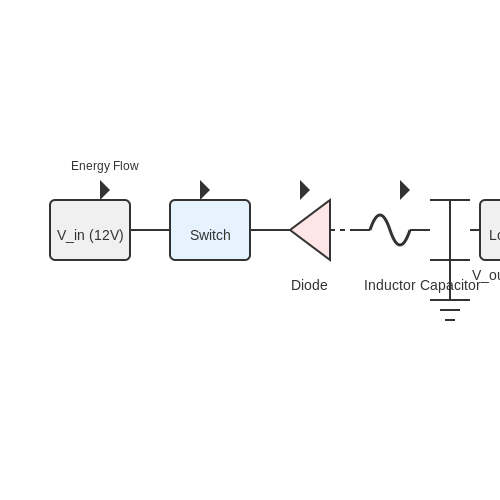
Typically configured as a DC-DC converter, the power converter adjusts the voltage and current from the PV modules to match the requirements of the load or grid. Common topologies include buck, boost, or buck-boost converters, each serving distinct applications depending on whether the output voltage needs to be reduced, increased, or both.
Example Power Converter Operation
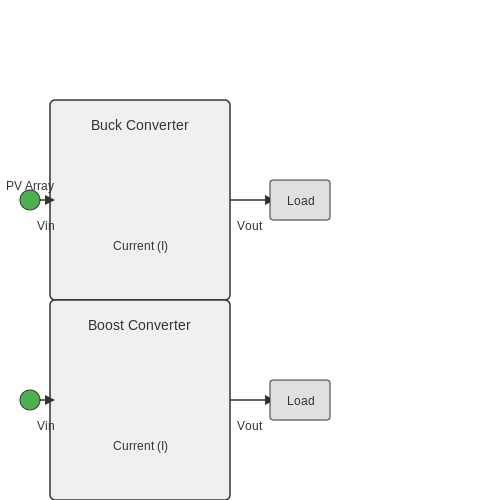
In a buck converter application, when the PV output voltage exceeds the required load voltage, the converter steps down the voltage while increasing the current, ensuring energy is delivered efficiently. Conversely, in a boost configuration, low voltage from a PV panel can be increased to a higher voltage suitable for charging batteries or feeding into the grid.
4. Energy Storage System
An integral component of many MPPT systems, energy storage systems, often in the form of batteries, store excess energy produced during peak sunlight hours. This stored energy can be utilized during low sunlight periods, enhancing the reliability of energy supply. The MPPT controller must intelligently manage the charge and discharge cycles of the batteries to prolong their life and efficiency.
5. Monitoring and Communication Interfaces
Modern MPPT systems frequently incorporate monitoring and communication interfaces that allow for real-time data access, enabling operators to evaluate performance metrics and implement remote control functionalities. These interfaces often support various communication protocols, including RS485, CAN, or wireless options, contributing to improved system management.
Conclusion
Collectively, these components form a cohesive MPPT system that optimizes energy production in renewable applications. Understanding the function and interplay of these elements is crucial for engineers and researchers aiming to advance solar technology and improve energy sustainability solutions.
3.2 Hardware Design Considerations
The design of hardware for Maximum Power Point Tracking (MPPT) controllers is crucial for enhancing the efficiency of photovoltaic (PV) systems. In this section, we will delve into key hardware design considerations that directly influence the performance, reliability, and cost-effectiveness of MPPT systems.
Power Conversion Topologies
One of the primary design considerations involves selecting the appropriate power conversion topology. The two most common topologies used in MPPT controllers are buck converters and boost converters.
- Buck Converters: These are typically used when the input voltage from the PV array is higher than the required load voltage. The configuration allows for stepping down the voltage while increasing the current, which is suitable for applications where the load operates at lower voltage levels.
- Boost Converters: Conversely, boost converters are imperative when the input voltage from the PV panels is below the load requirements. They step up the voltage and are often used in scenarios involving low irradiance conditions.
The choice of topology affects not only the efficiency of the power conversion process but also the overall system complexity and costs. Both converters involve trade-offs related to component selection, control strategies, and thermal management.
Component Selection
The individual components used within the MPPT controller, such as switches, inductors, capacitors, and diodes, play a significant role in determining the performance of the MPPT system. Here are some critical aspects to consider during component selection:
- Switching Devices: MOSFETs are often favored due to their high switching speeds and efficiency. When selecting a MOSFET, ensure it can handle the maximum voltage and current levels expected in the system.
- Inductor Characteristics: The inductor value must be chosen carefully to limit ripple current while ensuring a fast response time to changes in PV output. Consider saturation current ratings to avoid core saturation at peak load conditions.
- Capacitance: Output capacitors must be selected based on their Equivalent Series Resistance (ESR) and ripple current ratings to maintain voltage stability across load variations.
Thermal Management
High conversion efficiencies in MPPT systems often correlate with substantial heat generation. Proper thermal management is essential to prevent overheating, which can lead to component failure. Effective strategies include:
- Heat Sinks: Employing heat sinks can significantly improve thermal dissipation for power components.
- Thermal Interface Materials: Incorporating thermal interface materials between the components and heatsinks can enhance thermal conductivity.
- Active Cooling: In high-power applications, consider implementing fans or liquid cooling systems to manage thermal loads effectively.
Control Strategy Integration
The hardware design should seamlessly integrate with the selected control strategy for the MPPT algorithm. Common control methods like Perturb and Observe (P&O) and Incremental Conductance (IncCond) require fast response times and careful consideration of the digital signal processor (DSP) or microcontroller capabilities. The choice of an appropriate microcontroller not only influences processing power but also directly impacts the controller's efficiency and reliability.
Utilizing a dedicated DSP or an FPGA can enhance computational capabilities, thereby improving the tracking accuracy and response times significantly, especially under rapidly changing environmental conditions.
Real-World Applications
In practice, these design considerations have a direct impact on the performance of solar energy systems. For example, a well-designed MPPT controller can augment energy yield in residential PV setups by up to 30%, illustrating the importance of hardware choices in real-world applications.
In summary, the hardware design of MPPT controllers involves a complex interplay between power conversion topologies, component selection, thermal management, and integration with control strategies. Each consideration plays a vital role in ensuring the effective and efficient operation of solar energy systems.
3.3 Software Implementation Techniques
In the realm of Applied Maximum Power Point Tracking (MPPT) controllers, software implementation plays a pivotal role in harnessing the full potential of photovoltaic (PV) systems. The MPPT algorithms must not only efficiently track the maximum power point but also balance computational demands, response times, and integration into existing system architectures. Initially, understanding the underlying principles of MPPT algorithms is crucial. These algorithms can vary significantly in their complexity, but their primary goal remains the same: maximizing energy extraction under varying environmental conditions. Common methods include Perturb and Observe (P&O), Incremental Conductance (IncCond), and more advanced techniques like fuzzy logic and neural networks. Each of these methods presents unique advantages and challenges in terms of programming efficiency, computational overhead, and response speed.Algorithm Selection and Design
A well-structured MPPT controller begins with the selection of an appropriate algorithm based on the specific application requirements. For instance, P&O algorithms are simple to implement and need minimal computational resources, making them ideal for less complex systems. In contrast, IncCond provides better performance under rapidly changing conditions but at the cost of requiring more computational power. When implementing these algorithms in software, modularity is crucial. Each component—signal acquisition, algorithm execution, and control output—should be designed as independent modules. This approach facilitates debugging and future enhancements without overhauling the entire system. Engineers should leverage simulation tools such as MATLAB/Simulink to prototype and test algorithms iteratively before final implementation.Programming Environment and Tools
The choice of programming environments can significantly influence the effectiveness of the MPPT controller. In embedded systems, programming languages like C and C++ are prevalent due to their efficiency and performance capabilities. However, using higher-level languages, such as Python for prototyping, can accelerate the initial development phase before translating to a more efficient code base. Digital Signal Processors (DSPs) or microcontrollers (MCUs) are often employed in the software implementation of MPPT controllers. These devices enable real-time processing, which is critical for promptly adapting to varying light conditions. The integration of real-time operating systems (RTOS) can further enhance responsiveness but requires careful management of resources.Performance Optimization Techniques
Optimizing performance involves fine-tuning control parameters and enhancing algorithm efficiency. Adaptive techniques can be employed where the MPPT controller adjusts its tracking frequency based on changes in environmental conditions. For example, during slow variations in sunlight, the controller could operate at lower frequency intervals to conserve power and reduce processing demands. Moreover, power losses during signal acquisition and communication can be mitigated through efficient data handling. Using fixed-point arithmetic instead of floating-point where applicable can enhance performance on lower-end microcontrollers. Additionally, implementing filters to smooth out noise from sensor readings can significantly affect the stability of the MPPT operation, reducing erroneous demand changes.Validation and Testing
Before deployment, robust validation is necessary. This involves testing the software implementation under various environmental scenarios to ensure reliability and performance. Simulation environments can be set up to replicate real-world conditions, assessing how the software responds to dynamic changes in load and atmospheric conditions. Field testing in diverse environments offers insights into potential shortcomings and operating ranges, revealing opportunities for further refinement and adjustments in software settings. Utilizing software-in-the-loop (SIL) testing allows engineers to validate the algorithm's performance collaboratively with hardware components in real-time, thus identifying integration challenges early in the development process. In conclusion, the software implementation of MPPT controllers is a multifaceted endeavor involving selection, design, and optimization of algorithms, leading to effective energy extraction in PV systems. Understanding the nuances of these implementations allows engineers and researchers to develop more efficient and adaptable renewable energy solutions, crucial for advancing sustainable technologies.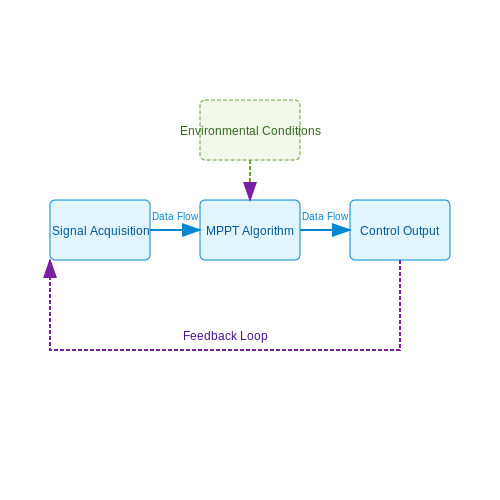
3.4 Simulation Tools for MPPT Design
As the reliance on renewable energy sources grows, the need for efficient energy conversion technologies, such as Maximum Power Point Tracking (MPPT) controllers, becomes crucial. These systems optimize the power output of photovoltaic arrays by ensuring that they operate at their maximum power point (MPP) under varying environmental conditions. To design and implement reliable MPPT controllers effectively, simulation tools play a crucial role. They allow researchers and engineers to model, analyze, and validate designs before deployment in real-world applications.
Importance of Simulation in MPPT Design
Simulation tools provide a mechanism for testing various MPPT algorithms, assessing their performance, and evaluating their robustness in different scenarios. They can mimic the electrical characteristics of solar panels, environmental conditions, and load demands, enabling a comprehensive analysis. The ability to simulate diverse conditions without the need for physical prototypes accelerates the design process and reduces costs significantly. Moreover, they facilitate the iterative process of optimization by allowing fine-tuning of parameters and algorithms before actual implementation.
Commonly Used Simulation Tools
Several simulation tools exist, each with unique features tailored for specific aspects of MPPT design. The following are notable options widely used in both academic research and industrial applications:
- Matlab/Simulink — This industry-standard tool offers robust simulation capabilities for modeling complex systems, including power electronics and MPPT algorithms. Its extensive library includes pre-designed blocks for solar panels, controllers, and filters.
- PSpice — Primarily used for circuit simulation, PSpice can accurately simulate MPPT controllers coupled with photovoltaic cells. Its capability for transient analysis is beneficial for assessing the dynamic response of MPPT strategies.
- LTspice — A free simulation software that is known for its user-friendly interface and accuracy. It is particularly effective for simulating analog circuits and can be utilized for designing MPPT controllers to validate performance.
- MATLAB’s Simscape Electrical — This toolbox expands on Simulink's capabilities by providing an environment for modeling and simulating electrical systems, particularly useful for integrating mechanical and electrical simulations in hybrid systems.
- PLECS — Specialized in power electronics system simulation, PLECS allows for real-time simulation analyses, making it an excellent choice for testing MPPT control algorithms in dynamic scenarios.
- ANSYS Icepak — While primarily a thermal simulation tool, it can be integrated with MPPT designs to study thermal dynamics and their effects on performance, an often-overlooked aspect in energy systems.
- Octave — An open-source alternative to MATLAB, Octave supports many of the same functions and can be employed for similar simulations in designing and testing MPPT algorithms.
Case Studies and Practical Applications
Case studies utilizing simulation tools provide empirical evidence supporting the efficacy of different MPPT algorithms. For instance, the perturb and observe (P&O) method is often tested against incremental conductance (IncCond) using tools like Matlab/Simulink to ascertain their performance under rapidly changing weather conditions. Such simulations can highlight the response time and efficiency differentials, guiding the selection process for particular applications such as solar farms, residential installations, or standalone systems.
Furthermore, through simulation, engineers can assess the impact of components and their tolerances, including the capacitance and inductance in the circuit, which can affect the overall stability and performance of MPPT systems. These insights, derived from simulations, are invaluable for developing reliable, efficient, and cost-effective MPPT controllers in real-world applications.
Conclusions
Simulation tools are indispensable in the design and development of MPPT controllers, allowing for rich experimentation without the associated costs and risks of physical prototyping. By leveraging these tools, engineers and researchers can enhance the performance and reliability of renewable energy technologies, paving the way for more sustainable energy solutions.
4. Efficiency Metrics for MPPT Performance
4.1 Efficiency Metrics for MPPT Performance
In the realm of photovoltaic (PV) systems and renewable energy technologies, Maximum Power Point Tracking (MPPT) controllers have emerged as crucial components for optimizing energy extraction. As the industry continues to evolve, understanding and quantifying the efficiency metrics for MPPT performance becomes essential to improve design strategies and increase energy yield. This section delves into various efficiency metrics that provide insights into MPPT effectiveness.
Understanding Efficiency in MPPT Systems
The primary operational goal of an MPPT controller is to constantly adjust its input characteristics to extract the maximum possible power from a PV array. Efficiency in MPPT systems typically refers to the ratio of the power delivered to the load versus the power available from the PV source. It can be expressed mathematically as:
where \( \eta \) is the efficiency, \( P_{load} \) is the power harvested by the load, and \( P_{max} \) is the maximum power available from the solar panel at the given conditions. However, several specific metrics are employed to provide a comprehensive evaluation of an MPPT controller's performance.
Key Efficiency Metrics
The following efficiency metrics serve as benchmarks for evaluating the performance of MPPT controllers:
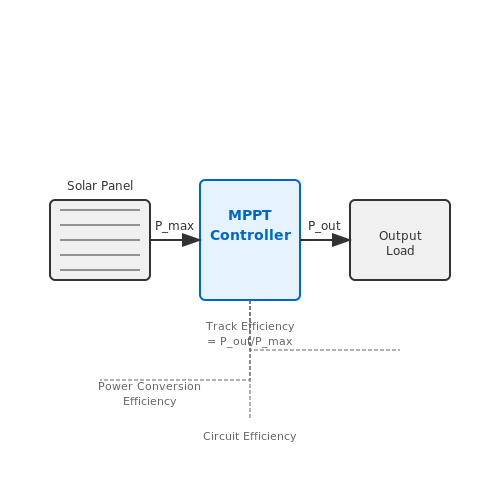
- Circuit Efficiency: This is defined as the ratio of output power to the input power at the power electronics stage of the MPPT. It quantifies losses incurred within the converter itself.
- Track Efficiency: This metric assesses how effectively an MPPT can track the maximum power point under varying irradiance and temperature conditions. It is evaluated using the ratio of power extracted during tracking to the power that could have been extracted.
- Power Conversion Efficiency (PCE): It refers to the effectiveness with which the MPPT converts input power from the solar module to usable electrical power. A high PCE signifies minimal energy losses in conversion.
- System Efficiency: This encompasses not only the MPPT controller's performance but also considers losses elsewhere in the photovoltaic system, such as wiring and inverter inefficiencies.
Calculating Track Efficiency
To calculate track efficiency specifically, one can apply the following approach:
1. Measure the output power during MPPT operation, denoted as \(P_{out}\). 2. Determine the maximum power point available at the same conditions, noted as \(P_{max}\). 3. The track efficiency can then be calculated using:The track efficiency reflects a controller's responsiveness and capability to adapt to changing environmental conditions, ultimately translating into overall system efficiency.
Real-World Application: Case Studies
Numerous studies illustrate the significance of efficiency metrics in practical implementations. For instance, a comparative analysis of MPPT algorithms, such as Perturb and Observe, shows variance in track efficiencies in response to dynamic irradiance conditions. Optimizing such algorithms based on empirical efficiency data can lead to enhanced energy harvest, benefiting both residential and commercial installations.
Furthermore, historical data spanning several years of performance from various MPPT-equipped PV systems demonstrates that those with higher track efficiencies yield superior performance, underlining the importance of optimizing MPPT algorithms.
Conclusion
The application of well-defined efficiency metrics not only facilitates the assessment of MPPT controller performance but also guides improvements in design and implementation strategies. As the demand for robust solar energy solutions increases, a thorough understanding of these metrics will be essential for engineers and researchers aiming to maximize energy generation and system reliability in real-world applications.
4.2 Experimental Setup for Testing MPPT
The experimental setup for testing Maximum Power Point Tracking (MPPT) controllers is a crucial step in validating their effectiveness and performance in real-world scenarios. In this section, we will detail the components required, the arrangement of those components, and the methodology for conducting the experiments.Key Components of the Experimental Setup
To establish a robust experimental framework, several components are needed:- Photovoltaic (PV) Array: A solar panel setup that provides the input power under varied environmental conditions. The characteristics of the PV array, such as voltage and current output, are vital for evaluating the MPPT controller's performance.
- MPPT Controller: The device that must be tested, which should ideally have configurable parameters to assess performance under different algorithms like Perturb and Observe (P&O) or Incremental Conductance.
- Load Resistor: A variable resistor to simulate different loads and test how the MPPT algorithm reacts to changes in system demand.
- Data Acquisition System: Essential for monitoring various parameters such as voltage, current, temperature, and power output of the system. This can be a microcontroller or an advanced data logger with analytical capabilities.
- Environmental Sensors: Temperature and irradiance sensors to capture the conditions under which the experiments are conducted.
Experimental Design
The design of experiments should focus on testing the MPPT controller performance over a range of conditions. The following steps outline the basic procedure: 1. Configuration of the PV Array: Choose PV modules to ensure characteristics that match the anticipated testing conditions. Connect them in series or parallel configurations as required for testing purposes. 2. Integration of the MPPT Controller: Install the MPPT controller between the PV array and the load. Ensure that the controller is configured for the specific algorithm intended for testing. 3. Load Variation: Using the variable load resistor, conduct tests under various resistive loads to assess the MPPT controller's ability to track the maximum power point. Record data at different load settings, enabling the assessment of efficiency under typical and extreme conditions. 4. Environmental Control: Conduct experiments under different simulated environmental conditions by varying irradiance and temperature. Ensure that the integrated sensors are calibrated to provide accurate readings for data analysis. 5. Data Collection: Utilize the data acquisition system to continuously log parameters including voltage (V), current (I), power output (P), and environmental data (irradiance and temperature).Data Analysis Techniques
The logged data can then be analyzed to derive performance metrics for the MPPT controller. Key performance indicators include: - Efficiency: Calculate the efficiency of the MPPT controller using the formula:Conclusion
In conclusion, a carefully structured experimental setup for testing MPPT controllers allows engineers and researchers to assess their performance rigorously. By manipulating both the load conditions and the environmental parameters, it is possible to derive valuable insights into the efficiency and reliability of various MPPT algorithms, leading to optimized designs for real-world applications. Understanding these dynamics not only aids in further research but is also invaluable for the advancement of solar energy technologies in diverse fields.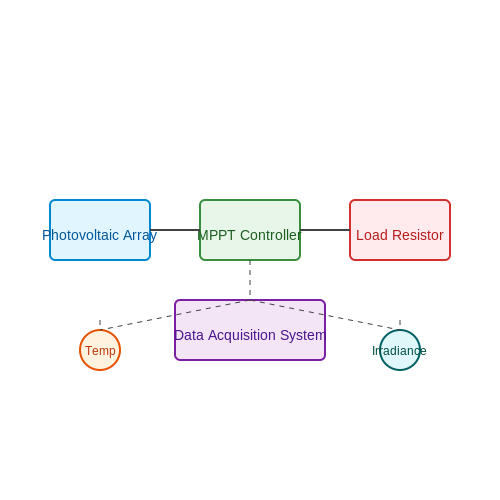
4.3 Analyzing Results and Data Interpretation
In the realm of applied Maximum Power Point Tracking (MPPT) controllers, analyzing results and interpreting data serves as a cornerstone for validating performance and optimizing functionality. The essence of this subsection lies in translating raw data into actionable insights that can enhance the efficiency of photovoltaic systems. We'll dive into statistical methods, graphical representations, and relevant metrics, giving you the tools to evaluate MPPT effectiveness thoroughly. A key aspect of analyzing MPPT results involves examining various performance metrics, including efficiency, tracking speed, and stability under varying environmental conditions. Efficiency, typically defined as the ratio of output power to input power, is pivotal when assessing the capability of the MPPT controller to harness maximum power from the photovoltaic source. To illustrate this concept, consider two parameters: the output voltage (\(V_{\text{out}}\)) and the output current (\(I_{\text{out}}\)). The efficiency (\( \eta \)) can then be expressed mathematically as: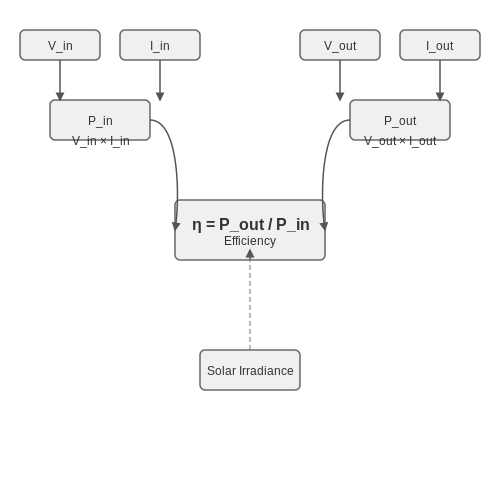
5. MPPT in Solar Photovoltaic Systems
5.1 MPPT in Solar Photovoltaic Systems
Within the realm of renewable energy, Maximum Power Point Tracking (MPPT) is a pivotal technique employed predominantly in solar photovoltaic (PV) systems. This process enhances the efficiency of energy conversion by ensuring that the photovoltaic cells operate at their maximum power point (MPP), varying with changes in environmental conditions such as temperature, sunlight intensity, and load demand.Principle of MPPT in PV Systems
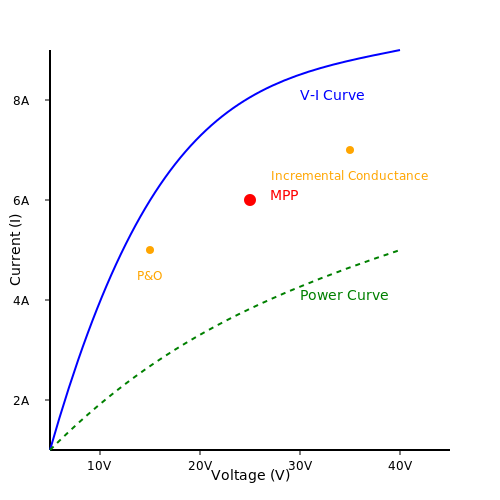
The core principle of MPPT lies in its ability to continuously monitor and adjust the operating points of the solar panels. Each solar panel has a unique curve represented by a voltage-current (V-I) characteristic, which indicates the power output based on changing conditions. Calculating the MPP requires an understanding of how power (P) is related to voltage (V) and current (I):MPPT Algorithms
Several algorithms have been developed to achieve MPPT, with varying levels of simplicity and effectiveness. Among the most commonly used are:- Perturb and Observe (P&O): This algorithm perturbs the operating voltage and observes the change in power output. If the power increases, the perturbation continues in the same direction; if it decreases, the direction is reversed.
- Incremental Conductance (IncCond): This method calculates the derivative of power concerning voltage, determining the direction to change the operating point directly at critical points.
- Constant Voltage (CV): A less dynamic method that sets the voltage at a predetermined level based on manufacturer’s settings, best applied when conditions are relatively stable.
- Neural Networks (NN): More complex, utilizing machine learning to predict MPP based on historical data patterns and solar conditions.
Implementation of MPPT Controllers
The implementation of MPPT controllers is critical for enhancing the performance of solar PV systems. The controller predominantly served as the interlink between the solar panels and the energy storage system or grid. The two primary types of MPPT controllers you will encounter are:- Voltage Source Converter (VSC): Used in grid-tied systems, allowing for bi-directional power flow and enabling the export of surplus energy back to the grid.
- Current Source Converter (CSC): Typically applied in off-grid systems, ensuring that the energy supply maintains stability and reliability.
Advantages and Real-World Applications
The adoption of MPPT technology in solar PV systems leads to a host of advantages:- Enhanced Efficiency: Maximizing the power output aligns with sustainable energy goals, significantly increasing the overall efficiency of solar systems.
- Flexibility: MPPT allows systems to adapt to different load conditions and weather variability
- Cost Savings: By improving energy harvest, MPPT systems can deliver faster returns on investment over the system's lifespan.
5.2 MPPT in Wind Energy Conversion Systems
The quest for renewable energy sources has led to increased interest in wind energy conversion systems (WECS), which harness the kinetic energy of wind to generate electricity. A fundamental aspect of these systems is their ability to maximize power capture from varying wind conditions, a role efficiently performed by Maximum Power Point Tracking (MPPT) controllers.
MPPT technology optimally regulates the electrical power output of wind turbines by adjusting the load and controlling the output voltage and current. The performance of a WECS is significantly influenced by its ability to track the maximum power point (MPP) under fluctuating wind speeds. Similar to photovoltaic systems, wind turbines exhibit a nonlinear relationship between wind speed and electrical power output, necessitating precise tracking for optimal performance.
Understanding Wind Power Characteristics
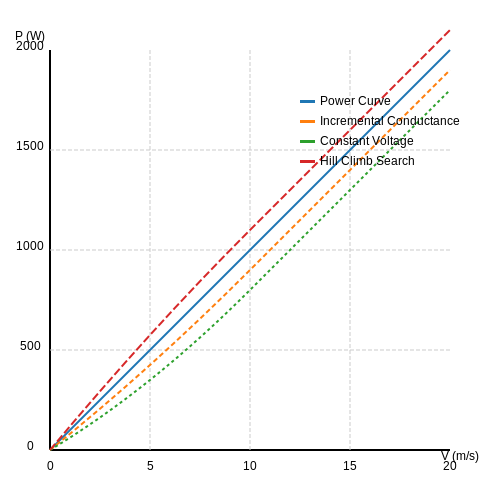
Wind turbines operate through the conversion of wind kinetic energy into mechanical energy, which is then transformed into electrical energy. The power produced by a wind turbine is described by the equation:
Where:
- P: the power output (watts)
- ρ: the air density (kg/m³)
- A: the swept area of the turbine blades (m²)
- C_p: the power coefficient (dimensionless), which depends on turbine design
- V: the wind speed (m/s)
The relationship illustrated here shows that power output increases with the cube of wind speed, emphasizing the critical need for efficient tracking of the MPP, especially during variable wind conditions.
MPPT Algorithms for Wind Turbines
Several MPPT algorithms have been adapted from solar energy systems to suit the unique dynamics of wind energy generation. Among the most prevalent are:
- Incremental Conductance (IncCond): This algorithm computes the change in power concerning the change in voltage, determining the direction to move to reach the MPP.
- Constant Voltage Method: This simpler approach adjusts the turbine rotor speed to maintain a fixed output voltage corresponding to the MPP at a specific wind speed.
- Hill Climb Search: This strategy perturbs the output voltage either up or down to identify the optimal operating point based on previously recorded performance.
Choosing the appropriate algorithm involves balancing complexity, cost, and efficiency. For instance, while the Incremental Conductance method yields higher efficiency in rapidly changing wind conditions, it also requires complex calculations and quick processing capabilities.
Implementation and Practical Applications
The practical integration of MPPT controllers in wind energy systems ensures that maximum power is extracted, especially in rapidly varying environments. A notable application involves hybrid systems where both solar and wind power are harvested, allowing for more stable power production.
Case studies show that MPPT-equipped wind turbines can achieve overall energy output increases of 15-30% compared to those without such technology. For example, advancements in algorithm optimization have led to real-time adjustments in settings of wind turbines at coastal sites, effectively countering sudden wind bursts while maintaining system efficiency.
As the push toward sustainable and reliable power sources continues, the significance of MPPT technology in wind energy conversion systems cannot be overstated. Its development not only enhances performance but also provides insights into making renewable energy more viable for large-scale applications.
5.3 MPPT in Battery Charging Systems
Maximum Power Point Tracking (MPPT) controllers play a pivotal role in enhancing the efficiency of battery charging systems, particularly in renewable energy applications. By dynamically adjusting the electrical operating point of solar panels to ensure they operate at their maximum power point, MPPT controllers optimize energy harvest. This efficiency is especially crucial in systems where energy inputs from solar panels can be variable due to environmental conditions.
Operational Mechanism of MPPT in Charging
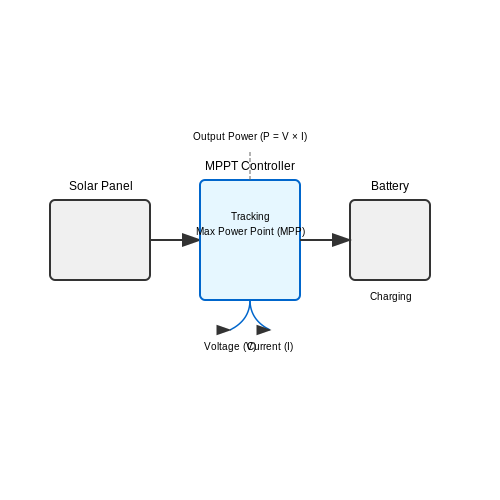
To effectively utilize the energy generated from solar panels, MPPT controllers continuously monitor the voltage and current output from the panels. The core principle involves applying a specific algorithm—such as perturb and observe (P&O) or incremental conductance (IncCond)—to determine the optimal voltage and current pair that maximizes power delivery.
Once the optimal point is identified, the MPPT controller adjusts its output to the battery charging system, ensuring not only maximum efficiency but also the protection of the battery from overcharging. In typical lead-acid or lithium-based systems, overcharging can lead to thermal runaway or reduced battery life. Therefore, control algorithms also incorporate safety parameters that adjust charging profiles based on battery state of charge (SoC) and health.
Mathematical Framework
Let us derive the relationship of power output with respect to voltage and current. The power (P) generated by the solar panel can be defined as:
Where \( V \) is the output voltage and \( I \) is the output current. To find the maximum power point, we set the derivative of \( P \) relative to voltage \( V \) to zero:
This results in two scenarios where either current output is constant or changes with voltage, allowing the MPPT algorithm to choose the effective increment. Practically, the maximal power point is tracked by slightly perturbing \( V \) and observing changes in \( P \) to reach optimal conditions.
Applications in Real-World Scenarios
MPPT technology is integral in various applications ranging from residential solar setups to large-scale solar farms. For instance, in remote off-grid applications where minimizing costs is crucial, MPPT systems effectively increase the energy yield even during non-ideal conditions. System designers leverage MPPT in conjunction with battery storage, enhancing the usability of harvested energy.
Moreover, with the rise of electric vehicles (EVs), MPPT controllers are also finding their way into EV charging stations, optimizing the energy feed from renewable sources—thus promoting greener transport solutions. Continuous advancements in MPPT algorithms further enhance their reliability and effectiveness in different operational environments, making them an essential aspect of modern energy management systems.
6. Common Issues Faced by MPPT Controllers
6.1 Common Issues Faced by MPPT Controllers
The deployment of Maximum Power Point Tracking (MPPT) controllers has revolutionized the efficiency of renewable energy systems, particularly in solar power applications. However, these controllers are not without their challenges, and understanding the common issues they face is crucial for engineers and researchers aiming to optimize their solar energy systems. One prominent issue encountered with MPPT controllers is related to environmental conditions such as temperature fluctuations. The efficiency of photovoltaic (PV) cells is influenced significantly by both temperature and sunlight intensity. As solar irradiance changes throughout the day, so does the available power output from PV modules. An MPPT controller must continually adapt to these fluctuations; otherwise, it may fail to maximize power extraction. Another challenge is the phenomenon known as 'shading.' In scenarios where partial shading occurs—such as nearby trees or buildings casting shadows on the solar array—the MPPT controller may lock onto a local maximum power point rather than the global one. This results in sub-optimal energy harvesting and can significantly reduce overall system performance. Advanced algorithms, such as Perturb and Observe (P&O) or Incremental Conductance (IncCond), can help mitigate this issue, but the controllers must be designed to quickly re-evaluate their operating point. The robustness of MPPT controllers can also come into question under conditions of rapid load changes. When the electrical demand changes abruptly, the controller may struggle to adapt its output quickly enough. This lag can result in energy losses, particularly in grid-tied systems where load balancing is crucial. Engineers must take into account these dynamic load conditions during the design phase, using techniques like predictive control to enhance responsiveness. Additionally, the MPPT algorithm’s tuning parameters, such as step size and response time, also play a critical role. If the step size is too large, the controller may overshoot the optimal point—leading to oscillations rather than convergence towards the maximum power point. Conversely, a step size that is too small results in prolonged settling time, reducing the controller’s effectiveness. A balance must be struck, tailoring these parameters to match the specific characteristics of the PV system. It is also essential to consider the reliability of the components used in MPPT controllers. Electronic components can degrade over time due to thermal cycling or exposure to environmental stresses. Regular maintenance and timely replacement of these components are vital, as failures in critical parts such as capacitors or inductor cores can compromise the entire MPPT operation. Lastly, external conditions such as electromagnetic interference (EMI) can lead to improper functioning of the MPPT controller. This interference can stem from nearby electrical equipment or even from the controllers themselves, especially in high-density installations. Protecting against EMI, through proper shielding and grounding techniques, as well as using high-quality control circuits, can improve overall system resilience. In conclusion, understanding the common issues faced by MPPT controllers not only provides insights into their operational challenges but also emphasizes the need for ongoing advancements and adaptive strategies in renewable energy technology. As engineers and researchers strive to enhance system performance, addressing these issues will be paramount for achieving optimal energy output and ensuring long-term sustainability in solar power applications.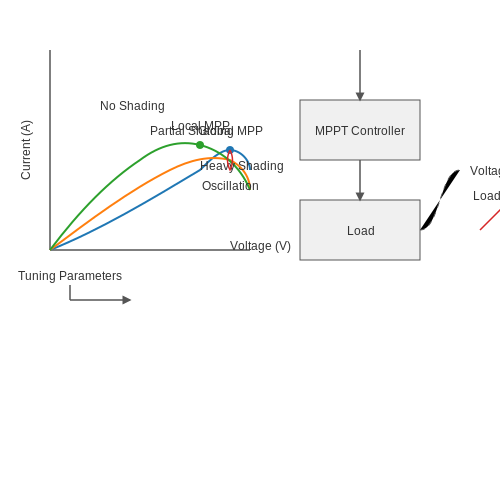
6.2 Future Developments in MPPT Algorithms
As the demand for renewable energy systems continues to grow, particularly in solar photovoltaic (PV) technologies, Maximum Power Point Tracking (MPPT) controllers have substantially advanced over the years. This evolution has led researchers and engineers to explore innovative approaches for enhancing the efficiency and effectiveness of MPPT algorithms. Looking ahead, there are several promising developments that may redefine how we implement MPPT in real-world applications.Enhanced Algorithmic Techniques
In seeking higher efficiency, new MPPT algorithms are being proposed, which incorporate aspects of artificial intelligence (AI) and machine learning. Traditional MPPT methods such as Perturb and Observe (P&O) and Incremental Conductance (IncCond) may find limitations in rapidly changing environmental conditions, such as shifting clouds and variable temperature effects. As a result, hybrid algorithms that dynamically adjust based on real-time conditions are being explored. Using AI-driven strategies, MPPT controllers can learn historical weather patterns to predict optimal settings. Through pattern recognition, these systems can increase their adaptability, thereby minimizing the potential for power loss during transient events. The integration of these advanced computational techniques can vastly improve the performance of MPPT systems in both stationary and mobile deployments.Multi-Input MPPT Systems
Another future development lies in the use of multi-input MPPT systems, particularly in setups that combine different energy sources. For example, solar panels paired with wind turbines can benefit from a single controller managing inputs from both sources. This approach requires sophisticated algorithms capable of optimizing power outputs amidst varying technology characteristics and dynamic environmental factors. Multi-input MPPT systems can simultaneously track the maximum power point for multiple sources, allowing for a more integrated and effective utilization of renewable resources.Application of Advanced Sensors
Emerging sensor technologies are also set to play a substantial role in the advancement of MPPT controllers. The integration of smart sensors capable of capturing detailed environmental data —such as temperature, intensity of sunlight, and wind speed— would provide MPPT systems with enhanced situational awareness. This additional data equips algorithms to make quicker, more informed decisions on power optimization, leading to increased energy yield. For instance, advanced sensors can facilitate real-time feedback loops that allow an MPPT controller to immediately adjust its operations based on instantaneous environmental changes, significantly enhancing reaction times compared to conventional methods.Energy Storage Integration
The context of MPPT operation is evolving beyond just maximizing output from solar panels to include effective management of energy storage systems. As battery technology becomes more advanced and cost-effective, integrating MPPT controllers with battery management systems can ensure that excess energy is stored for later use. Future developments will likely focus on algorithms that not only maximize power extraction from PV systems but also optimize charging and discharging cycles of batteries. This synergy can foster more reliable energy management solutions, particularly in off-grid systems or during periods of high energy demand.Conclusion
The future of MPPT controllers appears promising, with advancements in algorithmic strategies, integration of multiple power sources, the application of advanced sensors, and the intertwining of energy storage solutions. These developments will not only improve the efficiency of solar energy systems but will also pave the way for a more sustainable and flexible energy landscape. As researchers and engineers continue to explore these avenues, the next generation of MPPT technologies promises to be more intelligent, adaptive, and integrated than ever before. Utilizing these insights will be essential for designers and developers aiming to enhance renewable energy systems, ultimately contributing to more resilient and energy-efficient infrastructures.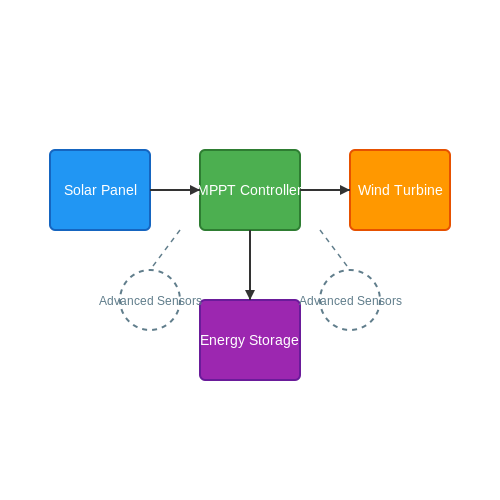
6.3 Integration of AI with MPPT Systems
As the landscape of renewable energy continuously evolves, the integration of Artificial Intelligence (AI) with Maximum Power Point Tracking (MPPT) systems presents an exciting frontier. The main objective of MPPT is to maximize the energy harvested from solar panels by adjusting the electrical operating point to the maximum power point. However, traditional MPPT algorithms may not always be responsive to the dynamic states of real-world conditions, such as changing weather patterns, shading effects, and varying load requirements. Here, AI offers the potential for enhanced adaptability, predictive ability, and optimization in MPPT control strategies.
Understanding the Role of AI in MPPT
AI techniques can significantly augment MPPT systems, improving their efficiency and reliability. Key AI methods that have emerged include:
- Machine Learning (ML): Algorithms such as decision trees and artificial neural networks (ANNs) can be trained to predict optimal operating points based on historical data, thereby adapting to fast-changing conditions.
- Fuzzy Logic: This approach models human-like reasoning, enabling MPPT systems to operate efficiently in situations with imprecise or uncertain data rather than relying solely on precise numerical inputs.
- Reinforcement Learning: This method allows MPPT systems to learn optimal strategies through trial and error, continuously improving their output based on feedback from operational performance.
Machine Learning Approaches to MPPT
Among the various AI methodologies, machine learning stands out due to its ability to analyze large datasets to predict optimal power extraction. An ML-based MPPT system involves three primary stages:
- Data Collection: Gather operational data, including voltage, current, environmental factors (temperature, irradiation levels), and historical performance data.
- Model Training: Use algorithms, such as regression or neural networks, to develop models that can predict the maximum power point based on the input data.
- Validation and Optimization: Continuously assess the model’s performance in real-time operation and refine it to enhance efficiency.
The advantage of an ML-driven approach lies in its ability to adapt quickly to environmental changes, improving the tracking efficiency beyond the capabilities of traditional algorithms. This adaptability is crucial during abrupt changes in sunlight due to clouds or other obstructions.
Case Studies and Practical Applications
Several studies and practical implementations have demonstrated the effectiveness of integrating AI with MPPT technologies:
- A study in Renewable Energy showcased a neural network-based MPPT controller that increased energy capture by 18% compared to conventional methods.
- Field applications in regions with variable weather patterns have reported significant improvements in energy yield by utilizing AI-enhanced MPPT systems, particularly in residential solar installations.
Challenges and Future Directions
While the integration of AI with MPPT systems offers numerous benefits, challenges remain, including:
- Data Dependency: ML algorithms depend on high-quality data for training. Inconsistent or incomplete data can degrade system performance.
- Computational Complexity: Some AI algorithms can introduce latency due to complex calculations. Designing real-time systems requires balancing computational load and operational efficiency.
- Scalability: As AI models become more complex, ensuring their scalability and adaptability in varying operational environments remains a key concern.
Future research may focus on hybrid models that combine different AI techniques to create more robust and flexible MPPT controllers. Furthermore, advancements in deep learning and real-time data analytics could revolutionize the way MPPT is approached, supporting smarter grids and contributing to a more sustainable energy future.
7. Key Research Papers on MPPT
7.1 Key Research Papers on MPPT
In the realm of solar energy systems, the efficacy of Maximum Power Point Tracking (MPPT) controllers plays a pivotal role in optimizing power extraction from photovoltaic arrays. This subsection presents a curated list of significant research papers that have contributed to the advancements in MPPT technologies. Each study offers unique insights into MPPT approaches, algorithms, and their applications, supporting engineers and researchers in furthering their understanding of this critical area.- A Comparative Study of Maximum Power Point Tracking Algorithms for PV Systems — This paper provides an in-depth analysis of various MPPT algorithms, evaluating their performance under different environmental conditions. It serves as an essential resource for selecting appropriate algorithms for specific PV systems.
- A Novel MPPT Scheme Based on Hybrid Fuzzy Logic: PV Power System Case Study — Introduces a hybrid fuzzy logic-based MPPT scheme, demonstrating its efficacy through simulations and experimental results. This research is notable for its innovative approach in reducing steady-state oscillations.
- Dynamic Analysis and Performance Improvement of Fast Converging MPPT Algorithms — Discusses fast-converging MPPT algorithms, focusing on their dynamic behavior and enhancements for increased reliability and efficiency. The paper includes detailed mathematical models to support its findings.
- Review and Comparison of MPPT Techniques — A comprehensive review of MPPT techniques, covering both traditional and modern methods. This study is valuable for understanding the historical evolution and current trends in MPPT technology.
- The Latest Research and Development in Photovoltaic Systems with Emphasis on MPPT Algorithms — Examines recent advancements and research in PV systems, highlighting novel MPPT algorithms that have significantly improved efficiency and adaptability in various environments.
- Artificial Intelligence-Based Approaches for MPPT in Photovoltaic Systems — Explores the application of AI techniques in MPPT, offering insights into how machine learning and predictive algorithms are revolutionizing traditional MPPT strategies.
- Robust Multi-Objective MPPT Technique for PV Applications — Proposes a multi-objective optimization approach for MPPT, balancing between maximum power extraction and system constraints. This paper is crucial for those exploring complex multi-variable optimization in PV systems.
- Improvement of MPPT Algorithms in Noise Affected Photovoltaic Systems — Focuses on enhancing MPPT algorithm efficacy under noisy conditions typical of real-world environments. The study is significant for applications in industrial and urban settings where electromagnetic interference is prevalent.
7.2 Recommended Books on Renewable Energy and MPPT
- Renewable Energy and Energy Efficiency by Anirudh Singh & Himanshu Karanjkar — This book covers the fundamentals of renewable energy systems, including solar, wind, and biomass energy. It discusses energy efficiency improvements, thereby providing a solid foundation for understanding MPPT principles.
- Energy Harvesting for Autonomous Systems by Stephen Beeby and Neil White — Explore the intricacies of energy harvesting technologies, including MPPT. This book provides comprehensive insights into the design and operation of systems that leverage renewable energy.
- Photovoltaics System Design and Practice by Heinrich Häberlin — Focused on the practical aspects of designing photovoltaic systems, this book deals with system components, installations, and controls. MPPT implementation is a key topic elaborated in detail.
- Renewable Energy from Wind and Solar Power Technologies by Radian Belu — Offering an extensive overview of wind and solar technologies, this text includes essential discussions of MPPT control techniques critical for optimizing these systems.
- Maximum Power Point Tracking Control for Photovoltaic Systems by Prabodh Bajpai — Dedicated specifically to MPPT controllers, this book provides detailed chapters on the design and implementation of advanced MPPT algorithms to maximize efficiency.
- Renewable Energy Engineering and Technology by V. V. N. Kishore — This comprehensive volume targets engineers and technologists interested in the engineering aspects of renewable energies, focusing on the practicalities of system design and operation, including MPPT technologies.
- Solar Photovoltaics: Fundamentals, Technologies and Applications by Chetan Solanki — This book offers a deep dive into solar photovoltaic technologies, detailing various innovative MPPT techniques and their practical application in today’s renewable energy systems.
7.3 Online Resources and Tutorials
Online resources offer invaluable help for advanced learners engaged in mastering Maximum Power Point Tracking (MPPT) controllers. These platforms provide a wide range of content, from foundation-building tutorials to cutting-edge research discussions, catering to both theoretical understanding and practical implementation.Advanced Resources for MPPT Controllers
Exploring the complex mechanisms behind MPPT controllers can be daunting. Fortunately, there are numerous well-maintained online resources that cover various aspects of this domain, from theoretical principles evident in particle physics to the nuances of electronic engineering.- Preparedness in Solar Energy — An edX course catered to the practical aspects of solar energy management, including MPPT technology, encompassing both theoretical and real-world applications.
- Energy Production, Distribution & Safety — This Coursera course highlights the role of MPPT in the context of energy distribution, exploring advanced control methodologies.
- ResearchGate - MPPT Controllers: Best Practices — A collection of scholarly articles and research papers on various MPPT algorithms, useful for practitioners looking for evidence-based methodologies.
- MIT OpenCourseWare Power Electronics Lab — Offers a deep dive into power electronics, essential for understanding the integration of MPPT systems into broader electronic frameworks.
- Swayam: Introduction to Renewable Energy Systems — A comprehensive course dissecting the environmental and technical aspects of renewable energy systems, focusing on MPPT technologies among other topics.
- All About Circuits: Maximized Power Transfer — Provides foundational insights into power transfer principles, essential for anyone programming or implementing MPPT devices in electronic systems.
- Instructables: MPPT Solar Charge Controller — A user-friendly step-by-step guide for building an MPPT solar charge controller, ideal for hands-on learners seeking practical exposure.
- Element14: Technologies and Techniques for MPPT in Solar Inverters — A technical analysis of MPPT technologies within solar inverters, providing intricate details valuable for design engineers.