Applied Electronics for Aerospace
1. Role of Electronics in Aerospace
1.1 Role of Electronics in Aerospace
The integration of electronics into aerospace systems has revolutionized the industry over the past few decades, enabling advancements in performance, safety, and efficiency. From avionics to propulsion systems, electronics play a critical role in the operation and functionality of aircraft and spacecraft. Understanding this integration requires a grasp of both fundamental electronic principles and their applications in the complex environments encountered in aerospace.
Significance of Avionics
Avionics refers to the electronic systems used on aircraft and spacecraft. These systems encompass navigation, communication, display, and management functions that are crucial for safe and efficient operation. Modern avionics leverage complex algorithms and data processing capabilities, often supported by high-performance microprocessors and GPUs, to provide real-time information and decision-making assistance to pilots and ground control.
Key components of avionics include:
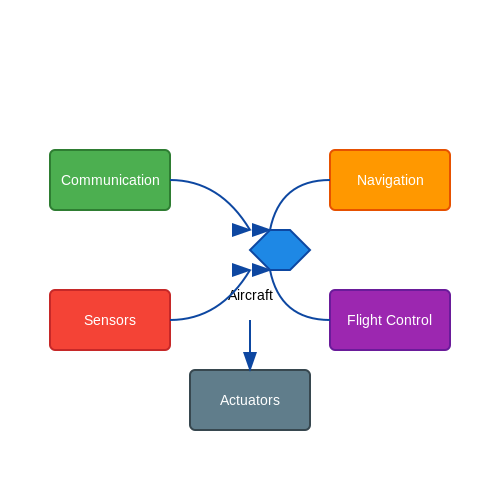
- Communication Systems: Enable real-time data exchange between aircraft and ground stations, facilitating flight operations and air traffic management.
- Navigation Systems: Utilize GPS and inertial navigation systems to provide precise location tracking and flight path management.
- Flight Control Systems: Manage the aircraft's aerodynamic surfaces and engine outputs, ensuring stability and responsiveness during all phases of flight.
Power Systems for Aerospace Applications
Highly reliable power systems are essential for all aerospace applications. These systems include not only the generation and distribution of electrical power but also the management and storage processes, as they must endure extreme conditions, such as wide temperature ranges and significant vibrations.
For instance, lithium-ion batteries are widely used for onboard power due to their high energy density and lightweight characteristics. Understanding the capacity, discharge rates, and thermal management of these batteries can be critical when designing for systems such as satellites, where energy conservation is paramount.
Control Systems in Aerospace
Control systems are fundamental for the automation and stability of aircraft and spacecraft. These systems often utilize sensors, actuators, and embedded processors to regulate flight dynamics. The role of electronics in control systems cannot be overstated; they allow for precise adjustments to be made in response to a variety of environmental factors.
Mathematical Models of Control Systems
Mathematical modeling is essential for understanding the dynamics of control systems. For example, the transfer function can relate input and output in a linear system. The general form of a transfer function \( G(s) \) can be expressed as:
Where \( Y(s) \) is the output and \( U(s) \) is the input in the Laplace domain. The behavior of the control system can then be analyzed using various stability criteria, such as Nyquist or Bode plots, which visually represent frequency response characteristics crucial for stability analysis.
Real-World Applications and Case Studies
Successful implementation of electronics in aerospace can be illustrated through various case studies. One significant example is the Boeing 787 Dreamliner, which employs advanced avionics for its fly-by-wire systems, enabling lighter aircraft design and improved fuel efficiency through optimized flight profiles.
Another prominent example is SpaceX’s Falcon 9 rocket, which incorporates sophisticated electronic systems for stage separation and landing procedures, showcasing the importance of precision and reliability in aerospace electronics. These advancements not only improve operational capabilities but also drive innovations in materials and design philosophies across the industry.
In summary, the role of electronics in aerospace is multifaceted and indispensable, spanning from vital onboard systems to innovative control mechanisms and power management. With ongoing advancements in electronics and computational technologies, the aerospace sector continues to evolve, setting new horizons for performance, safety, and reliability.
1.2 Key Technologies in Aerospace Electronics
The evolution and advancement of aerospace electronics hinge on several revolutionary technologies. These technologies not only enhance the functionality and safety of aerospace systems but also support the increasing complexity of modern aircraft and spacecraft operations. Understanding these key technologies is essential for engineers and researchers working in this field, as they offer practical applications that can significantly impact performance, reliability, and efficiency.
Avionics Systems
Avionics encompasses all electronic systems used in aircraft and spacecraft. These systems fall under three primary categories: communication, navigation, and surveillance. The integration of avionics systems leads to enhanced performance and reliability in mission-critical applications. For instance, the avionics suite of a commercial airliner consists of automated flight control systems, advanced radar systems for navigation, and real-time weather data communication. This layered integration reduces pilot workload and increases operational safety.
Satellite Communication Systems
As aerospace applications expand beyond terrestrial operations, satellite communications (SATCOM) have become pivotal. SATCOM utilizes radio frequency technology to enable two-way communication between ground stations and various platforms in orbit. The deployment of phased array antennas, which allow for electronic steering of the beam, has revolutionized satellite communication. These antennas reduce latency and improve data throughput, significantly impacting applications such as telemetry, tracking, and command (TT&C) in space missions.
Advanced Sensors and Actuators
Sensors and actuators play a fundamental role in aerospace electronics by converting physical phenomena into electrical signals and vice versa. Advanced sensor technology, such as microelectromechanical systems (MEMS), has improved accuracy and reliability. MEMS sensors are compact, lightweight, and can operate in harsh environments, which is crucial for aerospace applications. For instance, accelerometers and gyroscopes in flight control systems utilize MEMS technology to maintain stability and control. Furthermore, smart actuators, integrated with artificial intelligence (AI), can adaptively respond to flight conditions, enhancing the maneuverability of aircraft.
Power Distribution Systems
Modern aerospace platforms employ sophisticated power distribution systems to manage the energy requirements of onboard electronics. One notable advancement in this field is the introduction of more electric aircraft (MEA), which relies on electrical power for propulsion, flight control, and other functions traditionally powered by hydraulic systems. This transition to an all-electric architecture minimizes maintenance costs and improves fuel efficiency. A key component of power distribution systems is the use of solid-state converters, which support various voltage levels and increase the reliability of power management.
Data Management and Processing Systems
Aerospace electronics generate and process vast amounts of data, necessitating the development of robust data management systems. High-performance computing (HPC) platforms enable real-time data analysis and decision-making, which is crucial during critical flight operations. Moreover, the implementation of fault-tolerant systems ensures that data integrity is maintained, which is vital for safety and reliability. Techniques such as redundancy and error correction codes (ECC) mitigate the risk of data loss during missions, especially in long-duration space flights.
Cybersecurity in Aerospace Systems
As aerospace systems rely increasingly on digital technologies and interconnected networks, the importance of cybersecurity has soared. Aerospace systems are now potential targets for cyber threats, necessitating the implementation of cybersecurity protocols to protect sensitive flight information and operational data. Advanced encryption methods and network segmentation strategies are critical components in securing communications and preventing unauthorized access. Furthermore, continuous monitoring and intrusion detection systems help in identifying and mitigating potential threats, ensuring the integrity of aerospace operations.
As we approach the conclusion of this overview, it becomes evident that the interplay of these advanced technologies underpins the success and reliability of aerospace electronics. Engineers and researchers are continually challenged to innovate, ensuring that these systems can meet the demands of future exploration and transportation needs, thereby pushing the boundaries of current aerospace capabilities.
2. Flight Control Systems
Flight Control Systems
Flight control systems (FCS) serve as the backbone of modern aviation, ensuring that aircraft maintain stable flight through the manipulation of various aerodynamic surfaces. With the advent of advanced electronics and control theory, these systems have become highly sophisticated, relying heavily on automated systems and real-time data processing.
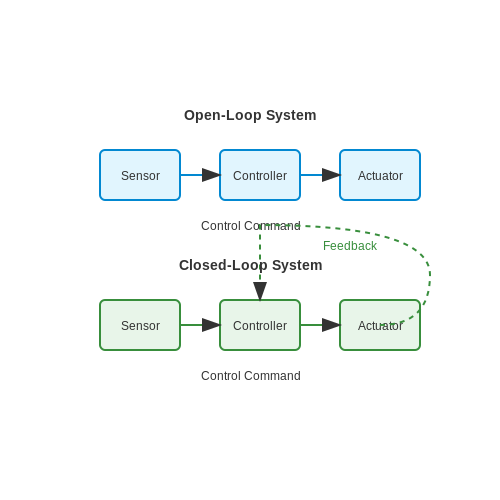
At the heart of an FCS lies the need to interpret signals from various sensors and convert them into control commands for the aircraft's actuators. These systems are typically classified into two main types: open-loop and closed-loop control systems.
Open-Loop Control Systems
In an open-loop control system, the controller does not take feedback from the output to adjust its operations. For example, an autopilot system may manage altitude by setting a constant throttle command without adjusting for changes in weight or aerodynamic conditions. While simple and effective for certain applications, open-loop systems lack the adaptability required for complex flight dynamics.
Closed-Loop Control Systems
On the other hand, closed-loop systems — also known as feedback control systems — constantly monitor the aircraft's current state and adjust its controls accordingly. A classic example is the altitude hold feature in modern autopilots, which uses data from altimeters and other sensors to make real-time adjustments. The fundamental equation governing such systems can often be described in the time domain or the frequency domain.
Closed-loop control utilizes the concept of negative feedback to enhance system stability, and this is where control theory becomes essential. The basic model for a closed-loop system can be described mathematically by the following transfer function:
In this equation, K represents the system gain, T the time constant, s the complex frequency variable, C(s) the controller output, and R(s) the reference input. By implementing control laws such as PID (Proportional-Integral-Derivative) control, engineers can refine the performance of closed-loop FCS effectively.
Real-world Application: PID Control
Consider a scenario where a drone must maintain a specific altitude amidst varying wind conditions. Here, a PID controller can be employed to minimize altitude deviations by adjusting throttle in response to the error (difference between desired and actual altitude). The control effort is calculated as:
In this equation, u(t) is the control output, e(t) the error at time t, and K_p, K_i, and K_d are the proportional, integral, and derivative gains, respectively. By properly tuning these gains, the drone achieves robust altitude control.
The parameters of the FCS must also account for external disturbances and the changing dynamics of flight. Designing FCS requires a thorough understanding of flight mechanics, sensor integration, and signal processing techniques. The use of advanced algorithms allows these systems to handle complex flight conditions and promote safety and efficiency in aerospace operations.
From the earliest mechanical flight control systems to today’s digital solutions, the evolution of flight control technology encapsulates the intersection of physics and electronics in aerospace engineering. The advances in control systems have profoundly transformed aviation, permitting aircraft to accomplish increasingly complex maneuvers with confidence.
2.2 Navigation Systems
The evolution of aerospace navigation systems has transformed the way aircraft and spacecraft determine their position, orientation, and course. These systems integrate various technologies, from traditional methods like inertial navigation to more advanced satellite-based systems. Here, we delve into these navigation methods, exploring the underlying physics, applications, and implications for aerospace engineering.
Inertial Navigation Systems (INS)
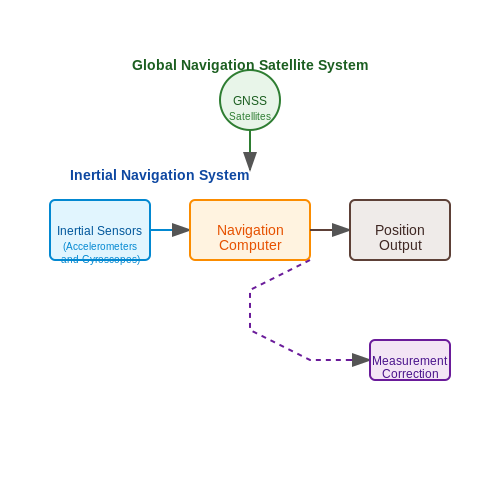
Inertial Navigation Systems (INS) operate based on the principles of classical mechanics. They use a combination of accelerometers and gyroscopes to measure the acceleration and rotation of the vehicle. This data allows for real-time calculation of the current position and velocity without external references.
The inertial navigation strategy relies on the fundamental equations of motion. Given an initial position and velocity, the subsequent position can be determined by integrating the acceleration measurements over time. The basic equations governing this calculation can be expressed as:
Where:
- r(t): Position vector at time t.
- r(t0): Initial position vector.
- v(t): Velocity vector as a function of time.
Gyroscopes control orientation by measuring angular velocity. When combined with accelerometers, they provide a comprehensive view of the vehicle's trajectory. However, inertial navigation has its limitations, primarily due to drift errors resulting from cumulative inaccuracies in measurement. Therefore, an INS is often supplemented with corrective input from other navigation systems.
Global Navigation Satellite Systems (GNSS)
Global Navigation Satellite Systems, such as GPS and GLONASS, utilize a constellation of satellites to provide precise location information across the globe. Each satellite broadcasts a signal containing its position and the precise time the signal was transmitted. The receiver computes its location by measuring the time it takes for these signals to reach it. The fundamental relationship governing this is described by:
Where:
- d: Distance to the satellite.
- c: Speed of light.
- Δt: Time delay between the sent and received signals.
By triangulating signals from at least four satellites, the receiver determines its 3D position (latitude, longitude, and altitude) and fine-tunes the time offset due to clock discrepancies. The integration of GNSS into aerospace navigation enhances accuracy and redundancy, especially crucial during long-distance flights and in scenarios where visual references are limited.
Hybrid Navigation Systems
In modern aerospace applications, the integration of both inertial and satellite-based navigation systems forms hybrid navigation systems. Such systems capitalize on the strengths of each method while compensating for their weaknesses. A common approach is to employ Kalman filtering, a mathematical algorithm that effectively estimates the state of a system from noisy measurements.
For a hybrid system, the state estimation can be represented by the following equations:
Where:
- ⌆xk|k: Updated state estimate.
- Kk: Kalman gain.
- zk: Measurement vector.
- H: Observation matrix.
This mathematical model captures the system's inherent dynamics and measurement uncertainty, allowing for real-time corrections and enhanced accuracy. This approach is vital in complex environments where navigation relies on multiple inputs from various sources, such as urban canyons or dense cloud cover.
Real-World Applications
The application of these navigation systems has visible implications across a wide spectrum of aerospace operations. In civil aviation, aircraft routinely use GNSS for optimal flight routing and landing approaches, significantly enhancing operational efficiency. In contrast, military aircraft often rely on hybrid systems for tactical missions, ensuring resilience against signal jamming and environmental challenges.
Furthermore, as we advance toward autonomous flying vehicles, robust navigation systems will serve as the backbone for maintaining safety, efficiency, and adaptability to dynamic airspace conditions. The integration of emerging technologies, like artificial intelligence and machine learning, is poised to optimize navigation strategies further, making aerial operations safer and more reliable.
Understanding these systems' principles fuels innovation that can dramatically influence how we traverse the skies. As aerospace technology continues to evolve, the interplay between various navigation methodologies will drive the future of airborne operations toward greater precision and autonomy.
2.3 Communication Systems
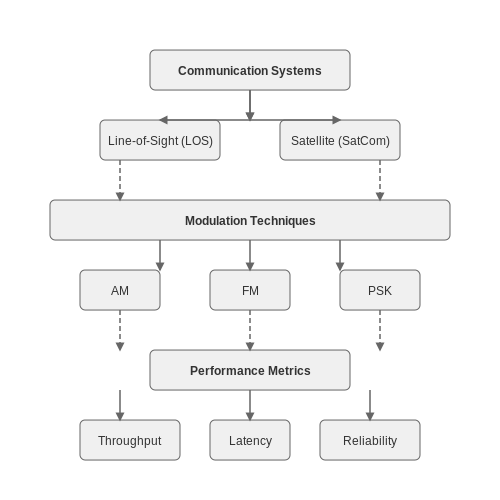
In the realm of aerospace engineering, communication systems are vital for ensuring efficient operation, safety, and coordination among various aircraft components and ground stations. Advanced communication systems integrate multiple technologies, such as RF communication, satellite links, and emerging optical systems, to facilitate robust and reliable transmission of data across vast distances.
Fundamentals of Aerospace Communication
At its core, aerospace communication involves the exchange of information between aircraft and ground stations, other aircraft, and onboard systems. This includes both voice communication for operational coordination and data communication for telemetry, navigation, and control systems. The overarching goal is to maintain situational awareness and ensure the timely transmission of critical information.
Communication systems typically operate in a variety of frequency bands, depending on the specific application and environmental considerations. Commonly used bands include HF, VHF, UHF, and microwave frequencies. Each band offers its unique advantages and constraints influenced by factors such as range, bandwidth, and atmospheric conditions.
Data Linking Technologies
A prominent aspect of aerospace communication systems is the use of data link technologies which enable the transmission of data in various forms, such as telemetry, command signals, and digital information. Two primary technologies are often employed:
- Line-of-Sight (LOS) Communication: Often employed in terrestrial communication applications, LOS systems require a clear path between the transmitter and receiver. Aircraft utilize LOS for short-range communications, typically within VHF/UHF bands.
- Satellite Communication (SatCom): For long-range and reliable communication beyond the visual range, satellite communication systems are indispensable. Utilizing geostationary and low Earth orbit satellites, SatCom enables global coverage, making it integral for international flights and remote operations.
Modulation Techniques
To effectively convey information over these communication channels, various modulation techniques are used. These techniques allow for the encoding of information onto carrier waves, which can then propagate through differing media (air, vacuum, etc.). Key modulation techniques include:
- Amplitude Modulation (AM): Used primarily in voice communications for its simplicity and robustness against noise.
- Frequency Modulation (FM): Offers improved signal clarity and resilience against interference, making it ideal for aviation communication.
- Phase Shift Keying (PSK): A digital modulation technique that provides high data rate communication while being efficient in bandwidth usage.
Performance Metrics
The effectiveness of aerospace communication systems is evaluated through several metrics such as:
- Throughput: The amount of data that can be successfully transmitted in a given time interval.
- Latency: The time delay from the transmission of information to its receipt.
- Reliability: The ability of the system to function correctly in various conditions, which is critical for maintaining safety in aviation.
For example, as reliability is a core concern, aerospace communication systems are designed with redundancy and error correction protocols to ensure data integrity and resilience against failures.
Current Trends and Innovations
The evolution of communication systems in aerospace is heavily influenced by the advancements in technology. Notably, the integration of 5G and Beyond communication standards, as well as the proliferation of Internet of Things (IoT) devices, is transforming the landscape of in-flight connectivity and operational efficiency. Additionally, the exploration of optical communication systems, leveraging Light Fidelity (Li-Fi) technologies, promises a future of ultra-fast, secure communication channels.
As we continue to explore the frontiers of aerospace technology, the role of innovative communication systems will remain paramount in shaping the future of aviation, ensuring safety, efficiency, and fundamentally enhancing the connectivity of aircraft in an increasingly crowded sky.
2.4 Monitoring and Diagnostics
The aerospace industry demands unparalleled reliability and safety in its operations. Effective monitoring and diagnostics of electronic systems play a critical role in achieving these objectives. Advanced diagnostics enhance system understanding, improve performance, and provide predictive maintenance capabilities, which ultimately reduce downtime and operational costs.
Scope of Monitoring in Aerospace
Monitoring in aerospace encompasses a range of parameters, including environmental conditions, structural integrity, system performance, and the health of electronic components. Achieving reliable monitoring requires a multifaceted approach that incorporates sensors, electronics, and data analysis systems tailored to the extreme conditions found in aerospace environments.
Types of Sensors and Their Applications
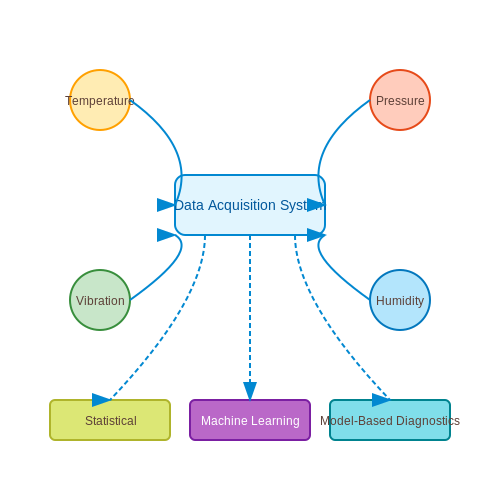
The selection of appropriate sensors is pivotal in aerospace monitoring systems. The following primary types of sensors are extensively used:
- Temperature Sensors: Essential for monitoring engine performance and structural integrity, thermocouples and infrared sensors are commonly deployed.
- Pressure Sensors: These sensors provide critical data on fuel systems and cabin pressure, using piezoelectric and capacitive technologies.
- Vibration Sensors: Accelerometers and piezoelectric sensors monitor mechanical vibrations, crucial for identifying potential failures in rotating machinery.
- Humidity Sensors: Employed to assess environmental conditions in both avionics and passenger areas, ensuring optimal comfort and safety.
Each sensor type is designed to operate under specific conditions, ensuring accuracy and reliability in measurements, even under extreme pressures, temperatures, and vibrations typical in aerospace applications.
Data Acquisition Systems
Once data is collected from sensors, it must be efficiently processed and analyzed. Data acquisition systems (DAS) serve as the bridge between sensors and software, integrating signals from various sensor types and formatting them for analysis. The design of robust DAS in aerospace must consider:
- Sampling Rate: Adequate sampling rates are essential to capture dynamic behavior accurately.
- Signal Conditioning: This process involves filtering and amplifying signals to enhance the quality of data before digitization.
- Real-Time Processing: In many applications, rapid data analysis is vital for immediate decision-making, especially in flight operations.
Moreover, the integration of advanced communication protocols, such as MIL-STD-1553 or ARINC 429, is crucial for transmitting acquired data to central processing units where further analysis can occur.
Analysis and Diagnostics
Following data acquisition, analysis methods provide insights into system performance and condition. Among the most utilized techniques are:
- Statistical Methods: These techniques identify trends and anomalies, often leading to predictive maintenance schedules before failure occurs.
- Machine Learning: Contemporary aerospace applications leverage machine learning algorithms to enhance predictive capabilities by learning from large datasets.
- Model-Based Diagnostics: Utilizing physical models of systems allows engineers to identify discrepancies between expected and measured behaviors.
Case Studies: Implementation in Aerospace Systems
Various aerospace companies implement sophisticated monitoring and diagnostics systems. For instance, Boeing utilizes a comprehensive monitoring system that gathers data from over 100,000 sensors across its aircraft, providing real-time diagnostics and trend analysis. Similarly, Airbus employs its Skywise platform, empowering operators with predictive insights derived from massive datasets to optimize maintenance schedules and improve fleet health.
Conclusion and Future Trends
The future of monitoring and diagnostics in aerospace is poised for growth through advancements in sensor technologies, data analytics, and digital twin methodologies. As systems become more complex, the integration of these technologies will enhance operational capabilities and safety standards. The aerospace sector is on the cusp of a major technological transformation, and those who harness these advancements will lead in safety, efficiency, and performance.
3. Power Sources and Distribution
3.1 Power Sources and Distribution
In the realm of applied electronics for aerospace, power sources and their distribution are fundamental elements that ensure the seamless operation of various systems aboard an aircraft or spacecraft. The successful design and integration of power systems are critical, as they must function under the harsh conditions of high altitudes and the unique environment of space.
Aerospace applications require power systems to meet stringent reliability, efficiency, and safety standards. As such, aerospace engineers often employ a combination of advanced technologies and innovative materials. The primary focus lies in understanding the characteristics of power sources, storage methods, and the frameworks for distribution that maintain constant and stable power supplies.
Power Sources
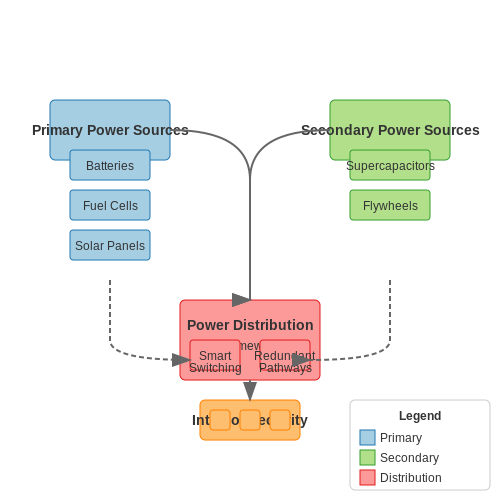
The power sources used in aerospace applications can be classified into two main categories: primary and secondary sources.
- Primary power sources: These convert chemical or kinetic energy into electrical energy and include batteries, fuel cells, solar panels, and generators. For instance, lithium-sulfur and lithium-ion batteries are frequently employed due to their high energy density and specific power.
- Secondary power sources: They are typically used for energy storage during or after the primary energy source has generated power. Supercapacitors and flywheels are notable examples. Their fast response times and ability to deliver high bursts of power make them suitable for transient loads experienced during maneuvering.
Consider the case of a solar panel system implemented on a satellite. Solar panels generate electricity when exposed to sunlight, providing continuous power to onboard systems while charging battery systems for when sunlight is unavailable (e.g., during the satellite's orbit around the Earth). This hybrid approach maximizes efficiency and reliability.
Distribution Frameworks
The distribution of power in aerospace systems must be both efficient and fault-tolerant. High-reliability power distribution systems employ advanced techniques that include:
- Redundant pathways: These ensure that if one path fails, power can still reach critical systems via an alternate route.
- Smart switching: This involves the use of electronic switches that can detect faults and reroute power in real-time, increasing system resilience.
- Power management systems: These systems constantly monitor and control voltage levels, ensuring that each component receives the appropriate amount of power, significantly reducing the risk of overloads.
For example, in modern commercial aircraft, power distribution units (PDUs) can manage power from different sources and provide power to onboard systems while also enabling diagnostic capabilities to detect and respond to failures instantly.
Interconnectivity and Cabling
Lastly, the components' interconnectivity plays a significant role in power distribution. Aerospace wiring harnesses are designed to be lightweight yet robust enough to withstand extreme conditions. Innovations such as high-conductivity materials and insulated cables help reduce weight while maximizing performance.
The combined focus on power sources, distribution systems, and interconnectivity not only contributes to the operational integrity of aerospace systems but also enhances overall system efficiency and longevity, ensuring that crucial missions can be accomplished effectively.
This holistic understanding of power sources and their distribution pathways is essential for engineers and researchers aiming to innovate within the aerospace sector, paving the way for advancements in power system design for future aerospace applications.
3.2 Battery Systems and Management
The aerospace industry demands highly reliable battery systems for various applications, including powering avionics, propulsion systems, and critical emergency functioning. Given the weight constraints and the need for high energy density, aerospace battery technologies have evolved significantly. In this section, we will explore the various types of battery systems used in aerospace applications, delve into battery management systems (BMS), and discuss methods to enhance battery performance and reliability.
Types of Battery Systems
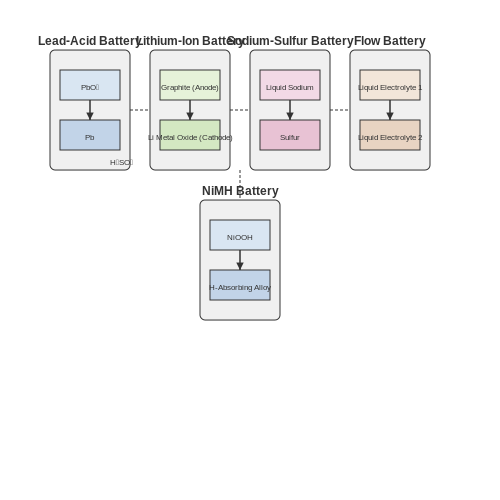
Aerospace applications primarily rely on three types of battery systems:
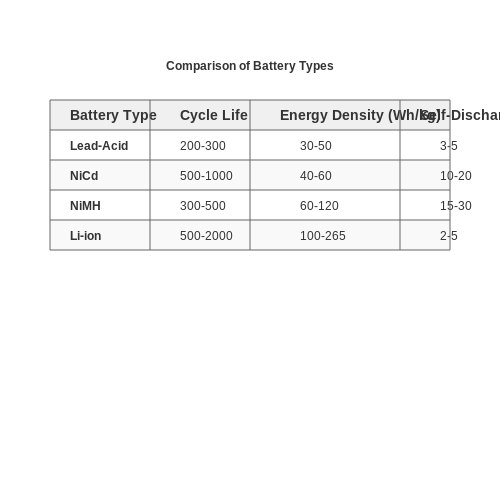
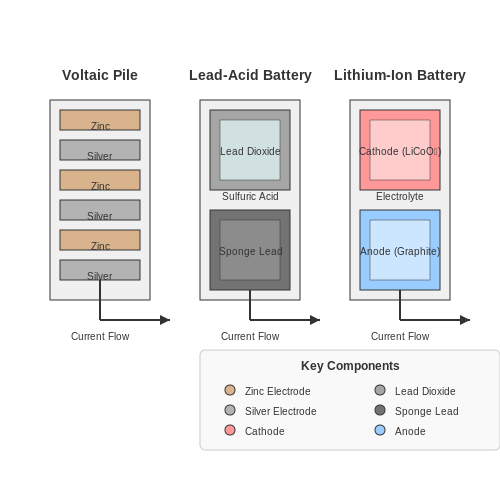
- Lithium-Ion Batteries: Renowned for their high energy density and long cycle life, lithium-ion batteries can store more energy in a lighter package than traditional batteries. These batteries are commonly used in satellites and space exploration vehicles.
- Nickel-Cadmium Batteries: While not as energy-dense as lithium-ion, nickel-cadmium batteries offer robustness, long life, and tolerance to extreme temperatures, making them useful in older aerospace applications.
- Advanced Lead-Acid Batteries: Although heavier, advanced lead-acid batteries are still employed in some aerospace applications where cost is a factor, providing a reliable and established technology. They are often used in backup power systems.
To better illustrate these types, consider a graph showing their energy densities on the horizontal axis against cycle life on the vertical axis. Lithium-ion batteries would stand out in the upper right quadrant, indicating both high energy density and long cycle life, while lead-acid would appear in the lower left quadrant.Diagram: Energy Density vs. Cycle Life of Various Battery Technologies
Battery Management Systems (BMS)
The role of a Battery Management System (BMS) is crucial in aerospace applications to ensure safety, reliability, and efficiency. A BMS serves several essential functions:
- State of Charge (SoC) Monitoring: The BMS continually assesses the SoC of each cell, ensuring that the battery does not over-discharge or over-charge.
- Temperature Control: Monitoring the temperature of individual cells can prevent thermal runaway, a critical safety concern in lithium-ion batteries.
- Balancing Cells: A BMS ensures uniform charging and discharging of battery cells, which helps extend the overall lifespan of the battery pack.
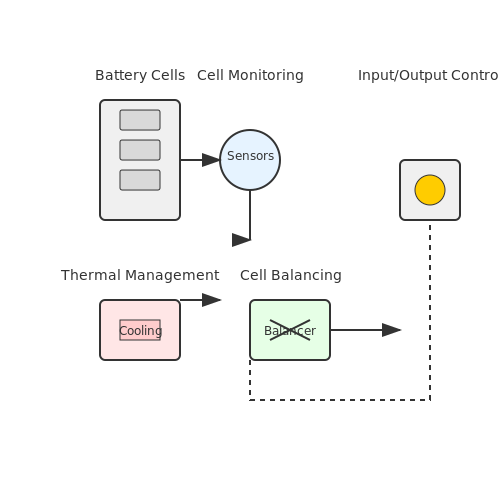
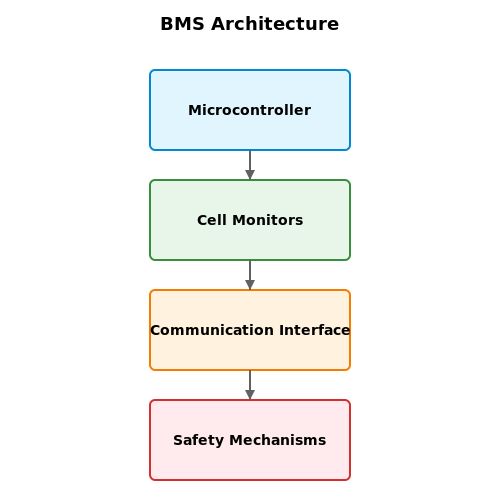
To illustrate the complexity of a BMS, consider a diagram showing a block diagram of a BMS architecture, which includes microcontrollers, cell monitors, communication interfaces, and safety mechanisms.Diagram: Block Diagram of a Battery Management System
Enhancing Battery Performance
In aerospace applications, the reliability and lifespan of the battery system must be maximized. Techniques such as:
- Thermal Management: Implementing advanced cooling systems can prevent overheating and maintain optimal operating conditions for the battery.
- Charge/Discharge Optimization: Using algorithms to control the charge and discharge cycles based on historical data can significantly enhance battery performance and longevity.
- Advanced Materials: Research into new electrode materials, such as silicon-based anodes and solid-state electrolytes, offers promise for next-generation batteries.
By employing these strategies, aerospace engineers can create battery systems that meet the rigorous demands of modern aircraft and spacecraft. Furthermore, ongoing research and development in this field will lead to exciting advancements in energy storage technologies for future aerospace endeavors.
3.3 Electric Propulsion Systems
Electric propulsion systems are pivotal in modern aerospace applications, offering thrust generation with greater efficiency compared to traditional chemical propulsion. As the aerospace industry pivots towards sustainability and enhanced performance, understanding the operational principles, types, and advantages of electric propulsion is essential for engineers and researchers in this field.
At its core, electric propulsion utilizes electrical energy to accelerate propellant, which subsequently creates thrust. This mode of propulsion boasts significant advantages, including reduced fuel mass, lower environmental impact, and the potential for longer operational durations—particularly beneficial for satellite and deep-space missions.
Fundamental Principles
The underlying principle of electric propulsion lies in Newton's third law of motion: for every action, there is an equal and opposite reaction. By expelling propellant at high velocities, electric propulsion systems create sufficient thrust to maneuver spacecraft efficiently through space.
There are two main types of electric propulsion systems:
- Electrothermal propellants: These systems heat a propellant using electrical energy, causing thermal expansion and accelerating it through a nozzle.
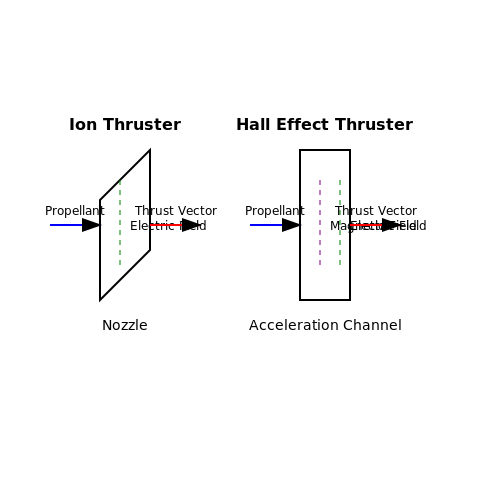
- Electromagnetic propellants: Utilizing electromagnetic fields, these systems include ion thrusters and Hall effect thrusters, which transport ions or charged particles to generate thrust.
Comparison of Electric Propulsion Types
To illustrate the diverse applications and efficiencies provided by electric propulsion, we can examine two essential systems: ion thrusters and Hall effect thrusters.
Ion Thrusters
Ion thrusters operate by ionizing a propellant (typically xenon) and then accelerating the ions through electric fields. This process, while providing low thrust, achieves a very high specific impulse, making it exceptionally fuel-efficient.
Where \(I_{sp}\) is the specific impulse, \(F\) is the thrust level, \(\dot{m}\) is the mass flow rate of the propellant, and \(g_0\) is the standard acceleration due to gravity. Ion thrusters typically achieve specific impulses in the range of 3000 to 5000 seconds.
Hall Effect Thrusters
Hall effect thrusters utilize a magnetic field to confine the ionized propellant and accelerate it using electric fields generated in the channel. This allows for a relatively high thrust and specific impulse (typically between 1500 to 3000 seconds), making it suitable for various missions, including orbital maneuvers and station-keeping tasks.
Applications and Future Potential
The applications of electric propulsion systems are vast. They play a critical role in satellite operations, such as orbital maneuvers and extending satellite lifetimes through more efficient fuel usage. Additionally, they hold considerable promise for interplanetary exploration, where long mission durations necessitate the need for effective and sustainable propulsion methods.
As the aerospace industry progresses towards more sustainable practices, the development of advanced electric propulsion systems—such as plasma-based thrusters and hybrid concepts—will pave the way for comprehensive space exploration while minimizing the environmental footprint.
In conclusion, the understanding and application of electric propulsion systems represent a significant leap towards technologically advanced and sustainable aerospace solutions. Continued research and development in this area are poised to redefine propulsion paradigms and drive future missions beyond our planet.
4. Types of Sensors Used in Aerospace
4.1 Types of Sensors Used in Aerospace
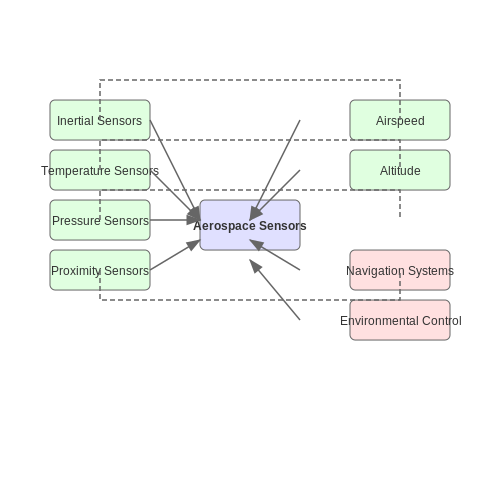
In the realm of aerospace engineering, the integration of various sensors plays a pivotal role in ensuring the safety, efficiency, and performance of both aircraft and spacecraft. These sensors facilitate the monitoring of critical parameters such as temperature, pressure, acceleration, and position. The data collected from these sensors is essential for real-time decision-making, enabling pilots and automated systems to respond promptly to dynamic flight conditions.
This section delves into the various types of sensors employed in the aerospace sector, examining their underlying principles, practical applications, and the particular attributes that make them suitable for aerospace environments.
Inertial Sensors
Inertial sensors, primarily consisting of accelerometers and gyroscopes, are fundamental components in aerospace navigation systems. These sensors measure acceleration and angular velocity, allowing for the determination of an object's velocity and orientation. For instance, MEMS (Micro-Electro-Mechanical Systems) accelerometers are widely used due to their compact size and reliability.
The output from these sensors often undergoes processing through algorithms such as the Kalman filter, which combines sensor data with atmospheric models, thereby improving the accuracy of navigation solutions. The derived equations for velocity and position from accelerometer data can be represented as:
where v is the current velocity, v0 is the initial velocity, and a(t') is the acceleration data measured over time. Similarly, the position can be obtained through double integration of acceleration data.
Temperature Sensors
Temperature sensors are crucial in monitoring the thermal status of various aerospace components. For example, thermocouples and RTDs (Resistance Temperature Detectors) are commonly used in aircraft engines and environmental control systems.
Additionally, these sensors must operate under extreme conditions, often subjected to rapid temperature variations and high levels of vibration. Thermocouples, which operate based on the Seebeck effect, convert thermal energy into a measurable voltage difference. For example, when two different metals are joined at one end and heated, a voltage is generated proportional to the temperature difference.
Pressure Sensors
Pressure sensors are vital in measuring altitude, airspeed, and cabin pressure in aircraft. They typically utilize piezoresistive or capacitive sensing elements to produce an electrical signal in response to pressure changes. The output signal can be described using the equation:
where P is the pressure, k is a constant related to the sensor's characteristics, and ΔR is the change in resistance. Accurate pressure measurements contribute to critical systems such as autopilots that depend on reliable altitude and speed data for stable flight.
Proximity Sensors
Proximity sensors, including ultrasonic and laser systems, are employed for detecting the position of components or the distance of objects around the aircraft. These sensors are increasingly integrating into collision avoidance systems, providing feedback to onboard computers to enhance navigational accuracy.
Ultrasonic sensors, for instance, operate by emitting sound waves and measuring the time taken for the echo to return. The distance can be calculated using the equation:
where d is the distance, c is the speed of sound in air, and t is the time for the sound wave to travel to the object and back.
Conclusion
The importance of sensors in aerospace cannot be overstated. From providing critical navigational data through inertial and pressure sensors to ensuring environmental control via temperature sensors, each type plays a crucial role in modern aviation and space exploration. As technology advances, the evolution of sensor systems continues to enhance the safety and efficiency of aerospace operations, paving the way for future innovation.
4.2 Sensor Integration and Signal Processing
In the realm of aerospace engineering, the integration of sensors and signal processing plays a pivotal role in ensuring the reliability, accuracy, and efficiency of flight systems. This section delves deep into the nuances of sensor technology and signal processing methodologies, highlighting their practical applications in aerospace scenarios.
Understanding Sensors in Aerospace
Sensors act as the primary interface between the physical phenomena occurring in an aircraft and the electronic systems designed to process this information. They collect data on various parameters such as pressure, temperature, altitude, and acceleration. The choice of sensor is critical, with factors like sensitivity, response time, and environmental robustness determining their suitability for aerospace applications. Below are some common types of sensors used in this field:
- Inertial Measurement Units (IMUs): These devices use accelerometers and gyroscopes to determine the aircraft's orientation and motion.
- Temperature Sensors: Utilizing thermocouples or thermistors, these sensors monitor engine and environmental temperatures.
- Pressure Sensors: Crucial for altitude detection, these sensors measure ambient pressure changes during flight.
Sensor Integration Techniques
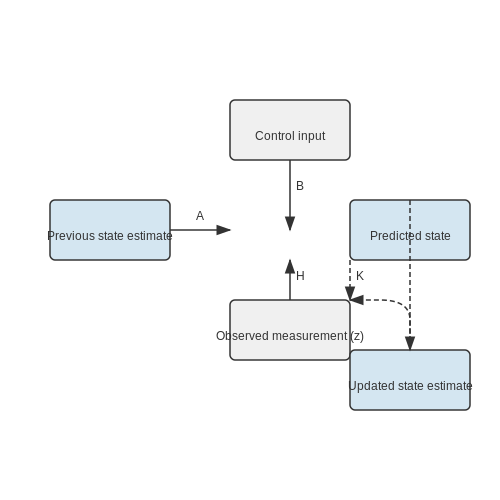
Effective sensor integration involves the fusion of data from multiple sensors to obtain a coherent understanding of the aircraft’s state. This process necessitates advanced algorithms such as Kalman filtering, which optimally combines sensor data in the presence of noise. The mathematical representation of the Kalman filter consists of two primary steps: prediction and correction.
Prediction Step
The prediction step uses the previous state estimate to predict the future state. Mathematically, this can be represented as:
Here, $$\hat{x}_k^-$$ is the predicted state, $$A$$ is the state transition model, $$\hat{x}_{k-1}$$ is the previous state estimate, $$B$$ is the control input model, and $$u_k$$ is the control vector.
Correction Step
In the correction step, sensor measurements are integrated to refine the state estimate:
In this equation, $$\hat{x}_k$$ is the updated state estimate, $$K_k$$ is the Kalman gain, $$z_k$$ is the observed measurement, and $$H$$ is the observation model. The Kalman gain determines the significance of the measurements in updating the state estimate, thereby balancing the influence of measurements and predictions.
Signal Processing in Aerospace
Once the sensor data is integrated, signal processing techniques are employed to enhance the quality and reliability of the processed data. Techniques such as low-pass filtering help to eliminate high-frequency noise that can obscure critical signals. Digital signal processors (DSPs) often play a crucial role in performing these operations in real-time, ensuring that the processed data is immediately actionable for flight control systems.
Practical Applications
The significance of sensor integration and signal processing becomes apparent when considering their applications in real-world aerospace technology:
- Flight Control Systems: Integrated sensor data informs autopilot systems, enhancing navigation accuracy and situational awareness.
- Structural Health Monitoring: Sensors embedded in aircraft structures provide continuous data on stress and fatigue, contributing to maintenance and safety protocols.
- Environmental Monitoring: Sensors collect atmospheric data for research and weather forecasting, aiding in better mission planning and execution.
In conclusion, sensor integration and signal processing are indispensable facets of aerospace engineering, merging hardware innovations with sophisticated algorithms to create reliable systems capable of withstanding the complexities of flight.
4.3 Environmental Sensing and Monitoring
In aerospace applications, the ability to gather accurate environmental data is paramount for ensuring safety, operational efficiency, and mission success. Environmental sensing refers to the processes that involve detecting and measuring various physical conditions in the atmosphere and conditions surrounding aircraft and spacecraft. This comprehensive section will explore the different types of environmental sensors, their operational principles, and their integration into aerospace systems.
Types of Environmental Sensors
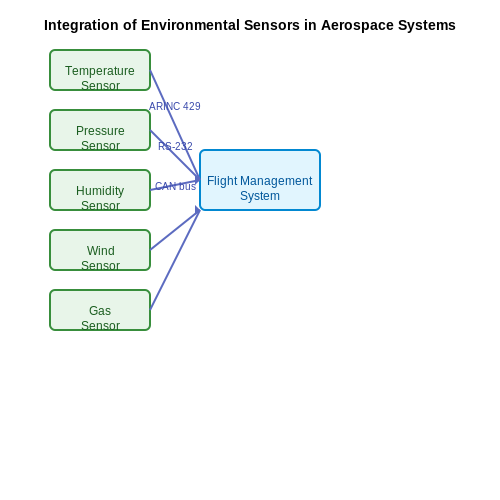
Environmental sensors in aerospace can be broadly categorized based on the parameters they measure. The primary types include:
- Temperature Sensors: These are essential for monitoring the thermal conditions of components and the atmospheric environment. Thermocouples, RTDs (Resistance Temperature Detectors), and thermistors are commonly utilized.
- Pressure Sensors: These sensors are crucial for measuring atmospheric pressure changes, aiding in altitude determination. Barometric pressure sensors and piezoelectric pressure transducers are widely used in aerospace applications.
- Humidity Sensors: Humidity levels can critically influence aerodynamic performance and material integrity. Capacitive and resistive humidity sensors provide real-time data in aviation systems.
- Wind Sensors: Anemometers measure air speed and direction, playing a vital role in navigation and aircraft control.
- Gas Sensors: Detecting specific gas concentrations is vital for monitoring both environmental conditions and the aircraft’s operational efficiency. This includes CO2, O2, and hazardous gas detection.
Operational Principles of Environmental Sensors
Understanding the operational principles behind these sensors is essential for effective integration into aerospace systems.
Temperature Sensors
For temperature measurement, thermocouples operate on the Seebeck effect, where two different metals joined at one end generate a voltage proportional to temperature differences. The fundamental equation can be represented as:
where \( V \) is the voltage generated, \( k \) is the thermoelectric coefficient, and \( \Delta T \) is the temperature difference.
Pressure Sensors
Pressure sensors often utilize piezoelectric materials that generate an electrical charge in response to mechanical stress. The relationship is expressed as:
where \( Q \) is the charge produced, \( k \) is the piezoelectric constant, and \( F \) is the applied force. These sensors are critical for altitude data, allowing pilots and systems to react to atmospheric changes.
Humidity Sensors
Capacitive humidity sensors measure humidity by detecting changes in capacitance caused by moisture levels in the air. This sensor can be modeled as:
with \( C \) as capacitance, \( \epsilon \) as the permittivity, \( A \) as the area of the plates, and \( d \) as the separation between them, demonstrating how moisture alters electrical properties.
Integration in Aerospace Systems
Environmental sensors must be integrated within aerospace systems effectively to maximize data utilization and operational reliability. Diverse data interfaces such as ARINC 429, RS-232, and CAN bus are commonly employed for data communication, allowing seamless interaction among various avionic systems.
These integration efforts ensure that flight management systems and navigation algorithms can access critical environmental data, aiding in real-time decision-making regarding flight paths, fuel efficiency, and safety measures. Moreover, the implementation of robust data fusion algorithms can enhance the accuracy of environmental readings and facilitate predictive modeling of atmospheric conditions, ensuring better preparedness for diverse scenarios in aerospace missions.
Case Studies and Practical Applications
Real-world applications of advanced environmental sensing technologies in aerospace are abundant. For instance, NASA's Perseverance rover is equipped with multiple sensors to monitor environmental conditions on Mars, including temperature variations, dust levels, and atmospheric density, enabling researchers to analyze the planet's climate and prepare for future human explorations.
Another notable case is the use of integrated sensor systems in commercial aircraft, which continuously monitor atmospheric conditions during flight. This data is vital for enhancing flight safety, optimizing fuel consumption, and improving passenger comfort.
Environmental sensing and monitoring represent a cornerstone of modern aerospace technology, facilitating safe operations and contributing to our understanding of operational environments both on Earth and beyond.
5. Onboard Data Processing Systems
5.1 Onboard Data Processing Systems
In aerospace applications, onboard data processing systems serve as the nexus of sensor input, decision-making, and control command generation. These systems are fundamentally responsible for interpreting a vast array of data from flight operations, environmental conditions, and structural health parameters in real-time, thus ensuring the safety, efficiency, and success of missions. In this subsection, we will delve into the underlying technology, architecture, and operational protocols of these critical systems.
Overview of Onboard Data Processing Systems
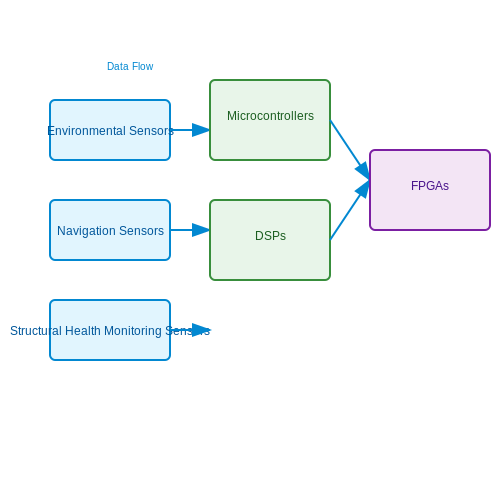
At their core, onboard data processing systems integrate hardware and software components engineered to execute specific functions. The systems generally consist of microcontrollers, digital signal processors (DSPs), field-programmable gate arrays (FPGAs), and associated software applications. Their functionalities include data acquisition, filtering, processing, and generation of control signals.
Key Components
Understanding the architecture of onboard data processing systems requires a closer look at the key components:
- Microcontrollers: These are embedded controllers that manage data processing tasks, often providing interfaces for sensor connectivity.
- Digital Signal Processors (DSPs): DSPs are optimized for high-speed data manipulations and are crucial for applications such as image processing and signal filtering.
- Field-Programmable Gate Arrays (FPGAs): FPGAs offer reconfigurability, allowing systems to adapt to different tasks or standards dynamically, making them versatile for changing mission requirements.
Data Acquisition and Processing Techniques
Data acquisition involves gathering information from various sensors, which can be categorized into:
- Environmental Sensors: These measure parameters like temperature, pressure, and humidity.
- Navigation Sensors: Systems such as GPS and inertial measurement units (IMUs) provide critical navigational data.
- Structural Health Monitoring Sensors: These ensure the integrity of aircraft materials and structures through strain gauges and accelerometers.
Once acquired, data processing executes algorithms that can filter noise, detect anomalies, and interpret complex information. The selection of algorithms is often driven by the need for real-time performance and resource optimization, especially in mission-critical scenarios. One common approach is the Kalman filter, which provides optimal estimates of system states based on noisy observations.
To illustrate the concept of the Kalman filter, let's derive its basic equations. The process starts with the state update from the previous estimate:
Where:
- x_k: State vector at time k.
- F_{k-1}: State transition matrix.
- B_{k-1}: Control input matrix.
- u_{k-1}: Control input.
- w_{k-1}: Process noise assumed to be Gaussian.
Then, the observation update is given by:
Where:
- z_k: Measurement vector at time k.
- H_k: Observation matrix.
- v_k: Measurement noise.
By inductively updating these equations, the Kalman filter continually refines its estimates, maintaining efficiency even under dynamic conditions typical in aerospace environments.
Real-World Applications
Applications of onboard data processing systems abound in modern aerospace technology:
- Unmanned Aerial Vehicles (UAVs): These utilize advanced onboard processing to perform autonomous flight, obstacle avoidance, and mission planning effectively.
- Commercial Aviation: Flight systems incorporate real-time data from multiple sources to enhance safety and efficiency in navigation and operations.
- Satellite Systems: Satellites rely on onboard processing for telemetry, tracking, and data management for various scientific and commercial applications.
As aerospace technology progresses, the sophistication and capabilities of onboard data processing systems will continue to evolve, pushing the boundaries of what is achievable in flight operations and exploration.
5.2 Data Transmission Protocols
In the realm of aerospace applications, effective data transmission protocols play a crucial role in ensuring operational efficiency and safety. These protocols not only facilitate communication between various onboard systems but are also integral to ground communications, telemetry, and monitoring vital parameters. Understanding the nuances of these protocols is essential for engineers and researchers who aim to innovate in the aerospace field. The evolution of data transmission protocols started primarily with the need for reliable communication in harsh environments, such as those found in air and space. Traditional protocols like RS-232 laid the groundwork for serial communication, but they eventually proved inadequate for the increasing bandwidth demands of modern aerospace systems. This led to the development of advanced protocols like ARINC 429, MIL-STD-1553, and the burgeoning use of Ethernet and CAN (Controller Area Network) protocols.Fundamental Concepts of Data Transmission Protocols
At their core, data transmission protocols are designed to set rules for how data is formatted, transmitted, and interpreted. A key factor in the performance of any protocol is its ability to deal with errors, manage data flow, and ensure synchronization between sending and receiving devices. Error detection mechanisms such as parity bits, checksums, and cyclic redundancy checks (CRC) are paramount. These approaches ensure the integrity of the transmitted data, which is particularly critical in applications where decisions are made based on this information. Flow control is another vital concept. Protocols implement various methods to manage the rate of data transmission between devices to prevent overwhelming a receiver. Techniques like stop-and-wait, sliding window, and acknowledgment-based systems exemplify this.Common Protocols in Aerospace
Aerospace applications predominantly utilize several well-established protocols favored for their reliability and robustness:- ARINC 429: A popular protocol used for avionics, featuring a uni-directional, serial communication approach. It is designed to transmit data between various aircraft systems, providing efficient real-time data exchange.
- MIL-STD-1553: This is a military standard for aircraft and spacecraft data buses. It allows for multiple devices to communicate on a single bus, offering a dual-redundant architecture that enhances reliability and fault tolerance.
- CAN (Controller Area Network): Originally developed for automotive applications, CAN is increasingly being adopted in aerospace for its robust performance in real-time applications, offering high data rates and efficient error handling.
- Aeronautical Telecommunications Network (ATN): Serving as the backbone for air traffic management, ATN enables the exchange of flight-related information over satellite and terrestrial networks, playing a vital role in global aviation management.
Integration of Ethernet in Aerospace Protocols
With the advent of next-generation avionics and increasing requirements for data bandwidth, Ethernet protocols are finding their way into aerospace. These protocols facilitate integration of commercial off-the-shelf (COTS) technologies, enabling higher data rates and flexibility in network management. However, using Ethernet in an aerospace context requires enhanced reliability measures to withstand the rigors of flight and space conditions, such as radiation and electromagnetic interference (EMI). Implementing Ethernet-based solutions involves using protocols like Time-Sensitive Networking (TSN) to ensure that data packets are prioritized and delivered in a timely manner, critical for applications requiring real-time data processing.Conclusion: The Future of Data Transmission in Aerospace
The design and implementation of data transmission protocols in aerospace are a continuously evolving field. As vehicle automation increases and systems become more interconnected, the demand for efficient, resilient, and scalable communication frameworks will likely grow. Innovations in protocol standards, alongside improvements in error handling and flow control, will be pivotal to enhancing safety and performance in future aerospace applications. The challenge for engineers and researchers lies not only in adapting existing protocols but redefining them to meet the emerging needs driven by new technologies and operational requirements. By understanding these frameworks, advanced-level readers can contribute to the ongoing development of better data transmission solutions that align with the rapid advancements in aerospace technology.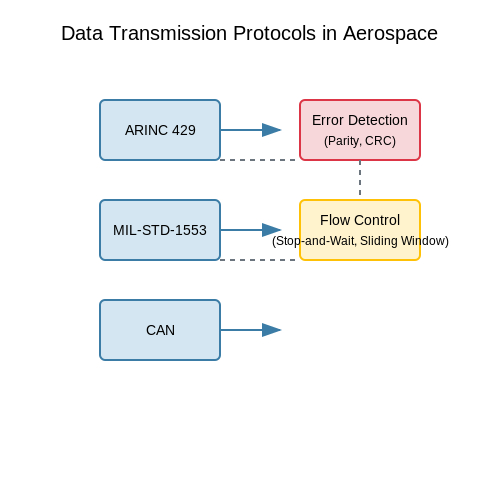
5.3 Ground Communication Systems
Ground communication systems form a critical backbone for aerospace applications, bridging the gap between various aircraft systems and ground control centers. These sophisticated systems ensure that data flow remains uninterrupted, enabling real-time navigation, monitoring, control, and coordination across vast distances. As we delve into the intricacies of ground communication systems, we will explore the physical principles underlying these technologies, the technical challenges faced, and the latest advancements shaping the field.
Understanding Communication Links
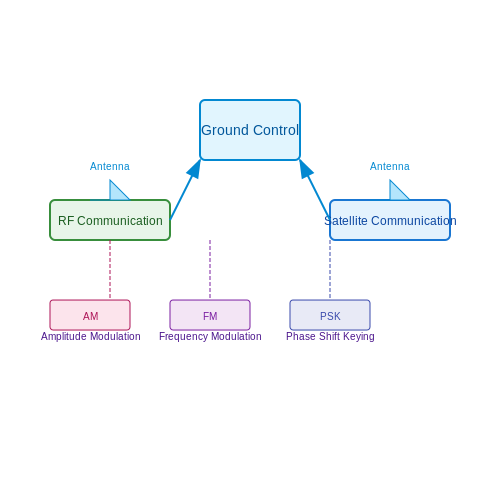
At the core of any ground communication system lies the communication link, which can be classified primarily into radio frequency (RF) and satellite communications. RF systems rely on line-of-sight propagation, utilizing antennas to transmit and receive radio signals, which are modulated to convey information. These systems are often utilized for their low latency and real-time communication capabilities. In contrast, satellite communications leverage geostationary or low Earth orbit satellites to relay signals, providing global coverage even in remote areas, albeit with a trade-off in latency due to the longer distances involved.
Modulation Techniques
To efficiently transmit information, ground communication systems often employ various modulation techniques. The most prevalent include:
- Amplitude Modulation (AM): Varies the amplitude of the carrier signal to encode information.
- Frequency Modulation (FM): Modulates the frequency of the carrier signal, providing improved noise immunity.
- Phase Shift Keying (PSK): A digital modulation scheme where the phase of the carrier signal is varied to represent data.
Understanding these techniques is crucial, as they directly impact the system's resilience to interference and its overall bandwidth efficiency. For instance, PSK can achieve better spectral efficiency compared to AM or FM, making it increasingly popular in digital communications.
Challenges in Ground Communication
Despite their importance, ground communication systems are fraught with challenges. Factors such as:
- Signal Interference: Environmental noise and overlapping frequencies can severely disrupt communication.
- Terrain Obstruction: Physical barriers such as mountains or tall buildings can hinder line-of-sight communications.
- Multipath Propagation: Signal reflections can create constructive and destructive interference patterns, complicating data interpretation.
These challenges necessitate the implementation of advanced techniques such as error correction algorithms and adaptive signal processing to ensure reliable communication. Engineers often develop algorithms capable of identifying and correcting errors introduced during transmission, thereby enhancing data integrity.
Recent Advancements
The advent of technologies like 5G networks and software-defined radios (SDRs) has revolutionized ground communication systems. 5G promises to significantly reduce latency and increase bandwidth, facilitating more complex data exchanges essential for modern aerospace operations. SDRs enable greater flexibility, allowing engineers to tweak hardware settings through software updates, thus adapting to different communication protocols without requiring physical changes to the system.
Conclusion
As aerospace technology continues to evolve, the role of ground communication systems is becoming increasingly significant. These systems not only ensure the safety of operations through real-time data transmission but also enhance the overall efficiency and effectiveness of aerospace operations. Continuous advancements in communication technology promise to further bolster these capabilities, allowing for greater automation and integration of aerospace systems in the future.
6. Safety Standards and Regulations
6.1 Safety Standards and Regulations
In the complex and high-stakes environment of aerospace applications, ensuring safety is paramount. Applied electronics play a crucial role in aspects ranging from navigation systems to communication and flight control. Adhering to safety standards and regulations is not just about compliance; it's about enhancing the reliability and integrity of aerospace systems. This section delves into the key safety standards and regulations that govern the field, providing engineers and researchers with the essential framework needed for future designs.
Understanding Safety Standards
Safety standards in aerospace electronics focus on preventing catastrophic failures that could jeopardize lives and vehicles. These standards are developed by various organizations, including:
- International Organization for Standardization (ISO) – Specifies global standards including safety, quality, and sustainability.
- Federal Aviation Administration (FAA) – Oversees aviation regulation in the United States, issuing guidelines that include safety protocols for avionics.
- European Union Aviation Safety Agency (EASA) – Similar to the FAA but specifically for the European Union, focusing on maintaining a high level of safety in civil aviation.
- RTCA DO-254 – Provides guidelines for the development of airborne electronic hardware, particularly in safety-critical applications.
By adhering to these standards, aerospace engineers are able to design systems that not only meet regulatory requirements but also demonstrate their commitment to safety and quality. For instance, DO-254 outlines the way in which hardware validation should be conducted, integrating practices that help ensure reliability in diverse environmental conditions.
The Importance of Compliance
Compliance with safety standards not only mitigates risks but also enhances the credibility of aerospace products. Organizations that prioritize safety in their design processes benefit from:
- Reduced Liability: Complying with established regulations minimizes legal risks associated with accidents.
- Market Access: Certification can be a prerequisite for entering certain markets, particularly in international contexts.
- Enhanced Customer Trust: Demonstrating compliance can significantly improve customer confidence in the reliability and safety of aerospace technologies.
Take, for instance, the implementation of the FAA's Advisory Circulars which encompass best-practice recommendations for avionics systems design and safety assessments. Programs that effectively incorporate these advisories may see a reduction in failure rates and improvements in system performance.
Integration of Safety in Design Processes
Given the critical nature of aerospace systems, incorporating safety into the design process is non-negotiable. This is often achieved through methods such as:
- Failure Mode and Effects Analysis (FMEA): A systematic technique for identifying potential failure modes in a system and evaluating the effects of those failures.
- Hazard Analysis and Risk Assessment: These processes assess the potential hazards associated with system operation and their impacts on safety.
- Verification and Validation (V&V): Ensuring that the systems meet their design specifications and intended uses through rigorous testing procedures.
Adopting these methods not only aligns with safety standards but also fosters a proactive approach to risk management. By understanding and addressing the possible points of failure, engineers can better anticipate challenges throughout a system's lifecycle.
Case Study: The Boeing 737 MAX
The grounding of the Boeing 737 MAX serves as a poignant reminder of the importance of adherence to safety regulations. The incidents involving the aircraft highlighted deficiencies in both design and compliance with safety standards. Investigations revealed lapses in the system design process and inadequate safety assessments surrounding the Maneuvering Characteristics Augmentation System (MCAS). This led to numerous legislation and fundamental changes in how compliance and certification processes are approached in the aviation industry.
In response, the FAA and international regulatory bodies have now mandated more rigorous assessments of software and hardware systems, reinforcing the need for stringent adherence to established safety practices.
In conclusion, safety standards and regulations in aerospace electronics are vital in driving the development of reliable and secure systems. By understanding and implementing these guidelines, engineers can significantly contribute to the advancement of safe aerospace technologies.
6.2 Redundancy and Fault Tolerance
In the aerospace industry, the stakes are high, and the fidelity of electronic systems is crucial for mission success. Redundancy and fault tolerance serve as foundational principles in aerospace electronics, specifically designed to mitigate risks associated with system failures. As we delve into these concepts, our comprehension will be enriched with historical evolution, practical applications, and real-world case studies, providing a comprehensive understanding of why these strategies are vital in aerospace systems.
Understanding Redundancy
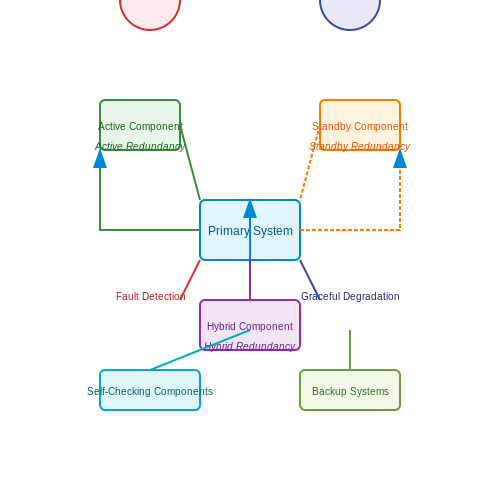
Redundancy in aerospace systems refers to the inclusion of extra components that serve the same purpose as the primary elements. This practice helps ensure that if one component fails, others can take over seamlessly. There are several types of redundancy, each selected based on the specific application and failure modes anticipated:
- Active Redundancy: All components function simultaneously, ensuring immediate backup. An example is multiple engines operating concurrently in an aircraft, where each can support the others if one fails.
- Standby Redundancy: Backup components remain inactive until the primary component fails. Such systems can be employed in navigation systems, where an auxiliary sensor kicks in only when the primary one fails.
- Hybrid Redundancy: This approach combines various redundant strategies to enhance reliability further. It utilizes both active and standby systems to maximize availability and fault tolerance.
Implementing redundancy increases reliability but adds complexity and cost, necessitating careful consideration during the design stages.
Fault Tolerance Explained
Fault tolerance is the ability of a system to continue operating correctly despite the presence of faults. The implementation of fault tolerance goes hand-in-hand with redundancy, as the latter provides the necessary infrastructure to detect and handle failures effectively. Techniques for achieving fault tolerance include:
- Error Detection and Correction: Implementing algorithms that can identify corrupt data and correct it automatically. These are commonly used in communication systems to ensure integrity.
- Graceful Degradation: Systems are designed to reduce functionality rather than fail completely. In avionics, for instance, critical flight data may still be available, even if the primary display fails.
- Self-Checking Components: Utilizing components that can perform self-tests and alert the system if they’re not functioning correctly. This early detection enables systems to switch to redundant components before a failure occurs.
The combination of these methods results in resilience that is crucial for missions where failure is not an option.
Case Studies: Applications in Aerospace Systems
Real-world applications of redundancy and fault tolerance demonstrate their importance in aerospace. A notable example is the Boeing 777, which employs triple-redundant flight control systems. Each control surface is managed by three separate computers, ensuring that should one computer fail, the remaining two maintain control of the aircraft.
Another exemplification is the Apollo Space Program, where all critical systems had multiple redundancies, particularly in guidance and navigation systems. This enabled astronauts to complete their missions successfully, even when faced with unexpected technical challenges.
Conclusion and Future Trends
As aerospace technology evolves, the need for advanced redundancy and fault-tolerant systems becomes increasingly crucial. The advent of artificial intelligence and machine learning offers exciting prospects for predicting potential failures and enhancing system reliability through adaptive redundancy architectures. As we move forward, integrating these technologies will pave the way for safer and more reliable aerospace systems.
In conclusion, understanding and applying the principles of redundancy and fault tolerance not only enhances system reliability in aerospace but also instills confidence in the safety and effectiveness of missions across this challenging field.
6.3 Testing and Validation Processes
In applied electronics for aerospace, robust testing and validation processes are paramount to ensure system reliability and safety. Given the critical nature of aerospace applications, these processes are designed to methodically verify that all electronic components and systems perform as expected under a variety of conditions. This section delves into the methodologies and standards that guide testing and validation in aerospace electronics, integrating both theoretical constructs and practical implications.
Understanding Testing and Validation
Testing refers to the process of evaluating the operation of a component or system under controlled conditions to ensure it meets predefined specifications. Validation, on the other hand, confirms that the systems or components fulfill their intended purpose, often through real-world scenarios. These processes are crucial not only for compliance with regulatory requirements but also for ensuring mission success in aerospace endeavors.
The aerospace sector employs several standardized testing methodologies, including:
- Environmental Testing: To simulate the harsh conditions faced in aerospace applications, such as extreme temperatures and pressures.
- Electromagnetic Interference (EMI) Testing: To ensure that systems can operate without being compromised by external electromagnetic fields.
- Vibration Testing: To evaluate the endurance of components against the vibrations encountered during take-off and flight.
Standards and Regulatory Compliance
Aerospace electronics must comply with strict standards set by governing bodies. These include the DO-160 standards for environmental conditions and testing for airborne equipment, and RTCA for minimum operational performance standards. Compliance with these regulations not only ensures safety but also enhances system interoperability and serviceability.
Testing Phases
The testing process can be broadly categorized into three phases:
- Unit Testing: Assessing individual components for functionality, often conducted during the design phase to catch design flaws early.
- Integration Testing: Conducted to verify the interaction between integrated components and systems.
- System Testing: Involves testing the complete and integrated system in conditions that closely mimic actual operational use.
Real-World Applications and Case Studies
One notable example of rigorous testing in aerospace is the development of the Boeing 787 Dreamliner, which underwent extensive environmental and system-level testing to ensure reliability and safety. Multiple testing facilities were employed, subjecting it to harsh conditions that included temperature extremes and high-altitude simulations. The rigorous testing protocols followed in this program exemplify the thoroughness required in aerospace electronics testing.
Furthermore, the increasing incorporation of complex software systems in avionics has led to the adoption of Model-Based Testing (MBT). This approach encourages the creation of models that simulate system behavior, allowing for early detection of potential issues. As technology advances, MBT is becoming a vital part of the testing paradigm in aerospace.
Conclusion
In conclusion, the testing and validation processes in applied electronics for aerospace are intricate and highly structured. With the stakes so high, adopting a comprehensive testing strategy not only mitigates risks but also assures performance under extreme conditions. Emphasizing both compliance with industry standards and real-world validation ultimately contributes to safer and more reliable aerospace systems.
7. Autonomous Systems and Robotics
7.1 Autonomous Systems and Robotics
Aerospace applications increasingly rely on autonomous systems and robotics to enhance efficiency, safety, and operational capabilities. Without the need for direct human intervention, these systems can execute tasks in environments that are often hazardous or inaccessible. This section delves into the core technologies and methodologies that underpin autonomous systems in aerospace, offering a detailed overview of their workings, challenges, and advancements.
Core Technologies for Autonomous Systems
At the heart of autonomous systems are several key technologies that enable decision-making and navigation. These include:
- Sensor Fusion: Integrates data from multiple sensors—such as LiDAR, cameras, and IMUs (Inertial Measurement Units)—to create a comprehensive situational awareness for the system.
- Machine Learning: Employed for improving decision-making processes through algorithms that learn from data. Techniques like reinforcement learning can improve efficiency in navigation and task execution.
- Control Systems: These systems maintain the desired trajectory and orientation of vehicles by continuously adjusting inputs based on feedback from sensors.
Robotics in Aerospace Applications
Robotics particularly shines in applications such as:
- Unmanned Aerial Vehicles (UAVs): Drones equipped with autonomous systems are capable of surveying vast areas, performing logistics, or even military operations with minimal human oversight.
- Robotic Arm Manipulators: Utilized in satellite servicing and manufacturing, these robots perform delicate tasks such as assembly or maintenance in hostile environments where human access is limited.
- Space Exploration: Rovers and landers equipped with autonomous navigation systems are central to solar system exploration, enabling them to traverse uneven terrain while conducting experiments.
Challenges to Autonomous Systems
While the advancements in autonomous systems present incredible opportunities, they also come with significant challenges:
- Reliability: Autonomous systems must operate with high reliability in unpredictable environments, necessitating robust designs that can handle failures gracefully.
- Regulatory Hurdles: The integration of autonomous systems into civilian airspace requires navigating complex regulatory landscapes to ensure safety and security.
- Ethical Considerations: Implementing AI in decision-making processes raises ethical questions that must be addressed, especially in critical scenarios like defense or search-and-rescue missions.
Future Directions
The field of autonomous systems and robotics in aerospace is rapidly evolving. Innovations such as the integration of AI with quantum computing may enable faster and more efficient processing of complex data sets, enhancing decision-making capabilities. Additionally, advancements in communication technologies, like 5G, will support real-time data analysis and system response, opening new frontiers in autonomous operations.
As these systems are deployed in increasingly complex scenarios, ongoing research will focus on improving safety standards, enhancing machine learning algorithms for better adaptability, and fostering international cooperation to standardize operations across borders.
In conclusion, autonomous systems represent a significant leap in aerospace technology, integrating complex electronics and software adequately to operate independently while delivering immense practical value across various applications. Understanding and addressing the associated challenges remains crucial for harnessing their full potential.
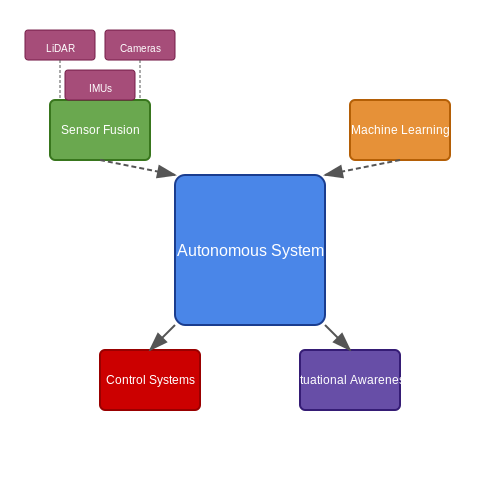
7.2 Advanced Materials and Aerodynamics
The field of aerospace engineering often stands at the nexus of advanced materials science and fluid dynamics, demanding an interplay that ensures optimal performance and safety in flight. In this subsection, we will explore the significance of advanced materials in aerospace applications and their interaction with aerodynamics, coupling theory with practical implementations.
Advanced Materials in Aerospace
Modern aerospace engineering increasingly relies on advanced materials to enhance structural integrity while reducing weight. Traditional materials like aluminum and titanium are now complemented by high-performance composites and alloys, such as carbon fiber reinforced polymers (CFRP) and titanium aluminides.
CFRPs, for instance, exhibit exceptional strength-to-weight ratios, making them ideal for constructing aircraft fuselages and wings. Their anisotropic nature allows for tailoring material properties in specific directions, enhancing performance. The challenge, however, lies in the fabrication and integration of these composites into existing aerospace structures, requiring innovative manufacturing techniques, such as additive manufacturing or advanced composite lay-up processes.
Case Study: The Boeing 787 Dreamliner
The Boeing 787 Dreamliner is a notable example of advanced materials usage in aviation. Approximately 50% of its primary structure is composed of composite materials, leading to substantial weight savings and increased fuel efficiency. The use of CFRPs allows the 787 to achieve a 20% reduction in fuel consumption compared to similar aircraft, showcasing the real-world implications of material advancements.
The Role of Aerodynamics
When discussing aerospace design, one cannot overlook the impact of aerodynamics. The flow of air around an aircraft is governed by principles of fluid dynamics, which dictate lift, drag, and thrust—a triad critical to flight performance. Advanced materials not only contribute to structural characteristics but also influence aerodynamic behavior.
Drag reduction is paramount for improving fuel efficiency and overall aircraft performance. Engineers employ computational fluid dynamics (CFD) simulations to visualize airflow and optimize aircraft shapes. Through systematic design iterations, engineers can minimize drag by refining wing shapes, fuselage profiles, and even control surfaces.
Mathematical Foundation of Aerodynamics
The aerodynamic forces experienced by an aircraft can be quantified using the principles laid out in Bernoulli's equation and the continuity equation. To establish the lift force \( L \), the following relationship is derived:
Where:
- \(\rho\) is the air density,
- v is the velocity of the aircraft relative to the air,
- S is the wing surface area, and
- C_L\) is the lift coefficient, which varies with the angle of attack.
Understanding how changes in material properties can affect the lift coefficient and drag area is vital for improving aircraft design. For example, the introduction of variable geometries in wings, facilitated by advanced materials, can dynamically optimize performance during different flight conditions.
Integrating Materials and Aerodynamics
The synthesis of advanced materials and aerodynamic principles is evident in cutting-edge aerospace projects like the development of the Space Launch System (SLS) by NASA. The SLS employs advanced composite materials to construct lighter and more effective launch vehicles capable of delivering heavier payloads into space. By integrating lightweight materials with smart aerodynamic designs, engineers are pushing the boundaries of what is achievable in aerospace technology.
In conclusion, the synergy between advanced materials and aerodynamics underlines the progression of aerospace engineering. As technologies evolve, further innovations are expected, leading to safer, more efficient flight solutions that could transform the aerospace landscape.
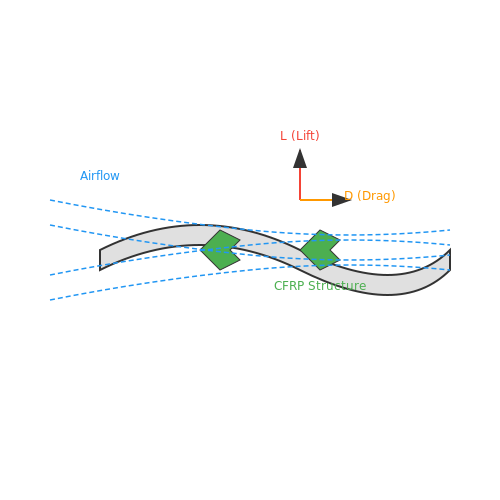
7.3 Integration of AI and Machine Learning
The aerospace industry is witnessing a technological renaissance with the integration of Artificial Intelligence (AI) and Machine Learning (ML) into applied electronics. These cutting-edge technologies are being used to enhance the efficiency, safety, and capabilities of aerospace systems. The potential applications range from autonomous flight systems to predictive maintenance and beyond. The aerospace domain is particularly suited for the application of machine learning due to the vast amount of data collected from various sensors and systems aboard aircraft and spacecraft. Not only do these systems generate real-time data, but they also engage in increasingly complex operations, which traditional programming methods may not adequately address. Therefore, AI and ML present not just an opportunity but a necessity for modern aerospace engineering. Understanding AI and ML in Aerospace At its core, AI refers to the simulation of human intelligence in machines. In contrast, ML is a subset of AI that utilizes statistical techniques, enabling systems to learn and improve from experience. A practical example in aerospace would be the use of ML algorithms to analyze flight data and optimize routes, enhancing fuel efficiency and reducing operational costs. The essence of ML in aerospace lies in its ability to identify patterns and make predictions. For instance, with flight data spanning years, ML models can be trained to predict aircraft failures before they occur, allowing for preemptive maintenance, thus ensuring operational safety and reducing downtime.Applications of AI and ML
To illustrate the practical relevance, let's delve into some notable applications of AI and ML in aerospace:- Autonomous Flight: AI systems enable fully automated flight operations, which can reduce human error and enhance safety. Drones and other UAVs employ machine learning algorithms to navigate and respond to obstacles in real time.
- Predictive Maintenance: By analyzing historical maintenance data and sensor readings, ML models help predict potential failures, allowing airlines to perform maintenance only when necessary, rather than following traditional scheduled maintenance protocols.
- Flight Optimization: AI can optimize flight paths by evaluating real-time meteorological data and air traffic, leading to reduced fuel consumption and emissions.
- Enhanced Design Processes: Generative design algorithms can create innovative aerospace component designs that meet specified performance criteria while minimizing weight and material usage, thus improving overall efficiency.
Mathematical Foundations
Understanding the mathematical underpinnings of machine learning models is crucial. Two common algorithms used in aerospace applications include linear regression and neural networks. Let’s start with linear regression for predictive maintenance: Consider a scenario where you wish to predict the failure rate \( Y \) based on various input parameters \( X_1, X_2, ..., X_n \). The model can be described using the equation: $$ Y = \beta_0 + \beta_1X_1 + \beta_2X_2 + ... + \beta_nX_n + \epsilon $$ where \( \beta_0 \) is the y-intercept, \( \beta_1,...,\beta_n \) are the coefficients that represent the relationship between the independent variables and the dependent variable \( Y \), and \( \epsilon \) accounts for the error term. To estimate the coefficients, we typically minimize the sum of squared residuals: $$ \text{Minimize: } \sum_{i=1}^{m} (Y_i - \hat{Y}_i)^2 $$ where \( \hat{Y}_i \) is the predicted value. This process involves standard optimization techniques such as gradient descent. For neural networks, which are used for more complex pattern recognition tasks, the architecture comprises layers of interconnected nodes (or neurons) that transform inputs through activation functions. The training process involves applying backpropagation to minimize error across the network.Future Directions
The integration of AI and ML into aerospace applied electronics is rapidly evolving. Future advancements may include: - Enhanced sensor fusion techniques, combining data from various sources to provide more accurate real-time system states. - Sophisticated algorithms capable of interpreting unstructured data from social networks and user feedback, driving improvements in customer satisfaction in airline services. - Development of self-learning systems that can adapt to new challenges without human intervention. As the aerospace industry continues to embrace AI and ML, we can expect these innovations to revolutionize every facet of aerospace operations, ensuring safer and more efficient travel while pushing the frontiers of aerospace technology further into uncharted territories.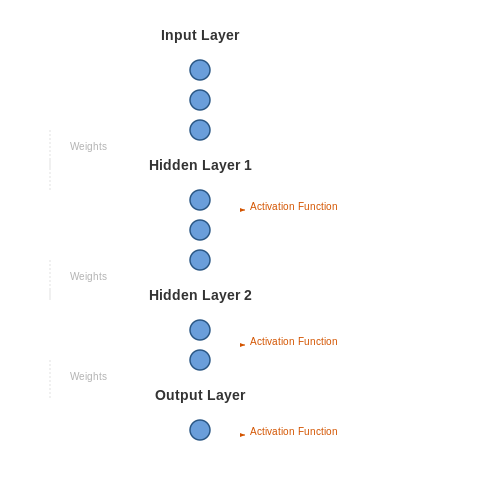
8. Recommended Textbooks
8.1 Recommended Textbooks
- Introduction to Flight by John D. Anderson Jr. — This book offers a comprehensive overview of aerodynamics and the principles of flight. It is suitable for advanced students who want to understand the physical laws governing aircraft behavior and design.
- Aerospace Engineering by Ann P. Johnson — A deep dive into the systems engineering perspective of aerospace engineering, focusing on the integration of electronics and communication systems in aircraft and spacecraft.
- Aircraft Electrical and Electronic Systems by Mike Tooley — This text provides in-depth coverage of aviation electrical systems, offering pragmatic insights into maintenance and systems operation specific to aerospace applications.
- Aeronautical Electrical Systems by Ian Moir — Focused on electrical systems used in civil and military aircraft, this book is essential for understanding complex avionics and their real-world applications.
- Radar Systems for Technicians by Dennis Roddy — Offers in-depth technical knowledge on the operation and maintenance of radar systems, crucial for modern aerospace electronics.
- Aerospace Electronic Systems by David Wyatt — Provides insights into the design and application of electronics in aerospace, addressing both theoretical understanding and practical implementation.
- Introduction to Satellite Communications by Bruce R. Elbert — Specializes in the principles and applications of satellite technology, describing how electronic systems support communication in aerospace environments.
8.2 Journals and Articles
- Aerospace Science and Technology Journal — Provides original articles on theoretical, computational, and experimental work in aerospace sciences and technology, suitable for aerospace engineers and researchers.
- AIAA Journals — Offers a comprehensive collection of aerospace related content including applied electronics, and is highly valuable for professionals and academics in the field.
- Journal of Electrical Engineering & Technology — Publishes research articles on subjects like avionics electronics, focusing on latest innovations and trends in the field.
- Aerospace Science and Technology (Elsevier) — A reputable journal that covers experimental and theoretical work in aerospace sciences, including applied electronics used in aerospace applications.
- IEEE Xplore Digital Library — Contains a vast number of peer-reviewed journals and conference proceedings encompassing aerospace-related electronics—critical for engineers and researchers.
- Aerospace MDPI — An open-access journal that features cutting-edge research in aerospace sciences including avionics and electronics, valuable for academics and industry professionals alike.
- Journal of Aerospace Engineering — Publishes scholarly articles presenting new developments in aerospace engineering with an emphasis on practical applications, including electronic systems.
8.3 Online Resources and Courses
In the rapidly evolving field of aerospace electronics, staying updated with the latest technologies and theoretical advancements is essential. With numerous online platforms offering specialized courses and resources, professionals and students can deepen their knowledge and practical skills. Here is a curated list of high-quality online resources and courses that provide advanced insights into applied electronics in aerospace.
- Spacecraft Dynamics and Control Specialization on Coursera — This comprehensive course explores the intricacies of spacecraft movements and the control systems crucial for autonomous navigation in space environments.
- Digital Circuits and Electrical Systems on edX — Offered by MIT, this course focuses on digital circuit design, a vital component of modern aerospace electronics, providing both theoretical grounding and hands-on techniques.
- Electrical Engineering by Khan Academy — Features a broad range of topics from basic electronics to sophisticated aerospace systems, with interactive tools and exercises to support learning.
- Aerospace Electronics Course on Udemy — This course provides detailed modules on the integration of electronics in aerospace systems, focusing on practical application and system design strategies.
- Space Systems Engineering by MIT Open Learning Library — Offers an in-depth study of systems engineering principles, design methodologies, and interdisciplinary collaboration required in aerospace projects.
- Aerospace Electronic Systems and Design on FutureLearn — This course covers the integral parts of electronics and design in aerospace systems, offering insights into the latest technological trends.
- Electronics Fundamentals at University of Phoenix — Aimed at understanding core electronics principles, this resource builds a foundation that is crucial for advanced studies in aerospace electronics.
By engaging with these resources, individuals can expand their knowledge base, refine their technical capabilities, and stay at the forefront of aerospace electronics innovations. These courses not only offer insights into theoretical concepts but also provide practical, hands-on experience that is essential for real-world applications in the aerospace industry.